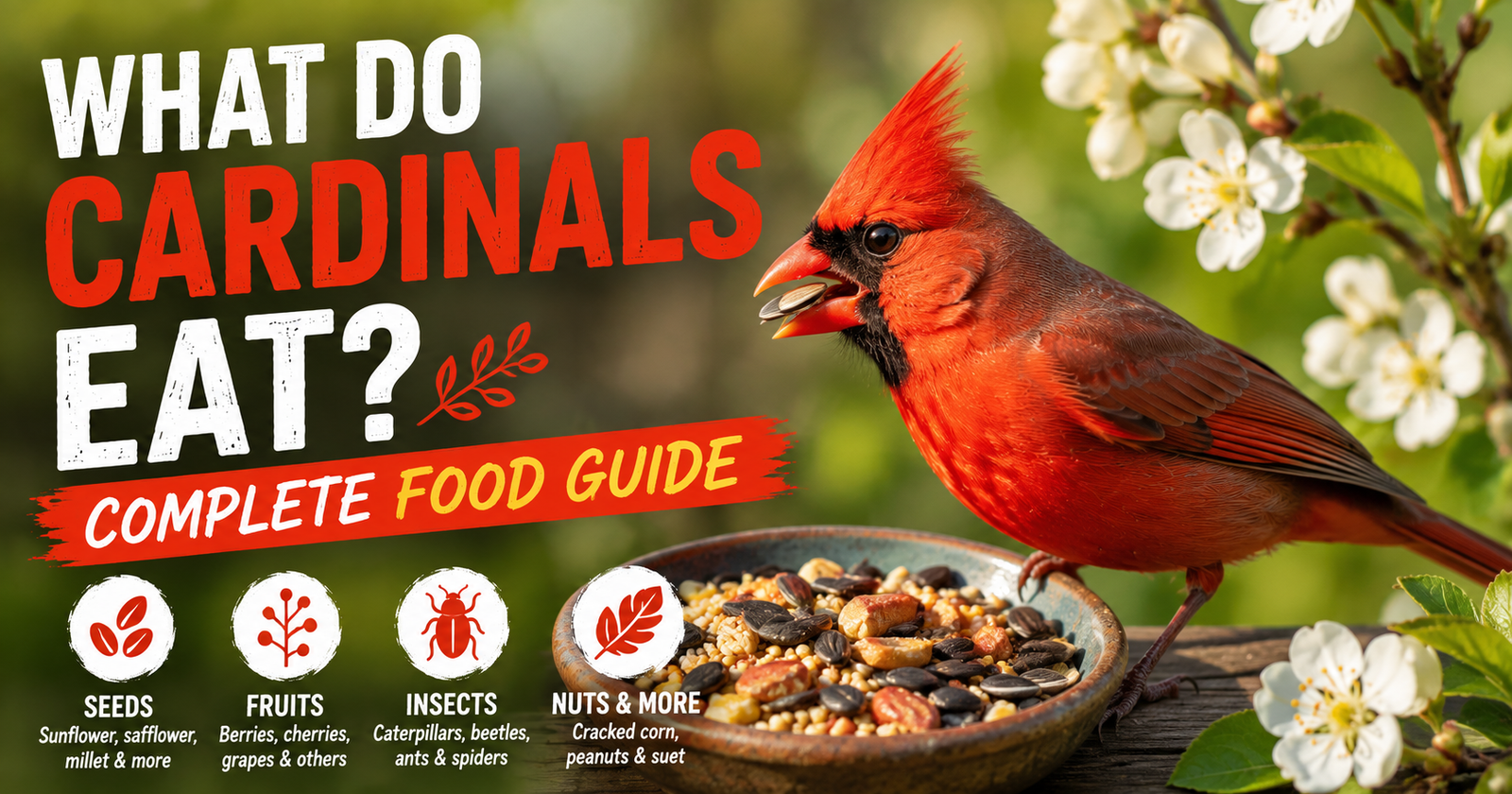
Northern Cardinals eat a varied diet of seeds, fruits, insects, and other small invertebrates. Around backyard feeders, sunflower and safflower seeds are two foods cardinals readily eat, but wild cardinals depend on much more than birdseed.
Their diet also changes with what’s available and what they’re doing. Seeds and fruits make up a substantial part of an adult cardinal’s diet, while insects become especially important during the breeding season. Growing baby cardinals are fed large amounts of insects and other invertebrates by their parents. That breeding-season shift often coincides with nesting, when cardinal eggs by size and color may be visible in a carefully hidden nest.
So if you’re trying to feed cardinals in your yard, I wouldn’t think of them as birds that simply need a feeder full of seeds.
A good cardinal-friendly yard can provide seeds, natural plant foods, insects, water, and protective vegetation. The feeder is just one piece of it.
What Foods Do Cardinals Eat in the Wild?
Northern Cardinals are primarily granivorous and frugivorous, meaning seeds and fruits make up an important part of their natural diet.
But they’re also opportunistic.
Cardinals forage on the ground, in shrubs, among vegetation, and around other places where food is available. They’ll consume a wide variety of plant material along with insects and other invertebrates.
That flexibility is one reason cardinals can live successfully in so many environments around people.
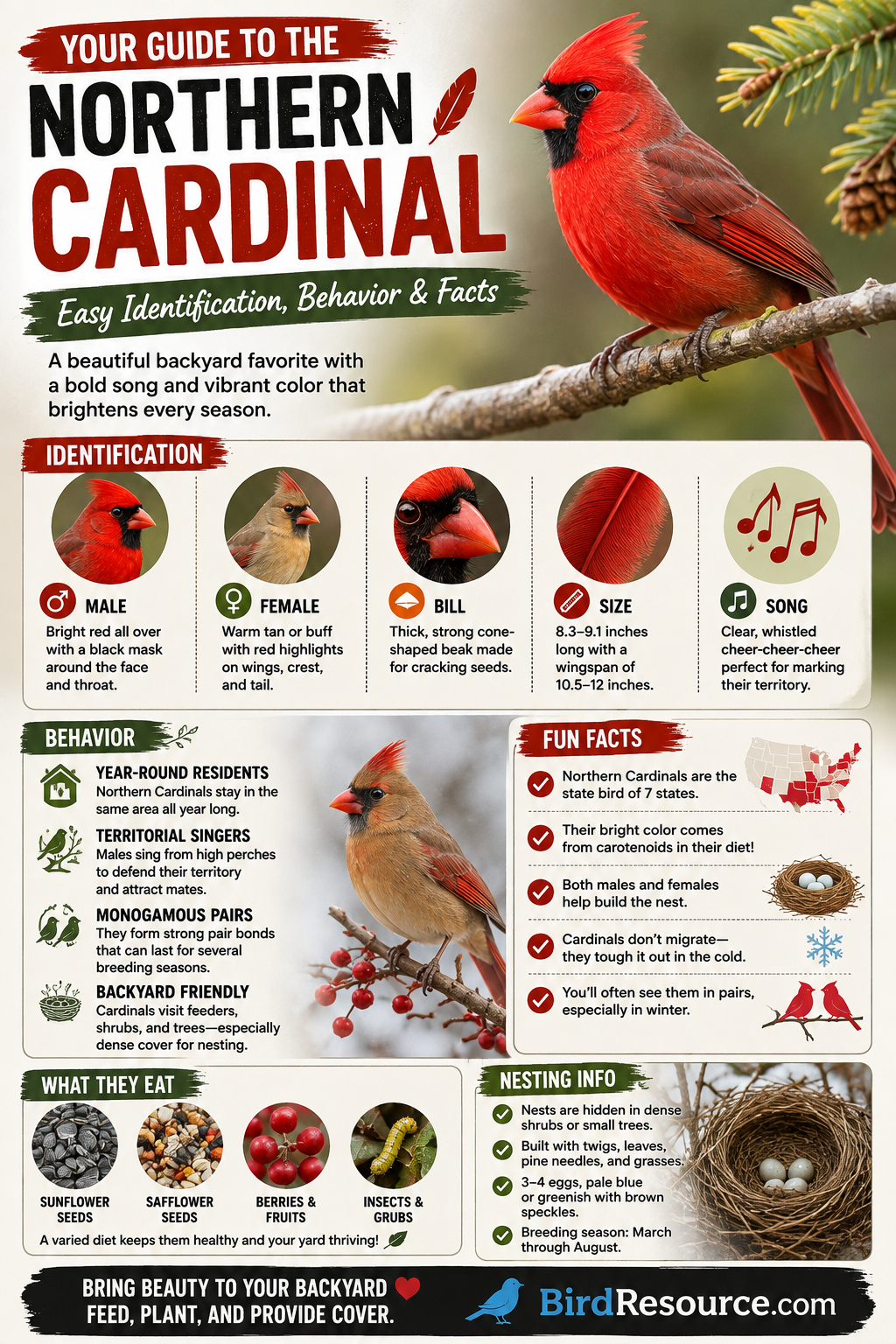
If you’re still getting familiar with the species itself, my complete guide to Northern Cardinal identification and behavior goes much deeper into where these birds live, how to identify males and females, nesting, sounds, and their everyday behavior.
For diet, though, I find it easiest to divide their food into three major groups.
Seeds
Seeds are an important part of the adult cardinal diet.
That heavy, cone-shaped bill isn’t there by accident. It’s well suited for handling and cracking seeds.
Wild cardinals consume seeds from a variety of grasses, weeds, trees, shrubs, and other plants. They also readily take advantage of the seeds people provide at feeders.
This is why a cardinal can look completely at home sitting at a feeder cracking one seed after another.
Fruits and Berries
Cardinals also eat fruits.
Wild fruits and berries can provide valuable food as availability changes throughout the year.
Depending on what’s growing locally, cardinals may feed on fruits produced by shrubs, vines, and trees.
This is worth remembering when you’re trying to make a yard genuinely useful for birds.
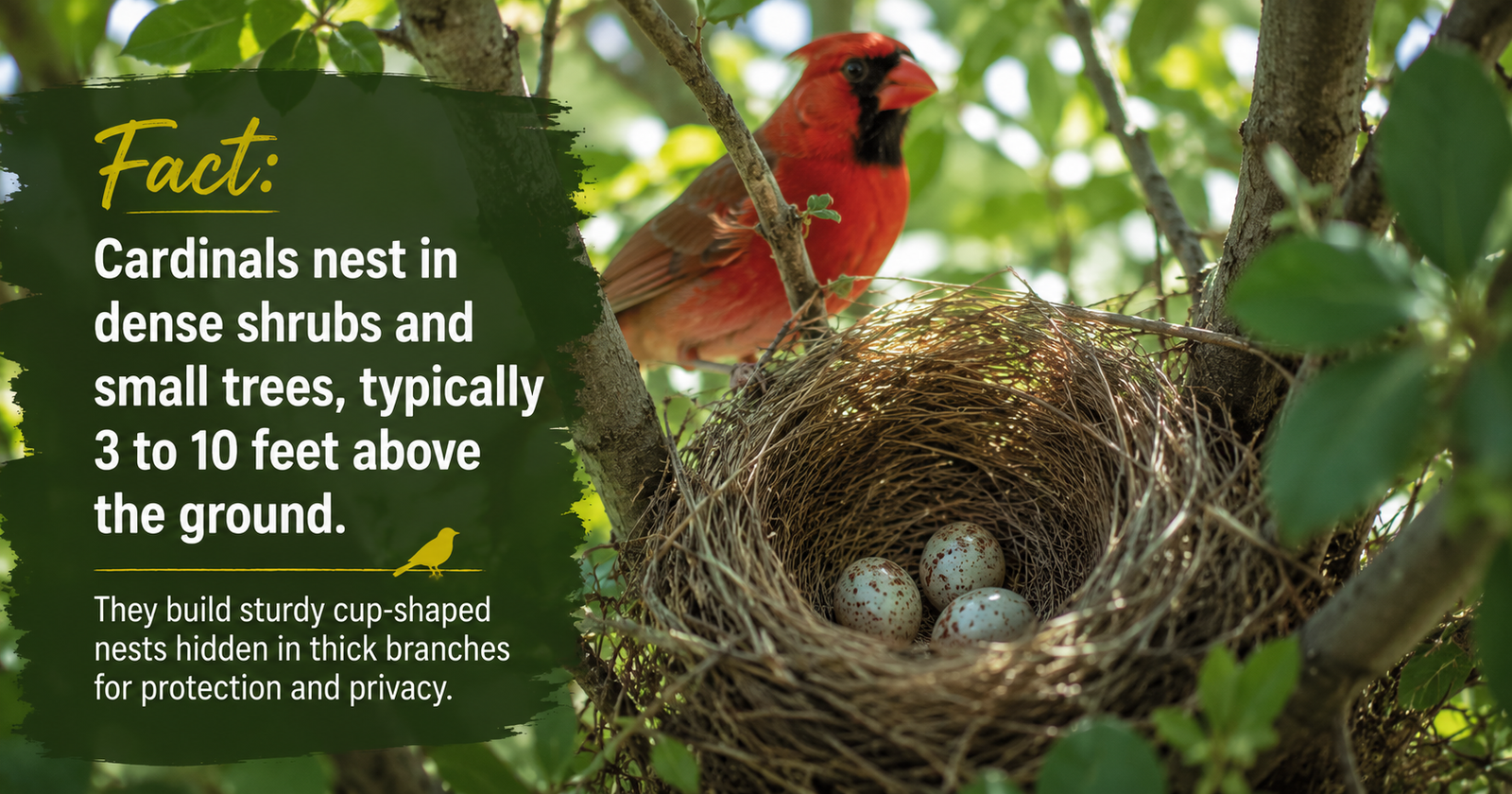
A bird feeder provides concentrated food in one location. Native fruiting vegetation can provide food while also contributing cover, nesting habitat, and places for insects to live. Native plants can support cardinals beyond feeding by offering where cardinals choose nesting cover.
Insects and Other Invertebrates
Adult cardinals eat insects and other invertebrates too.
Beetles, grasshoppers, caterpillars, and other small prey can become part of the diet.
This portion of their diet becomes particularly important when cardinals are raising young.
A bird that seems like a dedicated seed eater at your feeder may spend another part of its day searching vegetation for insects to carry back to hungry nestlings.
What Is a Cardinal’s Favorite Food?
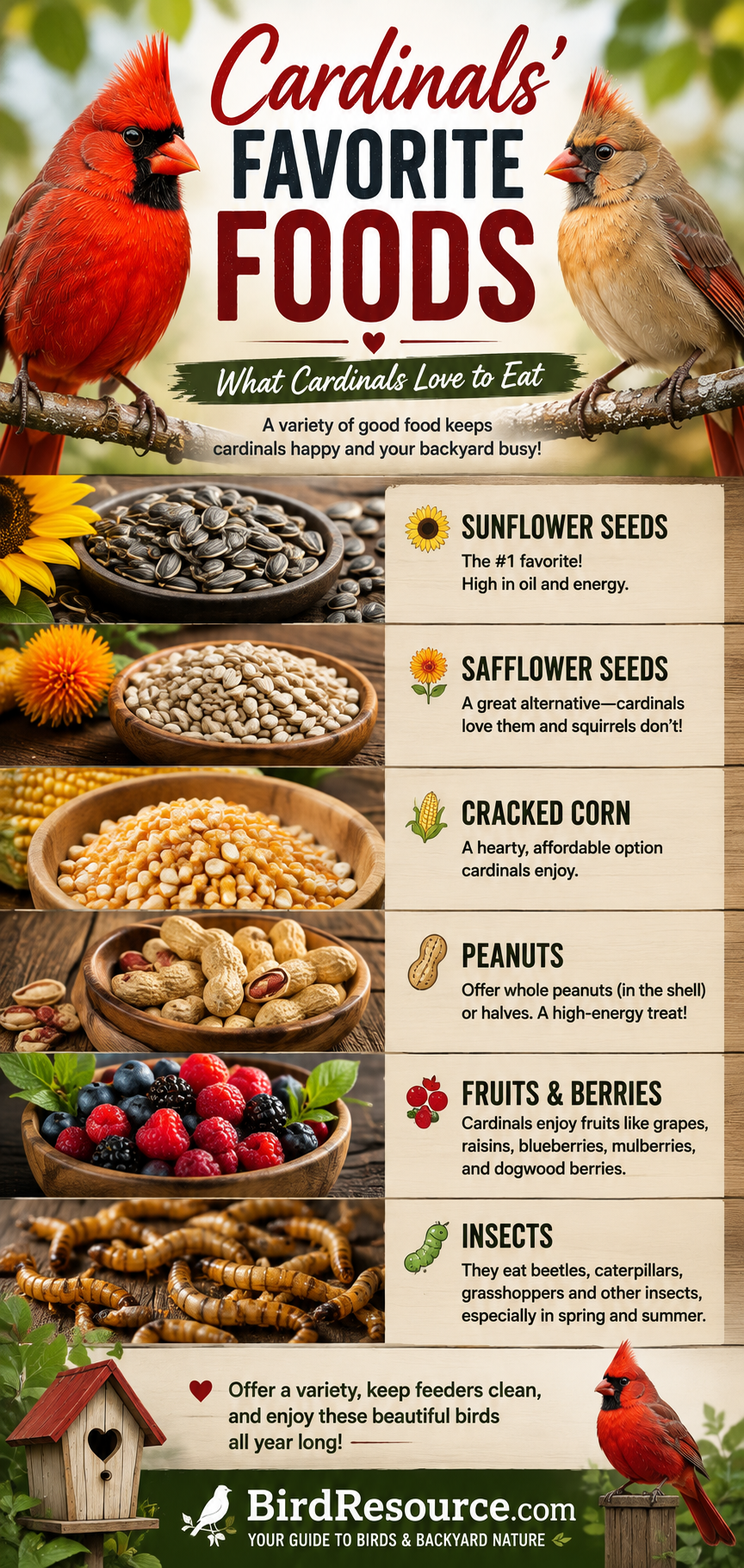
It’s difficult to assign one universal “favorite” food to every wild cardinal, but sunflower seeds are one of the best foods to offer if you want cardinals visiting a feeder.
Black oil sunflower seed is particularly popular in backyard bird feeding because many bird species can eat it and its relatively thin shell is easy for seed-eating birds to open.
Cardinals have no trouble handling it with their substantial bills.
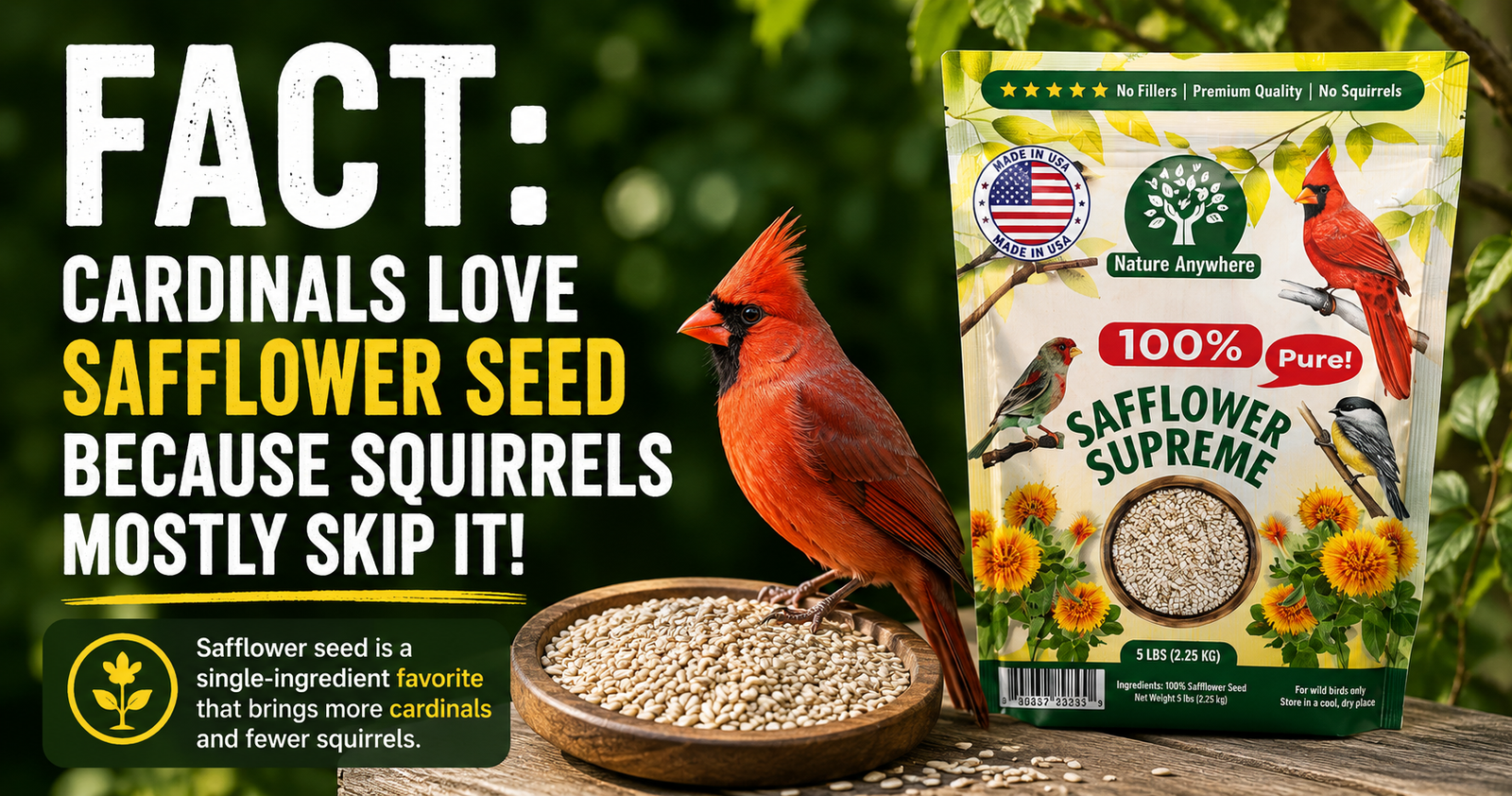
Safflower is another excellent option for cardinals.
If someone asked me what to buy first for a new feeder specifically because they wanted to see cardinals, I’d start with a quality sunflower seed or sunflower-heavy mixture rather than an inexpensive blend dominated by filler grains.
We’ll be testing and comparing actual options in our upcoming birdseed guides rather than recommending a product simply because its package has a cardinal printed on the front.
Do Cardinals Eat Black Oil Sunflower Seeds?
Yes.
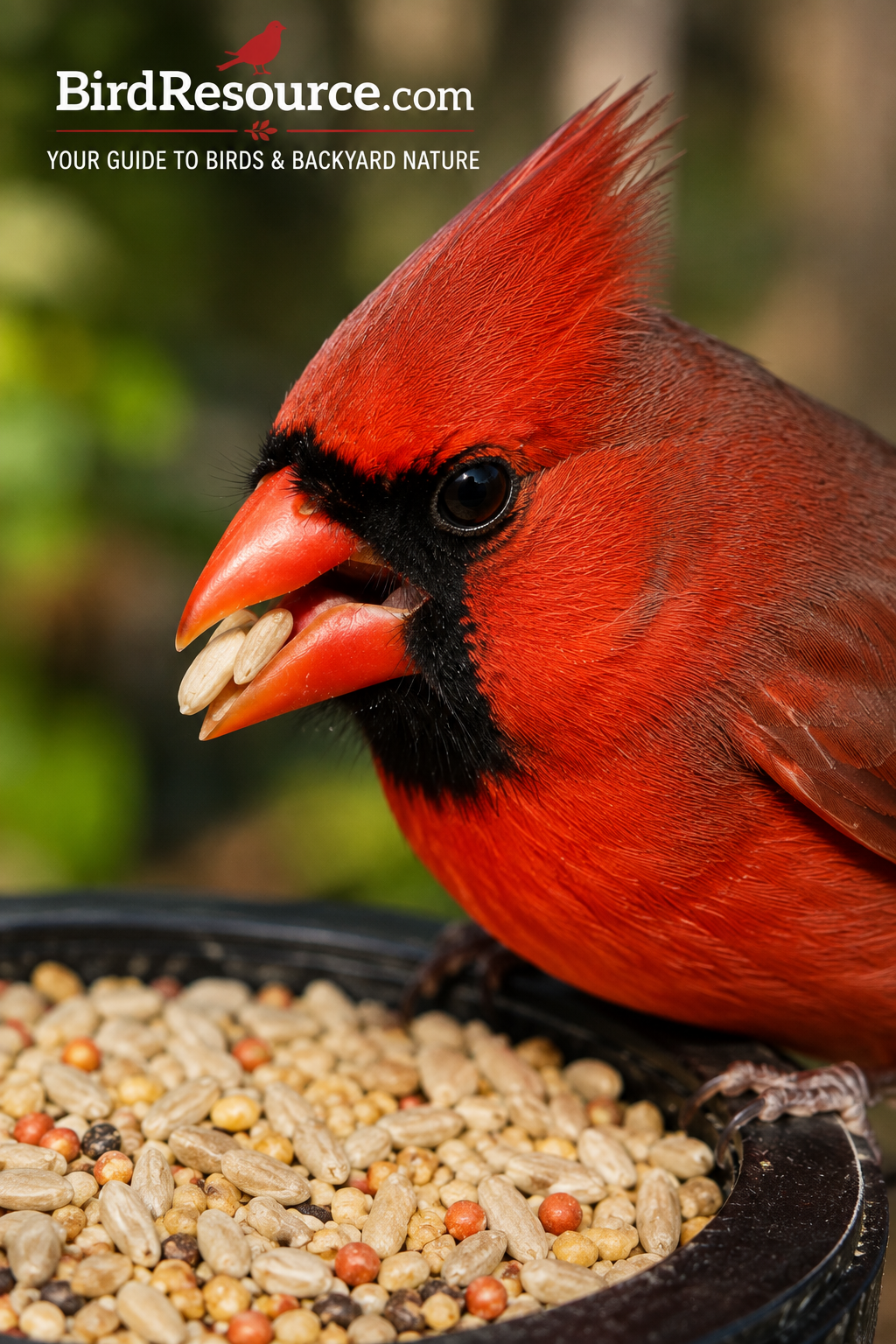
Black oil sunflower seeds are among the most reliable foods you can put out for Northern Cardinals.
They’re high in energy and relatively easy for birds to open compared with thicker-shelled sunflower varieties.
They’re also extremely popular with other backyard birds, which can be either a benefit or a drawback depending on what you’re trying to accomplish.
A feeder full of sunflower seed isn’t going to belong exclusively to your cardinals.
Chickadees, titmice, finches, nuthatches, and other seed-eating birds may visit too.
Personally, I’d consider that a good problem to have.
Do Cardinals Eat Safflower Seeds?
Yes. Northern Cardinals readily eat safflower seeds.

Safflower is particularly interesting because it can be a useful alternative or addition to sunflower seed. If you are comparing safflower choices, a safflower seed option is one option to review.
Some people try safflower when they’re dealing with unwanted feeder visitors, although I wouldn’t treat it as a magical seed that guarantees squirrels or every undesirable bird will disappear.
Wildlife doesn’t always follow the rules printed on a birdseed bag.
For attracting cardinals specifically, however, safflower is a legitimate food option.
You can offer it by itself or as part of a better-quality mixture.
Do Cardinals Eat Sunflower Hearts?
Yes.
Sunflower hearts, sometimes sold as sunflower kernels or chips depending on how they’re processed, are simply sunflower seed with the shell removed.
Cardinals can eat them easily.
The big advantage is less shell waste underneath the feeder.
The disadvantage is that shelled seed can cost more and is more exposed to moisture and spoilage because the protective hull has already been removed.
If you use sunflower hearts, I would pay particularly close attention to keeping the feeder dry and clean.
Putting out expensive seed doesn’t help birds if it sits wet long enough to become moldy or spoiled.
Do Cardinals Eat Peanuts?
Cardinals can eat peanuts, particularly when they’re offered in an appropriate form.
Small peanut pieces or chips are much more practical for many feeder birds than expecting them to deal with a whole peanut in the shell.
Peanuts are energy-dense, which makes them attractive to a variety of backyard species.
They’re not necessary to attract cardinals, though.
If my primary goal were simply getting Northern Cardinals to a new feeder, sunflower and safflower would be higher on my list.
Do Cardinals Eat Mealworms?
Cardinals can eat mealworms.
Because Northern Cardinals naturally consume insects and feed invertebrates to their young, mealworms aren’t biologically strange food for them.
But I wouldn’t expect every cardinal to immediately abandon the sunflower feeder because you put out a dish of mealworms.
Individual birds and local feeding patterns vary.
Mealworms also tend to attract insect-eating species such as bluebirds that people commonly associate more strongly with mealworm feeding.
For cardinals, I’d view mealworms as a supplemental option rather than the foundation of a feeding setup.
Do Cardinals Eat Cracked Corn?
Cardinals can eat cracked corn, but it wouldn’t be my first choice if the specific goal is attracting them.
Cracked corn can appeal to many ground-feeding birds and other wildlife.
It can also create quite a mess if too much accumulates and becomes wet or spoiled.
This gets back to something I think is important when choosing birdseed:
Just because a bird can eat something doesn’t mean it’s the best thing to fill your feeder with.
If I’m spending money specifically to bring cardinals closer to the house, I’d rather put that money toward foods they’re particularly likely to use.
Do Cardinals Eat Millet?
Cardinals can consume millet and other small seeds, but millet is more strongly associated with many ground-feeding birds and smaller seed eaters.
Some inexpensive birdseed mixtures contain large amounts of millet and other grains because they’re cheap.
That doesn’t automatically make the mixture worthless.
It does mean I’d read the ingredient list instead of choosing a bag because the front has beautiful photographs of cardinals, bluebirds, and ten other species.
The ingredients tell you what you’re actually buying.
Do Cardinals Eat Nyjer Seed?
Nyjer isn’t the food I’d choose for cardinals.
It’s particularly associated with finches, including American Goldfinches, and is commonly offered through specialized feeders with small openings.
A cardinal’s larger body and feeding style aren’t what those feeders are primarily designed around.
Again, a cardinal might occasionally investigate all sorts of foods and feeders.
But if your goal is specifically to attract cardinals, there are much better options.
What Kind of Birdseed Is Best for Cardinals?
For a straightforward cardinal feeding setup, I’d concentrate on:
Black oil sunflower seed
Safflower seed
Sunflower hearts or chips
A quality blend containing substantial amounts of foods cardinals actually want can work too.
What I’d avoid doing is buying the biggest, cheapest bag available without looking at what’s inside.
Some bargain mixes contain a high proportion of grains that aren’t necessarily the foods your target birds prefer.
You may save money per pound and then watch much of that cheap seed get kicked onto the ground.
The better question isn’t:
What’s the cheapest birdseed?
It’s:
What percentage of this bag are my birds actually going to eat?
That’s something we’ll look closely at when we begin reviewing birdseed products for BirdResource.com.
What Type of Feeder Do Cardinals Like?
Food is only half the equation.
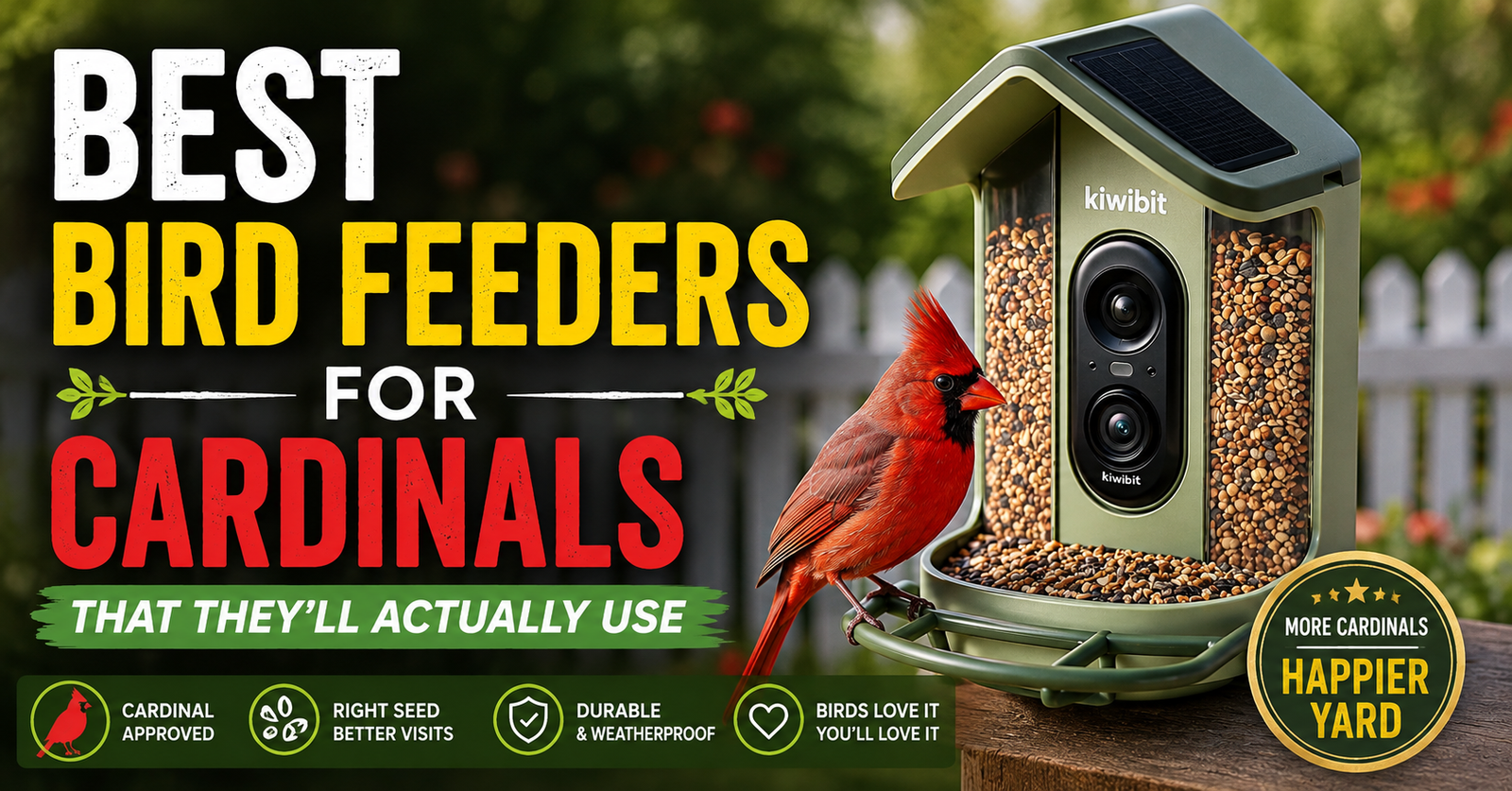
Cardinals are medium-sized songbirds. They’re noticeably larger than chickadees and goldfinches, and some feeders simply don’t give them a comfortable place to land and eat. Feeder size and perch design matter, so these feeders cardinals can use comfortably are worth comparing before you buy.
I like feeders that provide adequate room for the bird to perch or stand while accessing the seed.
Platform feeders can work particularly well.
Hopper-style feeders with appropriate perching space can also accommodate cardinals.
Some tube feeders work if they have sufficiently large perches or trays, while tiny feeders designed primarily around small finches may be awkward.
This is going to become an important topic on the site because the “best bird feeder” isn’t necessarily the best feeder for every species.
Our upcoming best bird feeders for cardinals guide will focus specifically on whether a feeder’s dimensions, perches, seed compatibility, cleaning, weather protection, and design actually make sense for a Northern Cardinal rather than ranking products on appearance alone.
Why Won’t Cardinals Use My Bird Feeder?
If you have cardinals around but they refuse to use your feeder, I wouldn’t immediately blame the seed.
Look at the entire setup.
The feeder may be difficult for a cardinal to perch on comfortably.
It could be positioned in a location where the bird feels too exposed.
Other birds or squirrels might dominate it.
The food could be old or wet.
Or the cardinals may simply have abundant natural food available elsewhere.
Cardinals often appreciate access to protective shrubs and vegetation.
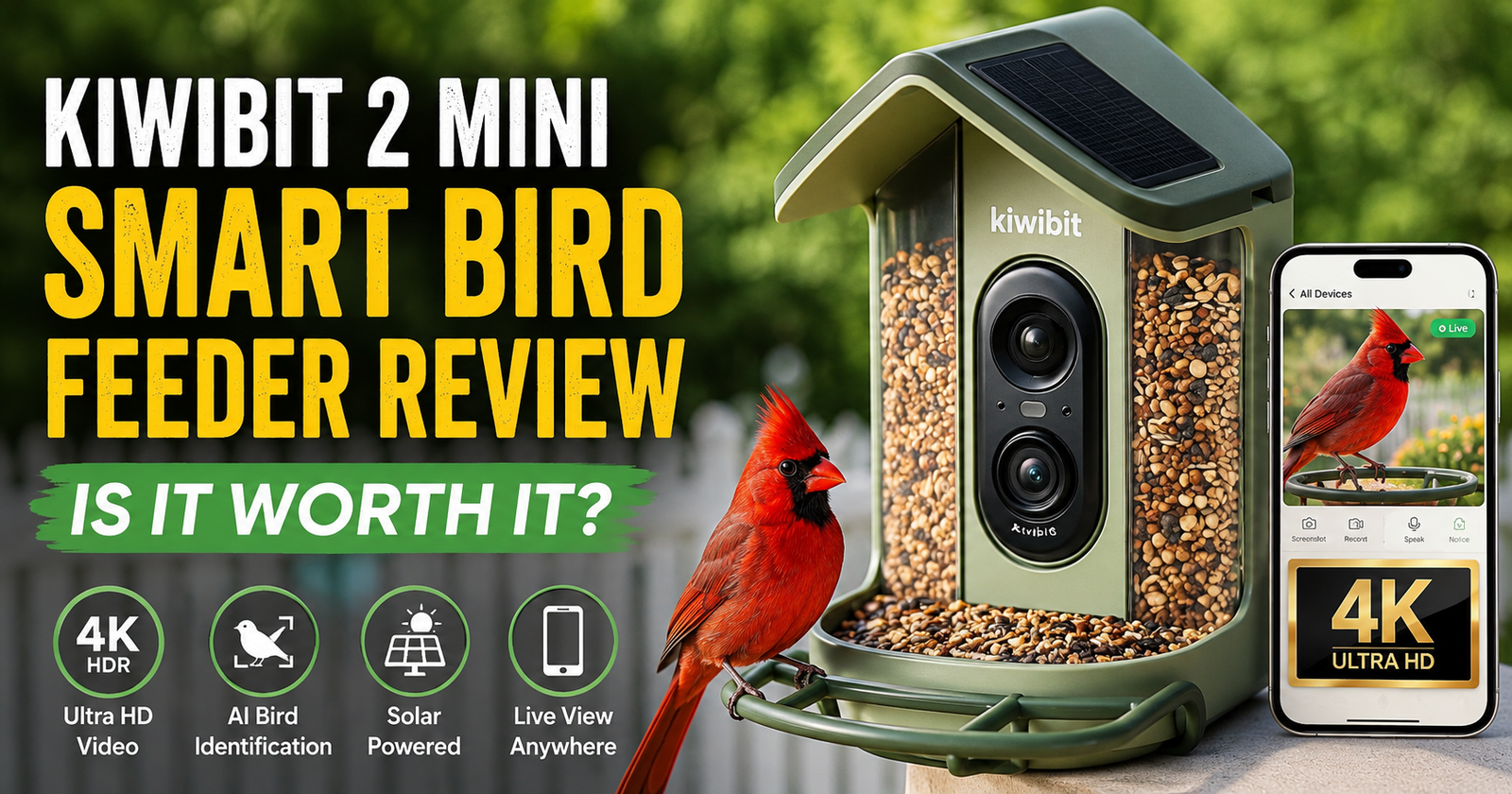
A feeder standing completely isolated in a wide-open area may feel very different from one that allows a bird to retreat quickly toward cover. If you want to see what visits that feeding station when you're away, the Kiwibit feeder's camera features explores a camera-equipped feeder option.
Patience matters too.
Wild birds don’t necessarily discover and trust a brand-new feeder the afternoon you hang it.
Do Cardinals Eat From the Ground?
Absolutely.
Northern Cardinals commonly forage on or near the ground.
That’s one reason you may see a cardinal happily eating underneath a feeder while completely ignoring the feeder itself.
Other birds knock seeds down.
Cardinals find them.
It works.
This doesn’t mean I’d deliberately create a thick carpet of old birdseed under the feeder.
Accumulated seed and hulls can hold moisture, become moldy, attract rodents, and create unsanitary conditions.
Ground feeding is normal cardinal behavior.
A neglected pile of rotting seed isn’t.
Do Cardinals Eat Fruit?
Yes.
Fruit is part of the natural Northern Cardinal diet.
Wild berries and fruits from various plants can provide food throughout the year depending on location and season.
Cardinals may eat fruits from dogwoods, mulberries, blackberries, sumac, and other fruiting plants available within their range.
This is where attracting cardinals becomes more interesting than hanging a feeder.
If you build a yard with appropriate native plants, you’re potentially supplying multiple resources at once.
A fruiting shrub can produce food.
Its foliage can support insects.
Dense growth can provide protective cover.
Depending on the plant and location, similar vegetation may also contribute nesting habitat.
That’s much closer to how a wild cardinal actually uses its environment.
Do Cardinals Eat Berries?
Yes, and berries can be an important natural food source.
Cardinals may swallow small fruits whole or work larger fruits with their bills.
The exact fruits available depend heavily on where you live.
That’s why I prefer talking about locally appropriate native fruiting plants instead of pretending there’s one perfect shrub every BirdResource.com reader should plant.
A native plant suited to Missouri may not be the right recommendation for someone in Florida.
As we build out our Feeding & Attracting Birds resources, we’ll get much more specific about choosing plants and foods that make sense for different backyard birds and different parts of the country.
Do Cardinals Eat Grapes?
Cardinals can eat grapes and other fleshy fruits.
If offering fruit at a feeding station, I would keep portions manageable and remove anything that begins spoiling rather than letting old fruit sit outside indefinitely.
Fruit attracts more than birds.
Insects, mammals, and other wildlife can quickly discover it too.
You also don’t need to provide grocery-store fruit to have a cardinal-friendly yard.
Natural fruiting plants are often a much more sustainable way to provide this portion of the diet.
Do Cardinals Eat Apples?
Cardinals may eat pieces of apple and other fruits, particularly the exposed flesh.
Again, I view this as optional supplemental feeding rather than something a cardinal requires from people.
A Northern Cardinal living successfully around your property isn’t waiting for someone to slice an apple for it.
Wild birds are remarkably capable of finding natural food.
Feeders and supplemental foods give us an opportunity to support and observe them, but I don’t want to accidentally give the impression that backyard cardinals depend entirely on what we put outside.
Do Cardinals Eat Blueberries?
They can eat blueberries and other suitable berries.
If you grow berries, you may discover that birds don’t particularly care whether you intended the fruit for them.
That can be frustrating when you’re trying to harvest your own crop, but it’s perfectly normal wildlife behavior.
For bird-focused landscaping, native berry-producing plants can be an excellent way to increase natural food availability without repeatedly putting fresh fruit on a feeder.
Do Cardinals Eat Insects?
Yes.
And this part of their diet doesn’t get nearly as much attention as sunflower seeds.
Northern Cardinals eat beetles, caterpillars, grasshoppers, and other insects and invertebrates.
The importance becomes especially obvious during nesting.
Adult birds that spend plenty of time eating seeds themselves switch heavily toward collecting animal prey for their growing young.
That makes an insect-rich yard valuable cardinal habitat.
It also means our choices in the yard can indirectly affect the food available to nesting birds.
What Do Baby Cardinals Eat?
Baby cardinals are fed primarily insects and other invertebrates by their parents.
Growing nestlings need protein-rich food, and insects provide an important resource during this period of extremely rapid development.
That’s one reason seeing an adult cardinal eating sunflower seeds doesn’t tell you what its babies are eating.
The parents may visit a feeder for themselves and then spend another part of the day hunting caterpillars and other small prey for their nestlings.
Once the youngsters leave the nest, parental feeding continues while they gradually learn to forage for themselves.
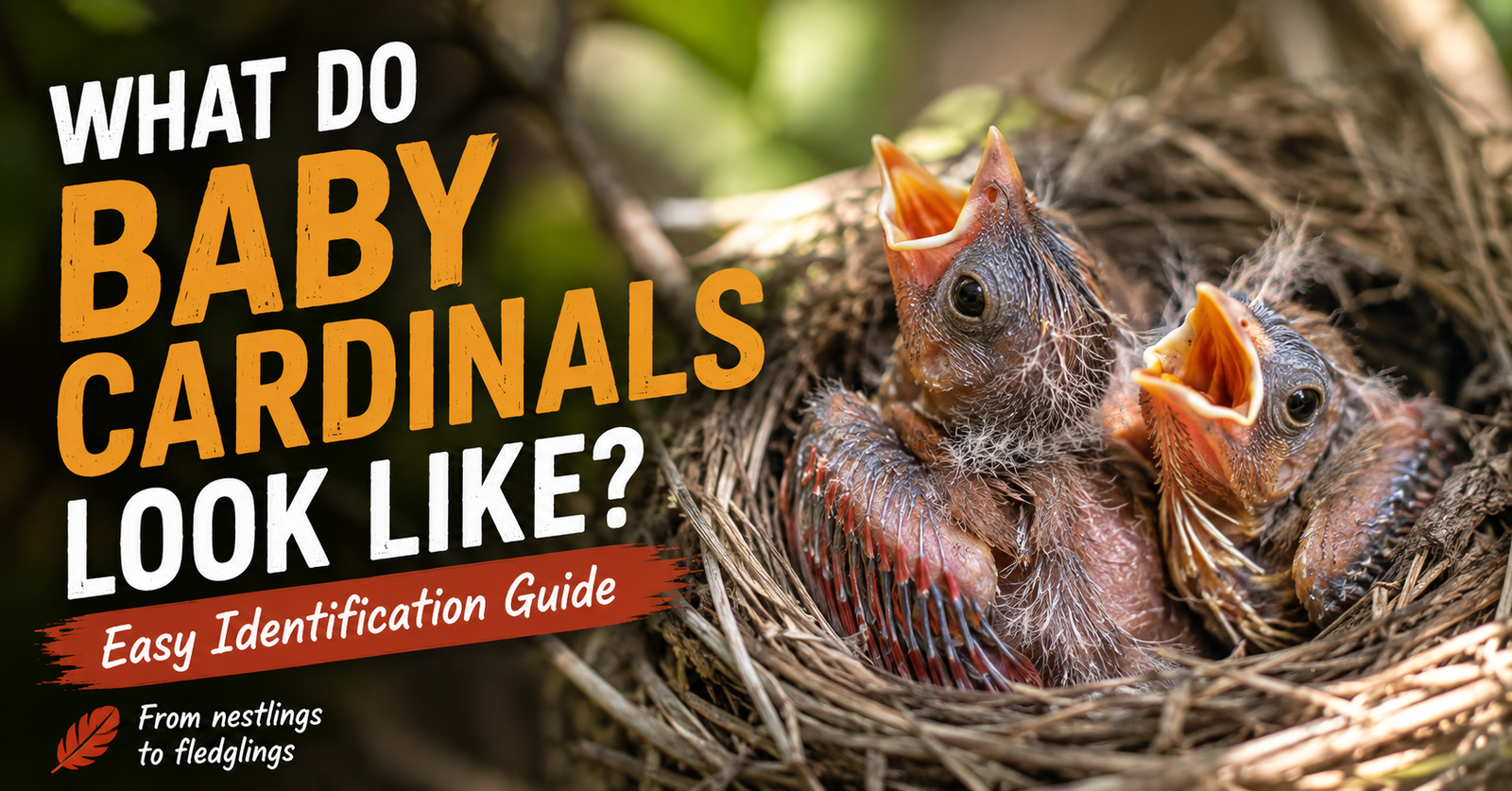
If you’ve found a brown, dark-billed youngster and aren’t sure what you’re looking at, our baby cardinal identification guide explains the differences between hatchlings, nestlings, fledglings, juveniles, and adults.
We’ll also eventually cover the baby cardinal diet separately because “What should I feed a baby cardinal?” requires a very different answer from “What should I put in my backyard feeder?”
Should I Feed a Baby Cardinal Myself?
Usually, no.
A healthy fledgling outside the nest is normally still being cared for by its parents.
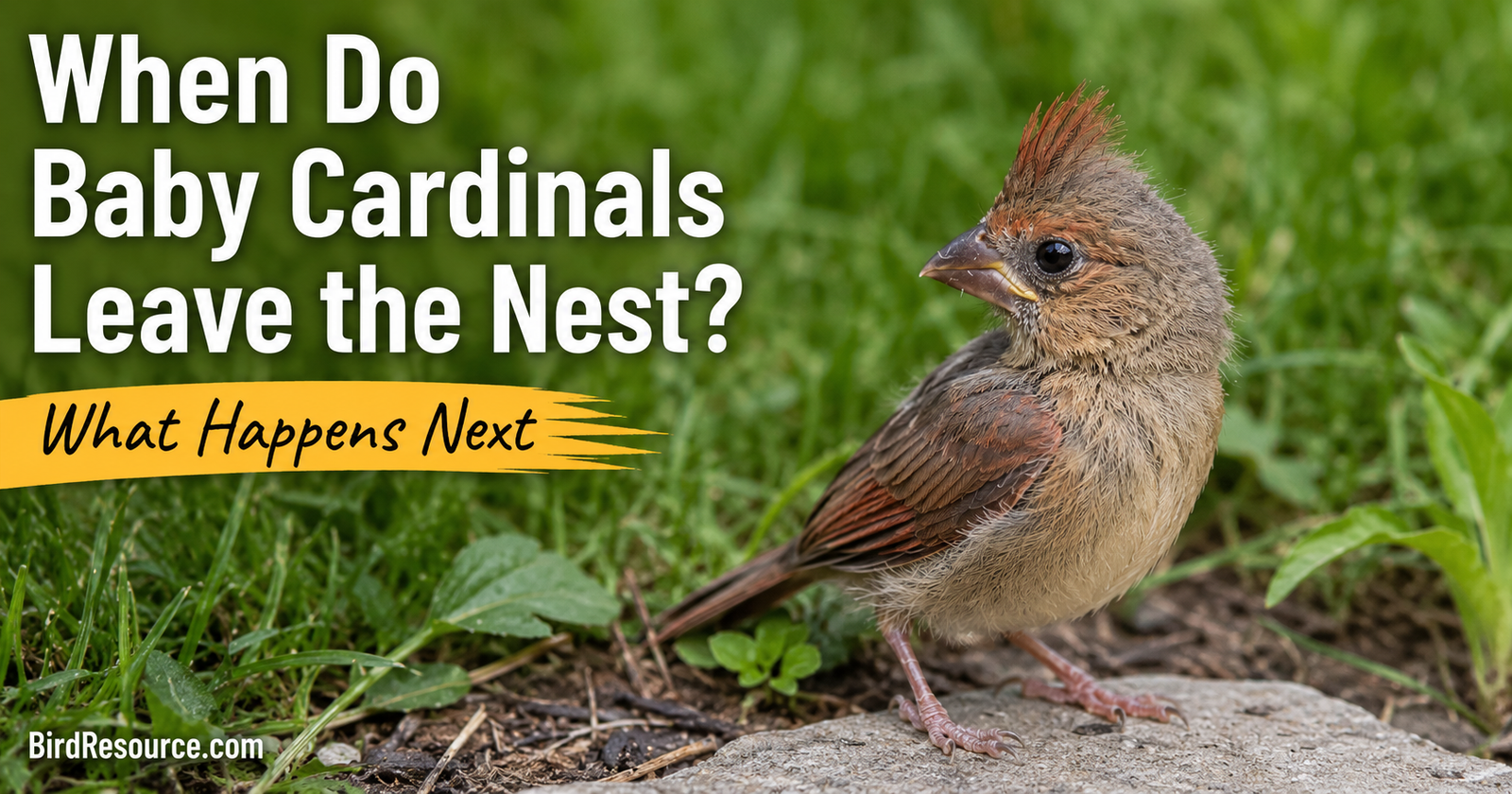
Seeing it sitting on the ground or hopping through a shrub doesn’t mean it needs a bowl of birdseed, mealworms, bread, milk, or water poured into its mouth. Understanding a young cardinal on the ground can help you recognize when this behavior is a normal part of growing up.
Improper feeding can harm a young bird.
If a baby cardinal is genuinely injured or orphaned, a licensed wildlife rehabilitator is the appropriate source of guidance.
This is one area where good intentions can create problems surprisingly quickly.
The best food source for a normal wild baby cardinal is its parents.
What Do Cardinals Eat During Winter?
Cardinals remain throughout their range year-round rather than making a long seasonal migration to escape winter.
That means they have to keep finding food when insects become less abundant and many plants stop actively growing.
Seeds and available fruits become particularly important.
Backyard feeders can provide a predictable supplemental food source during cold weather, which is one reason cardinals are such familiar winter feeder visitors.
Their red plumage also makes males ridiculously easy to notice against snow.
If you’re feeding during winter, consistency can be helpful, but cleanliness still matters.
Snow, freezing rain, and moisture can turn poorly protected seed into a wet mess.
Do Cardinals Store Food for Winter?
Cardinals aren’t famous food-caching specialists in the way some chickadees, nuthatches, and jays are.
Instead, they continue actively foraging for available food.
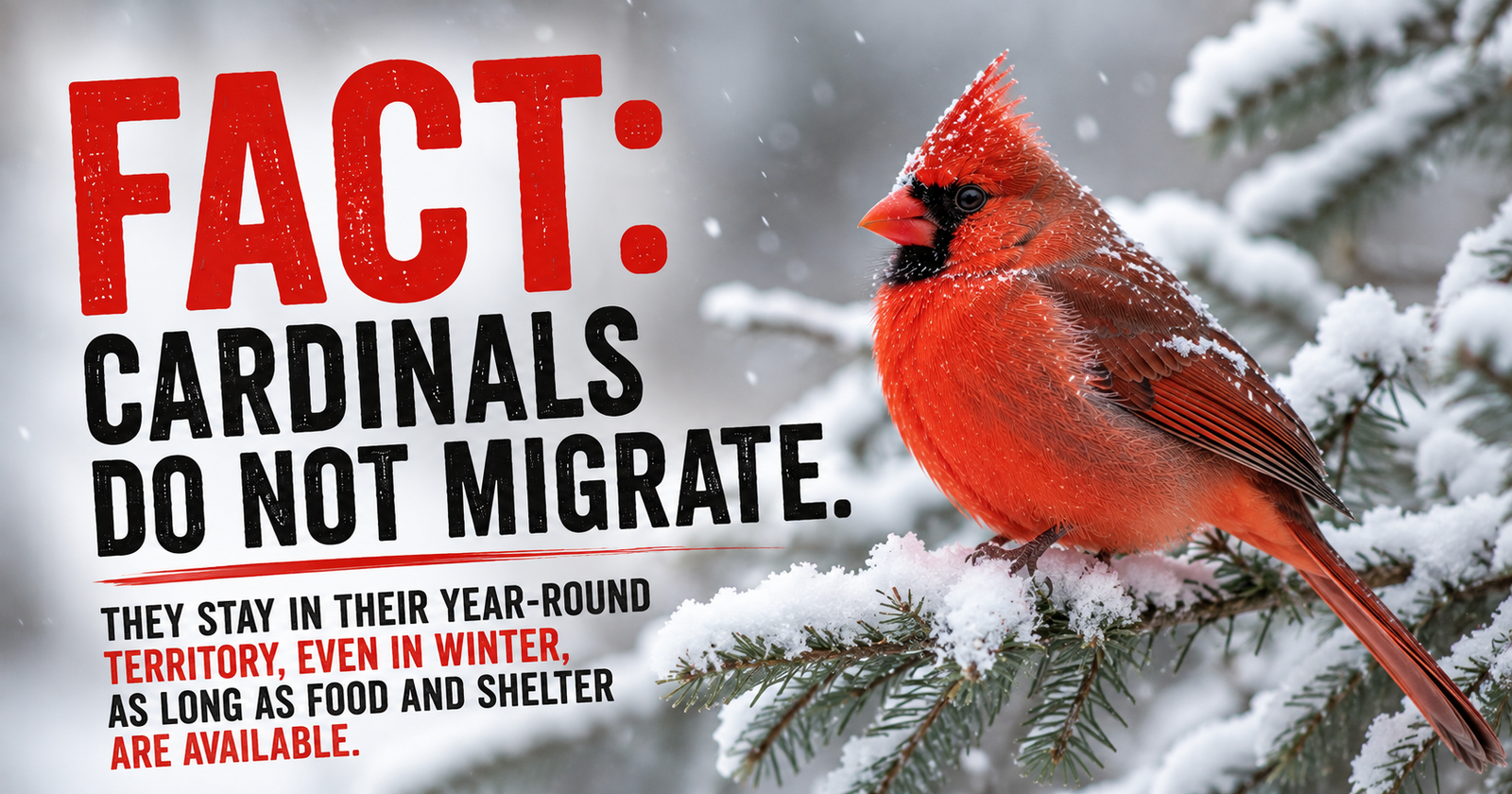
Their ability to use seeds, fruits, feeder foods, and other available resources helps them make it through winter without migrating south in the way many insect-dependent birds do.
You’ll often see winter cardinals spending considerable time near ground level, shrubs, thickets, and feeding areas.
What Do Cardinals Eat in Spring?
Spring changes the menu.
Seeds and fruits don’t suddenly disappear from the diet, but insects become increasingly available as temperatures rise.
At the same time, breeding activity begins increasing the importance of animal prey.
Once nestlings arrive, parents need a steady supply of small invertebrates to feed their rapidly growing young.
This is one reason I wouldn’t treat a perfectly manicured, insect-free yard as ideal cardinal habitat just because there’s a bird feeder hanging in the middle of it.
The feeder supplies one type of resource.
The surrounding habitat supplies many others.
What Do Cardinals Eat in Summer?
Summer can provide cardinals with an enormous variety of natural foods.
Insects are abundant.
Fruits become available.
Plants produce seeds.
Parents may be raising one brood while preparing for another.
Cardinals can raise multiple broods during a breeding season, so summer food requirements involve much more than keeping adult birds fed.
You may watch a male grab food and disappear repeatedly into vegetation.
Later, brown fledglings may begin following him around begging.
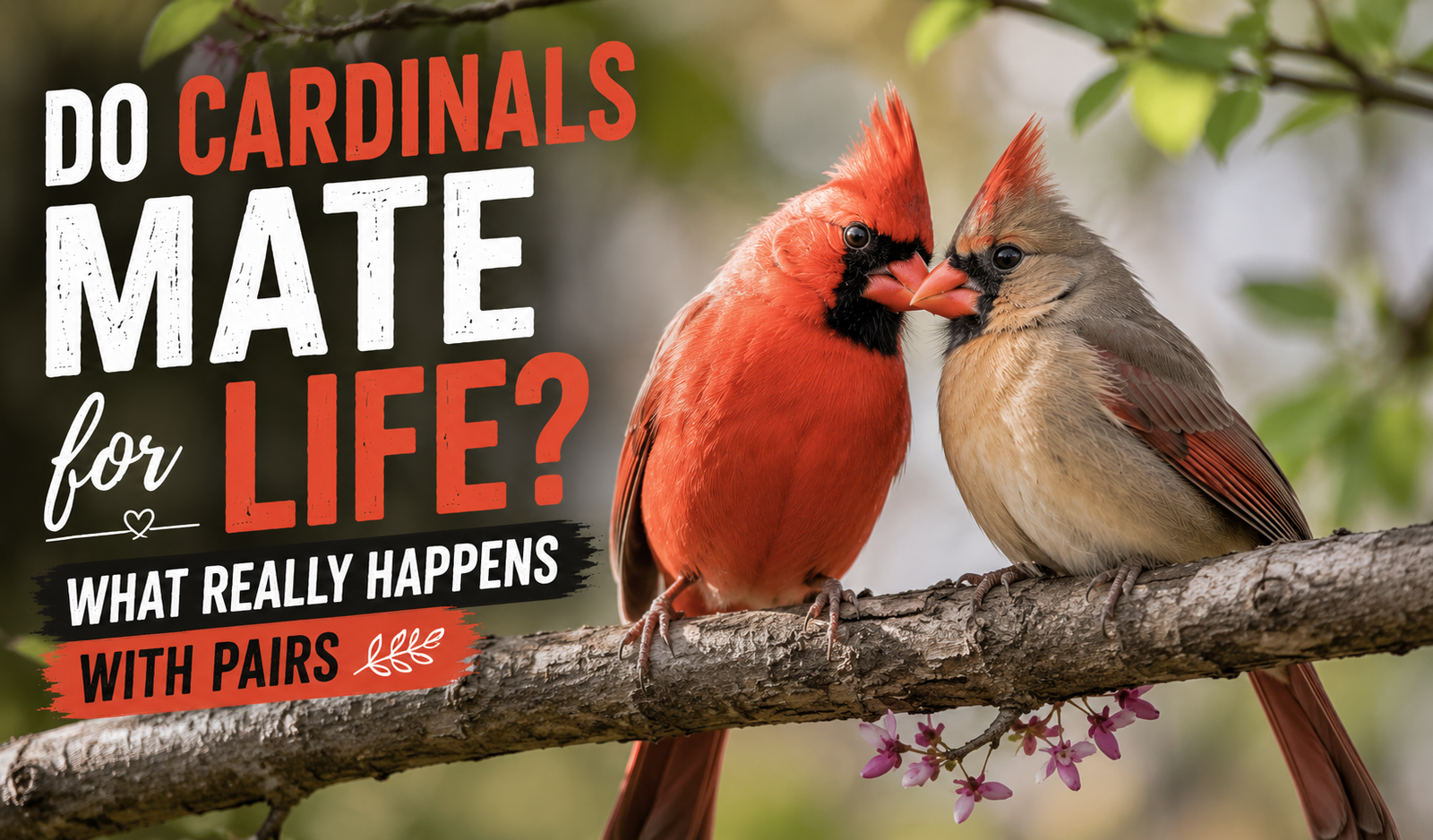
If you’re watching a male and female work together through the breeding season, our guide to how cardinal pair bonds and mating actually work explains courtship feeding, nesting roles, parental care, and why “cardinals mate for life” needs a little qualification.
What Do Cardinals Eat in Fall?
Fall is another period of changing food availability.
Plants are producing seeds and fruits, insect abundance is shifting, and cardinals are moving away from the intense breeding behavior of spring and summer.
Rather than depending on one food source, they continue exploiting what’s available.
That’s one of the big themes I want readers to understand about cardinal diets.
There isn’t one “cardinal food.”
They’re adaptable birds using a varied landscape.
What Should You NOT Feed Cardinals?
This is where some common backyard feeding habits need a little perspective.
I wouldn’t offer cardinals heavily salted foods, highly processed human snack foods, moldy or spoiled food, or anything containing ingredients known to be dangerous to birds.
I also wouldn’t make bread a regular bird food.
A tiny amount of plain bread isn’t the same thing as poison, but it doesn’t provide the kind of nutritional value that quality birdseed and natural foods do.
If we’re going to spend money and effort feeding wild birds, we might as well offer foods that actually make sense for them.
Fresh, appropriate birdseed beats leftover junk food.
Can Cardinals Eat Bread?
Cardinals may eat bread if it’s available, but that doesn’t make bread a good staple food.
Bread provides relatively poor nutrition compared with seeds, fruits, insects, and appropriate feeder foods.
I wouldn’t panic because a cardinal grabbed a tiny crumb from underneath a picnic table.
I also wouldn’t intentionally fill a feeder with bread.
There’s a big difference between can eat and should regularly be fed.
Can Cardinals Eat Rice?
Plain cooked or uncooked rice isn’t the bird-killing hazard suggested by the old wedding myth that uncooked rice swells inside birds and kills them.
Birds naturally consume many dry grains and seeds.
That said, rice still isn’t what I’d buy specifically for Northern Cardinals.
Sunflower and safflower are much more sensible choices if attracting cardinals is the goal.
Can Cardinals Eat Popcorn?
Plain, unsalted popcorn isn’t the first thing I’d choose for cardinals, and flavored popcorn is even less appropriate because of salt, butter, oils, seasonings, and other ingredients.
This is another case where there’s no reason to get creative with human snack foods.
We already know cardinals readily eat foods that are nutritionally appropriate and easy to provide.
Stick with those.
Do Cardinals Drink Water?
Absolutely.
Food gets most of the attention, but cardinals need water for drinking and bathing.
A clean bird bath can add another useful resource to a cardinal-friendly yard.
Keep it clean, relatively shallow, and maintained with fresh water.
During hot weather, water can become especially attractive.
During freezing weather, maintaining accessible liquid water becomes more challenging, which is why heated bird baths and bird-bath heaters will eventually deserve their own careful product coverage on the site.
I don’t want to recommend a heater simply because it gets hot. Electrical safety, construction, thermostat behavior, cleaning, durability, and suitability for outdoor use all matter.
How Often Do Cardinals Eat?
Wild cardinals don’t follow a breakfast-lunch-dinner schedule.
They forage repeatedly throughout daylight hours as energy needs and food availability dictate.
Activity can be especially noticeable early and later in the day.
Breeding changes the workload substantially because adults aren’t only feeding themselves.
Parents may make repeated trips carrying food to nestlings or fledglings.
Weather, season, temperature, food availability, competition, and disturbance all influence what you see at a feeder.
That’s why a feeder can be packed with birds one morning and strangely quiet the next without anything necessarily being wrong.
Why Do Cardinals Throw Seeds Out of the Feeder?
A cardinal may manipulate seeds with its bill while selecting and opening food, and birds in general can knock plenty of material from a feeder.
Some birds also actively sort through mixtures to reach preferred foods.
If you’ve bought a blend containing lots of ingredients your local birds don’t particularly want, you may see a surprising amount tossed aside.
This is another reason higher-quality food can sometimes be more economical than the price tag initially suggests.
A cheap bag isn’t cheap if half of it ends up sprouting underneath the feeder.
Where Should I Put Food for Cardinals?
I want a feeder accessible to the birds without making them feel completely exposed.
Cardinals commonly use shrubs, thickets, and other vegetation for cover.
Having suitable vegetation reasonably nearby gives birds somewhere to retreat.
But feeder placement also needs to consider predators and window safety.
Putting food in a location where a cat can hide inches away isn’t doing the birds a favor.

Windows deserve special consideration too. Cardinals are notorious for territorial reflection behavior, and our guide to stopping cardinals from attacking windows explains that problem separately.
Feeder placement and window-collision prevention are related but aren’t exactly the same issue, so we’ll eventually build a dedicated guide around safer feeder placement.
How Do I Get More Cardinals to My Feeder?
Start with the basics rather than buying ten different accessories.
Offer food cardinals actually want.
Give them enough room to feed comfortably.
Keep the food fresh.
Keep the feeder clean.
Provide water.
Maintain useful vegetation and cover.
Then give them time.
If cardinals already live around your property, creating a predictable feeding location can eventually make them regular visitors.
If the surrounding habitat isn’t suitable for cardinals, however, the world’s most expensive feeder can’t manufacture a local cardinal population.
This is why our upcoming guide to attracting cardinals will go beyond feeder selection and look at the entire yard.
Is It Okay to Feed Cardinals Every Day?
Backyard bird feeding can provide supplemental food when it’s managed responsibly.
The key word is supplemental.
Wild cardinals continue using natural foods and aren’t simply domesticated birds waiting for you to refill their bowl.
If you’re going to maintain feeders, cleanliness matters enormously.
Old seed should be removed.
Wet or moldy food should be discarded.
Feeders should be cleaned appropriately.
The area underneath shouldn’t be allowed to become a permanent pile of decomposing seed and waste.
Feeding birds is supposed to help us enjoy wildlife, not create an unhealthy concentration of spoiled food.
The Cardinal Diet Is Bigger Than the Bird Feeder
If I wanted to make a yard genuinely attractive to Northern Cardinals, I wouldn’t stop after buying sunflower seeds.
I’d think about what the birds use throughout an entire year.
Seeds.
Fruits.
Insects.
Water.
Shrubs.
Protective cover.
Potential nesting habitat.

A feeder can absolutely become the place where you get your best look at a cardinal. It’s convenient, predictable, and lets us bring birds closer to where we can enjoy them. For closer observation at the feeder, a Kiwibit feeder may fit this kind of setup.
But the cardinal flying away from that feeder still has an entire life happening elsewhere in the yard.
It may be collecting insects for nestlings.
It may be eating wild fruit.
It may be disappearing into a dense shrub where its mate is nesting.
Or it may be foraging underneath plants for food you’d never think to put into a feeder.
Understanding that bigger picture makes it much easier to understand what cardinals actually eat.
Common Questions About Feeding Cardinals
What is the best food to attract cardinals?
Black oil sunflower seed is one of the best starting choices for attracting Northern Cardinals to a feeder. Safflower and sunflower hearts are also excellent options.
What birdseed attracts cardinals the fastest?
There’s no seed that guarantees a cardinal will immediately discover a feeder, but sunflower seed is one of the most dependable choices when cardinals already live nearby.
Do cardinals prefer sunflower or safflower?
Cardinals readily eat both. I wouldn’t worry about choosing a universal winner. Sunflower is an excellent general-purpose bird food, while safflower can be useful as another cardinal-friendly option or as part of a quality mixture.
What fruit do cardinals like?
Northern Cardinals consume a variety of wild fruits and berries rather than depending on one specific fruit. Locally appropriate fruiting plants can provide natural food while also improving backyard habitat.
Do cardinals eat worms?
Cardinals primarily take insects and other invertebrates rather than behaving like the classic earthworm-hunting American Robin. They can consume various small animal foods when available, but insects such as beetles, caterpillars, and grasshoppers are more characteristic examples.
Do cardinals eat mosquitoes?
Cardinals consume insects, but I wouldn’t advertise them as mosquito-control machines. Their insect diet is diverse, and there’s no reason to expect a pair of cardinals to noticeably solve a mosquito problem around a property.
Do cardinals eat ticks?
Cardinals may encounter and consume various small invertebrates while foraging, but I wouldn’t attract cardinals with the expectation that they’ll provide meaningful tick control. Claims about wildlife eliminating pest populations are often much stronger than the evidence supports.
Do cardinals eat from feeders all year?
They can visit feeders throughout the year. Northern Cardinals are generally year-round residents, so the birds you enjoy at a summer feeder aren’t a species that normally disappears south for winter.
Seasonal changes in natural food, breeding, weather, flocking, and other factors can still cause feeder activity to rise or fall.
What can I put out for cardinals besides birdseed?
Clean water and a yard containing suitable natural vegetation can be just as valuable as experimenting with more feeder foods.
Native fruiting plants can provide food, while vegetation supports insects and supplies cover.
What is the easiest cardinal food to start with?
If you’re standing in a store wondering what to buy, I’d keep it simple:
Start with good-quality black oil sunflower seed and a feeder large enough for a cardinal to use comfortably.
Then watch what happens.
You can always experiment with safflower, sunflower hearts, other foods, water sources, and additional feeders later.
You don’t need an elaborate backyard bird station on day one.
Get the fundamentals right first, and let the birds tell you what they’re actually using.
Caleb Hartwell is the Bird Identification & Behavior Contributor for BirdResource.com, where he helps everyday birdwatchers understand what backyard birds eat, how they behave, and what actually helps attract them without turning simple bird feeding into something unnecessarily complicated.