
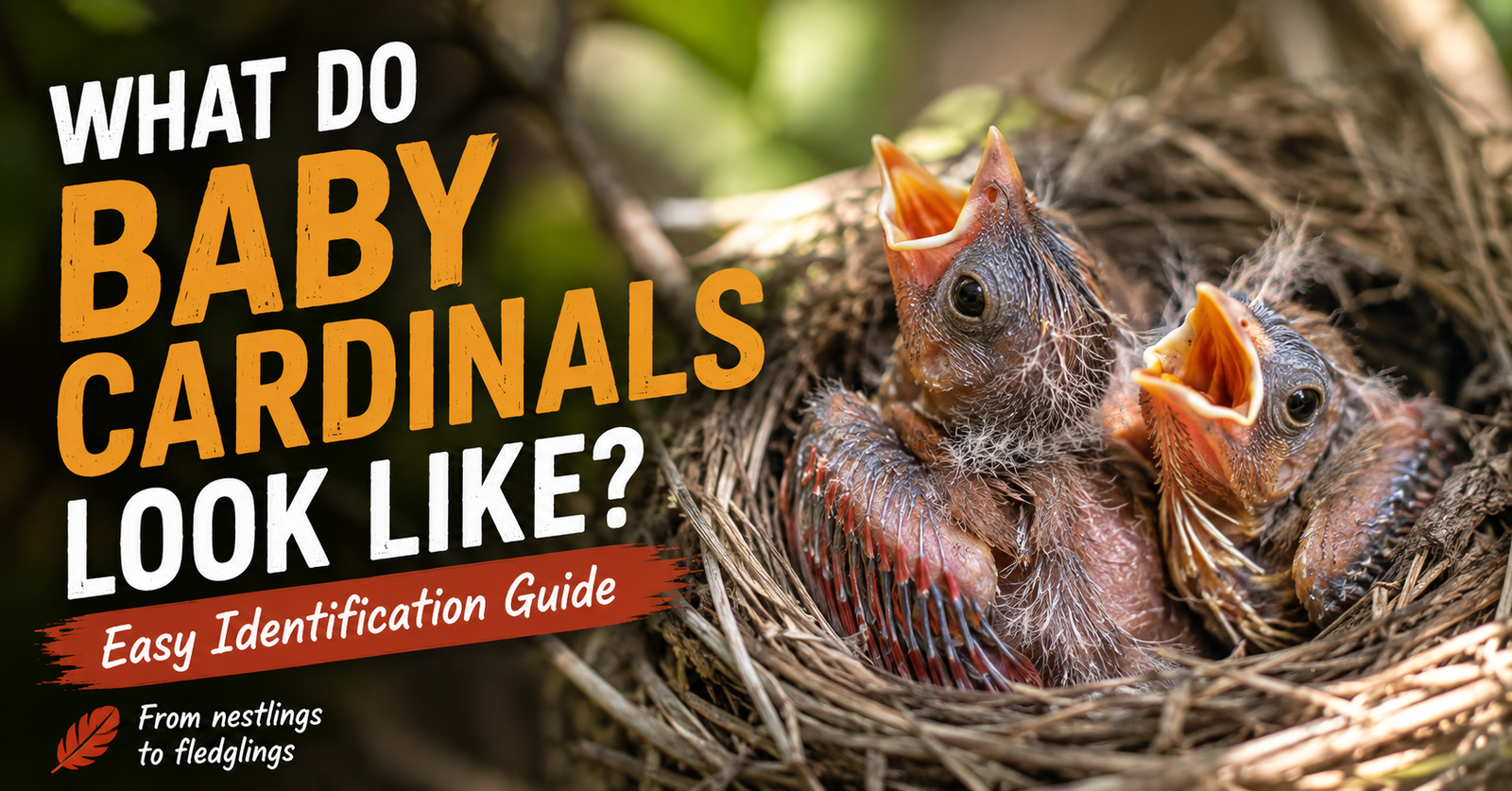
Baby cardinals don’t start out looking anything like the brilliant red Northern Cardinal most of us picture. Newly hatched cardinals are tiny, mostly naked, helpless birds with closed eyes and only sparse tufts of down. As they grow, they develop brownish feathers, a crest, a longer tail, and the familiar cardinal body shape. Those vulnerable early stages help explain why how long cardinals survive can vary so widely in the wild.
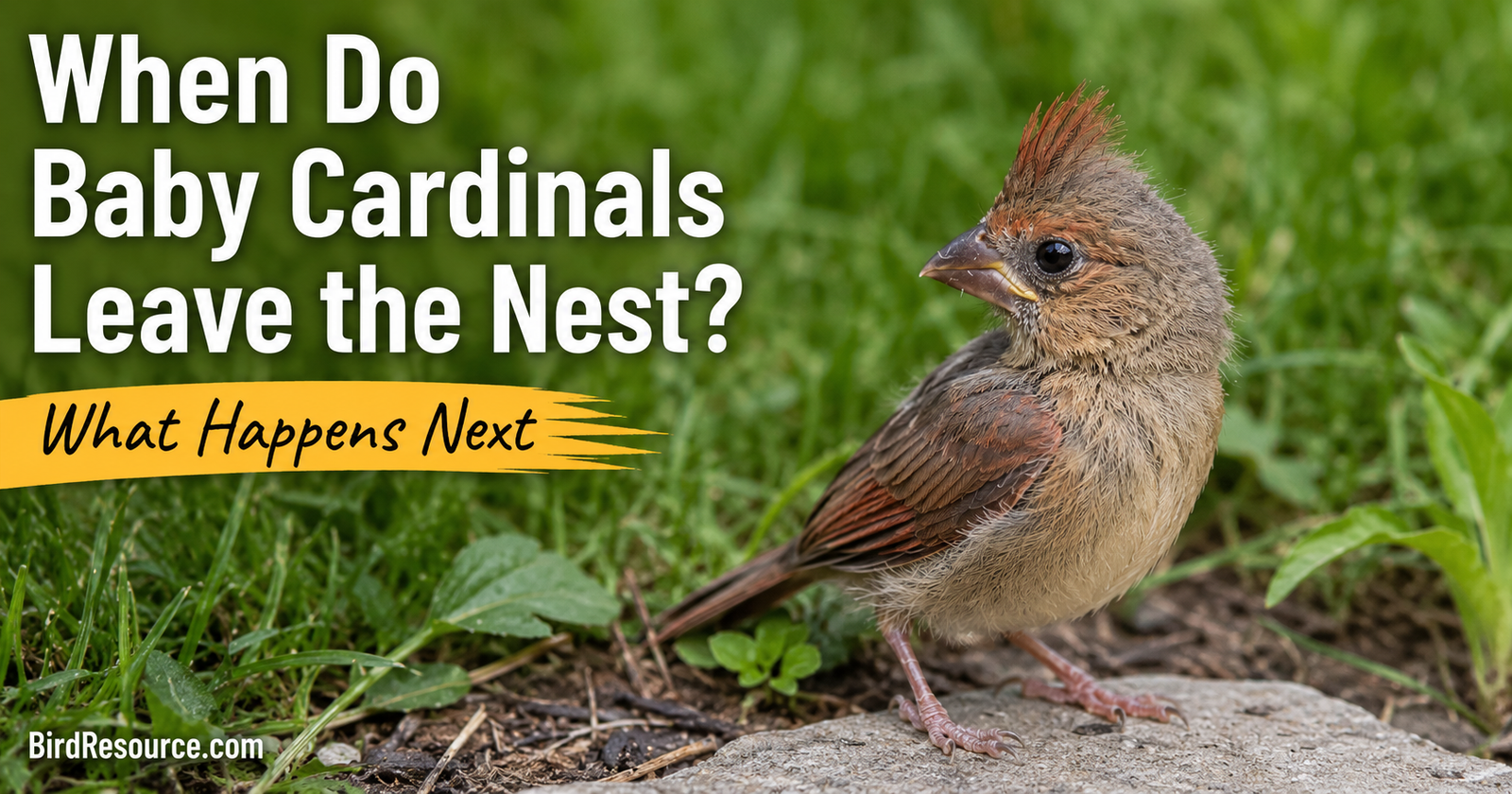
Once a young cardinal leaves the nest, one of the best identification clues is its dark gray or blackish bill. Adult Northern Cardinals have reddish-orange bills, while young cardinals initially have much darker bills.
That’s the clue I would look for first if I were trying to decide whether a brown cardinal-looking bird was a youngster or an adult female.
Young cardinals can be confusing because their appearance changes quickly. A hatchling, a feathered fledgling sitting in a shrub, and an immature male beginning to develop red plumage can look so different that someone unfamiliar with the stages might assume they’re three different birds. You can find more help with young birds and nesting questions in our Nests & Baby Birds guides.
If you already know what an adult looks like, our Northern Cardinal guide gives you a useful adult reference. Here, we’re going to stay focused on the youngsters and the changes that happen between hatching and adult plumage.
Baby Cardinal Identification at a Glance
| Life Stage | What It Generally Looks Like | Helpful Identification Clue |
|---|---|---|
| Hatchling | Nearly naked with sparse down and closed eyes | Extremely undeveloped and completely dependent on its parents |
| Nestling | Growing feathers but not yet fully feathered | Usually still confined to the nest and dependent on its parents |
| Fledgling | Mostly feathered, brownish, and somewhat scruffy | Dark bill, developing crest, and a tail that may still look short |
| Juvenile | Increasingly adult-shaped but still covered in immature brownish plumage | Dark bill and an overall appearance somewhat similar to an adult female |
| Immature Male | Brown juvenile plumage mixed with increasing amounts of red | Patchy red feathers appear as adult male plumage develops |
| Immature Female | Brown and increasingly similar to an adult female | Warm brown adult-like plumage develops as the bill changes toward reddish orange |
The boundaries between everyday terms such as “baby,” “fledgling,” “juvenile,” and “immature” can become confusing. For someone looking out the kitchen window, though, the most important question is usually much simpler:
Is this a young cardinal or an adult bird?
The bill can often answer that surprisingly quickly.


What Does a Newly Hatched Cardinal Look Like?
A Northern Cardinal right after hatching is almost unrecognizable compared with its parents.
The hatchling is tiny, largely naked, and helpless. Its eyes are closed, and only sparse tufts of grayish down cover parts of the body.
At this stage, it cannot fly, find its own food, or regulate everything it needs without parental care.
This type of development is called altricial. Cardinals, like many songbirds, hatch in an extremely dependent condition and undergo rapid development inside the nest.
If you’re imagining a miniature red cardinal with a tiny crest, that’s definitely not what comes out of the egg.
The recognizable cardinal appearance develops later.
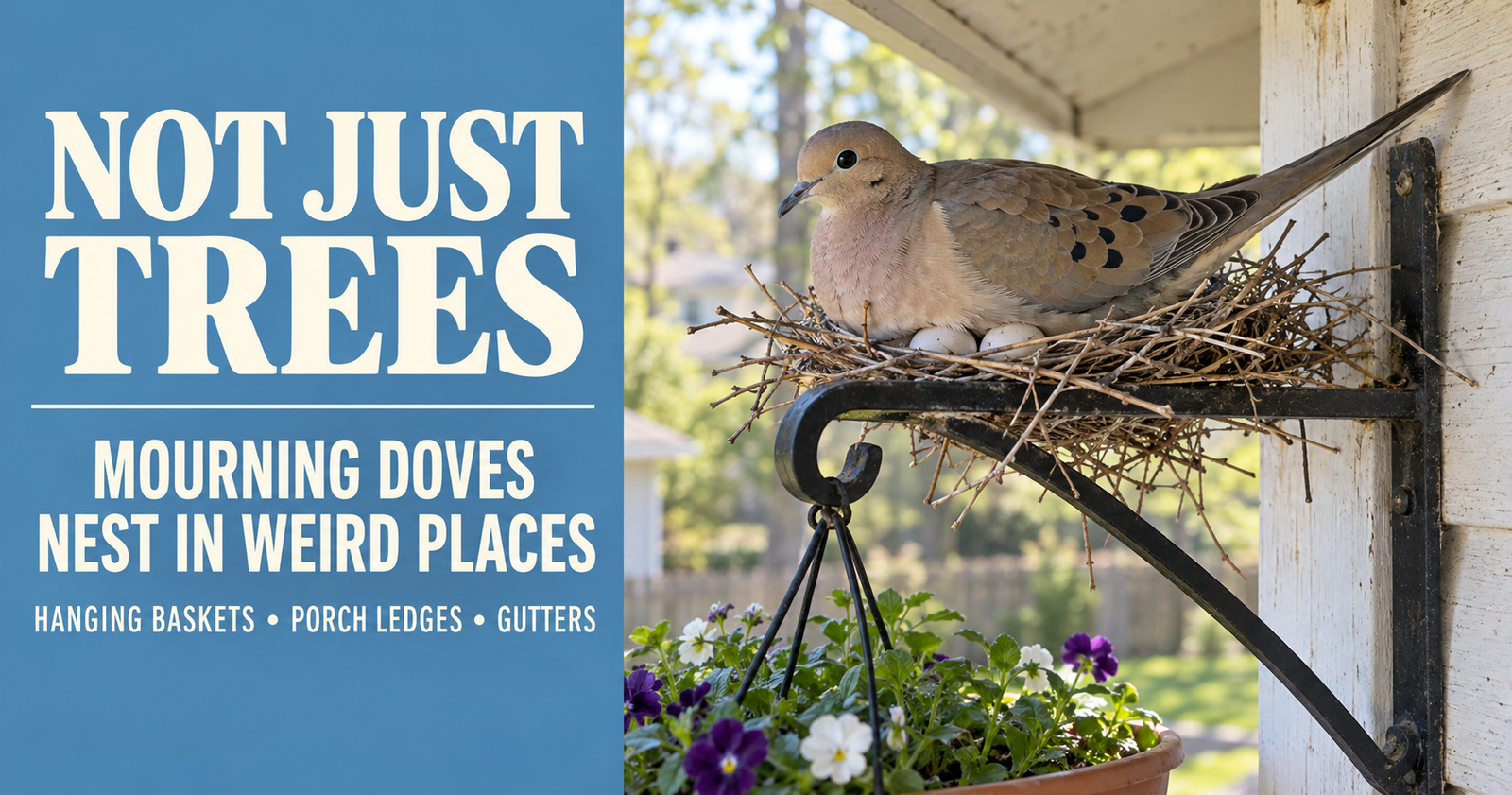
What Does a Cardinal Nestling Look Like?
As the days pass, the young cardinal begins changing rapidly.
Its eyes open. Feathers begin developing. The body becomes more covered, and the youngster gradually starts looking more like a bird instead of a nearly naked hatchling.
Growing feathers can initially appear as pin feathers before opening into more recognizable plumage.
The nest can also begin looking increasingly crowded as several nestlings grow rapidly in a relatively small space.
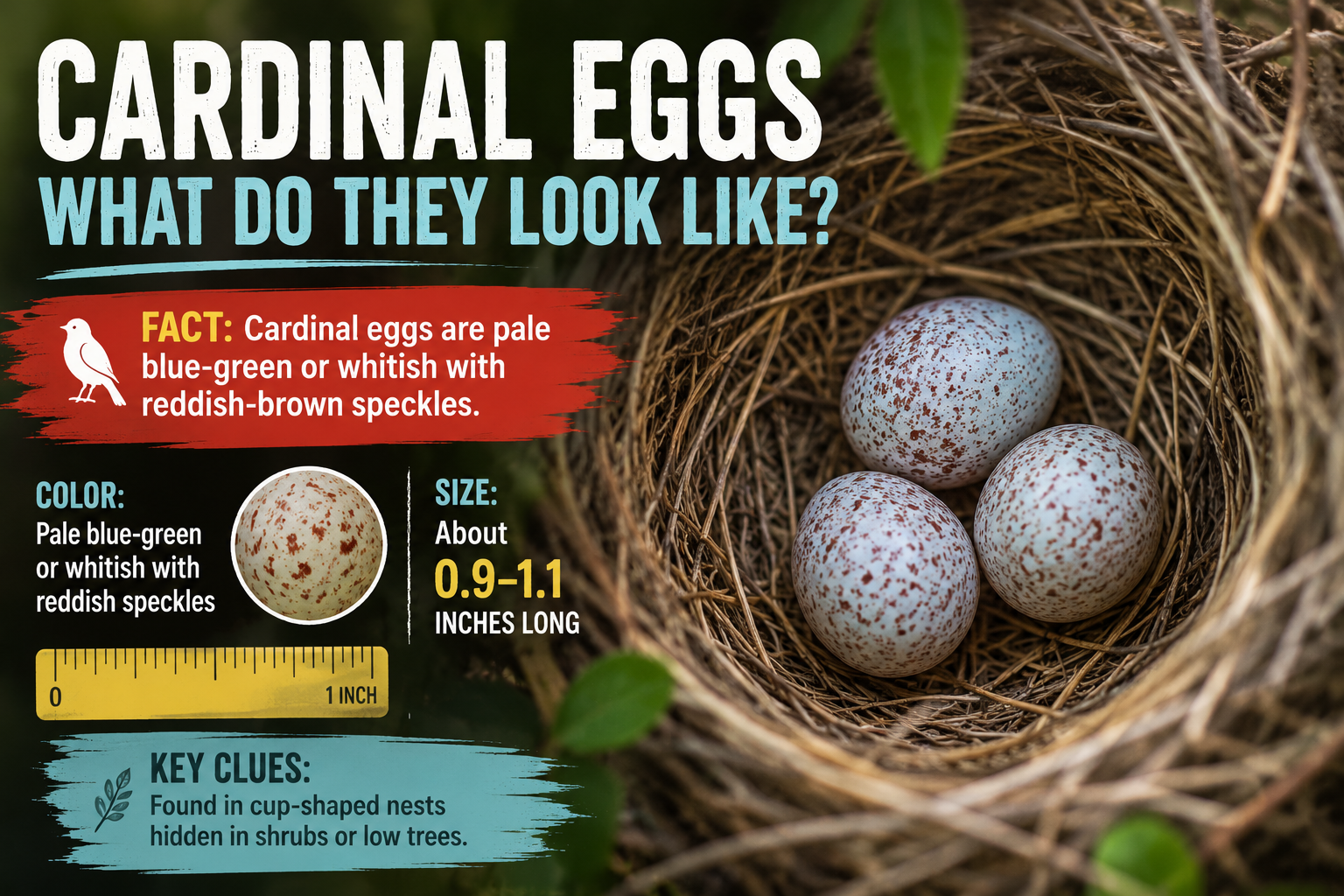
Northern Cardinal nestlings don’t remain in the nest for very long. The nestling period is generally around 7 to 13 days, which means an enormous amount of development happens in less than two weeks. Before the nestling stage, Northern Cardinal egg clues can help explain what observers may find in an active nest.
That’s one reason a nest can seem to go from tiny helpless hatchlings to nearly full-sized young birds surprisingly fast.
What Does a Cardinal Fledgling Look Like?
This is the stage most likely to confuse someone who discovers a “baby cardinal” in the yard.
A fledgling has left the nest but is still young and dependent on its parents.
It is mostly feathered and can look remarkably close to adult size, but its appearance is less polished than an adult’s. The plumage is generally brownish and subdued, the tail may look relatively short or unfinished, and the crest may not look as impressive as it will later.
Most importantly, look at the bill.
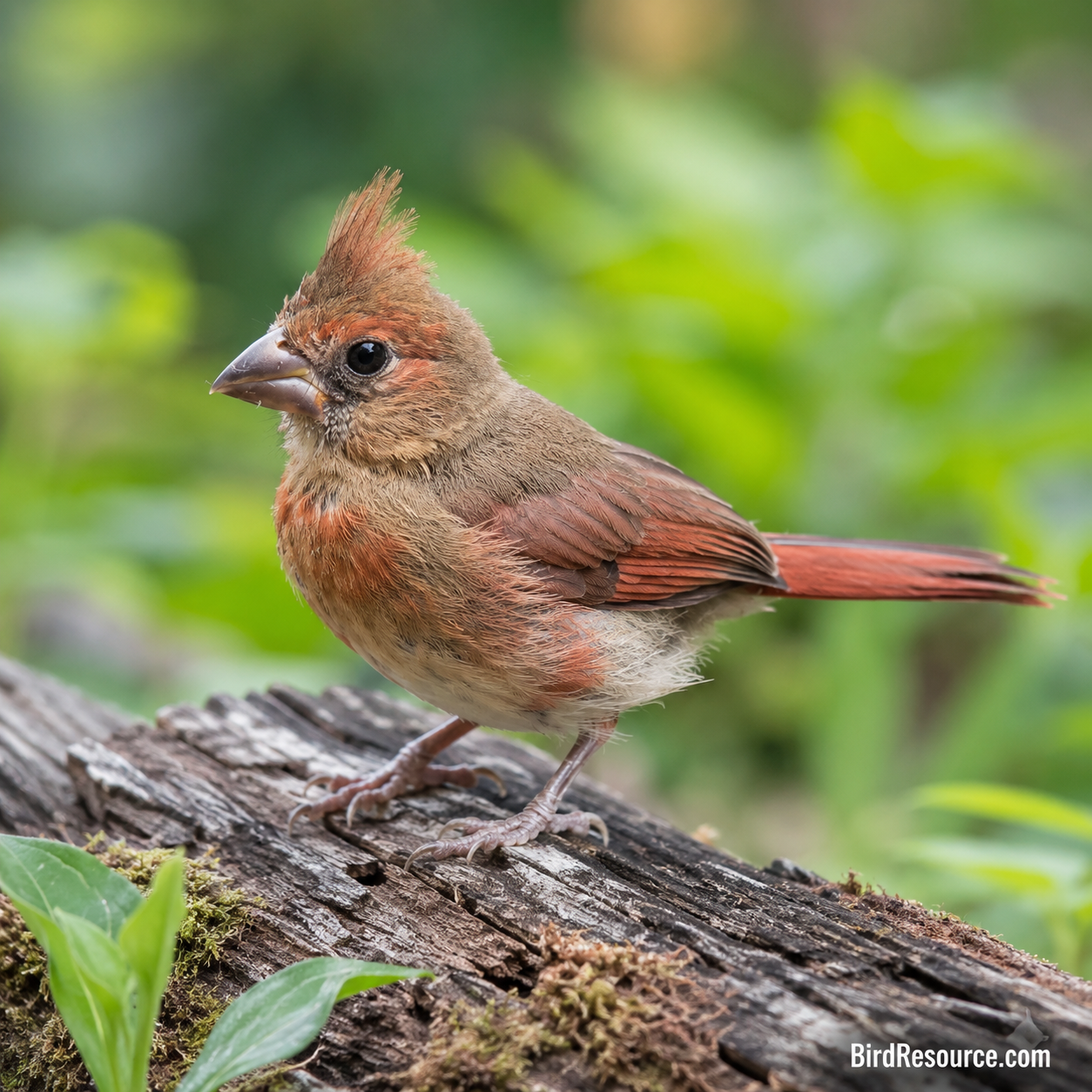
A young Northern Cardinal has a dark grayish to black bill.
Adult males and females have reddish-orange bills.
That dark bill can turn a questionable brown bird into a much easier identification.
If the bird has the general shape of a cardinal, brownish immature plumage, a developing crest, and a dark bill, a young Northern Cardinal becomes a strong possibility.
Baby Cardinals Are Not Tiny Versions of Adult Cardinals
This misconception causes a lot of baby bird identification problems.
People often expect a baby bird outside the nest to be dramatically smaller than its parents.
Songbird fledglings can already be surprisingly close to adult body size by the time they leave the nest.
That means you shouldn’t dismiss a bird as an adult just because it looks “too big to be a baby.”
A recently fledged cardinal can be nearly adult-sized while still depending on its parents for food.
Instead of judging age by body size alone, look at plumage, bill color, tail development, behavior, and whether adult cardinals are interacting with it.
Those clues tell you much more.
The Dark Bill Is One of the Best Clues
If there’s one baby cardinal identification feature worth remembering, I’d make it the bill.
Adult Northern Cardinals have reddish-orange bills.
Young Northern Cardinals initially have dark bills that can appear gray, charcoal, or nearly black.
That’s especially useful because juvenile cardinals often resemble adult females.
Imagine looking at two brownish cardinals.
One has a bright reddish-orange bill.
The other has a dark gray-black bill.
The first may be an adult female. The second deserves a much closer look as a juvenile.
Bill coloration changes as the young bird matures, so it isn’t a permanent juvenile feature. But while it’s present, it’s extremely useful.

Baby Cardinal vs Female Cardinal
This is probably the comparison that causes the most confusion.
An adult female Northern Cardinal is predominantly warm brown or buff, with reddish coloration particularly noticeable in her crest, wings, and tail.
A juvenile cardinal is also generally brownish.
At a quick glance, they can look remarkably similar.
The easiest distinction is often the bill.
Adult Female Cardinal
An adult female has a reddish-orange bill.
She also tends to have a more finished adult appearance, including a developed crest, longer adult tail, and established reddish accents.
Juvenile Cardinal
A juvenile has a dark gray to blackish bill initially.
Its plumage can look less polished, the crest may be less developed, and the overall appearance may seem somewhat scruffy compared with an adult.
If you’re comparing the sexes rather than ages, the distinction becomes different. Adult males are predominantly bright red while adult females remain mostly warm brown.
The young birds are what complicate that otherwise easy comparison.
What Does a Baby Male Cardinal Look Like?
A young male doesn’t leave the nest looking like a miniature version of his brilliant red father.
He begins with the same generally subdued juvenile appearance expected of young Northern Cardinals.
As he matures and molts toward adult plumage, red feathers increasingly appear.
This can create one of the strangest-looking cardinals you’ll see around a backyard.
An immature male may look brown in some areas, red in others, and generally patchy while his plumage is changing.
That’s normal.
He isn’t necessarily sick, a strange cardinal hybrid, or a female somehow turning male.
You’re watching the transition toward adult male plumage.
Eventually, the familiar predominantly red adult appearance takes over.

What Does a Baby Female Cardinal Look Like?
A young female also begins with juvenile plumage rather than immediately looking exactly like a mature female.
As she develops, her appearance moves toward the familiar warm brown adult female coloration with reddish accents in the wings, tail, and crest.
Because both juvenile sexes initially have subdued coloration, determining the sex of a very young cardinal isn’t always as simple as identifying an adult.
Later plumage development makes the distinction increasingly apparent, especially as immature males acquire more red.
This is a good example of why I don’t like forcing a bird identification beyond what the visible evidence actually supports.
Sometimes “juvenile Northern Cardinal” is the confident identification you can make from a photograph even when the sex isn’t yet obvious.
Why Does a Young Male Cardinal Look Patchy?
Molting.
As an immature male transitions toward his adult appearance, old juvenile feathers are replaced and the developing red plumage becomes increasingly visible.
That process doesn’t necessarily create a perfectly smooth transformation.
For a while, the bird can look mottled or patchy.
Someone expecting every male cardinal to be solid red can understandably wonder what’s wrong with it.
Usually, nothing is wrong.
Age and molt explain the unusual appearance.
This becomes especially relevant later in summer when young cardinals from earlier nesting attempts are maturing.
Do Baby Cardinals Have Crests?
Young cardinals develop the characteristic cardinal crest, but it may not initially have the dramatic pointed appearance of a mature adult.
A fledgling can look somewhat round-headed or have a short, scruffy-looking crest while its feathers continue developing.
Even adult cardinal crests can be misleading because cardinals raise and lower them.
A relaxed adult can flatten its crest substantially, while an alert bird can make the crest look extremely prominent.
So I wouldn’t use crest size by itself to determine whether a cardinal is young.
Look for the combination of the developing crest, dark bill, immature plumage, tail, and behavior.
What Color Are Baby Cardinals?
The answer depends heavily on age.
A newly hatched cardinal has exposed skin and sparse down rather than the full brown or red plumage we associate with older birds.
As feathers develop, young cardinals become generally brownish or grayish-brown.
They don’t begin life bright red.
Even young males need time to acquire the brilliant red adult plumage.
That makes brown a completely normal color for a young Northern Cardinal.
The color becomes especially useful when paired with the dark juvenile bill.
Do Baby Cardinals Have Orange Beaks?
Not initially.
Young Northern Cardinals begin with dark bills.
The familiar reddish-orange adult bill develops as the bird matures.

This is one of those wonderfully practical identification clues because the bill sits right in the middle of the bird’s face and is often visible in a decent photograph. A feeder camera such as the Kiwibit feeder camera may help you capture close-up images of details like bill color.
If someone sends me a picture of what appears to be a brown cardinal and asks whether it’s a baby or adult female, the bill is one of the first places I’d look.
How Long Do Baby Cardinals Stay in the Nest?
Northern Cardinal nestlings generally remain in the nest for about 7 to 13 days after hatching.
That’s not very long.
It also explains why fledglings can seem surprisingly undeveloped when they first appear outside the nest.
Leaving the nest doesn’t mean the bird has suddenly become independent.
The parents continue caring for fledglings after they leave.
This is extremely important for anyone who discovers a young cardinal on the ground.
Why Is a Baby Cardinal on the Ground?
A feathered young cardinal on the ground may be a perfectly normal fledgling.
Fledglings have left the nest but are still learning to fly effectively, navigate vegetation, find food, and avoid danger.
During this period, they may spend time on the ground or low in shrubs.
Their parents can continue bringing them food even though they’re no longer sitting in the nest.
That’s why “baby bird on the ground” doesn’t automatically mean “abandoned bird.”
The bird’s developmental stage matters enormously.
Is the Baby Cardinal Abandoned?
Usually, you can’t determine that simply because you don’t immediately see a parent.
Adult birds don’t necessarily remain directly beside a fledgling every second.
A parent may be gathering food, caring for another youngster, responding to your presence, or waiting nearby until you leave.
If you’re standing close to the fledgling watching for its parents, you may actually be the reason the adults aren’t approaching.
A fully feathered, alert fledgling that can perch or hop is very different from a naked or sparsely feathered nestling that has somehow ended up outside its nest.
Knowing that distinction can prevent well-meaning people from accidentally removing healthy young birds from their parents.
Fledgling vs Nestling Cardinal
This is one distinction every backyard birdwatcher should understand.
A Nestling Cardinal
A nestling is still in the stage when it belongs in the nest.
It may have exposed skin, developing pin feathers, incomplete feather coverage, and limited ability to move or perch normally.
A Fledgling Cardinal
A fledgling has reached the stage when leaving the nest is part of normal development.
It is substantially feathered, can move around outside the nest, and may hop, perch, flutter, or make short awkward flights while its abilities improve.
The fledgling still needs its parents.
It just doesn’t need to remain inside the nest.
That difference matters far more than whether we casually call both birds “babies.”
What Should I Do If I Find a Baby Cardinal?
First, figure out whether you’re looking at a fledgling or a younger nestling.
If it’s a healthy, fully feathered fledgling, the best response is usually to give it space and allow its parents to continue caring for it.
Keep pets and children away.
If the bird is in an immediately dangerous location, such as directly in a roadway, professional wildlife guidance can help determine whether a very short move to nearby cover is appropriate.
A naked or sparsely feathered nestling outside its nest is a different situation.
If you can clearly identify the original nest and safely return the nestling without disturbing other birds or putting yourself at risk, wildlife rehabilitation guidance commonly supports returning an uninjured nestling to its nest.
If the bird appears injured, has been caught by a cat, the nest can’t be located, or you’re uncertain what to do, contact a licensed wildlife rehabilitator. For the site's limits on individual wildlife assistance, see Bird Resource's wildlife assistance guidance.
Don’t attempt to turn a wild baby cardinal into a pet.
Will the Parents Come Back If I Touch a Baby Cardinal?
The old claim that parent birds automatically abandon their babies because a human touched them isn’t generally true.
That doesn’t mean handling a young bird unnecessarily is a good idea.
It means smell isn’t a reason to leave a displaced nestling in danger when appropriate wildlife guidance indicates it should be returned to its nest.
Handling should still be minimized.
Wild young birds are fragile, easily stressed, and best cared for by their parents whenever possible.
The goal isn’t to interact with the baby.
The goal is to keep a healthy family together.
What Do Baby Cardinals Eat?
Young cardinals need considerably more than birdseed.

Adult Northern Cardinals eat plenty of seeds and fruits, but they also consume insects and other invertebrates. The complete guide to the cardinal diet explains how these food sources vary between adults and growing young.
Nestlings are fed predominantly insects.
That protein-rich food supports their extremely rapid growth during the short period between hatching and fledging.
Parents may bring caterpillars, beetles, and various other small invertebrates to their young.
This is another reason people shouldn’t try feeding a baby cardinal based on what they see adult cardinals eating at a backyard feeder.
A sunflower seed feeder is not a substitute for parental care.
We’ll eventually give what baby cardinals eat its own article because feeding biology and what to do with an apparently orphaned bird deserve careful treatment rather than a few rushed paragraphs.
Do Both Cardinal Parents Feed the Babies?
Yes.
Both parents participate in feeding their young.
The female handles incubation of the eggs, but after hatching, both male and female Northern Cardinals bring food to the nestlings.
Parental care continues after fledging.
You may see an adult cardinal followed by a brown youngster fluttering its wings, crouching, calling, or otherwise begging for food.
That interaction can actually be one of your best clues that the strange-looking brown bird is a juvenile.
The youngster may already look nearly as large as its parent and still expect dinner to be delivered directly into its mouth.
Why Is an Adult Cardinal Feeding Another Full-Sized Cardinal?
You may be looking at a parent feeding a fledgling.
This can be confusing because young songbirds are often close to adult size by the time they’re moving around outside the nest.
The youngster’s behavior gives it away.
A fledgling may beg conspicuously when an adult approaches. The adult then places food directly into its bill.
Look at the young bird’s bill too.
If it’s dark rather than reddish orange, that provides another strong age clue.
Don’t automatically interpret every bill-to-bill feeding interaction as courtship between an adult male and female.
Age matters.
Where Do Baby Cardinals Go After Leaving the Nest?

Fledgling cardinals generally remain within habitat where their parents can continue finding and feeding them. A yard with suitable food and cover can help provide that setting; learn more about keeping cardinals coming back.
Dense shrubs and vegetation provide valuable cover.
Young birds aren’t expert flyers the instant they leave the nest, so protected low vegetation gives them places to perch, hide, and develop their skills.
You may hear youngsters before you see them.
Begging calls can reveal a fledgling concealed inside vegetation while a parent moves back and forth bringing food.
This is another reason I wouldn’t immediately start trimming dense shrubs after discovering that cardinals have nested nearby.

The nest may be empty while the young are still using the surrounding vegetation. The surrounding vegetation matters because cardinals typically nest in protected, open sites rather than enclosed boxes, as explained in where cardinals place their nests.
Can Baby Cardinals Fly When They Leave the Nest?
Their flying ability is still developing.
A newly fledged songbird isn’t necessarily capable of the strong, controlled flight of an adult.
Young cardinals may flutter, make short flights, hop through vegetation, or end up in locations that look awkward to us.
That’s part of fledgling life.
The bird continues developing coordination, strength, and survival skills outside the nest while its parents provide care.
So seeing a feathered young cardinal that “can’t fly very well” doesn’t automatically mean its wing is injured.
Look for other signs of injury and consider the bird’s age and behavior.
How Can I Tell If a Baby Cardinal Is Injured?
Normal fledgling awkwardness can look alarming, so I would look for something beyond simply being on the ground or flying poorly.
Warning signs can include obvious bleeding, a visibly injured or badly drooping wing, inability to stand, severe lethargy, abnormal breathing, or other clear signs of trauma.
Any young bird that has been caught by a cat deserves special concern even when you can’t immediately see an injury. Cat bites and scratches can cause serious problems that aren’t obvious from the outside.
When an injury is suspected, contact a licensed wildlife rehabilitator rather than attempting home treatment.
BirdResource.com can help you understand what you’re looking at, but an online article can’t diagnose an individual wild bird. Our BirdResource.com's informational limitations explain why online bird information should not replace individualized professional guidance.
How Long Do Cardinal Parents Care for Fledglings?
Leaving the nest isn’t the end of parental care.
Adults continue feeding and supervising their young while the fledglings become increasingly capable of finding their own food and navigating their surroundings.
Cardinals can also raise more than one brood during a breeding season.
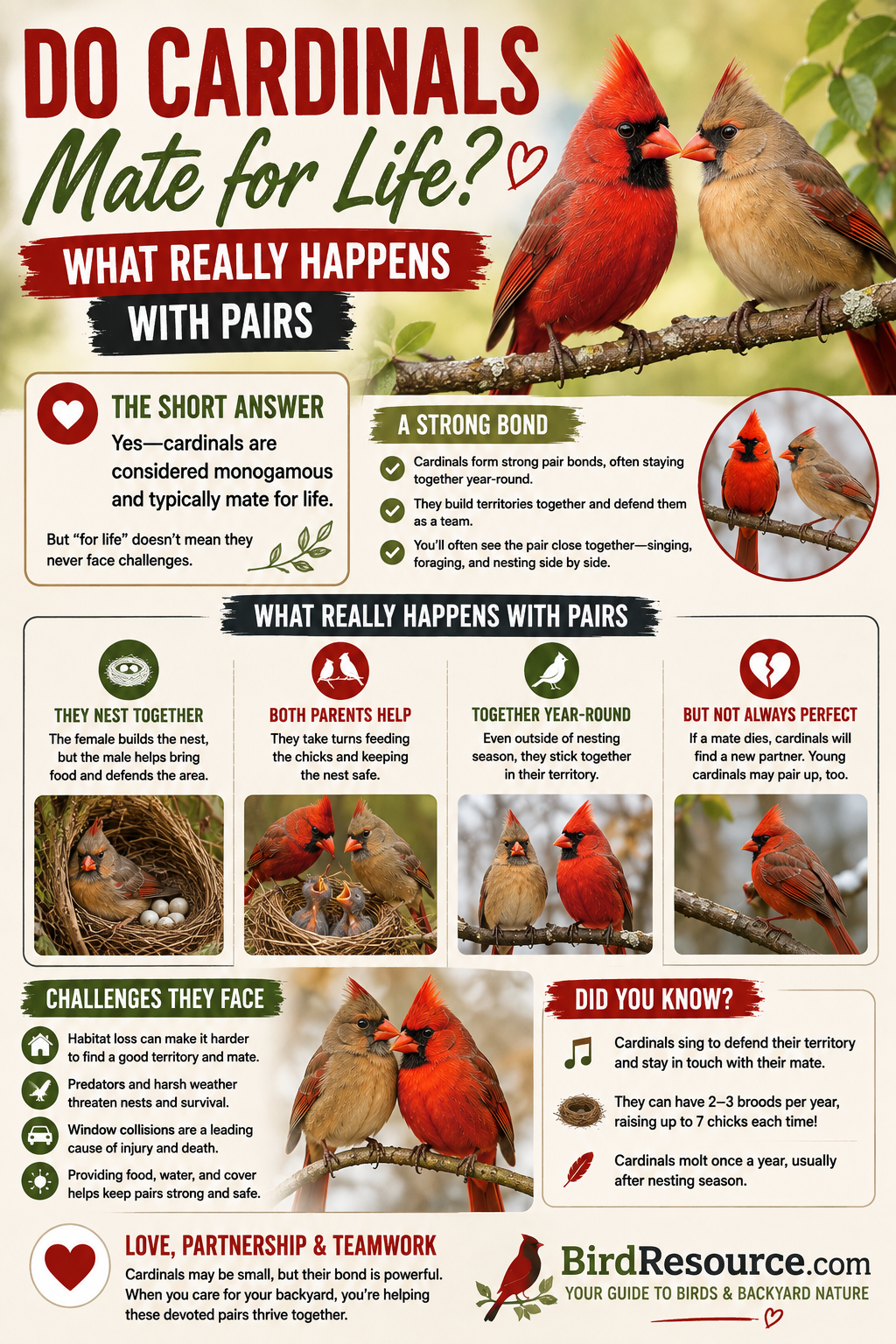
That can create an interesting division of family responsibilities. A male may continue caring for fledglings from one nesting attempt while the female begins another nesting cycle. That division of care connects with the broader way A male may continue caring for fledglings within a cardinal pair.
If you see an adult male repeatedly feeding a brown juvenile, you’re getting a glimpse of a normal part of cardinal family life that happens after the nest itself has become empty.
When Do Baby Male Cardinals Turn Red?
Young males gradually acquire their adult red plumage as they mature and molt.
It isn’t an overnight transformation.
For a period, an immature male may show a mixture of brown juvenile plumage and emerging red feathers.
Those patchy young males are some of the easiest cardinals to misinterpret.
People sometimes wonder whether they’re seeing a sick cardinal, an unusual female, or some different type of red-and-brown bird.
Look at the overall cardinal shape and the stage of bill and plumage development.
If the bird is an immature male, the increasingly red plumage eventually makes its sex much more obvious.
Can You Tell Whether a Baby Cardinal Is Male or Female?
Sometimes you can make a reasonable identification as the bird matures, especially once male plumage begins developing.
Very young juveniles are more difficult.
Both sexes initially have a generally brownish juvenile appearance, so I wouldn’t confidently label every recently fledged cardinal male or female based on a tiny color difference in a questionable photograph.
As young males begin acquiring obvious red plumage, the distinction becomes much easier.
Females mature toward the predominantly warm brown adult female appearance with reddish highlights.
Age first, sex second is often the better way to approach a very young cardinal.
Baby Cardinal vs Baby Robin
These birds can occur in the same yards, but a well-feathered fledgling usually gives you several useful differences.
A juvenile American Robin has a spotted or mottled breast that looks quite different from the relatively plain brownish appearance of a young cardinal.
The robin also lacks the cardinal’s distinctive heavy conical bill and developing crest.
Body shape differs too.
Once you’ve seen a few juveniles, the combination of shape and markings makes this comparison considerably easier.
This is exactly why I prefer using multiple identification clues rather than asking only, “What color is it?”
Baby Cardinal vs Sparrow
A young cardinal’s subdued brown coloration can initially make someone think “sparrow.”
Look at structure.
Northern Cardinals are larger and have a substantial, thick bill, relatively long tail, and the beginnings of that recognizable crested head shape.
Many sparrows also have patterned backs, heads, or breasts that don’t match a juvenile cardinal.
The dark juvenile cardinal bill can cause confusion because people expect every cardinal to have an orange-red bill. Once you know that young cardinals start with dark bills, the overall structure makes much more sense.
Baby Cardinal vs Adult Female Cardinal
If I had to reduce this entire comparison to one practical field mark, it would be this:
Check the bill.
An adult female Northern Cardinal has a reddish-orange bill.
A juvenile has a grayish or blackish bill initially.
Then confirm what you’re seeing with the rest of the bird.
Does it look scruffier or less finished than an adult?
Is the crest still developing?
Does the tail appear shorter?
Is an adult cardinal feeding it?
Is it begging?
Are you seeing it during or shortly after the local breeding season?
No single clue has to carry the entire identification when several clues all point in the same direction.
Why Baby Cardinals Are Easy to Overlook
Adult male cardinals practically advertise themselves.
Juveniles don’t.
Their brownish coloration can blend beautifully with branches, leaf litter, shrubs, and other vegetation.
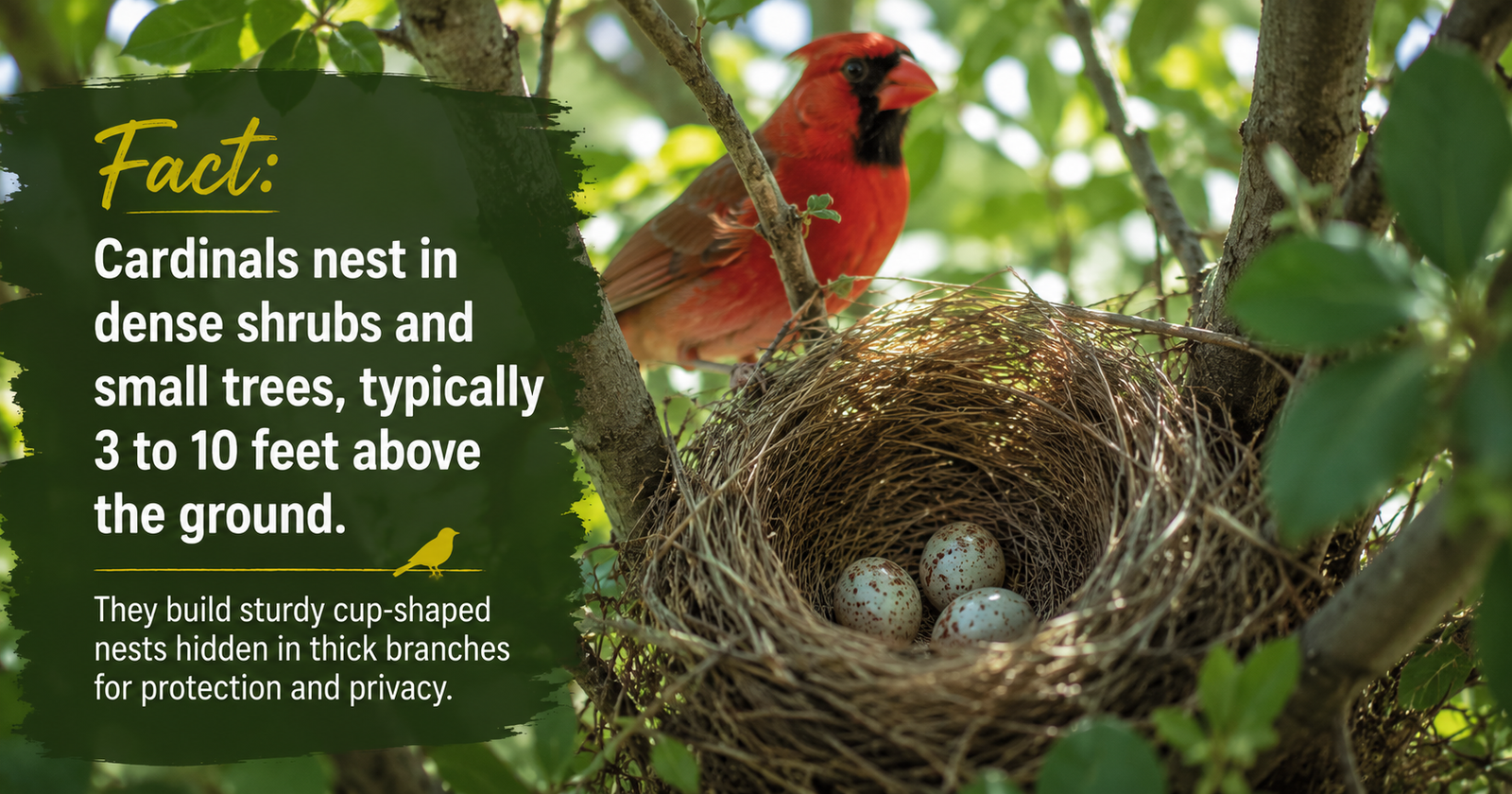
Young birds also spend time in protective cover while their parents move around gathering food. That protective cover often overlaps with the dense vegetation described in cardinal nesting cover.
That means a cardinal family can be living right around your yard without the fledglings being nearly as conspicuous as their bright red father.
Once you learn the dark bill and start listening for begging youngsters, you’ll probably notice more of them.
Finding a Baby Cardinal Doesn’t Mean You Should Rescue It
This may be the most important part of identifying a baby bird correctly.
Identification changes what you should do next.
A naked nestling lying beneath a nest presents one situation.
A fully feathered fledgling hopping underneath a shrub presents another.
The second bird may look helpless to us while actually being exactly where its parents expect it to be.
That’s why I wouldn’t scoop up a feathered young cardinal simply because it isn’t flying like an adult.
Watch from a distance.
Look for parents.
Keep cats, dogs, and people away.
Give the family room to behave normally.
If there’s clear evidence of injury, a cat encounter, or another genuine emergency, that’s when professional wildlife rehabilitation help becomes important.
Common Questions About Baby Cardinals
Are baby cardinals red?
Not when they first leave the nest. Juvenile Northern Cardinals are generally brownish and much more subdued than adult males. Young males acquire increasing amounts of red as they mature.
Do baby cardinals have black beaks?
Young cardinals have dark grayish to black bills initially. The bill changes toward the reddish-orange coloration seen in adults as the bird matures.
How do I know if a brown cardinal is a baby?
Look at the bill first. A dark bill strongly suggests a juvenile, while an adult female has a reddish-orange bill. Immature plumage, a developing crest, begging behavior, and interaction with adult cardinals provide additional clues.
Why is a baby cardinal following a male cardinal?
The young bird may be following its father and begging for food. Male Northern Cardinals participate in caring for fledglings and may continue feeding youngsters after they’ve left the nest. That demanding period can also help explain cardinals during the fledgling stage while adults care for recently fledged young.
Why is a baby cardinal chirping constantly?
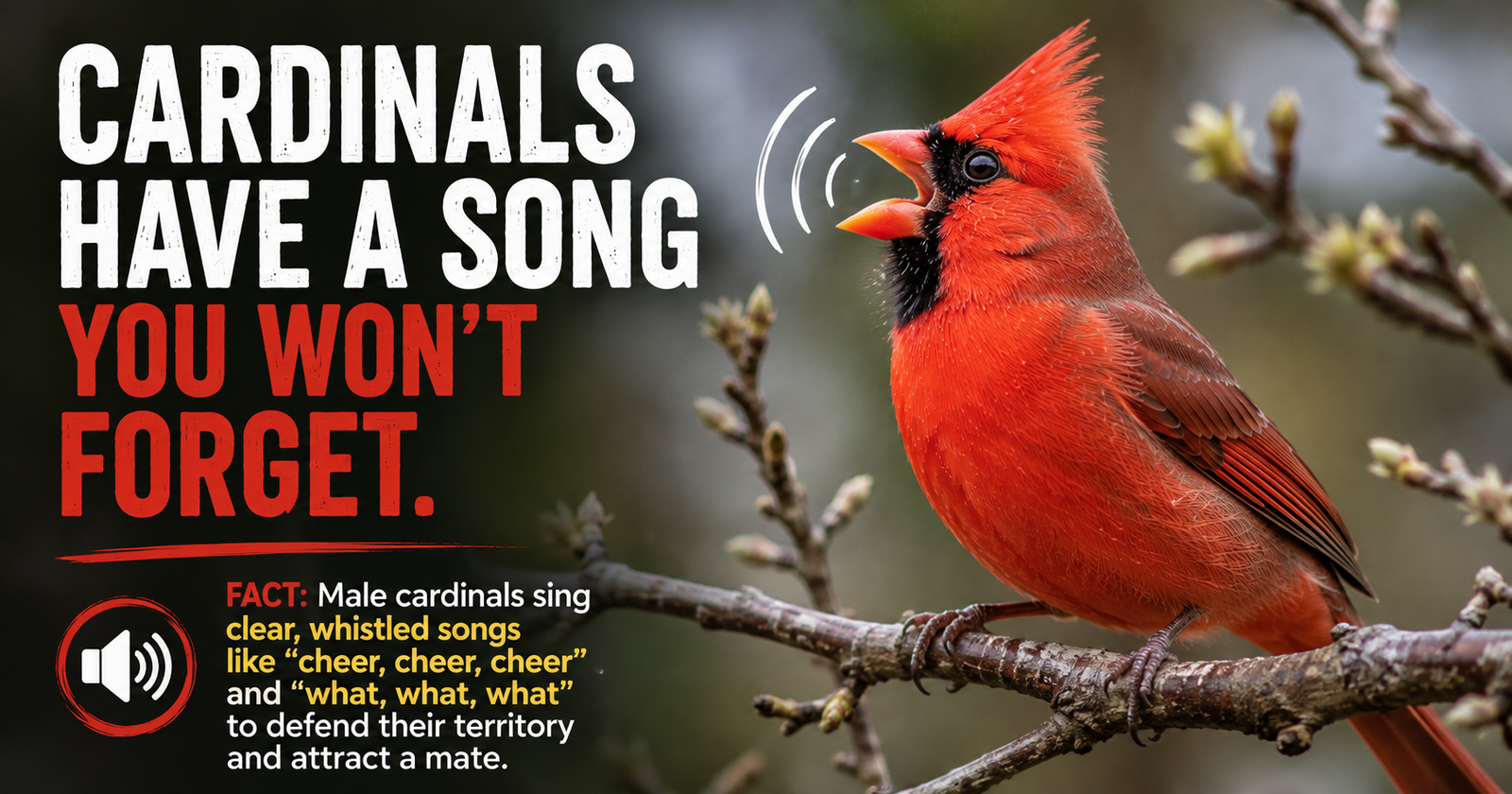
A fledgling may call or beg to communicate with its parents and solicit food. Young birds can be surprisingly noisy when an adult carrying food appears nearby.
Do baby cardinals return to the nest at night?
Once a fledgling has left the nest as part of normal development, you shouldn’t assume it needs to be put back every evening. The young bird transitions to life outside the nest while remaining under parental care.
Can I give a baby cardinal water?
I wouldn’t pour water into a baby bird’s mouth or attempt to feed it unless you’re acting under specific guidance from a licensed wildlife rehabilitator. Improper feeding or giving liquids can harm a young bird.
If you’ve found an injured or genuinely orphaned cardinal, the goal should be getting appropriate professional wildlife rehabilitation guidance rather than improvising a diet at home.
What is the easiest way to identify a juvenile cardinal?
Start with the combination of a dark bill, brownish plumage, cardinal-like body shape, developing crest, and relatively long body profile.
Then look at behavior.
A youngster begging from or being fed by an unmistakable adult Northern Cardinal gives you an especially useful confirmation.
Once you recognize that dark juvenile bill, baby cardinals become much easier to pick out among the birds moving through a backyard.
Caleb Hartwell is the Bird Identification & Behavior Contributor for BirdResource.com, where he helps readers make sense of the field marks, age differences, and behaviors that can turn a confusing backyard bird into a confident identification.