
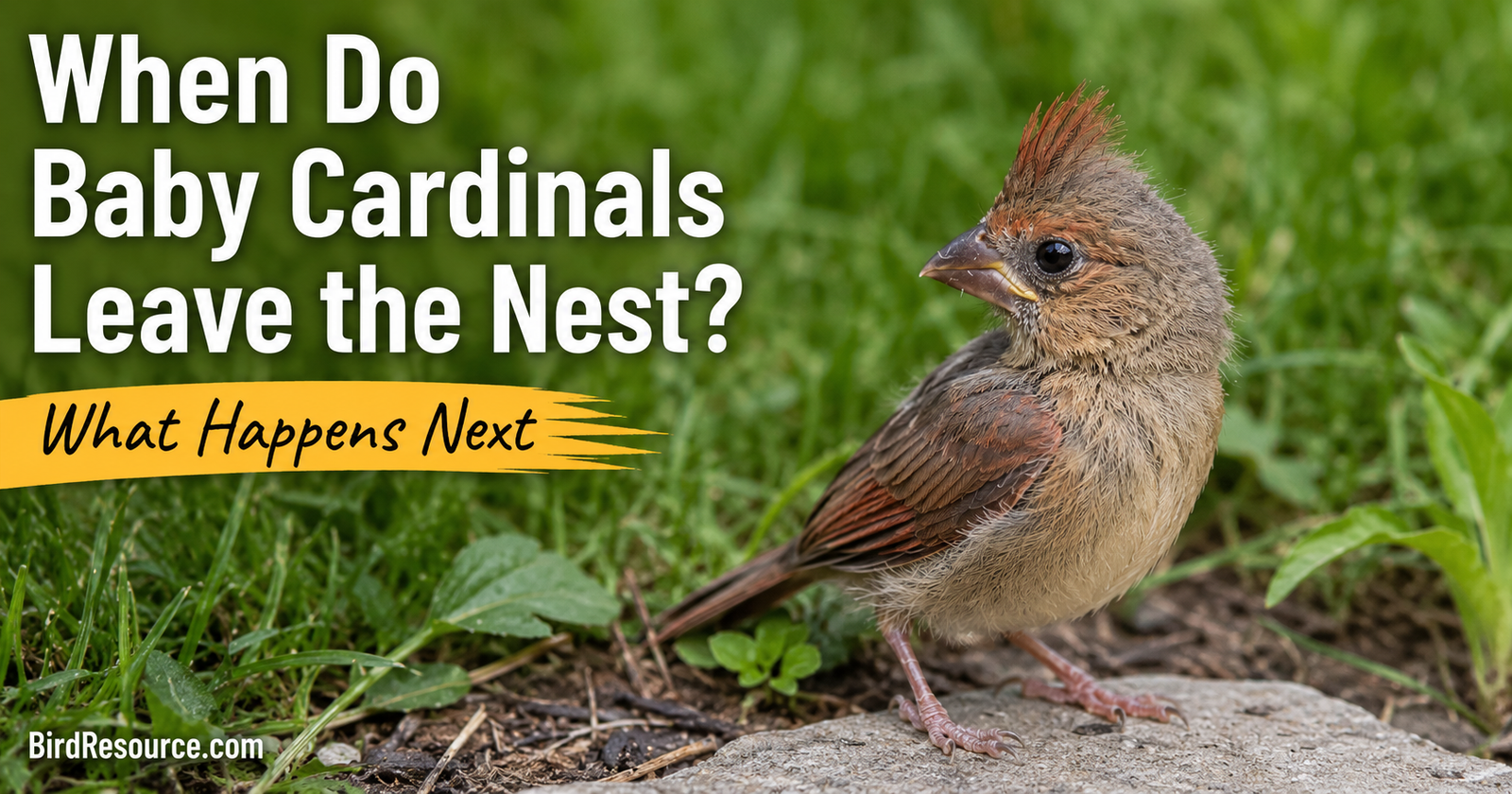
Baby cardinals leave the nest much sooner than most people expect. A young Northern Cardinal may be out of the nest only about 7 to 13 days after hatching, with around 9 to 11 days commonly reported.
That means the little bird hopping underneath your bushes may not have fallen from its nest at all.
It may be exactly where it’s supposed to be.
This is one of those situations where our instinct to help can actually cause trouble. A newly fledged cardinal can look helpless. Its tail is short, its flight may be terrible, and it might sit quietly on a low branch or even on the ground while an adult is nowhere in sight.
But the parents are often still nearby.
Leaving the nest doesn’t mean a baby cardinal has been abandoned. It’s the beginning of the next stage of growing up.
How Old Are Baby Cardinals When They Leave the Nest?
Northern Cardinal nestlings spend roughly 7 to 13 days in the nest after hatching, according to Cornell. Audubon gives a narrower typical estimate of about 9 to 11 days.
Think about how fast that is.
A newly hatched cardinal starts out nearly naked, with closed eyes and only sparse tufts of down.
Within roughly a week and a half, that same bird can be climbing out of the nest and entering the world outside it.
It isn’t finished developing.
It isn’t independent.
And it certainly isn’t an expert flyer.
It’s a fledgling.
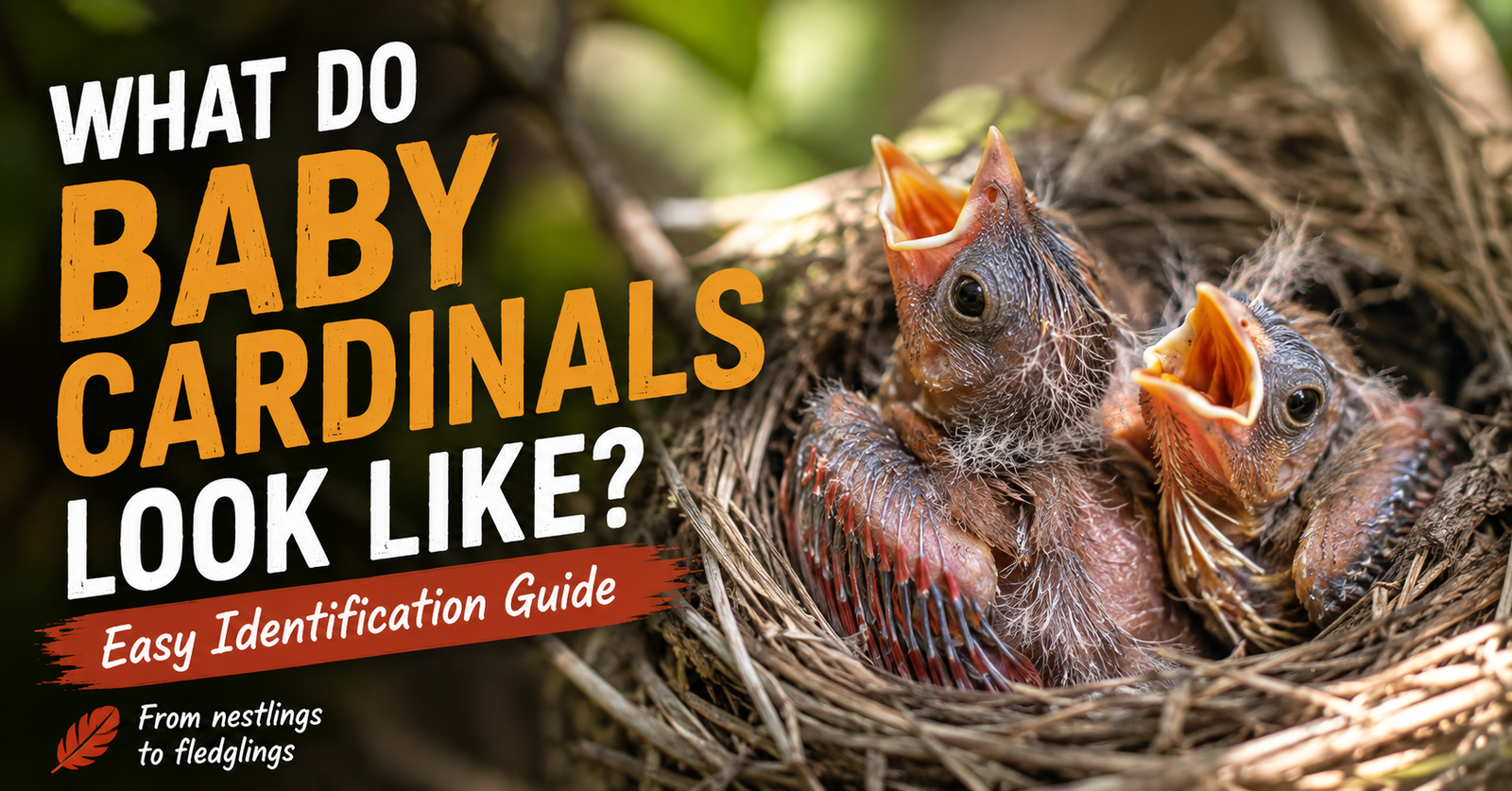
If you want to see how dramatically their appearance changes during these first stages, my baby cardinal identification guide breaks down hatchlings, nestlings, fledglings, juveniles, and immature cardinals separately.
Why Do Baby Cardinals Leave the Nest So Early?
At first, leaving a perfectly good nest before you’re an accomplished flyer sounds like a terrible strategy.
But a nest isn’t the safe little bird house we sometimes imagine.
A nest full of noisy, hungry babies creates a concentrated target. Predators only need to locate that one small spot to potentially find the entire brood.
Cornell explains that getting young songbirds out of the nest allows them to spread into different locations. The parents can continue caring for them while the youngsters are no longer concentrated together in one obvious nest.
So fledging is a tradeoff.
The young birds are inexperienced and vulnerable outside the nest, but staying crowded together in the nest carries risks too.
What Does a Cardinal Look Like When It First Leaves the Nest?
Don’t expect a miniature version of the brilliant red male at your feeder.
A newly fledged cardinal is mostly brownish.
It has feathers, but it may look fluffy, uneven, or downright scruffy. Its tail is much shorter than an adult’s, and one of my favorite identification clues is the bill. Those scruffy features are part of the broader pattern explained in fluffy, uneven, or downright scruffy.
Young cardinals initially have a dark bill rather than the reddish-orange bill seen on adults.
The crest may already be noticeable, although the bird’s overall shape and proportions can look a little awkward.
That’s why someone who knows adult cardinals perfectly well can still look at a fledgling and wonder:
What in the world is that bird?
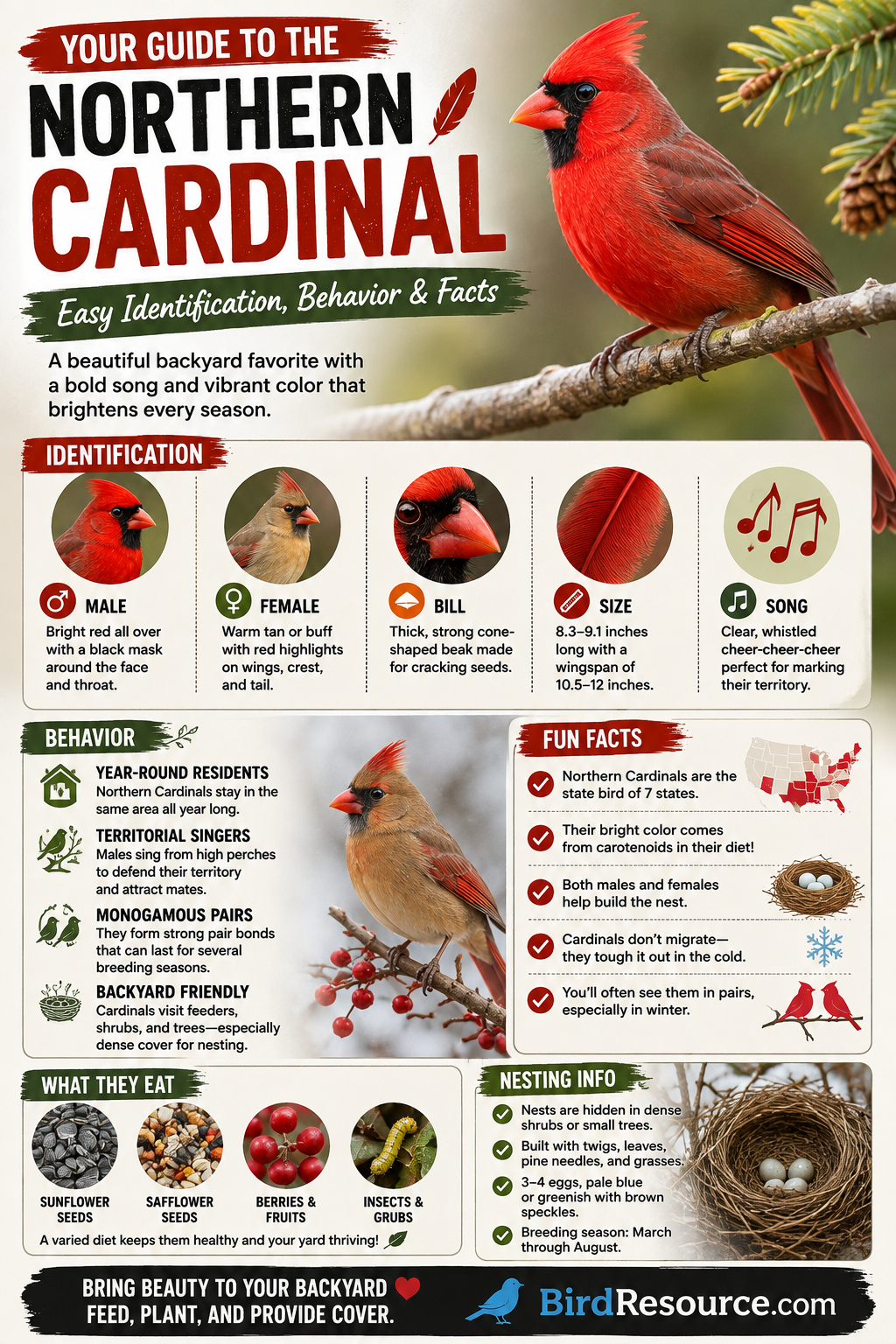
Our broader Northern Cardinal identification and behavior guide is useful if you’re trying to compare the youngster with adult males and females around it.
Can Baby Cardinals Fly When They Leave the Nest?
Not particularly well at first.
That’s completely normal.
A fledgling has developed enough to leave the nest, but its flight skills are still improving.
You may see short flights from the ground to a shrub.
You might see awkward hopping from branch to branch.
The bird may flutter instead of making the smooth, controlled flights you expect from its parents.
Sometimes it simply sits there.
That can make the youngster look injured even when nothing is wrong.
Cornell notes that fledglings are generally feathered and capable of hopping or flitting around, even though they’re not yet strong flyers.
This is one of the most important distinctions to make before intervening with any baby bird.

Nestling or Fledgling? This Changes What You Should Do
A nestling is a younger bird that should normally still be in the nest.
A fledgling has reached the developmental stage where leaving the nest is normal.
A nestling may have large areas of bare skin or developing pin feathers. It may be unable to hop, perch, or move effectively.
A fledgling is substantially feathered and can usually hop, grip, perch, or flutter around.
That difference matters enormously.
If you find a feathered young cardinal hopping underneath a shrub, putting it back into the nest may accomplish nothing except stressing everybody involved.
Cornell notes that fledglings rarely return to their nests after leaving and may simply hop back out if someone puts them inside.
Do Baby Cardinals Stay Near the Nest After Leaving?
They can remain in the general area, but they aren’t necessarily sitting directly underneath their old nest.
The fledglings begin spreading out.
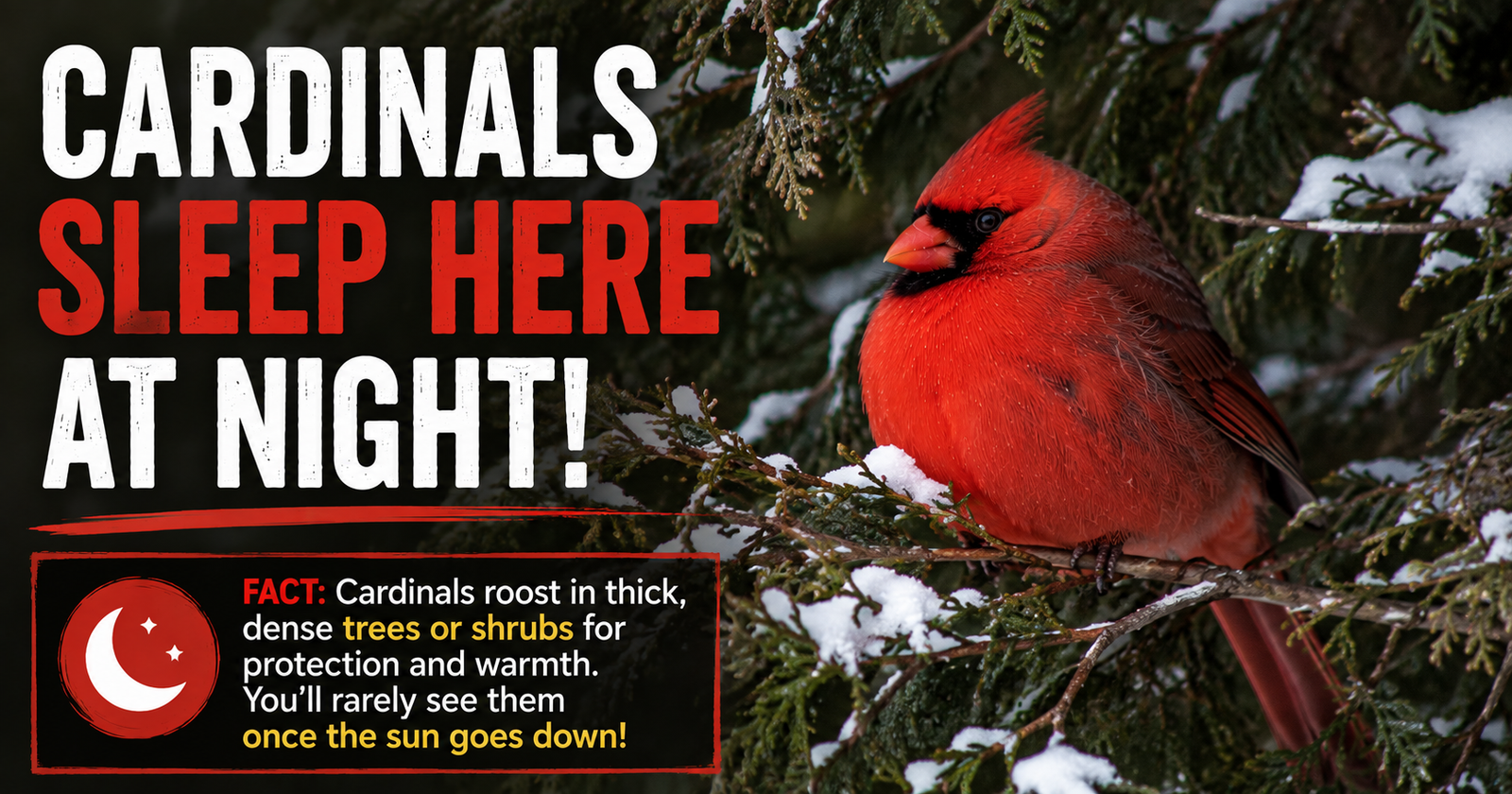
They may hide inside shrubs, perch on low branches, move through vegetation, or spend time close to the ground. Adult cardinals also rely on protected vegetation and branches at night, as described in cardinal perching behavior.
This can make them surprisingly difficult to locate even when you know they’re nearby.
And that’s not necessarily a bad thing.
Being inconspicuous is useful when you’re a small inexperienced bird that can’t fly particularly well yet.
If you’ve been following a nest and suddenly find it empty, don’t immediately assume a predator got the babies.
Look and listen around the surrounding vegetation from a respectful distance.
Successful fledglings may already be hiding nearby.

Do Parent Cardinals Stay With Their Babies After They Leave?
Yes, and this is probably the most important thing to understand about fledgling cardinals.
Leaving the nest is not the same as leaving the parents.
Both cardinal parents feed their nestlings, and parental care continues after fledging. Audubon notes that the male may continue feeding fledglings while the female begins another nesting attempt.

Cornell’s Bird Academy cites research showing just how dependent young cardinals can remain after fledging. During roughly the first 11 days after leaving the nest, young cardinals may move very little from their perches while receiving frequent food deliveries. They can continue receiving at least occasional parental feeding for weeks afterward. That vulnerable early period is one reason the difference between potential and typical cardinal lifespan matters; dependent young cardinals can remain after fledging explains how survival changes as cardinals mature.
So that “abandoned” little bird sitting alone may actually have room service coming.
You just aren’t there long enough to see it.
Why Don’t I See the Parents?
Because you’re watching a snapshot of the bird’s day.
The parents aren’t required to stand beside their fledgling continuously.
They have to find food.
They may be caring for several young birds scattered through different locations.
They may also be reluctant to approach while a person is standing close to their youngster.
That’s why I’d give the bird space before deciding nobody is caring for it.
Back away.
Watch from somewhere less intrusive.
Give the adults an opportunity to behave normally.
Cornell specifically recommends observing a fledgling from a distance to see whether the parents return.
Standing over the baby waiting for Mom to appear can actually make the situation harder to judge.
What Do Parent Cardinals Feed Their Fledglings?
Insects are extremely important.

Northern Cardinals eat plenty of seeds and fruits as adults, but their young are fed mostly insects. Audubon lists prey such as beetles, grasshoppers, caterpillars, ants, flies, and numerous other invertebrates as part of the species’ broader diet. For the supplemental foods adult cardinals commonly use at feeders, see what adult cardinals eat.
That protein-rich diet helps support incredibly rapid growth.

It’s also why you might see a male cardinal at your sunflower feeder one minute and then watch him disappear into vegetation carrying something completely different. A camera-enabled feeder can help you see more of these brief visits when you're not watching the yard directly; our smart feeder for watching cardinal visits examines how that setup works.
He’s feeding himself and feeding growing youngsters.

Our complete guide to what cardinals eat goes much deeper into how their diet changes between adults and babies and throughout different times of year.
Does the Male Cardinal Feed the Fledglings?
Absolutely.
This is one of the more interesting parts of cardinal family life.
Both parents participate in feeding the young, but the male can take on an especially visible role once the first brood fledges and the female begins preparing for another nesting attempt.
Audubon specifically notes that a male may feed the fledglings while the female begins the next nest.
So if you see a brilliant red male being followed around by several awkward brown youngsters, you’re witnessing a normal part of cardinal parenting.
He isn’t just tolerating them.
He’s taking care of them.
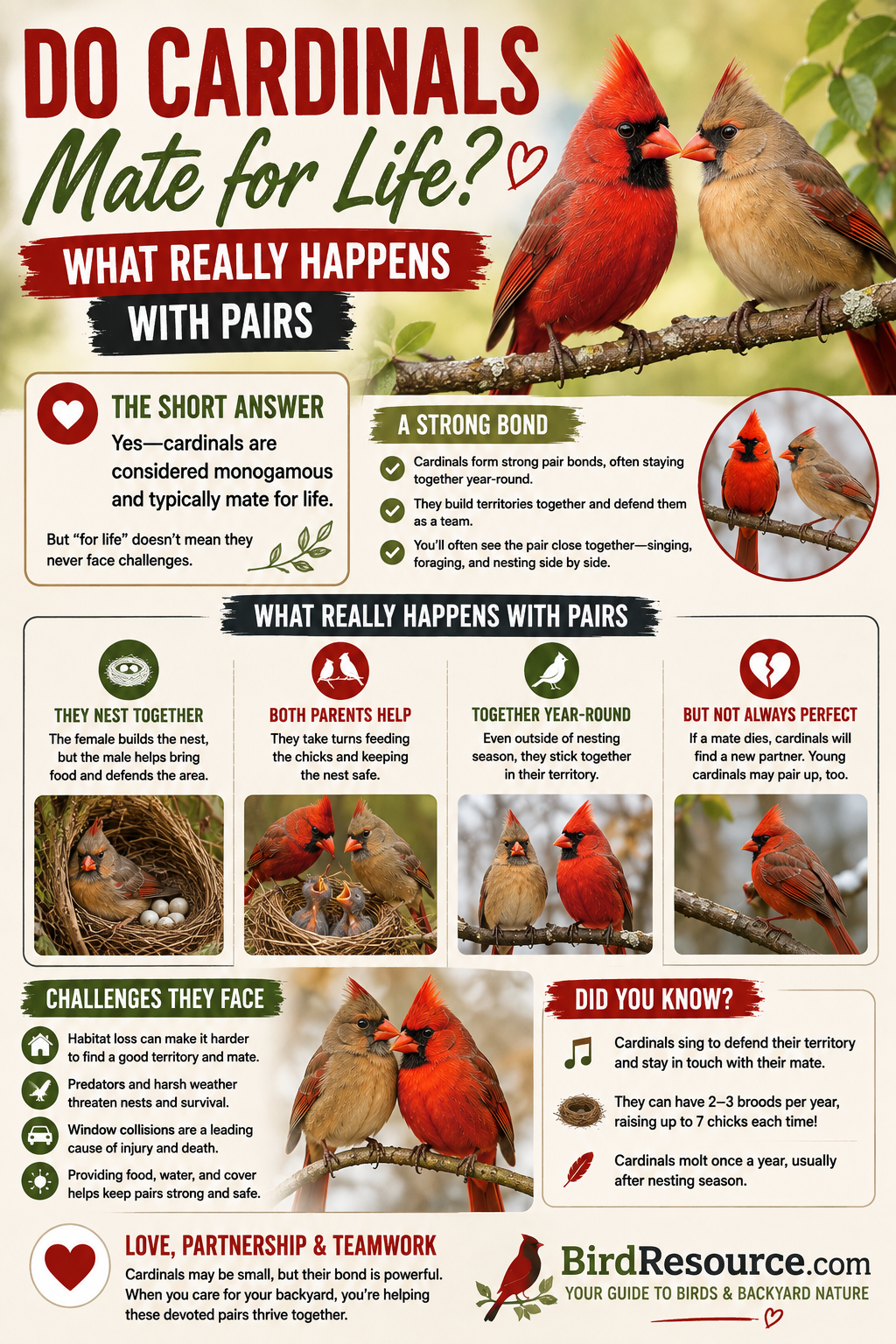
The division of parenting responsibilities is also one reason the simple claim that cardinals “mate for life” misses some of the much more interesting behavior happening between a pair during breeding season.

How Long Do Parent Cardinals Feed Fledglings?
Longer than you might assume from how quickly the babies leave the nest.
Cornell Bird Academy cites research indicating that young Northern Cardinals continue receiving parental food well beyond their first days outside the nest. In one study, young were fed for an average of about a month after fledging, with occasional parental feeding documented considerably later in some cases.
Their independence develops gradually.
They don’t leave the nest Tuesday and start buying their own sunflower seeds Wednesday.
During those first days, the fledgling can remain surprisingly stationary while its parents deliver food.
As it develops, it begins moving farther and learning to forage more effectively for itself.
Why Is a Baby Cardinal Sitting on the Ground?
Because fledglings sometimes spend time on or near the ground.
That alone does not prove something is wrong.
Cardinals are ground foragers even as adults, and fledglings are still developing their ability to fly and navigate vegetation.
A feathered youngster may hop along the ground before getting onto a low branch or shrub.
The situation deserves more attention if the bird has an obvious injury, cannot stand, appears extremely weak, or is actually a sparsely feathered nestling rather than a fledgling.
But:
Baby bird + ground = emergency
isn’t a reliable rule.
Should I Put a Baby Cardinal Back in the Nest?
It depends on whether you’re looking at a nestling or a fledgling.
If it’s a healthy fledgling that has naturally left the nest, usually no.
Cornell specifically advises that fledglings normally don’t need to be returned. Even when someone places one back into the nest, it may simply hop out again.
If it’s a very young nestling that has fallen prematurely and you can safely locate the original nest, that’s different.
Cornell recommends returning a healthy nestling to its nest when possible. The parents will not automatically abandon it simply because a person handled it briefly.
The first job is figuring out which stage you’re actually looking at.
Will the Mother Reject a Baby Cardinal If I Touch It?
No, a parent cardinal isn’t automatically going to abandon its baby because you briefly touched it.
That’s a persistent bird myth.
But I don’t want that fact twisted into permission to handle fledglings unnecessarily.
If the bird is healthy and exactly where its parents expect it to be, leave it there.
Handling always introduces another opportunity for stress, injury, or accidentally moving the youngster away from where its parents are searching.
Knowing that a bird won’t magically be rejected because of human scent is useful when a genuine rescue is necessary.
It’s not a reason to pick up every fledgling you find.
What If the Baby Cardinal Is in My Yard?
Most of the time, enjoy the opportunity.
Watch from a distance.
Keep the area relatively quiet.
And pay particular attention to pets.
A fledgling can spend several vulnerable days low to the ground while its flying skills improve.
Cornell specifically warns that young cardinals are vulnerable to unsupervised cats and dogs and recommends keeping pets indoors or leashed well away from fledglings.
This is one of those times when a very small change on our part can make a very big difference to the bird.
Keep Cats Away From Fledgling Cardinals
This deserves its own section because a fledgling’s normal behavior puts it right where cats can reach it.
Low shrubs.
Ground vegetation.
Grass.
Short flights.
Limited escape ability.
Those are terrible circumstances for encountering a free-roaming cat.
If you know fledglings are around, keep cats indoors.
Dogs should be controlled around the area too.
You don’t need to relocate the baby bird because your pet discovered it.
Control the pet.
Let the cardinal parents continue doing their job.
Should I Move a Fledgling Cardinal Out of Danger?
Sometimes a very small intervention makes sense.
Maybe the fledgling is sitting in the middle of a road, directly on a busy walkway, or somewhere else with an immediate obvious danger.
If necessary, Cornell advises moving a fledgling to a nearby perch or safer location rather than carrying it far away.
Nearby is important.
Its parents know approximately where their youngster is.
Moving it across the neighborhood because the new location “looks safer” could make parental care harder.
If there’s no immediate danger, I’d leave it where it is.
What If a Baby Cardinal Can’t Fly?
A fledgling that can’t fly strongly yet isn’t automatically injured.
Poor flight is part of being a fledgling.
Look at the entire bird.
Is it substantially feathered?
Can it stand?
Can it hop?
Can it grip a branch?
Is it alert?
Does it flutter or make short movements?
Those characteristics are very different from a bird lying injured, bleeding, unable to stand, or showing an obviously damaged wing.
If you’re unsure whether the bird is simply inexperienced or genuinely injured, contacting a licensed wildlife rehabilitator is much safer than attempting treatment yourself.
When Does a Baby Cardinal Actually Need Help?
Most fledglings don’t.
But there are situations where intervention is appropriate.
An obvious injury changes things.
So does a known cat attack, a bird that cannot stand, severe weakness, or a true nestling that cannot be returned to its nest.
If both parents are known to be dead or you’re genuinely certain the bird is orphaned, professional help may be needed.
Cornell recommends contacting a wildlife rehabilitator for sick, injured, or truly orphaned young birds rather than attempting to raise them yourself.
Don’t force food or water into an injured bird. Audubon likewise advises against force-feeding or giving water to an injured wild bird while seeking appropriate help.
What If a Cat Caught the Baby Cardinal?
Treat that differently from finding a healthy fledgling sitting in the grass.
A bird that’s been in a cat’s mouth may have injuries that aren’t immediately obvious.
This isn’t a situation where I’d simply put it on a branch and assume everything is fine because you don’t see blood.
Contact a licensed wildlife rehabilitator promptly for instructions.
Meanwhile, separate the cat from the bird and keep other pets away.
The easiest version of this problem to solve is the one that never happens, which is another reason keeping cats indoors when fledglings are present matters so much.
Should I Feed a Fledgling Cardinal?
Normally, no.
Its parents are vastly better equipped for the job.
They’re already collecting the foods their young need and delivering them repeatedly throughout the day.
Trying to improvise with bread, milk, birdseed, worms, or water can create problems.
Even foods an adult cardinal eats aren’t automatically appropriate substitutes for what parents are feeding a developing youngster.
If the fledgling is healthy, let the parents feed it.
If it’s genuinely orphaned or injured, let a wildlife rehabilitator tell you what to do.
Those are much better options than turning your kitchen into an experimental cardinal nursery.
Do Fledgling Cardinals Eat Birdseed?
Eventually, young cardinals transition toward the varied adult diet of seeds, fruits, insects, and other foods.
But a newly fledged bird is still heavily dependent on its parents.
Don’t look at the sunflower feeder and assume the baby should simply figure it out.
Learning to forage takes time.
The parents continue supplying food while the youngster develops the physical skills and experience necessary to find its own.

If you already maintain a feeder, keeping appropriate food available for the adult birds can be useful. For readers who want to keep suitable food available for adult cardinals, cardinal seed for an established feeder is one product option to review.

Our guide to attracting cardinals and keeping them around your yard covers feeder food, water, vegetation, cover, and habitat rather than trying to directly feed their babies.
Where Do Baby Cardinals Sleep After Leaving the Nest?
This is where our human idea of a nest as a permanent “home” can get confusing.
Once fledged, young songbirds don’t necessarily climb back into the nest every night like children returning to bed.
They use vegetation and protected perches while remaining under parental care.
Cornell notes more broadly that fledged songbirds can be led to different locations as they spread out after leaving the nest, which helps reduce the risk of keeping an entire brood concentrated in one spot.
So an empty cardinal nest at night doesn’t necessarily mean something went wrong.
The babies may simply be done with it.
We’ll explore cardinal nighttime behavior much more deeply in our upcoming guide to where cardinals sleep.
Do Baby Cardinals Return to the Nest?
Generally, don’t expect a fledgling to return and continue living in its old nest.
Once the bird has fledged normally, the nest has largely completed its purpose.
Cornell notes that fledglings typically don’t return when people try putting them back, often hopping right back out.
The parents continue caring for them outside.
This is also why an empty nest shouldn’t automatically trigger a rescue mission.
If the babies reached fledging age and disappeared, look for signs of them around the surrounding vegetation before assuming the nest failed.
What Happens to the Old Cardinal Nest?
Not much.
Cardinals generally don’t reuse their nests for another brood. Cornell notes that a new nesting attempt typically means another nest.
That’s pretty remarkable considering how much work the female puts into construction.
But the old nest isn’t the family’s permanent house.
It was a nursery.
Once the babies have left, its primary job is finished.
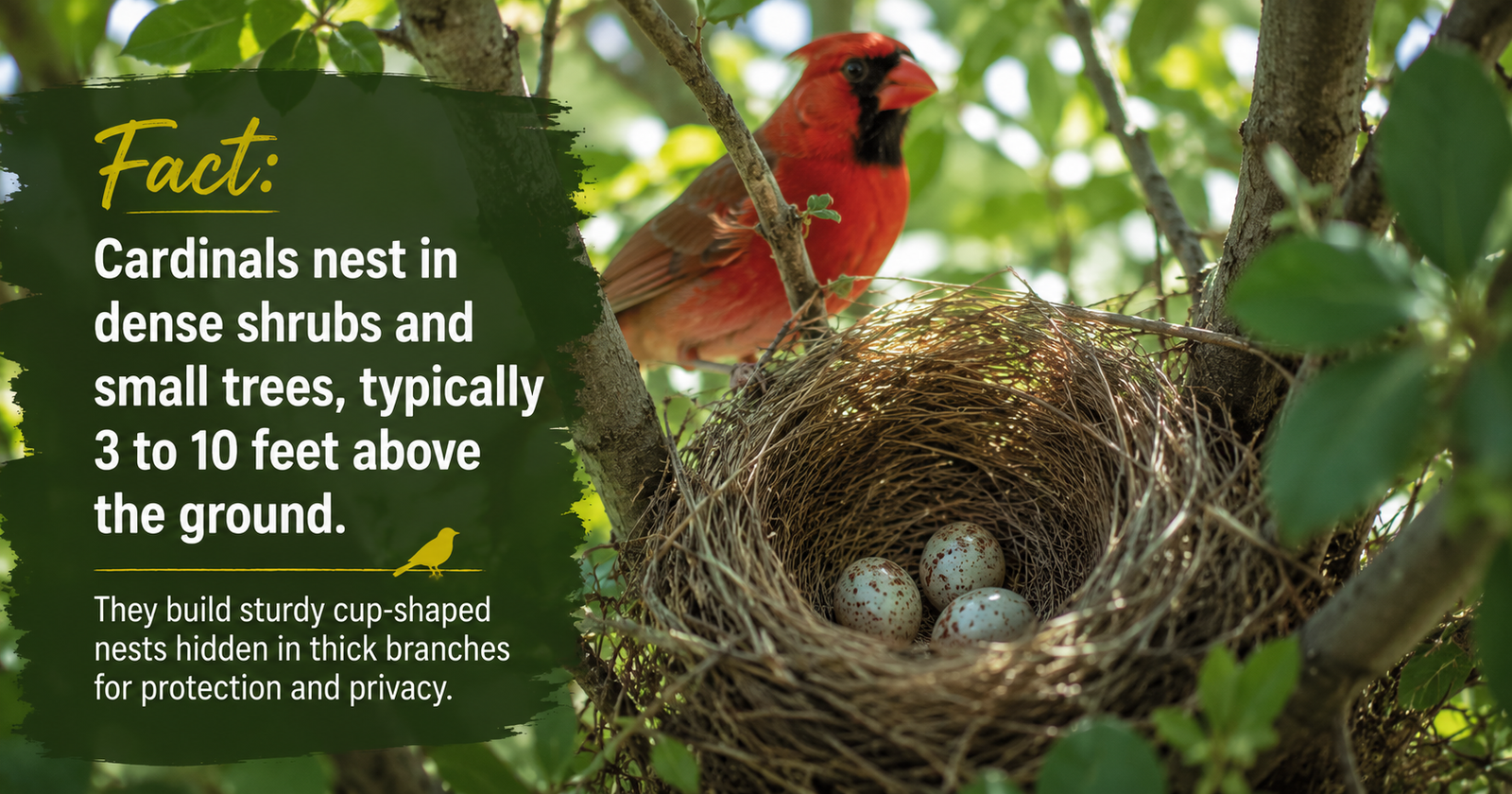
If you’ve ever wondered where that nest was hiding in the first place, our guide to where cardinals actually build their nests covers the shrubs, vines, small trees, heights, and concealed locations they commonly choose.
How Soon Does the Female Cardinal Nest Again?
Potentially surprisingly soon.
Northern Cardinals can produce multiple broods during a breeding season.
The female may begin another nesting attempt while the male takes a larger role in caring for fledglings from the previous brood. Audubon specifically describes males feeding fledged young while females begin another nest.
That creates an interesting overlap.
The first babies aren’t completely independent yet.
Dad may still be feeding them.
Meanwhile, Mom is already preparing for another round of eggs.
Cardinal family life can get busy very quickly.
Can There Be Cardinal Eggs and Fledglings in the Same Yard?
Absolutely.
Because parental care of one brood can overlap with another nesting attempt, you might have fledglings from an earlier brood following the male while the female is working on the next nest.
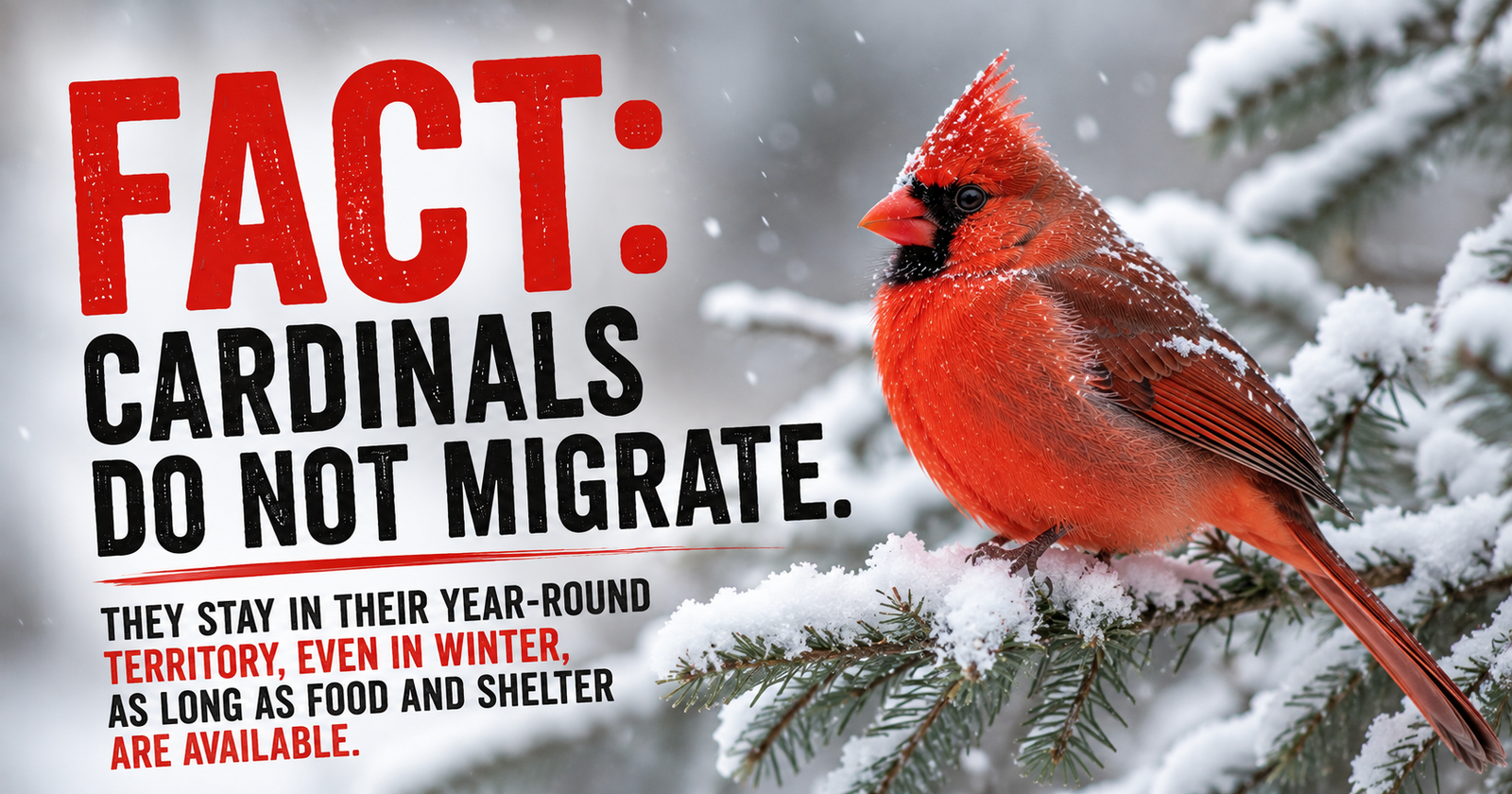
That’s one reason cardinal activity around a good backyard habitat can seem almost nonstop during breeding season. That seasonal change in activity connects with what happens to cardinal behavior outside the breeding season, as explained in cardinal behavior beyond breeding season.

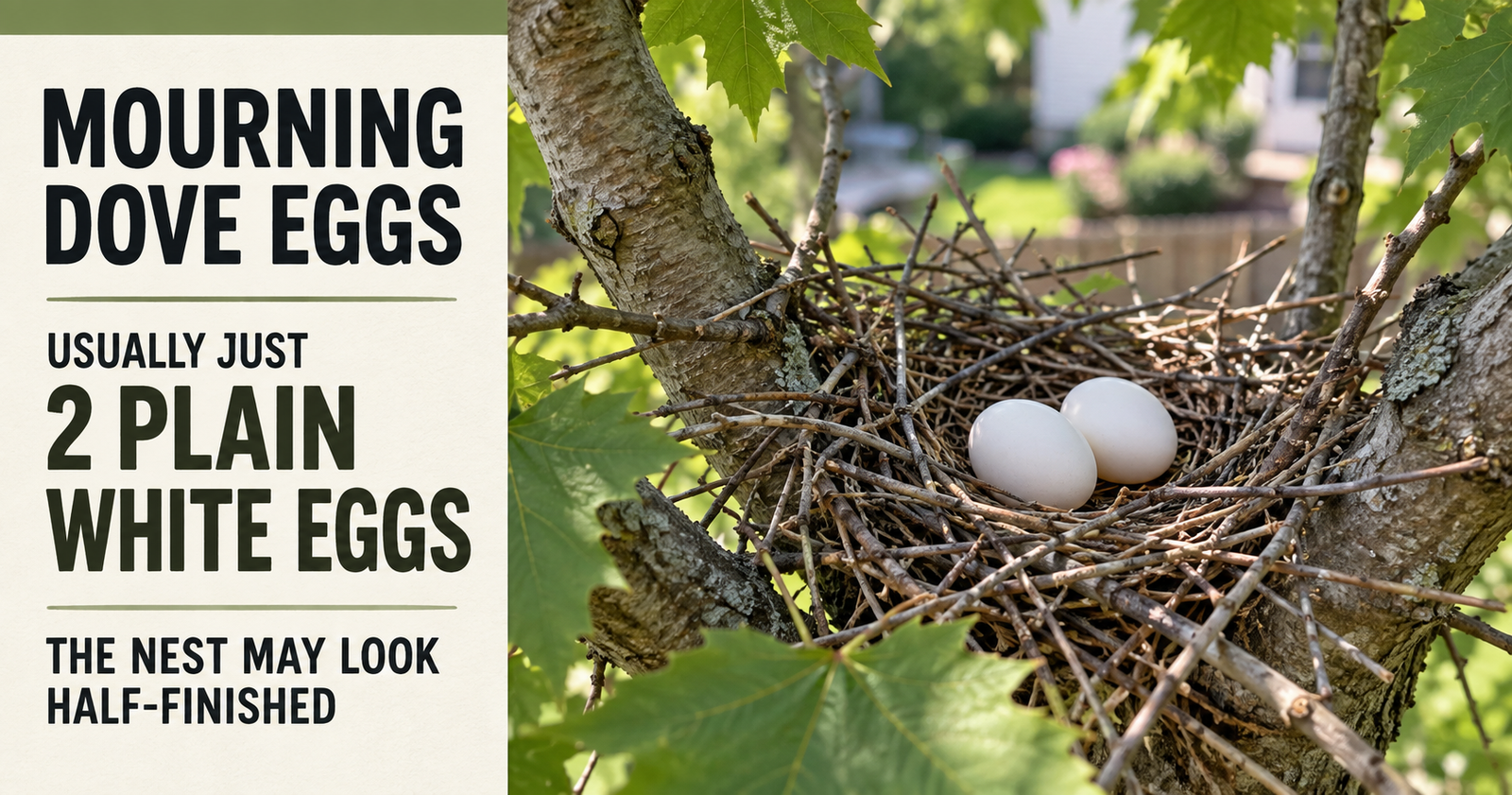
If you discover another nest, the eggs themselves have a distinctive pale, speckled appearance. Our cardinal egg identification guide covers their size, coloration, markings, clutch size, and incubation period without encouraging unnecessary nest disturbance.
Why Is the Male Cardinal Feeding a Brown Bird?
Before assuming you’ve discovered some strange interspecies friendship, look closely at the brown bird.
It might be his kid.
Young Northern Cardinals are predominantly brown, and their dark bills make them look noticeably different from adults.
Seeing a bright red male place food directly into the mouth of an awkward brown youngster is classic cardinal family behavior.
Once you recognize fledglings, you’ll probably start noticing this much more often.
The youngsters can also beg conspicuously, making it pretty clear who expects lunch.
When Do Male Baby Cardinals Turn Red?
Not immediately after leaving the nest.
Young males initially resemble the overall brownish juvenile appearance rather than emerging from the nest bright red.
As they mature and molt into later plumage, increasing amounts of red begin appearing.
That transitional appearance can be confusing because a young male may show a mixture of brown and red rather than the uniform brilliant coloration people expect.
Female youngsters remain predominantly brownish as they mature, eventually developing the warmer reddish accents characteristic of adult females.
This is another reason the bill can be useful when identifying a very young bird.
How Long Until a Fledgling Cardinal Is Independent?
There isn’t a single birthday when a fledgling suddenly switches from dependent to independent.
It’s gradual.
The first days outside the nest can involve limited movement and frequent parental feeding.
Then the youngster becomes more mobile.
It begins exploring.
Foraging skills improve.
Flight improves.
Parental feeding gradually decreases.
Research summarized by Cornell Bird Academy shows that young cardinals can continue receiving some parental food for weeks after fledging.
So don’t judge independence solely by whether the youngster can fly.
There’s much more to becoming a self-sufficient wild bird than getting airborne.
An Empty Cardinal Nest Can Be Good News
This is probably the part I’d want someone to remember if they’ve been watching a cardinal nest in their yard.
You saw eggs.
Then tiny babies.
Then feathered nestlings.
And suddenly the nest is empty.
It’s incredibly easy to assume the worst.
But if those youngsters were around fledging age, an empty nest may be exactly what you wanted to see.
They made it out.
Now the action moves away from that little cup and into the surrounding yard.
Listen for begging.
Watch low branches.
Pay attention when the male flies through carrying an insect.
Look for little brown birds with dark bills hiding inside shrubs.
You may discover that the babies you thought disappeared are only twenty feet away, starting the much longer process of learning how to be cardinals.
Common Questions About Baby Cardinals Leaving the Nest
How many days do baby cardinals stay in the nest?
Northern Cardinal nestlings remain in the nest approximately 7 to 13 days after hatching, with about 9 to 11 days commonly reported.
Can a 10-day-old cardinal fly?
A cardinal around fledging age may be capable of fluttering and making short flights, but don’t expect adult-level flight ability. Young birds continue developing those skills after leaving the nest.
Do cardinal parents know where their fledglings are?
Parents continue caring for their fledglings after they leave the nest and locate them to provide food. The youngsters may be scattered rather than gathered together in one location. That shift in parental duties can also explain cardinal feeder visits during nesting season during the breeding season.
Why is a fledgling cardinal chirping constantly?
Begging calls can help communicate its need for food to its parents. A noisy young bird isn’t necessarily abandoned. It may be doing a very effective job of reminding Mom or Dad that it’s hungry.
Will a cardinal fledgling survive on the ground?
Spending time low to the ground can be normal, but this is a vulnerable period. Keep cats indoors and dogs away while the fledgling develops stronger flight skills.
Should I put water out for a baby cardinal?
Don’t try to pour or drip water into a fledgling’s mouth. A healthy fledgling should remain under its parents’ care. If a bird is injured or genuinely orphaned, seek advice from a licensed wildlife rehabilitator rather than attempting to force food or water.
How can I tell whether the baby was abandoned?
Don’t assume abandonment simply because you don’t immediately see a parent. Back away and observe from a distance. Healthy feathered fledglings are commonly alone between parental visits.
Do both cardinal parents take care of fledglings?
Both parents care for young, although the male may take on much of the fledgling feeding while the female begins another nesting attempt.
Is it normal to find several baby cardinals in different parts of the yard?
Yes. Fledging spreads the young away from the concentrated nest site. Don’t gather healthy fledglings together simply because you think siblings should stay in one place.
What’s the best thing I can do for a healthy fledgling cardinal?
Usually, give it space and control the dangers you can control.
Keep cats inside.
Keep dogs away.
Don’t force-feed it.
Don’t carry it around the yard.
Don’t assume it needs to go back into the nest.
And give its parents enough distance to return.
Sometimes helping a baby bird means resisting the urge to “rescue” a bird that was doing exactly what it was supposed to be doing.
Caleb Hartwell is the Bird Identification & Behavior Contributor for BirdResource.com, where he helps backyard birdwatchers make sense of the moments that cause the most questions, especially nests, eggs, fledglings, feeding behavior, and the surprisingly complicated family lives happening right outside our homes.