Blue Jay eggs aren’t quite as predictable as their name might make you expect.
Yes, they can look blue.
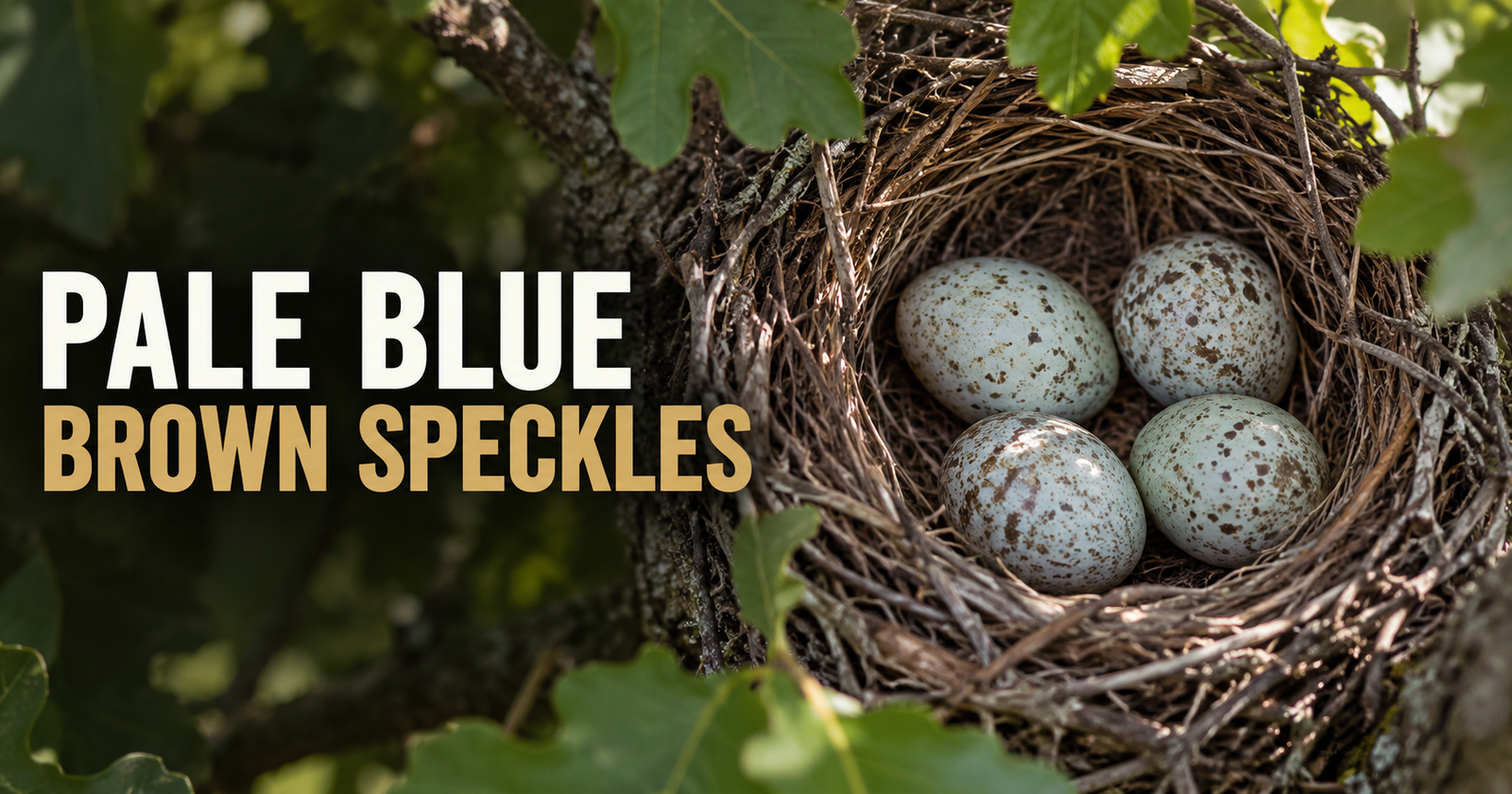
But you can also find Blue Jay eggs that appear light brown rather than obviously blue, and they’re normally covered with brownish markings. Cornell describes them as bluish or light brown with brownish spots.
That variation is important because egg color alone isn’t enough for me to confidently identify a mystery nest.
Instead, I look at the whole picture.
How big are the eggs?
How many are there?
What does the nest look like?
How high is it?
Where is it positioned in the tree?
And most importantly, which adult birds are repeatedly visiting?
Put those clues together and identifying Blue Jay eggs becomes much easier.
What Color Are Blue Jay Eggs?
Blue Jay eggs can range from bluish to light brown, usually with brownish spotting.
That means you shouldn’t expect every clutch to look like a collection of perfectly blue miniature robin eggs.
Some may appear considerably more muted.
The markings can also make the overall appearance look darker or more mottled from a distance.
Lighting complicates things further.
An egg photographed in shade may look different from the same egg under bright natural light. Camera processing can shift colors too.
That’s why I’d never identify a Blue Jay nest solely because someone says:
“The eggs looked kind of blue.”
Plenty of birds lay blue or blue-green eggs.
We need more evidence.

How Big Are Blue Jay Eggs?
Blue Jay eggs are roughly 1 to 1.3 inches long and about 0.7 to 0.9 inches wide, according to Cornell.
That makes them noticeably larger than the tiny eggs produced by many small backyard songbirds, but they’re certainly not enormous.
I wouldn’t recommend handling eggs just to measure them.
If you’re trying to identify an active nest, use the nest itself, the adult birds, location, and photographs taken responsibly from a distance.
An exact ruler measurement isn’t worth disturbing a nesting pair.
How Many Eggs Do Blue Jays Lay?
A typical Blue Jay clutch contains 2 to 7 eggs.
That’s a fairly wide range.
So finding three eggs doesn’t rule out Blue Jay.
Neither does finding five.
And remember that a clutch may not be complete when you first discover the nest. Songbirds generally lay no more than one egg per day, often continuing until the clutch is complete.
If you happen to notice the number increase over several days, that doesn’t mean another bird sneaked eggs into the nest.
The female may simply still be laying.
Who Incubates Blue Jay Eggs?
The female Blue Jay incubates the eggs.
This gives us one of the few genuinely useful behavioral differences between male and female Blue Jays.
While she incubates, the male brings her food. Cornell reports an incubation period of approximately 17 to 18 days.
That’s particularly useful because male and female Blue Jays look extremely similar.
If you watch one bird consistently sitting on a confirmed Blue Jay clutch, you’re looking at the female.
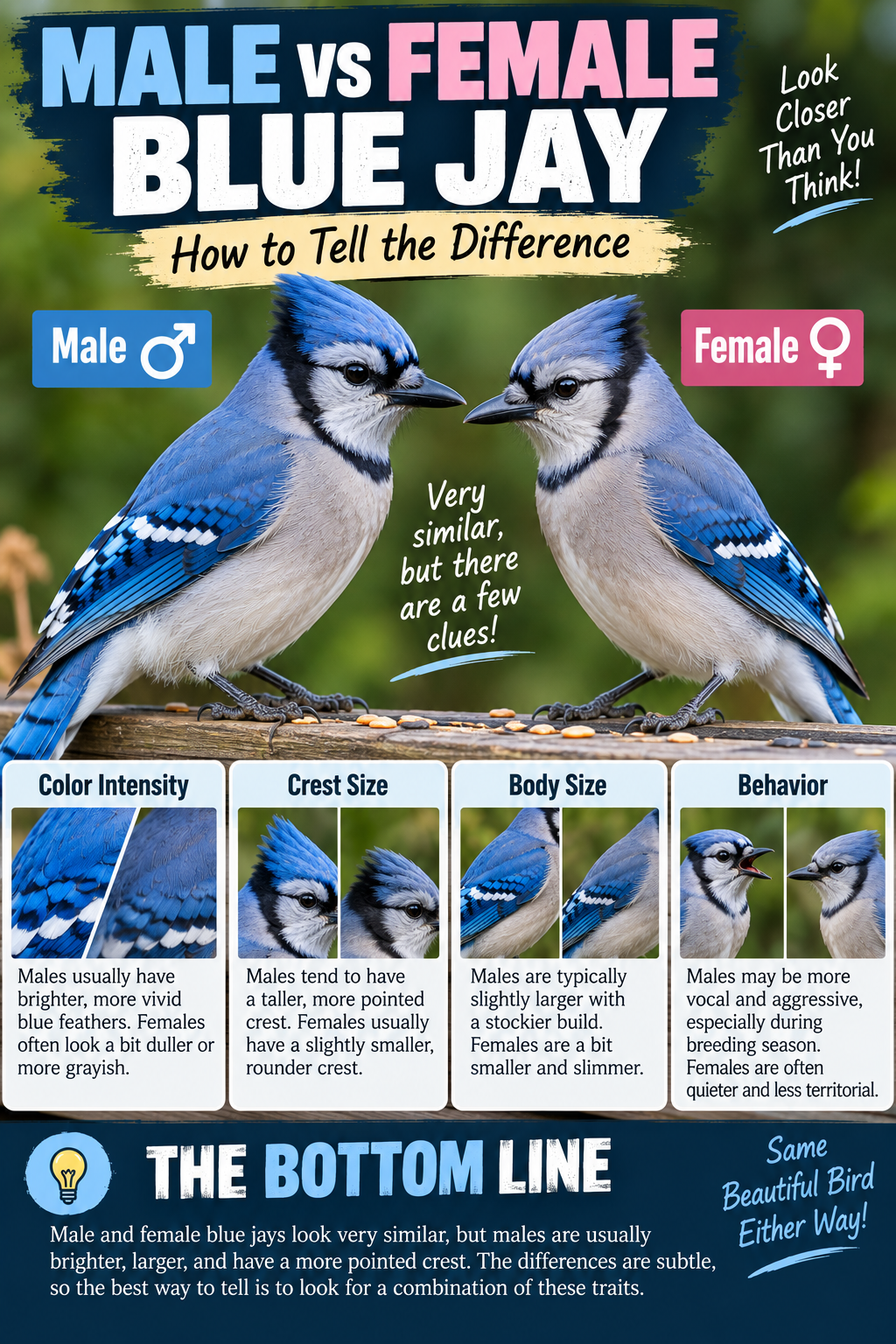
Our male vs female Blue Jay guide explains why plumage isn’t nearly as helpful as people expect when trying to separate the sexes.
What Does the Nest Around Blue Jay Eggs Look Like?
Blue Jays build an open-cup nest rather than nesting inside a typical enclosed birdhouse.
Cornell describes the nest as a cup constructed from twigs, grass and sometimes mud, with the interior lined with rootlets.
Both members of the pair participate in construction.
Interestingly, the birds may travel considerable distances to find particular materials. Cornell notes that Blue Jays have been observed collecting rootlets from places such as recently dug ditches and newly fallen trees.
So if you’re watching a Blue Jay repeatedly fly past carrying a twig or rootlet, don’t assume it’s random.
You may be watching construction underway.
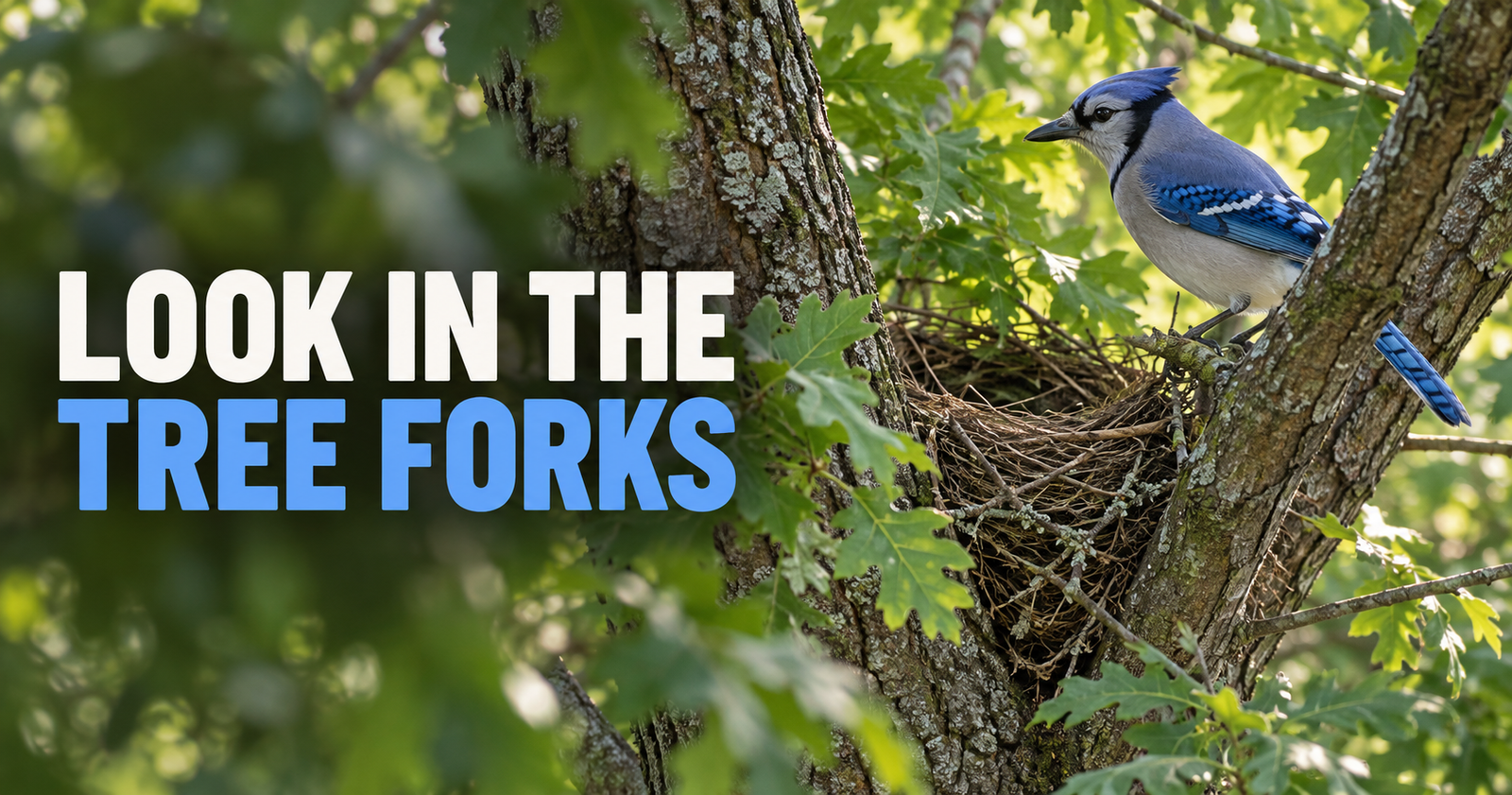
Our guide to where Blue Jays nest and what to look for in your yard covers nest placement and construction in much more detail.
Where Will I Find Blue Jay Eggs?
Inside a nest built in a tree.
Blue Jays commonly position nests in the crotch or thick outer branches of either deciduous or coniferous trees, usually around 10 to 25 feet above the ground.
That’s another useful identification clue.
If you find spotted bluish eggs inside a cavity or conventional birdhouse, I would not immediately assume Blue Jay.
Their normal nesting strategy is an open cup supported by tree branches.
Location plus nest structure plus egg appearance gives us a much stronger identification than color alone.
Do Blue Jays Lay Eggs in Birdhouses?
Normally, no.
Blue Jays aren’t typical cavity-nesting birds.
They build open-cup nests in trees.
That’s very different from bluebirds, which readily use appropriately designed nest boxes.
This distinction is especially important because Blue Jay and bluebird sound similar enough that people sometimes mix them up.
If you find pale blue eggs inside a proper nest box, an actual bluebird is a much more logical possibility in appropriate habitat. Cornell describes Eastern Bluebird eggs as pale blue or, more rarely, white.
Blue Jay eggs belong in a very different kind of nest.
Blue Jay Eggs vs Bluebird Eggs
These can sound confusing when they’re described only as “blue eggs.”
The nesting location makes the distinction much easier.
Blue Jay: open-cup nest built in a tree.
Bluebird: cavity or nest box.
Eastern Bluebird eggs are generally pale blue and typically lack the brown spotting characteristic of Blue Jay eggs.
The adults are dramatically different too.
A Blue Jay is a large crested bird with blue, white, black and gray plumage.
An Eastern Bluebird is much smaller and has a rusty-orange breast.
If you’re seeing the parents, there’s really no reason to identify the nest from eggs alone.
Blue Jay Eggs vs Robin Eggs
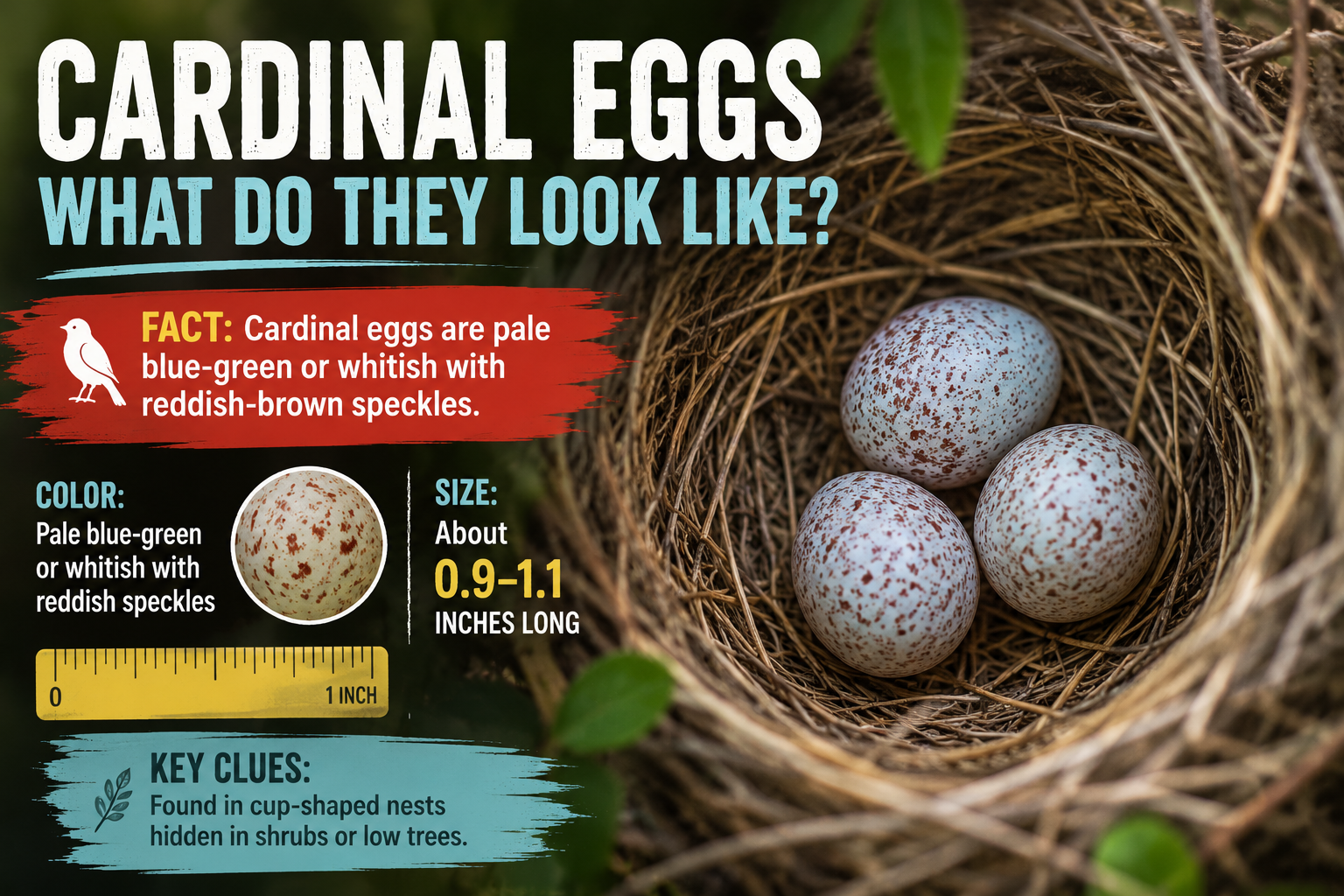
American Robin eggs are famous for their beautiful blue coloration.
That’s where people can get confused.
The easiest mistake is seeing something blue and immediately thinking:
Robin egg.
But Blue Jay eggs commonly have brownish spotting, while the classic American Robin egg is a much more uniform blue.
Nest appearance and placement help too.
If you’re uncertain, wait and watch from a distance for the adults.
The parent bird is going to give you a much stronger answer than arguing with yourself over whether an egg looks blue, blue-green, or bluish brown.
Blue Jay Eggs vs Crow Eggs
This comparison makes sense because Blue Jays and American Crows are both corvids.
Crow eggs are larger.
Cornell reports American Crow eggs at roughly 1.4 to 1.9 inches long, compared with approximately 1 to 1.3 inches for Blue Jays. Crow eggs are generally pale bluish-green to olive green with brown and gray blotching.
Crow nests are substantially larger too.
Again, I wouldn’t climb around measuring eggs.
The adult birds and overall nest size should make this distinction considerably easier.
Blue Jay Eggs vs Steller’s Jay Eggs
This is a more realistic comparison in places where people are learning different jay species.
Steller’s Jay eggs are described by Cornell as bluish-green with dark brown, purplish, or olive spotting, and clutches generally contain 2 to 6 eggs.
The adults make identification much easier.
Blue Jays and Steller’s Jays have very different plumage and largely different geographic distributions.
A mystery egg photograph without location or adult-bird information is always going to be harder to identify than an active nest you’re responsibly observing in context.
When Do Blue Jays Lay Eggs?
Timing varies geographically because spring arrives at very different times across the Blue Jay’s range.
Birds farther south can begin nesting earlier than birds much farther north.
That’s why I don’t like giving one universal date and telling everyone:
“Blue Jays lay eggs on April 12.”
Nature doesn’t follow one national calendar.
Look for the sequence instead.
Courtship.
Nest-site selection.
Nest building.
Egg laying.
Incubation.
Nestlings.
Fledging.
If you’re watching Blue Jays carrying nesting material repeatedly into the same tree, eggs may not be far behind.
How Long Before Blue Jay Eggs Hatch?
The incubation period is approximately 17 to 18 days.
That’s incubation, not necessarily the number of days from the first egg appearing until every chick hatches.
Egg laying and incubation timing can complicate that calculation.
For a backyard observer, the useful takeaway is simply that development moves quickly.
A nest containing eggs today can contain hungry nestlings surprisingly soon.
Then the nestling period itself lasts only around 17 to 21 days before fledging.
A Blue Jay nest can therefore change dramatically in a matter of weeks.
What Do Blue Jay Chicks Look Like When They Hatch?
They’re helpless.
Cornell describes newly hatched Blue Jays as naked and helpless with closed eyes.
They don’t emerge looking like tiny blue adults.
The familiar feathers develop as they grow.
That’s why there’s such a dramatic difference between a hatchling and the young Blue Jay people may later find sitting on a branch after fledging.
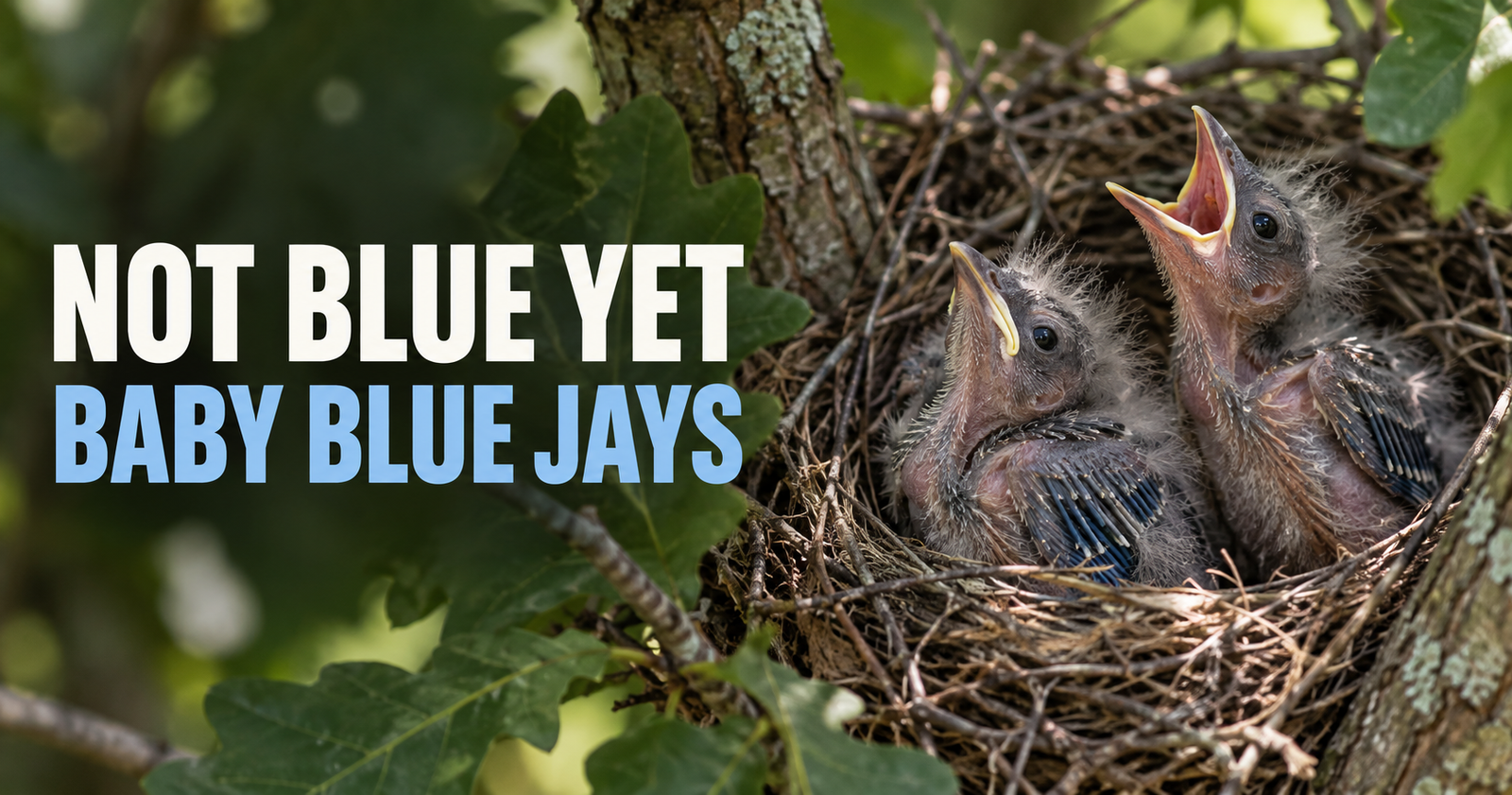
Our baby Blue Jay identification guide follows that development from newly hatched nestling through the fledgling stage.
What If I Find Blue Jay Eggs With No Parent Around?
Don’t immediately assume the nest has been abandoned.
Parent birds don’t remain visibly sitting on a nest every second.
They may leave to feed or temporarily move away after being disturbed.
Cornell advises that adult birds usually return after the perceived threat has passed and recommends observing from a distance rather than assuming unattended eggs have been abandoned.
This is one situation where standing directly beside the nest waiting for Mom to return can work against you.
Back away.
Give the birds room.
Then observe.
Should I Touch Blue Jay Eggs?
I wouldn’t.
There’s usually no reason.
The old claim that a parent automatically abandons eggs because a person briefly touched them is oversimplified, but that doesn’t mean handling wild bird eggs is a good idea.
You can damage an egg.
You can disturb the parents.
Repeated activity can attract attention to the nest.
And active native bird nests, eggs and young have legal protections.
Enjoy the nest without turning it into something that needs to be handled.
Should I Move a Blue Jay Nest Somewhere Safer?
No, not because another location looks better to you.
The parents selected that site and know where the nest is.
Moving an active nest can cause abandonment, and active nests of native migratory birds are federally protected.
Cornell’s NestWatch advises leaving active nests with eggs where they are rather than relocating them.
If there’s a genuine emergency involving an active nest, contact an appropriate wildlife professional rather than improvising.
Why Did My Blue Jay Eggs Disappear?
Unfortunately, nests fail.
Eggs can be taken by predators.
Severe weather can damage nests.
A nesting attempt can be abandoned.
Eggs can fail to hatch.
Blue Jays themselves are famous for occasionally taking other birds’ eggs, but their own nests are vulnerable too.
I wouldn’t automatically blame the first squirrel, crow, snake, or hawk you see nearby unless you actually witnessed what happened.
Nature leaves us with unanswered questions sometimes.
Do Blue Jays Have More Than One Brood a Year?
Cornell lists one brood as typical for Blue Jays.
That makes a successful nesting attempt especially important.
Compare that with some backyard birds capable of producing several broods during one breeding season.
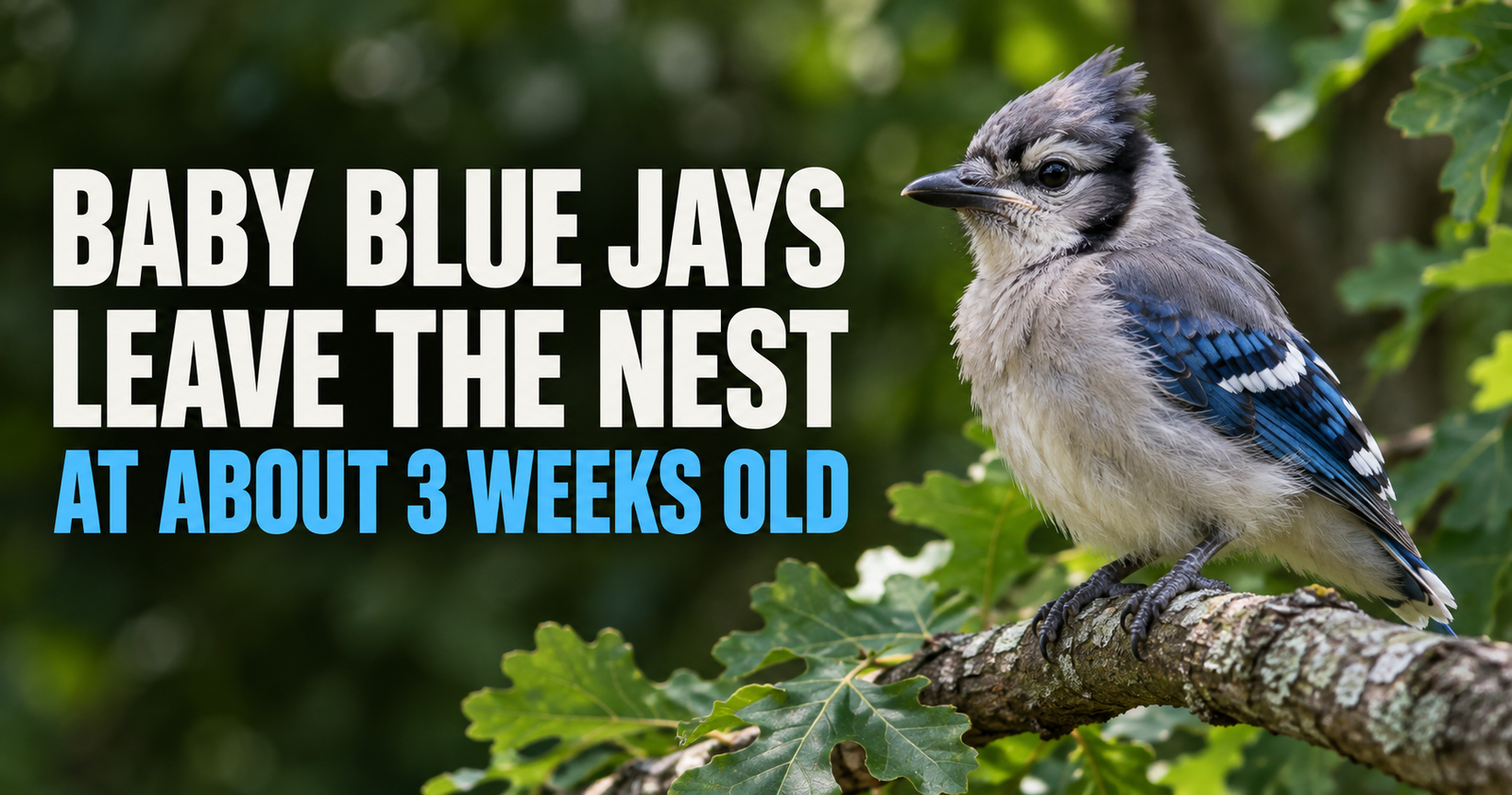
Blue Jays invest heavily in their young, and family relationships continue beyond the day the youngsters leave the nest. That continuing family care is explored in young Blue Jay development.
How Long Do Baby Blue Jays Stay in the Nest?
Roughly 17 to 21 days after hatching.
Interestingly, some young Blue Jays begin wandering away from the nest shortly before the entire brood officially fledges.
Cornell notes that individual nestlings may move as far as about 15 feet from the nest 1 to 3 days before fledging.
That’s exactly the kind of behavior that can make someone think they’ve discovered an abandoned baby.
The youngster may simply be approaching fledging age.
Common Questions About Blue Jay Eggs
What color are Blue Jay eggs?
They can be bluish or light brown and typically have brownish spots.
How many eggs does a Blue Jay lay?
A typical clutch contains about 2 to 7 eggs.
How big are Blue Jay eggs?
Approximately 1 to 1.3 inches long and 0.7 to 0.9 inches wide.
How long do Blue Jay eggs take to hatch?
The incubation period is approximately 17 to 18 days.
Which parent sits on Blue Jay eggs?
The female incubates. The male supplies her with food during incubation.
Do Blue Jays lay blue eggs?
They can. Blue Jay eggs may be bluish, but they can also appear light brown. Brownish spotting is typical.
Do Blue Jays lay eggs in birdhouses?
Not normally. Blue Jays build open-cup nests in trees rather than nesting in traditional enclosed birdhouses.
Can I tell a Blue Jay egg from a robin egg?
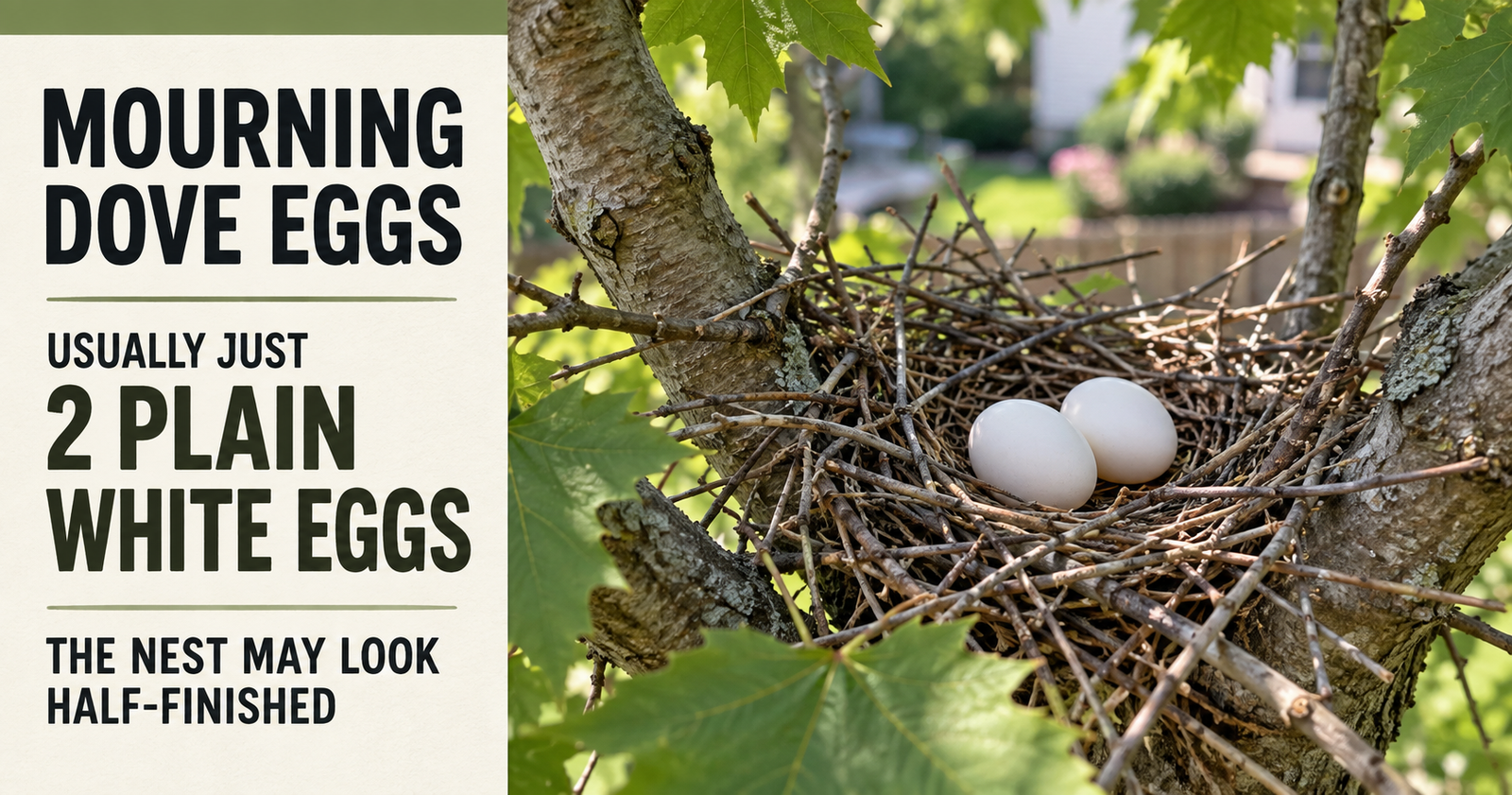
Blue Jay eggs typically show brownish spotting, while the familiar American Robin egg is usually a more uniform blue. Watching for the adult birds is much more reliable than relying on color alone. For another common backyard egg with a notably plain appearance, compare Mourning Dove egg appearance.
What should I do if I find a Blue Jay nest?
Observe it from a respectful distance and avoid unnecessary handling or disturbance. If the parents temporarily leave, give them room to return.
Finding Blue Jay eggs is exciting, but the best identification clue usually isn’t sitting inside the nest.
It’s flying around outside it.
Watch the adults.
Watch what they’re carrying.
Watch where they repeatedly land.
Put the egg color, nest shape, tree location and parental behavior together.
That’s much more reliable than trying to identify an entire nesting attempt from one blue-speckled egg.
Mason Reed is the Bird Identification & Nesting Contributor for BirdResource.com, where he helps backyard birdwatchers understand the nests, eggs, young birds and behaviors they find around their homes without turning every wildlife encounter into guesswork.