If you’re trying to figure out whether the Blue Jay in your yard is male or female, I’ve got good news and bad news.
The good news is you’re probably not overlooking some obvious marking.
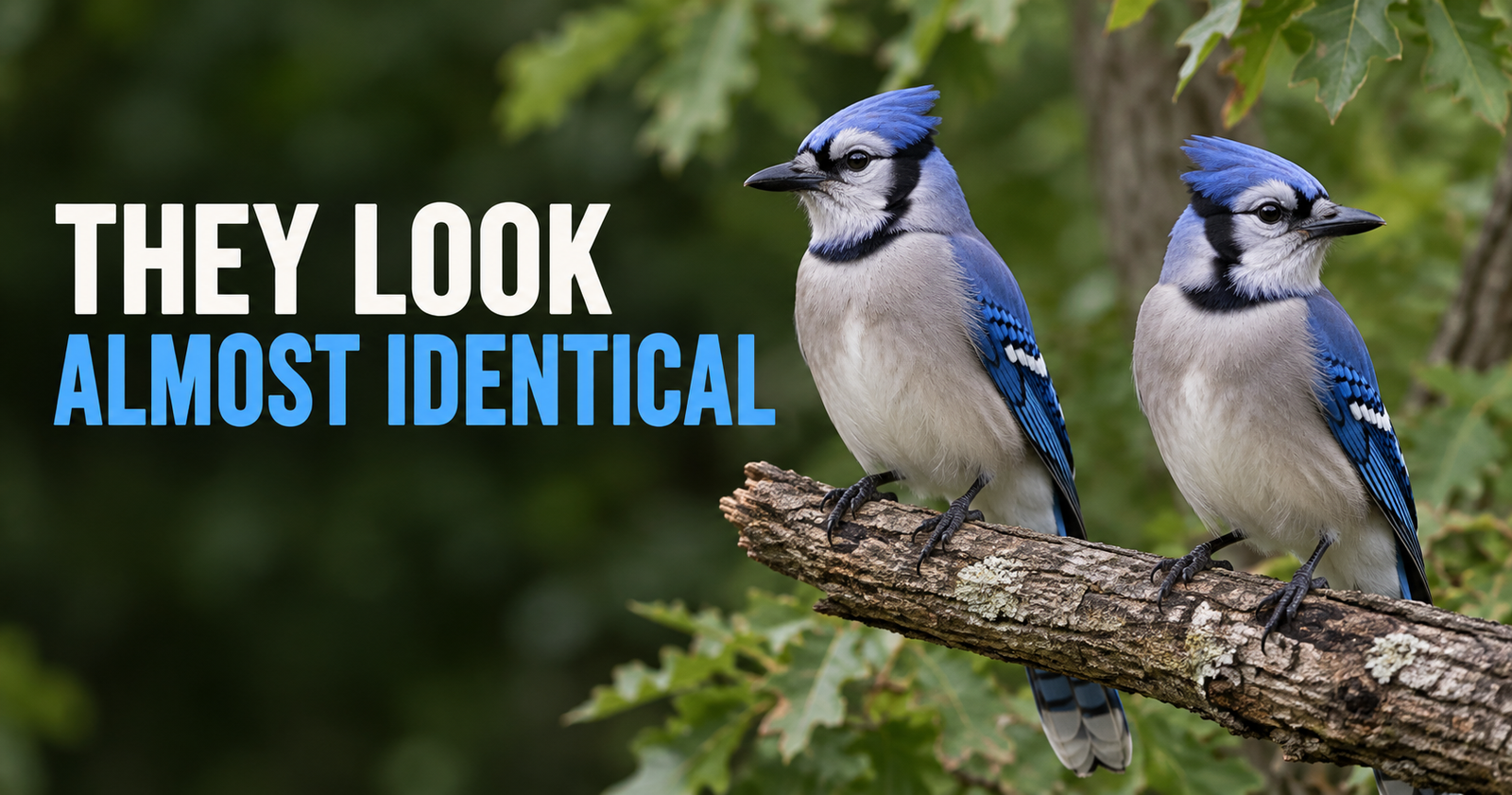
The bad news is male and female Blue Jays look remarkably similar.
There’s no bright male and dull female like we see with Northern Cardinals.
A male Blue Jay doesn’t have a special colored chest.
The female doesn’t have a different wing pattern.
Both sexes have that familiar combination of blue, white, and black plumage, a prominent crest, barred wings and tail, white underparts, and a dark necklace around the head and throat.
Cornell actually uses the Blue Jay as an example of a bird where both sexes share the same adult plumage pattern.

That means looking at a single Blue Jay sitting on your feeder and confidently declaring “That’s a male” usually isn’t justified from appearance alone. A camera-equipped setup such as the Kiwibit smart feeder can support closer observation of recurring feeder visitors and their behavior.
There are differences we can look at, especially behavior during breeding and nesting.
But this is one bird where sometimes the most accurate identification is simply:
Adult Blue Jay. Sex unknown.
Do Male and Female Blue Jays Look Different?
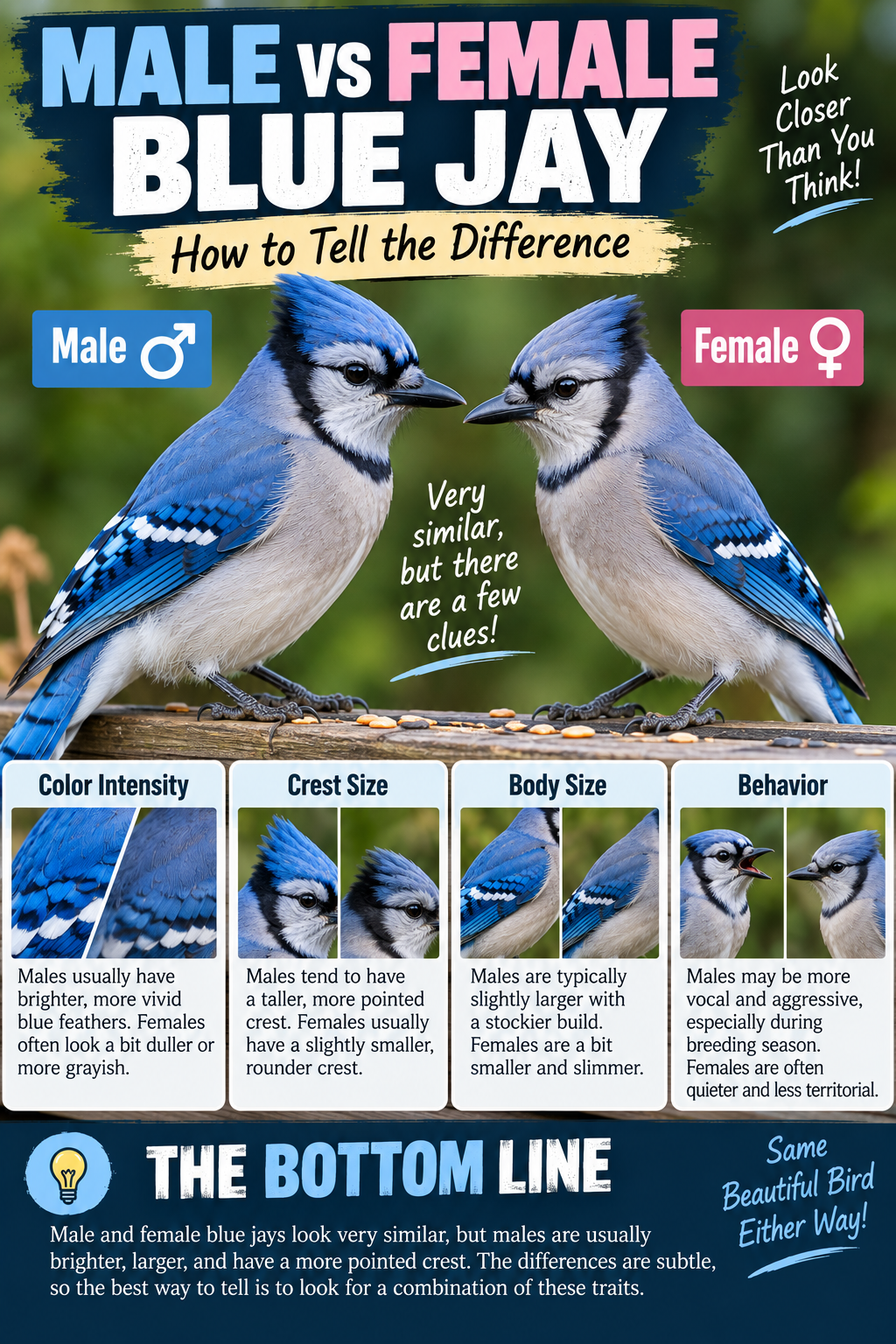
Not in any obvious, dependable way.
Cornell describes adult Blue Jays as blue above and white below with a prominent crest, bold black necklace, barred wings and tail, and a strong straight bill. Those identification characteristics apply to both sexes. For a broader look at the species’ appearance and behavior, see the complete Blue Jay identification guide.
Both males and females have:
blue wings,
blue tails,
white wing markings,
white or pale gray underparts,
a black necklace,
a prominent crest,
and essentially the same overall pattern.
Put a male and female beside one another and you may still have trouble deciding which is which.
That’s normal.


Are Male Blue Jays Bigger Than Females?
On average, males can be somewhat larger.
But here’s the problem:
Average differences don’t reliably identify individual birds.
Cornell Bird Academy addressed this question directly during a feeder-watch event. Their experts explained that males are slightly larger on average, but even within a pair you can’t assume the larger bird will always be the male. Without genetics or observing sex-specific reproductive behavior, reliable identification can be extremely difficult.
Cornell’s standard Blue Jay measurements don’t even separate males and females. It lists both sexes together at approximately:
9.8 to 11.8 inches long,
2.5 to 3.5 ounces,
with a wingspan around 13.4 to 16.9 inches.
That’s a substantial range.
One naturally small male can easily be smaller than one naturally large female.

Don’t Use Size Unless You Have Much Better Evidence
This is where internet identification advice can get people into trouble.
You may read:
“Male Blue Jays are bigger.”
Technically, there’s something behind that statement.
But then someone sees two jays and assumes:
Big = male.
Small = female.
That’s not reliable.
Distance alone can fool you.
A bird six feet closer can look noticeably larger.
Posture matters.
Feathers can be fluffed.
Camera lenses distort perspective.
And individual size variation overlaps between sexes.
So size can be a supporting clue, but I would never use it as my only clue.
Are Male Blue Jays Brighter Blue?
No reliable rule says the brighter Blue Jay is male.
Both sexes share essentially the same plumage.
Cornell’s Blue Jay identification material doesn’t describe a male-versus-female color difference because there isn’t a useful one for field identification.
Lighting creates another problem.
Blue Jay coloration is structural.
The blue appearance comes from light scattering through specialized feather structures rather than ordinary blue pigment. That means the same bird can look dramatically brighter or duller depending on the angle and lighting.
One bird looking more brilliantly blue in a photograph doesn’t tell me it’s male.
It may simply be standing in better light.

Male and Female Blue Jays Have the Same Basic Markings
This is worth emphasizing because people sometimes search for tiny differences in the black facial markings.
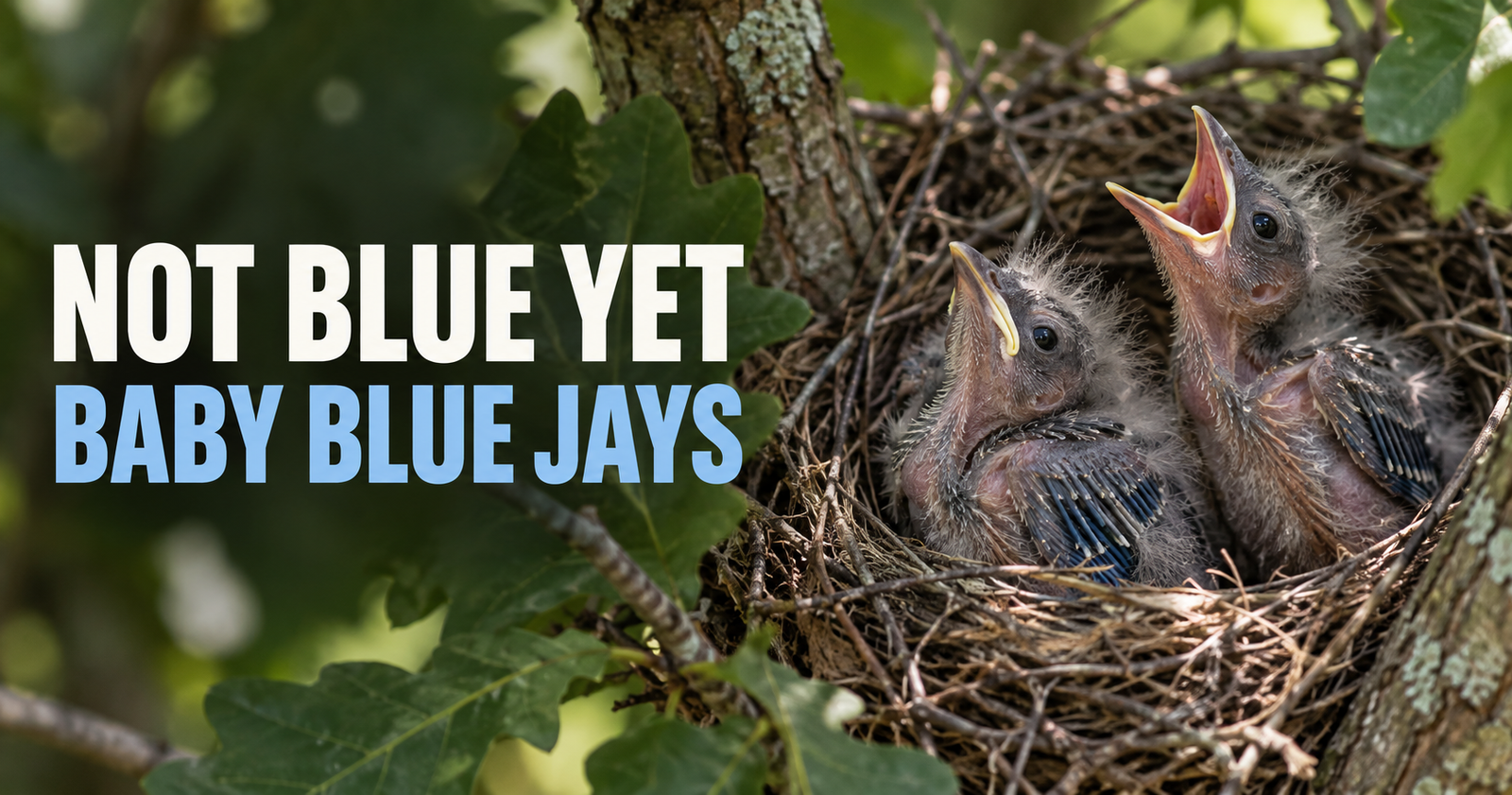
Both sexes have the characteristic dark bridle around the face, nape, and throat.
Interestingly, Cornell notes that this black pattern varies substantially between individual Blue Jays and may actually help the birds recognize one another.
That’s fascinating.
But individual variation isn’t the same as a sex difference.
A Blue Jay with a thicker-looking black necklace isn’t automatically male.
A bird with slightly different facial markings isn’t automatically female.
You may simply be seeing two different individuals.
Does Crest Size Tell You Whether a Blue Jay Is Male or Female?
No.
Both male and female Blue Jays have prominent crests.
And crest appearance changes constantly because Blue Jays can raise and lower those feathers.
A calm bird may flatten its crest considerably.
An alert or agitated bird may raise it.
Cornell notes that Blue Jays lower their crests while peacefully feeding with family or flock members and while tending nestlings.
That means two photographs of the same bird can show dramatically different-looking crests.
So:
Big crest ≠ male.
Small crest ≠ female.
Crest position tells me much more about what the bird is doing than what sex it is.
Can You Tell Male and Female Blue Jays Apart by Their Calls?
This gets more interesting.
Both sexes produce many of the familiar Blue Jay vocalizations.
However, Audubon notes one potentially useful behavioral clue: female Blue Jays produce a rattle call accompanied by a bobbing motion when disturbed.
That gives us something more useful than trying to compare shades of blue.
But I still wouldn’t hear one random Blue Jay noise and immediately declare the bird female.
Blue Jays have an enormous vocal repertoire.
They scream.
Whistle.
Click.
Rattle.
Make softer conversational sounds.
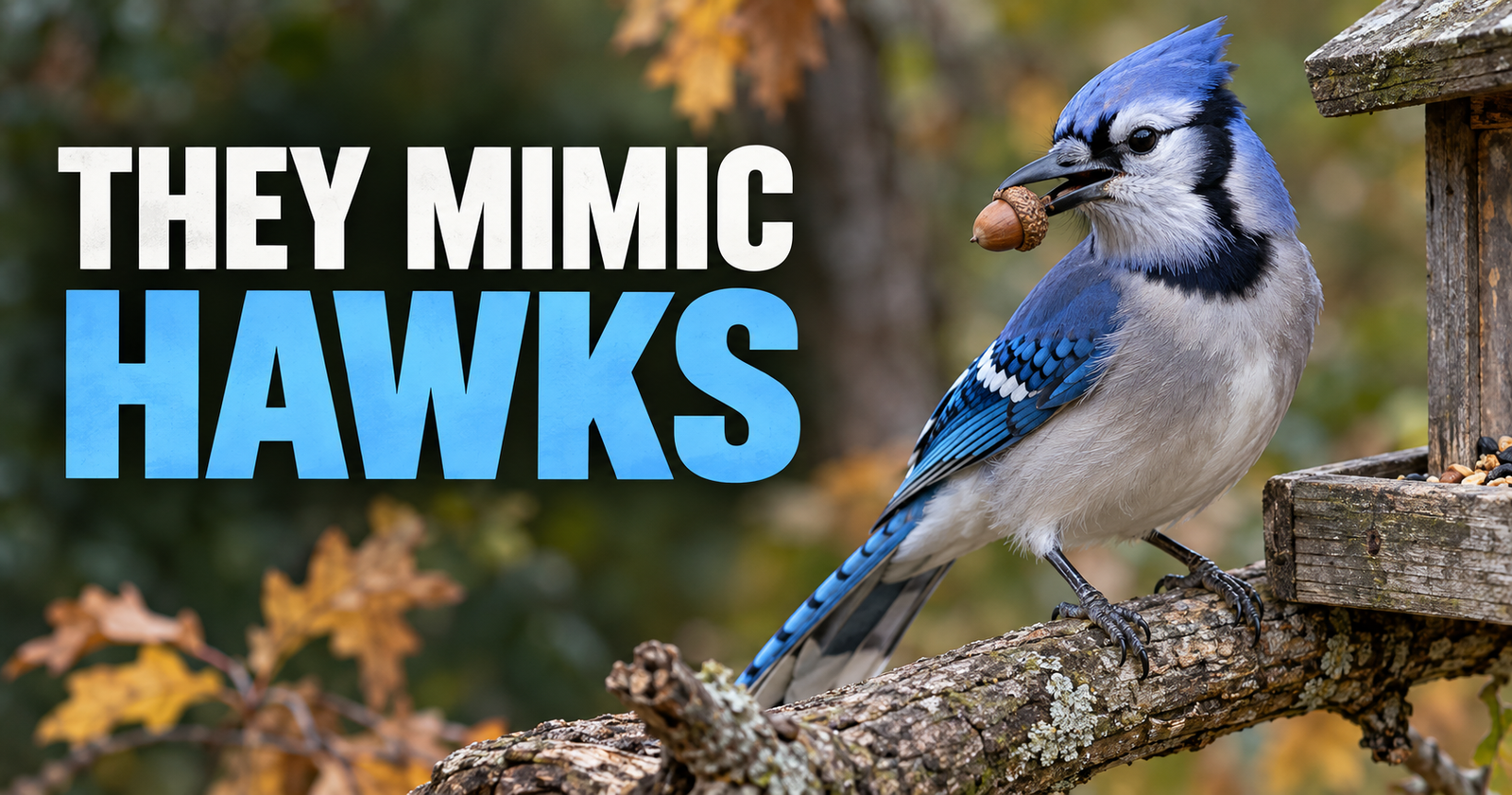
And even imitate hawks.
Correctly identifying the particular vocalization matters.
We’ll dig much deeper into those sounds in our dedicated Blue Jay calls article.
Behavior Becomes Much More Useful During Nesting Season
If you really want to know whether a Blue Jay is male or female, breeding season gives you better clues than plumage does.
Both sexes participate in nest construction.
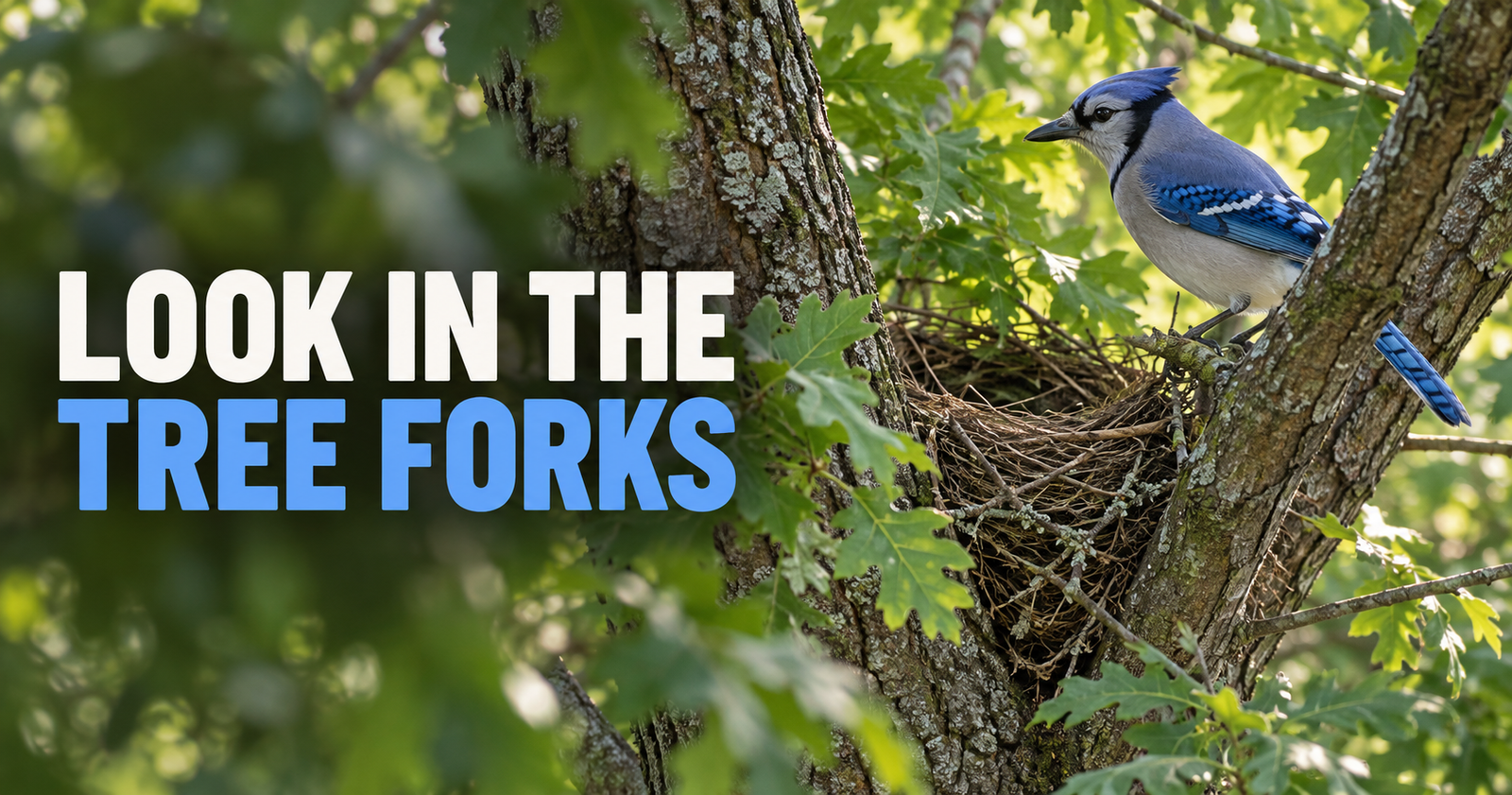
Cornell notes that males and females both build the nest, although the female generally spends more time arranging twigs and lining the interior with materials such as rootlets, grass, and sometimes mud.
So simply seeing a Blue Jay carrying a twig doesn’t automatically mean:
Female.
Both can do it.
But once eggs appear, their roles become easier to distinguish.
Which Blue Jay Sits on the Eggs?
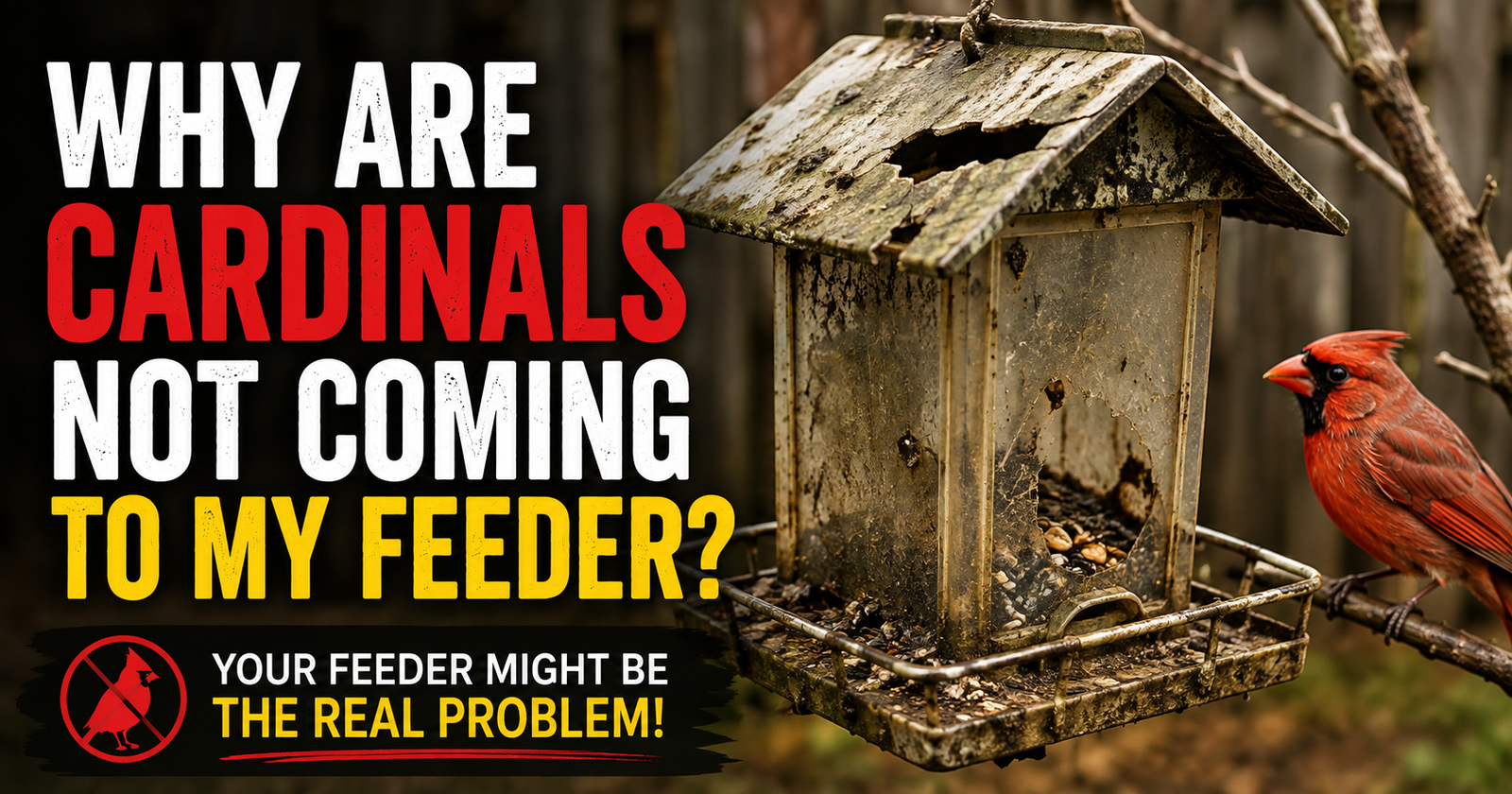
The female incubates the eggs.
That’s one of the strongest behavioral clues you can get.
If you know you’re observing an active Blue Jay nest and one adult is consistently sitting on the eggs for extended periods, that’s the female.
The male plays a different role during incubation, including bringing food to his mate.
That’s considerably stronger evidence than:
“This bird looks a little bigger.”
Now you’re observing sex-specific reproductive behavior.
Does the Male Blue Jay Feed the Female?
Yes.
During nesting, the male can bring food to the incubating female.
This gives you another potentially useful clue if you’re fortunate enough to observe a pair around an active nest without disturbing them.
Bird sitting on eggs:
Female.
Bird bringing food:
Likely male in that interaction.
That’s much more useful than trying to distinguish them by color.
And it also shows how closely the pair works together during reproduction.

Do Both Parents Feed Baby Blue Jays?
Yes.
Once the eggs hatch, both parents participate in caring for the young.
At that point, identifying the sexes from behavior becomes harder again because both adults may repeatedly arrive with food.
You’ll see one Blue Jay.
Then another.
Both are feeding nestlings.
Both look almost identical.
Unless you’ve been carefully following the pair and already know which bird is which, you may not be able to reliably assign sex from those feeding trips alone.
And that’s okay.
You don’t need to know whether every bird is Mom or Dad to understand what the family is doing.
Do Male and Female Blue Jays Build the Nest Together?
Yes.
Both participate.
Cornell’s Blue Jay photo documentation specifically shows a male and female building a nest together and notes that the female usually spends more time arranging the twigs and lining the nest.
This is a good example of why simplistic rules fail.
You might hear:
“Female birds build nests.”
Not always.
Or:
“The Blue Jay carrying sticks must be female.”
Not necessarily.
Bird species divide reproductive work in different ways.
For Blue Jays, nest building is a shared project.
What About Courtship Behavior?
Courtship can provide clues too, although it gets complicated quickly.
Blue Jays can participate in social courtship groups involving a female and several males.
The birds may follow one another through trees and fly together while the males compete for the female’s attention.
Eventually a pair forms.
If you watch enough of that behavior, you may be able to determine which bird is the female based on the interactions around her.
But for the average person seeing three Blue Jays bouncing around an oak tree?
I wouldn’t pretend it’s easy.
Courtship behavior requires context.
Do Male Blue Jays Feed Females During Courtship?
Courtship feeding can occur.
This is another behavior where knowing exactly what you’re observing can help distinguish the pair.
A male may present food to a female as part of courtship and pair-bond behavior.
But again, I wouldn’t identify sex from one quick food exchange unless the broader behavior supports it.
Blue Jays have complex social relationships.
Food gets moved.
Food gets cached.
Birds interact.
A five-second observation can be misleading.
Watch longer whenever possible.
Do Male and Female Blue Jays Mate for Life?
Blue Jays form strong pair bonds and have complex family relationships, but I wouldn’t reduce that to the absolute statement that every Blue Jay mates with one bird for life.
Cornell describes Blue Jays as having tight family bonds and complex social systems.
Pairs work together through courtship, nesting, incubation support, and raising young.
That relationship can be substantial.
But wild birds can lose mates, relationships can change, and long-term pair behavior isn’t something I’d turn into a romantic guarantee.
It’s better to describe what researchers actually observe than force every bird relationship into the human phrase “married for life.”
Is the Blue Jay Following Another Blue Jay the Male?
Not necessarily.
Blue Jays interact with mates, family members, flock members, and other jays.
Two birds traveling together aren’t automatically a male and female pair.
And even if they are paired, you can’t determine which is male simply because one follows the other.
This becomes especially tricky outside breeding season when social groups can include multiple individuals.
Look for stronger behavioral evidence before assigning sex.
Can You Tell Male and Female Blue Jays Apart at a Feeder?
Usually not with confidence.
This is probably the situation most BirdResource readers will encounter.
Two Blue Jays land at the feeder.
One looks slightly larger.
One grabs a peanut first.
One chases the other.
Which is male?
I wouldn’t know from that alone.
Dominance doesn’t automatically equal male.
Being first to the feeder doesn’t equal male.
Being louder doesn’t automatically equal male.
Being brighter doesn’t equal male.
Being larger doesn’t reliably equal male.
Sometimes the correct answer is:
I can’t tell.
That’s better than inventing certainty.
Is the More Aggressive Blue Jay the Male?
Not reliably.
Both sexes can defend themselves, respond to threats, interact around food, and participate in social behavior.
A particularly assertive bird isn’t automatically male.
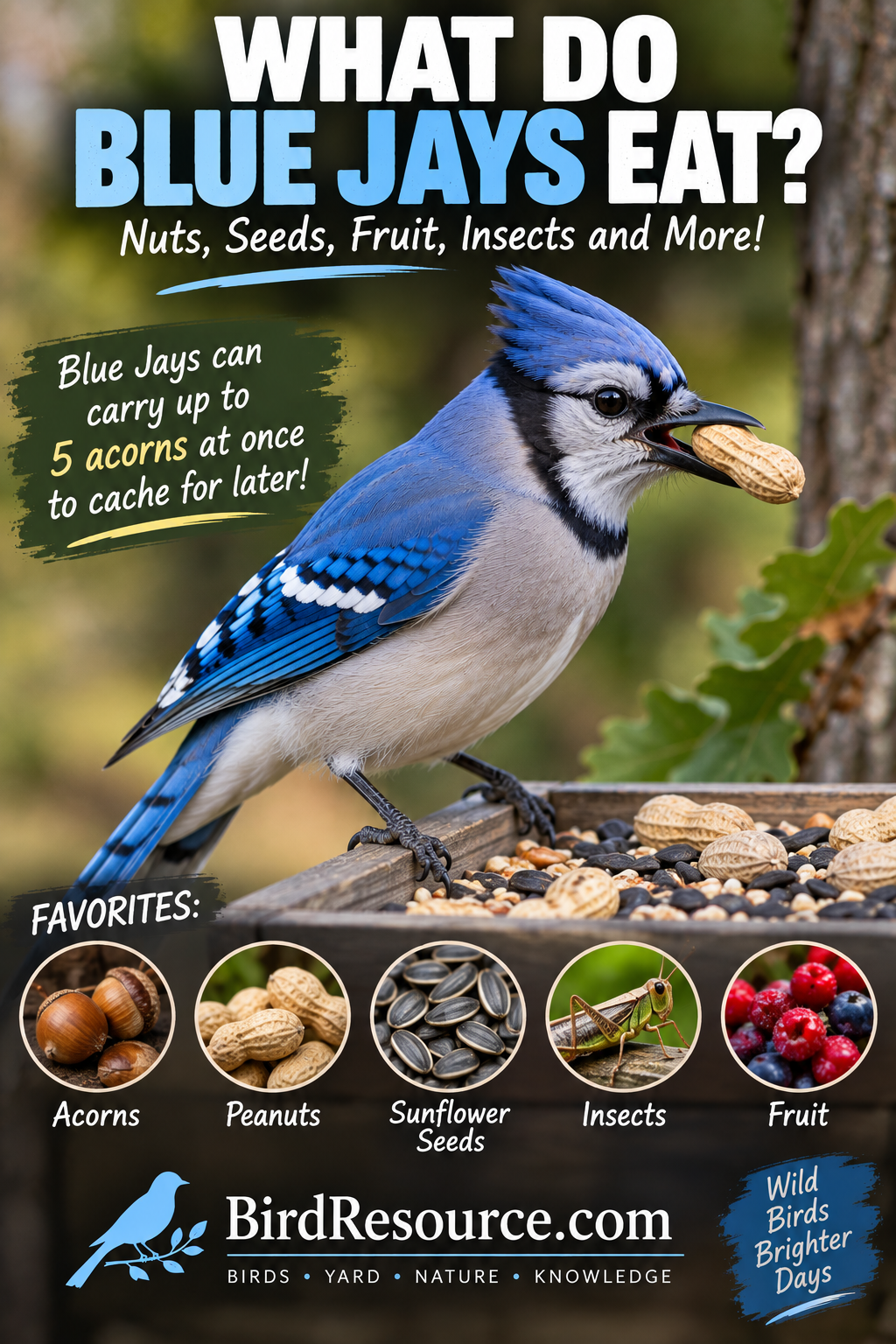
Feeder dominance can also depend on the individual bird, hunger, social relationships, and what else is happening at the feeding station. The food itself can also shape what happens at a feeding station; see Blue Jay feeding behavior.
This is another example of humans trying to map familiar stereotypes onto birds.
Male = aggressive.
Female = quiet.
Nature isn’t that simple.
Is the Female Blue Jay Duller Than the Male?
No.
This misconception probably comes from species where sexual dimorphism is obvious.
Northern Cardinals are the perfect example.
Adult male cardinal:
Brilliant red.
Adult female:
Mostly warm brown.
With Blue Jays, Cornell specifically places them among birds where males and females share the same adult plumage pattern.
So don’t search for the “brown female Blue Jay.”
If you’re looking at a brownish bird, you probably need to reconsider the species or the bird’s age.
Male Blue Jay vs Female Blue Jay at a Glance
The simplest comparison is:
Color: Essentially the same.
Crest: Both have one.
Black necklace: Both have one.
Wing markings: Essentially the same.
Tail pattern: Essentially the same.
Average size: Males may average somewhat larger.
Reliable individual identification by size: No.
Incubates eggs: Female.
Brings food to incubating mate: Male.
Nest building: Both.
Feeds young: Both.
Female-specific clue: A female rattle call with accompanying bobbing behavior has been described.
That’s why behavior beats plumage for this species.
Male Blue Jay vs Female Cardinal Is a Completely Different Situation
If you’ve been following our Northern Cardinal guides, the contrast is dramatic.
With cardinals, sex identification is usually easy once the birds reach adult plumage.
The male is brilliant red.
The female is predominantly brown with reddish accents.
Blue Jays don’t give us that luxury.
This is a great reminder that bird identification rules don’t transfer automatically between species.
Sometimes color tells you everything.
Sometimes it tells you almost nothing about sex.
Don’t Confuse a Female Blue Jay With a Female Bluebird
The names make this surprisingly easy for beginners to mix up.
A female Blue Jay still looks like a Blue Jay.
Blue, white, and black.
Large.
Crested.
Long-tailed.
A female Eastern Bluebird looks completely different. Cornell describes female Eastern Bluebirds as mostly grayish above with bluish wings and tail and a subdued orange-brown breast.
Bluebirds are also substantially smaller.
So if someone tells you:
“Female Blue Jays are gray and brown.”
there’s a decent chance they’re confusing Blue Jays with bluebirds.
What About Juvenile Blue Jays?
Young birds can complicate identification even further.
Juvenile plumage and developing behavior may make a young Blue Jay look somewhat different from a polished adult.
But a juvenile shouldn’t automatically be labeled female because it looks less impressive.
Age and sex are different questions.
We’ll handle juvenile identification properly in the next supporting article because What Do Baby Blue Jays Look Like?deserves its own guide from hatchling through fledgling and juvenile stages.
Can DNA Tell Whether a Blue Jay Is Male or Female?
Yes.
When researchers or wildlife professionals need definitive sex determination in a bird species without obvious external differences, genetic testing can provide an answer.
Cornell Bird Academy specifically notes genetics as one of the ways to know a Blue Jay’s sex when external appearance isn’t sufficient.
Obviously, nobody needs to DNA-test the Blue Jay eating peanuts in the backyard just to satisfy curiosity.
For everyday birdwatching, behavior is much more practical.
What’s the Most Reliable Way to Tell Male and Female Blue Jays Apart?
If we’re talking about an unbanded wild bird in your yard, reproductive behavior is your best practical clue.
Watch an active nest from a respectful distance.
The bird performing prolonged incubation is female.
The bird delivering food to her during incubation is the male.
Outside that context, certainty gets much harder.
Size may offer a weak clue.
Certain vocal behavior may help.
But plumage isn’t going to solve it.
Sometimes the scientifically responsible answer really is:
Male or female Blue Jay. I can’t tell which.
Common Questions About Male and Female Blue Jays
What is the main difference between a male and female Blue Jay?
There is no obvious plumage difference. Male and female Blue Jays have essentially the same blue, white, and black coloration. Males may average slightly larger, but size isn’t reliable enough to sex individual birds.
Are male Blue Jays brighter than females?
No reliable sex difference in plumage brightness is used for field identification. Lighting can dramatically change how bright the structural blue coloration appears.
Are male Blue Jays larger?
Males average somewhat larger, but there’s enough overlap that the larger bird in a pair isn’t guaranteed to be male.
Do female Blue Jays have crests?
Yes. Both sexes have the familiar Blue Jay crest and can raise or lower it.
Which Blue Jay builds the nest?
Both sexes participate in nest construction. Cornell notes that the female generally spends more time arranging twigs and lining the nest.
Which Blue Jay sits on the eggs?
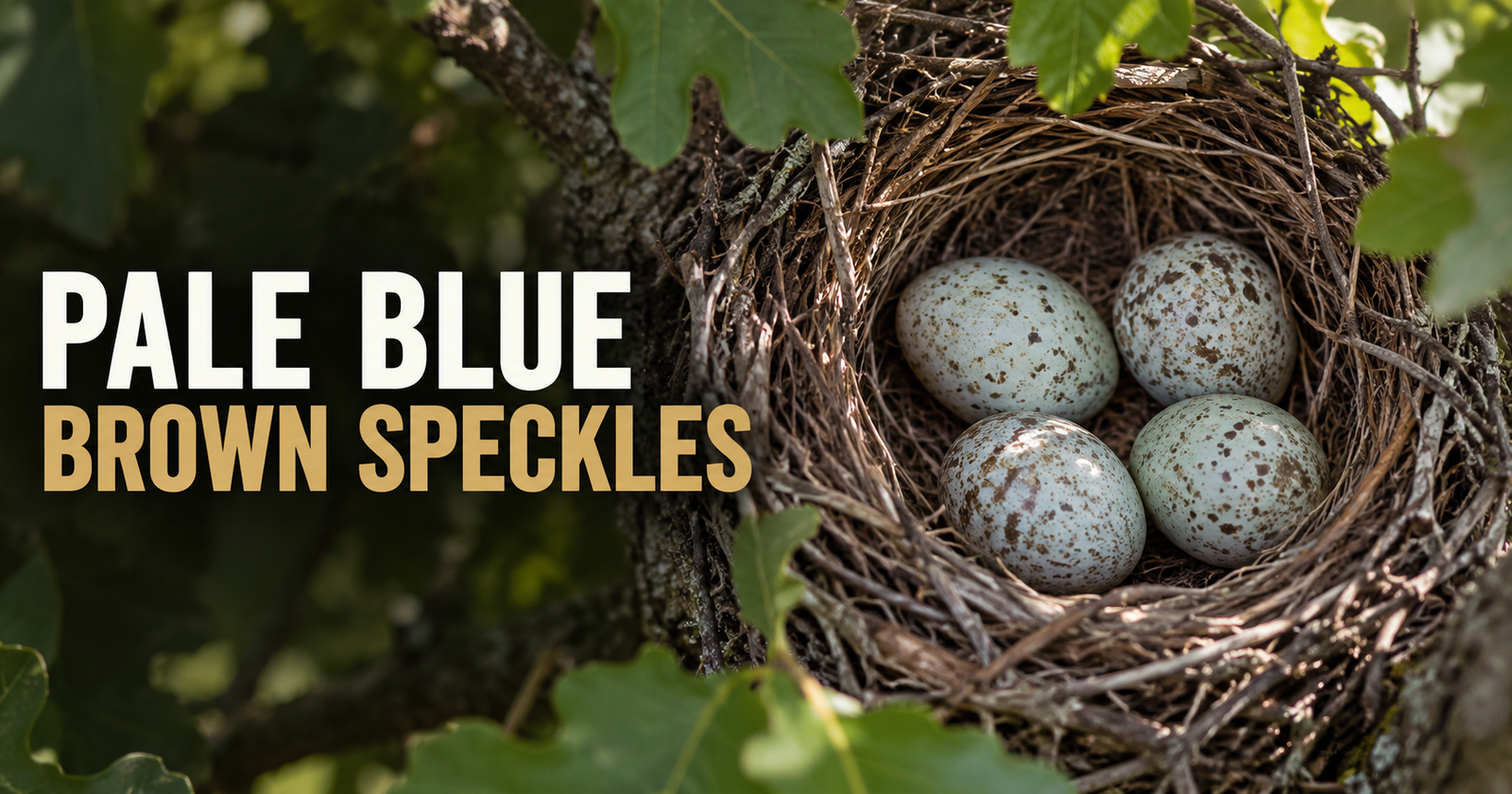
The female performs incubation. This is one of the most useful behavioral clues for identifying the sex of a Blue Jay around an active nest. Readers observing that behavior can use this Blue Jay egg identification to compare the eggs with the nest and adult-bird clues.
Does the male Blue Jay feed the female?
Yes. The male brings food to the female during incubation.
Do both Blue Jay parents feed the babies?
Yes. Both parents participate in feeding and caring for their young after hatching.
Is the aggressive Blue Jay usually male?
You can’t reliably identify sex based on aggression. Both male and female Blue Jays can participate in assertive social and defensive behavior.
Can You Tell a Blue Jay’s Sex by Its Call?
Usually, no.
Male and female Blue Jays both produce vocalizations, and there isn’t a simple male call versus female call that lets the average backyard birdwatcher reliably determine sex by listening.
That’s very different from learning to recognize the species itself by sound.
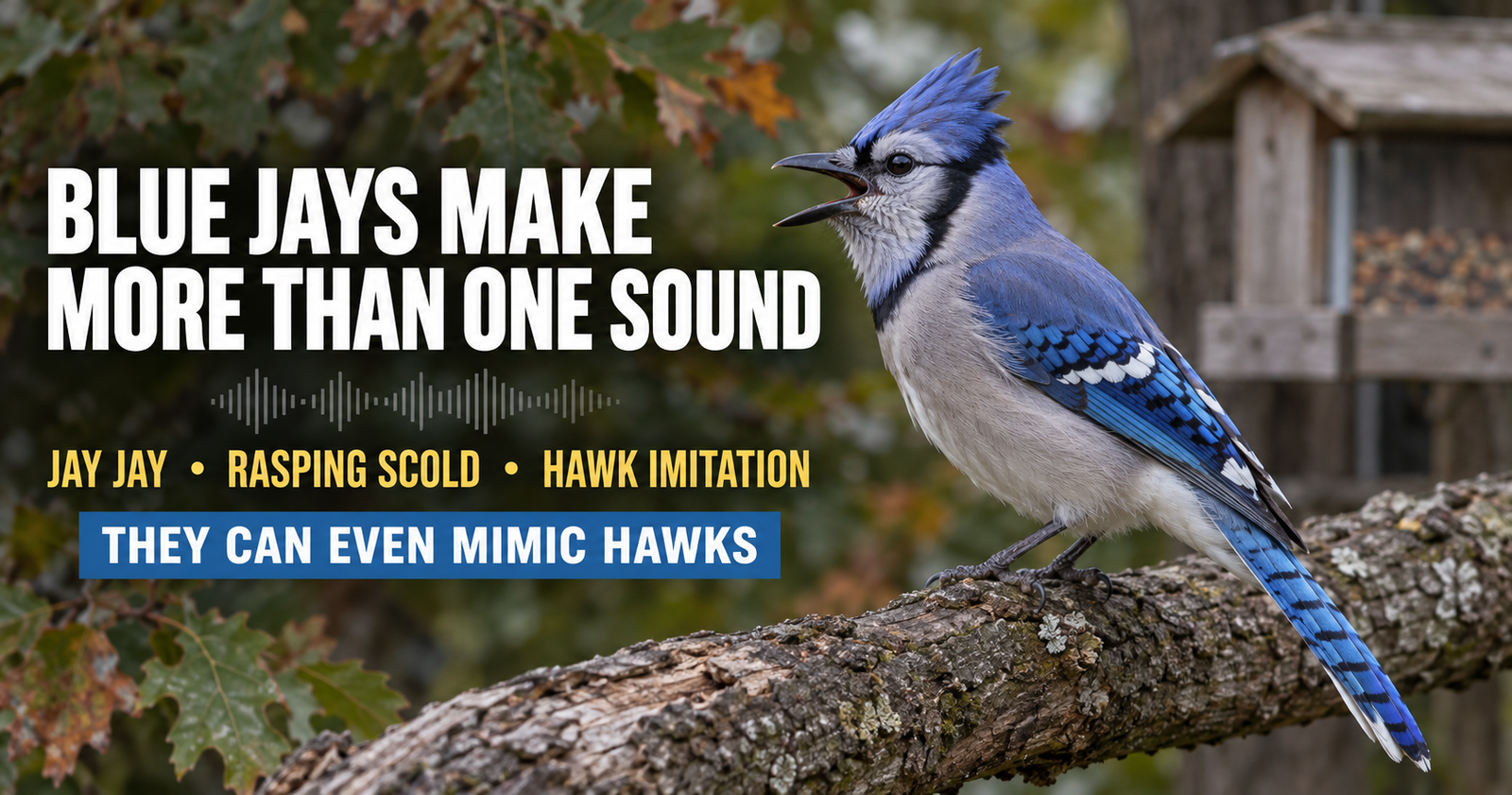
Blue Jays have an impressively varied vocabulary. Cornell describes their vocalizations as including the familiar loud jeercalls, clear whistled notes, rattles, clicks, gurgles, and much softer sounds that most people probably wouldn’t associate with a Blue Jay at all. For examples of how these calls differ in real backyard situations, see Blue Jay sound vocabulary.
They can even imitate hawks.
But hearing one of those sounds doesn’t usually give you enough information to confidently say:
“That’s a male.”
or:
“That’s definitely a female.”
Behavior around a known nesting pair can sometimes provide additional context, but sound alone isn’t the shortcut people hope it will be.
Can You Tell Male and Female Blue Jays Apart by Behavior?
Sometimes behavior gives you better clues than appearance.
During breeding season, the female performs the incubation while the male brings her food. That means a Blue Jay consistently sitting on eggs in a confirmed active nest is the female.
Courtship can provide clues too.
Cornell describes courtship groups containing several males following a female. These groups can include roughly three to ten birds, with males pursuing the female until a pair forms.
If you’re fortunate enough to watch that behavior clearly, you have more information than someone looking at two random Blue Jays sitting beside a feeder.
But there’s an important distinction:
Behavior can help identify sex in a particular situation. It doesn’t give males and females permanently different everyday behaviors.
A Blue Jay gathering food isn’t automatically male.
A Blue Jay carrying a twig isn’t automatically female.
A loud Blue Jay isn’t automatically male.
You need context.
Which Blue Jay Builds the Nest?
Both sexes participate.
That’s another reason nest building doesn’t give us an easy male-versus-female identification trick.
Male and female Blue Jays both help select the nesting site and both participate in construction.
The pair builds an open-cup nest using materials such as twigs, bark strips, rootlets, grasses, moss, and sometimes human-made materials.
So if you see one Blue Jay carrying a twig into a tree, you can’t confidently determine its sex from that behavior alone.
Later in the nesting cycle, their responsibilities become more distinctive.
The female incubates.
The male brings her food.
After the eggs hatch, both parents participate in caring for the young.
Which Blue Jay Sits on the Eggs?
The female.
This is one of our strongest behavioral clues.
Cornell reports that the female Blue Jay incubates the eggs while the male provides her with food.
So if you’re observing a known active Blue Jay nest from an appropriate distance and repeatedly see the same bird sitting on the eggs, that bird is the female.
The incubation period lasts roughly 17 to 18 days.
That doesn’t mean you should approach the nest just to determine which bird is female.
There’s no reason to disturb an active nest for an identification question.
Watch from a distance.
The birds’ normal behavior may eventually give you the answer.
Does the Male Blue Jay Feed the Female?
Yes.
During incubation, the male brings food to his mate.
That’s a much more useful sex clue than trying to compare tiny differences in body size.
If you have a known pair and repeatedly watch one bird deliver food to the incubating bird, you’re seeing a normal division of nesting responsibilities.
Male feeds.
Female incubates.
Once the babies hatch, things become less convenient for identification because both parents feed the nestlings.
That’s another recurring theme with Blue Jay sex identification.
There are moments when behavior makes the answer fairly clear.
Outside those moments, males and females can be frustratingly difficult to separate.
Do Both Male and Female Blue Jays Feed Their Babies?
Yes.
Both parents participate in feeding young Blue Jays.
The nestlings remain in the nest for roughly 17 to 21 days, and parental care continues after fledging.
That means seeing an adult carrying food toward young birds doesn’t automatically tell you whether you’re watching Mom or Dad.
Both are involved.
This is one reason I wouldn’t create an identification rule such as:
“The Blue Jay feeding the babies is the male.”
That’s incorrect.
During incubation, food delivery to the female is useful behavioral evidence.
After hatching, both sexes are busy feeding hungry youngsters.
Are Male Blue Jays More Aggressive Than Females?
I wouldn’t use aggression as a reliable way to sex a Blue Jay.
Blue Jays can be assertive around feeders, territories, predators, nests, and other birds.
Both sexes have reasons to respond strongly to threats.
A particularly bold Blue Jay isn’t automatically male.
Likewise, a quieter bird isn’t automatically female.
This is where human expectations can get us into trouble.
We sometimes expect:
male = bigger, brighter, louder, aggressive
female = smaller, duller, quieter
Northern Cardinals partially reinforce that expectation because their plumage is dramatically different.
Blue Jays don’t cooperate with that simple pattern.
Are Male Blue Jays Bigger Than Females?
Males can average slightly larger, but there’s substantial overlap.
That’s why size isn’t particularly useful for identifying the sex of one Blue Jay in your backyard.
Even when two birds are together, perspective can fool you.
One bird is closer.
One is standing taller.
One has its feathers fluffed.
One is leaning forward.
Suddenly a very small real-world size difference looks much larger than it actually is.
Unless you’re working with measurements taken under controlled conditions, I wouldn’t rely on body size.
Do Male Blue Jays Have Bigger Crests?
Not in a way I’d use for sex identification.
Crest appearance changes dramatically depending on what the bird is doing.
A Blue Jay can raise its crest when alert or agitated and flatten it when calmer.
That means the same bird can look sharp-headed and dramatic one minute and surprisingly smooth-headed later.
So if one Blue Jay appears to have a larger crest than another, don’t assume you’ve discovered the male.
You may simply be comparing two different behavioral states.
Does Crest Position Tell You the Sex?
No.
Crest position tells you more about the bird’s current state than whether it’s male or female.
Both sexes can raise and lower their crests.
That’s actually one of the fun things to watch once you stop trying to use the crest for sex identification.
Pay attention around the feeder.
A calm bird may keep the crest relatively flat.
Then another Blue Jay arrives.
Suddenly the crest changes.
A hawk appears.
Everything changes again.
The crest is part of the bird’s visual communication, not a permanent male/female marker.
Are Female Blue Jays Duller Than Males?
No obvious plumage difference makes females consistently duller.
Male and female Blue Jays share the same basic blue, white, black, and gray coloration.
That’s the answer people sometimes have trouble accepting because sexual dimorphism is so obvious in many familiar backyard birds.
But not every species works that way.
If you line up photographs of random adult male and female Blue Jays without knowing which is which, you’re not going to reliably separate them by choosing the “prettier” or “brighter” birds.
Both can look spectacular.
Why Do Male and Female Blue Jays Look the Same?
Different species evolve different visual differences between the sexes.
In Northern Cardinals, sexual dimorphism is obvious.
In Blue Jays, males and females have very similar plumage.
That doesn’t mean the sexes are biologically identical.
Their reproductive roles differ.
Females lay and incubate eggs.
Males provide food during incubation.
But evolution hasn’t produced the kind of dramatic male-versus-female color difference we see in cardinals.
That’s a useful lesson for bird identification generally.
Sometimes color tells you sex immediately.
Sometimes it tells you almost nothing.
Is a Bright Blue Jay More Likely to Be Male?
No.
I wouldn’t sex Blue Jays according to how intensely blue they appear.
Lighting alone can completely change how Blue Jay plumage looks.
Their blue coloration is also structural rather than being created simply by blue pigment. Microscopic feather structures interact with light to produce the blue appearance.
Sunlight angle matters.
Shade matters.
Camera processing matters.
Feather condition matters.
So the bird that looks electric blue in one photograph and grayish blue in another could literally be the same individual.
Brightness isn’t a reliable sex marker.
Can You Tell Male and Female Blue Jays Apart in Photos?
Usually not with confidence from appearance alone.
A photograph may show a beautiful adult Blue Jay perfectly.
Sharp crest.
Clear black necklace.
Blue wings.
Long tail.
Every feather visible.
And you may still not know whether it’s male or female.
That’s not an identification failure.
Sometimes the information simply isn’t visible.
If the photograph also shows behavior, things can change.
A bird clearly incubating eggs in a confirmed Blue Jay nest gives us useful information.
A random Blue Jay sitting on a fence doesn’t.
Sometimes “I can’t determine the sex from this photo” is the most accurate identification possible.
Can You Tell the Sex of a Juvenile Blue Jay?
Not reliably by ordinary visual observation.
Young Blue Jays already create enough identification confusion without trying to assign sex based on tiny differences.
I’d focus first on determining:
Is this actually a Blue Jay?
Is it juvenile or adult?
Is it a fledgling still receiving parental care?
Those are much more practical questions.
We’ll cover young birds separately in our baby Blue Jay identification guide because juvenile appearance and behavior deserve their own explanation.
Do Male and Female Blue Jays Stay Together?
Blue Jays form pair bonds for breeding, and pairs cooperate extensively.
They choose a nesting site.
Build the nest.
The female incubates.
The male feeds her.
Then both care for the young.
That’s a substantial partnership.
But I wouldn’t use seeing two Blue Jays together as proof that one is male and one is female.
Blue Jays interact socially outside pair relationships too.
Several birds can travel, feed, and interact together.
Context still matters.
Do Blue Jays Mate for Life?
Blue Jay pair bonds can persist, and the species is generally described as forming long-term monogamous pair relationships.
But I wouldn’t turn that into the overly romantic claim that every Blue Jay chooses one mate as a youngster and remains with that exact bird until death.
Wild birds lose mates.
Pair relationships can change.
And following individual unbanded Blue Jays across many years is difficult.
The useful takeaway is that Blue Jays form strong pair bonds and cooperate extensively during reproduction.
Their actual family behavior is interesting enough without turning it into a human love story.
Can DNA Tell Whether a Blue Jay Is Male or Female?
Yes.
When researchers, rehabilitators, or other qualified professionals need certainty, biological methods such as DNA sexing can distinguish males from females.
That’s very different from backyard identification.
You don’t need to capture a wild Blue Jay because you’re curious whether the bird eating peanuts is Bob or Barbara.
For everyday birdwatching, accept that sometimes the sex will remain unknown.
That’s normal.
What’s the Best Way to Tell a Male Blue Jay From a Female?
If you’re watching ordinary adult Blue Jays away from an active nest, there may be no reliable way to tell.
That’s the answer I’d remember.
Don’t rely on:
color,
crest size,
how blue the bird looks,
how loud it is,
how aggressive it acts,
or a tiny apparent difference in body size.
Instead, look for reproductive behavior that genuinely distinguishes the sexes.
A Blue Jay incubating eggs is female.
A known mate repeatedly bringing food to that incubating female is male.
Outside situations like those, I’d rather leave the sex unidentified than invent certainty from a visual clue that doesn’t reliably work.
Common Questions About Male and Female Blue Jays
Do male and female Blue Jays look different?
Not noticeably enough for reliable backyard identification. Both sexes share essentially the same blue, white, black, and gray plumage.
Are male Blue Jays brighter blue than females?
No reliable difference in blue intensity allows you to determine sex. Lighting and feather structure can also dramatically affect how blue a bird appears.
Are male Blue Jays bigger?
Males can average slightly larger, but the overlap between sexes makes size unreliable for identifying individual birds.
Do female Blue Jays have crests?
Yes. Both male and female Blue Jays have the species’ characteristic crest.
Do male Blue Jays have bigger crests?
Not in a way useful for sex identification. Both sexes can raise and flatten their crests depending on behavior.
Which Blue Jay builds the nest?
Both male and female Blue Jays participate in nest building.
Which Blue Jay sits on the eggs?
The female incubates the eggs.
Does the male Blue Jay feed the female?
Yes. The male brings food to the female while she’s incubating.
Do both Blue Jay parents feed the babies?
Yes. Both parents participate in feeding and caring for their young.
Can you tell a Blue Jay’s sex by its voice?
Not reliably during ordinary backyard observation. Both sexes vocalize, and there isn’t a simple male-versus-female call that provides dependable identification.
Are female Blue Jays quieter?
I wouldn’t use loudness as a sex-identification clue. Both sexes are capable of vocal communication.
Can you tell whether two Blue Jays are a male and female pair?
Behavior around an active breeding pair can provide useful clues, but simply seeing two Blue Jays together doesn’t prove they’re opposite sexes or mates.
Why is it so hard to tell male and female Blue Jays apart?
Because Blue Jays aren’t strongly sexually dimorphic in plumage. Unlike Northern Cardinals, males and females look remarkably similar.
That’s what makes sexing Blue Jays such an interesting identification problem.
With some backyard birds, one glance gives you the answer.
With Blue Jays, you may watch two beautiful adults eating side by side for twenty minutes and still have no reliable idea which is male and which is female.
And sometimes that’s the correct answer:
You simply can’t tell from what you’re seeing.
Mason Reed is the Bird Identification & Behavior Contributor for BirdResource.com, where he helps everyday birdwatchers make sense of identification, nesting, feeding, sounds, and the behaviors that reveal much more about backyard birds than color alone.