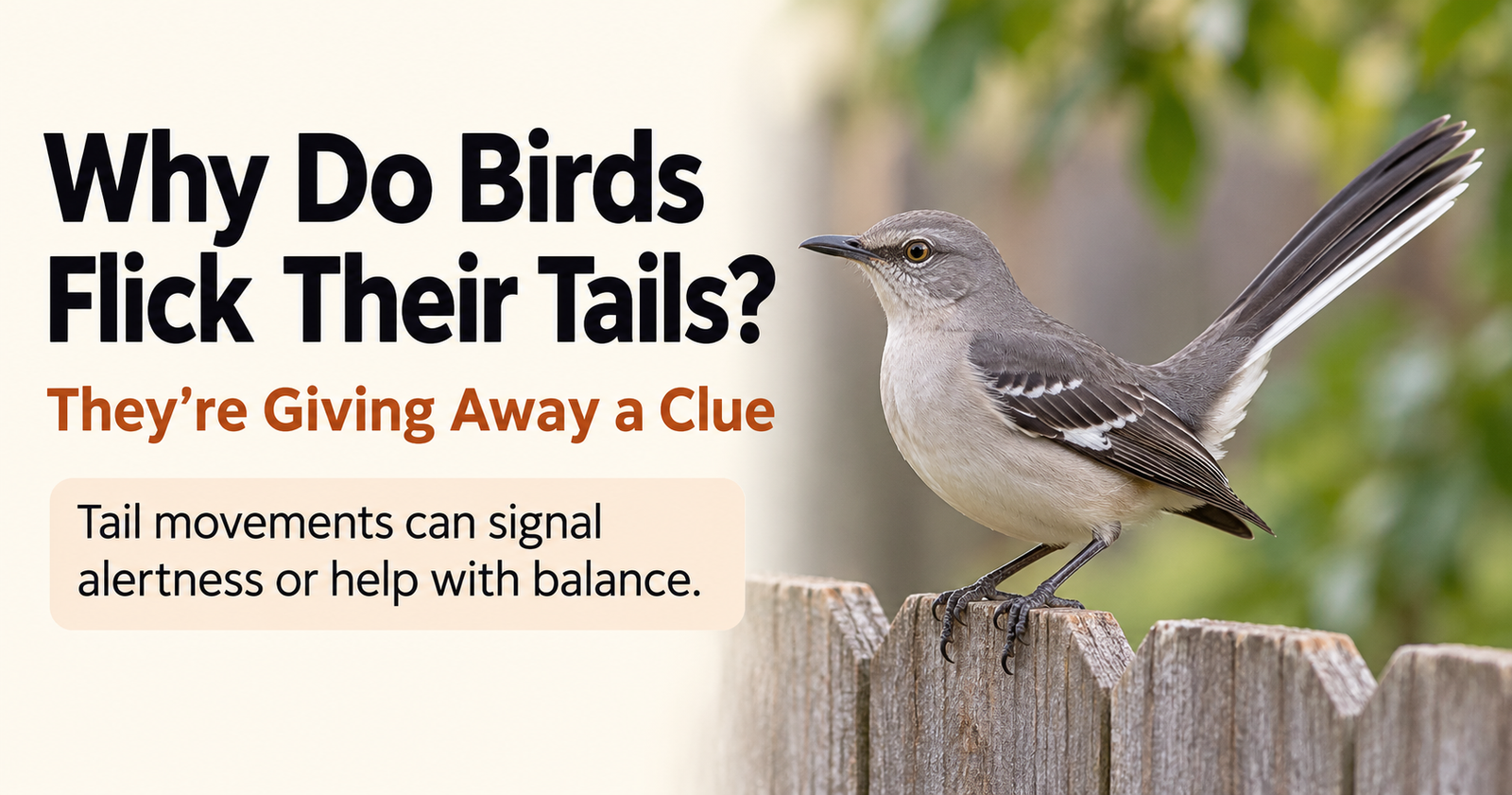
A little bird lands on a fence.
It looks around.
Then its tail suddenly jerks upward.
A second later, it does it again.
Most people probably wouldn’t think twice about that tiny movement. But I’ve come to appreciate how much you can learn about birds by paying attention to what they do between the obvious stuff.
We notice the singing.
We notice the colorful feathers.
We notice birds fighting over feeders.
But something as simple as a quick tail flick can reveal what a bird is paying attention to.
And here’s what makes this especially interesting.
Researchers have found evidence that tail flicking in some birds is connected to how alert they are and whether predators might be nearby.
Other birds may use tail movements while hunting insects.
Some species even flash contrasting tail feathers that are normally hidden.
So if I wanted to understand why a bird kept flicking its tail, I wouldn’t immediately assume it was happy, nervous, or annoyed.
I’d watch what happened right before the movement.
That’s where the interesting clues begin.
A Bird Flicking Its Tail Might Be Watching for Danger
This is the explanation I find most interesting.
Imagine a small bird sitting on a low branch.
It’s exposed.
A hawk could be somewhere nearby.
A cat might be moving through the grass.
The bird needs to remain alert.
Now imagine that same bird repeatedly flicking its tail while watching its surroundings.
Could the movement have something to do with danger?
Research suggests that it sometimes does.
A 2020 scientific review titled The Functions of Tail Flicking in Birds examined studies involving tail movements across different bird species.
The researchers found evidence connecting tail flicking with vigilance and predation risk.
In other words, some birds flick their tails more when they’re paying attention to possible threats.
That doesn’t mean every tail flick signals a predator.
But it gives us a genuinely useful reason to watch the bird’s surroundings.
The Tail Flick Might Be Telling a Predator Something
Here’s an idea that changes how I think about these movements.
Suppose a small bird notices a predator.
The bird could immediately fly away.
But sometimes it remains perched while making noticeable movements.
One proposed explanation is that visible movements may signal that the bird is alert and has already detected danger.
A predator relying on surprise might have less incentive to attack prey that appears ready to escape.
The BirdNote explanation of why birds flick their tails discusses this possibility.
It’s a fascinating idea.
But I’d be careful about claiming a bird is deliberately sending a message every time its tail moves.
The research indicates several possible functions, and the explanation can vary by species.
Here’s a Backyard Observation I’d Love to Compare
Rather than simply counting how many times a bird moves its tail, I’d compare two situations.
Situation one: A bird feeding quietly with no obvious disturbance.
Situation two: The same species becoming alert after another bird gives an alarm call.
Would its tail movements change?
That’s what I’d want to investigate.
I’d record a short video of the bird behaving normally, then compare it with naturally occurring moments when the bird becomes more watchful.
I wouldn’t deliberately scare it.
And I wouldn’t introduce a predator or play distress calls.
The point would be observing ordinary behavior without changing it.
One interesting result from the scientific review was that tail-flicking rates tended to decrease as flock size increased.
That raises another question worth watching.
Does a bird flick its tail more when it’s alone than when several birds are feeding together?
That would make an interesting original backyard observation project.
Some Birds Flick Their Tails While Hunting Insects
This is where the explanation gets completely different.
Not every tail movement is about danger.
Some birds use conspicuous tail movements while searching for food.
Imagine a small insect hiding in vegetation.
A bird moves nearby and suddenly flicks or spreads its tail.
That movement may disturb the insect enough to make it move.
And once the insect moves, the bird has a better chance of spotting it.
Researchers have investigated this possibility in several species.
The scientific literature refers to the idea as prey flushing.
It’s not equally established for every bird that flicks its tail, but it gives us another reason to look at what the bird is doing.
If it’s actively searching leaves, branches, or grass for insects, the tail movement may be connected to feeding rather than alarm.
Dark-eyed Juncos Have a Tail Trick Worth Watching
Dark-eyed Juncos are particularly interesting because of their contrasting tail feathers.
Many have white outer tail feathers that become especially noticeable when the bird moves or flies.
A junco feeding on the ground may suddenly flash those white feathers.
Then they seem to disappear again.
It’s one of those identification clues that becomes easier to recognize once you know to watch for it.
The Cornell Lab’s bird behavior lessons specifically highlight tail flicking as a useful clue when identifying certain birds.
That’s something I’d remember when watching small brownish birds moving underneath feeders.
Sometimes the tail tells you which bird you’re looking at before you get a clear view of its face.
A Tail Moving Up and Down Isn’t Always the Same as Wagging Side to Side
This distinction is worth making.
When people say a bird is wagging its tail, they might mean several different movements.
Some birds flick their tails sharply upward.
Others pump them downward.
Some spread or fan their tail feathers.
A few species move their tails from side to side.
Those aren’t necessarily interchangeable behaviors.
And different species may use similar-looking movements for different reasons.
That’s why I’d pay attention to the actual movement rather than relying entirely on the word wagging.
A bird rapidly pumping its tail while perched may be doing something different from one spreading its tail while chasing insects.
Does a Bird Wagging Its Tail Mean It’s Happy?
I wouldn’t assume that.
It’s tempting to compare birds with dogs.
A dog wags its tail.
We associate that with excitement or happiness.
Then we see a bird wagging its tail and wonder whether it’s expressing the same emotion.
But birds and dogs have very different anatomy and communication systems.
A bird’s tail plays important roles in flight, balance, display, and other behaviors.
Tail movements may also be associated with vigilance or feeding.
So tail wagging alone isn’t reliable evidence that a bird is happy.
I’d want to know the species and what was happening around it.
Could the Bird Simply Be Adjusting Its Balance?
Absolutely.
Bird tails are important for maneuvering and controlling movement.
A bird landing on a narrow branch may move its tail while settling into position.
A bird hopping between branches may adjust its tail as its body changes direction.
A sudden movement immediately after landing isn’t necessarily a social signal or predator warning.
It could simply be part of normal body control.
This is one reason I wouldn’t interpret every isolated tail flick as meaningful communication.
The pattern matters more than one movement.

What I’d Watch Around My Bird Feeder
If I wanted to investigate tail flicking without complicated equipment, I’d start with the birds already using a feeder.
But I wouldn’t watch only the feeder itself.
I’d watch the nearby branches.
That’s where birds often pause before approaching food.
I’d look for three things.
Does the Bird Flick Its Tail Before Landing?
If so, the movement might be associated with maneuvering or adjusting its position.
I’d watch whether it happens consistently during landing.
Does It Flick While Watching Another Bird?
Maybe another bird has approached.
Maybe there’s competition around the feeder.
Maybe the bird is simply remaining alert.
I’d note what changed without automatically assigning a motive.
Does It Flick While Searching for Food?
If the bird is moving through vegetation hunting insects, that gives us another possible explanation.
I’d look for whether tail movements are followed by an insect moving or the bird making a feeding attempt.
That would be a much more useful observation than simply counting tail flicks without recording context.
The Most Interesting Test Wouldn’t Require Buying Anything
Here’s an idea I’d genuinely like to see documented.
Choose one bird species that regularly visits your property.
Watch it during several short observation sessions.
Record the number of tail flicks during one minute of ordinary activity.
Then note whether the bird is:
- Feeding.
- Resting.
- Watching its surroundings.
- Interacting with another bird.
- Searching for insects.
Don’t combine every bird species into one result.
A junco and a robin may use their tails differently.
Instead, compare observations of the same species under different natural conditions.
Even if you discover no obvious pattern, that’s useful information.
The important part is recording what actually happened rather than claiming the tail movement definitely meant something.
Can Tail Flicking Help Identify a Bird?
Yes, sometimes.
Bird identification isn’t only about feather colors.
Behavior can be an excellent clue.
Some species have distinctive habits involving their tails.
A repeated tail pump, a flash of white feathers, or a particular wagging motion can help narrow down what you’re seeing.
But I wouldn’t identify a bird from tail movement alone.
I’d combine it with:
body size,
bill shape,
plumage,
habitat,
location,
and any sounds the bird makes.
That’s a much stronger approach.
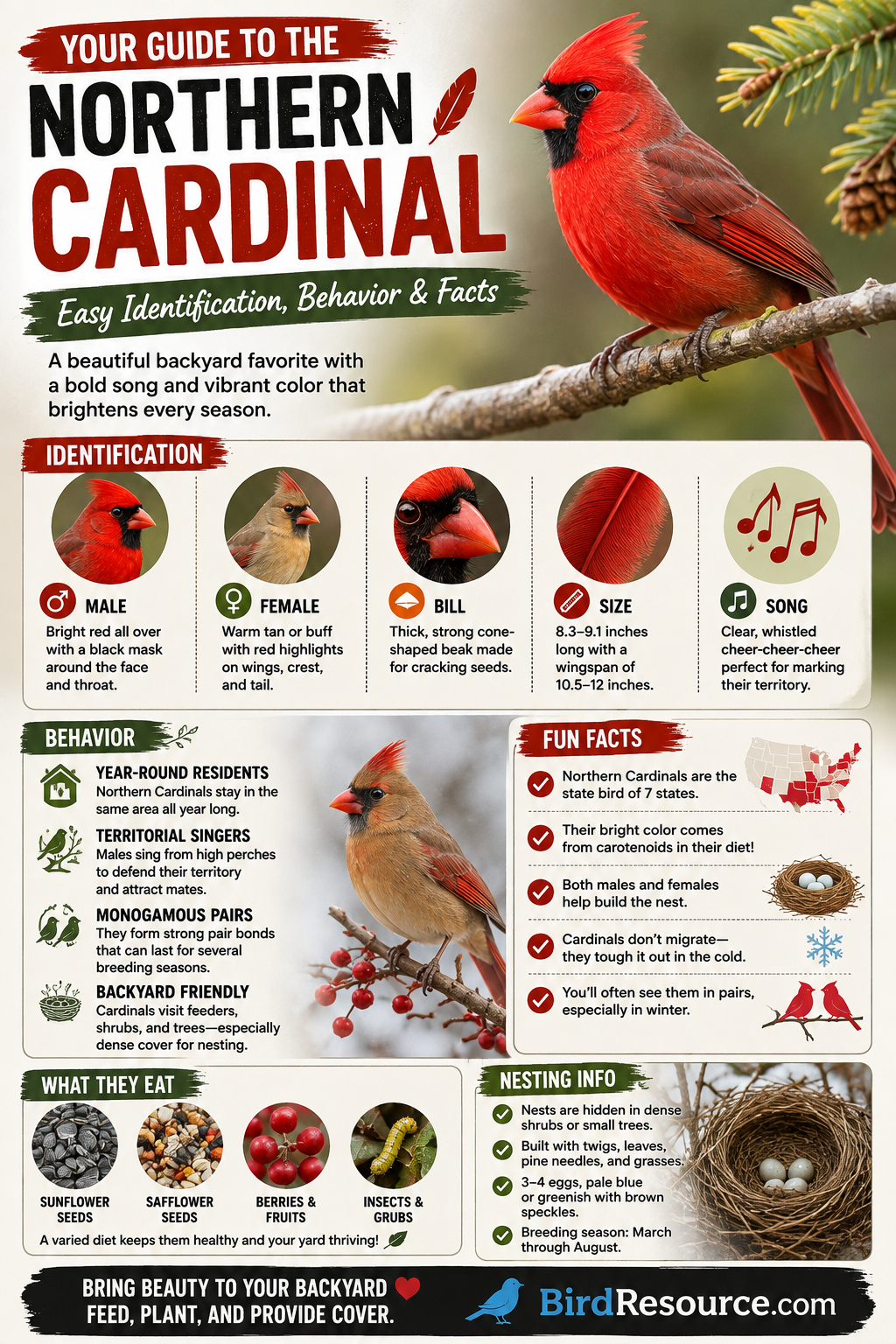
Our complete Northern Cardinal identification guide explains how combining several clues helps identify familiar backyard birds.
When Would Tail Movement Actually Concern Me?
Normal tail flicking isn’t something I’d worry about.
But I’d pay attention if the movement appeared unusual for the bird or was accompanied by other symptoms.
For example, pronounced tail bobbing in rhythm with breathing can sometimes indicate respiratory distress.
That’s different from an occasional quick tail flick.
I’d also be concerned about a bird that appeared weak, couldn’t perch normally, had difficulty flying, or showed obvious injuries.
If a wild bird seems genuinely sick or injured, contacting a licensed wildlife rehabilitator is more appropriate than trying to diagnose it from tail movements alone.
Common Questions About Birds Flicking Their Tails
Why do birds flick their tails up and down?
The reason varies by species and situation. Tail flicking can be associated with vigilance, predator awareness, feeding behavior, or ordinary body movements.
Does a bird wagging its tail mean it’s happy?
Not necessarily. Bird tail movements don’t have the same meaning as a dog’s tail wag. Context and species matter.
Why do small birds flick their tails?
Some small birds use tail movements while watching for danger or searching for food. Others have distinctive tail movements that are useful for identification.
Do birds flick their tails when they’re nervous?
Some species increase tail flicking in situations associated with vigilance or predation risk. However, the movement alone doesn’t prove that a bird is frightened.
Why do birds flash white tail feathers?
In some species, contrasting tail feathers become visible during flicking or flight. These movements can serve different functions depending on the bird.
Is tail flicking normal?
Yes. Occasional tail flicking is normal for many birds. The movement becomes more concerning when accompanied by obvious weakness, injury, or breathing difficulty.
The Next Time a Bird Flicks Its Tail, Watch What Happens Next
I think the biggest mistake we make when watching birds is trying to assign a meaning to one movement without considering everything around it.
A tail flick might be connected to danger.
It might help disturb an insect.
It might be part of ordinary movement.
Or it might be a characteristic behavior of that particular species.
That’s why I find the seconds before and after the movement more interesting than the movement itself.
What was the bird doing?
What changed?
Did another bird appear?
Did it catch something?
Did it fly away?
Those are the details worth remembering.
A bird’s tail isn’t just something trailing behind it.
It’s part of how that bird moves through the world, and sometimes it gives us a surprisingly useful clue about what the bird is doing.
Nathaniel Fenwick is a Bird Behavior Contributor for BirdResource.com, where he explores the small movements and overlooked behaviors that make ordinary backyard birds worth watching more closely.