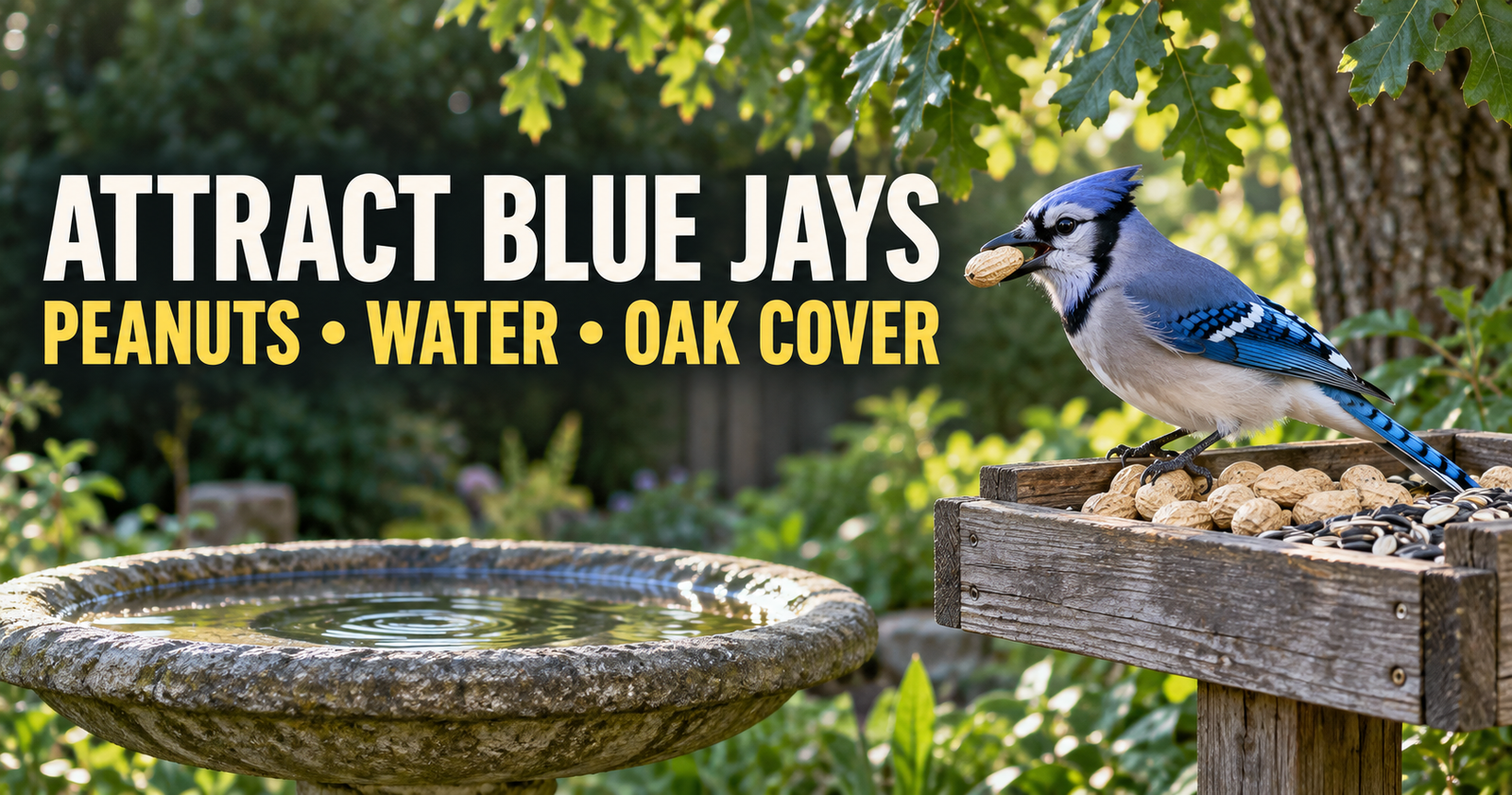
If I wanted Blue Jays showing up in my yard regularly, I’d start with one food:
Plain, unsalted peanuts.
Blue Jays love them, they’re large enough for the birds to easily carry away, and watching a jay choose a peanut and fly off with it is half the fun.
But peanuts alone aren’t the whole answer.
The yards that become genuinely useful to Blue Jays offer several things at once: food, water, enough room to feed comfortably, trees for cover and nesting, and natural foods such as acorns. Understanding why these habitat features matter is easier with this Blue Jay habitat and behavior guide.
Cornell specifically recommends peanuts, sunflower seeds and suet for attracting Blue Jays, along with tray or hopper feeders. It also notes that Blue Jays drink from birdbaths and that planting oaks provides future acorn crops.
So if your goal is more than getting one Blue Jay to make a five-second peanut run, I’d think about the entire yard.
Start With Peanuts
This is the easiest thing I’d try first.
Put out plain, unsalted peanuts somewhere Blue Jays can comfortably reach them.
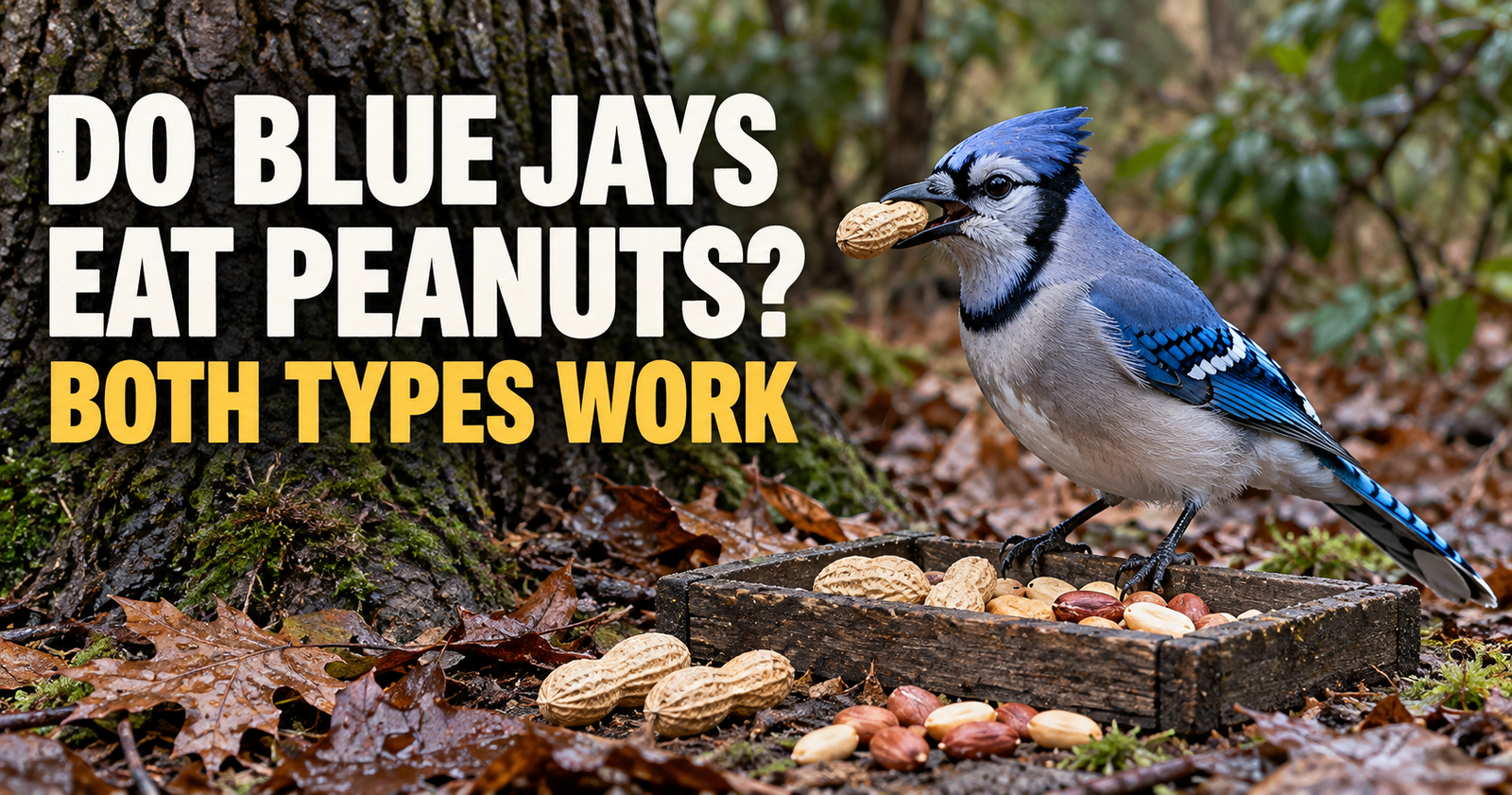
Whole peanuts in the shell are particularly entertaining because jays frequently carry them elsewhere rather than eating them immediately.
Cornell specifically recommends peanuts for Blue Jays and notes that peanuts in the shell can be offered on platform feeders.
Don’t be surprised if a jay lands, grabs one, and disappears.
That doesn’t mean it disliked your setup.
Blue Jays cache food.
The peanut may be getting hidden somewhere for later.
Once the bird learns that your yard regularly produces peanuts, you may start seeing repeat visits.
Sunflower Seeds Are Another Excellent Choice
Peanuts aren’t your only option.
Blue Jays readily eat sunflower seeds too, and sunflower has the advantage of attracting plenty of other desirable backyard birds.
Cornell includes sunflower among the primary feeder foods Blue Jays prefer.
If you’re already maintaining a general bird feeding station, you may not need to completely change what you’re doing.
Blue Jays may discover the sunflower that’s already there.
The bigger problem can be the feeder itself.
A Blue Jay needs substantially more room than a chickadee or goldfinch.
Give Blue Jays a Feeder Big Enough to Land On
This is where I’d make my next change.
Blue Jays are large feeder birds.
Cornell specifically recommends tray feeders or hopper feeders on a post for them rather than relying on small hanging feeders.
Penn State Extension similarly recommends platform feeders for Blue Jays and lists peanuts, sunflower and suet among appropriate foods.
That makes sense the moment you watch one trying to use a feeder designed for tiny birds.
I want a stable feeding surface.
A platform is hard to beat.
The bird can land normally, choose a peanut, and leave.
A roomy hopper can work well too.
If your Blue Jays keep eating spilled food underneath the feeder but rarely land on the feeder itself, I’d seriously question whether the feeding area is simply too cramped.
Put the Feeder Somewhere They Can Find It
I don’t hide a new Blue Jay feeding station deep inside vegetation.
Give the birds a reasonable opportunity to see and approach it.
At the same time, I like having trees and useful cover in the surrounding yard.
Blue Jays are strongly associated with forests, woodland edges, neighborhoods, parks and other places containing substantial trees.
So I’m looking for a balance.
Open enough that the bird can easily access the feeder.
Close enough to useful habitat that the yard doesn’t feel like one giant empty lawn.
Watch where the Blue Jays already travel.
Sometimes the best feeder location becomes obvious once you stop choosing it entirely around the view from your window.
Don’t Expect Them to Sit There Eating
This is something that confuses people.
A cardinal may sit at a feeder cracking seeds.
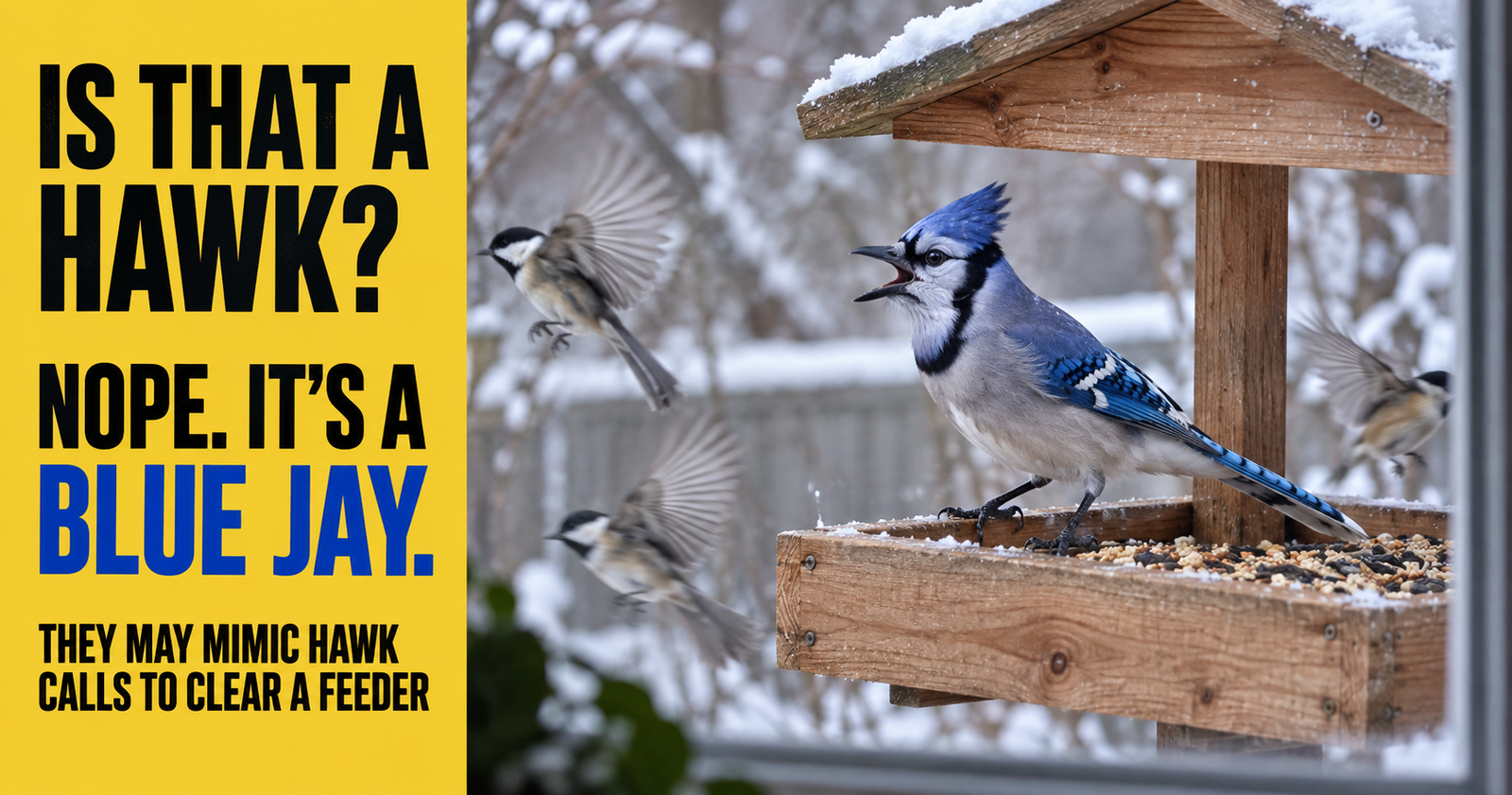
A Blue Jay often behaves more like someone running into a store.
Land.
Grab food.
Leave.
Return.
Grab another.
Leave again.
There are several reasons birds carry food away, including eating somewhere safer, needing a better place to open it, and caching it for later. Cornell specifically highlights Blue Jays as food-caching birds capable of carrying multiple large food items.
So repeated grab-and-go visits are a good sign.
Your feeder is working.
Add Fresh Water
This is one of the easiest things people overlook.
Cornell specifically notes that Blue Jays often drink from birdbaths.
A clean birdbath gives them another reason to use your yard even when they’re finding plenty of natural food elsewhere.
Blue Jays drink and bathe.
Because they’re relatively large birds, I prefer a bath with a reasonably broad, shallow area and secure footing rather than something extremely deep with slippery sides.
Keep it clean.
Change dirty water.
And during hot weather, check it frequently.
Food may be what gets you interested in attracting Blue Jays, but water can bring in birds that aren’t hungry enough to bother with your feeder.
Oak Trees Are About as Blue Jay-Friendly as It Gets
If you’re thinking long term, this is where things get interesting.
Blue Jays and oak trees have an extraordinary relationship.
Acorns are a major Blue Jay food, and the birds transport and cache huge numbers of them.
One classic study documented Blue Jays moving 133,000 acorns, representing more than half of the available acorn crop at the study site. The average caching trip moved the acorns more than a kilometer from the source.
Some of those acorns eventually germinate.
That’s why Blue Jays are important oak seed dispersers.
So an oak isn’t simply another tree where a Blue Jay can perch.
It can become a natural food factory.
Obviously, planting an oak today isn’t going to produce acorns for tomorrow morning’s Blue Jays.
But if you already have mature oaks, protect them when practical.
Your yard may already contain one of the best natural Blue Jay attractants available.
Let Natural Food Do Some of the Work
A bird-friendly yard doesn’t need to operate entirely out of bags.
Blue Jays naturally eat acorns, other nuts, fruits, grains and insects.
That means trees and vegetation can provide food without requiring you to refill anything.
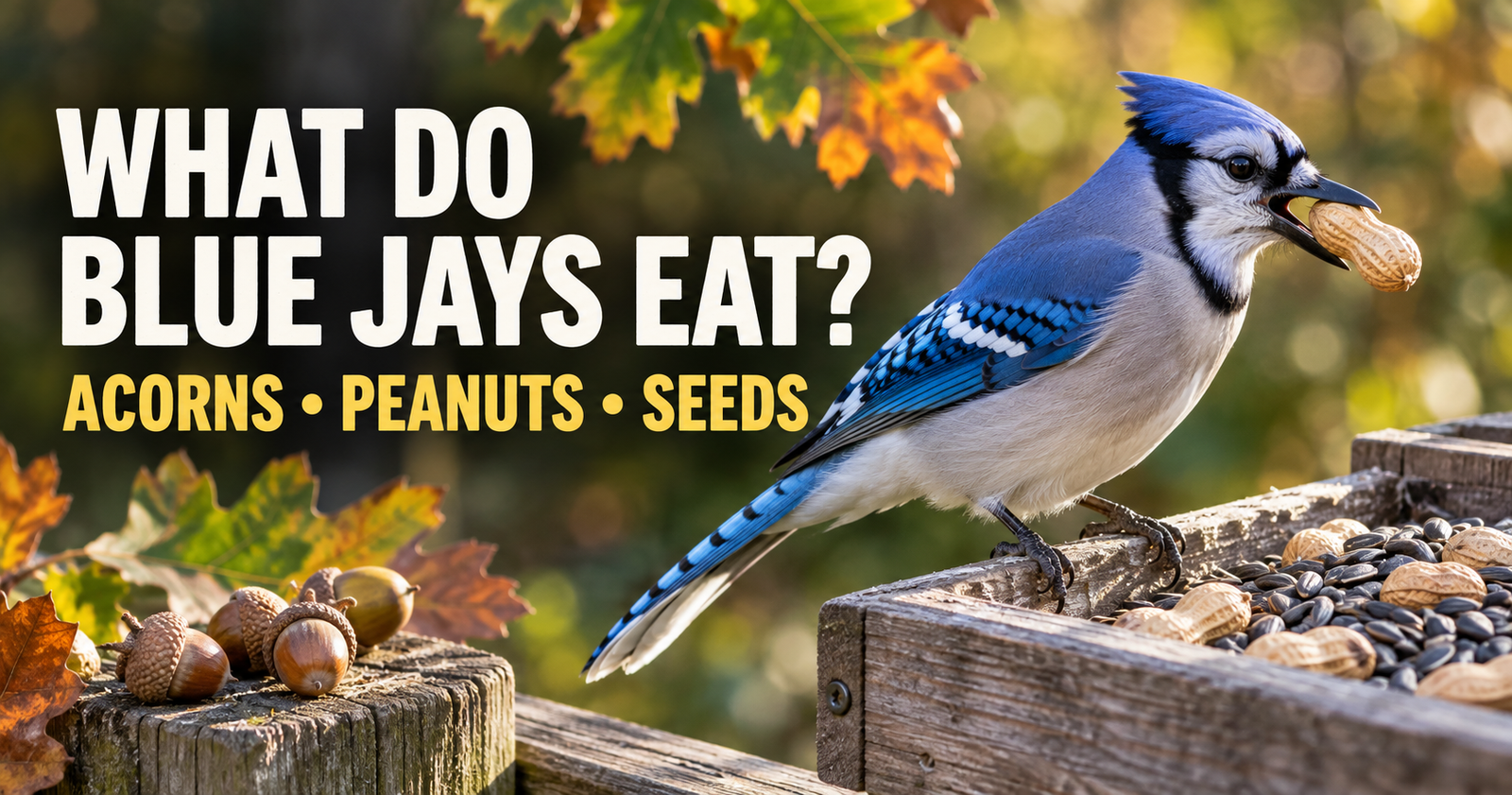
Our complete guide to what Blue Jays eat goes much deeper into their natural and feeder diet.
The big takeaway for attracting them is simple:
Don’t assume a feeder has to provide everything.
Natural food is a huge part of the equation.
Suet Can Bring Blue Jays In Too
Suet isn’t only for woodpeckers.
Cornell includes suet among the foods Blue Jays readily use at feeders.
This can be particularly useful during colder weather when high-energy foods become attractive to many backyard birds.
Again, feeder design matters.
If you’re deliberately using suet for Blue Jays, don’t choose a feeder specifically designed to exclude larger birds and then wonder why the jays aren’t using it.
Give them access.
Be Consistent
Once Blue Jays discover a reliable food source, they can learn to check it.
That’s one reason I prefer a predictable feeding location rather than tossing peanuts somewhere different every day.
Put them in the same general place.
Let the birds discover the routine.
Then watch.
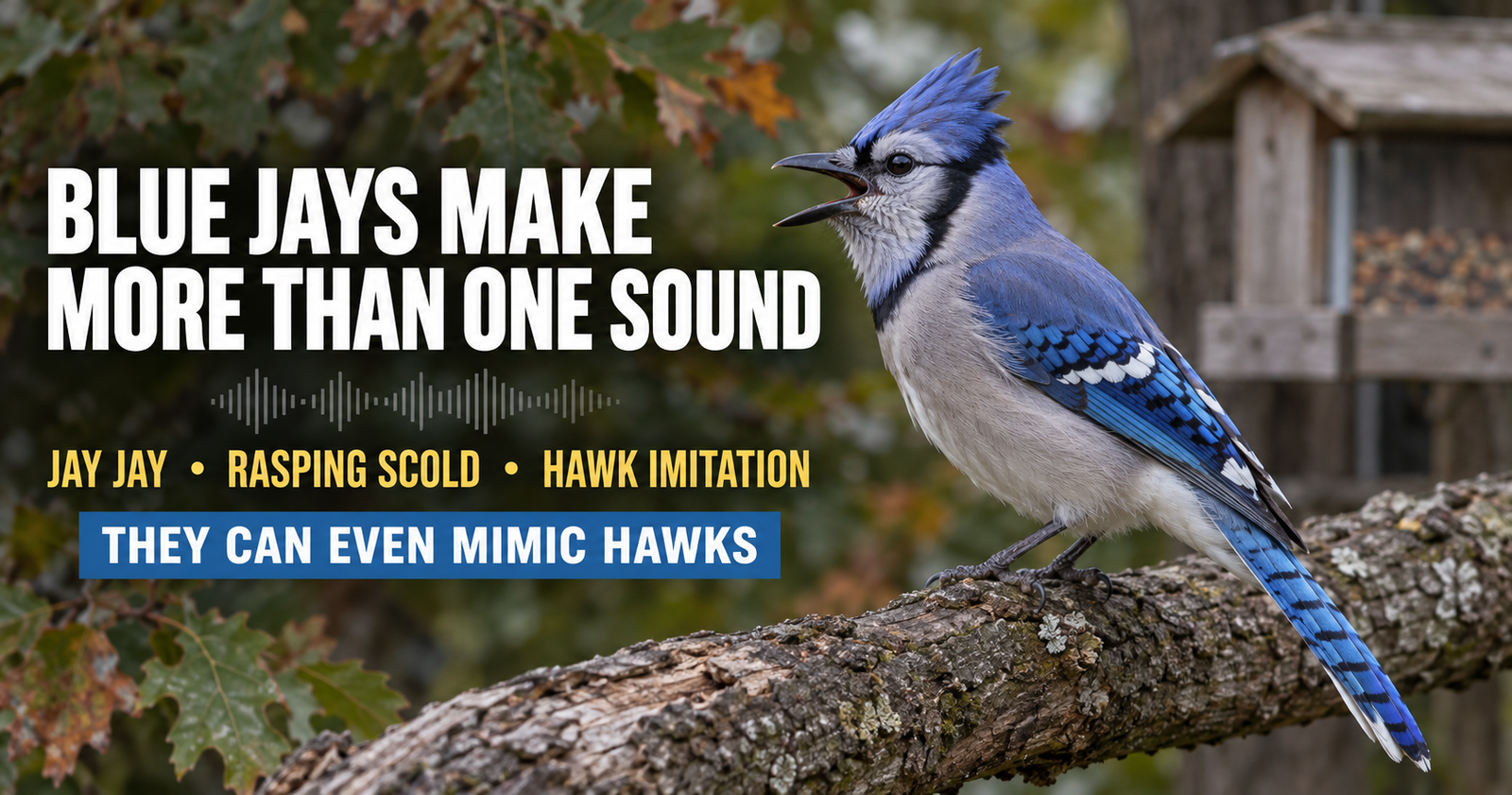
You may start hearing Blue Jays before you even put the food out. Learning recognizing Blue Jay calls can help you identify visitors before they come into view.
That doesn’t mean you need to maintain a feeder every day for the rest of your life.
Wild Blue Jays continue finding natural foods.
But consistency can make your yard much easier for them to learn.
Keep Peanuts Dry and Fresh
Peanuts need a little care.
Cornell warns that peanuts can develop aflatoxins when stored poorly, particularly when moisture becomes a problem. They recommend keeping peanuts dry and using them relatively quickly.
So don’t dump an enormous pile into a feeder and leave it sitting through repeated rainstorms.
Offer reasonable amounts.
Replace wet or spoiled food.
Clean the feeder.
Store the remaining peanuts somewhere dry.
More food isn’t automatically better food.
Expect Squirrels
There’s no delicate way to put this.
If you put peanuts outside, squirrels may think you’ve finally come to your senses and started feeding them properly.
Blue Jays love peanuts.
Squirrels love peanuts.
Raccoons may investigate them too.
Cornell specifically notes that peanuts appeal to several mammals in addition to birds.
That’s why feeder placement and squirrel-resistant hardware can become important if mammals start taking everything.
I wouldn’t solve the problem by switching to a food the Blue Jays don’t want.
I’d work on access.
Give Blue Jays Their Own Feeding Area If Needed
Blue Jays are large enough to dominate smaller birds around some feeders.
If that’s becoming annoying, you don’t necessarily need to stop feeding the jays.
Try separating the food.
Put peanuts at a roomy Blue Jay feeding station.
Keep smaller-seed feeders elsewhere.
Cornell notes that peanut feeders can draw larger birds away and leave more room for smaller birds at other feeders.
I like that approach.
Instead of trying to make one feeder perfect for every species, give different birds different places to eat.
Don’t Worry If Blue Jays Disappear for a While
A quiet feeder doesn’t automatically mean you’ve done something wrong.
Natural food availability changes.
Acorn crops change.
Seasonal behavior changes.
Blue Jays have unusual migration patterns too, with some individuals migrating while others remain resident.
So feeder activity can fluctuate.
If the setup previously worked, I wouldn’t immediately rebuild everything because the Blue Jays disappeared for a week.
Look at what changed around them.
Nature may simply be offering something better at the moment.
Trees Matter for More Than Food
Trees also provide Blue Jays with nesting sites, cover and perches.
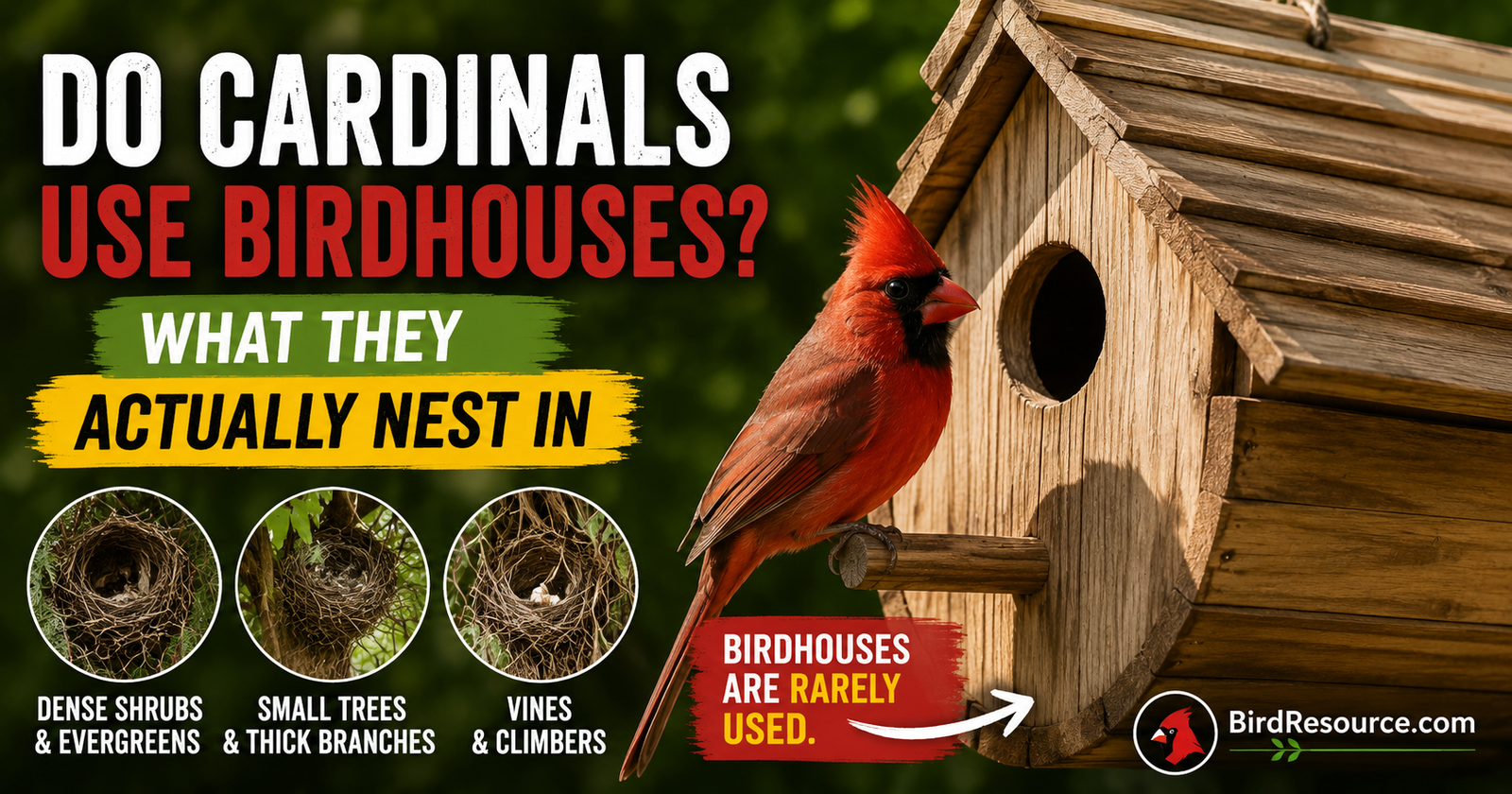
Blue Jays don’t normally use conventional enclosed birdhouses.
They build open-cup nests in trees.
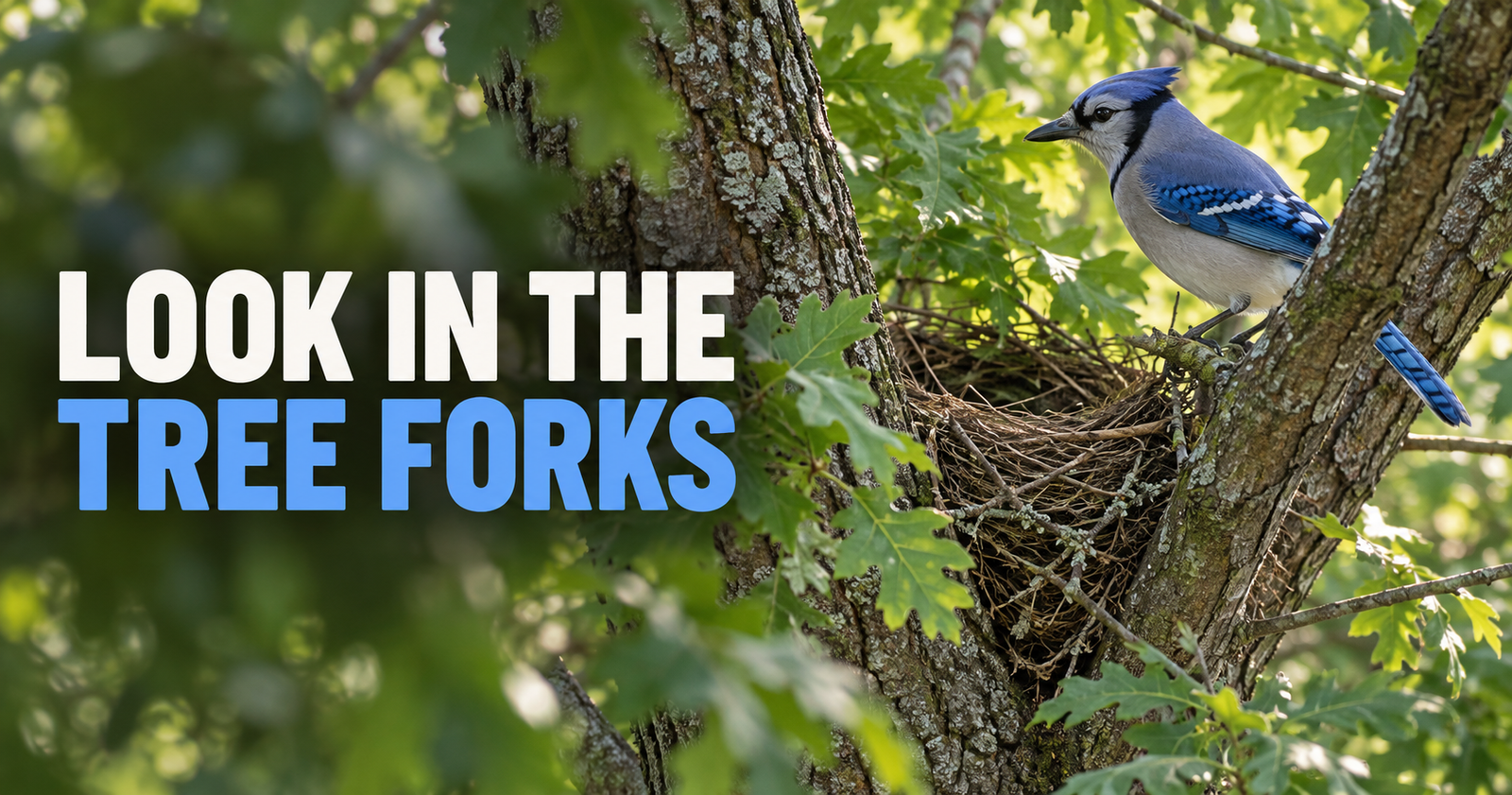
Our guide to where Blue Jays nest explains the kinds of locations they choose and what nesting activity looks like.
That’s another reason a property with mature trees offers something a bare lawn and feeder can’t duplicate.
The feeder handles one part of the bird’s day.
Trees handle a whole lot more.
You May Eventually See Young Blue Jays at the Feeder
If a pair nests nearby successfully, summer can become especially interesting.
Young Blue Jays remain dependent on their parents after fledging and can stay associated with the family while learning to find food independently.
You may eventually see awkward youngsters following adults around the yard.
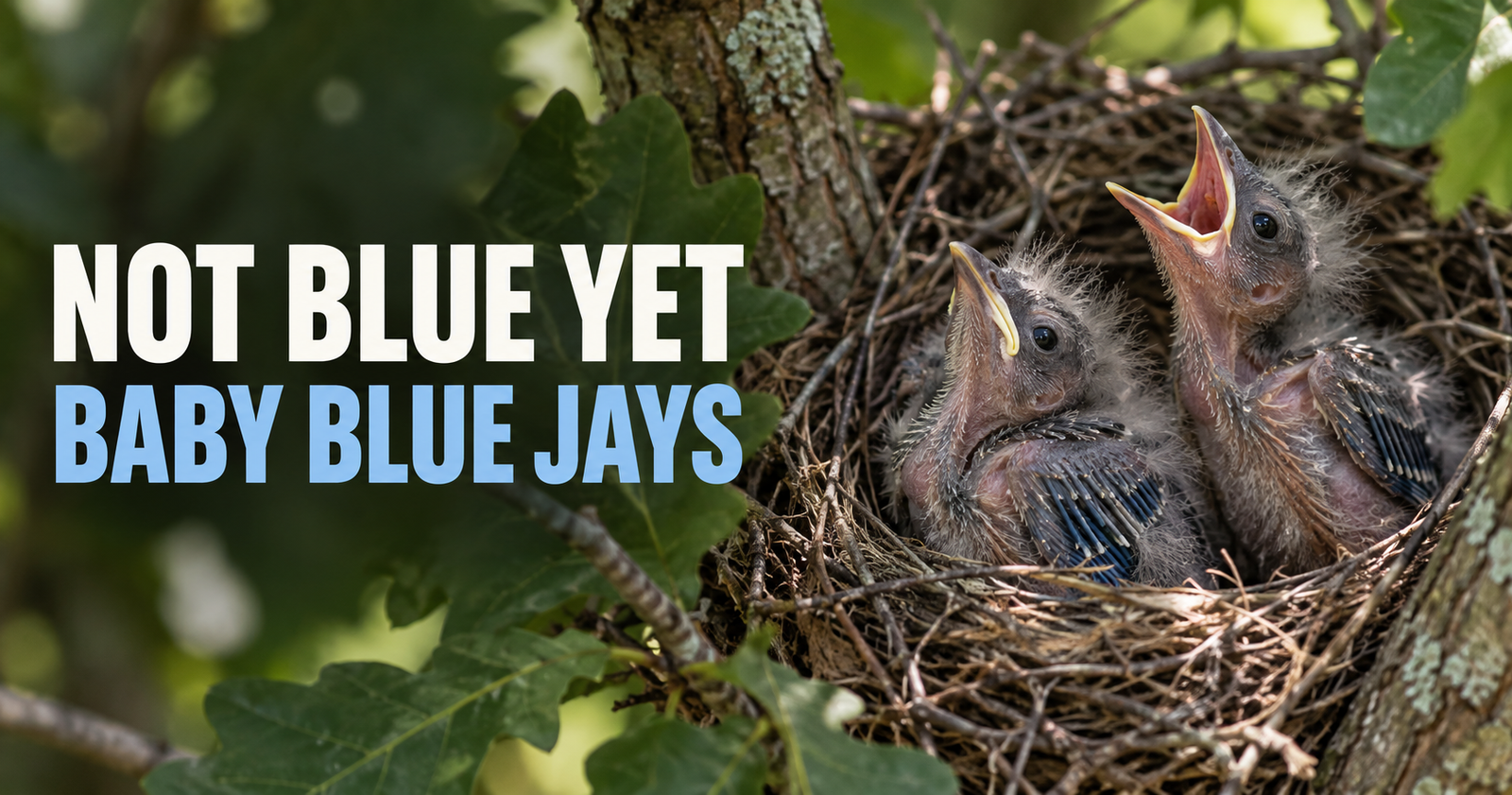
Our baby Blue Jay identification guide can help you recognize them, while our fledgling guide explains why a young bird outside the nest may still be receiving extensive parental care.
Don’t be surprised if a juvenile looks nearly grown but still expects Mom or Dad to provide dinner.
Don’t Try to Attract Blue Jays With a Birdhouse
If Blue Jays are your goal, spend your effort somewhere else.
They’re open-cup nesters.
They build in trees rather than moving into conventional enclosed birdhouses.
That doesn’t mean birdhouses aren’t useful.
They can be excellent for appropriate cavity-nesting species.
But the Blue Jay isn’t the bird I’d buy one for.
Food, water, oak trees and suitable nesting habitat make much more sense.
My Simple Blue Jay Setup
If I were starting tomorrow, I wouldn’t make this complicated.
I’d use a roomy platform feeder.
I’d put out a modest amount of plain unsalted peanuts and sunflower seed.
I’d provide a clean birdbath.
I’d keep useful mature trees around the property.
And if I had oaks, I’d appreciate just how valuable those trees already are.
Then I’d wait.
Blue Jays are noisy enough that you’ll probably know when they’ve discovered the setup.
Common Questions About Attracting Blue Jays
What food attracts Blue Jays the fastest?
Plain unsalted peanuts are one of my first choices. Cornell also recommends sunflower seeds and suet.
What kind of feeder attracts Blue Jays?
Tray or platform feeders and roomy hopper feeders work particularly well because Blue Jays need enough space to land comfortably.
Do Blue Jays like peanuts in the shell?
Yes. Peanuts in the shell are an excellent Blue Jay food and can be offered on a platform feeder.
Do Blue Jays use birdbaths?
Yes. Cornell specifically notes that Blue Jays often drink from birdbaths.
What trees attract Blue Jays?
Oak trees are particularly valuable because acorns are an important natural Blue Jay food. Blue Jays also play an important role in dispersing those acorns.
Will Blue Jays use a birdhouse?
Not normally. Blue Jays build open-cup nests in trees rather than using conventional enclosed nest boxes.
Why do Blue Jays take peanuts and fly away?
They may eat somewhere safer or cache the peanut for later. Carrying and storing food is normal Blue Jay behavior.
How long does it take Blue Jays to find a feeder?
There’s no reliable number of days. If Blue Jays already live nearby, appropriate food in an accessible location gives them a good reason to investigate. I’d keep the setup consistent and give them time.
How do I attract Blue Jays but not squirrels?
Food alone probably won’t solve that problem because both Blue Jays and squirrels love peanuts. Feeder placement, baffles and squirrel-resistant feeder designs are more useful approaches.
You don’t need an elaborate backyard setup to start attracting Blue Jays.
Give them a large enough place to land, food worth carrying away, fresh water, and useful trees nearby.
Peanuts may get that first Blue Jay to notice your yard.
But the combination of food, water and habitat is what gives the bird reasons to keep coming back.
Mason Reed is the Backyard Birding & Feeding Contributor for BirdResource.com, where he helps everyday birdwatchers attract and understand the wild birds using their yards through practical feeding, habitat and behavior guides.