Walk down the birdseed aisle and you’d think attracting cardinals requires some kind of secret recipe.
There are cardinal blends, premium wild bird mixes, fruit blends, no-mess mixes, sunflower varieties, safflower, cracked corn, peanuts, and huge bargain bags containing a little bit of everything.
But if my main goal were getting Northern Cardinals to regularly visit a feeder, I wouldn’t make it nearly that complicated.
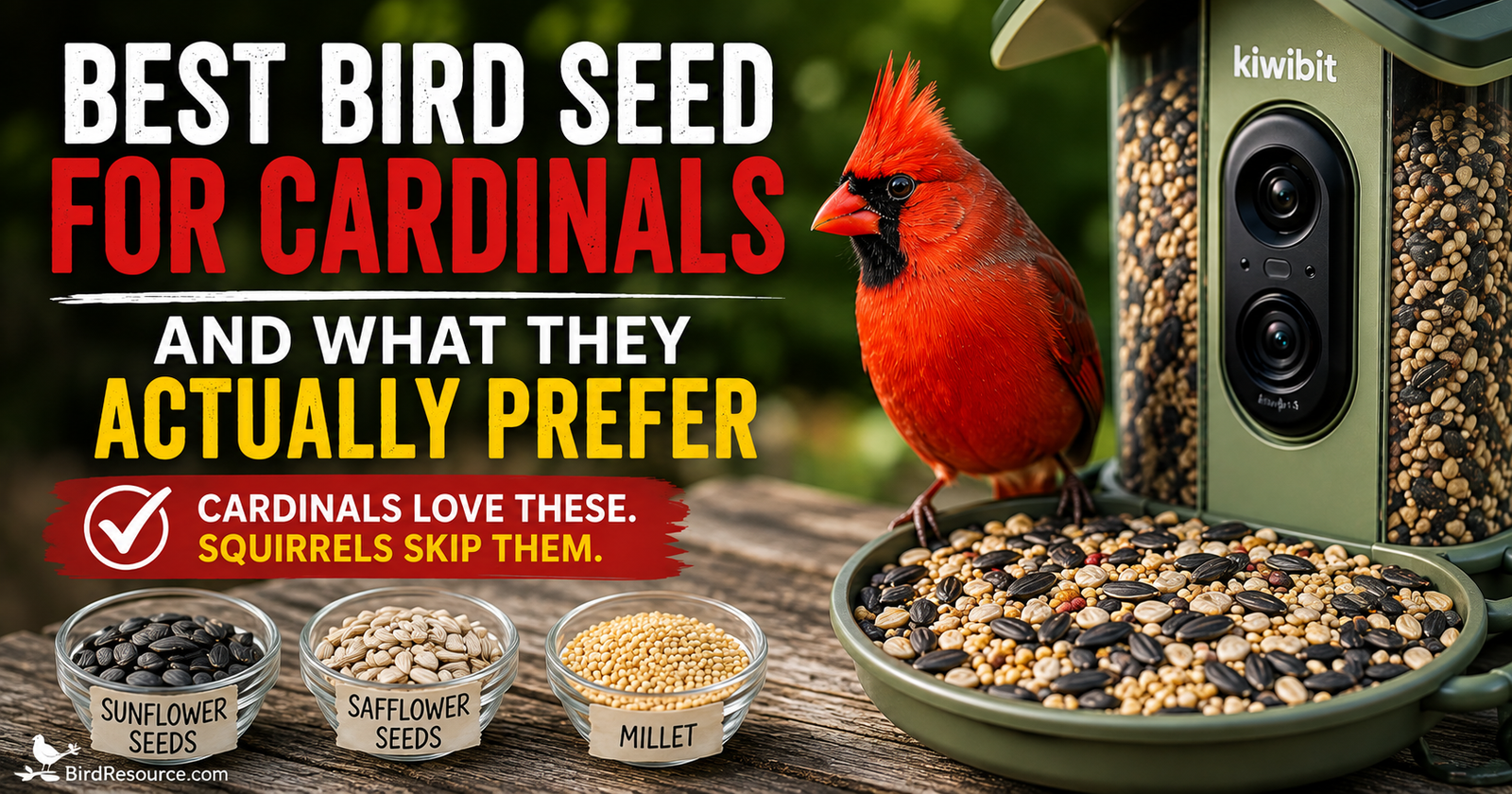
I’d start with black oil sunflower seed.
That’s the birdseed I’d choose first, and there’s good evidence behind it. Cornell says Northern Cardinals eat many kinds of birdseed but particularly black oil sunflower, while Audubon’s current cardinal guidance calls black oil sunflower the best bet for attracting them.
That doesn’t mean it’s the only good cardinal food.
Safflower is excellent.
Striped sunflower works.
Sunflower hearts can be fantastic if you don’t mind paying more.
Cardinals will also eat peanuts and cracked corn.
The trick is understanding which foods I’d actually spend money on, which ones I’d use for specific situations, and which cheap ingredients can make a giant bag of birdseed look like a much better deal than it really is. For broader guidance on seed, feeder placement, and responsible feeding, explore feeding and attracting bird resources.
My Number One Choice Is Black Oil Sunflower Seed
If somebody told me:
“I just bought a feeder. What should I put in it to attract cardinals?”
Black oil sunflower would be my answer.
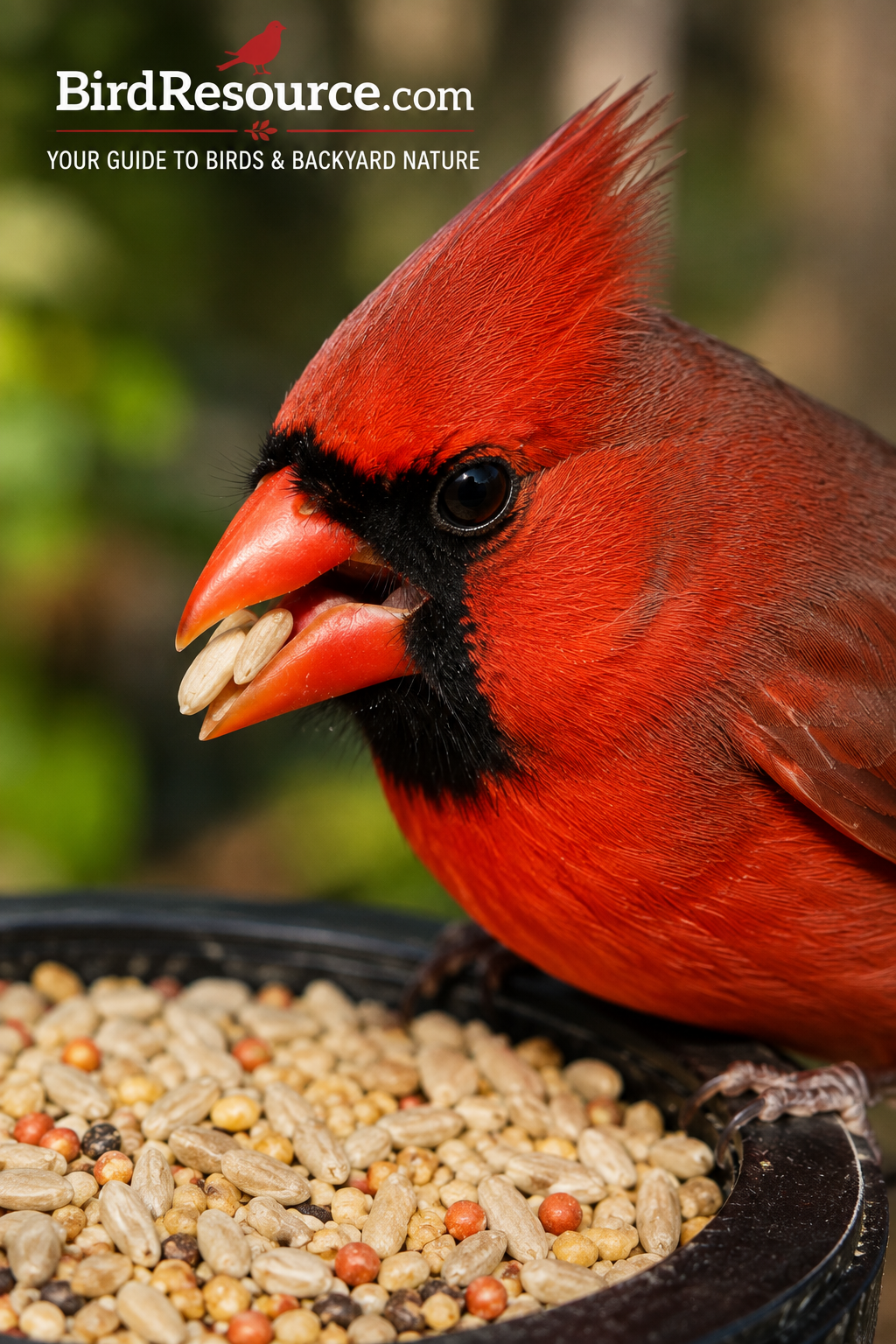
Northern Cardinals have powerful bills designed for handling seeds, and black oil sunflower gives them exactly the kind of food they readily use.
Audubon’s 2026 cardinal guidance says black oil sunflower is the best bet for attracting Northern Cardinals. It also notes that these seeds attract plenty of other desirable feeder birds, including chickadees, House Finches, titmice, and nuthatches.
That’s part of what makes black oil sunflower so useful.
You’re not buying something so specialized that only one bird in the neighborhood recognizes it.
You can attract cardinals while still maintaining a lively backyard feeder.
Why Is Black Oil Sunflower So Good?
Take a close look at black oil sunflower seed and compare it with the big striped sunflower seeds people commonly eat.
The black oil variety is smaller and has a relatively thin shell.
Cornell notes that the thin shells are easy for seed-eating birds to crack, while the kernels have a high fat content.
That combination makes a lot of sense.
Easy access to a valuable food source.
And a cardinal is exceptionally well equipped for the job.
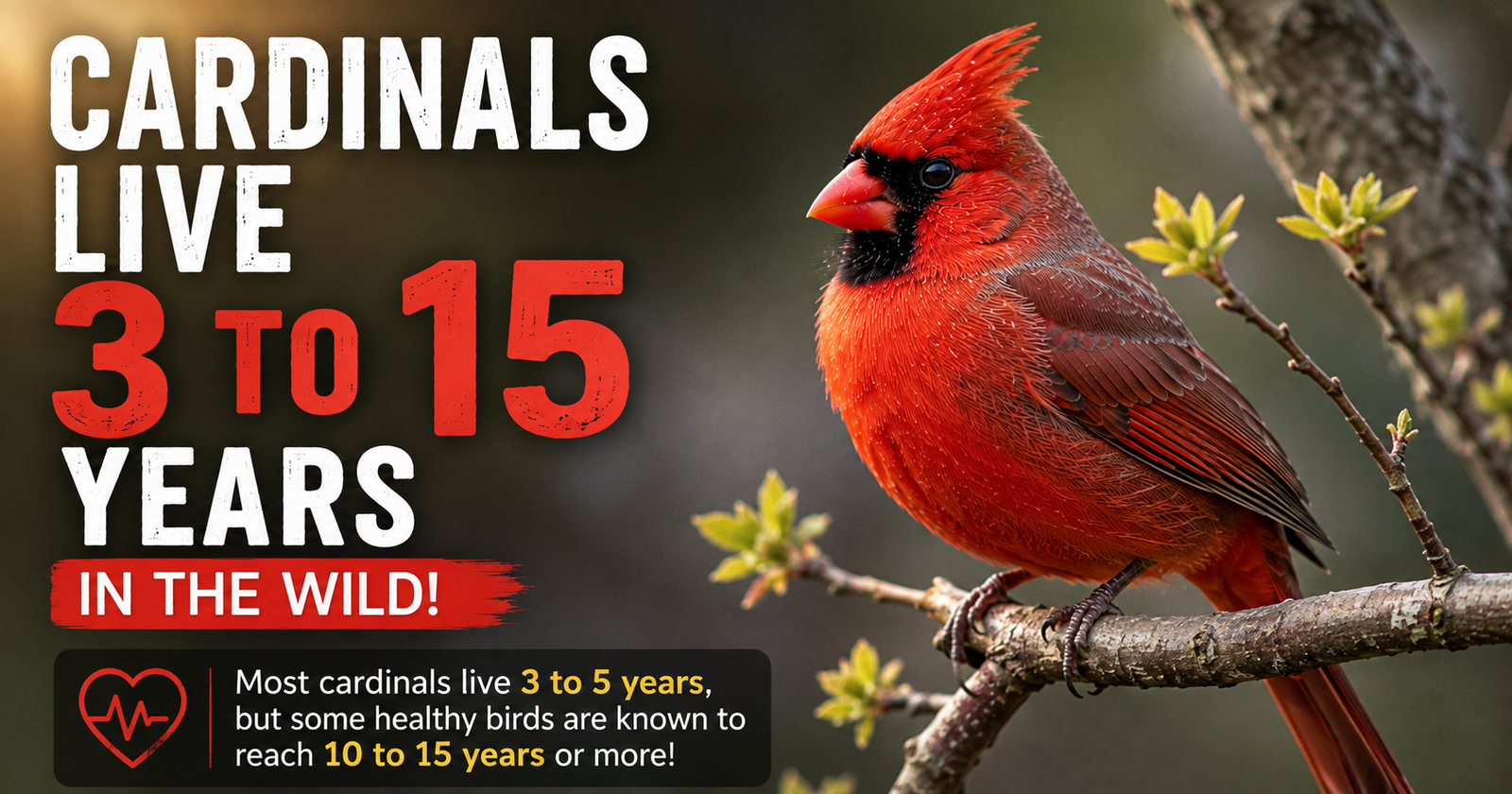
That big reddish-orange bill isn’t just there to make the bird easy to identify. Cardinals use their strong bills to handle and crack seeds.
Watch one closely at a feeder and you’ll see it grab a seed, manipulate it, crack the hull, eat the kernel, and move right along to the next one.
Cardinals Really Do Prefer Sunflower
This isn’t just something birdseed companies put on bags.
Audubon reported results from a large observational bird-feeding study involving about 1.2 million feeder visits. Sunflower remained one of the consistently strong seed choices across feeder birds.
More specifically for Northern Cardinals, Audubon reports that research found black oil sunflower ranked first among their feeder choices, followed by striped sunflower and then sunflower chips.
That’s extremely useful when deciding what to buy.
Instead of guessing, we’ve got a pretty straightforward hierarchy to start with.
My Second Choice Is Safflower Seed
Safflower deserves a special place on this list because it can solve a problem sunflower sometimes creates.
Squirrels.
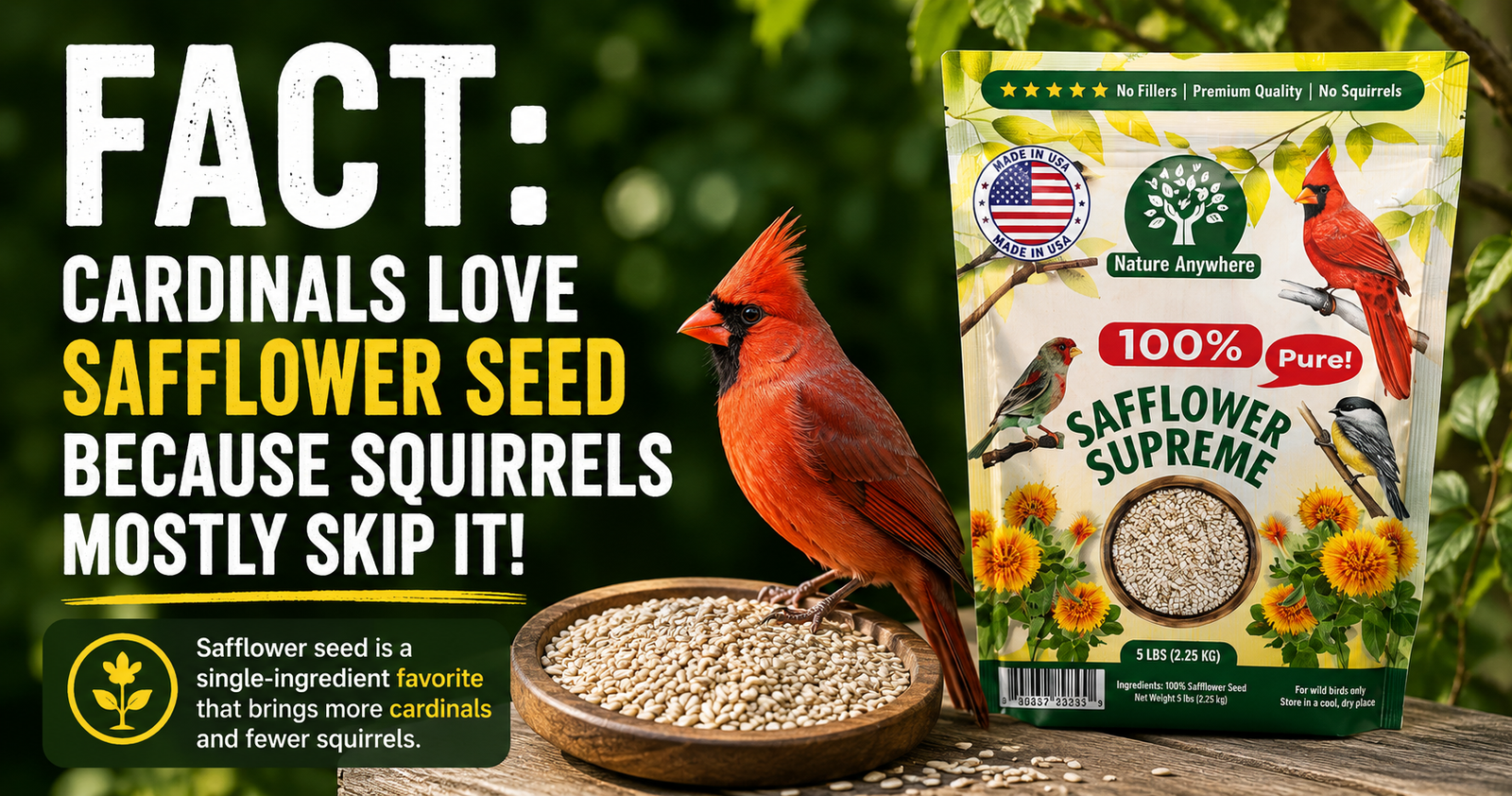
Cardinals readily eat safflower.
Cornell describes safflower as having a relatively thick shell that some birds have trouble opening, while noting that it is a favorite among cardinals.
The interesting part is that squirrels sometimes show less interest in safflower than sunflower.
I intentionally said sometimes.
I wouldn’t tell anyone that safflower is squirrel-proof.
It isn’t.
Some squirrels will eat it.
But if squirrels are absolutely destroying your sunflower supply, changing the menu is one of the easiest things you can experiment with.
I’ve gone much deeper into whether safflower seed is good for cardinals and why I think it’s worth trying.
And there’s a specific safflower seed I’d consider if I wanted to run that experiment.
The Safflower Seed I’d Use for Cardinals
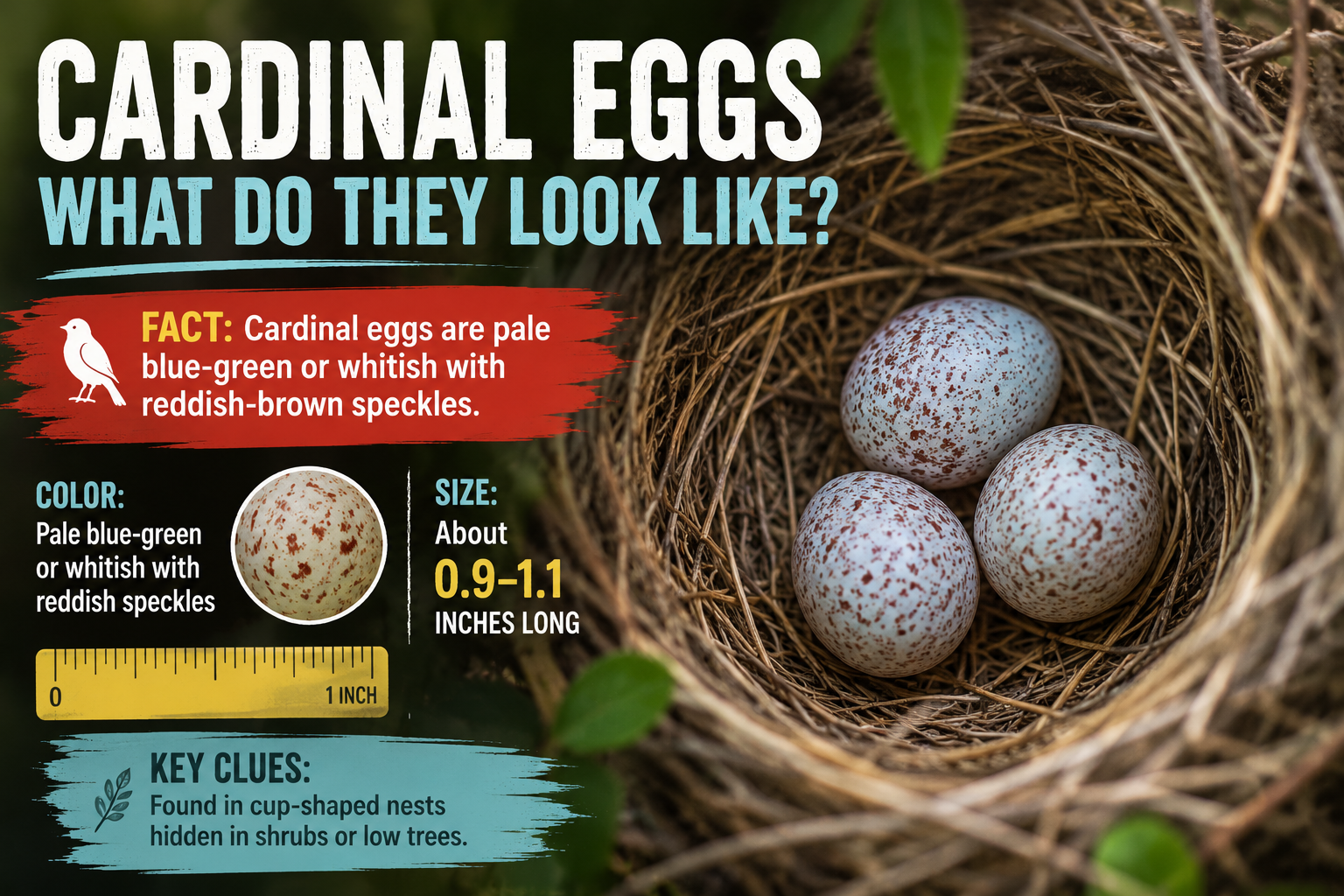
The one we’ve looked at is a 5-pound bag of single-ingredient safflower birdseed intended for outdoor wild birds.
That’s what I like about it.
It’s safflower.
Not a giant blend where you’re trying to determine which of seven ingredients the cardinals actually ate.
Not a bag bulked up with inexpensive grains.
Just the seed we’re trying to offer.
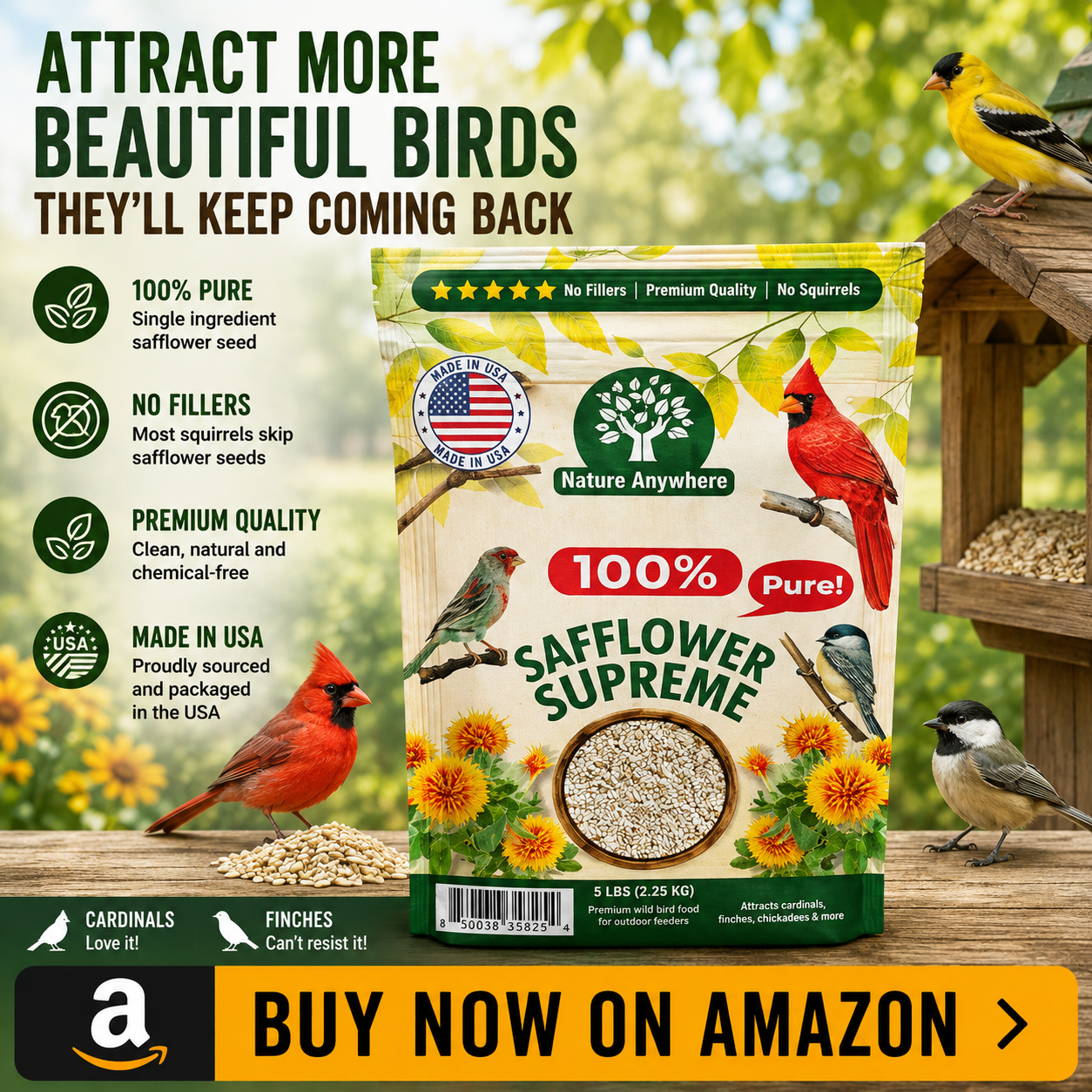
If squirrels keep emptying your sunflower feeder or you simply want to see how strongly your local cardinals respond to safflower, check the current price on this 5-pound bag of safflower birdseed on Amazon .
I’d start small rather than immediately buying a massive amount.
Your own birds will tell you whether it’s worth buying more.
Should You Choose Safflower or Black Oil Sunflower?
This is probably the question most cardinal feeders eventually ask.
For me, it’s simple.
If squirrels aren’t causing trouble, I’d start with black oil sunflower.
If squirrels are taking over, I’d experiment with safflower.
You don’t even have to choose one exclusively.
Try both.
You could offer them separately and see what happens.
Audubon actually recommends offering different seeds separately when possible because it can reduce waste and lets birds choose the food they want.
That’s much more informative than buying a mystery mixture and watching birds throw half of it onto the ground.
Striped Sunflower Seed Is Good Too
Striped sunflower doesn’t get quite as much attention because black oil sunflower is such an easy recommendation.
But cardinals will absolutely eat it.
In the cardinal preference research Audubon discusses, striped sunflower ranked behind black oil sunflower but ahead of sunflower chips.
Striped sunflower seeds have thicker shells.
That’s a disadvantage for smaller birds that have trouble opening them.
A cardinal has a much more substantial bill.
That means striped sunflower can still work very well when cardinals are among your main targets.
I simply wouldn’t choose it over black oil sunflower as my first experiment unless I had a specific reason.
What About Sunflower Hearts and Chips?
These are interesting because somebody has already done the annoying part for the bird.
The shell is gone.
You’re buying the edible sunflower kernel.
That gives you a couple of advantages.
There’s less shell debris underneath the feeder.
Birds don’t need to open the hull.
And Audubon’s birdseed guidance says hulled sunflower attracts a wide variety of birds, including Northern Cardinals.
The downside?
You’re usually going to pay more.
And once the protective hull has been removed, I become even more careful about moisture and freshness.
I wouldn’t let hulled sunflower sit around wet.
Are No-Mess Cardinal Seeds Worth It?
Sometimes.
A quality no-mess blend usually contains foods birds actually eat with the shells already removed.
That means less waste accumulating underneath the feeder.
Audubon notes that good no-mess blends eliminate shells and filler seeds, so more of what you’re buying actually gets eaten.
That’s attractive if your feeder is above:
A patio.
Deck.
Flower bed.
Driveway.
Or somewhere you simply don’t want piles of sunflower hulls accumulating.
You’re paying for convenience.
For a feeder sitting farther out in the yard, I personally wouldn’t feel as much pressure to pay the premium.
Cheap Birdseed Can Be Expensive in Disguise
Here’s where I think people get fooled.
You see two bags.
One costs considerably less per pound.
Easy decision, right?
Not necessarily.
Look at the ingredient list.
Some inexpensive mixes contain substantial amounts of milo, wheat, oats, and other grains that many common feeder birds aren’t particularly interested in.
Audubon’s birdseed guide specifically warns that milo, wheat, and oats are frequently used in inexpensive mixes and that most birds discard the uneaten seed.
Cornell similarly warns that mixtures containing red millet, oats, and other filler-type ingredients can result in considerable waste as birds sort through the food.
So that enormous cheap bag isn’t necessarily a bargain.
If birds throw a third of it onto the ground, you paid for food they didn’t want.
Watch the Ground Under Your Feeder
This is one of the easiest ways to evaluate a birdseed mix.
Don’t only watch what’s disappearing from the feeder.
Look underneath it.
Are there empty sunflower hulls?
That’s normal.
Or is there a giant pile of untouched little seeds accumulating?
That’s different.
Birds can be surprisingly efficient at digging through a mixture to find the pieces they actually want.
You’ll see them grab something.
Throw it.
Grab something else.
Throw it.
Then finally take the sunflower seed.
If that’s happening constantly, I’d rather buy more of the ingredient they’re actually eating.
What About Cardinal-Specific Birdseed Blends?
I’m not automatically against them.
A good cardinal blend can be excellent.
But the word cardinal on the bag doesn’t convince me.
The ingredient list does.
I’d look for sunflower and safflower near the top.
Nuts can be useful too.
What I don’t want is a beautiful red cardinal printed across the front of a bag that’s mostly inexpensive filler.
Turn the bag around.
Read what’s actually inside.
That’s much more important than the bird photograph.
Peanuts Can Be Good for Cardinals
Peanuts aren’t usually the first food people associate with cardinals, but they will eat them.
Audubon’s current cardinal guidance specifically includes peanuts among the foods Northern Cardinals will readily take.
Cornell’s recent feeder observations also mention peanut hearts alongside sunflower and cracked corn as foods that can attract Northern Cardinals.
If I were offering peanuts, I’d use appropriate bird-feeding peanuts rather than salted snack peanuts meant for people.
I wouldn’t make peanuts my main cardinal food.
I’d treat them as another option.
Cardinals Eat Cracked Corn Too
Cracked corn is another food cardinals will use.
Cornell specifically lists it among foods that can bring Northern Cardinals to feeders.
The problem is exclusivity.
Cardinals aren’t the only animals interested in corn.
Audubon notes that cracked corn attracts birds such as doves, jays, sparrows, blackbirds, and quail, along with squirrels.
So if you’re trying to create a feeding station heavily geared toward cardinals, cracked corn isn’t where I’d start.
It’s more of an additional food than my main attraction.
What About Millet?
Millet isn’t my first choice for cardinals either.
White millet can be excellent for ground-feeding birds such as sparrows and juncos.
That’s useful if those are birds you want to attract.
But this article isn’t about attracting every seed-eating bird possible.
We’re specifically trying to make the feeding station appealing to Northern Cardinals.
I’d put my money toward sunflower and safflower first.
What About Nyjer Seed?
I’d save it for finches.
Nyjer is strongly associated with birds such as American Goldfinches, Pine Siskins, redpolls, and other small finches.
If I’m standing in the store choosing one bag specifically because I want Northern Cardinals, Nyjer isn’t coming home with me.
That’s another reason understanding individual seed types matters.
There isn’t one universally “best birdseed.”
The best choice depends on the bird you’re trying to attract.
Seed Isn’t a Cardinal’s Entire Diet
This is important because we’re talking so much about feeders.
Northern Cardinals don’t live on bags of sunflower seed.
Cornell describes their natural diet as mainly seeds and fruits supplemented with insects. Natural foods include seeds and fruits from dogwood, wild grape, grasses, sedges, mulberry, hackberry, blackberry, sumac, and other plants. They also eat insects and other small invertebrates.
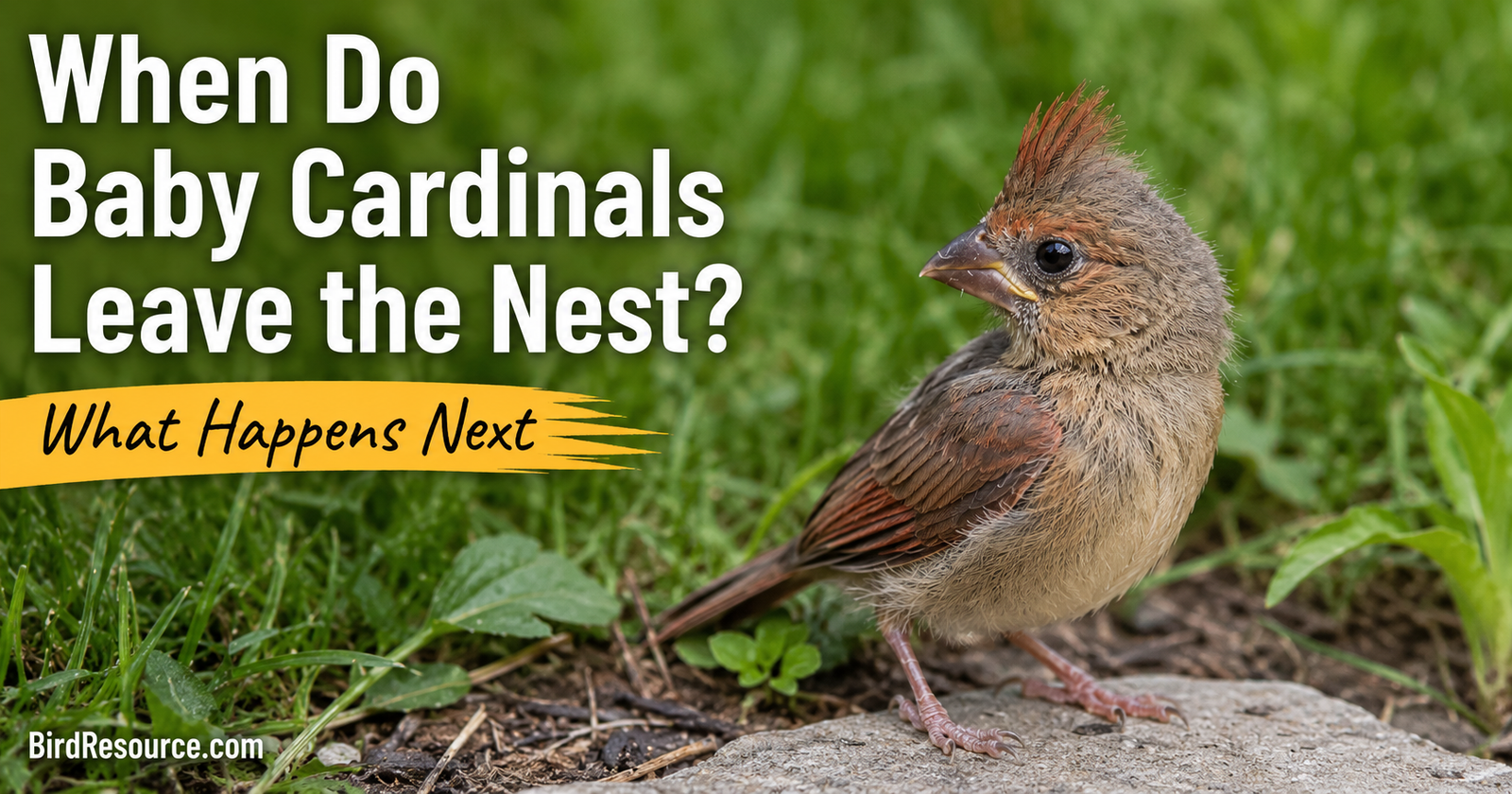
Young cardinals are fed mostly insects.
So I think of my feeder as a supplement to the habitat around it.
Not a replacement for that habitat.
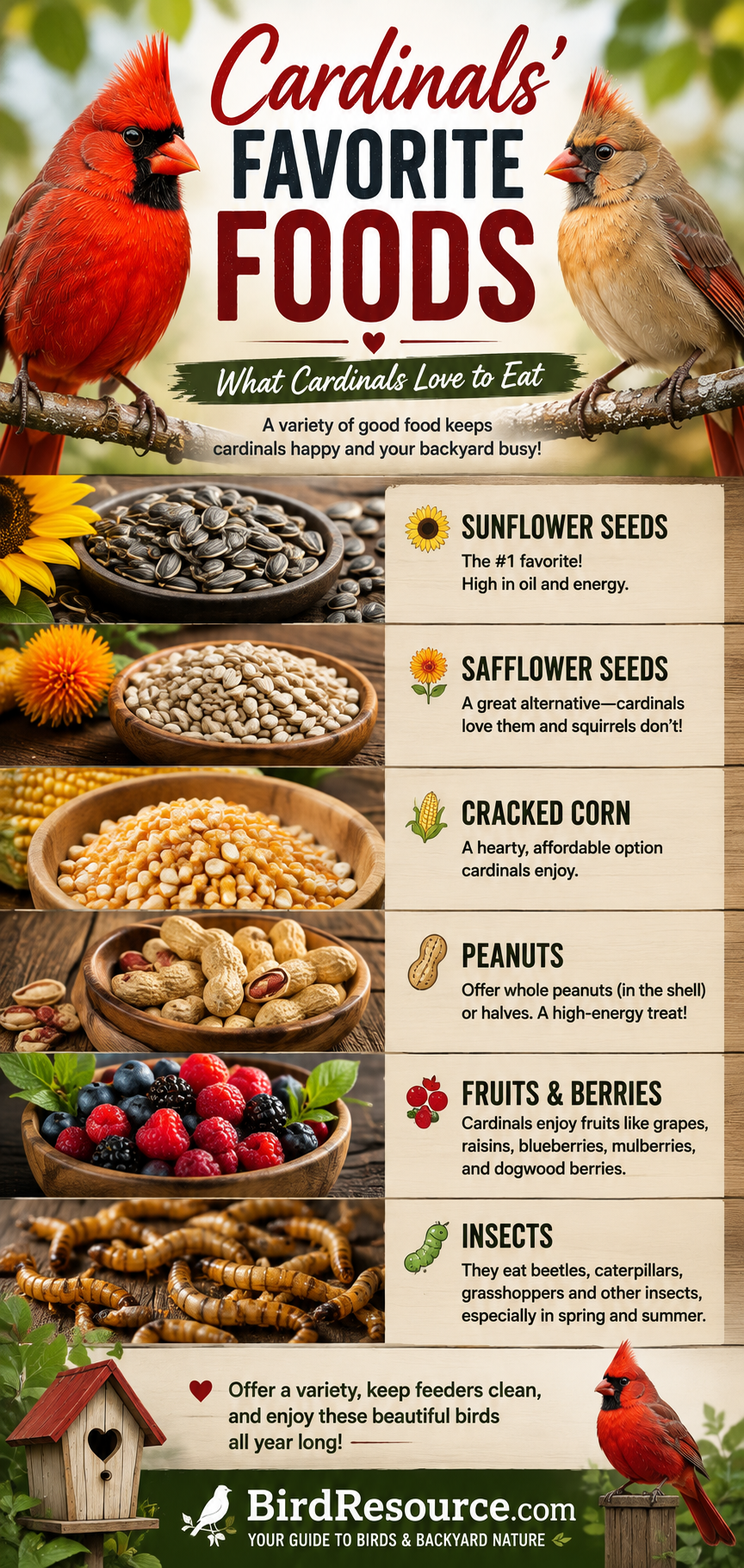
Our complete guide to what cardinals eat gets much deeper into what they’re finding naturally when they aren’t sitting at your feeder.
Natural Food Can Actually Pull Cardinals Away From Your Feeder
This is something people sometimes interpret as a problem.
Cardinals visit every day.
Then suddenly they don’t.
You immediately wonder:
What’s wrong with my birdseed?
Maybe nothing.
Natural food availability changes throughout the year.
If the surrounding landscape suddenly provides abundant berries, seeds, fruits, or insects, the birds have more options.
That doesn’t mean they suddenly decided your sunflower seed tastes terrible.
They may simply be eating elsewhere.
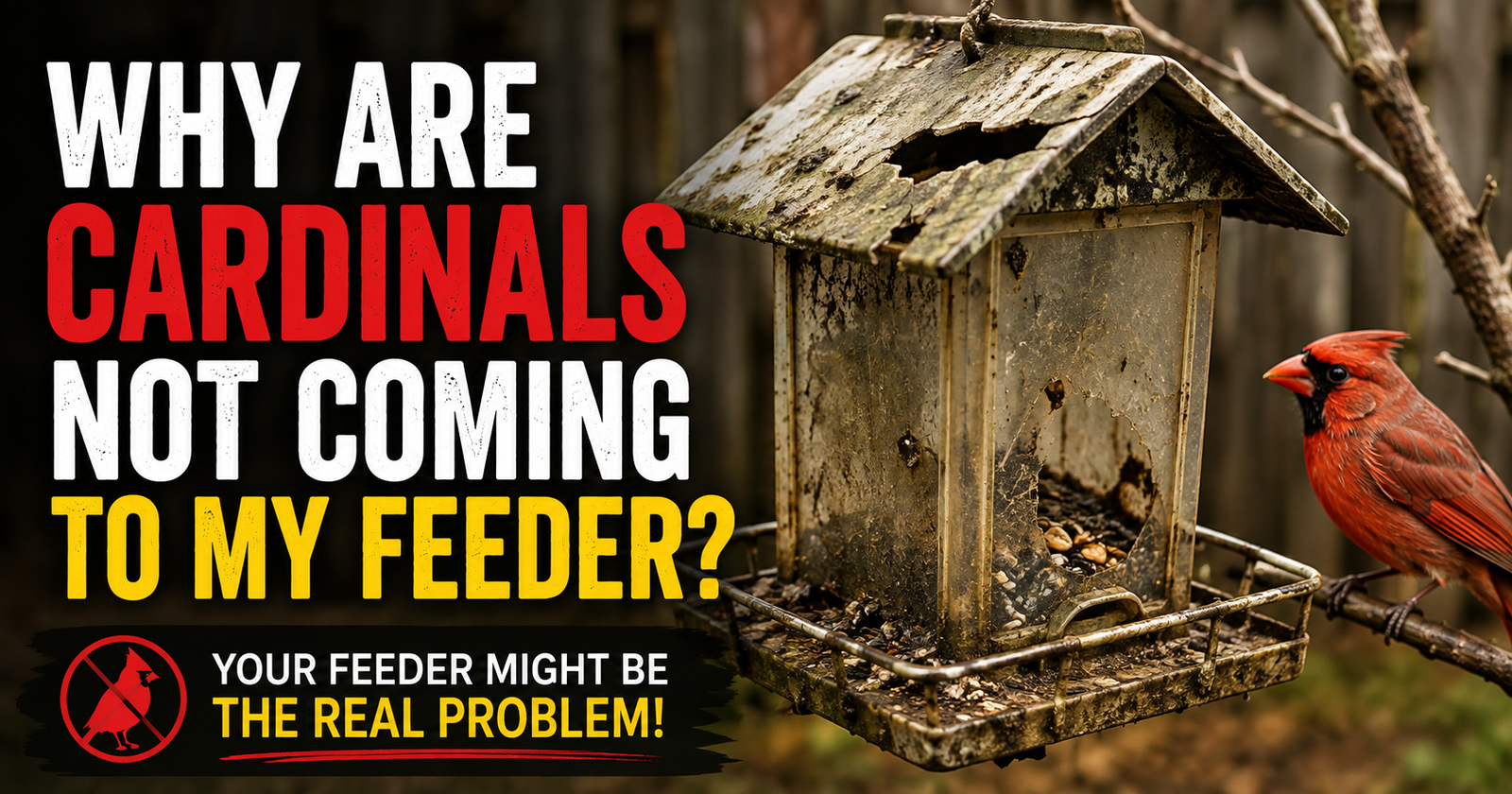
If this has already happened to you, our guide explaining why cardinals suddenly stop coming to a feeder walks through the possibilities before you start changing everything.
The Feeder Matters Almost as Much as the Seed
You can buy fantastic cardinal food and put it in a feeder the bird hates using.
That’s not particularly helpful.
Cardinals are larger than many common feeder birds.
I want them to have enough room to comfortably position themselves.
Platform feeders are a simple option.
Roomy hopper feeders can work very well.
Larger feeders with substantial perches or trays can also work.
The specific shape matters less to me than the actual usable feeding area.
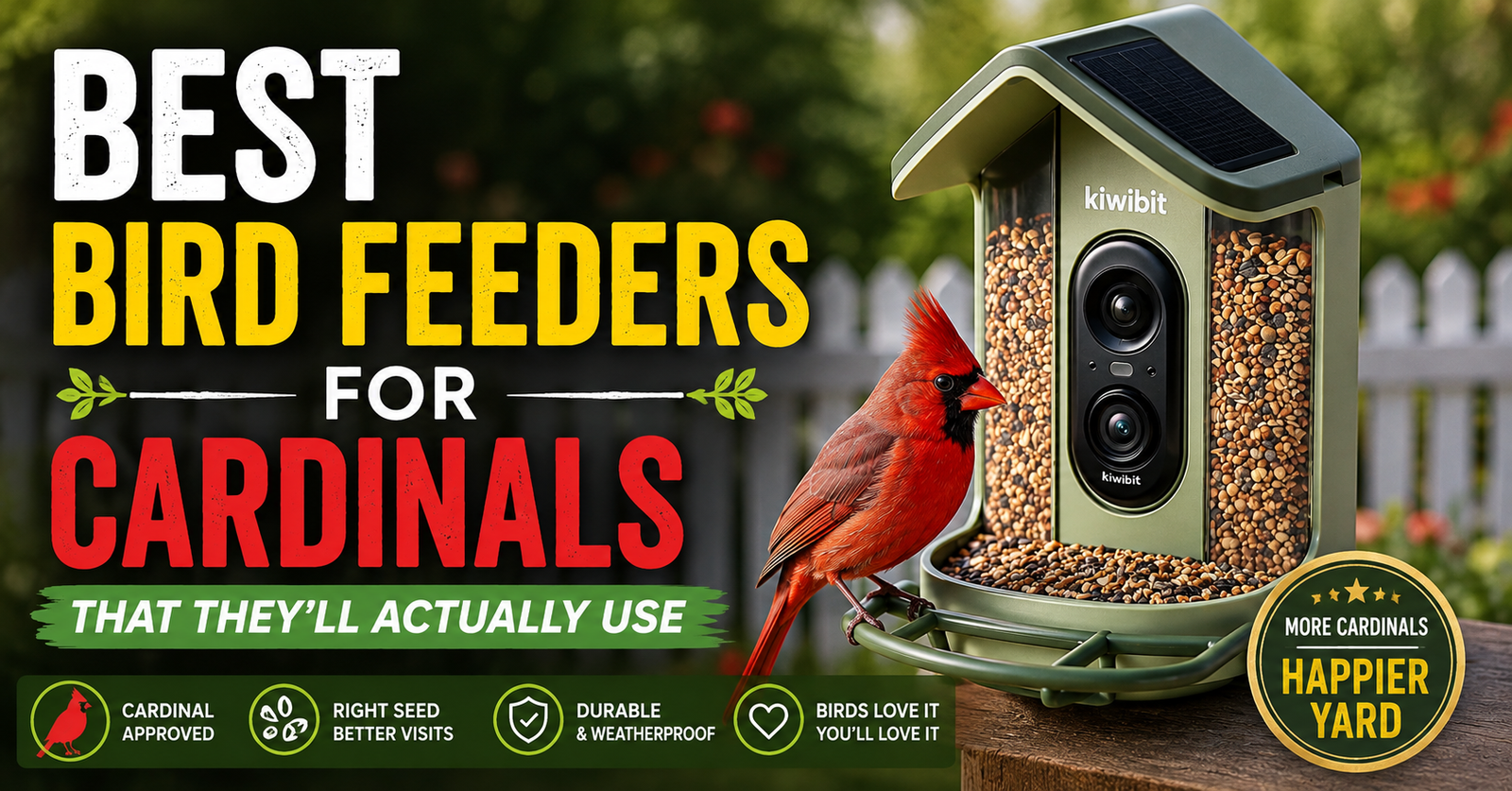
We’ve already gone through the best bird feeders for cardinals and what makes a feeder cardinal-friendly.
Pair a comfortable feeder with the right food and you’ve solved two of the biggest variables.
A Camera Feeder Can Actually Help You Test Different Seeds
This is one of the reasons I’ve become interested in smart bird feeders.
Normally, you put seed outside and see whatever happens while you’re looking through the window.
But what happened at 6:15 this morning?
What happened while you were at work?
Which bird actually ate the safflower?
That’s where a camera feeder becomes useful.
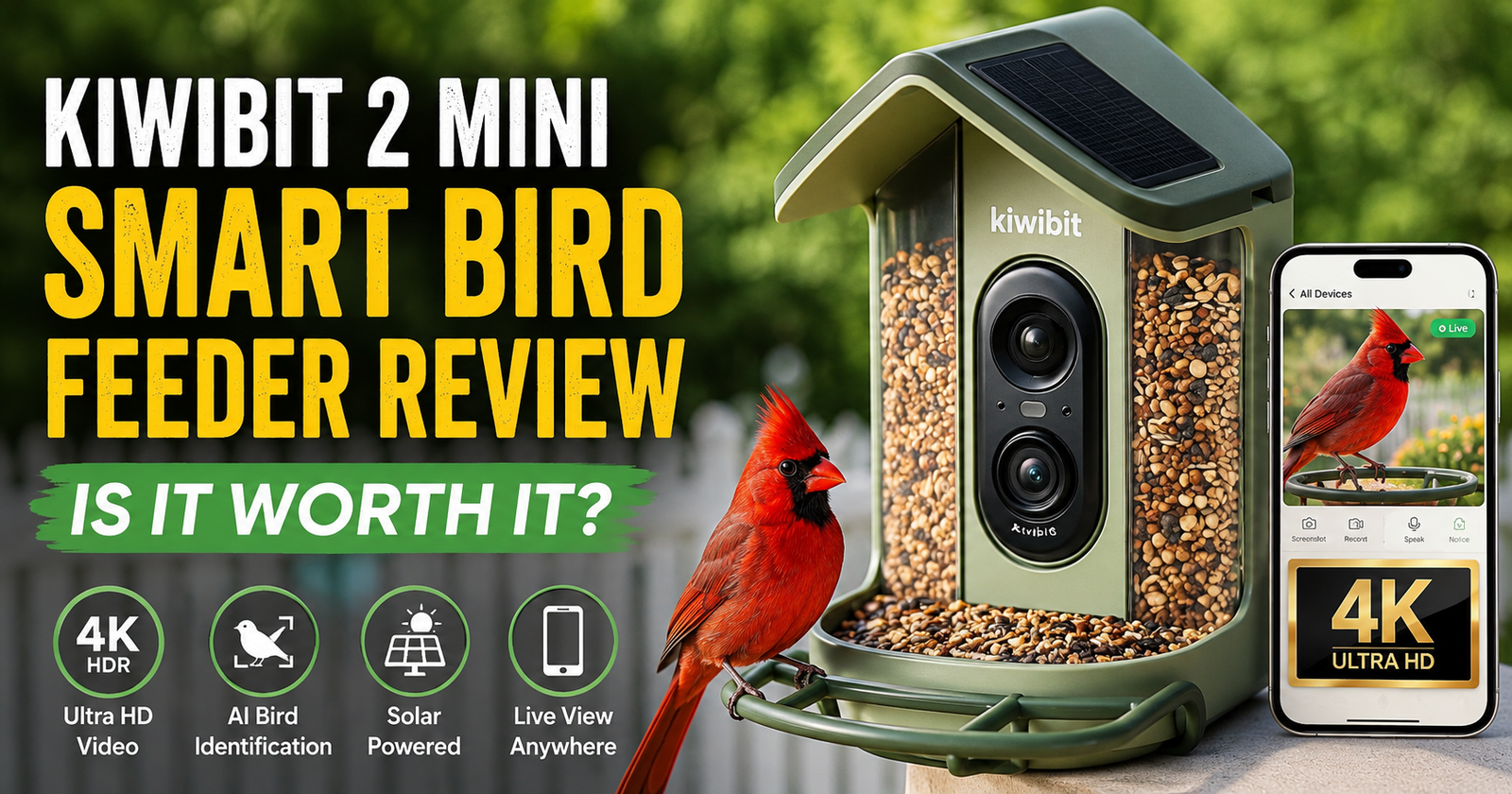
The Kiwibit Smart Bird Feeder 2 Mini we’ve looked at combines the feeding station with a 4K camera, letting you see birds visiting when you otherwise wouldn’t be watching. The Kiwibit camera feeder review considers whether that added viewing experience is worthwhile beyond simply choosing the right seed.
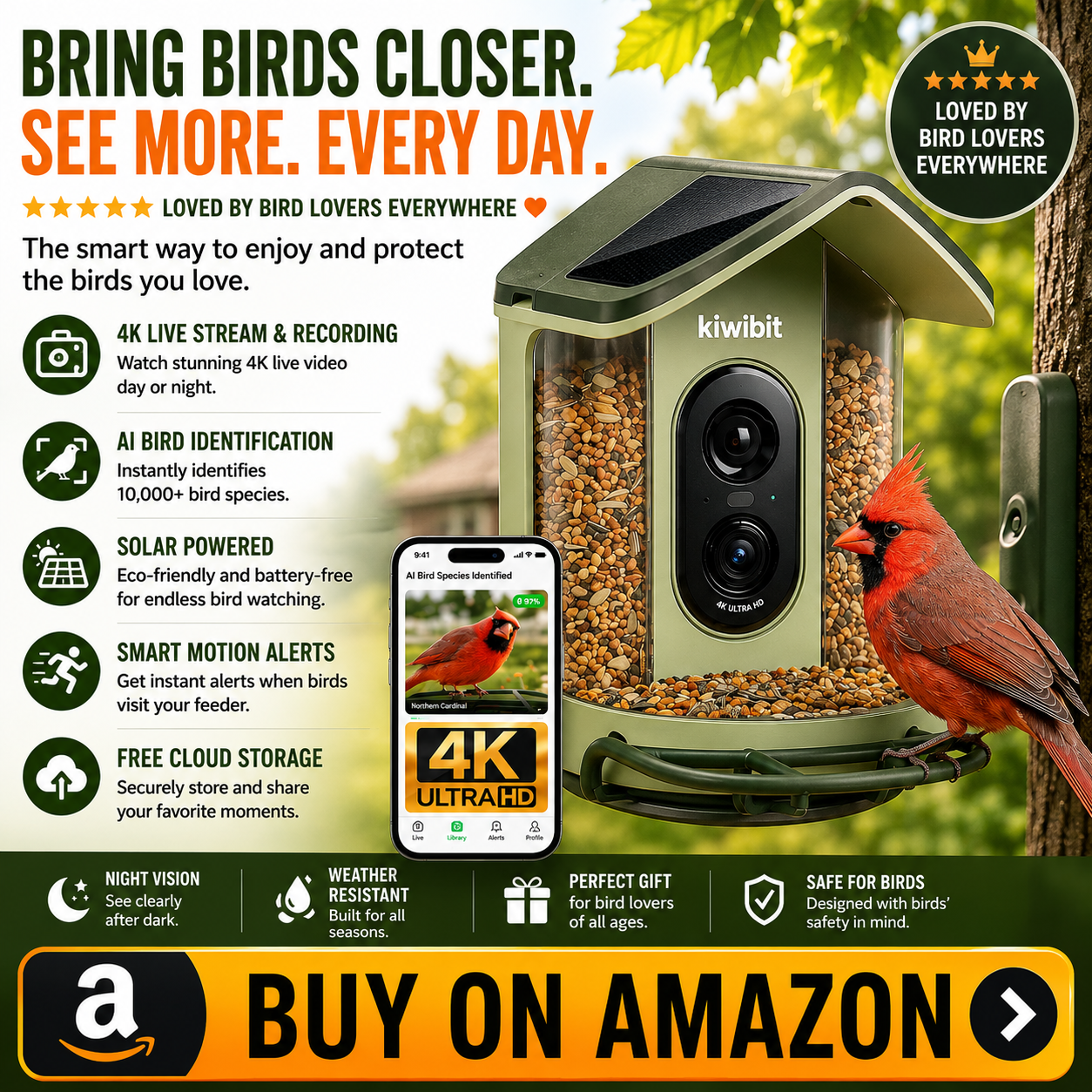
Check out the Kiwibit 4K smart bird feeder on Amazon
I could easily see myself running black oil sunflower for a while, trying safflower afterward, and comparing what actually showed up.
What Birdseed Should I Use If Squirrels Are Taking Everything?
This is where I’d try safflower.
Again, I won’t promise squirrels won’t eat it.
Cornell specifically notes that while squirrels are sometimes reported to dislike safflower, squirrels in some areas appear to develop a taste for it.
That’s exactly the kind of nuance I want readers to know before spending money.
Safflower isn’t magic.
But cardinals like it, and there’s a reasonable chance it will be less appealing to some of your squirrels.
That’s enough reason for me to experiment.
See the pure safflower birdseed I’d try for cardinals on Amazon
If the squirrels ignore it and the cardinals keep eating, fantastic.
Your own backyard has answered the question.
Should You Mix Safflower and Sunflower?
You certainly can.
And I think this is an easy way to introduce safflower.
If your cardinals already know the feeder contains sunflower, you don’t necessarily have to dump everything and suddenly switch to something completely different.
Add safflower.
Watch.
Then adjust.
You may discover your cardinals happily eat both.
You may discover they strongly favor one.
You may discover your squirrels don’t care about your clever experiment and eat everything anyway.
That’s backyard bird feeding.
Individual animals don’t always read the same rulebook we do.
What Is the Best Birdseed for Cardinals in Winter?
I wouldn’t suddenly abandon black oil sunflower because it’s cold.
Its high-energy kernel makes it an excellent winter food, and Audubon recommends black oil sunflower for year-round bird feeding.
Safflower remains useful too.
The bigger winter issue for me is keeping food available and in good condition.
Northern Cardinals are year-round residents throughout much of their range rather than long-distance migrants.
That means the birds you enjoyed all summer can still be around after snow arrives.
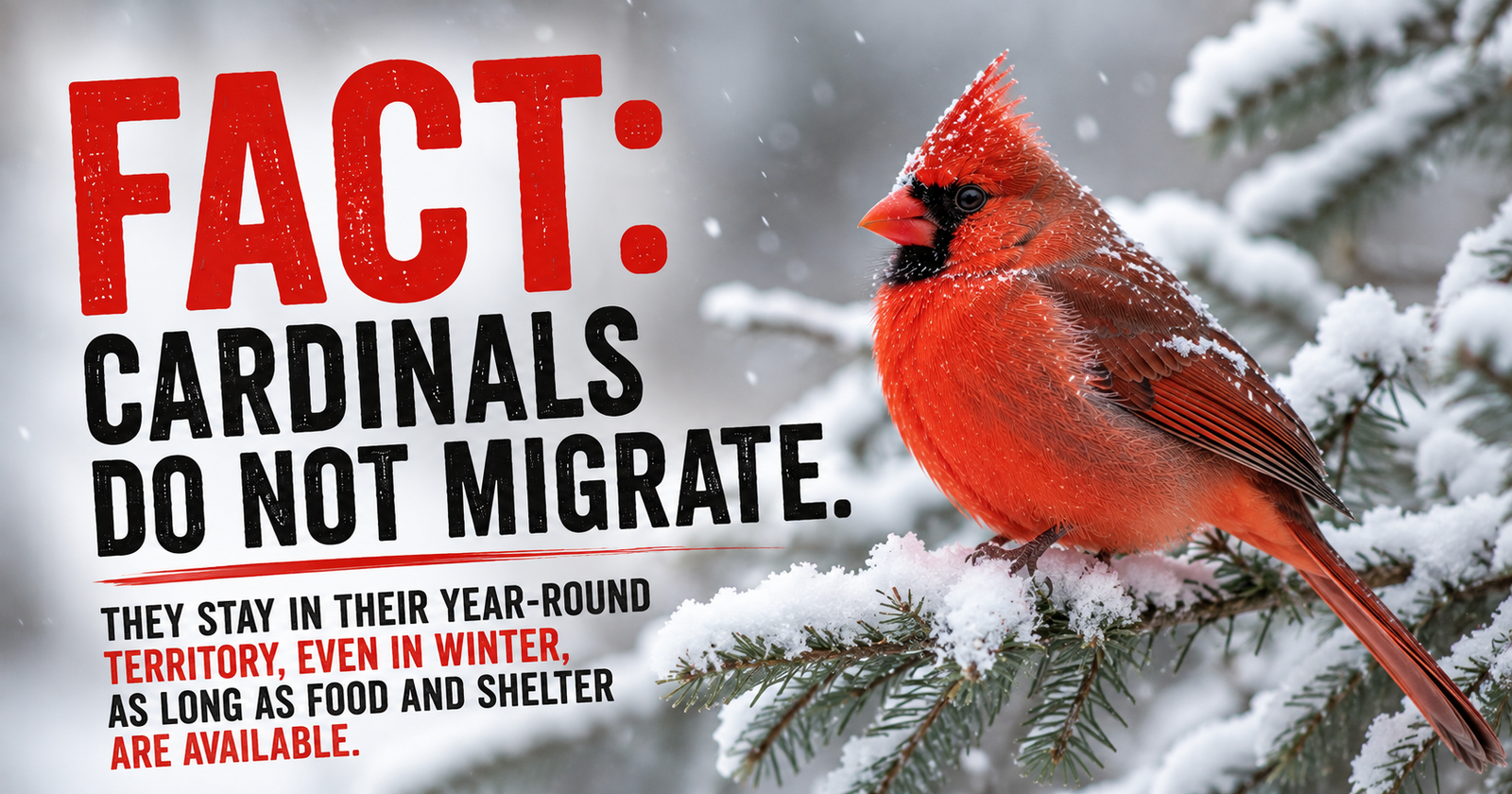
Our guide to where cardinals really go in winter explains why they don’t simply disappear south every fall.
Do Cardinals Need More Food During Nesting Season?
Their diet certainly changes in importance when they’re feeding young.
Cardinal nestlings receive mostly insects rather than a diet consisting entirely of seeds.
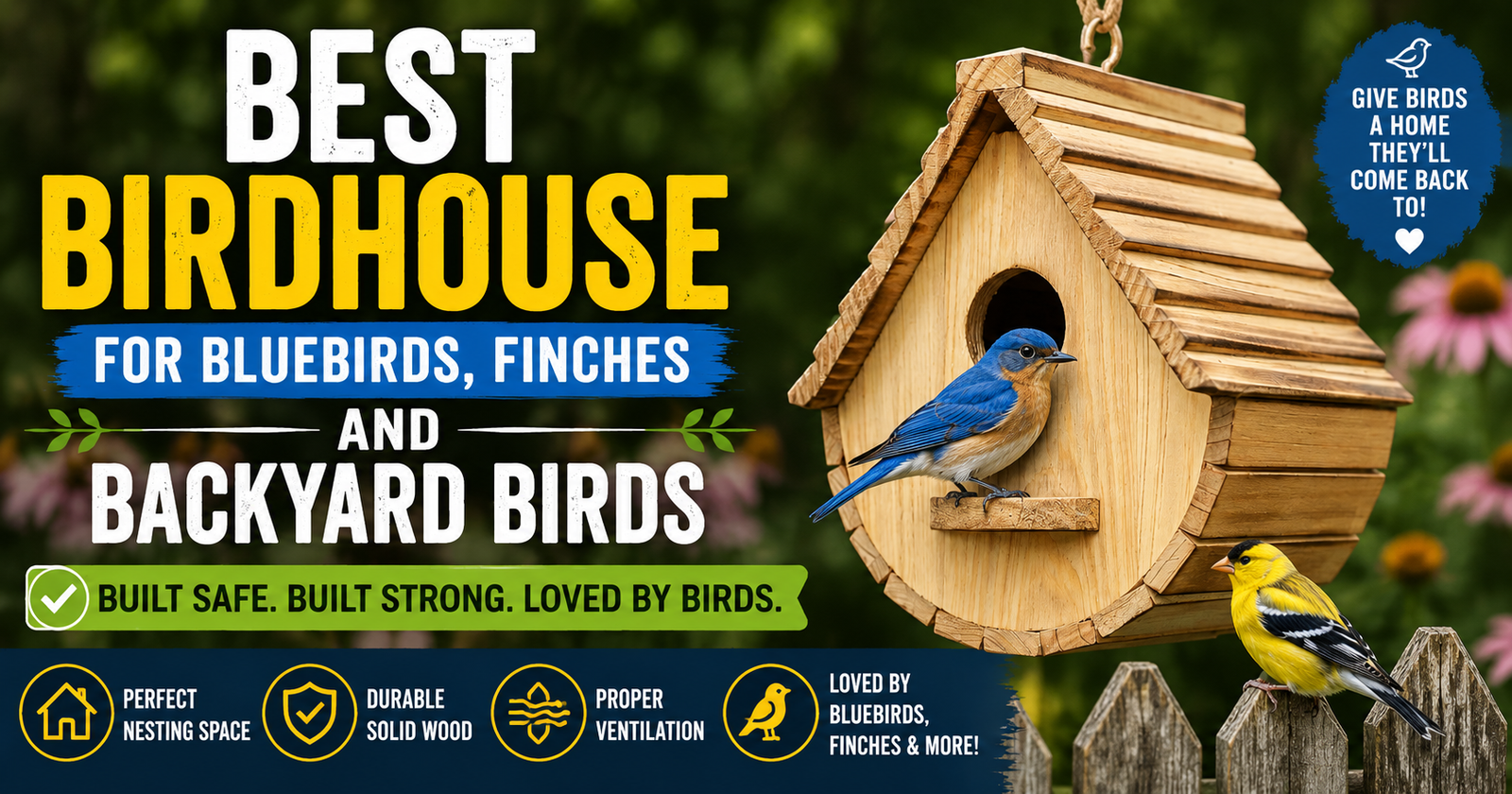
That’s another reminder that a bird feeder can’t provide everything a cardinal family needs. For readers considering nesting habitat alongside feeding, a suitable backyard birdhouse explains which backyard birds are realistic candidates for an enclosed box.
A yard supporting insects, native plants, shrubs, natural seeds, and fruits has enormous value.
Feeders are helpful.
Habitat is better.
Ideally, I want both.
Don’t Forget Water
You can have the greatest cardinal seed setup in the neighborhood and still be missing another simple attraction.
Water.
Audubon recommends providing cardinals with a fountain or birdbath in addition to food and shelter.
That’s why I don’t look at birdseed as an isolated trick.
If you genuinely want cardinals spending more time around your property, give them multiple reasons to be there.
Food.
Water.
Cover.
Natural vegetation.
Nesting opportunities.
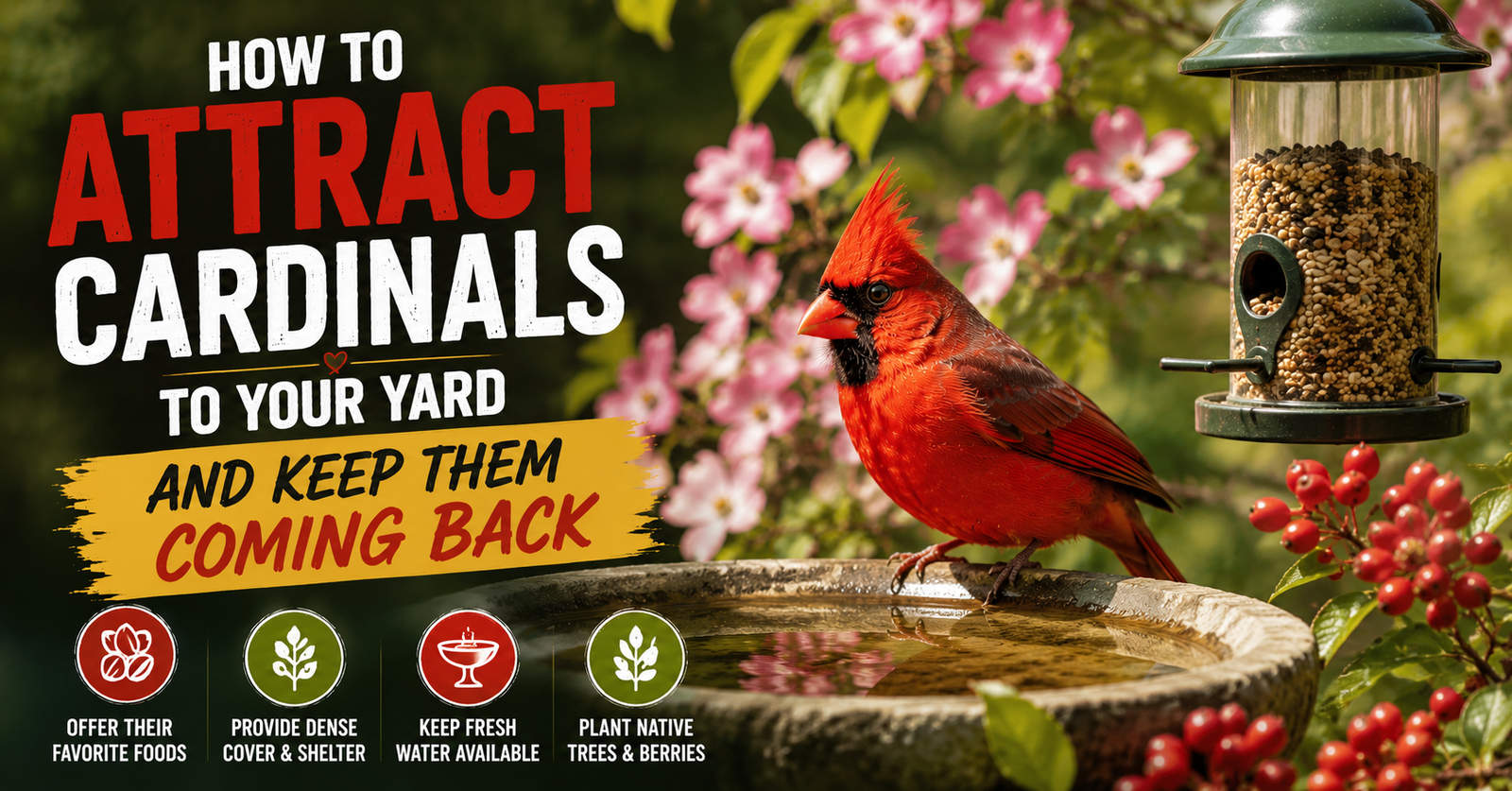
Our guide to attracting cardinals and keeping them coming back ties those pieces together.
Fresh Seed Matters More Than Buying the Fanciest Bag
I’d rather have ordinary fresh black oil sunflower than an expensive premium blend that’s been sitting damp in the bottom of a dirty feeder.
Keep your seed dry.
Store the unused portion properly.
Don’t continually pour fresh seed over old wet food.
Check the bottom of the feeder.
Clean it regularly.
Pay attention to what the birds are actually eating.
You don’t need to overcomplicate this.
Good food in a clean, comfortable feeder is a very strong starting point.
What I Would Buy First
If I were starting a cardinal feeding station tomorrow, I’d keep it incredibly simple.
I’d get a cardinal-friendly feeder.
I’d fill it with black oil sunflower seed.
Then I’d wait.
If cardinals showed up, great.
If squirrels became the biggest customers, I’d start experimenting with safflower.
If I wanted less mess underneath the feeder, I’d consider sunflower hearts.
If I wanted more variety, I’d add other foods later.
But I wouldn’t start by buying six different bags.
First figure out what your birds actually want.
Then build from there.
Common Questions About the Best Bird Seed for Cardinals
What is the best bird seed for cardinals?
Black oil sunflower seed is my first choice. Cornell says Northern Cardinals particularly eat black oil sunflower, while Audubon’s current cardinal guidance calls it the best bet for attracting them.
Do cardinals prefer sunflower or safflower seed?
Both are excellent. Research discussed by Audubon places black oil sunflower ahead of other sunflower options for Northern Cardinals, so that’s where I’d start. Safflower becomes especially attractive when squirrels are causing problems.
Is safflower seed good for cardinals?
Yes. Cornell specifically describes safflower as a favorite among cardinals. Its thicker shell can make it less accessible to some other birds.
Do cardinals eat striped sunflower seeds?
Yes. Striped sunflower ranked behind black oil sunflower in the cardinal seed preferences reported by Audubon, but cardinals readily eat it.
Do cardinals eat sunflower hearts?
Yes. Hulled sunflower attracts Northern Cardinals along with many other feeder birds. It also creates less shell debris beneath the feeder.
Do cardinals eat peanuts?
Yes. Cardinals will eat peanuts, although I wouldn’t choose peanuts over sunflower as my main cardinal food.
Do cardinals eat cracked corn?
Yes. Cornell lists cracked corn among foods that can attract Northern Cardinals to feeders. Just remember that plenty of other birds and squirrels like it too.
Is cheap mixed birdseed good for cardinals?
It depends entirely on what’s inside. I would look for a mix containing plenty of sunflower and other foods cardinals actually use. Cheap blends containing large amounts of ingredients birds routinely discard can create more waste than savings.
Can I feed cardinals only sunflower seeds?
You can offer sunflower as your primary feeder food, but remember that wild cardinals eat a much broader natural diet containing seeds, fruits, berries, and insects. Their feeder food is supplemental.
What birdseed should I use when squirrels keep stealing the cardinal food?
Safflower is the first alternative I’d experiment with because cardinals readily eat it while some squirrels find it less appealing. It’s not guaranteed to deter every squirrel.
For most people, I don’t think finding the best bird seed for cardinals needs to involve buying a fancy mix with a giant red bird printed across the front.
Start with black oil sunflower.
Watch what happens.
If squirrels become a problem, try safflower.
If you want less shell mess, experiment with sunflower hearts.
And pay attention to what ends up underneath the feeder instead of assuming everything disappearing from the bag is actually being eaten.
Cardinals are remarkably good at telling you what they prefer.
You just have to watch them.
Mason Reed is the Backyard Birding & Gear Contributor for BirdResource.com, where he focuses on practical bird feeding, backyard birding, bird behavior, and helping everyday birdwatchers choose food and gear based on what birds actually use.