If you’ve heard a Blue Jay before you’ve seen one, there’s a good chance your first thought wasn’t:
What a beautiful songbird.
It was probably closer to:
What in the world is making THAT noise?
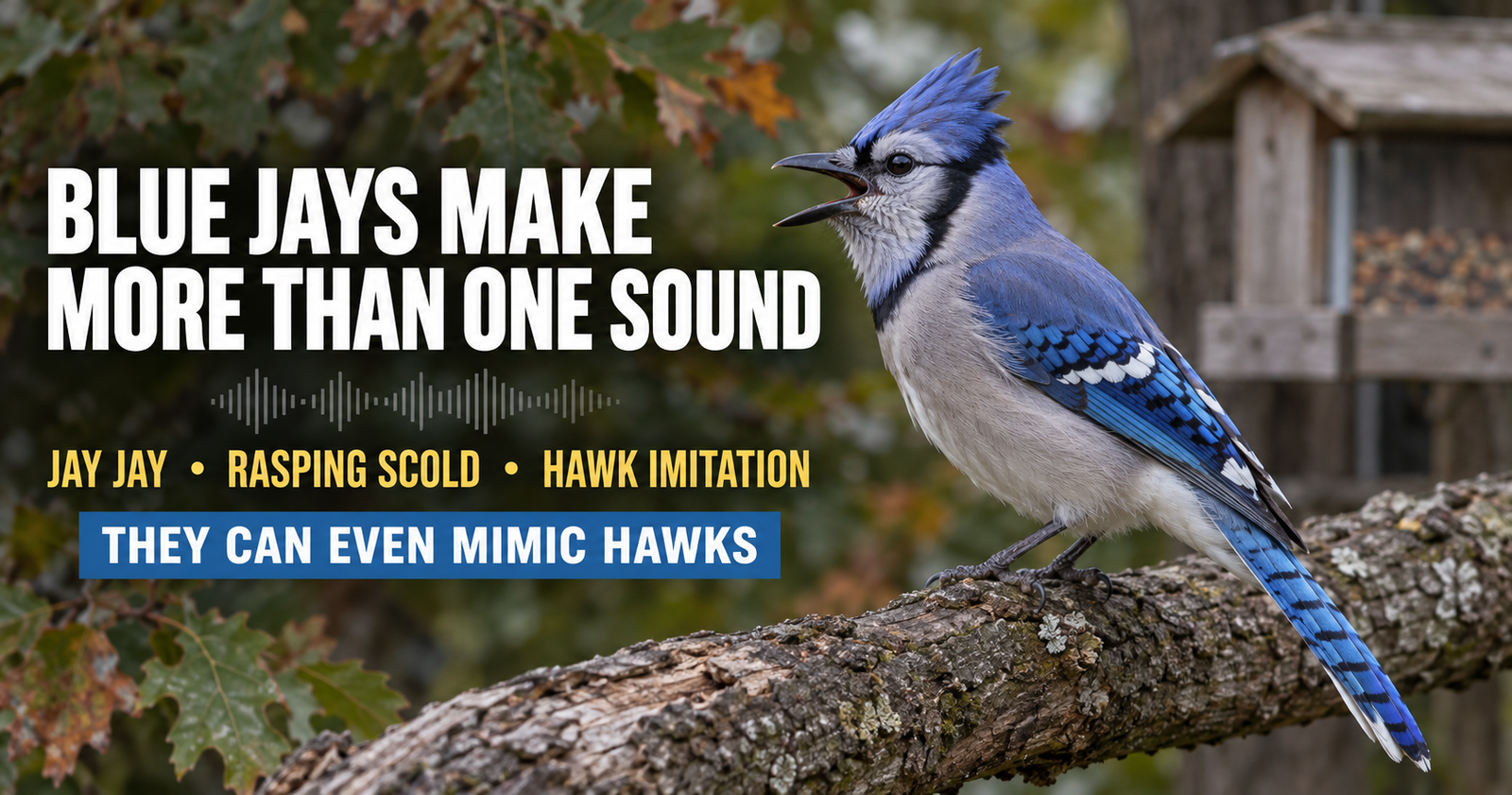
Blue Jays can be incredibly loud.
Their familiar harsh jay! jay! jay! call can cut across a backyard and immediately get your attention.
But here’s what makes these birds much more interesting once you start listening closely:
That scream is only one part of a surprisingly huge Blue Jay vocabulary.
Blue Jays whistle.
They make rattling sounds.
They produce clicks, gurgles, squeaks, and soft noises you might never associate with the large blue bird visiting your feeder.
And yes, they can even imitate hawks.
The Cornell Lab’s guide to Blue Jay sounds and calls describes everything from the familiar jeer call to quieter musical sounds and a strange collection of soft vocalizations sometimes called the whisper song.
Once you learn a few of these sounds, Blue Jays become much easier to recognize without ever seeing them.
That Famous “JAY! JAY!” Call
This is the Blue Jay sound most people already know, even if they don’t realize which bird is making it.
Cornell describes the characteristic call as a loud jeer.
It’s harsh.
Piercing.
And difficult to ignore.
A Blue Jay may repeat the call several times, producing something that sounds roughly like:
JAY! JAY! JAY!
Written bird sounds are never perfect, but once you hear the real thing while watching a Blue Jay make it, the connection becomes pretty easy to remember.
This is one reason I recommend learning bird sounds alongside visual identification.
A Blue Jay hidden behind leaves can still tell you exactly where it is.
And unlike some quiet little backyard birds, Blue Jays don’t always seem particularly concerned about keeping their presence secret.

Why Is a Blue Jay Screaming?
This is where I wouldn’t translate one call into one exact sentence.
A loud Blue Jay could be communicating with other jays.
It might be alarmed.
A predator could be nearby.
Several birds might be interacting around food.
A family group could be communicating.
Something may have disturbed the bird.
Or you may simply be hearing normal Blue Jay communication.
Context matters.
Instead of hearing a screaming Blue Jay and immediately assuming danger, look at what the bird is doing.
Is it staring at one particular tree?
Are several jays joining in?
Are other birds reacting?
Is there a hawk nearby?
Are the jays fighting over your peanut feeder?
The sound gets much more useful when you combine it with behavior.
If Every Blue Jay Suddenly Starts Yelling, Look Around
This is one of the most useful things I’ve learned from paying attention to backyard birds.
Sometimes the birds notice something before I do.
Blue Jays can become extremely vocal around potential predators.
If several jays suddenly gather around one location and begin calling intensely, I start looking.
There could be a hawk.
An owl.
A cat.
A snake.
Or another animal the birds consider threatening.
Blue Jays can participate in mobbing, where birds gather around a potential predator, call loudly, follow it, and sometimes approach surprisingly close.
That behavior can expose a predator that would otherwise remain hidden.
So the next time your normally noisy Blue Jays become unusually noisy and focused on one spot, don’t automatically tune them out.
See what they’re looking at.
Wait, Was That a Hawk?
Here’s where Blue Jay identification gets really fun.
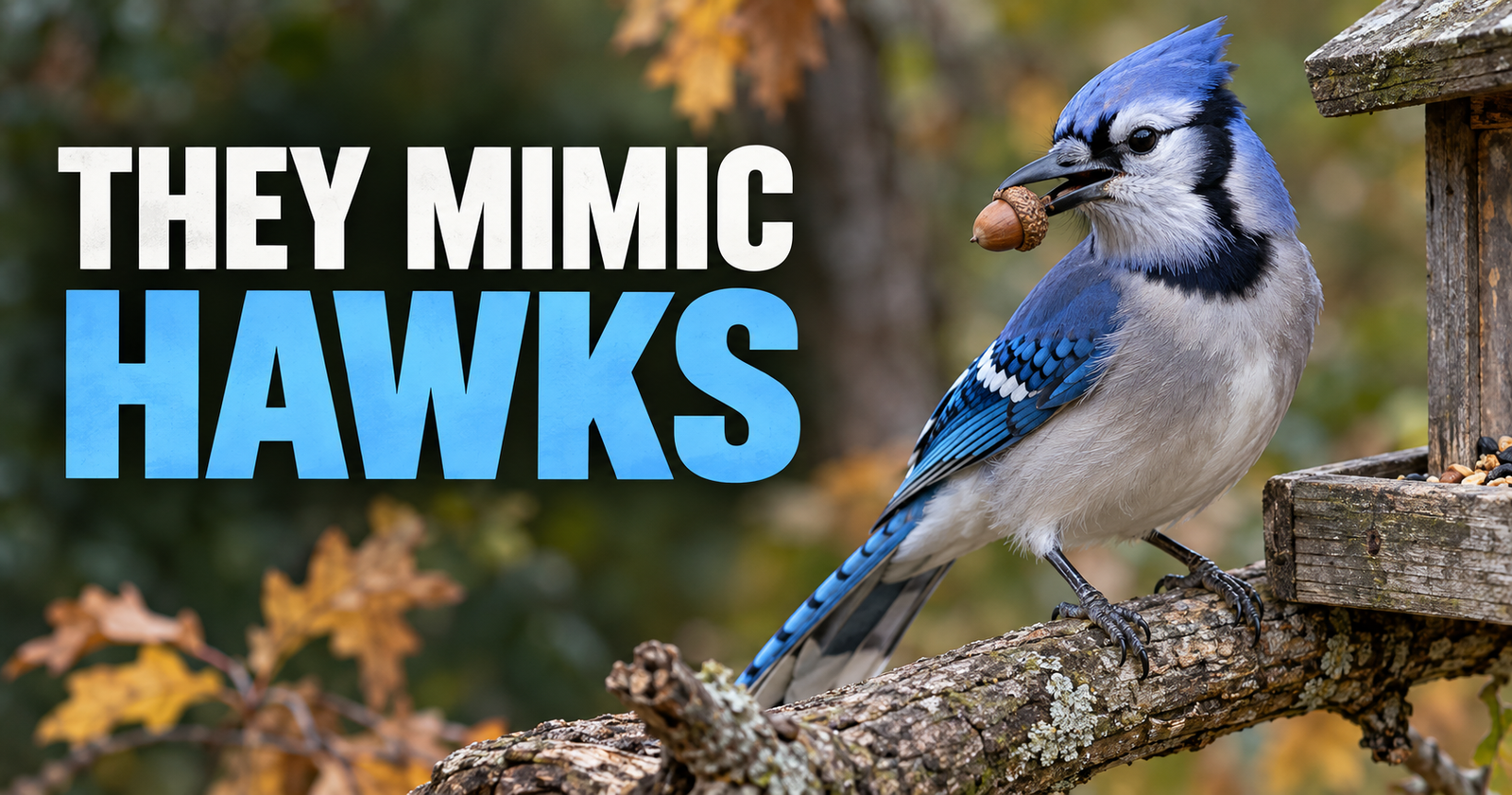
Blue Jays can imitate hawks.
And sometimes they’re convincing enough to make you stop what you’re doing and start looking for a raptor.
Cornell documents Blue Jays imitating Red-shouldered Hawks and sometimes Red-tailed Hawks in its detailed Blue Jay sound guide.
That means a hawk-like scream around your yard doesn’t always belong to a hawk.
Sometimes the bird responsible is blue, white, black, crested, and considerably smaller.
Once you know Blue Jays do this, every mystery hawk call becomes a little more interesting.


Why Would a Blue Jay Imitate a Hawk?
This is one question where I don’t want to pretend scientists have a perfectly settled answer.
Several explanations have been suggested.
Hawk imitation may sometimes alert other Blue Jays to the presence of a real hawk.
Another possibility is that mimicking a predator affects other birds nearby.
Imagine several smaller birds feeding.
They hear a hawk.
They scatter.
Now the Blue Jay has less competition.
It’s an interesting possibility, but I wouldn’t claim every Blue Jay making a hawk sound is deliberately running an elaborate feeder scam.
The behavior is real.
The exact purpose can be harder to determine.
That’s one of the things I like about bird behavior. Sometimes we know what the bird does long before we completely understand why.
Blue Jays Have a Strange “Pump Handle” Call Too
This sounds nothing like the classic harsh Blue Jay scream.
Cornell describes another Blue Jay vocalization often compared with the sound of an old-fashioned hand-operated water pump.
It’s sometimes written something like:
queedle-queedle
The sound is more musical and less abrasive than the familiar jeer.
If you’ve only learned one Blue Jay call, you could easily hear this and assume another bird is nearby.
That’s exactly why the question “What does a Blue Jay sound like?” doesn’t really have one answer.
Blue Jays sound like a lot of things.
Blue Jays Can Be Surprisingly Quiet
I know.
“Quiet Blue Jay” sounds almost contradictory.
But Blue Jays also produce soft vocalizations used at closer range.
Cornell describes clicks, whirs, whines, liquid notes, soft whistles, and other low-volume sounds.
Those noises make sense when birds are relatively close together.
A Blue Jay doesn’t need to scream across the neighborhood when the bird it’s communicating with is sitting three branches away.
Think of the difference between yelling across a pasture and talking to someone sitting beside you.
Blue Jays have voices for both situations.
The Blue Jay Whisper Song Doesn’t Sound Like What You’d Expect
This may be one of the strangest Blue Jay vocalizations.
The so-called whisper song can include an extended mixture of quiet clicks, pops, whirs, liquid sounds, and other soft notes.
Blue Jays may even incorporate imitations of other birds.
It’s dramatically different from the screaming jay most people recognize.
If you heard one performing these quieter sounds without seeing it, you might never guess a Blue Jay was responsible.
That’s one of my favorite things about learning bird calls.
A species you’ve seen hundreds of times suddenly becomes unfamiliar again.

Do Blue Jays Actually Sing?
Yes, although not necessarily in the way most people imagine when they hear the word songbird.
A Northern Cardinal may sit on a prominent perch and repeatedly deliver a clear series of whistles that sounds obviously musical to us.
Blue Jays have a different vocal style.
They produce numerous calls along with complex quieter vocal sequences.
They’re also members of the songbird order, Passeriformes.
But “songbird” doesn’t mean every species has to sound sweet to human ears.
Sometimes being a songbird apparently means screaming:
JAY! JAY! JAY!
outside someone’s bedroom window at sunrise.
Do Male and Female Blue Jays Sound Different?
Not in a simple way that lets me reliably identify sex from an ordinary backyard call.
Both males and females vocalize.
It would be convenient if males had one obvious voice and females had another because the sexes already look extremely similar.
Unfortunately, Blue Jays don’t make identification that easy.
Behavior during nesting can give us much stronger clues.
For example, the female incubates the eggs while the male brings her food.
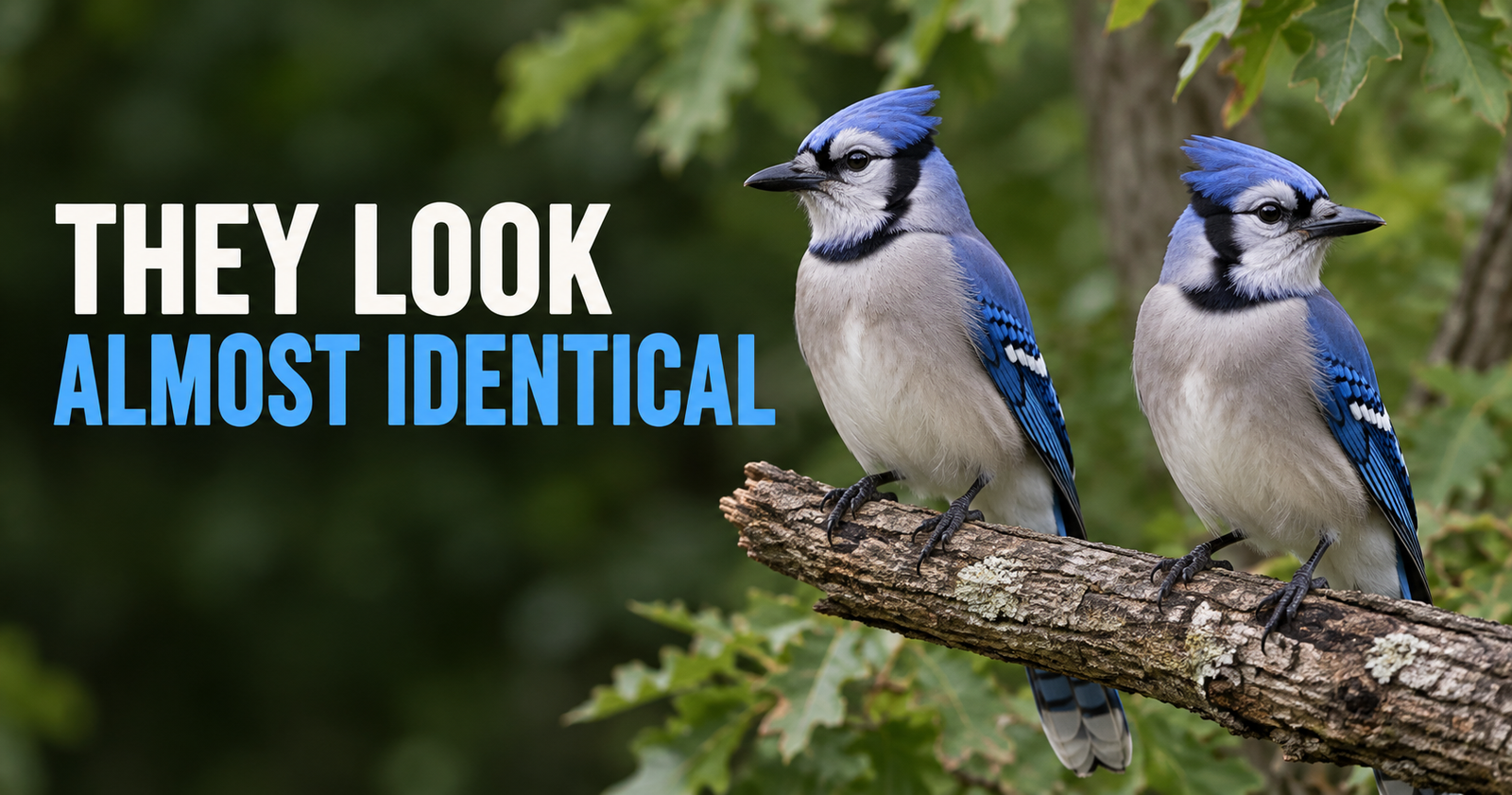
Our male vs female Blue Jay identification guide explains why behavior is often much more useful than trying to find tiny visual or vocal differences.
What Do Baby Blue Jays Sound Like?
Young Blue Jays beg.
And hungry young birds aren’t always subtle about it.
Begging calls help parents locate and feed their dependent youngsters.
That behavior continues after fledging.
So you may see a nearly adult-sized juvenile following another Blue Jay around while repeatedly demanding food.
That doesn’t necessarily mean something is wrong.
Young Blue Jays remain dependent on their parents after leaving the nest.
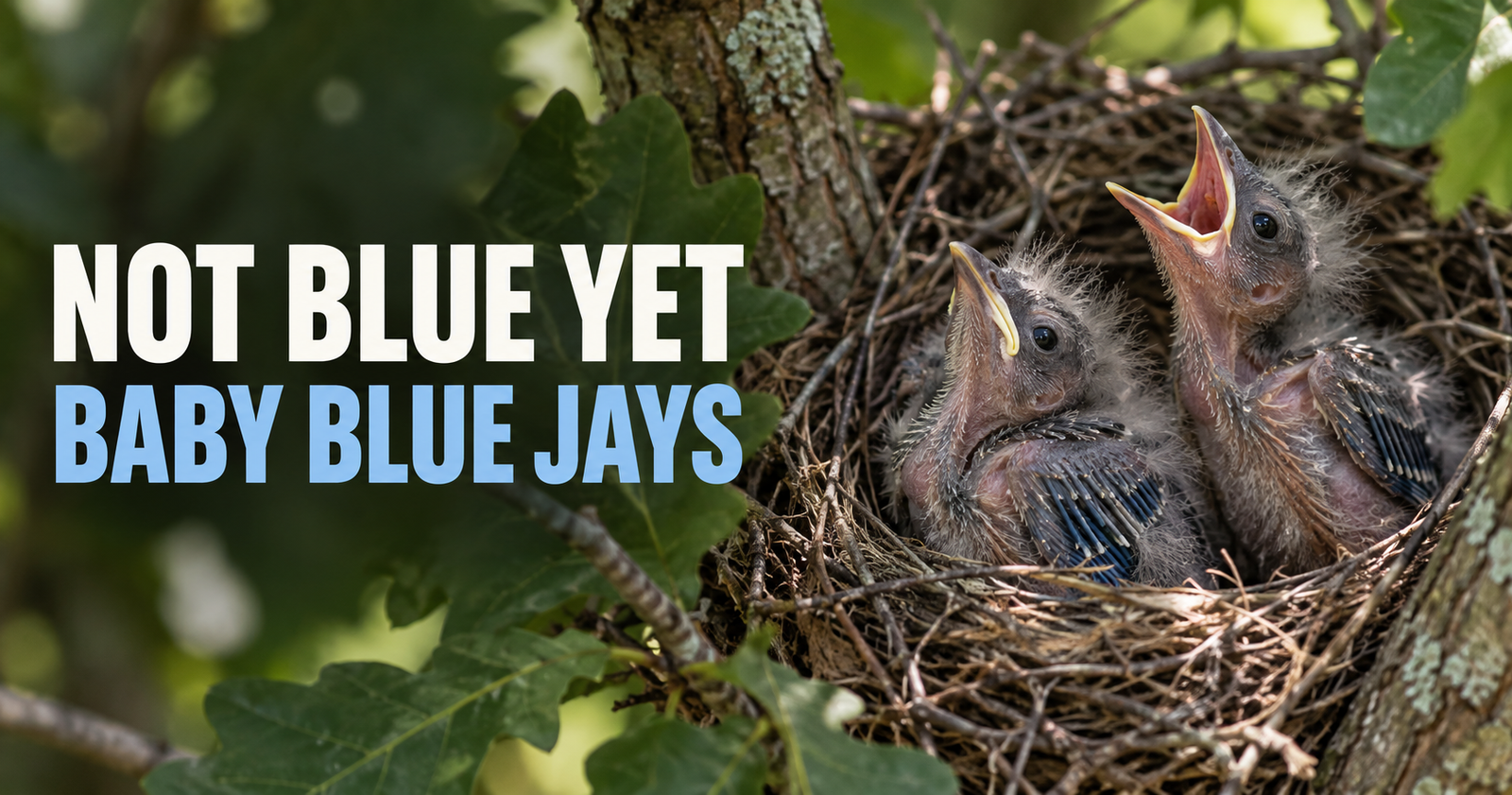
If the noisy youngster you’re watching doesn’t quite look like an adult, our baby Blue Jay identification guide can help you figure out which stage you’re seeing.
Why Are Blue Jays So Loud Around My Feeder?
Food creates competition and social interaction.
One Blue Jay arrives.
Another follows.
Smaller birds move away.
The jays communicate.
Someone grabs a peanut.
Another bird wants the same spot.
Suddenly your peaceful backyard feeding station sounds like an argument in a parking lot.
That’s not necessarily unusual.
Blue Jays are large, social, vocal birds.
A concentrated food source gives them plenty to interact over.
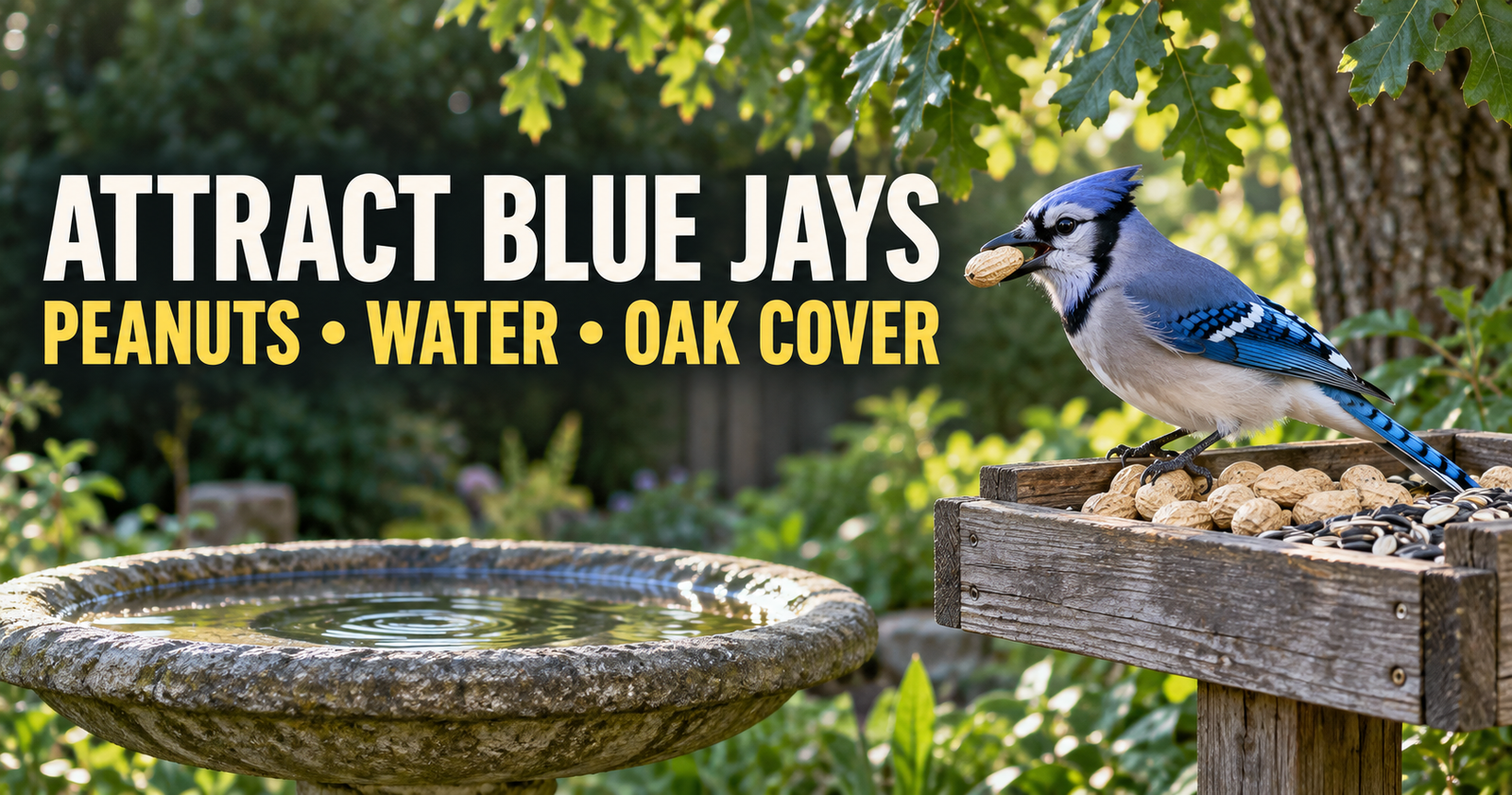
If you’re deliberately trying to bring them closer, our guide to attracting Blue Jays to your yard covers the combination I like best, including peanuts, sunflower seeds, water, roomy feeders, and natural habitat.
Just understand that attracting more Blue Jays may also mean hearing more Blue Jays.
Why Does My Blue Jay Call Before Taking a Peanut?
I wouldn’t assume the bird is announcing:
“Hey everybody, Dax put the peanuts out!”
Blue Jays vocalize around feeding areas for numerous reasons.
It may be communicating with another jay.
It may be responding to a nearby bird.
It may be alert.
Something may have changed around the feeder.
Or the call may have little to do with the peanut itself.
Watch the entire sequence.
Call.
Look around.
Approach.
Inspect the peanuts.
Choose one.
Leave.
The more you connect sounds with behavior, the more useful those calls become.
Can Blue Jays Copy Birds Besides Hawks?
Yes.
Blue Jays are capable mimics, and their quieter vocal performances can incorporate sounds resembling other birds.
Hawk imitation gets most of the attention because it’s dramatic.
A Blue Jay convincing you that a Red-shouldered Hawk is sitting outside makes a better story than the jay quietly copying another songbird.
But mimicry is part of their broader vocal ability.
That’s also why I wouldn’t identify a mystery bird from one unusual sound if I can locate the actual bird making it.
Sometimes your ears get fooled.
Blue Jay vs Crow Sounds
This comparison makes sense because Blue Jays and American Crows are relatives.
Both belong to the corvid family.
The stereotypical calls are quite different.
An American Crow gives the familiar strong:
CAW!
A Blue Jay’s classic jeer is sharper and has that distinctive jay-like quality.
But both birds have much larger vocal repertoires than those famous calls suggest.
So “caw versus jay” is useful when the bird cooperates and makes its textbook sound.
Real bird identification isn’t always that convenient.
Blue Jay vs Cardinal Sounds
Once you’ve learned both, these birds sound dramatically different.
Northern Cardinals are famous for clear whistled songs.
Blue Jays are much better known for harsh jeers and a much stranger collection of varied calls.
Cardinals aren’t always musical either. They have a sharp metallic chip call that sounds nothing like their familiar song.
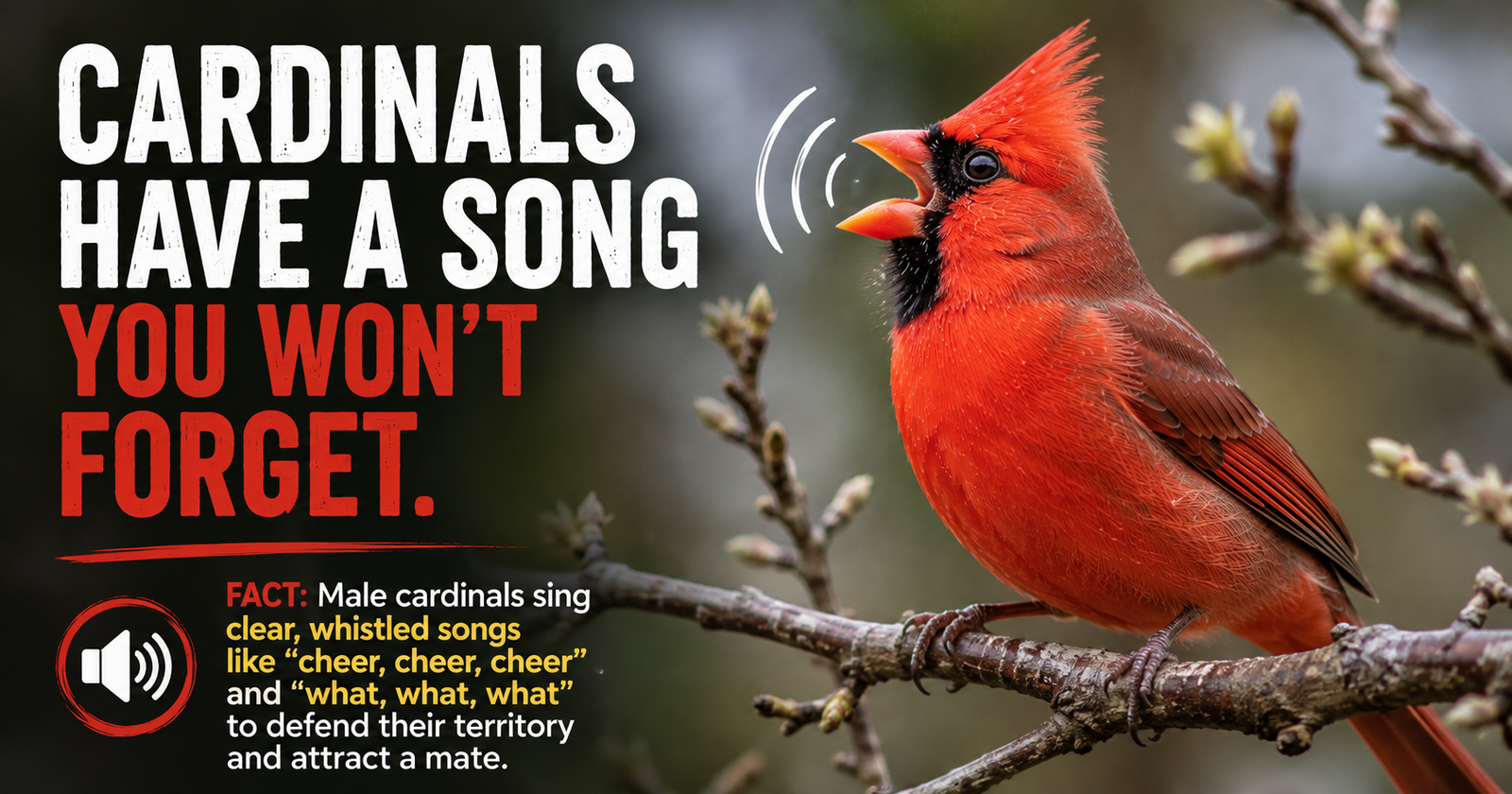
Our guide to Northern Cardinal songs and calls makes a useful comparison if both species regularly visit your yard.
Learn the two voices and you’ll start identifying birds you can’t even see.
The Fastest Way to Learn Blue Jay Calls
Don’t try memorizing twenty written versions of bird sounds.
Go outside and connect the sound with the actual bird.
That’s what makes it stick.
Hear it. Find the bird. Watch what it’s doing.
Then pay attention when the sound changes.
Did another Blue Jay arrive?
Did a hawk fly overhead?
Did the bird approach a feeder?
Did several jays gather?
Did the crest rise?
Was the bird calling across a long distance or quietly communicating with another jay nearby?
Now you’re learning more than a noise.
You’re learning how the bird communicates.
Common Questions About Blue Jay Sounds
What is the classic Blue Jay sound?
The best-known Blue Jay vocalization is a loud, harsh jeer commonly represented as jay! jay! jay! It’s one of the easiest Blue Jay calls to recognize once you’ve heard it while watching the bird.
Why do Blue Jays scream so loudly?
Blue Jays use loud calls during many situations, including communication with other jays and responses to potential threats. One loud call doesn’t have a single universal meaning.
Can Blue Jays sound like hawks?
Yes. Blue Jays are documented mimics of Red-shouldered Hawks and sometimes Red-tailed Hawks. You can hear examples through the Cornell Lab’s Blue Jay sound recordings.
Why do Blue Jays imitate hawks?
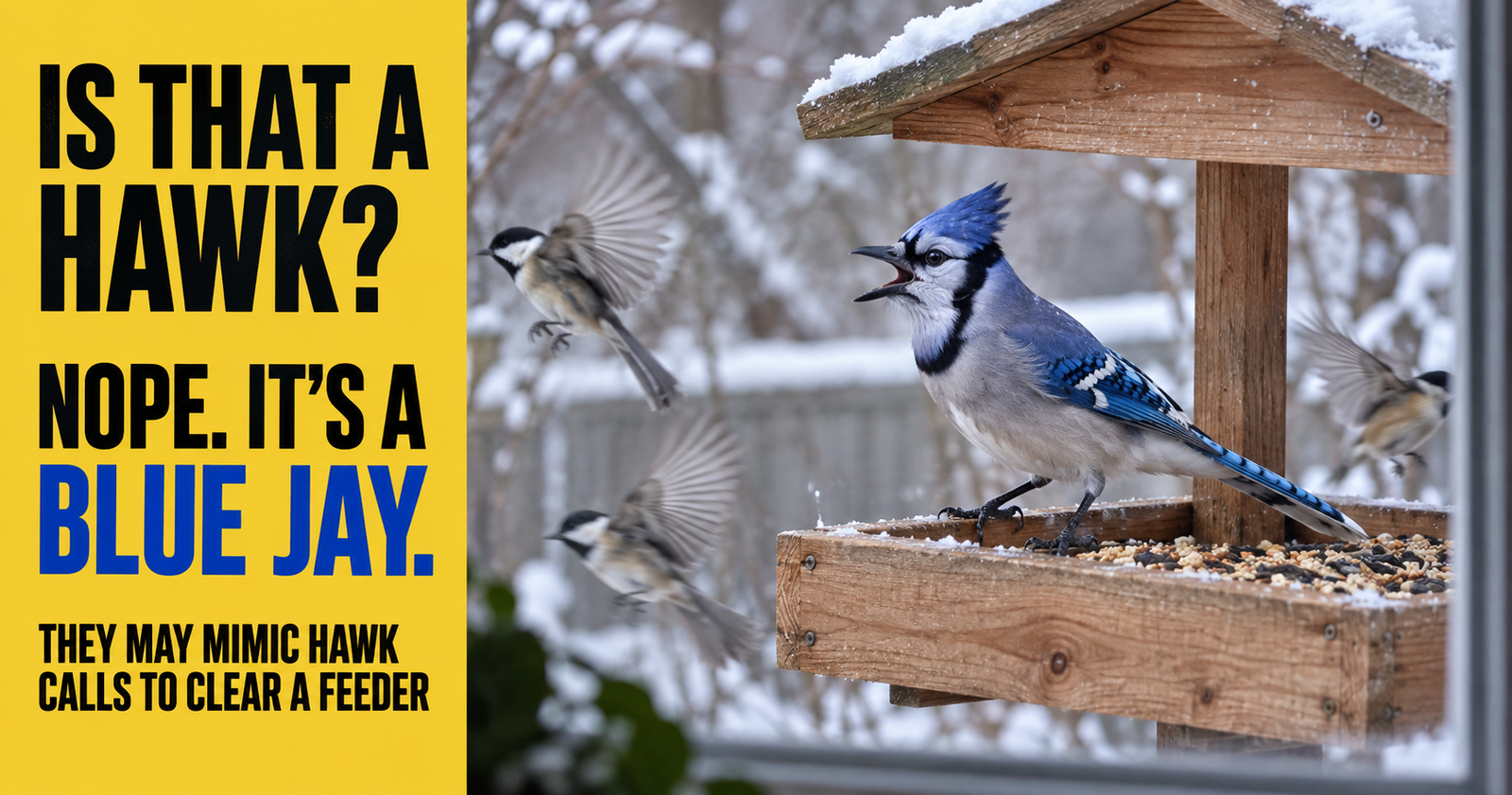
The exact purpose isn’t completely settled. Hawk mimicry may sometimes function as an alarm, and researchers have also considered whether it could influence other birds nearby.
Do Blue Jays sing?
They produce complex vocalizations, including quiet sequences sometimes called whisper songs. Their vocal behavior simply doesn’t sound like the stereotypical melodic singing people associate with birds such as cardinals.
Do female Blue Jays call?
Yes. Both male and female Blue Jays vocalize.
Can you tell a male Blue Jay from a female by its voice?
Not reliably from ordinary backyard calls.
What does a baby Blue Jay sound like?
Young Blue Jays produce begging calls when communicating with their parents and may remain vocal after leaving the nest.
Why are several Blue Jays screaming at one tree?
They may have discovered a predator and could be mobbing it. Look from a safe distance for a hawk, owl, cat, snake, or another possible threat, while remembering that group calling can happen for other reasons too.
Why does a Blue Jay sound different sometimes?
Because Blue Jays have a much larger vocal repertoire than their famous scream. The same bird can produce harsh jeers, whistles, softer conversational sounds, mimicry, and complicated quiet vocalizations. Those sounds make more sense when considered alongside the species’ wider behavior in this Blue Jay behavior and communication guide.
Listen Before You Look
The loud scream is what gets most people to notice a Blue Jay.
But once you start listening for everything else, the bird gets much more interesting.
A whistle from inside the trees.
A strange quiet clicking sequence.
A pump-like call you can’t immediately place.
A hawk scream that turns out not to be a hawk at all.
Those are the sounds that make you stop treating Blue Jays as background noise.
Next time one starts calling outside, don’t immediately tune it out.
Listen for a few seconds.
Then find the bird and watch what happens next.
Sometimes that screaming Blue Jay is simply communicating.
And sometimes it’s telling you that something much more interesting is happening somewhere in the trees.
Mason Reed is the Bird Identification & Behavior Contributor for BirdResource.com, where he helps everyday birdwatchers recognize the calls, behaviors, feeding habits, and identification clues that reveal what’s really happening around their yards.