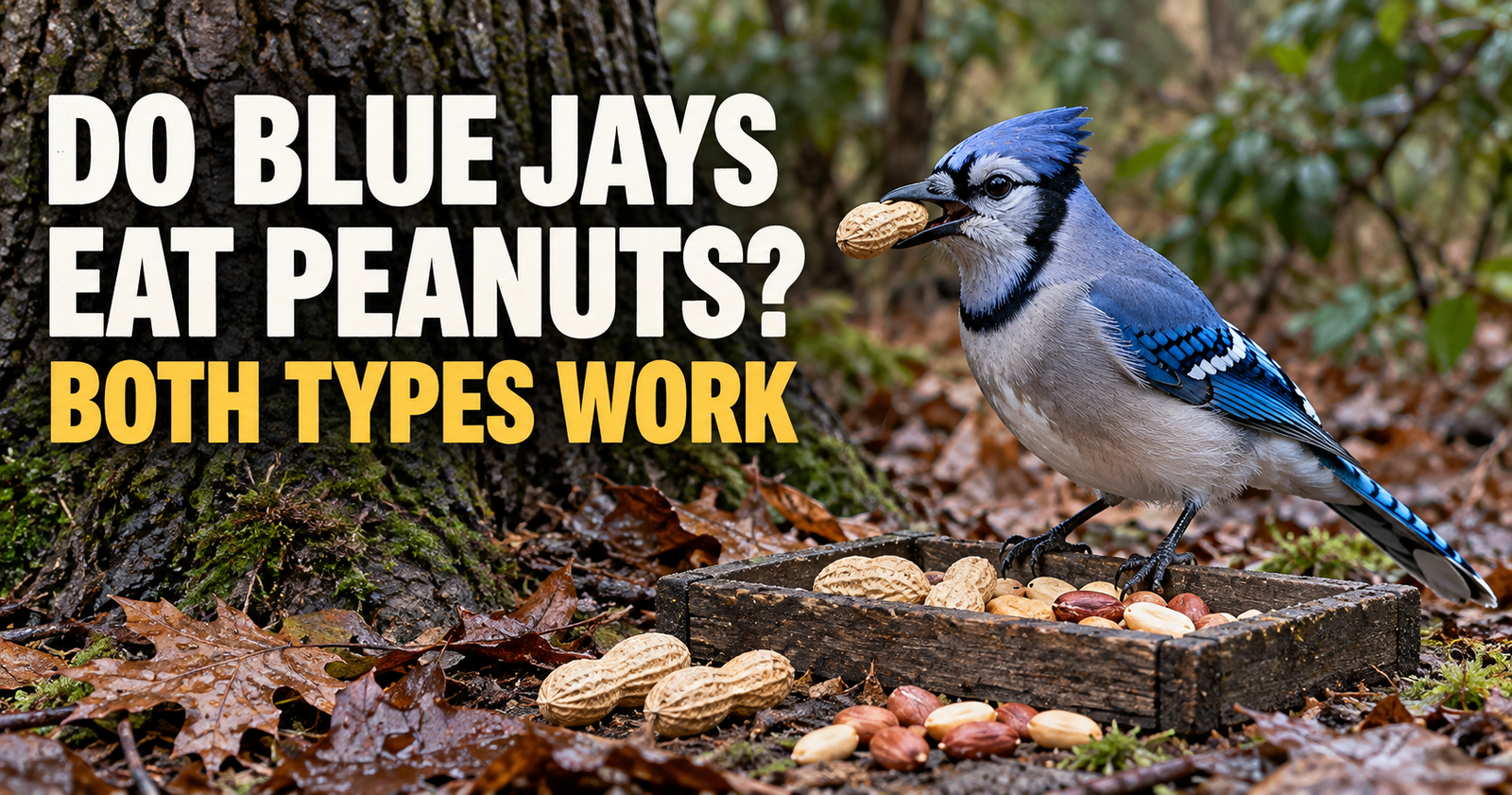
Yes, Blue Jays eat peanuts, and if I wanted to get their attention around a backyard feeder, peanuts would be one of the first foods I’d try.
You can offer them shelled peanuts or whole peanuts still in the shell.
Project FeederWatch specifically notes that larger birds such as jays will take peanuts and may carry several away to hide for later. Plain raw or roasted peanuts can be offered, but salted, flavored, and coated peanuts should be avoided.
So the basic answer is easy.
Blue Jays love peanuts.
The more interesting question is which kind you should put out.
For me, whole peanuts in the shell are hard to beat if Blue Jays are the main birds I’m trying to attract.
Are Peanuts Actually Good Food for Blue Jays?
Peanuts fit naturally into the kind of diet Blue Jays are equipped to handle.
Blue Jays eat plenty of nuts and seeds in the wild. Acorns are particularly important, and these birds are excellent at carrying, opening, and caching hard foods.
Peanuts aren’t native tree nuts, and technically they’re legumes, but Blue Jays readily eat them at feeders.
They’re also energy-rich foods containing substantial fat and protein.
I still think of peanuts as supplemental food.
A wild Blue Jay should continue finding acorns, insects, fruits, seeds, grains, and other natural foods throughout its environment.
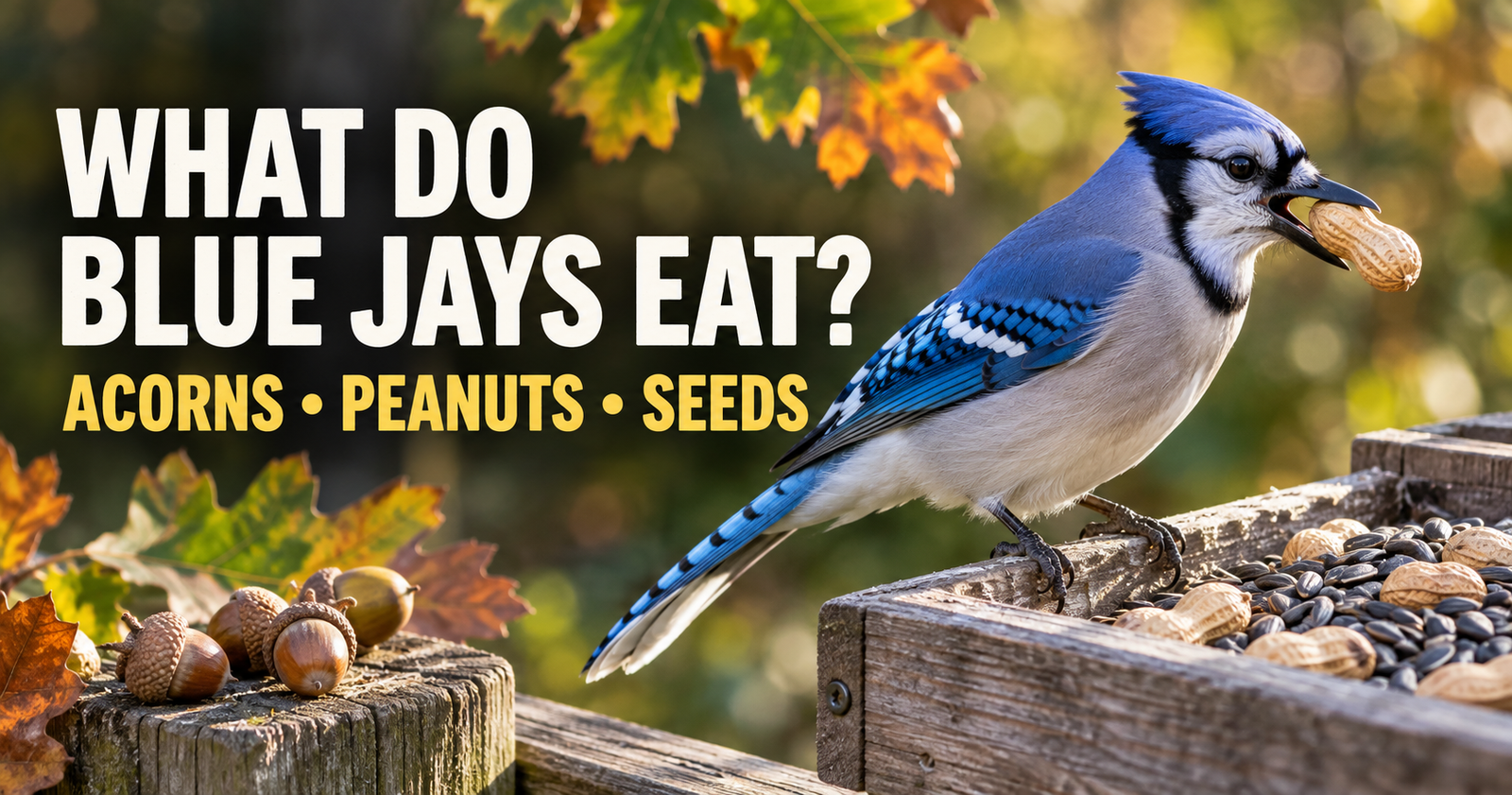
Our complete guide to what Blue Jays eat covers that broader diet.
Peanuts are simply one particularly effective way to bring some of that feeding behavior where you can watch it.
Shelled vs Unshelled Peanuts for Blue Jays
Both work.
If my main goal were attracting Blue Jays and watching their natural food-handling behavior, I’d probably start with whole peanuts in the shell.
Blue Jays are large enough to carry them easily.
They may inspect different peanuts before choosing one, grab it, and immediately fly away.
Shelled peanuts are easier to eat and attract plenty of birds besides Blue Jays.
Project FeederWatch notes that smaller birds such as chickadees, titmice, and nuthatches have an easier time with shelled peanuts, while larger jays readily handle whole peanuts.
So I’d choose based on what I want from the feeding station.
Whole peanuts: excellent when Blue Jays are the main attraction.
Shelled peanuts: better when I want a broader range of peanut-eating birds to participate.
There’s nothing wrong with offering both.
Why Do Blue Jays Take Whole Peanuts Away?
This is one of the behaviors that makes feeding Blue Jays so entertaining.
A jay lands.
Looks at the peanuts.
Chooses one.
Flies away.
Then comes back and does it again.
The bird may be taking the peanut somewhere safer to open, but Blue Jays also cache food for later.
Food storage is normal Blue Jay behavior.
In the wild, they famously transport and hide acorns. Peanuts give them another large, portable food they can carry elsewhere.
So don’t assume the bird doesn’t like your feeder because it refuses to sit there eating.
A Blue Jay repeatedly grabbing peanuts and leaving is about as strong an endorsement of your peanut supply as you’re going to get.
Do Blue Jays Eat Peanuts in the Shell?
Absolutely.
Project FeederWatch specifically recommends peanuts in the shell as a food larger birds such as jays can take and cache.
Whole peanuts also create some of the best backyard Blue Jay watching.
The bird has to choose the peanut, transport it, and eventually break through the shell.
I’ve always found that more interesting than watching a bird swallow something instantly.
Just make sure you’re offering plain peanuts, not the salted in-shell peanuts sold as human snacks.
Can Blue Jays Eat Shelled Peanuts?
Yes.
Shelled peanuts are perfectly usable for Blue Jays and eliminate the work of opening the outer shell.
Peanut pieces or hearts also become accessible to smaller birds.
That’s useful if your feeding station isn’t supposed to be Blue Jay-only.
Chickadees, nuthatches, titmice, woodpeckers, and other birds can be attracted to peanuts too.
The downside is that exposed peanut meat is more vulnerable to moisture and spoilage than a peanut protected by its shell.
That makes freshness and feeder cleanliness particularly important.
Raw or Roasted Peanuts for Blue Jays?
Either can work as long as they’re plain.
Project FeederWatch says raw or roasted peanuts may be offered while specifically warning against salted peanuts and peanuts roasted with coatings or flavorings.
That’s the distinction I’d use.
I’m not worried about whether a peanut went through a plain roasting process nearly as much as I’m worried about what was added to it afterward.
Salt?
Skip it.
Honey coating?
Skip it.
Barbecue seasoning?
Definitely skip it.
Plain peanuts are all the birds need.
Can Blue Jays Eat Salted Peanuts?
I wouldn’t offer them.
Wild birds don’t need the added sodium contained in salted human snack foods.
And there’s no reason to use them when plain peanuts are readily available.
This is one of those situations where the simplest product is usually the better bird food.
Look for:
plain
unsalted
and preferably peanuts sold specifically for birds or wildlife.
The Blue Jay isn’t going to complain that you forgot the sea salt.
What About Honey-Roasted or Flavored Peanuts?
Those stay in the human snack bowl.
Project FeederWatch specifically advises against peanuts roasted with coatings or flavorings.
That includes the kinds of products we enjoy eating ourselves.
Honey roasted.
Barbecue.
Spicy.
Chocolate coated.
Seasoned.
None of that improves the peanut from the bird’s perspective.
When I’m feeding wildlife, I don’t try to make human junk food work.
I choose a food that already makes sense.
How Many Peanuts Should I Put Out?
I wouldn’t dump an enormous bag onto a platform and assume more is always better.
Offer an amount the birds are likely to use reasonably quickly.
Then refill as needed.
This is especially important because peanuts can spoil when they stay damp.
Cornell warns that peanuts can harbor aflatoxins and recommends keeping them dry and using them relatively quickly.
If rain soaks the food, don’t continually pile fresh peanuts over the old wet ones.
Remove questionable food.
Clean the feeding area.
Start fresh.
Can Moldy Peanuts Hurt Blue Jays?
Moldy peanuts shouldn’t be fed to birds.
Cornell specifically warns about the potential for aflatoxin contamination in peanuts and emphasizes keeping them dry.
That’s enough reason for me to take storage seriously.
Keep unused peanuts somewhere cool and dry.
Use a sealed container that keeps moisture and rodents out.
Inspect food before putting it outside.
And if something smells strange or looks moldy, throw it away.
Saving a few dollars worth of old peanuts isn’t worth gambling with the health of the birds visiting your yard.
What’s the Best Feeder for Whole Peanuts?
For the easiest possible setup, a platform feeder works.
Put the peanuts on the tray.
The Blue Jay lands.
It chooses one.
Done.
Project FeederWatch recommends large feeding surfaces for bigger birds and notes that platform feeders attract a wide variety of species.
There are also specialized peanut feeders that hold whole peanuts behind wire or openings, requiring the jay to pull them out.
Those can make the peanuts last longer and create some entertaining feeding behavior.
We’ll look at those separately in our best peanut feeder for Blue Jays guide rather than turning this article into a product roundup.
Can I Put Peanuts on the Ground?
Blue Jays can certainly pick peanuts up from the ground.
But I generally prefer a raised feeding surface where I have more control over cleanliness and moisture.
Food scattered across damp ground can become dirty quickly.
It also becomes accessible to rodents and other animals.
A simple platform gives Blue Jays the same easy access while making it much easier for me to see what’s happening and remove old food.
Will Peanuts Attract Squirrels?
Oh yes.
If you were hoping peanuts contained some secret chemical that Blue Jays love and squirrels hate, I’ve got bad news.
Squirrels like peanuts too.
So do other mammals.
Cornell specifically warns that peanuts can attract squirrels, raccoons, bears, and other animals depending on where you live.
That’s where feeder placement and physical exclusion become much more important than food choice.
A squirrel baffle can help on a properly positioned pole.
And don’t place a supposedly squirrel-resistant setup three feet from a tree trunk and then act surprised when the squirrels jump onto it.
They’re very good at this.
Will Peanuts Attract Other Birds?
Definitely.
That’s not necessarily a bad thing.
Peanuts can attract:
woodpeckers,
nuthatches,
chickadees,
titmice,
crows,
and other birds depending on where you live and how the peanuts are offered.
Whole peanuts naturally favor birds large enough to handle them.
Shelled pieces open the buffet to smaller species.
If Blue Jays are your main target, whole in-shell peanuts can help tilt the setup toward larger birds without guaranteeing exclusivity.
Will Blue Jays Become Dependent on My Peanuts?
I don’t think of a backyard peanut feeder as replacing a Blue Jay’s natural diet.
These birds continue moving through a much larger environment finding natural food.
That’s exactly what I want.
A feeder is supplemental.
If you go on vacation and don’t put peanuts out for a week, the local Blue Jays haven’t suddenly forgotten how to be wild birds.
They may notice the missing food.
They may check the usual location.
Then they’ll continue foraging elsewhere.
How Do Blue Jays Find My Peanuts?
Once Blue Jays discover a reliable food source, they can learn to return to it.
Consistency helps.
Put the food in a predictable place.
Use a feeder large enough for them.
Then give them time.
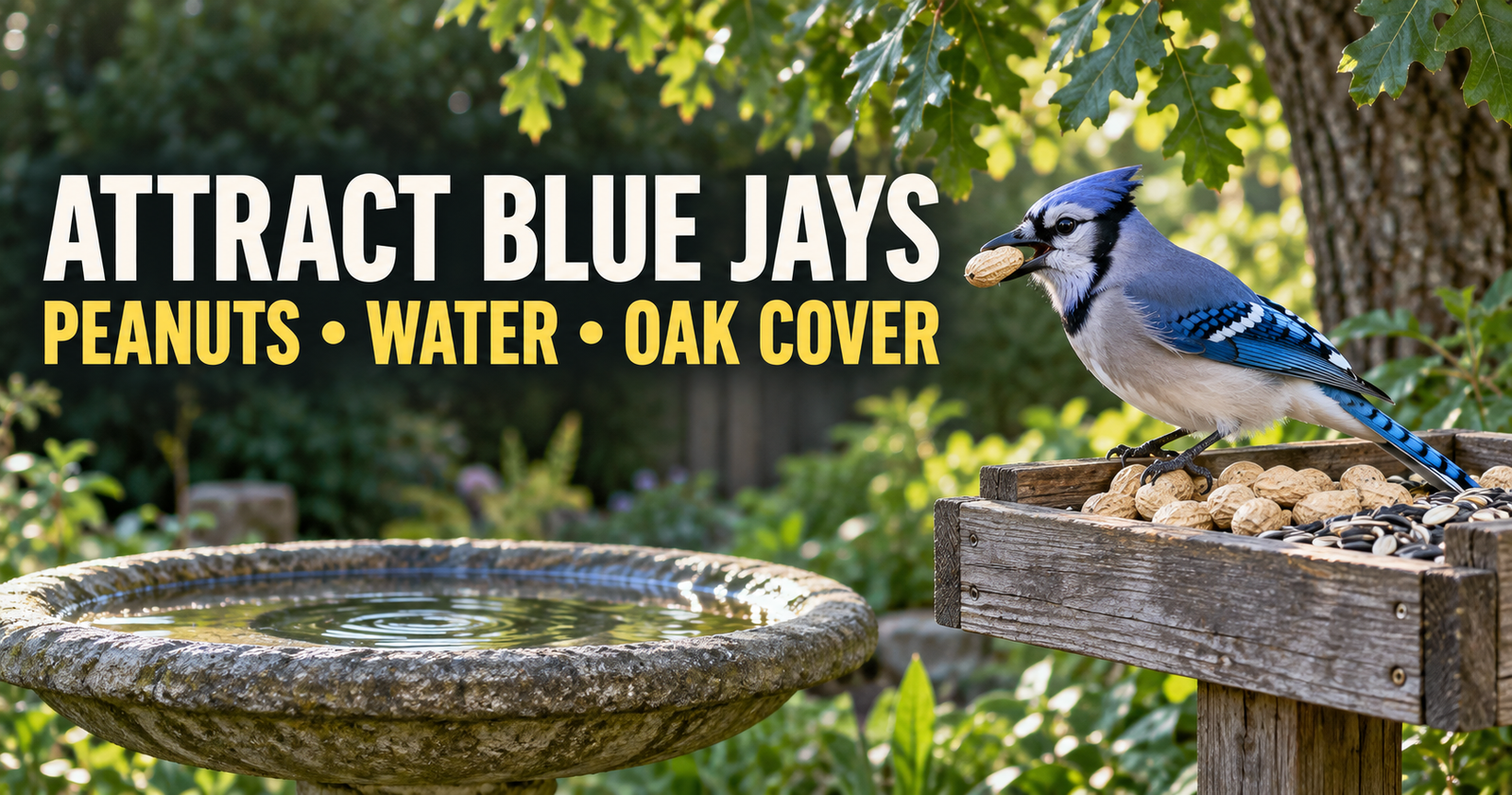
Our guide to attracting Blue Jays and keeping them coming back covers the entire setup, including food, water, feeder size, oak trees, and habitat.
You don’t need to scatter peanuts across the entire property hoping a jay accidentally finds one.
Give them one good feeding location and let the birds learn where it is.
Why Does My Blue Jay Pick Up Several Peanuts?
Blue Jays are food transporters.
They don’t always intend to eat everything at the feeder.
Project FeederWatch notes that larger birds such as jays may grab several peanuts and fly off to hide them.
That fits perfectly with what we know about their natural caching behavior.
A Blue Jay can move an impressive amount of food during repeated trips.
So the bird taking peanut after peanut isn’t necessarily eating a massive meal.
Some of your peanut supply may currently be hidden around the neighborhood.
Do Blue Jays Eat Peanuts in Winter?
Yes, and peanuts can be particularly useful as a high-energy supplemental food during colder weather.
Blue Jays remain in many parts of their range throughout winter, although the species has unusual migration behavior and some individuals move seasonally.
If you have winter Blue Jays, peanuts, sunflower seeds, and suet can all be useful feeder foods.
Keep everything dry and fresh.
Winter weather doesn’t magically prevent food from spoiling, especially when snow melts into feeders or temperatures fluctuate.
Do Baby Blue Jays Eat Peanuts?
Young Blue Jays are fed by their parents, and their early diet isn’t something I’d try to manage by hand.
Parents provide appropriate foods while the youngsters grow.
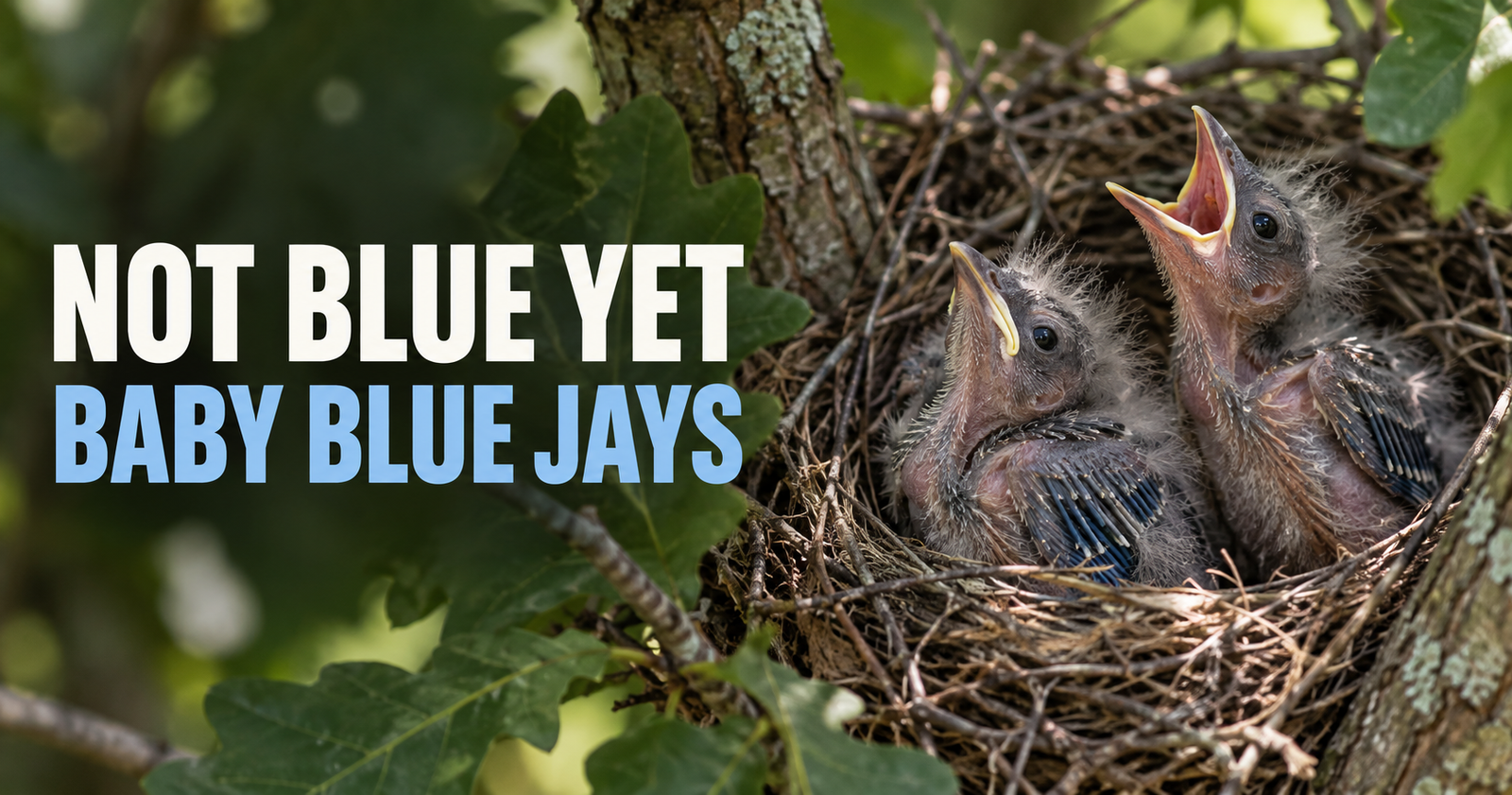
Even after fledging, young Blue Jays can continue receiving food from their parents for weeks. That extended dependence is easier to understand in the context of Blue Jay fledgling development.
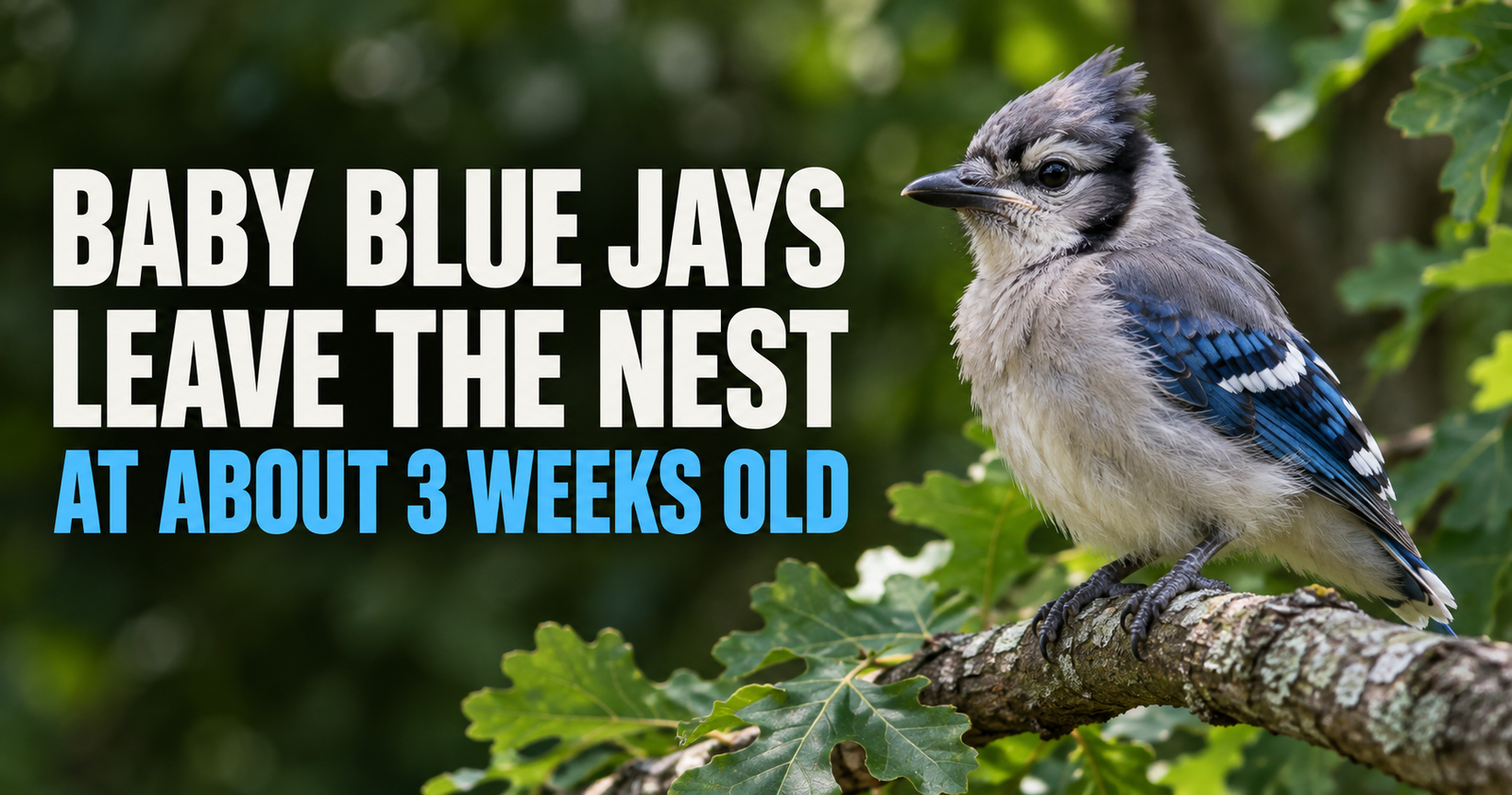
Our guide to when baby Blue Jays leave the nest explains how long that dependence continues.
If you find a healthy fledgling, don’t start stuffing peanut pieces into its mouth.
Let the parents do their job.
Common Questions About Feeding Blue Jays Peanuts
Do Blue Jays prefer shelled or unshelled peanuts?
Blue Jays readily eat both. If I’m specifically trying to attract Blue Jays, I like whole peanuts in the shell because the birds are well equipped to carry and open them.
Can Blue Jays eat raw peanuts?
Yes. Project FeederWatch says both raw and roasted peanuts can be offered as long as they’re plain and appropriate for birds.
Can Blue Jays eat roasted peanuts?
Plain roasted peanuts can be offered. Avoid salted, coated, or flavored varieties.
Are salted peanuts bad for Blue Jays?
I wouldn’t feed salted peanuts. Plain unsalted peanuts are the much better choice.
Can Blue Jays eat peanut pieces?
Yes. Shelled peanut pieces are usable by Blue Jays and also make peanuts accessible to smaller feeder birds.
Why do Blue Jays bury peanuts?
They’re caching food for later. Blue Jays naturally store foods such as acorns and can treat feeder peanuts similarly.
Will Blue Jays choke on peanuts in the shell?
Blue Jays naturally handle large foods and readily carry whole peanuts. Offer normal-size plain peanuts rather than trying to force-feed any bird.
How often should I put peanuts out?
There’s no required schedule. I prefer offering manageable amounts that stay fresh rather than keeping an enormous pile outside continuously.
What feeder should I use for Blue Jays and peanuts?
A roomy platform feeder is the simplest option. Specialized whole-peanut feeders can also work and may make the food last longer.
Do peanuts attract Blue Jays better than sunflower seeds?
Both are excellent feeder foods. If I specifically wanted to get a Blue Jay’s attention, I’d start with whole unsalted peanuts.
The Peanut I’d Put Out First
If I wanted Blue Jays visiting tomorrow, I wouldn’t overthink this.
I’d buy plain, unsalted peanuts in the shell.
I’d put a modest amount on a roomy platform.
Then I’d watch.
The first Blue Jay may sit there inspecting the choices longer than you expect.
Then it grabs one.
Gone.
A minute later it’s back.
That behavior isn’t the bird refusing to eat at your feeder.
It’s one of the most interesting reasons to feed Blue Jays in the first place.
You’re getting to watch the same basic instinct they use when moving and hiding acorns, except this time you’re supplying the groceries.
Mason Reed is the Backyard Birding & Feeding Contributor for BirdResource.com, where he helps everyday birdwatchers understand what wild birds eat, how they use feeders, and the behaviors that make backyard bird feeding worth watching.