If I walked outside and noticed a bird standing on one leg, my first thought would probably be that something happened to its other foot.
Maybe it got hurt.
Maybe something attacked it.
Or maybe it was born that way.
But here’s something I find fascinating about birds.
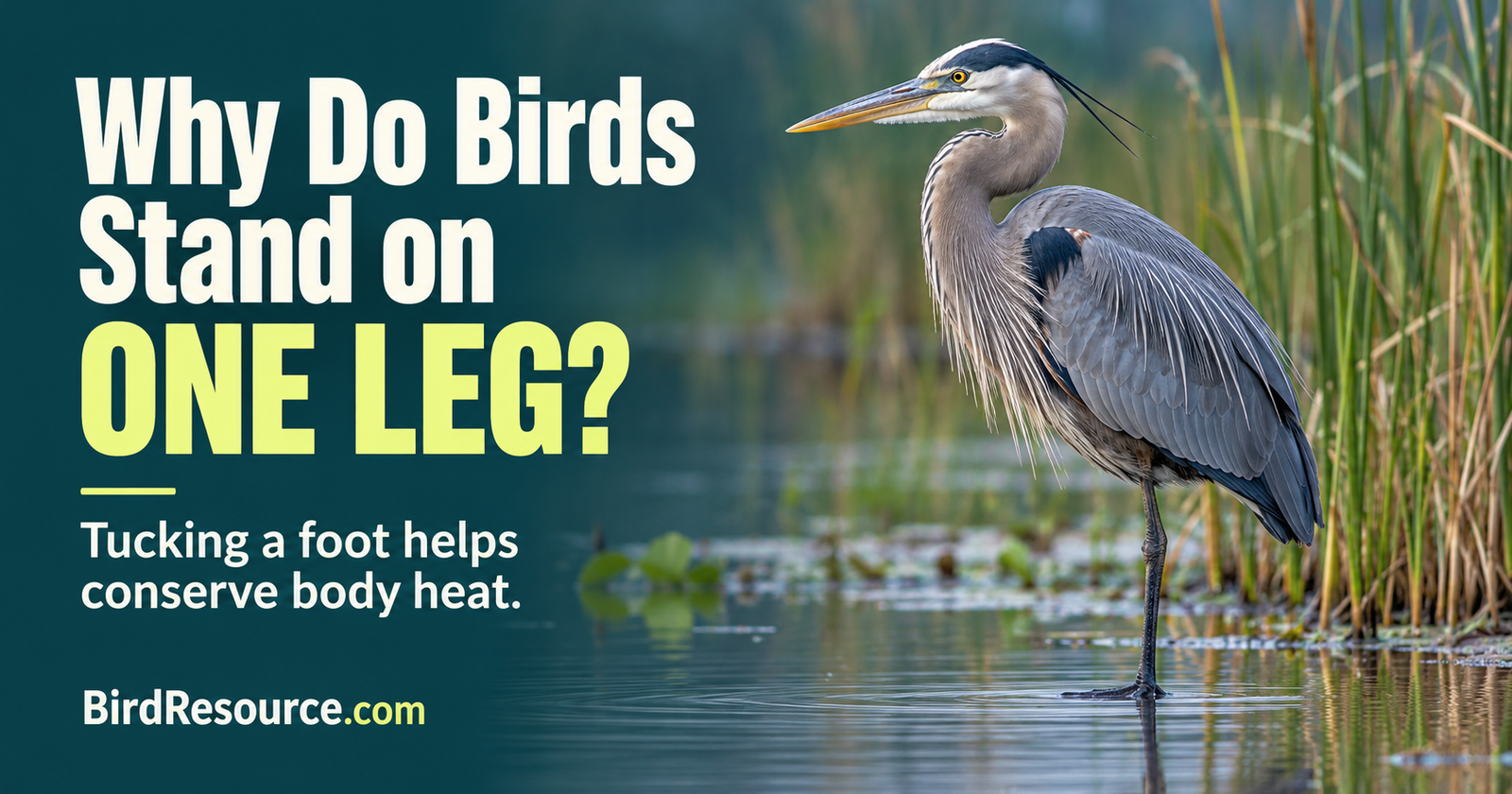
Standing on one leg is completely normal for many species.
Ducks do it.
Geese do it.
Hawks do it.
Flamingos are practically famous for it.
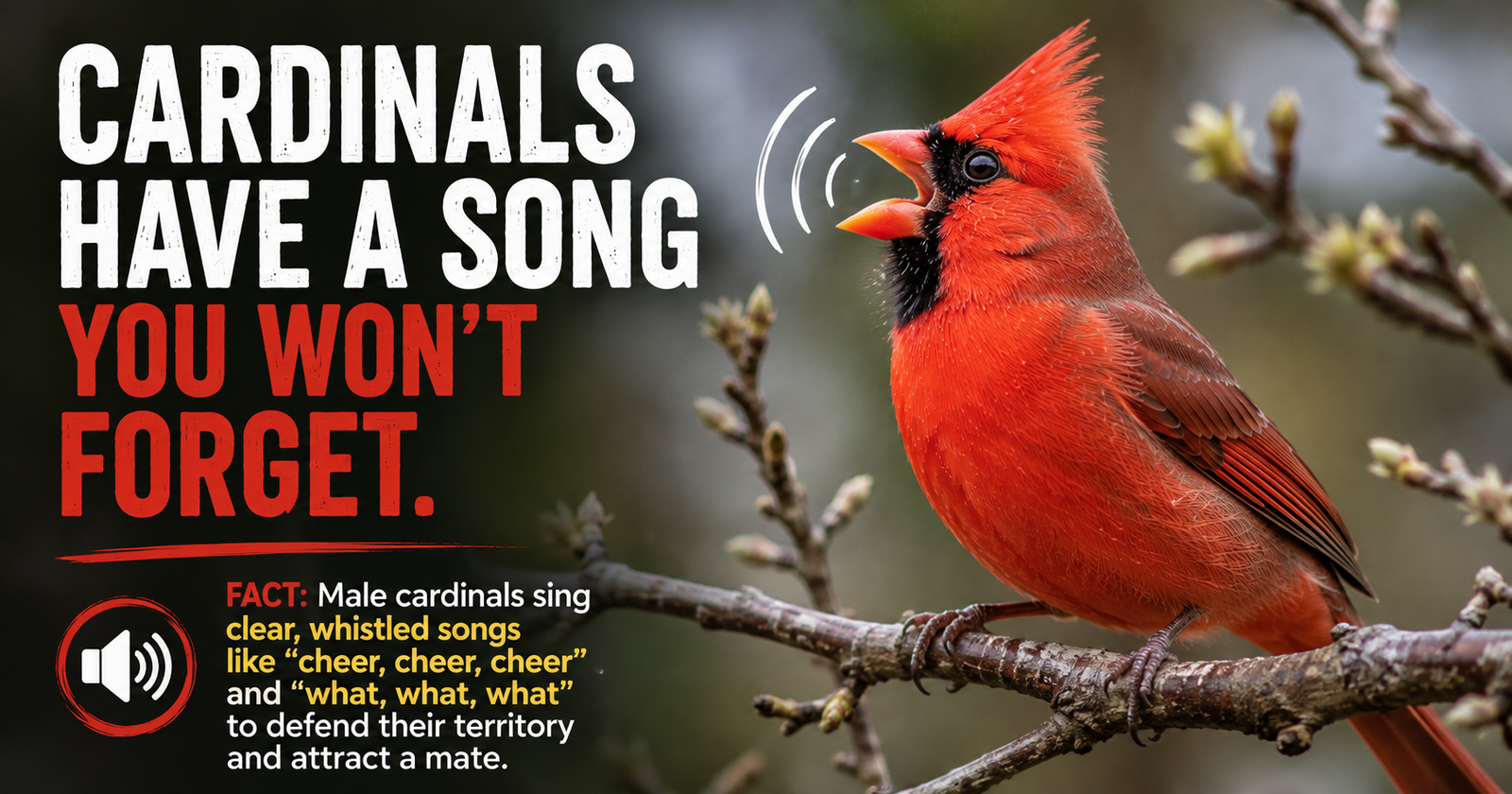
Even familiar backyard birds such as cardinals can tuck one foot into their feathers while resting.
And one of the biggest reasons has nothing to do with injury.
The bird may simply be trying to stay warm.
According to the Cornell Lab’s explanation of birds standing on one foot, birds frequently use this position to reduce heat loss.
But warmth isn’t the only possible explanation.
Some birds stand on one leg while resting, sleeping, or simply maintaining a comfortable position.
So before assuming something is wrong, here’s what I’d actually look for.
First, I’d Watch What Happens When the Bird Moves
This is the easiest place to start.
I wouldn’t rush toward the bird to make it move.
I’d simply watch from a distance.
Is it standing calmly?
Are its feathers relaxed?
Is it looking around normally?
Does it eventually lower the other foot?
If the bird starts walking, does it use both legs?
Those observations tell me considerably more than the one-legged position alone.
A Bird That Walks Normally Is a Good Sign
Imagine watching a Mourning Dove resting on a fence.
One foot is tucked into its belly feathers.
A few minutes later, it lowers that foot, walks along the fence, and flies away normally.
That wouldn’t concern me.
The bird demonstrated that it could use the leg.
Now imagine a different situation.
The dove tries to walk but repeatedly falls over.
One leg hangs at an unusual angle.
It can’t put weight on the foot.
That’s a different story.
The difference isn’t simply whether the bird stands on one leg. It’s whether the bird can use the other leg normally.


Birds Can Lose Body Heat Through Their Legs
Here’s the science behind one of the most common explanations.
Most of a bird’s body is covered in feathers.
Those feathers provide excellent insulation.
But look at its legs and feet.
They’re often mostly bare.
That exposed skin can allow heat to escape, particularly in cold weather.
So what does the bird do?
It lifts one foot and tucks it into the warm feathers underneath its body.
Now less bare skin is exposed.
The National Audubon Society’s explanation of one-legged resting describes how birds use this behavior to conserve body heat.
It’s a simple-looking position with a useful purpose.
Think of It Like Putting One Cold Hand in Your Pocket
This is how I’d explain it to someone who doesn’t know much about birds.
Imagine standing outside on a freezing morning without gloves.
Your hands get cold.
You put one inside your coat pocket.
That hand is now protected from the cold air.
The other remains exposed.
A bird tucking one foot into its belly feathers is doing something somewhat similar.
Of course, bird anatomy is considerably more specialized than ours.
But the basic idea is easy to understand.
Less exposed skin can mean less heat loss.
And for a small animal trying to maintain its body temperature through a cold night, conserving energy matters.
Birds Have Another Trick That Helps Keep Their Feet From Freezing
This is where things get especially interesting.
Birds have specialized blood circulation that helps manage heat exchange between their bodies and legs.
Warm blood traveling toward the feet passes close to cooler blood returning toward the body.
Heat transfers between those blood vessels.
That helps conserve warmth in the bird’s core while allowing its feet to remain cooler than the rest of its body.
The Smithsonian National Zoo’s explanation of one-legged birds describes this heat-exchange system and why it matters.
That’s one reason a duck can stand on cold ground or ice without responding the way a barefoot human would.
And when the bird tucks one leg into its feathers, it adds another way to reduce heat loss.


Why Do Ducks Stand on One Leg?
Ducks are one of the birds I’d expect people to notice doing this.
Imagine walking past a pond during winter.
Several ducks are resting near the water.
One has its bill tucked into its feathers.
Another appears to be standing on a single foot.
That doesn’t automatically mean the duck is injured.
Ducks can tuck one leg up to conserve warmth while resting.
Their feet are exposed to cold water, mud, ice, and air, so reducing unnecessary heat loss can be valuable.
But I’d still watch the individual bird.
A duck that occasionally stands on one foot and later walks normally is different from one that persistently limps or struggles to move.
Why Do Geese Stand on One Leg?
Geese use similar resting behavior.
You might see a Canada Goose standing on one leg beside a pond, in a grassy field, or near a shoreline.
The other foot may be tucked so deeply into the feathers that it almost looks like the bird doesn’t have one.
That’s something I’d check before worrying.
Look at the bird’s body.
Is it relaxed?
Is its head tucked back?
Is it resting with other geese?
If so, the position may be perfectly normal.
Geese can remain remarkably steady while resting on one leg.

Flamingos Take One-Legged Standing to Another Level
Flamingos are probably the most famous example.
They can stand on one leg for extended periods, sometimes while sleeping.
And they don’t appear to struggle nearly as much as a person would.
Researchers have investigated the mechanics of this behavior and found that flamingos can maintain the position with remarkably little muscular effort.
The Audubon explanation of how flamingos balance on one leg discusses research showing how their anatomy helps support the posture.
That’s an important reminder that one-legged standing isn’t necessarily difficult or uncomfortable for a bird.
What looks exhausting to us can be a normal resting position for them.
Do Cardinals Stand on One Leg?
Yes.
Even familiar backyard songbirds can tuck one foot into their feathers.
If I noticed a Northern Cardinal sitting quietly in a shrub with one foot hidden, I wouldn’t immediately assume it was hurt.
I’d look at the overall behavior.
A healthy bird may rest with one leg tucked, especially when trying to conserve warmth.
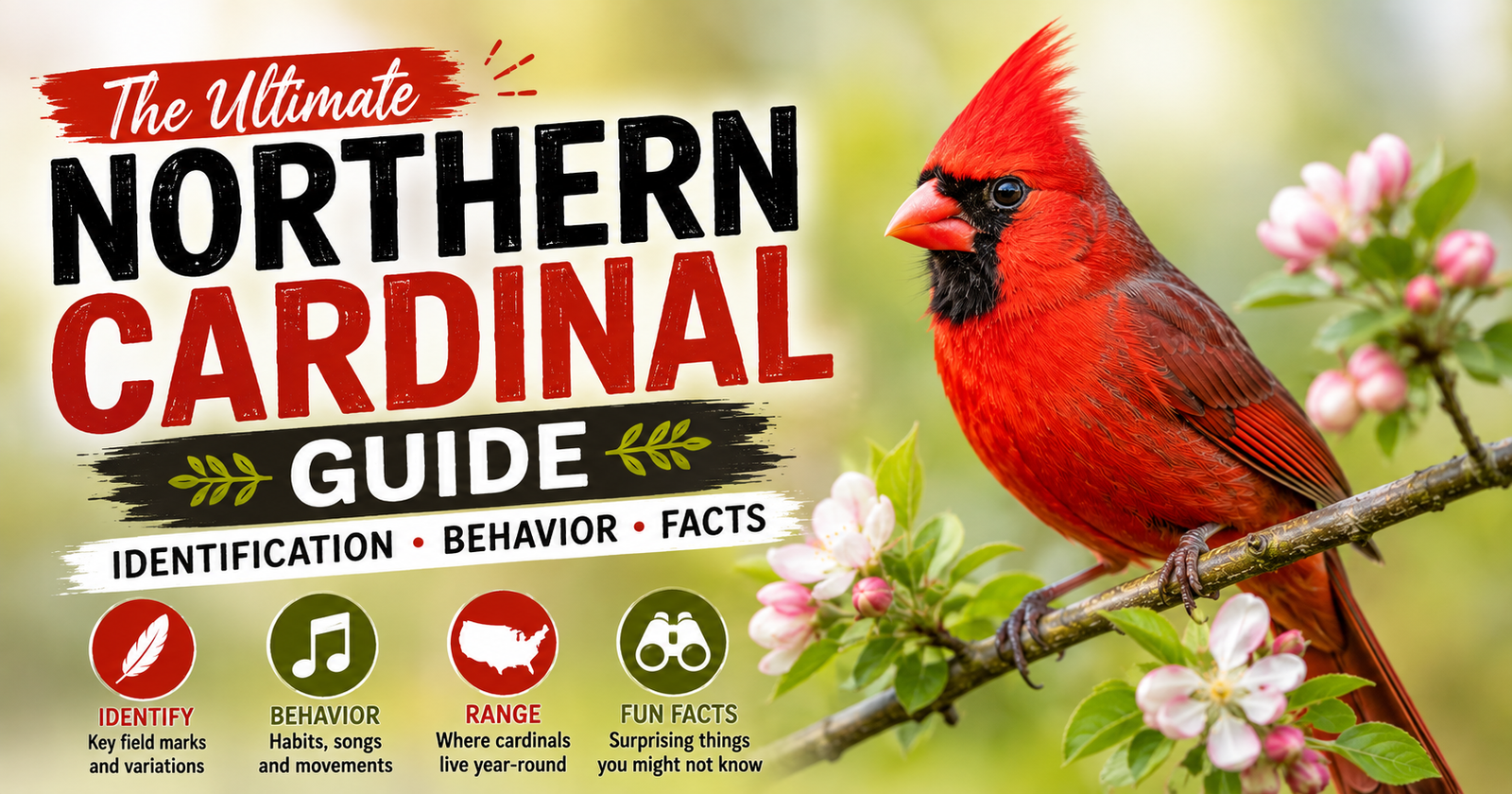
Our Northern Cardinal identification and behavior guide covers the species’ appearance and everyday habits.
Cardinals also use protected vegetation for resting and nighttime roosting.
A bird sitting quietly with its feathers slightly puffed up may simply be conserving energy.

Can Birds Actually Sleep Standing on One Leg?
Yes.
And this is one of those things that sounds almost impossible until you understand how birds are built.
Many perching birds have a specialized tendon arrangement that helps their toes grip a branch.
When the bird settles into a perched position, its body weight helps maintain that grip.
That makes resting on a branch much easier than it would be for a person trying to balance on a narrow railing.
The Cornell Lab’s explanation of how birds sleep describes how perching birds can remain securely attached to branches while resting.
Some birds tuck one foot into their feathers and rest on the other.
So a sleeping bird doesn’t necessarily need both feet planted firmly underneath it.
What If It’s Warm Outside?
This is where I wouldn’t oversimplify the explanation.
Heat conservation is important, but birds don’t only stand on one leg when they’re cold.
You can see the behavior during mild or warm weather too.
Sometimes birds appear to use the position while resting.
Different species also have different anatomical advantages.
Research on one-legged standing suggests that temperature alone doesn’t explain every observation.
So I wouldn’t look at a bird standing on one leg in July and say:
That bird must be freezing.
It may simply be resting comfortably.
The surrounding behavior matters.
Could a Bird Be Resting One Tired Leg?
Possibly.
Birds spend considerable time standing, walking, perching, and moving through their environments.
Changing posture may help them rest.
But I wouldn’t claim every bird standing on one leg is deliberately resting a tired foot.
We can’t determine that from appearance alone.
What I can say is that a relaxed bird occasionally changing its stance is very different from a bird that appears unable to use one leg.
That’s the distinction I’d focus on.
When I’d Actually Worry About a Bird Standing on One Leg
This is the part I think matters most for backyard birdwatchers.
I wouldn’t be concerned simply because a bird has one foot tucked into its feathers.
I’d become concerned if I noticed additional problems.
The Bird Can’t Put Weight on Its Other Leg
This would immediately get my attention.
If the bird repeatedly tries to stand on the other foot but can’t, an injury becomes more plausible.
One Leg Looks Swollen or Bent
Visible swelling, bleeding, an unnatural angle, or something wrapped tightly around a foot can indicate a problem.
Fishing line, string, and other debris can sometimes become tangled around birds’ legs.
The Bird Keeps Falling Over
A bird struggling to maintain balance isn’t behaving like a relaxed duck resting on one leg.
Repeated falling or inability to perch normally deserves attention.
It Can’t Escape Normally
If the bird appears weak, cannot fly when it normally should, or struggles to move away from danger, I’d be more concerned.
I wouldn’t chase it to test this.
I’d simply observe its natural movements.
What Should I Do If the Bird Really Is Injured?
I wouldn’t attempt to grab every bird that appears to have a leg problem.
Some wild birds survive with old injuries and adapt surprisingly well.
But a bird that’s clearly suffering, bleeding, unable to stand, or tangled in dangerous material may need professional help.
I’d contact a licensed wildlife rehabilitator for guidance.
I wouldn’t attempt to straighten a leg, remove deeply embedded material, or administer medication myself.
And I wouldn’t force food or water into the bird.
The goal is to help without accidentally making the injury worse.
My Simple Five-Minute Birdwatching Check
If I wanted to figure out whether a one-legged bird was simply resting, I’d try something straightforward.
I’d watch it quietly for five minutes.
Not because five minutes is a scientifically established diagnostic test.
It’s simply a practical amount of time to observe without disturbing the bird.
I’d pay attention to three things.
Does It Look Relaxed?
A bird resting comfortably may have slightly fluffed feathers, a tucked bill, or a calm posture.
A distressed bird may appear unusually weak, unstable, or unable to move normally.
Does It Switch Feet?
Some birds alternate which leg they tuck.
If I saw a bird lower one foot and lift the other, that would be reassuring.
It demonstrates that both legs can function.
What Happens When It Walks?
This is probably the strongest clue.
A bird that walks normally after resting on one leg is much less concerning than one that persistently limps or falls.
I wouldn’t deliberately frighten the bird into moving.
I’d simply wait until it decides to move on its own.
Common Questions About Birds Standing on One Leg
Why do birds stand on one leg?
Often to conserve body heat. Tucking one foot into the feathers reduces exposed skin. Birds may also use the position while resting.
Does standing on one leg mean a bird is injured?
No. It’s normal behavior for many species. I’d look for limping, swelling, unusual leg position, or difficulty moving before suspecting injury.
Why do ducks stand on one foot?
Ducks commonly tuck one leg while resting, which can help reduce heat loss.
Why do flamingos stand on one leg?
Their anatomy allows them to maintain the posture with remarkably little muscular effort. Heat conservation may also play a role.
Can birds sleep on one leg?
Yes. Some birds sleep or rest while standing on one leg, and many perching birds have specialized gripping mechanisms that help them remain securely perched.
Why do birds tuck one leg into their feathers?
Tucking a bare foot into warm body feathers helps reduce heat loss.
Do birds stand on one leg when they’re sick?
They can, but the posture alone isn’t evidence of illness. Other symptoms and abnormal movement are more useful clues.
Should I help a bird that’s standing on one leg?
Not automatically. If it’s alert and moving normally, I’d leave it alone. If it’s visibly injured or unable to stand, contact a licensed wildlife rehabilitator.
I’d Watch the Bird Before Assuming Something Was Wrong
The next time I spotted a bird standing on one leg, I wouldn’t immediately assume it needed rescuing.
I’d watch.
Maybe it’s a duck resting beside a pond.
Maybe it’s a cardinal tucked into a sheltered branch.
Maybe it’s a goose conserving warmth on a cold morning.
Or maybe it’s a bird that genuinely has an injured foot.
The difference becomes much easier to recognize when you stop focusing only on the missing leg and start watching the whole animal.
A bird standing comfortably on one leg can be perfectly healthy.
And sometimes that strange-looking position is simply one more clever way birds manage to survive outside in conditions that would leave the rest of us reaching for warmer clothes.
Mason Reed is the Bird Behavior & Backyard Identification Contributor for BirdResource.com, where he helps everyday birdwatchers understand unusual bird behavior and recognize the difference between normal wildlife habits and situations that may require help.