
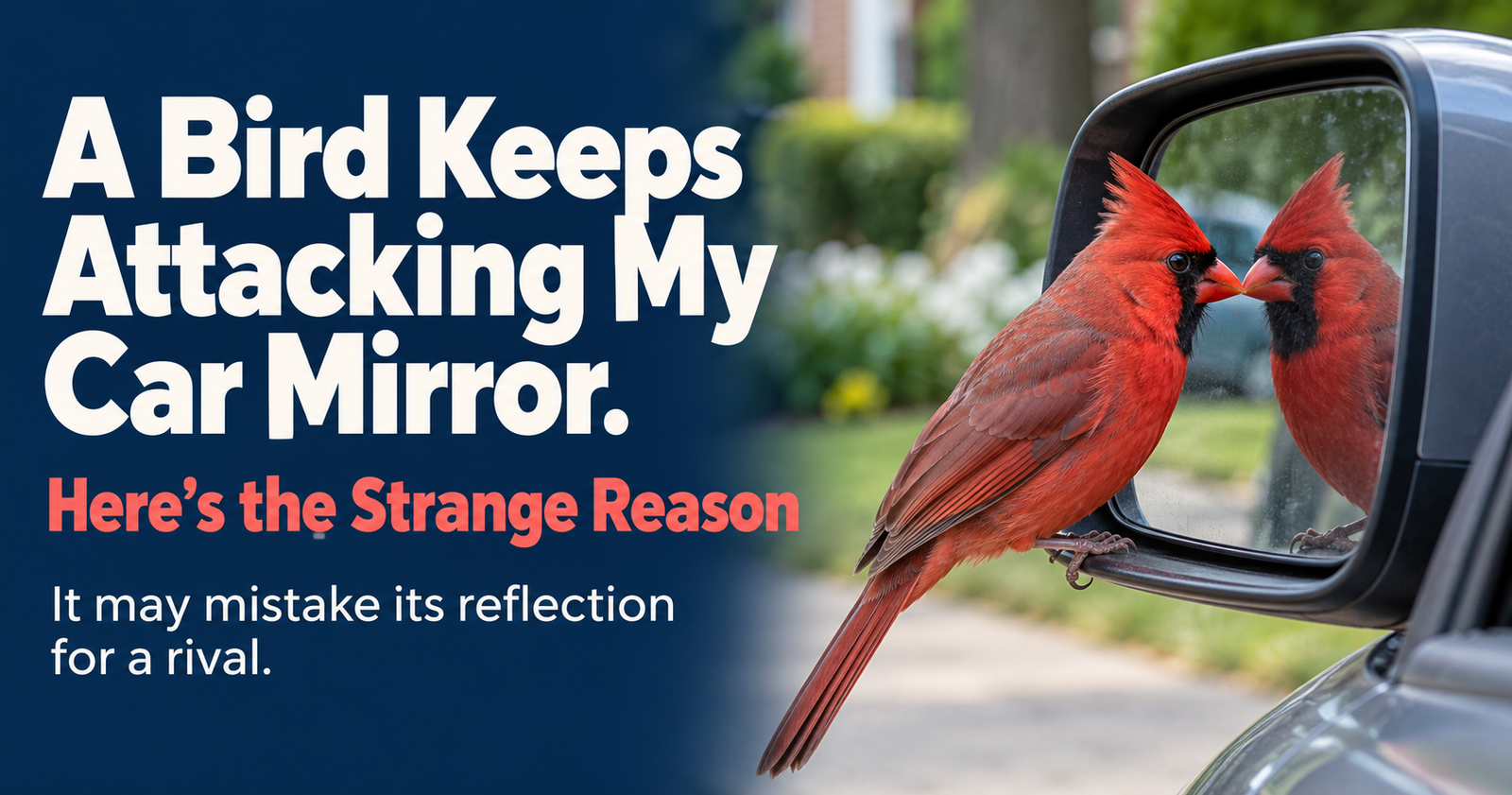
A bird attacking a parked car is one of those things that sounds ridiculous until you realize how determined a little songbird can be.
I’m talking about a bird that repeatedly lands on a side mirror, pecks at the glass, flutters around, and comes right back after being chased away.
And sometimes the evidence is all over the car.
Bird droppings down the door.
Little marks around the mirror.
Maybe even scratches from the bird’s feet.
What interests me most about this behavior is that the bird may be spending hours fighting an enemy that doesn’t actually exist.
The bird is probably attacking its own reflection.
It sees another bird in the mirror, interprets that image as a potential rival, and tries to drive it away.
The problem?
That rival never leaves.
And every time the bird returns, there it is again.
Why a Bird Would Pick a Fight With a Parked Car
The explanation becomes much more interesting when you think about what the bird sees.
We know a car mirror is reflecting whatever happens to be in front of it.
But a territorial bird doesn’t necessarily recognize its reflection as itself.
Instead, it may perceive another bird occupying the same territory.
During breeding season, that can be a serious problem from the bird’s perspective.
A rival might compete for nesting space, food, or a mate.
So the bird responds the way it might respond to an actual intruder.
It approaches.
Displays.
Pecks.
Sometimes attacks repeatedly.
The Cornell Lab’s explanation of birds attacking car mirrors confirms that this behavior is particularly common during the breeding season.


The Detail I’d Pay Attention to First
I wouldn’t start by trying to scare the bird away.
I’d look at which part of the car it keeps attacking.
Is it repeatedly targeting the mirror?
Or is it pecking randomly across the hood and windshield?
That distinction matters.
A bird repeatedly confronting the same reflective surface fits the territorial-reflection explanation.
A bird picking at insects on the car might behave differently.
For example, it may move across several surfaces instead of repeatedly returning to the same mirror.
The exact location of the pecking can tell you more than the species of bird.

Why Does It Keep Coming Back Every Morning?
This is the part that makes the behavior especially frustrating.
You might scare the bird away.
It flies into a nearby tree.
Everything gets quiet.
Then ten minutes later, it’s back.
From our perspective, the bird seems incredibly stubborn.
But imagine what happens from its perspective.
It successfully drives the intruder away.
Then it returns.
And the intruder is back.
The bird doesn’t understand that the reflection only disappears when it moves away from the mirror.
That creates a cycle that can continue for days.
Sometimes longer.
And during breeding season, the motivation to defend territory can be particularly strong.
Why Your Car Mirror Might Be Worse Than Your House Windows
Here’s something I think deserves more attention.
A car mirror creates a very different reflection from a large house window.
It’s smaller.
It’s positioned around the height of many backyard birds.
And depending on where the vehicle is parked, it may reflect nearby trees, shrubs, or open space.
That can make it an easy target for a bird defending territory around a driveway.
I’d also pay attention to the direction the vehicle faces.
A mirror may create a stronger reflection during certain parts of the day.
That could help explain why the bird seems particularly interested in the car during the morning but leaves it alone later.
I wouldn’t assume that’s the explanation without checking, though.
It’s something worth observing.
The First Thing I’d Actually Try
I’d cover the mirror.
Not the entire car.
Just the mirror the bird keeps attacking.
A soft mirror cover or securely attached cloth can block the reflection without damaging the vehicle.
I’d make sure nothing could blow loose or interfere with the car.
And I’d remove the cover before driving.
Then I’d watch whether the bird returned.
This is the simplest way I know to test whether the reflection is driving the behavior.
If the bird stops attacking that mirror once the reflection disappears, that’s useful evidence.
If it moves to the other mirror, I’d cover that one too.
Cornell recommends covering reflective surfaces to discourage birds from repeatedly attacking their reflections.
Why I Wouldn’t Start With a Fake Owl
It’s tempting to buy a plastic owl and stick it beside the driveway.
But I wouldn’t make that my first move.
The problem isn’t necessarily that the bird feels comfortable around the car.
The problem may be that it sees a rival in the mirror.
Adding another object doesn’t remove that rival.
I’d rather eliminate the thing triggering the behavior than spend money trying to frighten the bird away.
And I definitely wouldn’t use sticky substances, traps, or anything that could injure it.

What If the Bird Is Leaving Droppings All Over the Door?
This is one of the most annoying parts.
A bird repeatedly perching on a side mirror may leave droppings down the door beneath it.
If that were happening to my vehicle, I’d want to solve the behavior before worrying about constantly washing the car.
Otherwise, you’re cleaning the same mess every morning.
I’d cover the mirror while the vehicle is parked and clean the droppings promptly with an appropriate automotive cleaner.
I’d avoid scraping dried droppings aggressively because that can damage the finish.
The goal is to remove the attraction and protect the paint.
Can the Bird Hurt Itself?
Yes, although repeated reflection attacks are different from a bird accidentally flying into a window at full speed.
A bird may exhaust itself or occasionally suffer injuries while repeatedly confronting a reflective surface.
That’s another reason I’d address the problem instead of treating it as entertainment.
The bird has better things to do than spend half the day fighting a reflection.
It needs to feed.
Avoid predators.
Find a mate.
And potentially care for young.
Removing the reflection can help end an unnecessary distraction.
Cardinals Aren’t the Only Birds That Do This
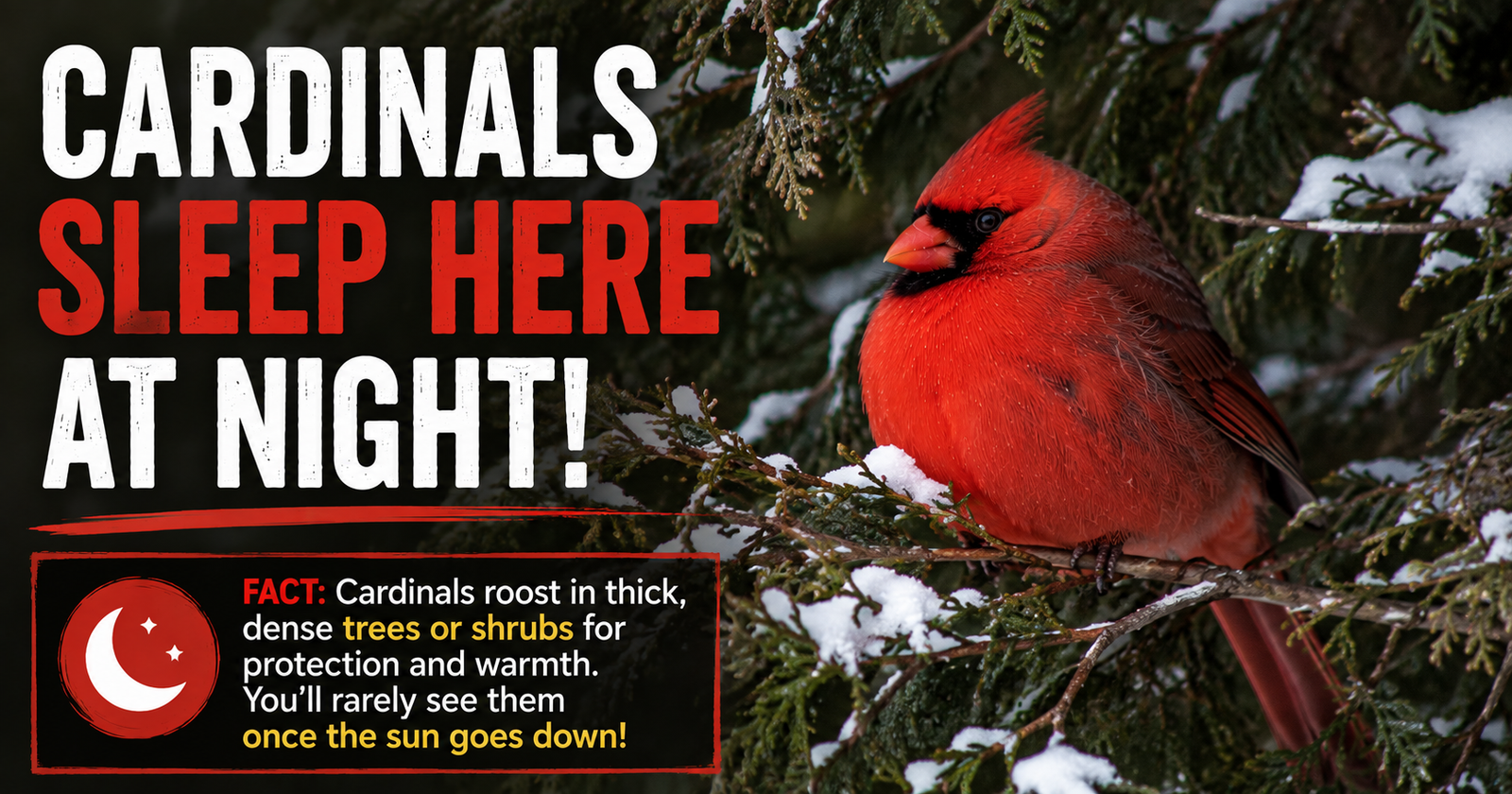
Northern Cardinals are famous for attacking reflections.
But American Robins, bluebirds, sparrows, towhees, and other territorial birds can behave similarly.
Both males and females may participate.

If you’ve experienced the same behavior around your house, our guide to why Cardinals attack windows explains the related problem and ways to reduce reflections.
The important thing is that this isn’t limited to one species.
A parked vehicle can become a target wherever a territorial bird encounters a convincing reflection.
What I’d Record Before Changing Anything
If I wanted to turn this into a useful backyard observation, I’d keep it simple.
I’d photograph the vehicle’s position and note which mirror the bird attacks.
Then I’d record the approximate time of day.
I’d also note whether the bird attacks the mirror itself or spends most of its time perched on the housing.
Next, I’d cover the reflective surface while the car is parked.
Then I’d compare what happened.
Did the bird stop visiting?
Did it move to another reflective surface?
Did it continue perching without attacking?
Those details would help distinguish a reflection problem from ordinary perching behavior.
I wouldn’t claim a successful test until I’d actually observed the results.
What If Covering the Mirror Doesn’t Work?
I’d look for other reflective surfaces.
A bird may move from the side mirror to a window or another part of the vehicle.
I’d also check whether the bird is actually attacking anything.
Sometimes a bird simply likes using a mirror housing as a perch.
Perching and attacking aren’t the same behavior.
If the bird is only sitting there, the solution may involve making that location less convenient without harming it.
But if it’s repeatedly pecking at its reflection, I’d continue focusing on safely covering or reducing reflective surfaces.
Common Questions About Birds Attacking Car Mirrors
Why does a bird keep pecking my car mirror?
It may see its reflection and mistake it for another bird invading its territory.
Why does the same bird return every day?
The reflection remains in the same location, so the bird may repeatedly perceive the same nonexistent rival.
Will covering my car mirror stop birds from attacking it?
Covering the reflective surface can help because it removes the image triggering territorial behavior.
Why is a bird pooping all over my side mirror?
The bird may be repeatedly perching on the mirror while confronting its reflection. Frequent visits can leave droppings on the mirror and door.
Do female birds attack car mirrors?
Yes. Both male and female birds can respond aggressively to reflections.
Will the bird eventually stop?
Often, reflection attacks decrease as breeding-related territorial behavior changes. However, the behavior can continue for days or weeks, so removing the reflection is usually more practical than waiting.
The Bird Isn’t Really Angry at Your Car
That’s what makes this behavior so strange.
From the outside, it looks like a tiny bird has developed a personal grudge against your vehicle.
But the car isn’t really the target.
The reflection is.
And once you understand that, the solution becomes much simpler.
You don’t need to outsmart the bird.
You don’t need to scare it every morning.
You need to make the imaginary rival disappear.
Sometimes a simple mirror cover accomplishes more than an entire collection of bird deterrents.
Everett Hollis is a Backyard Bird Behavior Contributor for BirdResource.com, where he explores unusual bird behavior and practical ways to solve everyday problems involving wild birds around homes, yards, and vehicles.