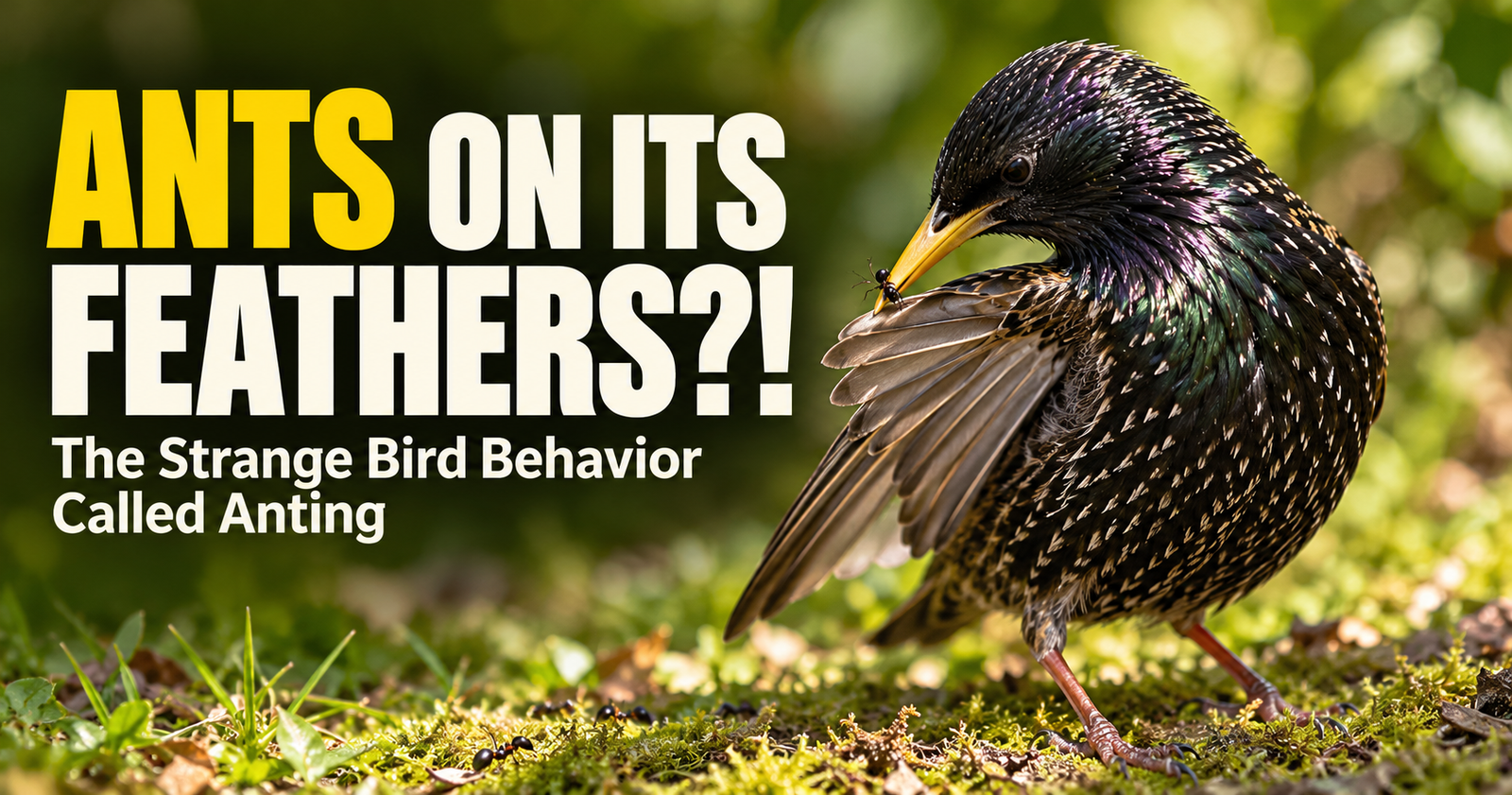
The first time I really paid attention to this behavior, I thought the bird had gotten into something that was irritating its feathers.
It was down low, acting strangely around ants, twisting its body and working something through its feathers.
At first glance, it looked uncomfortable.
Then I realized what it was doing.
The bird was deliberately putting ants in its feathers.
That sent me down a rabbit hole because I couldn’t understand why any bird would voluntarily do that.
Ants bite.
Some sting.
Some produce formic acid.
If I had ants crawling through my clothes, my first goal would be getting them OUT.
Some birds apparently have the opposite idea.
The behavior even has a name.
Anting.
And the deeper I looked into it, the stranger it got.
Birds don’t all do it the same way.
Some pick ants up individually and rub them across their feathers.
Others basically park themselves on an ant colony, spread their wings, and let the ants crawl through them.
And despite people observing this for generations, scientists still don’t completely agree on why birds do it.
I Honestly Thought the Bird Was Eating the Ants
That was my first assumption.
Bird finds ants.
Bird eats ants.
Nothing particularly mysterious about that.
Except anting doesn’t always look like feeding.
A bird may grab an ant with its bill and instead of swallowing it, move the ant underneath a wing and rub it along the feathers.
Then it grabs another.
And another.
Cornell calls this active anting. Their bird terminology guide describes it as deliberately picking up an ant or another chemically potent object and rubbing it into the plumage.
That distinction matters.
The bird isn’t simply eating near an anthill.
It’s using the ant.
Once I understood that, the behavior became much harder to ignore.
Then I Learned Some Birds Don’t Even Pick the Ants Up
This version is even stranger.
It’s called passive anting.
Instead of individually grabbing ants, the bird positions itself where ants can crawl directly through its feathers.
Cornell describes birds effectively allowing ants to move in and out among the plumage.
Imagine seeing that without knowing what anting was.
A bird is sitting strangely on the ground.
Its wings may be spread.
Ants are crawling all over it.
You might assume the bird is sick.
Or injured.
Or somehow trapped.
Meanwhile, the bird may have put itself there intentionally.
That’s exactly the kind of bird behavior I think gets missed because it doesn’t look like anything we’re expecting to see.
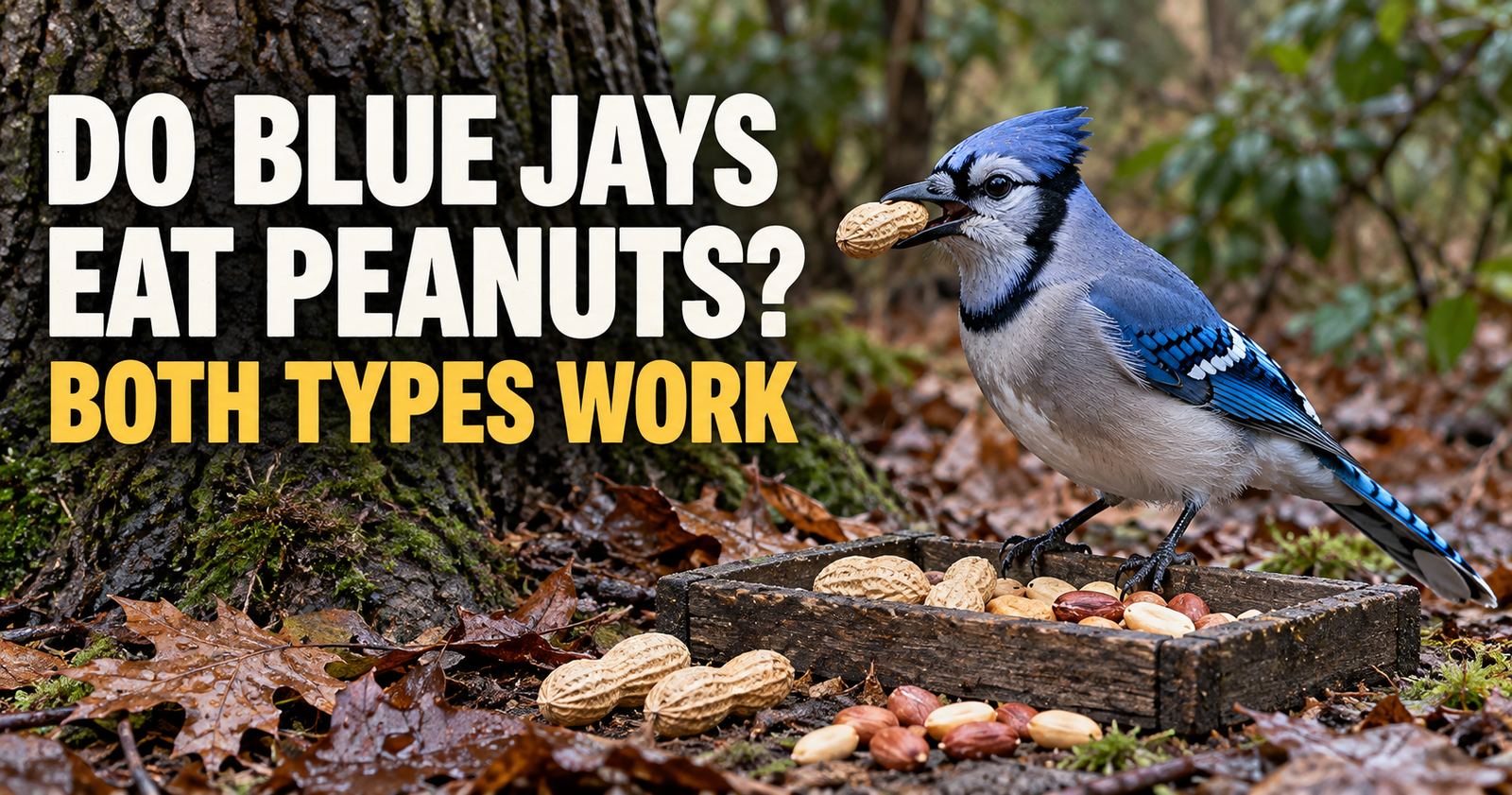
Blue Jays Actually Do This
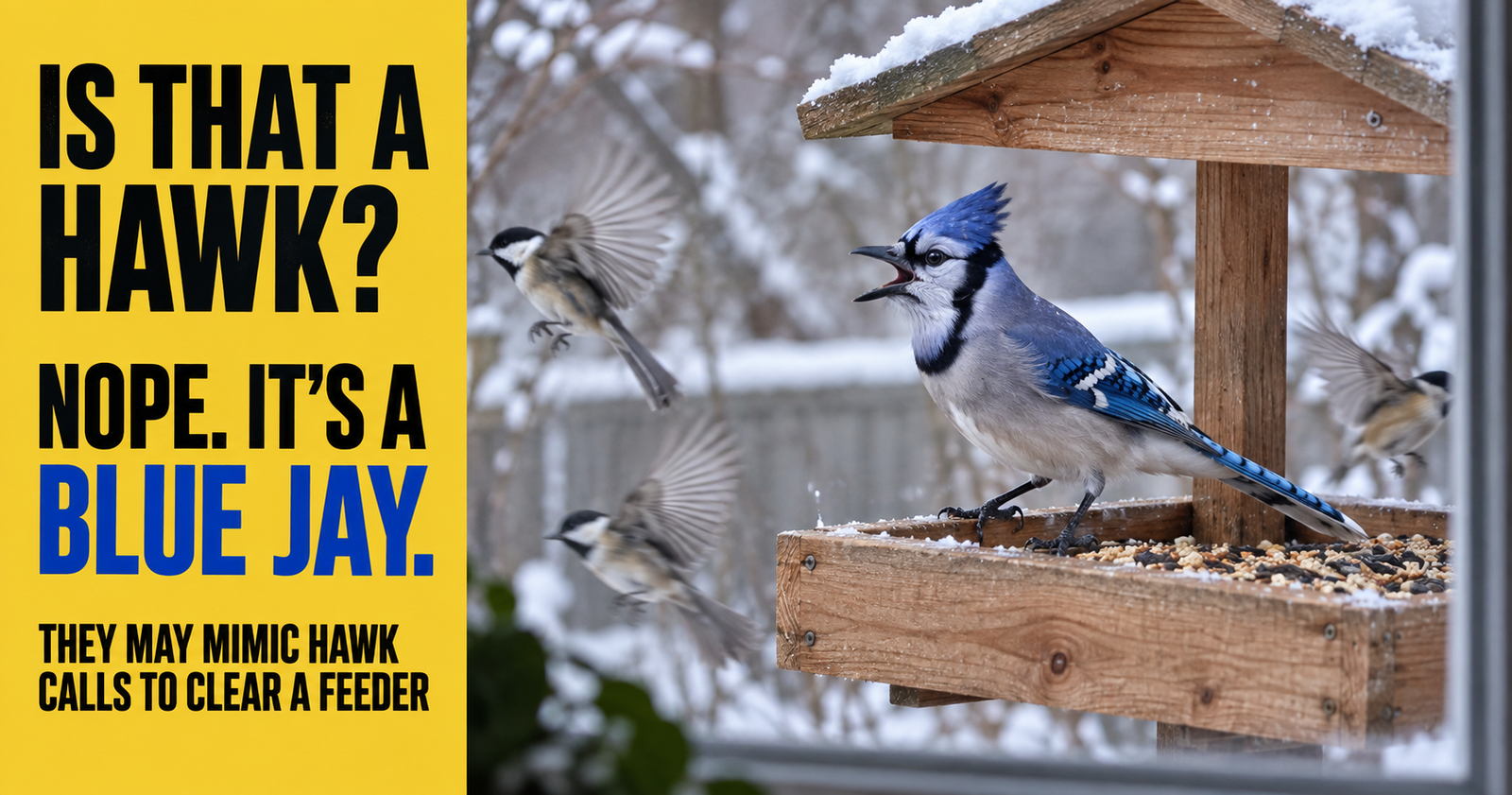
This caught my attention because we’ve spent so much time watching and writing about Blue Jays.
They’re already strange birds.
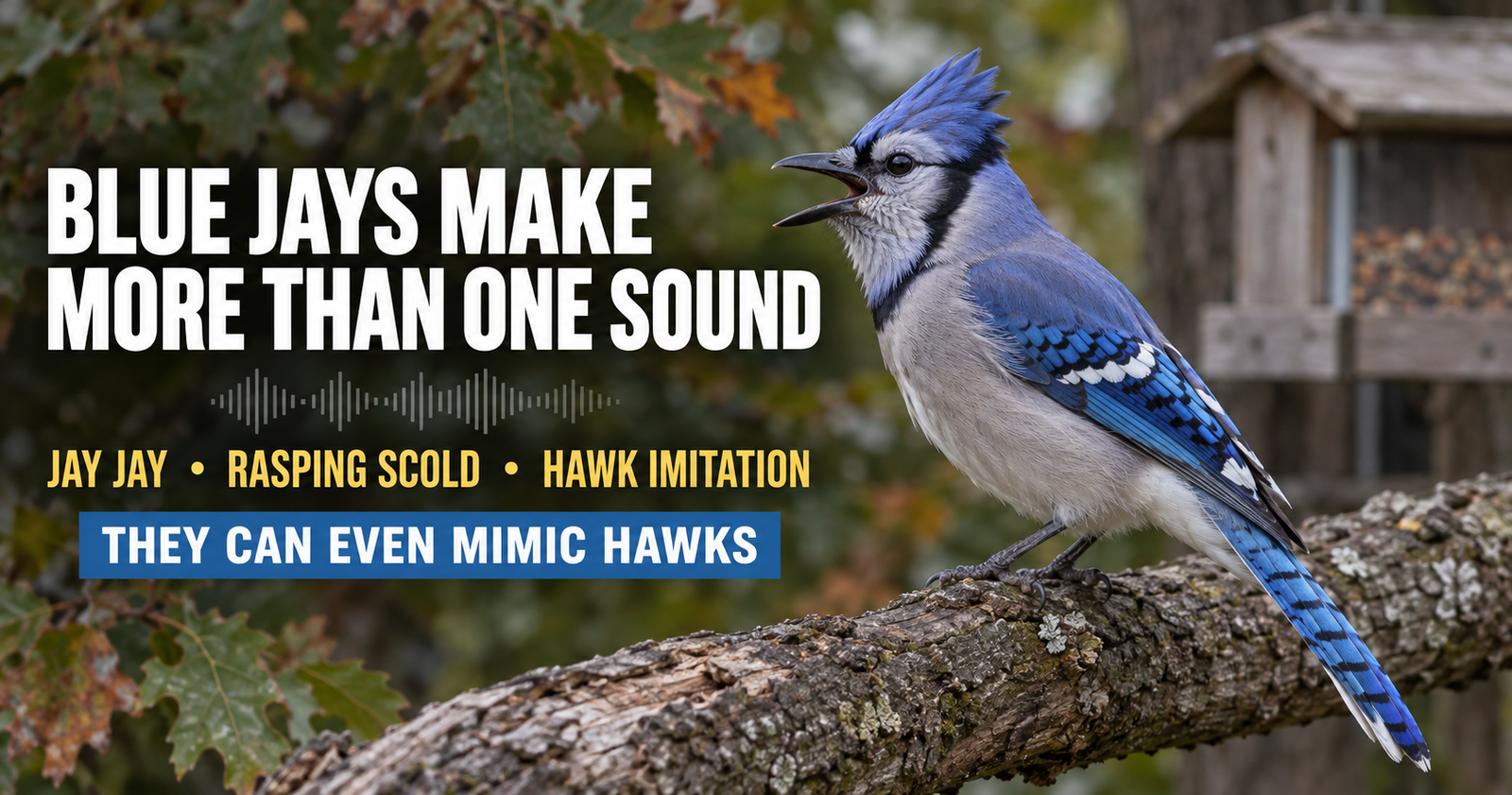
They imitate hawks.
They hide food.
They scream at practically everything.
Apparently that wasn’t enough.
Blue Jays ant too.
Scientific literature specifically describes Blue Jays holding ants in the bill while leaving the ant’s abdomen exposed during active anting.
That detail is fascinating because the abdomen is where some ants produce the chemicals researchers think may be important to the behavior.
So now when I see a Blue Jay acting weird on the ground, I have another possibility to consider.
It may not be injured.
It may not even be eating.
It might be doing something considerably stranger.
Common Grackles May Be Even Better Birds to Watch
If I wanted to actually catch this behavior happening around a yard, Common Grackles would be high on my list.
Cornell specifically calls grackles frequent practitioners of anting.
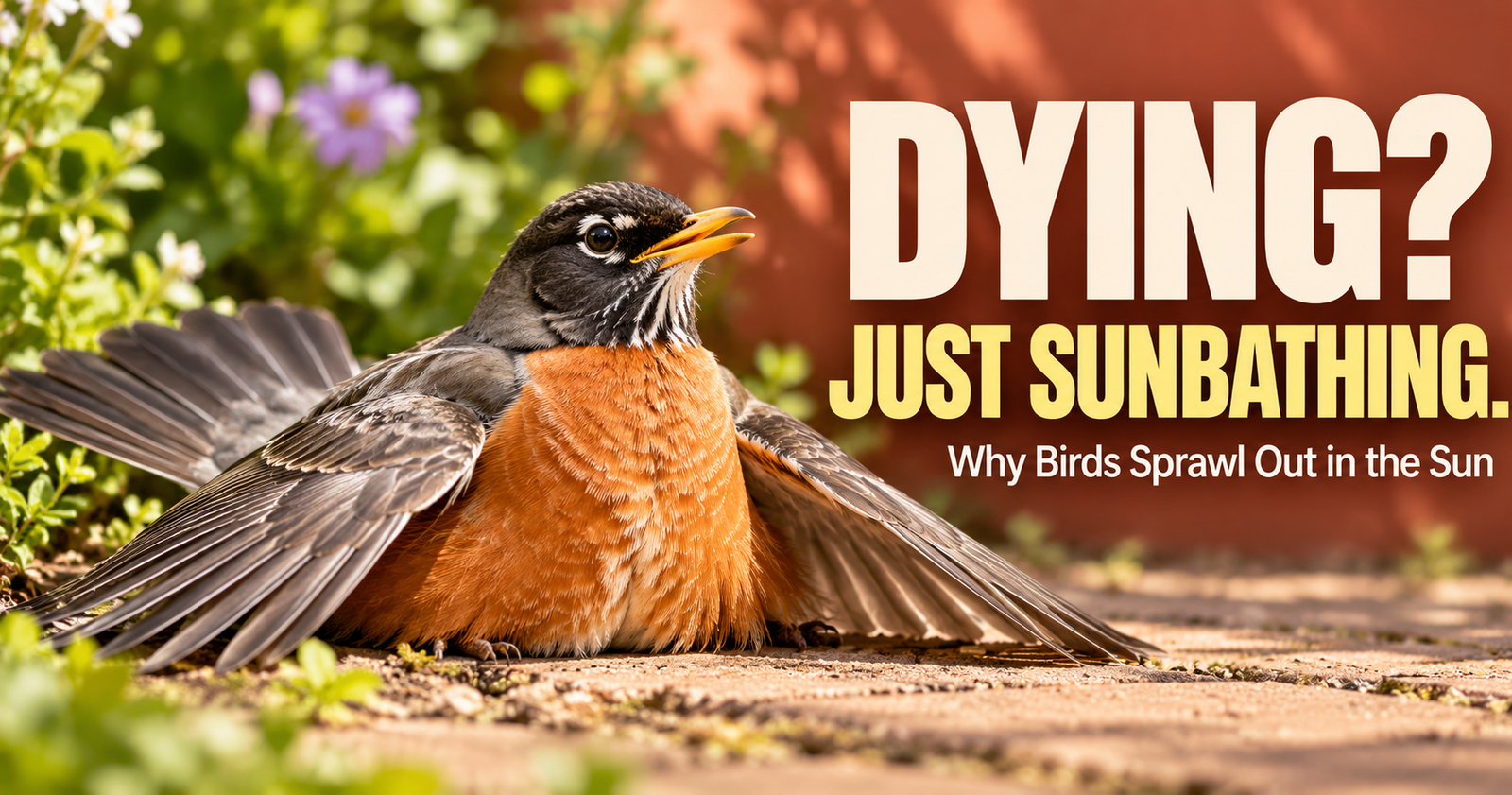
They’ve been observed hunching over on the ground with their wings spread while allowing ants around their feathers. That same wings-spread posture can also appear during sunning, as explained in this guide to birds spreading their wings in sunlight.
That’s the kind of behavior I’d love to record because without context it could look completely ridiculous.
A glossy black bird.
Wings spread.
Body hunched.
Acting almost like something is crawling all over it.
Well…
Something is crawling all over it.
The bird just may have invited them.
The Obvious Theory Is That Ants Kill Parasites
This was my first thought once I learned ants were being intentionally rubbed into feathers.
Maybe it’s bird medicine.
Many ants produce formic acid and other defensive chemicals.
Bird feathers can harbor mites, lice, fungi, bacteria, and other unwanted organisms.
Put those ideas together and you get an attractive explanation:
Birds use ant chemicals to kill parasites.
It’s such a good explanation that I almost wanted to stop there.
Except the research doesn’t let us be that confident.
A major scientific review of anti-parasite behavior in birds notes that anting has been observed in more than 200 species and that the chemicals produced by ants make parasite control plausible.
But the same review says there’s very little direct evidence proving that this is the function.
That’s much more interesting than pretending scientists solved the mystery years ago.
One Old Observation Makes the Parasite Idea Hard to Ignore
While digging into the research, I found an older observation that really caught my attention.
Researchers examined birds that had rubbed ants through their feathers and found that the plumage smelled strongly of formic acid afterward.
A portion of feather mites collected from those birds were dead, and additional mites later died.
That doesn’t prove every bird ants specifically to kill mites.
But it certainly explains why researchers keep coming back to the parasite-control theory.
If I were watching anting in my own yard, that’s one detail I’d immediately wonder about:
Is the bird molting or having some kind of feather irritation?
Which leads to another theory.
Maybe Anting Feels Good When New Feathers Are Coming In
Molting isn’t just feathers magically falling out and being replaced.
New feathers grow inside protective sheaths.
Anyone who has watched birds closely during a heavy molt knows they can look downright rough.
Researchers have proposed that anting may help reduce skin irritation associated with molting.
I can’t tell you that a bird rubbing ants underneath its wings is thinking:
Finally, something for this itch.
We don’t know that.
But the timing would be something I’d record if I ever caught the behavior happening repeatedly.
What month is it?
Is the bird visibly molting?
Are feathers missing?
Is it preening more than usual afterward?
Those observations could be more useful than simply writing down:
Bird used ants.
Then There’s a Completely Different Theory
Maybe the bird isn’t treating its feathers at all.
Maybe it’s preparing the ant.
Some ants are chemically defended.
That formic acid that might bother mites could also make an ant less pleasant to swallow.
One hypothesis suggests birds rub ants through their feathers to encourage them to discharge defensive chemicals before eating them.
Basically:
Use up the ant’s chemical defense first.
Then eat it.
That would turn the whole behavior upside down.
Instead of:
bird uses ant as medicine
we’d have:
bird wipes the spicy stuff off dinner before swallowing it.
Researchers still debate these explanations, which is exactly why I wouldn’t claim one answer as settled fact.
Here’s Where Anting Gets Truly Bizarre
Birds don’t always use ants.
They’ve been observed using other insects and chemically interesting objects.
And Common Grackles apparently take this to another level.
Cornell reports that grackles have been observed performing similar behavior with:
walnut juice,
lemons and limes,
marigold blossoms,
chokecherries,
and even mothballs.
Mothballs.
That one stopped me.
Now we’re well beyond:
Maybe this bird accidentally sat on an anthill.
If birds deliberately apply strong-smelling or chemically active materials to their feathers, something purposeful appears to be happening.
Exactly what purpose?
That’s the mystery.
I Would Never Put Mothballs Out for Birds
This needs to be said immediately after that last fact.
Just because somebody documented a bird using a substance doesn’t mean we should provide it.
Mothballs contain pesticides and aren’t something I’d intentionally expose wildlife to.
I wouldn’t put chemicals, insecticides, essential oils, or random substances outside hoping to watch birds “self-medicate.”
If I wanted to observe anting, I’d leave the birds alone and watch natural behavior.
That’s much more interesting anyway.
I Started Wondering How Many Times I’ve Seen This and Missed It
This is what happens whenever I learn a weird bird behavior.
I start replaying things I’ve seen before.
A bird rolling around strangely.
A Blue Jay twisting underneath a wing.
A grackle sitting awkwardly on the ground.
At the time, maybe I assumed it was preening.
And that’s understandable.
A scientific review points out that active anting can happen so quickly that an inexperienced observer may mistake it for ordinary feather cleaning.
That makes me wonder how common the behavior actually is around ordinary yards.
Not because every bird does it every afternoon.
But because something can be happening right in front of us without us having a name for it.
Here’s What I’d Watch for Now
If I saw a bird acting strangely around ants, I’d slow down before approaching.
I’d look for a very specific sequence.
Is the Bird Picking Up Ants?
Not just pecking randomly.
Actually grabbing individual ants.
Does the Ant Go Toward the Wing Instead of the Mouth?
That’s the giveaway I’d really watch for.
If the bird repeatedly grabs ants and reaches underneath its feathers, active anting becomes much more plausible.
Is the Bird Spreading Its Wings on an Ant Colony?
That could point toward passive anting.
Does It Eat the Ant Afterwards?
I’d try to watch closely.
Some birds may eat ants after using them.
Others may discard them.
That detail could help us understand what we’re seeing.
The Phone Camera Would Be Better Than My Memory
This is exactly the kind of behavior I’d record.
Not because I need a beautiful bird photograph.
Video is more useful here.
I’d start recording from a respectful distance and keep the bird in frame.
Later I could slow the video down.
Did the bird actually rub an ant against a feather?
Which part of the body?
How many times?
Did it swallow the ant afterward?
Did it repeat the behavior?
Those details happen too quickly to trust entirely to memory.
A thirty-second phone video could reveal something I completely missed while watching live.
I Wouldn’t Break Up the Ant Trail
Normally, ants around the yard aren’t something I’m excited to preserve.
But if I noticed a wild bird actively anting, I wouldn’t walk over and spray the area.
I’d let the behavior finish.
That doesn’t mean accepting ants inside the house.
It means recognizing that an outdoor ant colony can be part of a much larger little ecosystem than we realize.
Birds eat ants.
Other animals eat ants.
And apparently some birds use ants in ways we’re still trying to understand.
Could Anting Actually Feel Good?
Here’s the weirdest hypothesis.
Maybe birds like it.
Researchers have considered sensory self-stimulation as one possible explanation for anting.
That’s incredibly difficult to demonstrate scientifically because we can’t simply ask the bird.
But anyone who has watched animals scratch, roll, rub, or groom knows that body-maintenance behaviors don’t have to serve only one purpose.
Something can be useful and apparently satisfying at the same time.
I wouldn’t claim birds are getting some kind of ant-induced spa treatment.
But I also wouldn’t rule out sensation as part of the behavior when researchers themselves have considered it.
Common Questions About Birds and Anting
Why do birds rub ants on their feathers?
Scientists aren’t completely certain. Proposed explanations include parasite control, feather maintenance, relief during molting, preparing ants before eating them, and sensory stimulation. Anting has been documented in more than 200 bird species.
What is anting in birds?
Anting is behavior in which a bird deliberately applies ants to its plumage or allows ants to crawl through its feathers.
Do Blue Jays use ants on their feathers?
Yes. Blue Jays are among the species documented performing active anting.
Do grackles practice anting?
Yes. Cornell describes Common Grackles as frequent practitioners of the behavior.
Are birds using ants to kill mites?
Possibly, but this hasn’t been conclusively established as the main purpose of anting. Formic acid and other ant chemicals make parasite control a plausible explanation.
Do birds eat the ants after rubbing them on their feathers?
Sometimes they may. One hypothesis suggests anting helps ants discharge defensive chemicals before the bird eats them.
Should I put ants out for birds?
No. Wild birds capable of anting can find natural opportunities themselves. I wouldn’t manipulate ant colonies or expose birds to chemicals just to encourage the behavior.
Now an Anthill Looks Completely Different to Me
That’s what I like about learning one strange thing about birds.
An ordinary part of the yard suddenly becomes interesting.
Before, I might have looked at an ant trail and seen nothing but ants.
Now I’d probably stop if a Blue Jay or grackle started behaving strangely beside it.
I’d watch the bill.
I’d watch the wings.
I’d see whether the bird was eating those ants or using them.
And if it started deliberately rubbing ants underneath its feathers, I’d get my phone out.
Because even after generations of people watching birds do this, researchers still can’t give us one completely settled explanation for why.
Parasite treatment?
Feather maintenance?
Molt relief?
Food preparation?
Something that simply feels good?
Maybe the answer isn’t even the same every time.
And I think that’s what makes anting so much more interesting than another bird fact with a clean one-sentence answer.
Sometimes you can watch a wild bird do something right in front of you and realize:
We still don’t completely know what it’s doing either.
Graham Bellweather is a Bird Behavior Contributor for BirdResource.com, where he writes about the strange little bird behaviors that make an ordinary walk through the yard turn into something worth stopping to watch.