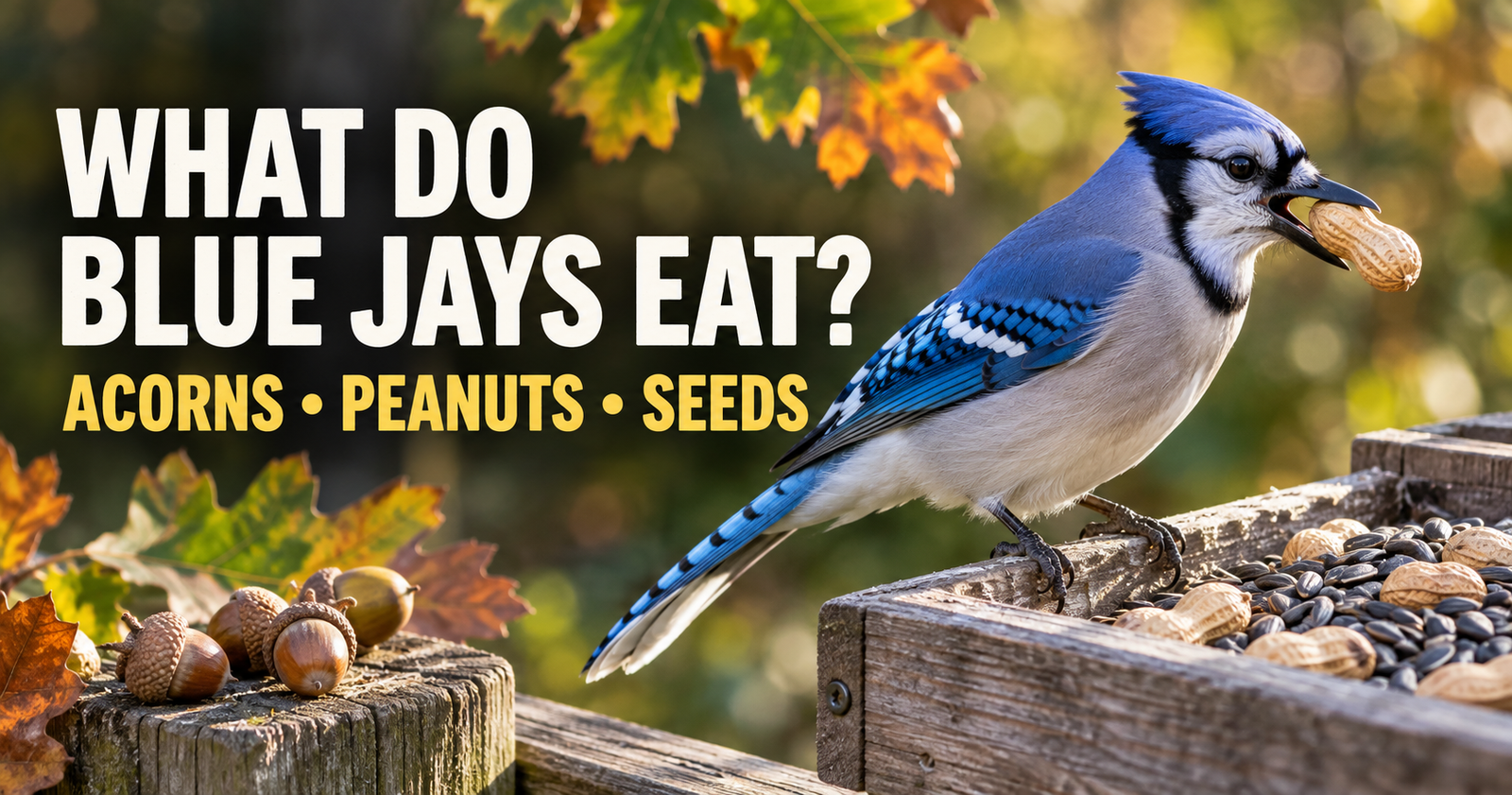
Blue Jays will eat just about anything they can reasonably turn into food, but that doesn’t mean their diet is random.
If I had to pick one natural food most closely associated with Blue Jays, I’d choose acorns.
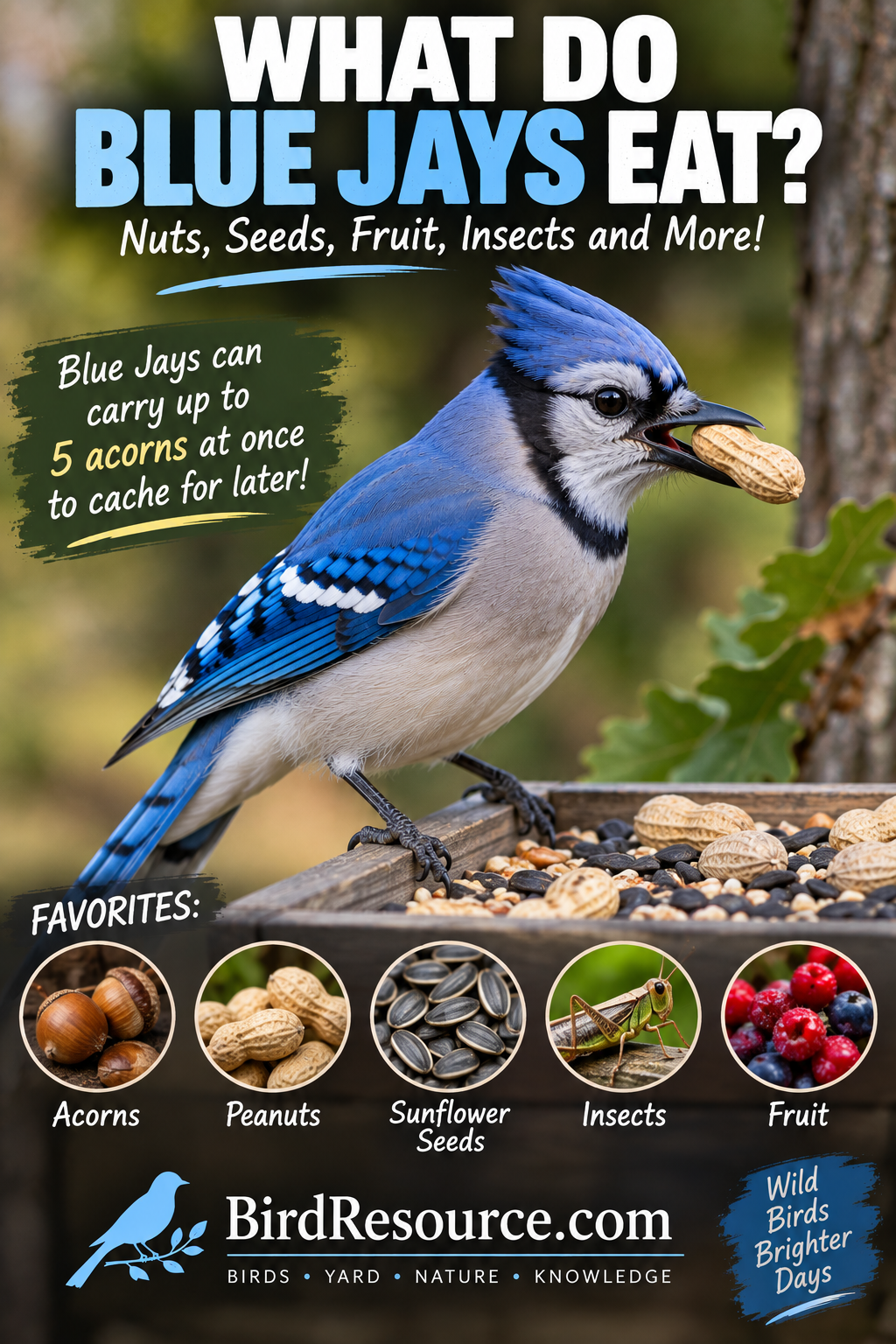
They also eat other nuts, seeds, fruits, grains, insects, and occasionally animal foods. Around backyard feeders, peanuts and sunflower seeds are two of the easiest ways to get their attention.
Cornell describes Blue Jays as omnivores, but stomach-content research gives us a much clearer picture of what that actually means. About 22 percent of the contents examined were insects, while acorns, other nuts, fruits, and grains accounted for nearly all of the remainder.
That may surprise anyone who has heard Blue Jays described mainly as birds that raid nests and eat baby birds.
They can do that.
But eggs and baby birds aren’t remotely the foundation of the normal Blue Jay diet.
Most of the time, a Blue Jay is much more interested in an acorn, insect, seed, or peanut.
What Do Blue Jays Eat in the Wild?
A wild Blue Jay has a remarkably flexible menu.
Common foods include:
acorns and other nuts,
seeds,
grains,
fruits,
beetles and other insects,
caterpillars,
grasshoppers,
and occasional small animal foods.
Cornell also documents Blue Jays eating dead or injured small vertebrates and occasionally taking eggs or nestlings.
That flexibility is useful for a bird living across a huge portion of eastern and central North America.
The food available in July isn’t necessarily what will be available in January.
Blue Jays adjust.
Acorns Are One of the Most Important Blue Jay Foods
If you have mature oak trees and Blue Jays, you’ve probably got one of their favorite natural food sources already growing in the yard.
Blue Jays don’t simply eat acorns underneath the tree.
They transport them.
A jay may pick up several acorns and fly somewhere else before hiding them for later.
Cornell reports that Blue Jays can carry two or three acorns in the throat and upper esophagus, another in the mouth, and one more in the bill.
That’s potentially five acorns during one trip.
Even more impressive, six radio-tracked Blue Jays in one study each cached approximately 3,000 to 5,000 acorns during a single autumn.
That’s a tremendous amount of food being moved around by one bird.
Why Do Blue Jays Hide Acorns?
They’re storing food for later.
This behavior is called caching.
Instead of eating everything immediately, the bird takes advantage of abundant food by hiding some of it in different locations.
Then it can return to those stored foods later when fresh food isn’t as plentiful.
But not every acorn gets recovered.
Some remain where the jay placed them and can eventually germinate.
Blue Jays are such effective acorn movers that their caching behavior has been credited with helping oak trees spread following the last glacial period.
That’s one of my favorite Blue Jay facts.
The bird is trying to save lunch.
The forest gets planted in the process.
Do Blue Jays Eat Peanuts?
Absolutely.
If I wanted to attract Blue Jays to a backyard feeding station, plain peanuts would be near the top of my list.
Cornell specifically recommends peanuts, sunflower seeds, and suet for attracting Blue Jays to feeders.
Peanuts are especially fun because Blue Jays don’t necessarily eat them at the feeder.
A jay may land, select a peanut, and immediately fly away.
Then it returns.
Grabs another.
Gone again.
That doesn’t mean it dislikes your feeder.
Quite the opposite.
The bird may be taking those peanuts elsewhere to eat safely or cache for later.
Peanuts in the Shell or Shelled Peanuts?
Blue Jays will use both.
Whole peanuts in the shell create some of the most entertaining behavior because the bird has to select, transport, and open them.
Cornell specifically notes that peanuts in the shell can be offered on platform feeders or similar open feeding areas for jays.
Shelled peanuts are easier to eat and can work in appropriately designed feeders too.
Whichever you choose, I’d stick with plain, unsalted peanuts intended for wildlife feeding.
We’ll give peanuts their own guide because there are enough questions around raw versus roasted, shelled versus unshelled, feeder choice, caching, and squirrel competition that trying to answer everything here would turn this into a peanut article instead of a Blue Jay diet guide.
Do Blue Jays Eat Sunflower Seeds?
Yes.
Sunflower is another excellent feeder food for Blue Jays.
Cornell specifically lists sunflower seeds among the foods Blue Jays prefer at backyard feeders.
Black oil sunflower is particularly useful around a general backyard feeding station because it attracts many other seed-eating birds too.
The shells are relatively thin, making them easy for many birds to open, and the kernels contain valuable fat.
Watch a Blue Jay handling one and you’ll see another interesting behavior.
Rather than simply swallowing every seed whole, Blue Jays can hold food between their feet and hammer it open with the bill.
Those powerful feet and that substantial bill make short work of foods that would be much more difficult for a tiny songbird.
Do Blue Jays Eat Birdseed?
Yes, but “birdseed” can mean almost anything.
A cheap wild bird mix might contain sunflower, millet, milo, corn, wheat, oats, and several other ingredients.
Blue Jays won’t necessarily value every ingredient equally.
That’s why I’d rather choose food based on what the birds actually eat instead of buying the biggest bag with the prettiest bird pictures.
For Blue Jays, sunflower and peanuts are much more interesting to me than a bargain mix dominated by filler ingredients.
Cornell warns that mixes containing large amounts of red millet, oats, and similar fillers can result in considerable waste because many birds simply sort through them looking for the foods they prefer.
Watch the ground underneath your feeder.
Sometimes the birds will show you exactly which ingredients you shouldn’t bother buying again.
Do Blue Jays Eat Corn?
They can eat grains, including corn.
But corn wouldn’t be my first food if my specific goal were attracting Blue Jays.
One problem is that corn appeals to plenty of other animals too.
Another is storage.
Cornell warns that corn can develop dangerous aflatoxin contamination and emphasizes keeping it dry and offering only manageable amounts.
So yes, Blue Jays may eat corn.
But if I were standing in the store choosing between corn, sunflower, and peanuts specifically for Blue Jays, I’d be reaching for the peanuts or sunflower first.
Do Blue Jays Eat Suet?
Yes.
Cornell includes suet among the feeder foods Blue Jays use.
Suet is particularly associated with woodpeckers in many people’s minds, but plenty of other birds will investigate it.
Blue Jays are large enough that feeder design matters here too.
A tiny upside-down suet feeder intended to restrict larger birds may accomplish exactly that and make the food difficult for the jay to access.
If Blue Jays are the target, make sure the feeding setup physically accommodates them.
Do Blue Jays Eat Fruit?
Yes.
Fruit forms part of their natural diet.
Cornell’s stomach-content summary places fruits alongside acorns, nuts, and grains as important plant foods.
The exact fruits available vary by region and season.
This is another reason I like creating bird habitat rather than thinking only about feeders.
Trees and shrubs can produce natural food while also providing cover, nesting locations, insects, and perches.
A feeder gives a Blue Jay somewhere to grab a peanut.
A good landscape can give the bird reasons to spend much more of its day around the property.
Do Blue Jays Eat Insects?
Definitely.
Insects aren’t some tiny accidental part of the diet either.
Cornell reports that about 22 percent of the stomach contents examined in Blue Jay diet research consisted of insects.
Blue Jays glean insects from trees, shrubs, and other vegetation and also forage on the ground.
That means the jay you see hammering a peanut open in January may spend part of summer hunting insects instead.
Season changes what’s available.
A flexible diet lets the bird take advantage of that.
Do Blue Jays Eat Caterpillars?
Yes, caterpillars and other insect larvae can be part of their diet.
That doesn’t mean I’d advertise Blue Jays as a guaranteed solution to garden pests.
Wild birds don’t follow our landscaping plans.
But insects are a normal Blue Jay food, and a yard supporting healthy insect populations provides natural feeding opportunities that a bag of birdseed can’t duplicate.
This becomes especially important during breeding season when adults are feeding growing young.
Do Blue Jays Eat Baby Birds?
They can.
This is the part of the Blue Jay diet that gets the most attention because it’s dramatic.
Blue Jays occasionally raid nests and consume eggs or nestlings.
But here’s the context people often leave out.
Cornell summarizes a study of 530 Blue Jay stomachs in which researchers specifically looked for evidence of bird remains. Only six stomachs contained traces of bird eggs or birds.
That’s a little over 1 percent of the birds examined.
So yes, nest predation is real.
No, Blue Jays aren’t spending most of their lives flying around murdering baby songbirds.
We’ll give this question its own article because the reality is much more interesting than either extreme.
Do Blue Jays Eat Bird Eggs?
Yes, occasionally.
Again, that’s documented behavior.
But eggs aren’t the foundation of their diet.
The stomach-content evidence is particularly valuable because it gives us something stronger than stories about someone seeing a Blue Jay near an empty nest.
Sometimes a Blue Jay really did raid a nest.
Sometimes another predator was responsible.
Sometimes a nesting attempt failed for another reason entirely.
Seeing a jay in the neighborhood doesn’t automatically make it guilty.
Do Blue Jays Eat Mice or Other Small Animals?
Blue Jays can consume animal foods beyond insects.
Cornell documents them taking dead or injured small vertebrates.
But I wouldn’t describe Blue Jays as regular mouse hunters.
That’s the difference between something an opportunistic omnivore can eat and a major normal food source.
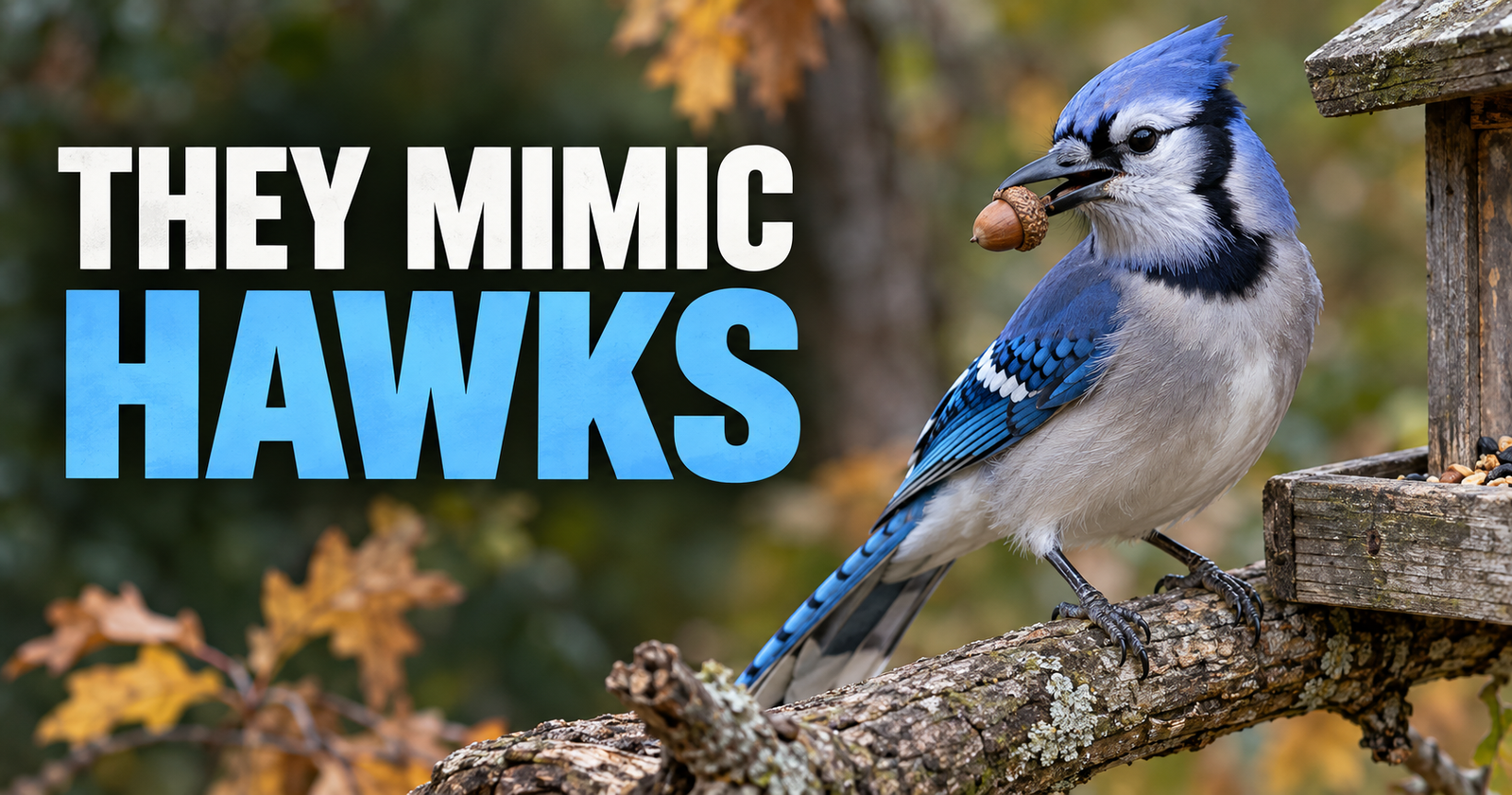
Acorns, nuts, fruits, grains, insects, seeds, and feeder foods give us a much better picture of the everyday Blue Jay diet. Readers who want to connect that diet with caching, competition, and other natural behaviors can use this broader Blue Jay behavior guide.
Wild animals occasionally do unusual things.
Those unusual events shouldn’t become the headline description of how the species normally lives.
Do Blue Jays Eat Other Dead Birds?
They sometimes take dead or dying adult birds.
Again, Blue Jays are opportunistic omnivores.
If usable food becomes available, they may take advantage of it.
That can look shocking when we’re accustomed to seeing the same bird eating peanuts.
But nature doesn’t divide foods into categories based on what humans find pleasant to watch.
The important thing is keeping the behavior in perspective.
Carrion and other vertebrate foods occur in the Blue Jay diet, but nuts, plant foods, and insects account for much more of what they normally eat.
What Do Baby Blue Jays Eat?
Baby Blue Jays depend on their parents.
The adults gather appropriate foods and deliver them to the growing nestlings.
Animal protein, including insects, is particularly useful during this rapid growth period.
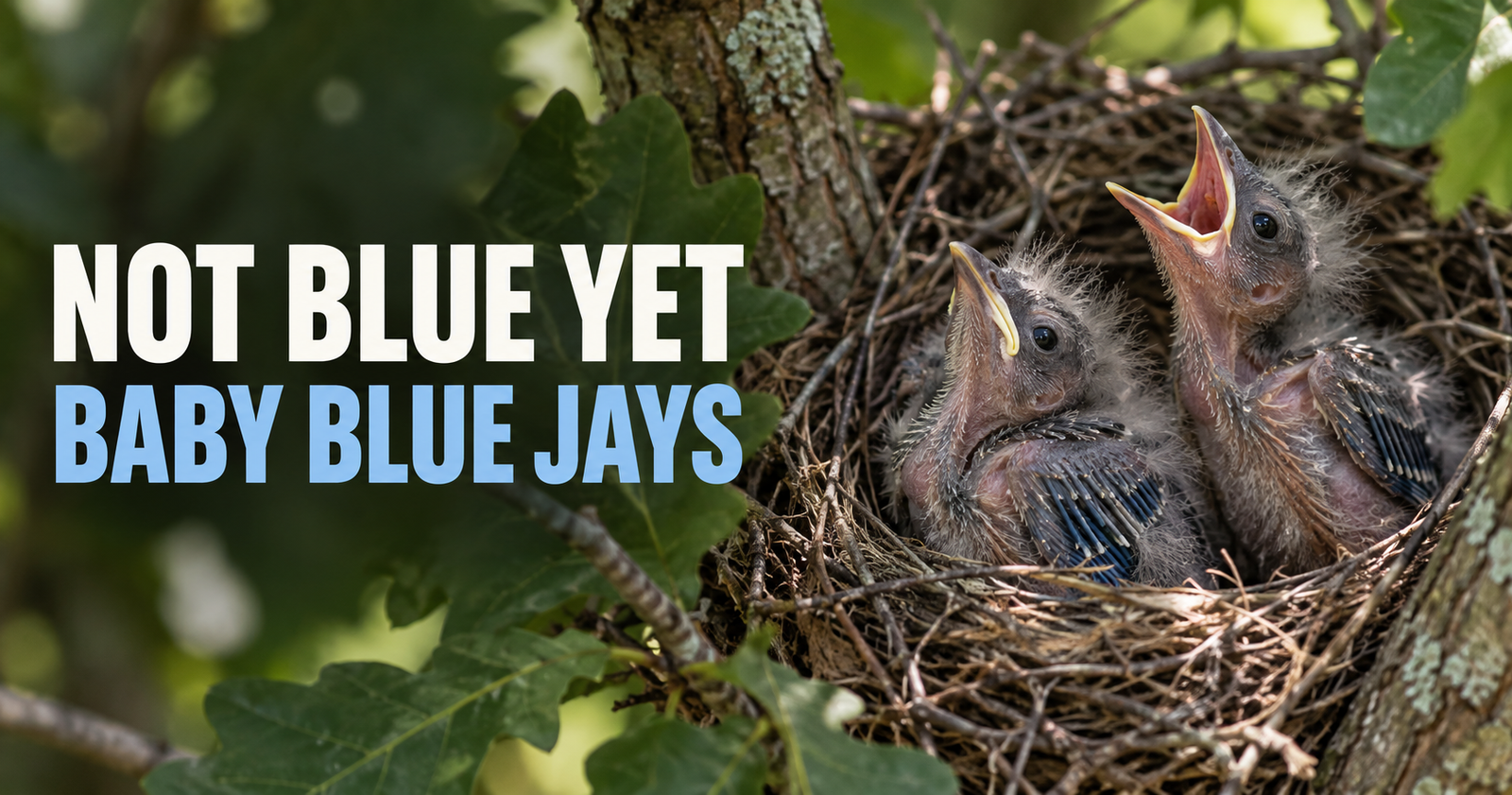
Parents continue feeding young Blue Jays even after the youngsters leave the nest. The stages of young Blue Jay feeding and development explain why fledglings still depend on their parents after leaving the nest.
That’s important because a fledgling sitting on a branch isn’t suddenly responsible for finding every meal on its own.
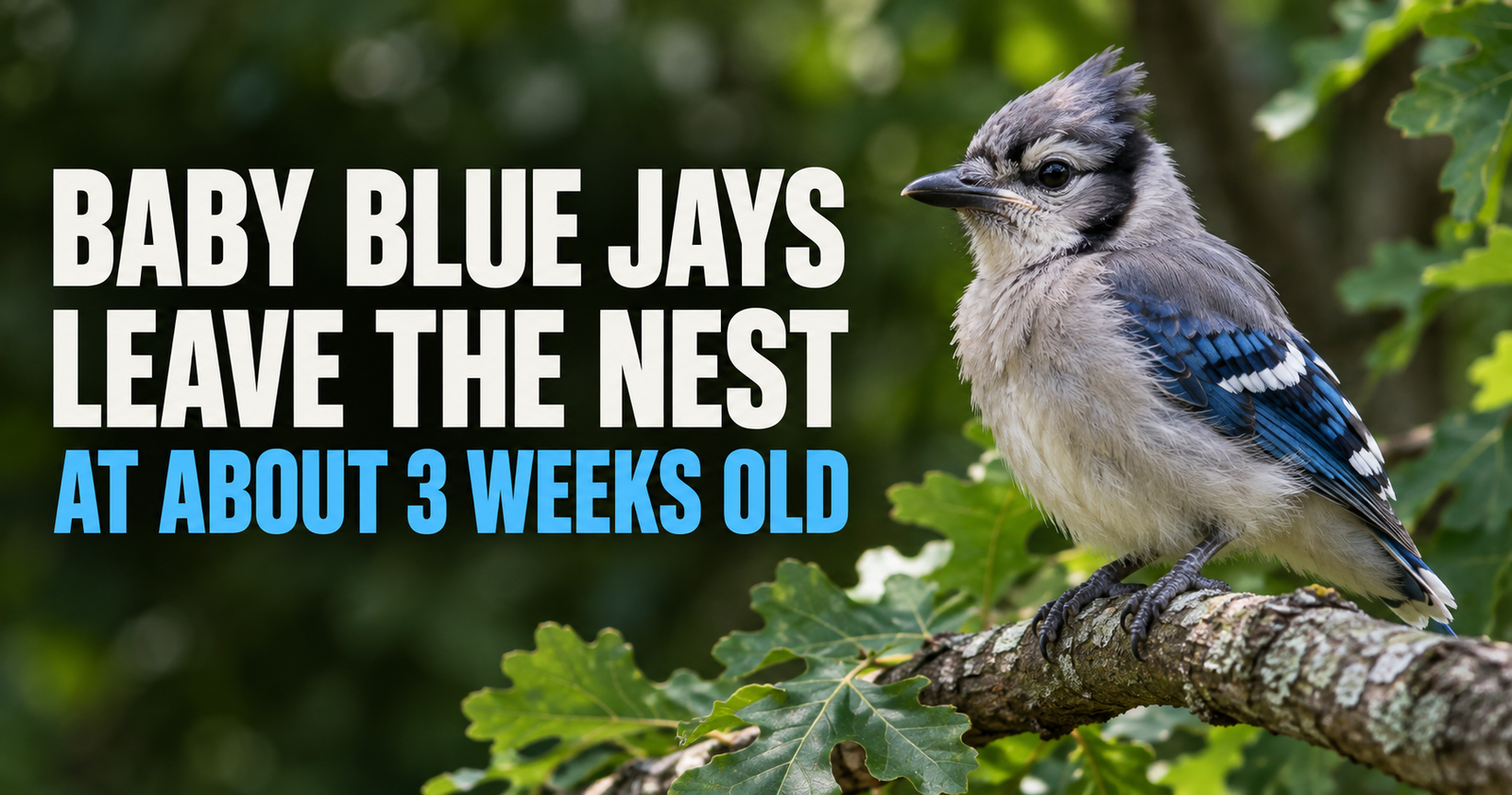
Our guide to when baby Blue Jays leave the nest explains how long that parental dependence can continue after fledging.
If you find a healthy young jay outside the nest, don’t assume hunger means you should start feeding it yourself.
Its parents may already be handling that job.
What Do Blue Jays Eat in Winter?
Winter pushes the diet toward foods that remain available.
Nuts and cached foods become particularly valuable.
Acorns can be important.
Seeds remain available.
Backyard feeders can provide supplemental sunflower, peanuts, and suet.
Blue Jays also have the advantage of caching food earlier when it was abundant.
That’s one reason watching them carry food away in fall makes so much sense.
The bird isn’t necessarily wasting time.
It may be preparing for periods when finding fresh food becomes harder.
Do Blue Jays Eat More When It’s Cold?
Bird energy needs can change with temperature.
Cornell notes that a Blue Jay may consume around 10 percent of its body weight in food per day, with birds generally needing more calories during colder conditions.
I wouldn’t turn that into a precise daily feeding requirement for every Blue Jay.
Wild diets vary tremendously.
Food calorie density varies.
Activity varies.
Weather varies.
The useful takeaway is simply that cold conditions increase the importance of obtaining enough energy.
A reliable winter feeder can supplement the natural foods birds are already finding.
Why Does a Blue Jay Grab Food and Immediately Fly Away?
There are several possibilities.
It may want to eat somewhere safer.
A feeder is exposed, and birds have to remain alert for predators while they’re using it.
The bird may also need a better place to hold and open the food.
Or it may be caching the item for later.
Cornell notes that birds often carry food away because of safety, because it needs additional handling, or because they’re storing it. Blue Jays commonly hold nuts or seeds with their feet and hammer them open.
So don’t assume a Blue Jay hates your feeder because it refuses to sit there and eat.
Repeated grab-and-go visits may mean your feeding station is working extremely well.
How Much Food Can a Blue Jay Carry?
More than you’d think from watching one grab an acorn.
Blue Jays have a throat and upper esophageal area that can temporarily hold food.
Cornell reports that a jay may transport five acorns during one trip, carrying several internally plus another in its mouth and one at the bill tip.
That’s an impressive load for a bird weighing only a few ounces.
It also explains why one Blue Jay can make food disappear from a feeder surprisingly quickly.
The bird isn’t necessarily eating everything immediately.
Some of your expensive birdseed may currently be buried around the neighborhood.
What Kind of Feeder Works Best for Blue Jay Food?
For Blue Jays, I want room.
Cornell recommends tray feeders or hopper feeders on posts and notes that Blue Jays prefer these over many hanging feeder designs.
That makes sense when you look at the bird.
A Blue Jay is substantially larger than a finch or chickadee.
Give it somewhere to land.
For whole peanuts, an open platform can be incredibly simple and effective.
Later we’ll look specifically at peanut feeders because there are feeder designs made to hold whole peanuts while letting jays pull them through openings.
But you don’t need anything complicated to get started.
What Should I Put Out If I Want Blue Jays Tomorrow?
If Blue Jays already live around your neighborhood, I’d keep the experiment simple.
Start with plain unsalted peanuts.
You can add sunflower seed too.
Use a feeder or platform large enough for a Blue Jay to comfortably land.
Then watch.
Don’t be surprised if the bird grabs food and leaves immediately.
And don’t be surprised if squirrels discover the setup before the jays do.
Peanuts are not exactly a secret in the wildlife community.
Can Blue Jays Eat Salted Peanuts?
I wouldn’t offer them.
When I recommend peanuts for wild birds, I mean plain, unsalted peanuts.
There’s no benefit to adding the salt and seasonings intended for human snack food.
The same rule applies to heavily flavored nuts.
Honey roasted.
Barbecue.
Spicy.
Garlic.
Whatever else is sitting beside the plain peanuts at the grocery store.
Keep wildlife food simple.
A Blue Jay doesn’t need ranch-flavored peanuts.
Can Blue Jays Eat Bread?
A Blue Jay may eat bread if it’s available.
That doesn’t make bread a food I’d intentionally use to attract them.
If I’m spending money to feed wild birds, I’d rather offer foods that resemble the nutrient-rich items they’re naturally equipped to use.
Peanuts.
Sunflower.
Appropriate suet.
Natural nuts and seeds.
Bread fills space without being the kind of food I want forming a meaningful part of a wild bird’s diet.
Just because a bird will eat something doesn’t mean it’s the thing I’d choose to feed it.
What Should You Not Feed Blue Jays?
I’d avoid:
salty snack foods,
heavily seasoned nuts,
moldy or spoiled food,
wet peanuts that have begun deteriorating,
and foods contaminated with pesticides or other chemicals.
Peanuts deserve particular attention because Cornell warns that they can develop aflatoxins when stored improperly. Keep them dry and don’t allow old damp peanuts to sit around the feeder.
That’s good advice for bird food generally.
Fresh food in a clean feeder beats an enormous pile of neglected food every time.
Don’t Forget Water
Food gets all the attention when people want Blue Jays.
Water is another easy attraction.
Cornell specifically notes that Blue Jays often drink from birdbaths.
Fresh water can be useful even when plenty of natural food is available.
Keep the birdbath clean and replace dirty water regularly. Blue Jays are fairly large birds, so I also prefer a bath with enough room for them to comfortably land, drink, and bathe.
Water is another reason I don’t think attracting Blue Jays should revolve entirely around filling a feeder.
Food gets them interested.
Water gives them another resource.
Trees provide natural foods, cover, nesting locations, and perches.
Put those things together and you’re creating a yard Blue Jays can actually use rather than simply a place where they occasionally stop for a peanut.
Why Aren’t Blue Jays Eating From My Feeder?
If you know Blue Jays live around your property but they aren’t using the feeder, I’d check the food and feeder design first.
Try something they strongly recognize as food, such as plain unsalted peanuts or sunflower seed.
Then look at the feeder itself.
Blue Jays are fairly large birds. A tiny feeder designed around little finches may contain perfectly good food while giving a Blue Jay nowhere comfortable to land.
A roomy platform or hopper-style feeder makes much more sense.
Natural food availability can matter too.
If oak trees around your property are dropping enormous numbers of acorns, your peanuts have serious competition.
The birds may simply have better natural food available at the moment.
Do Blue Jays Eat the Same Foods as Cardinals?
Some of them.
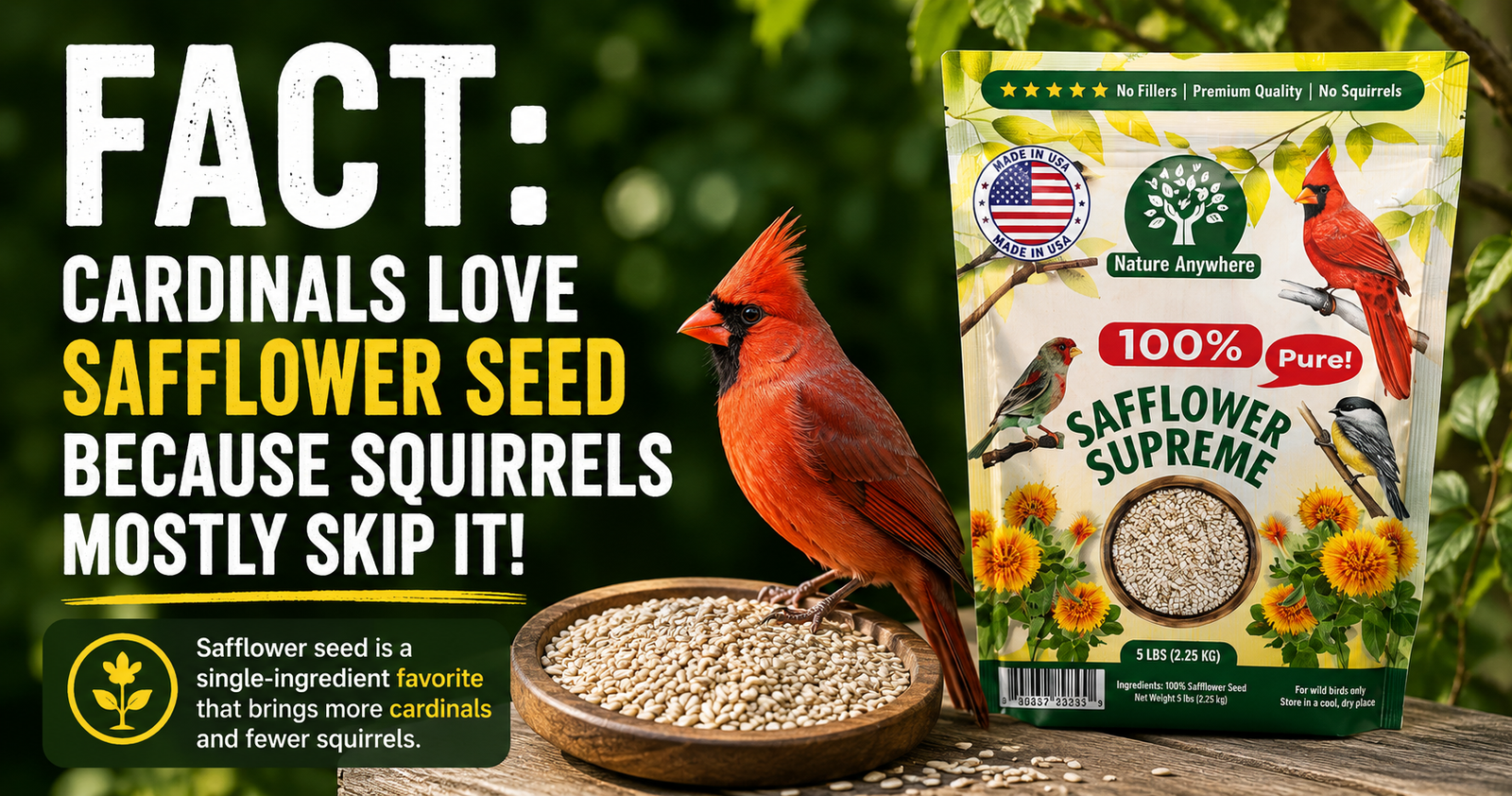
Both Blue Jays and Northern Cardinals readily eat sunflower seeds, so you may see both species visiting the same feeding station.
Their feeding behavior can look very different, though.
A cardinal may remain at the feeder cracking seeds.
A Blue Jay may grab something large and immediately disappear with it.
Peanuts and acorns also play a much bigger role in Blue Jay feeding behavior because jays commonly carry and cache food.
So you don’t necessarily need separate feeding stations for the two species, but the feeder needs to be large enough for both birds to comfortably use.
Do Blue Jays Eat All Day?
Blue Jays forage during daylight, but that doesn’t mean they’ll sit at your feeder continuously.
They move around their environment looking for natural foods.
They visit different feeding locations.
They cache food.
They interact with other birds.
They respond to predators.
And their activity can change with weather and season.
That’s why I wouldn’t judge a feeding station from one quiet hour.
A Blue Jay may make repeated visits early in the morning, disappear for hours, and return later.
If you’re putting out food consistently, watch the pattern over several days rather than expecting constant activity.
Do Blue Jays Store Food for Winter?
Blue Jays cache food for later, and this behavior becomes especially noticeable when acorns and other foods are abundant.
They can move thousands of acorns during autumn.
Some are retrieved relatively soon.
Others remain hidden longer.
And some are never recovered at all.
Caching gives Blue Jays access to stored food after the original food source is no longer as abundant.
It’s one of the reasons seeing a jay carry food away shouldn’t automatically make you think it rejected the feeding station.
Quite the opposite.
Your peanut may have been valuable enough to save for later.
Can Blue Jays Smell Peanuts?
I wouldn’t depend on smell to bring Blue Jays to a feeder.
Blue Jays are intelligent, observant birds capable of learning where reliable food sources are located.
Once they discover that peanuts regularly appear on a particular platform, they can return to that location.
Other birds visiting the feeder can also help make a feeding area noticeable.
Consistency matters.
If you want Blue Jays to establish a feeding routine, put appropriate food in a predictable location and give them time to discover it.
Should I Feed Blue Jays Every Day?
You can provide supplemental food regularly, but Blue Jays shouldn’t become dependent on your feeder as their entire diet.
They continue finding natural foods throughout the environment.
That’s exactly what I want.
A feeder should supplement natural foraging, not replace it.
If you’re going to feed regularly, focus on keeping the station clean and the food fresh.
Don’t keep piling new peanuts or seed on top of wet, spoiled leftovers.
And don’t panic if the Blue Jays disappear for a while.
Natural food availability and seasonal behavior can change feeder activity considerably.
Common Questions About What Blue Jays Eat
What is a Blue Jay’s favorite food?
Acorns are among the most important natural foods for Blue Jays. At backyard feeders, plain unsalted peanuts and sunflower seeds are two of the foods I’d try first.
What can I feed Blue Jays in my backyard?
Plain unsalted peanuts, sunflower seeds, and appropriate suet are good options. Blue Jays also naturally eat acorns, other nuts, fruits, grains, and insects.
Do Blue Jays eat peanuts in the shell?
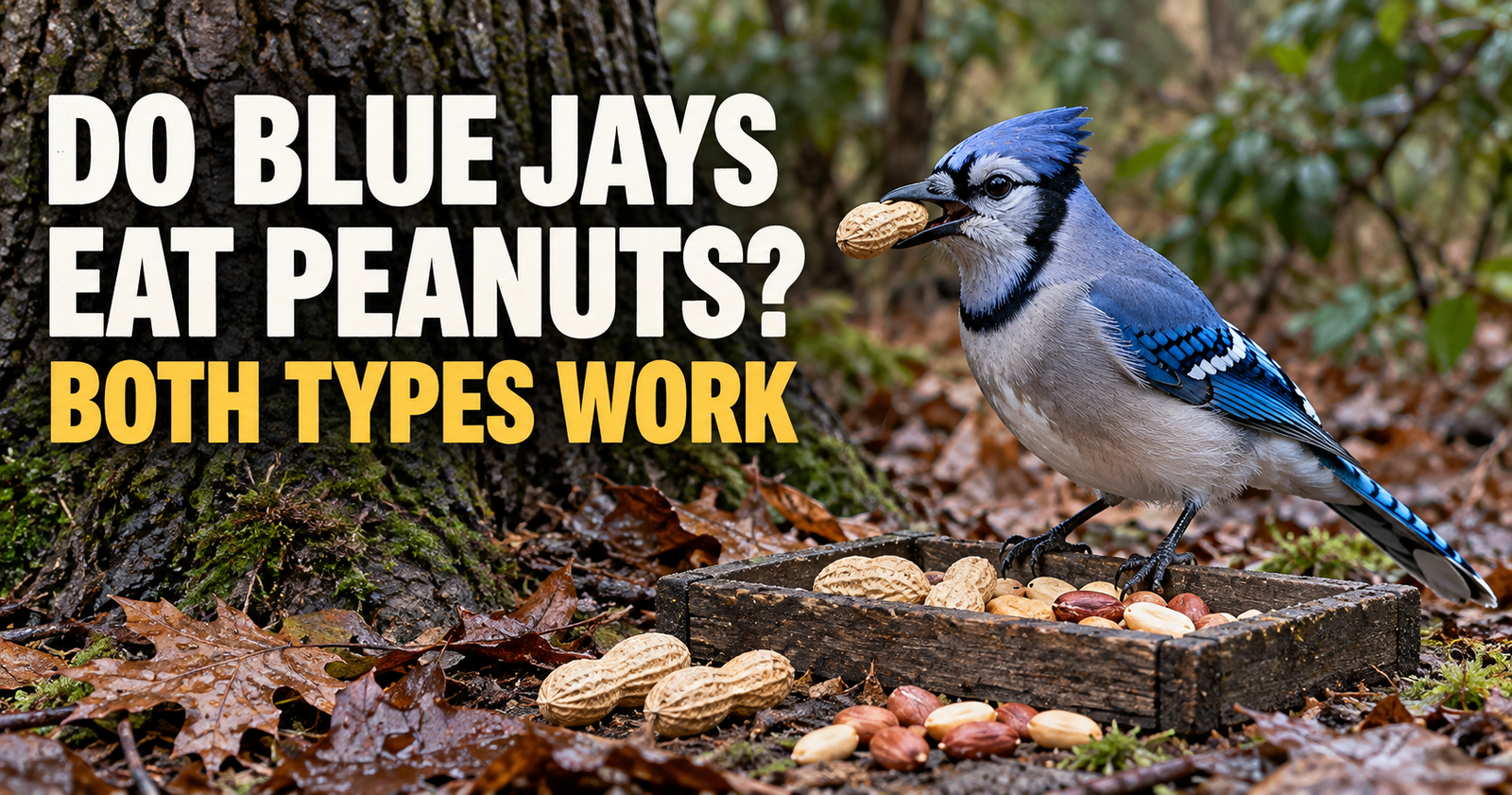
Yes. Blue Jays readily take peanuts in the shell and may carry them away to eat or cache elsewhere.
Should I give Blue Jays salted peanuts?
No. I’d stick with plain, unsalted peanuts rather than salted or heavily seasoned snack foods intended for people.
Do Blue Jays eat sunflower seeds?
Yes. Sunflower seeds are one of the feeder foods Blue Jays readily eat.
Do Blue Jays eat acorns?
Absolutely. Acorns are one of their most important natural foods, and Blue Jays are remarkable acorn cachers.
Do Blue Jays eat insects?
Yes. Insects make up a meaningful portion of their diet, including beetles, caterpillars, grasshoppers, and other available prey.
Do Blue Jays eat baby birds?
They occasionally eat eggs and nestlings, but this behavior represents a small portion of their overall diet. Nuts, seeds, fruits, grains, and insects are much more representative of what Blue Jays normally eat.
Do Blue Jays eat fruit?
Yes. Fruits are part of their natural diet.
Do Blue Jays eat suet?
Yes. Blue Jays can eat suet, although you’ll want a feeder that comfortably accommodates a bird their size.
Do Blue Jays eat bread?
They may eat bread, but I wouldn’t intentionally use it to attract them. I’d rather offer nutrient-rich foods such as peanuts, sunflower seeds, and appropriate suet.
Why do Blue Jays take peanuts away instead of eating them?
They may be moving somewhere safer to eat or caching the peanut for later. Carrying food away is completely normal Blue Jay behavior.
What should I avoid feeding Blue Jays?
I’d avoid salty and heavily seasoned foods, spoiled food, moldy nuts, and anything contaminated with chemicals. Keep wild bird food simple and fresh.
What kind of feeder is best for Blue Jays?
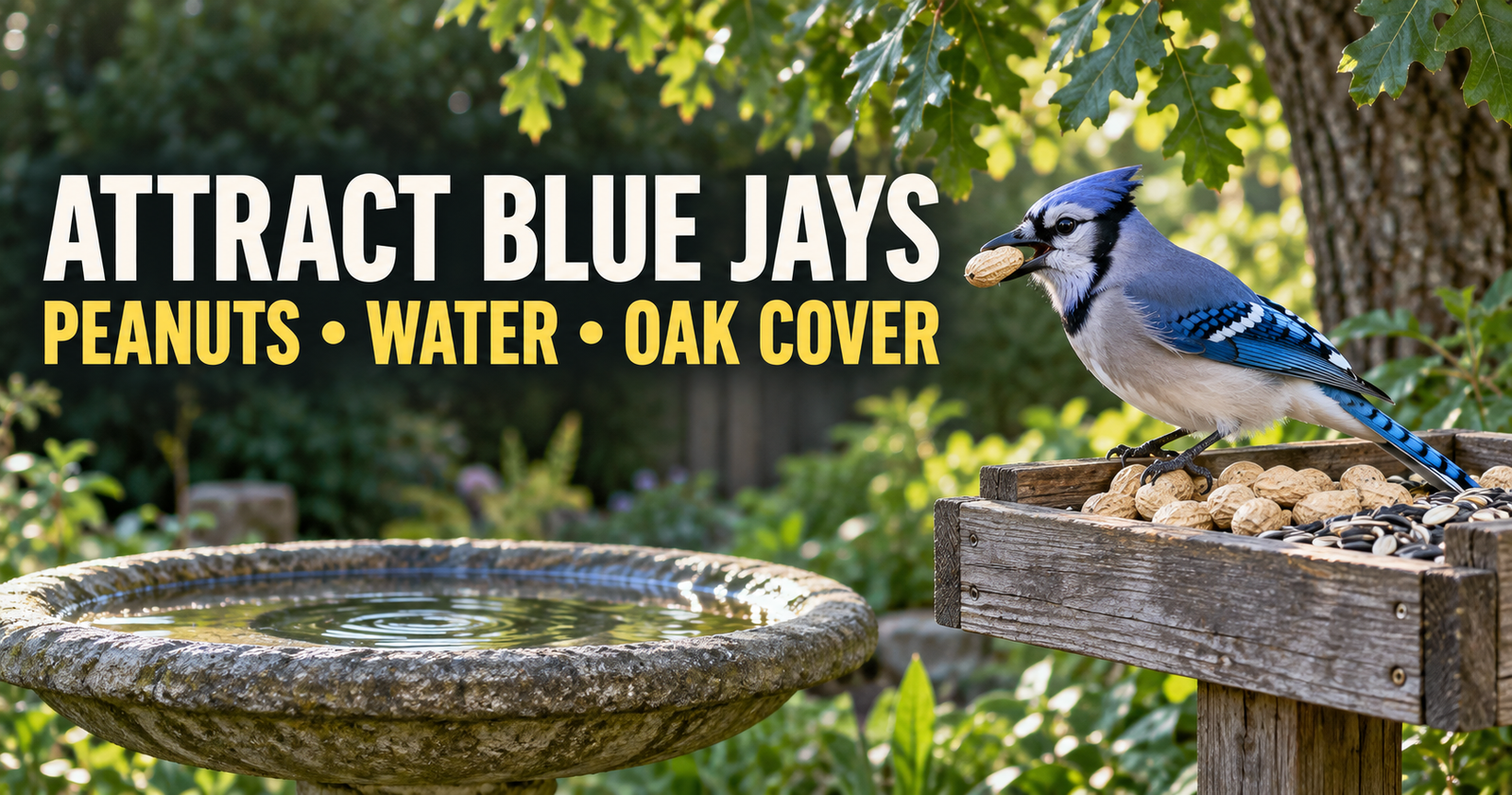
A roomy platform or hopper feeder works well because Blue Jays need more landing space than small feeder birds. Cornell specifically recommends tray and hopper feeders for attracting Blue Jays.
If I Wanted to Feed Blue Jays Tomorrow, I’d Keep It Simple
I wouldn’t start with a giant bag containing fifteen different kinds of seed.
I’d put out plain unsalted peanuts.
I’d probably offer some sunflower seed too.
I’d use a platform or another feeder large enough for a Blue Jay to comfortably land.
Then I’d watch.
If Blue Jays already live around the property, there’s a good chance they’ll eventually discover it.
And when one grabs a peanut and immediately flies away, I wouldn’t assume it disliked my feeder.
That peanut may be headed toward a hiding place.
The bird may return a minute later for another.
Then another.
Before long, you may realize you’re not simply feeding a Blue Jay.
You’re watching an animal collect, transport, choose, and store food using behaviors its species has relied on for thousands of years.
That’s much more interesting than simply asking whether Blue Jays eat peanuts.
Mason Reed is the Backyard Birding & Feeding Contributor for BirdResource.com, where he helps everyday birdwatchers understand what wild birds eat, how they use backyard feeders, and the behaviors happening around the food we put outside.