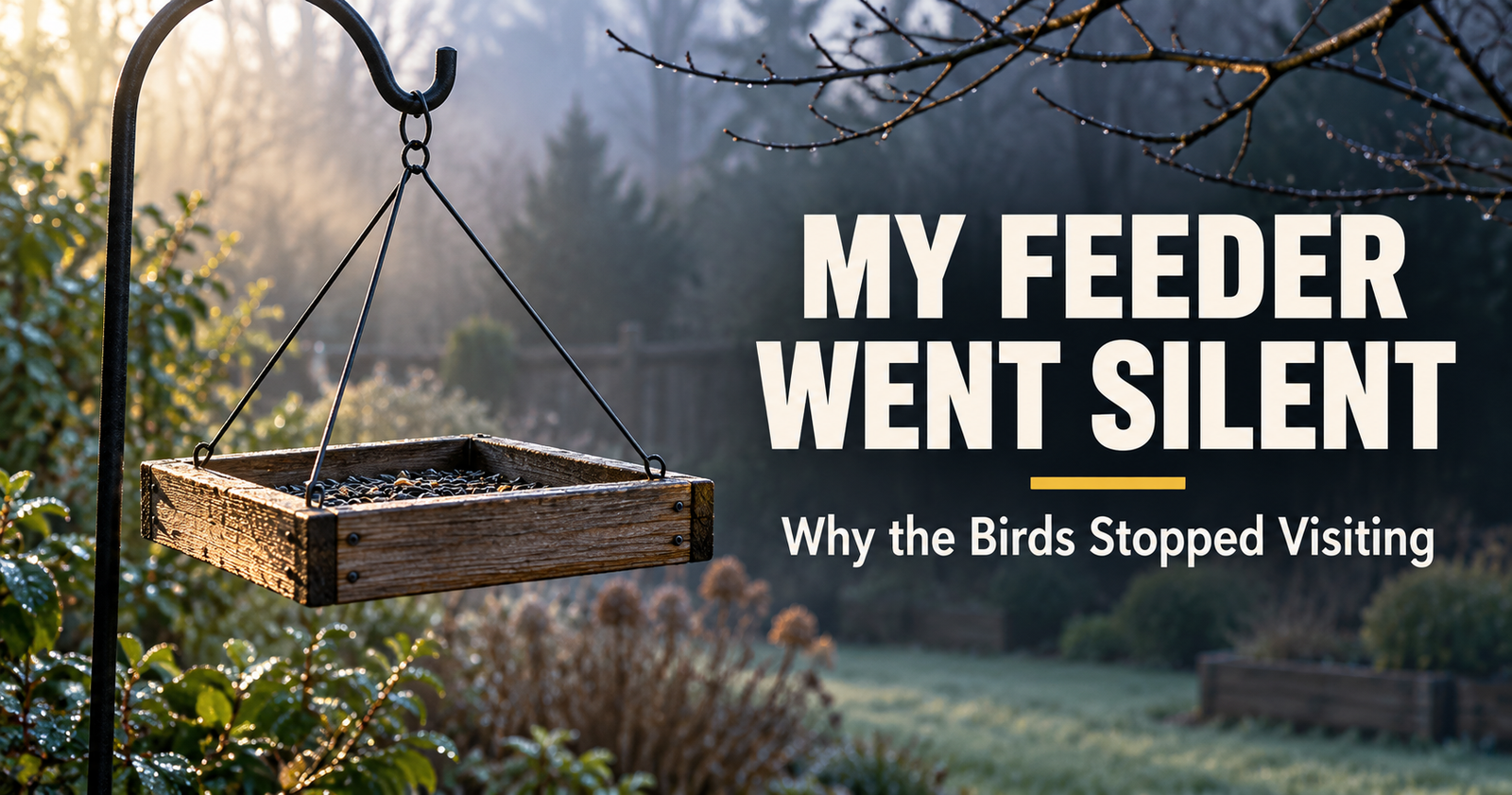
The first thing that bothered me wasn’t an empty feeder.
It was a full one.
Normally, seed disappearing means everything is working.
Then one morning I realized the level hadn’t moved.
I didn’t think much of it.
The next day looked about the same.
That’s when I started paying attention.
A feeder that normally had birds bouncing around it suddenly looked abandoned. No little birds waiting in the nearby branches. Nothing underneath cleaning up dropped seed. Hardly anything moving through the yard at all.
My first thought was exactly what I think most people would wonder:
Where did all the birds go?
I started thinking something was wrong with the feeder.
Maybe the seed was bad.
Maybe I’d put it somewhere the birds didn’t like.
Maybe something had happened to the birds themselves.
But instead of immediately buying another feeder or changing everything, I started watching the yard around it.
That’s where I think most people should start.
Because when birds suddenly stop coming to a feeder, the feeder isn’t always the problem.
Sometimes the empty feeder is just the clue.
I Started With the Seed Because It Was the Easiest Thing to Rule Out
Before blaming a hawk or some mysterious change in bird behavior, I checked the obvious thing.
The food.
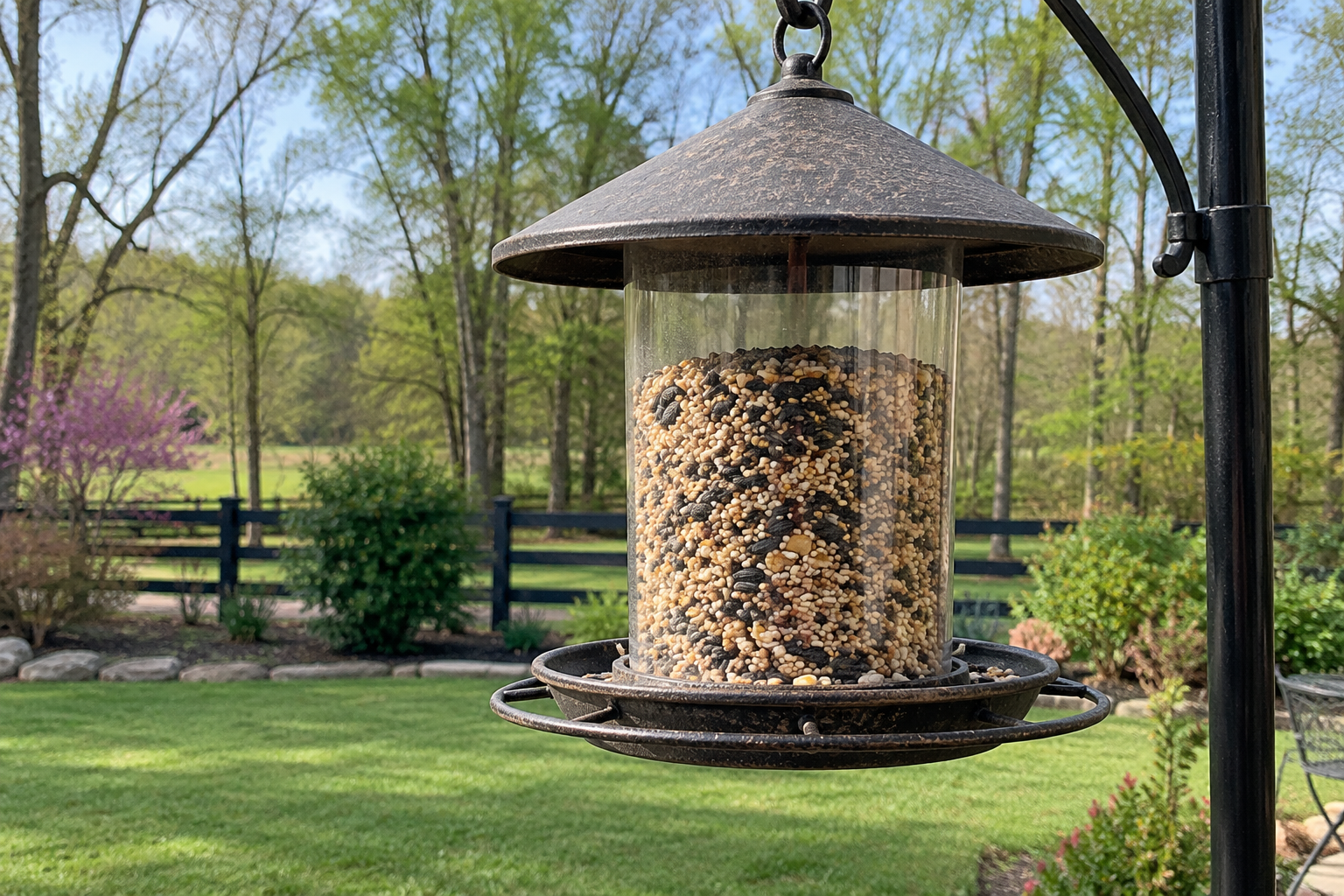
Birdseed can look fine from the outside and still be lousy farther down in the feeder.
Moisture gets inside.
Seed clumps together.
The bottom stays damp.
Old seed can smell musty or develop mold.
So I’d dump some into my hand instead of judging it through the plastic feeder.
I’d smell it.
I’d break apart any clumps.
I’d look for moisture, mold, insects, or seed that had started sprouting.
Penn State Extension specifically notes that birds may avoid old, moldy, or insect-infested seed.
That’s such an easy problem to overlook.
You see a feeder full of food and think:
Well, they’re obviously not hungry.
But a full feeder can sometimes mean exactly the opposite.
The birds aren’t eating what’s inside.
Then I’d Stop Looking at the Feeder
This is the part I’d spend more time doing.
I’d grab a cup of coffee, sit somewhere I wasn’t obvious, and watch the yard for twenty minutes.
Not the feeder.
Everything around the feeder.
I’d watch the fence posts.
Tree branches.
Roofline.
Ground underneath shrubs.
Power lines.
I’d listen too.
Are birds still calling somewhere nearby?
If I’m hearing chickadees, cardinals, or other familiar birds but none are approaching the feeder, that tells me something different than a yard that’s suddenly completely silent.
If birds are still moving through the property but ignoring my seed, I’m thinking food or feeder conditions.
If everything has gone strangely quiet, I’m looking for something else.
A Hawk Would Be High on My List
This is one of the first things I’d suspect if a busy feeding station seemed to shut down almost overnight.
Not because every quiet feeder means there’s a hawk.
Because predators can change bird behavior incredibly quickly.
Project FeederWatch specifically lists a bird-eating hawk or cat as a reason feeder birds can disappear temporarily. Once the predator moves along, birds often return.
A Cooper’s Hawk doesn’t need to sit directly on the feeder.
I’d look farther out.
A bare tree.
Fence post.
Roof.
Somewhere with a clear view of the feeding area.
And sometimes I might never actually see the hawk.
The smaller birds usually notice danger long before I do.
The Clue I’d Trust More Than Seeing the Hawk
I’d listen for what the smaller birds are doing.
Suppose the feeder normally sounds busy.
Then suddenly I hear sharp alarm calls from cover, followed by silence.
That gets my attention.
Or maybe birds approach the yard but remain buried in shrubs instead of crossing the open space to the feeder.
Again, interesting.
I wouldn’t automatically label either one proof of a hawk.
But I’d start looking upward.
Bird behavior can reveal a predator that I haven’t spotted yet.
That’s much more useful than staring at an empty feeder and wondering whether the sunflower seeds suddenly became unpopular.
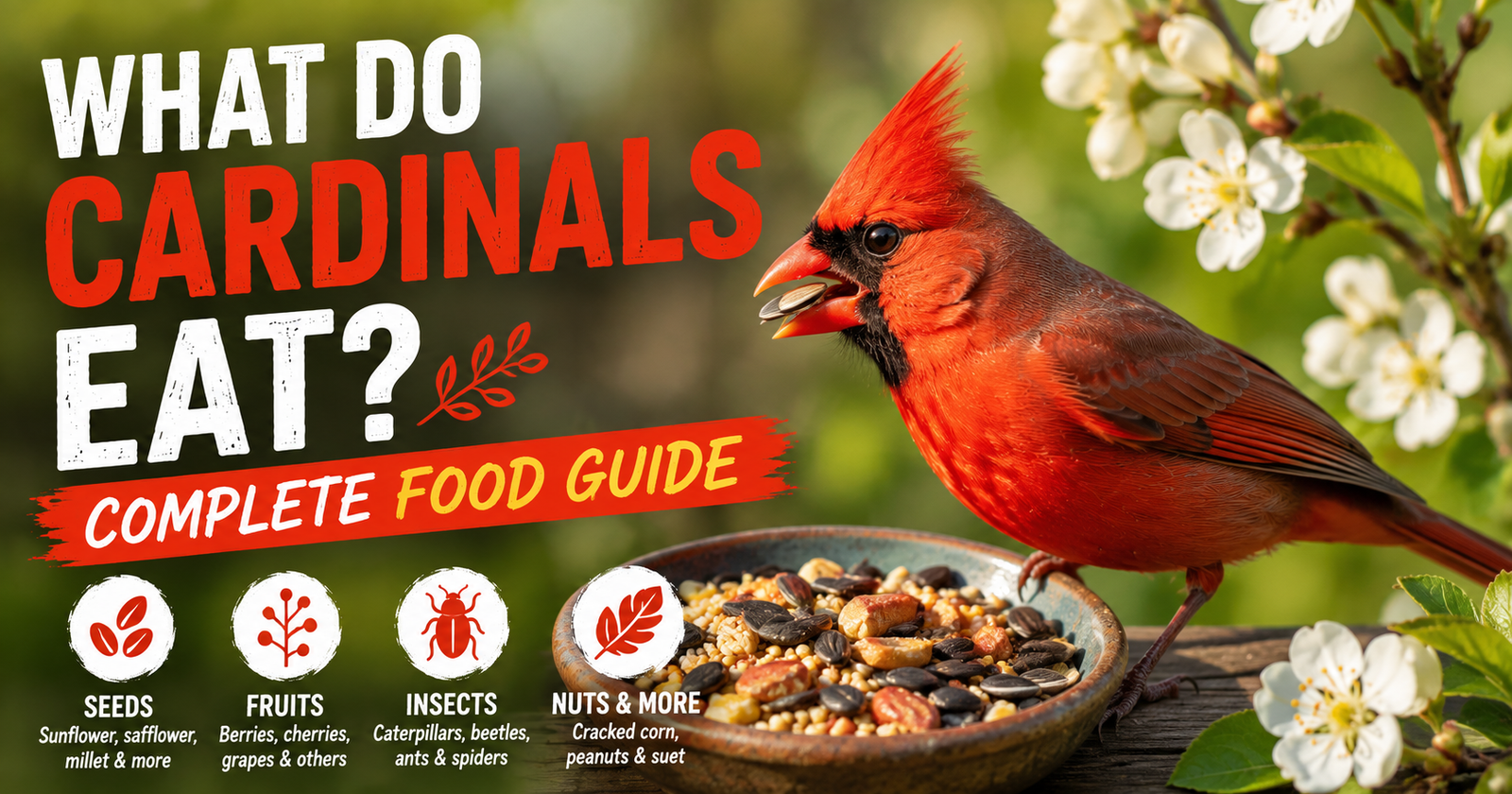
I’d Also Look Down
Cats change this equation too.
A neighborhood cat doesn’t have to catch a bird every morning to make a feeding area dangerous.
It only has to convince the birds that approaching isn’t worth the risk.
I’d check underneath shrubs near the feeder.
Behind landscaping.
Along fences.
Anywhere a cat could sit hidden while watching birds land.
And I’d pay attention at different times.
Maybe the feeder is empty every morning because a cat has developed its own morning routine.
That’s exactly the sort of pattern you miss if you only look outside once at lunchtime.
Then I Would Check Something I Used to Overlook Completely
The rest of the property.
A bird feeder feels important because it’s important to us.
We bought it.
We filled it.
We put it where we could watch it.
To a wild bird, it’s one food source among many.
Project FeederWatch explains that natural supplies of seeds, berries, insects, and other foods fluctuate, causing birds to move around and take advantage of what’s available.
Penn State makes the same point. Feeders supplement natural food, and birds may use them much less when wild food is plentiful.
That completely changes the question.
Instead of:
Why won’t the birds eat my seed?
I’d start asking:
What are they eating instead?
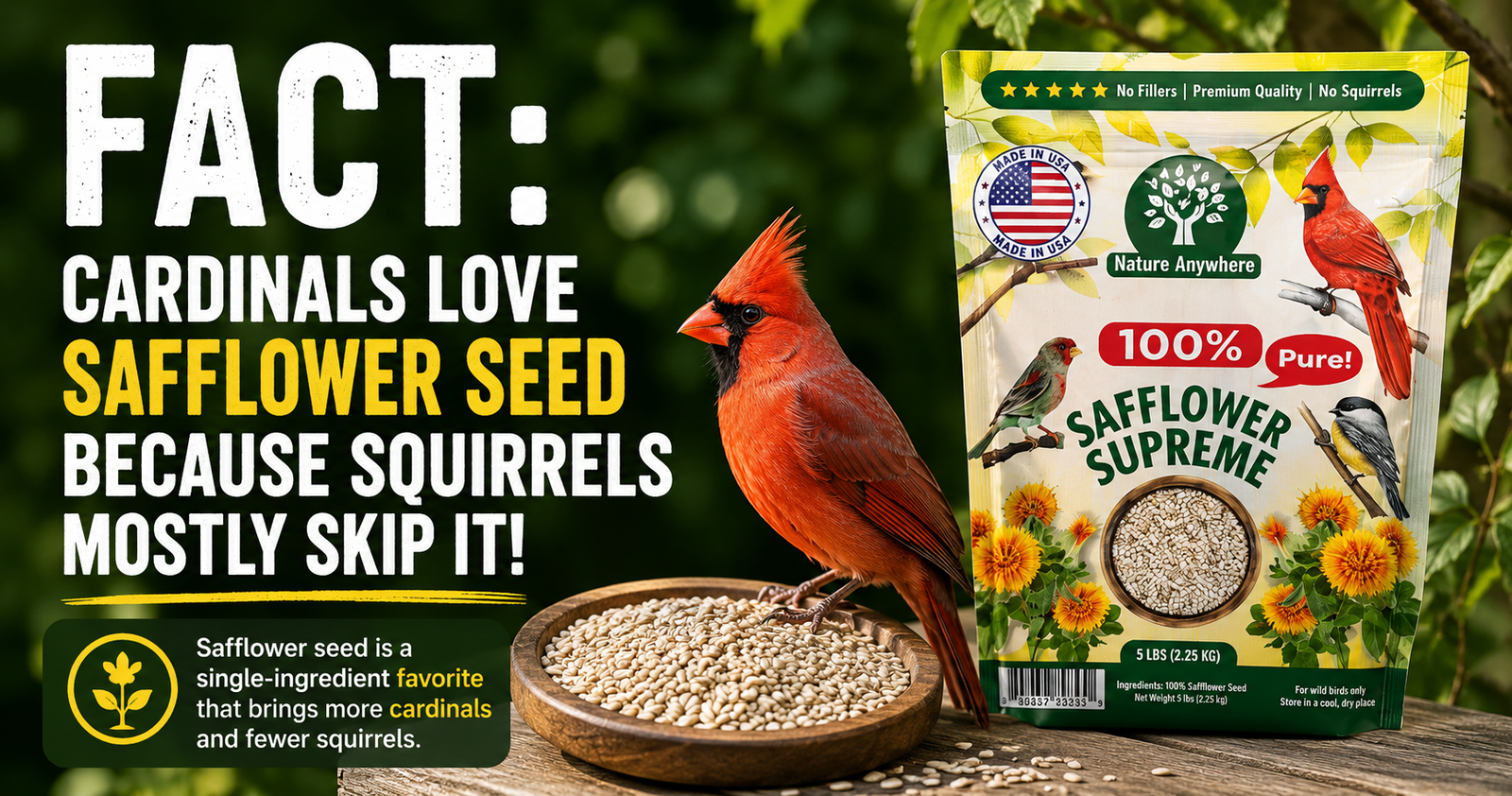
I’d Walk the Property and Look for What’s Ripe Right Now
This is something I’d actually enjoy doing.
I’d walk around without worrying about identifying every plant.
I’d look for:
seed heads,
berries,
fruit,
insects,
acorns,
other nuts,
and anything birds are actively feeding on.
Then I’d stop and watch.
Maybe the feeder isn’t failing at all.
Maybe there’s simply better food somewhere else.
That’s actually a good thing.
I’d much rather see birds taking advantage of natural food than depending entirely on something I pour from a bag.
The Calendar Can Explain a Lot
This is why I’d write down when the feeder went quiet.
Not just:
sometime last month.
I’d put an actual date on it.
Then I’d compare that with what was happening outside.
Did temperatures suddenly change?
Did berries ripen?
Did weeds and grasses go to seed?
Did migration start?
Did leaves fall and change the amount of cover around the feeder?
Did someone cut down a nearby hedge?
Project FeederWatch notes that bird numbers naturally fluctuate with season, weather, habitat, and food availability.
One day’s empty feeder doesn’t tell me much.
A pattern tied to the season tells me considerably more.
I Wouldn’t Buy Another Feeder Yet
This is where I think it’s easy to waste money.
Birds disappear.
You assume they hate the feeder.
So you buy another one.
Nothing happens.
Then you buy different seed.
Still nothing.
Now you’ve changed two variables and learned almost nothing.
I’d keep the setup mostly unchanged while I investigated.
Fresh seed?
Yes.
Clean feeder?
Absolutely.
But I wouldn’t redesign the entire feeding station on day one.
Give yourself a chance to figure out what changed.
I’d Clean It Even If It Didn’t Look Dirty
This is one thing I wouldn’t postpone.
If birds had suddenly stopped using a feeder, I’d empty it and clean it properly.
I’d also clean underneath it.
Old seed and hulls accumulate surprisingly fast.
Wet organic material underneath a feeder isn’t something I want birds feeding through anyway.
The U.S. Fish and Wildlife Service recommends checking for spoiled seed and cleaning feeders when birds stop visiting.
Then I’d refill with a small amount of fresh food.
Not fill it to the top.
If traffic is low, a huge amount of seed simply sits there getting older.
A smaller amount also makes it easier to tell whether anything is actually being eaten.
I’d Mark the Seed Level
This is a ridiculously simple trick, but I like it.
Take a picture.
Or put a small piece of removable tape on the outside of a clear feeder at the current seed level.
Then check tomorrow.
Sometimes a feeder looks untouched even though birds have removed more than you realize.
Other times the level truly hasn’t moved.
Now you have something better than memory.
You have a comparison.
That’s the sort of tiny observation that turns:
“I don’t think birds are coming anymore”
into:
“The seed level hasn’t changed in three days.”
Much more useful.
I’d Watch at the Right Time
Another mistake would be deciding the feeder is abandoned because nothing is happening every time I happen to glance outside.
Bird activity changes throughout the day.
The U.S. Fish and Wildlife Service notes that feeder activity can vary and that birds naturally move among different food sources.
I’d intentionally check early in the morning.
Then again later.
If I only watch for five minutes during a quiet part of the day, I could completely misread what’s happening.
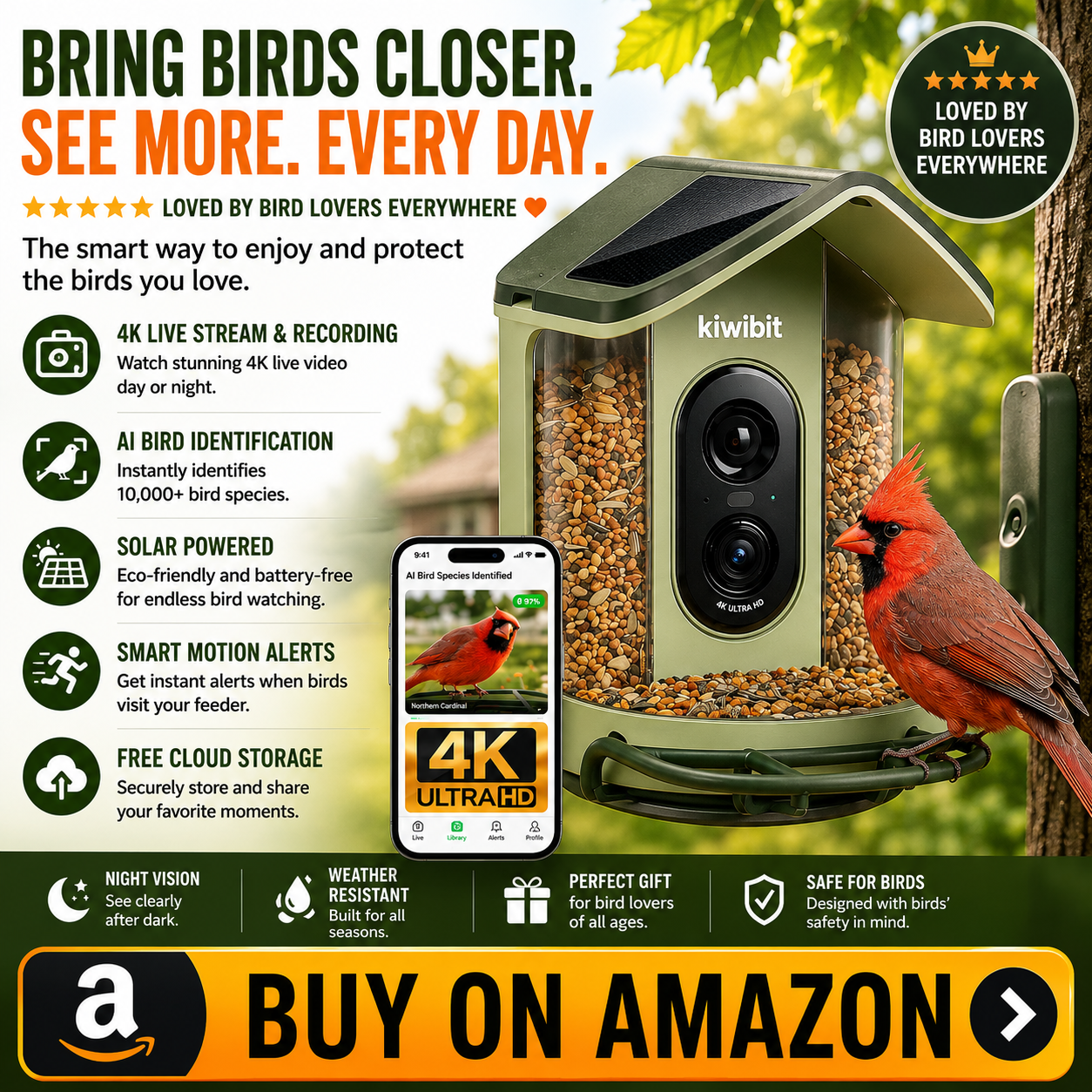
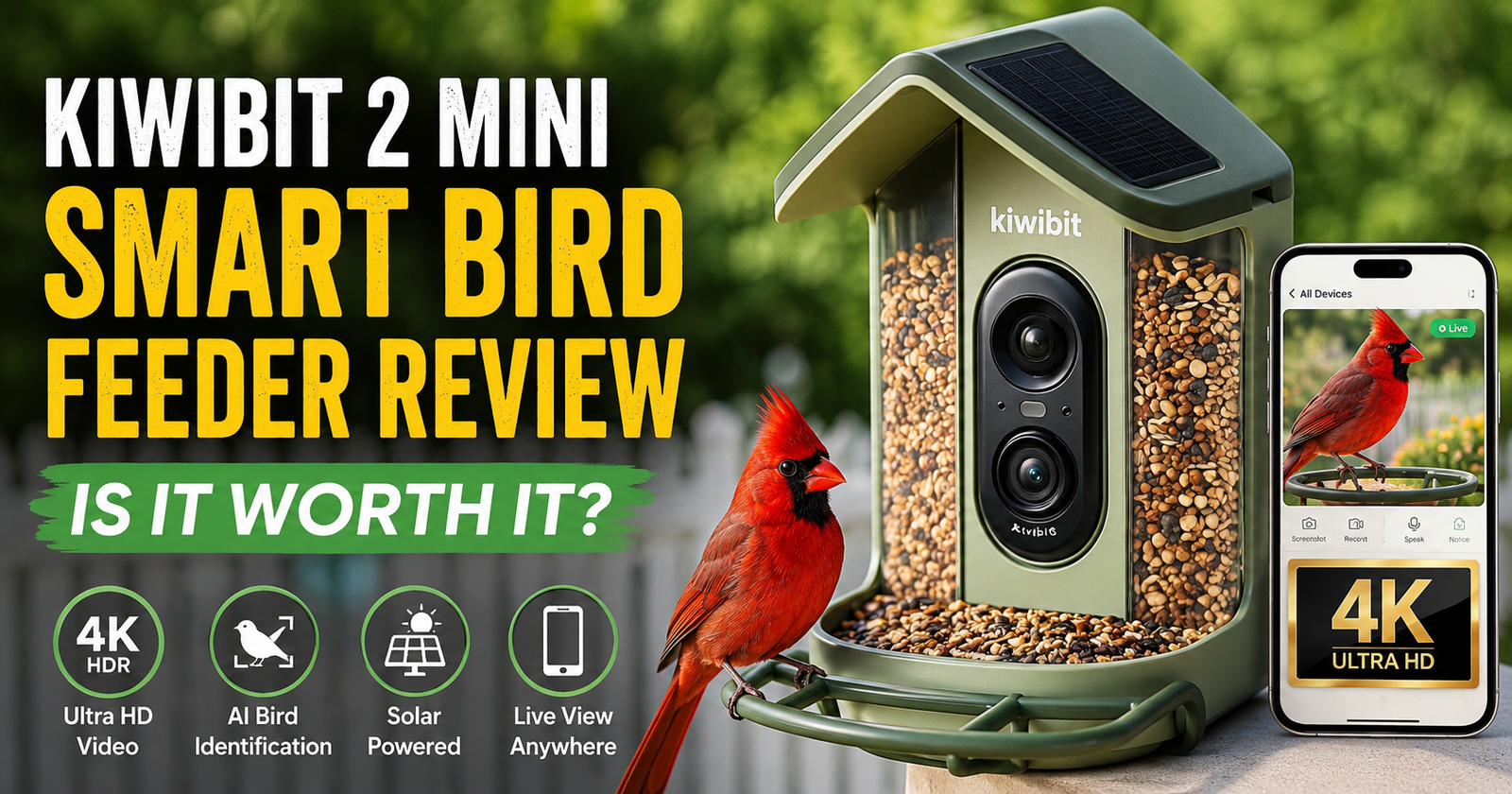
A cheap outdoor camera pointed toward the feeder would make this even easier. A product such as Kiwibit feeder camera can help you observe whether birds are visiting when you are not watching.
You might discover birds are visiting when nobody is standing at the kitchen window.
There’s Another Possibility People Don’t Like Hearing
Your neighbor might simply have a better restaurant.
I’m serious.
Birds aren’t loyal customers.
If somebody three houses down suddenly puts out fresh black oil sunflower seed in a safer location with better cover, some birds may spend more time there.
That doesn’t mean you’ve permanently lost them.
It means wild animals are using the resources available to them.
I’d resist thinking of feeder birds as my birds.
They’re neighborhood birds.
Sometimes I’m the convenient stop.
Sometimes somebody else is.
If Every Species Vanished at Once, I’d Pay Attention
This is one distinction I’d actually write down.
Suppose I normally see:
cardinals,
chickadees,
finches,
Mourning Doves,
Blue Jays,
and woodpeckers.
Then suddenly everything disappears on the same day.
That feels different from goldfinches gradually becoming less common over several weeks.
An abrupt disappearance across many species makes me think more about:
a predator,
a major disturbance,
something wrong with the feeding station,
or a sudden environmental change.
A gradual seasonal change makes me think more about natural food, migration, weather, and changing dietary needs.
It’s not a perfect diagnostic rule.
But it’s a useful way to organize what I’m seeing.
I’d Check What Changed Around the Yard
Sometimes the answer isn’t food at all.
Did a tree come down?
Did you remove shrubs?
Did construction start next door?
Did somebody start running equipment nearby?
Did a new dog move into the yard beside yours?
Project FeederWatch specifically identifies habitat changes such as tree removal and new construction as reasons local bird numbers can change.
We tend to think birds visit a feeder because of the feeder.
But they’re evaluating the whole area.
Food.
Cover.
Escape routes.
Predators.
Noise.
Perches.
Change the surroundings and the exact same feeder may suddenly feel different to a bird.
One Thing That Would Make Me Stop Feeding Temporarily
Sick birds.
If I noticed birds that looked unusually lethargic, had crusty or swollen eyes, struggled to perch, or if dead birds began appearing around the feeding area, I wouldn’t treat that as an ordinary feeder slump.
I’d stop and investigate.
Feeders concentrate birds in one location, which can help diseases spread.
That’s very different from:
Nobody ate sunflower seeds today.
A quiet feeder by itself usually isn’t evidence of disease.
Actual sick or dead birds are what would make me take that possibility seriously.
My Seven-Day Quiet Feeder Test
Instead of changing everything, I’d give myself one week.
Day 1
Clean the feeder thoroughly.
Remove old food.
Refill with a small amount of fresh seed.
Photograph the seed level.
Day 2
Watch for twenty minutes in the morning.
Don’t stare only at the feeder.
Look for birds and predators around the entire yard.
Day 3
Walk the property.
Look for natural food.
Watch whether birds are feeding somewhere else.
Day 4
Check the seed level against the photograph.
Look underneath for fresh hulls or droppings.
Day 5
Watch at a different time of day.
Day 6
Do nothing.
Seriously.
Don’t keep changing things.
Day 7
Compare everything you’ve noticed.
Maybe you’ve seen a hawk.
Maybe you’ve found birds hammering berries somewhere else.
Maybe the seed smelled stale.
Maybe birds actually visited when you weren’t watching.
Or maybe you still have no explanation.
That’s okay.
At least you’ve learned something instead of randomly buying another feeder.
What I Wouldn’t Do
I wouldn’t panic after two quiet days.
I wouldn’t keep pouring fresh seed on top of old seed.
I wouldn’t immediately move every feeder.
I wouldn’t assume the local birds died.
And I wouldn’t assume they became dependent on my feeder and are now starving somewhere.
Audubon notes that seed feeders generally provide supplemental food. Birds normally use multiple food sources and can shift elsewhere when a feeder is unavailable.
That’s reassuring.
We’re helping them.
We’re also getting an incredible opportunity to watch them.
But they’re still wild birds.
Common Questions When Birds Stop Coming to Feeders
Why did all my birds suddenly disappear?
An abrupt disappearance makes me look first for a predator, disturbance, or problem with the feeder or food. Natural bird numbers also fluctuate, so watch the surrounding yard before assuming something serious happened.
Can a hawk make every bird leave my feeder?
Yes. Project FeederWatch specifically notes that bird-eating hawks can temporarily reduce feeder activity. Birds often return after the predator moves on.
Will birds stop eating old birdseed?
They may avoid stale, moldy, wet, or insect-infested seed. Penn State recommends checking seed quality when feeder activity drops.
Why is my feeder quiet when there are still birds in the yard?
Natural food may simply be more attractive. Birds use feeders as supplemental food sources and change their feeding habits as natural foods become available.
Did my birds move to somebody else’s feeder?
They certainly can use other feeding stations. Wild birds move around and aren’t dependent on one backyard feeder.
Should I move my feeder when birds disappear?
Not immediately. I’d first check seed freshness, cleanliness, predators, natural food, and recent changes around the yard. Moving the feeder adds another variable before you know what’s wrong.
How long should I wait for birds to come back?
There isn’t one exact timeframe because the cause matters. A temporary predator disturbance may resolve quickly, while seasonal changes in natural food can alter feeder activity for weeks.
The Empty Feeder Finally Taught Me Where to Look
The biggest lesson for me isn’t really about feeders.
It’s about paying attention to everything around them.
When a feeder suddenly goes quiet, it’s incredibly tempting to focus on the plastic tube hanging from the pole.
But the answer might be fifty feet away.
A hawk sitting silently in a tree.
A cat underneath a shrub.
A patch of ripe berries.
A field full of seeds.
A tree that disappeared from the neighbor’s yard.
Or a feeder full of seed that isn’t nearly as fresh as it looks.
That’s why an empty feeder doesn’t immediately tell me something is wrong with the birds.
It tells me to start watching.
And sometimes figuring out why the birds disappeared teaches me considerably more about them than watching them eat ever did.
Jonah Mercer is a Backyard Bird Behavior Contributor for BirdResource.com, where he writes about the odd little moments around feeders, yards, and farms that make you stop what you’re doing and wonder what the birds are actually up to.