
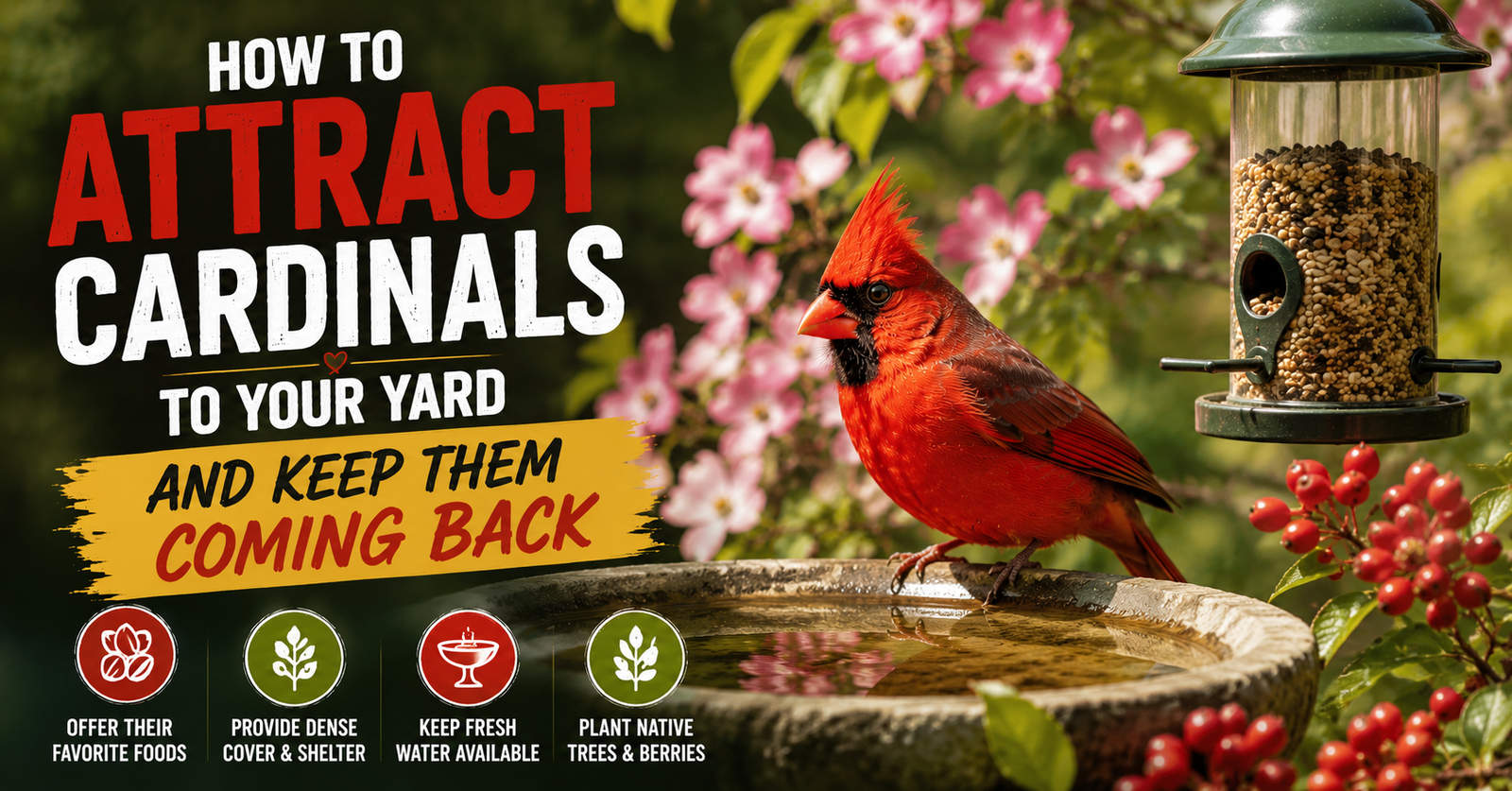
Northern Cardinals are actually one of the easier backyard birds to attract if they already live in your area. The trick is that I wouldn’t rely on a bird feeder alone.
Cardinals need food, water, protective cover, and places where they feel comfortable moving around. During breeding season, suitable nesting habitat becomes important too. The same protective cover that makes a yard attractive during the day can also provide cardinals with nighttime roosting places.
If I wanted to make a yard more attractive to cardinals, I’d concentrate on five things first: sunflower seed, a feeder they can comfortably use, clean water, dense vegetation, and a yard that provides natural food as well as feeder food.
You don’t need a giant property or an elaborate bird sanctuary to get started.
Sometimes relatively simple changes can turn a yard that cardinals occasionally pass through into one they use much more regularly.
Start With Food Cardinals Actually Want
One of the quickest ways to encourage cardinals to spend time where you can see them is to offer food they readily eat.
Black oil sunflower seed would be my first choice.
Cardinals have thick, powerful bills that handle sunflower seeds easily, and sunflower is one of the most dependable foods for bringing them to backyard feeders.
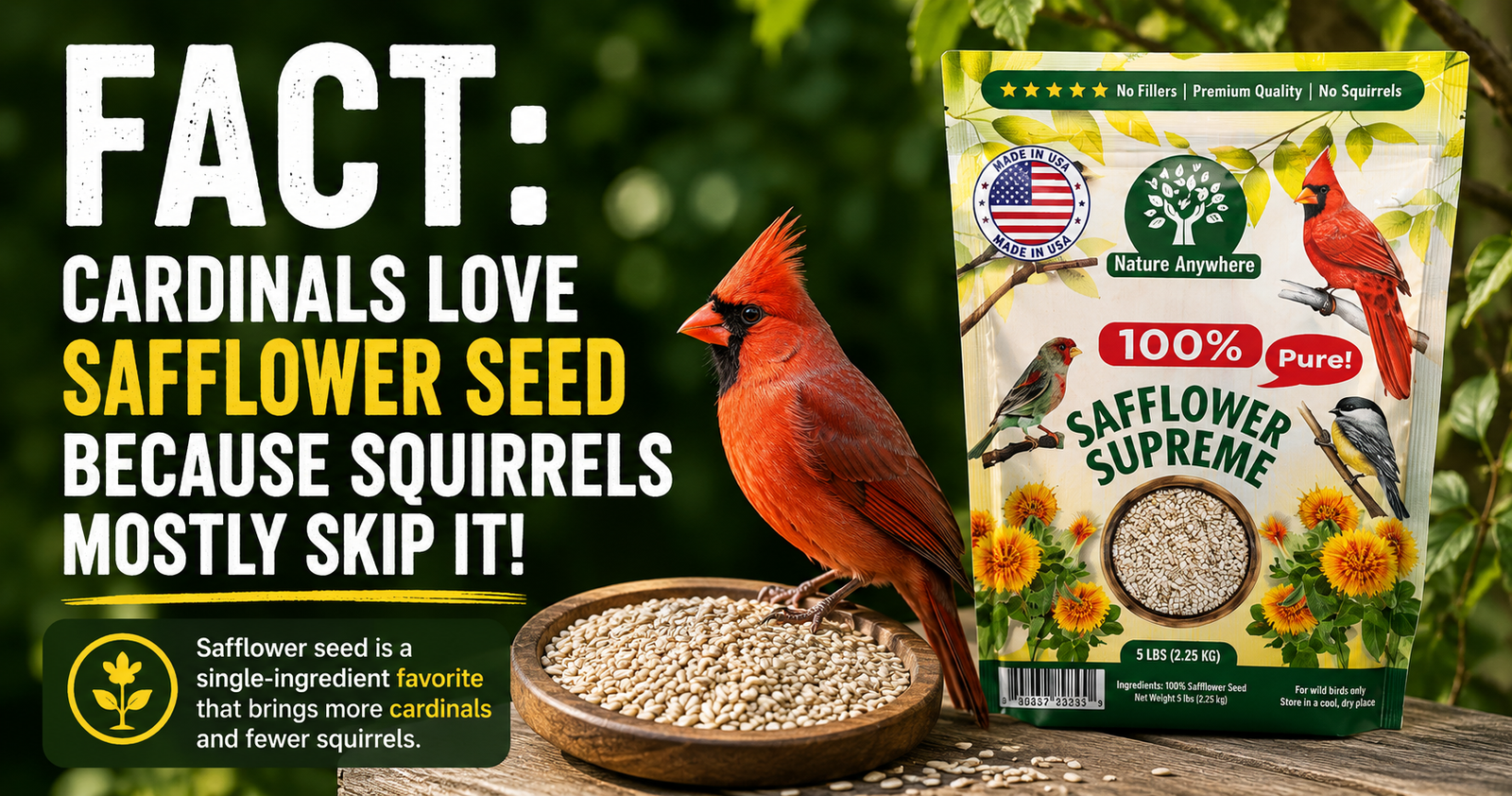
Safflower is another good option.
Sunflower hearts or chips can work well too, especially if you want less shell debris accumulating underneath your feeders.
But I wouldn’t get carried away buying five different bags of birdseed on day one.
Start with a good food, see what the birds actually use, and build from there.
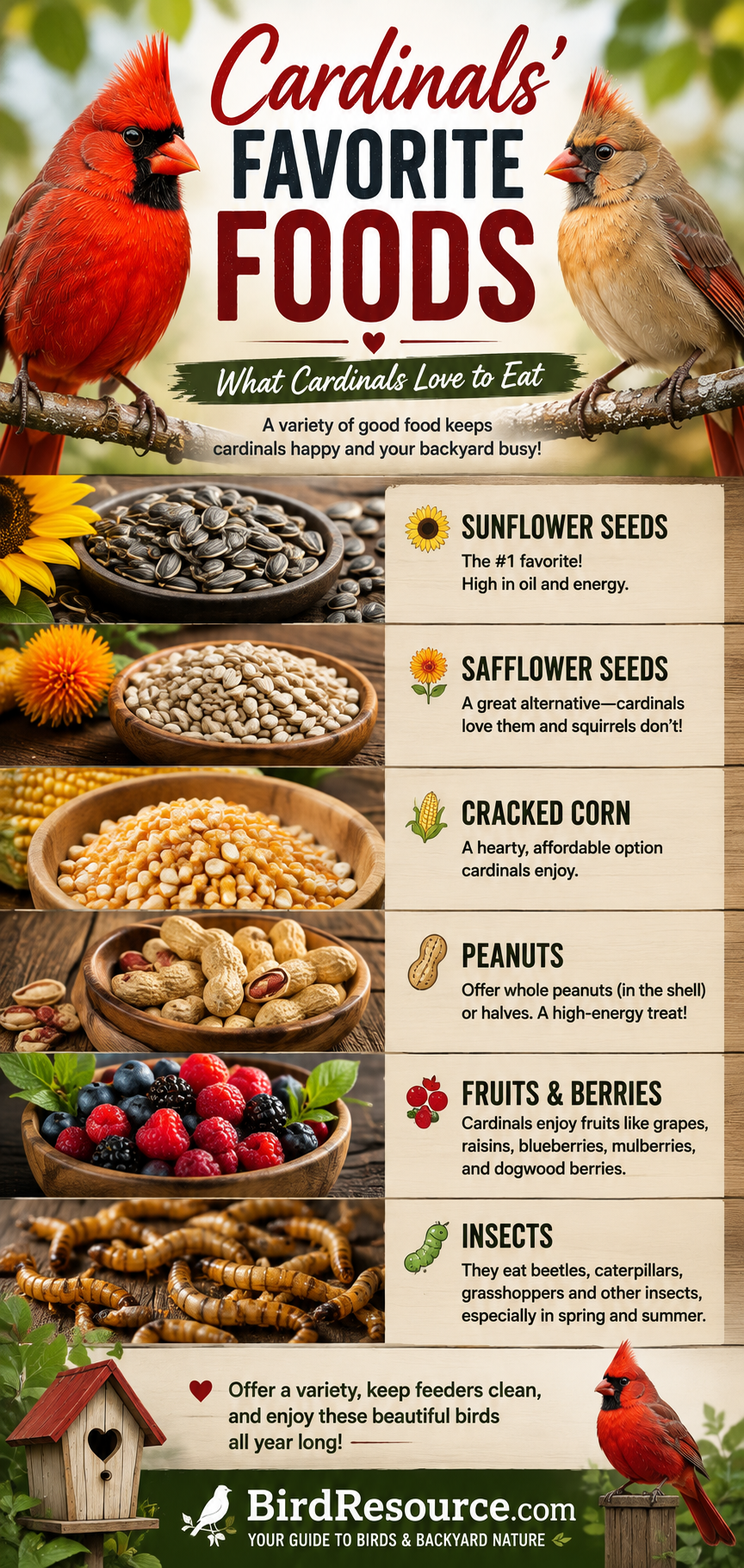
Our complete guide to what cardinals eat goes much deeper into sunflower, safflower, fruits, insects, mealworms, peanuts, seasonal diets, and foods I wouldn’t make a regular part of their diet.
Black Oil Sunflower Seed Is Hard to Beat

If someone asked me to choose one feeder food specifically to start attracting Northern Cardinals, I’d choose black oil sunflower seed. Readers comparing suitable foods can also review a cardinal seed option alongside black oil sunflower seed.
It isn’t exclusive to cardinals.
That’s actually part of its appeal.
Chickadees, titmice, finches, nuthatches, and several other familiar backyard birds readily use sunflower seed too. A sunflower feeder can become one of the busiest feeding locations in a yard.
Cardinals are particularly well equipped to handle the seeds with their large conical bills.
There’s another benefit to starting simple.
If you put out a complicated inexpensive seed blend containing several grains and the cardinals ignore it, you won’t necessarily know which ingredient is the problem.
A straightforward sunflower offering gives you a much cleaner starting point.
The Feeder Matters More Than People Realize
You can have excellent birdseed and still make feeding awkward for a cardinal.
Northern Cardinals are medium-sized songbirds. They need more room than a tiny finch.
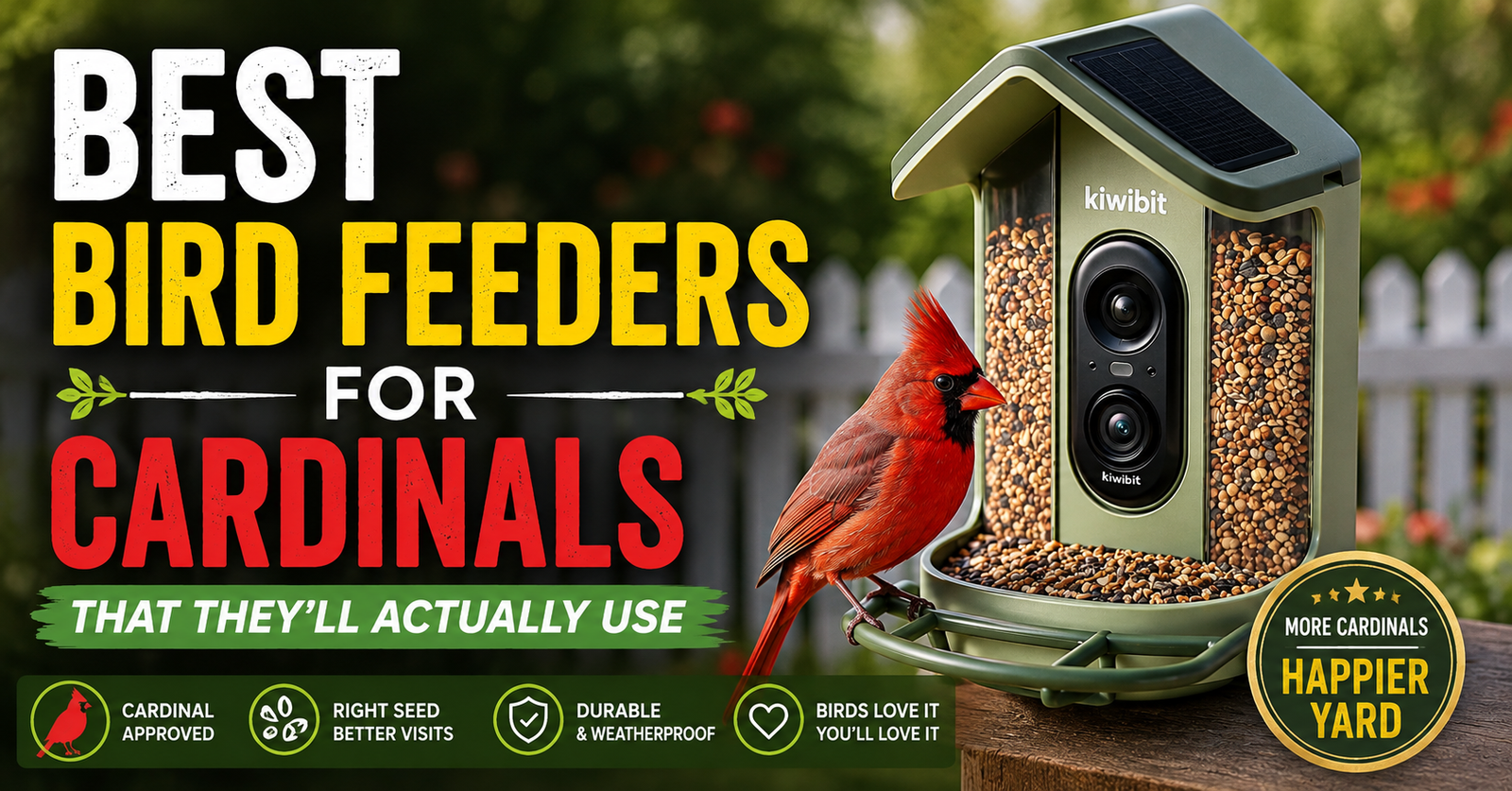
A feeder designed around very small perches may technically allow a cardinal to reach the seed, but that doesn’t mean the bird will use it comfortably. A closer look at cardinal-friendly feeder designs can help you avoid choosing a feeder that technically works but feels awkward for the birds.
I prefer a setup that gives cardinals enough room to land, balance, and feed naturally.
Hopper feeders can work very well.
Platform and tray-style feeders can also be attractive to cardinals.
Some tube feeders work perfectly fine when they have adequate perches or a tray around the bottom.
This is exactly why our upcoming feeder reviews won’t simply rank whichever Amazon products have the highest star rating.
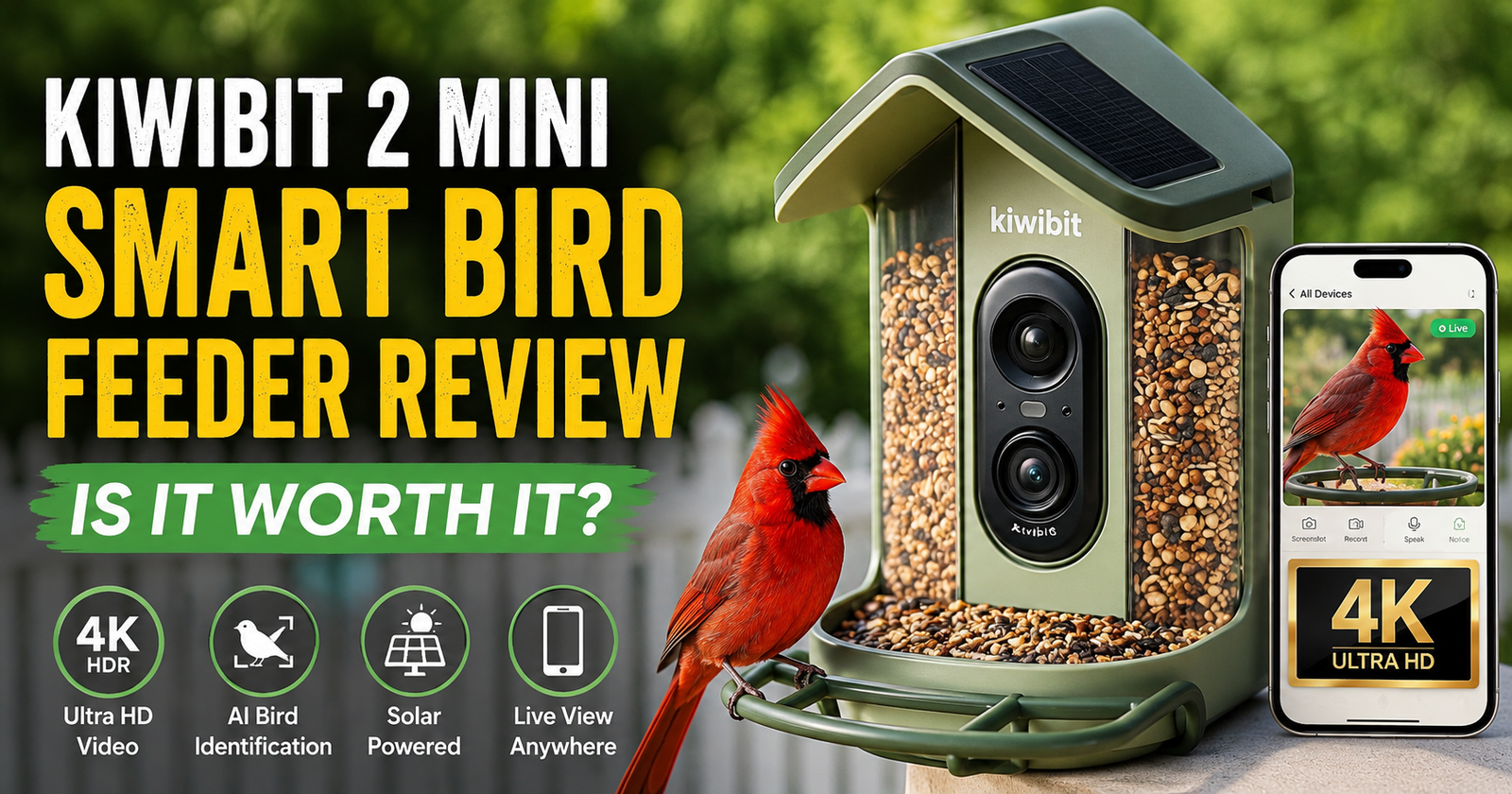
For a cardinal feeder, I’ll be looking specifically at usable perch space, dimensions, seed compatibility, cleaning, weather protection, construction, squirrel resistance, and how practical the design actually is for a bird the size of a Northern Cardinal. A camera-equipped option adds another dimension to those practical considerations, as discussed in this smart feeder design and features.
Cardinals May Eat Under Your Feeder Too
Don’t assume the feeder itself is failing because a cardinal keeps eating underneath it.
Cardinals naturally forage on and near the ground.
When chickadees, finches, and other birds knock sunflower seeds from a feeder, a cardinal may happily clean up below.
I’ve always found this useful to remember because we tend to judge bird feeders from a human perspective.
We think:
The food is inside the feeder, so that’s where the bird should eat.
The cardinal doesn’t care.
If perfectly good seed is sitting underneath it, that’s food too.
What I wouldn’t allow is a thick layer of old seed, hulls, waste, and droppings to accumulate indefinitely.
Keep the area reasonably clean so ground feeding doesn’t turn into feeding among spoiled seed.
Give Cardinals Water
Food gets almost all the attention when people try to attract birds.
Water deserves more.
Cardinals need water for drinking and bathing, and a bird bath can bring birds into a yard that aren’t interested in whatever happens to be inside your feeder.
I like a relatively shallow bird bath rather than something resembling a deep decorative pond.
Audubon notes that typical bird baths are generally no deeper than about two inches in the middle, with shallower areas toward the edges, and that this depth works for larger birds including cardinals.
The water needs to be maintained, though.
A bird bath filled with dirty stagnant water isn’t an upgrade.
Refresh it regularly and clean the bath as needed.
Moving Water Can Make a Bird Bath More Noticeable
A simple bird bath can work perfectly well.
But movement can make water easier for birds to notice.
A dripper, bubbler, small fountain, or other gentle movement creates sound and visual activity that can draw attention to the water source.
I wouldn’t turn the bath into a miniature whitewater river.
Cardinals need somewhere comfortable to drink and bathe.
The goal is simply to make clean water available and noticeable.
This can also expand the variety of birds you see because not every species visiting water will necessarily visit your seed feeders.
Don’t Forget Water During Winter
Cardinals remain within their range throughout the year rather than migrating south for winter.
That makes winter water especially interesting.
Food can actually be easier for us to provide than liquid water once temperatures remain below freezing.
A heated bird bath or properly designed bird-bath heater can keep water available during cold weather.
This will eventually be another product category I want BirdResource.com to examine carefully.
Electrical products sitting outside around water deserve more scrutiny than a quick affiliate recommendation. When we review heated bird baths, we’ll pay attention to outdoor ratings, thermostatic operation, construction, cord design, cleaning, durability, and manufacturer instructions.
Dense Shrubs Can Make a Huge Difference
If your yard is nothing but an open lawn with a feeder planted in the middle, you’re providing food without much habitat.
Northern Cardinals have a strong association with dense, brushy vegetation.
Shrubs, thickets, vines, woodland edges, and similar cover give them places to move, forage, hide, and potentially nest.
Cornell specifically recommends leaving some backyard undergrowth if you want cardinals nesting on your property.
This is one of the easiest ways to understand the difference between feeding cardinals and attracting cardinals.
Feeding is one part.
Habitat is the bigger picture.
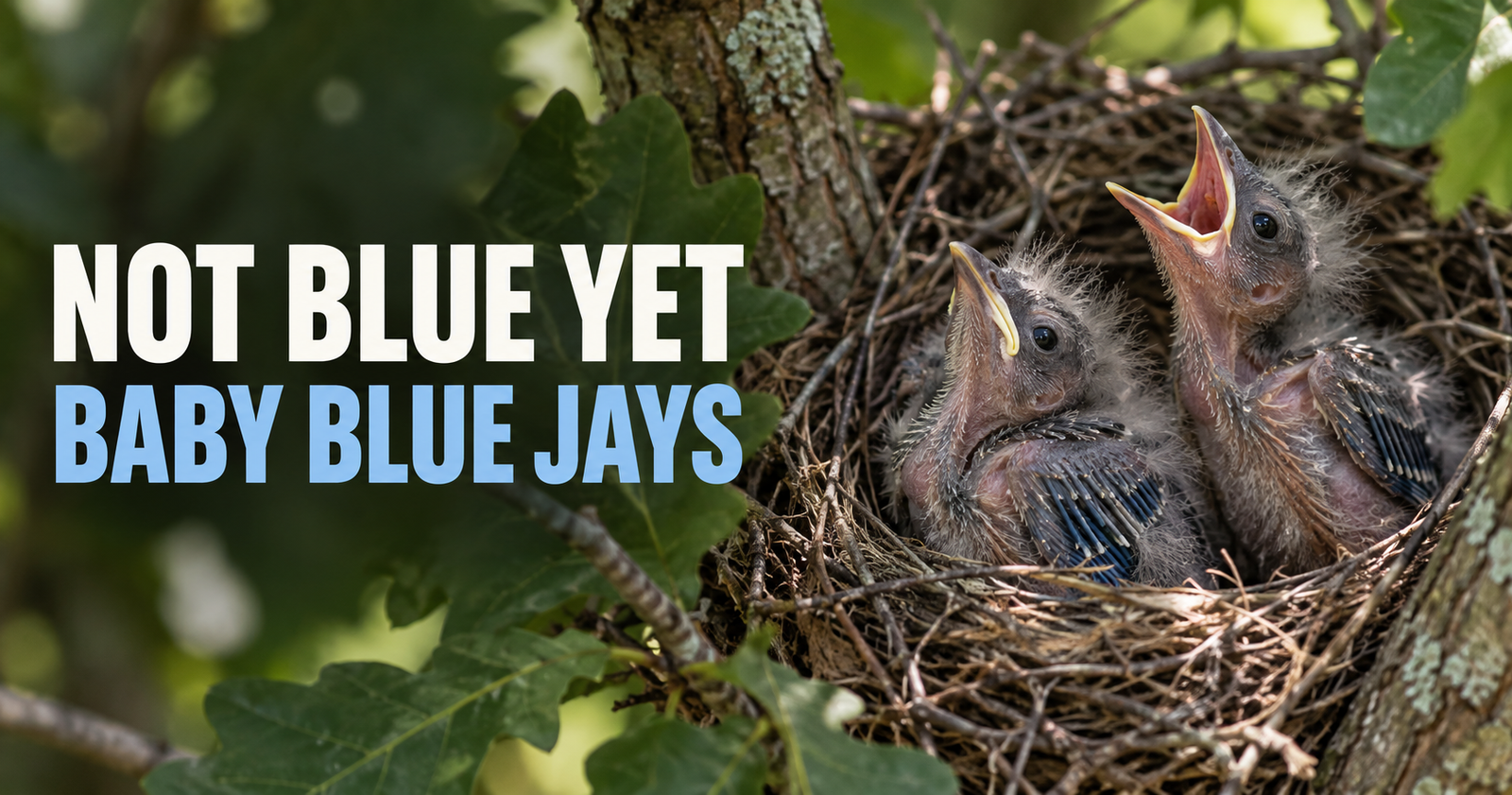
Don’t Make Every Corner of the Yard Perfectly Neat
This can be difficult for people who love a perfectly manicured landscape.
Birds don’t necessarily share our landscaping preferences.
Leaving some natural vegetation, leaf litter, seed heads, and brush can create feeding and shelter opportunities that disappear when every plant is cut back and every fallen leaf is removed.
Audubon’s current cardinal guidance specifically recommends leaving dead leaves and seed-producing perennial growth available as part of backyard habitat.
I’m not suggesting you let the entire property become an overgrown mess.
There’s a middle ground.
A maintained yard can still have natural corners, shrub borders, native planting beds, and less-disturbed areas where wildlife gets something useful from the landscape.
Native Plants Can Do Several Jobs at Once
This is where I think backyard birding gets much more interesting.
A bag of birdseed does one obvious thing.
The right plant can do several.
Native plants can provide fruits or seeds.
They can support native insects.
They can provide cover.
Shrubs can create nesting structure.
Vegetation can offer protected places for birds to move through the yard.
Audubon recommends native plants because they can provide birds with food, shelter, nesting structure, and the insects that are especially important when birds are raising young.
So if you’re serious about seeing more cardinals, I’d eventually look beyond what you can hang from a shepherd’s hook.
What Plants Attract Cardinals?
There isn’t one perfect cardinal plant for every yard in America.
That’s important.
Native status, climate, soil, moisture, available space, and the cardinal’s local range all matter.
But there are useful groups of plants to consider.
Audubon specifically highlights native sunflowers, elderberries, and serviceberries for cardinals and related birds.
Dense native shrubs can be valuable for another reason.
They don’t only produce food.
They can create the protected structure cardinals prefer for nesting and shelter.
I’d rather choose plants appropriate to the reader’s region than publish one generic list and pretend every plant belongs in every American backyard.
Grow Some of the Food Instead of Buying All of It
This is one of my favorite parts of creating bird habitat.
Not every bird meal needs to come from a bag.
Native sunflowers can produce seeds.
Fruiting shrubs can produce berries.
Plants support insects.
Seed heads left standing can continue supplying food.
And those resources don’t require a cardinal to visit one specific feeder to use them.
A bird can forage naturally throughout the property.
This also makes the yard useful when your feeder happens to be empty.
Insects Matter More Than You Might Think
If you watch an adult cardinal cracking sunflower seeds all winter, it’s easy to think of cardinals almost entirely as seed eaters.
Then breeding season arrives.
Cardinal parents feed their young primarily insects and other invertebrates.
That changes how I think about a “cardinal-friendly” yard.
A property that has sunflower seed but almost no insect life isn’t providing the same resources as a more complete habitat.
Native plants can help support the insects birds rely on, especially during breeding.
This doesn’t mean you need to love every bug in your yard.
It means insects are part of the food web that supports the birds you’re trying to attract.
If You Want Baby Cardinals, Think Beyond the Feeder

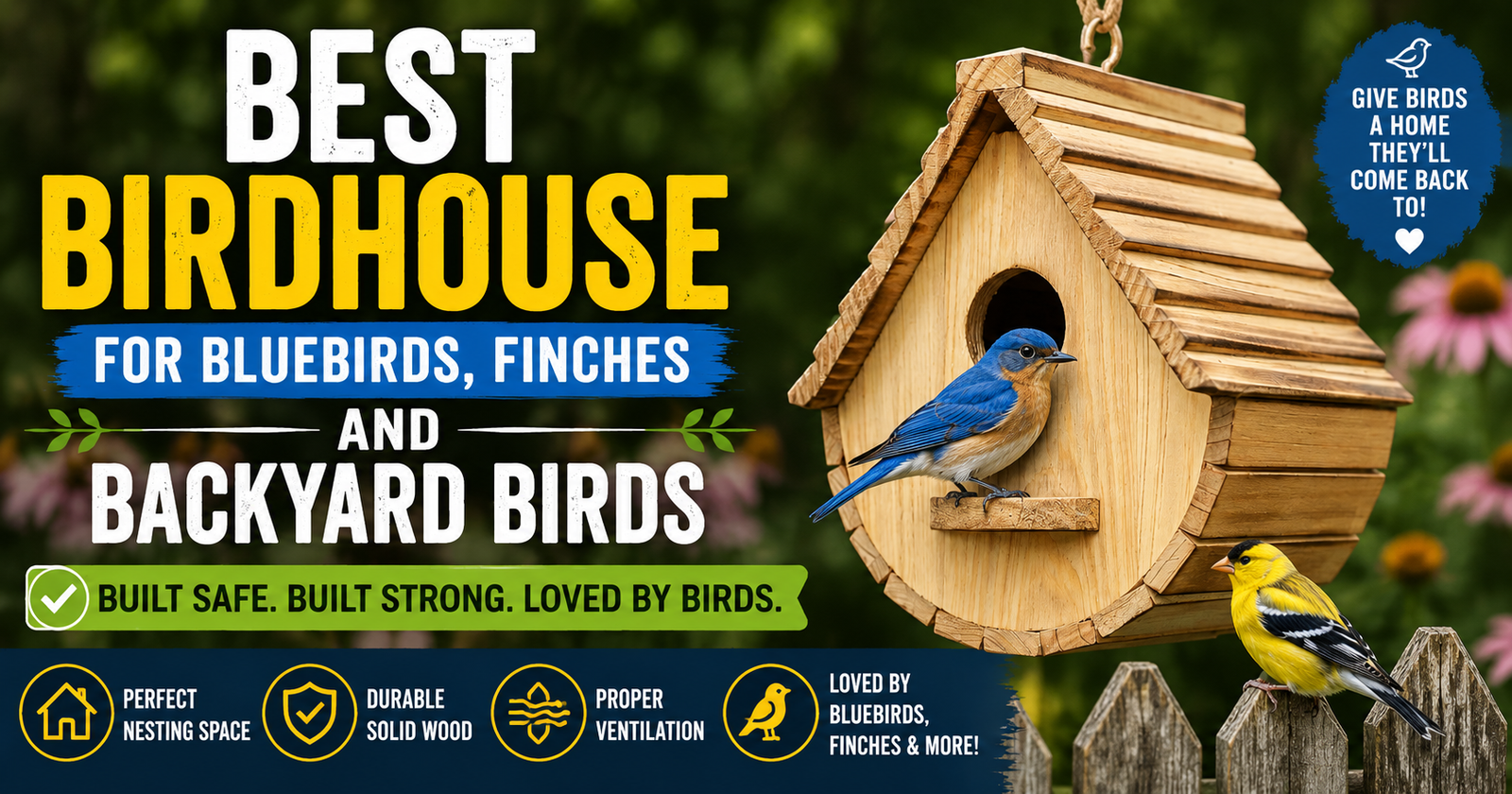
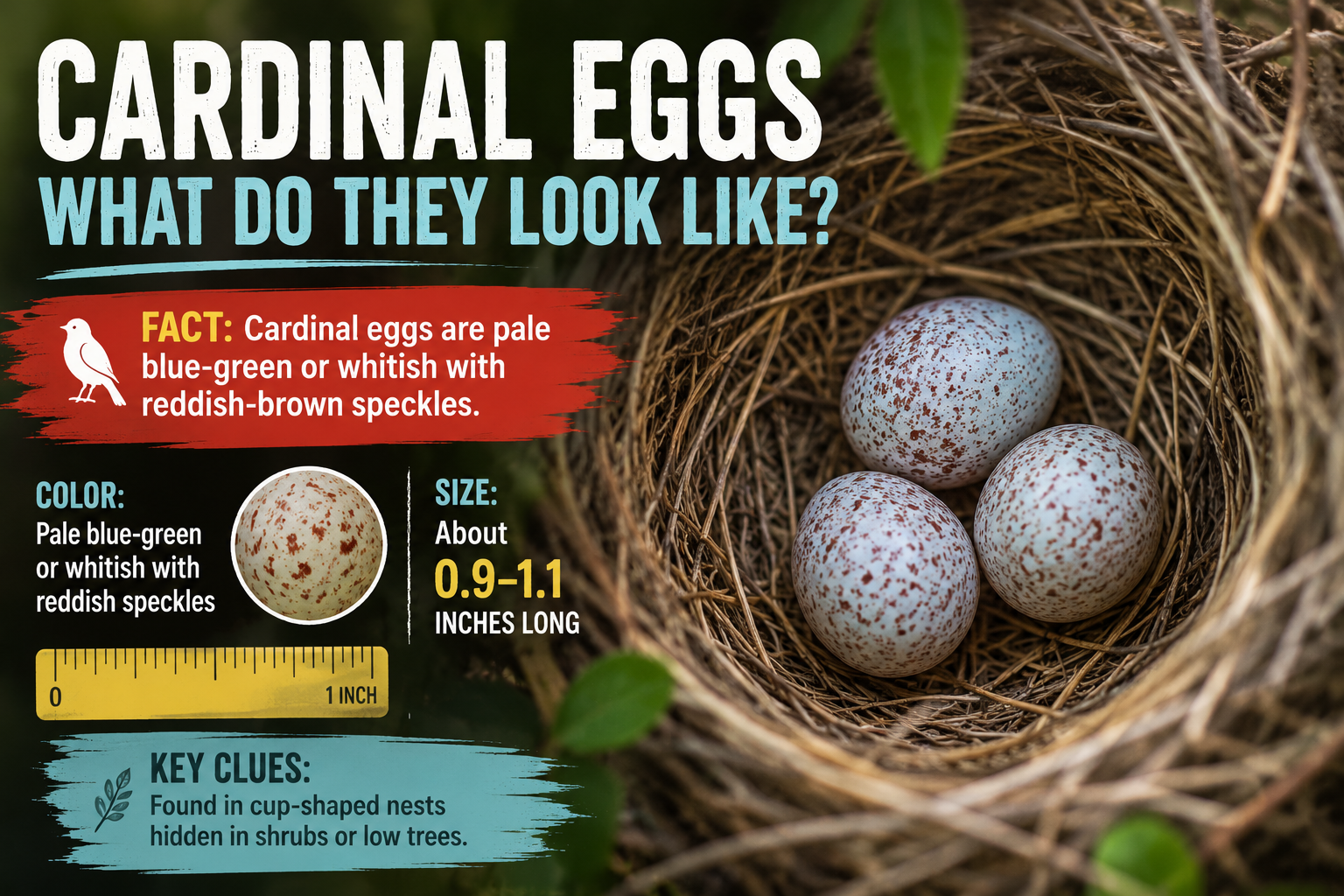
Attracting an adult cardinal to a feeder and encouraging a pair to nest nearby are two different goals. If nesting is part of your goal, a wooden birdhouse for cardinals may be a natural product category to research alongside suitable shrubs and other cover.
Northern Cardinals build open-cup nests rather than nesting inside typical enclosed birdhouses.
They commonly place nests in dense shrubs, vines, thickets, and low trees.
So adding three traditional birdhouses isn’t necessarily going to convince a cardinal pair to move in.
Vegetation matters much more.
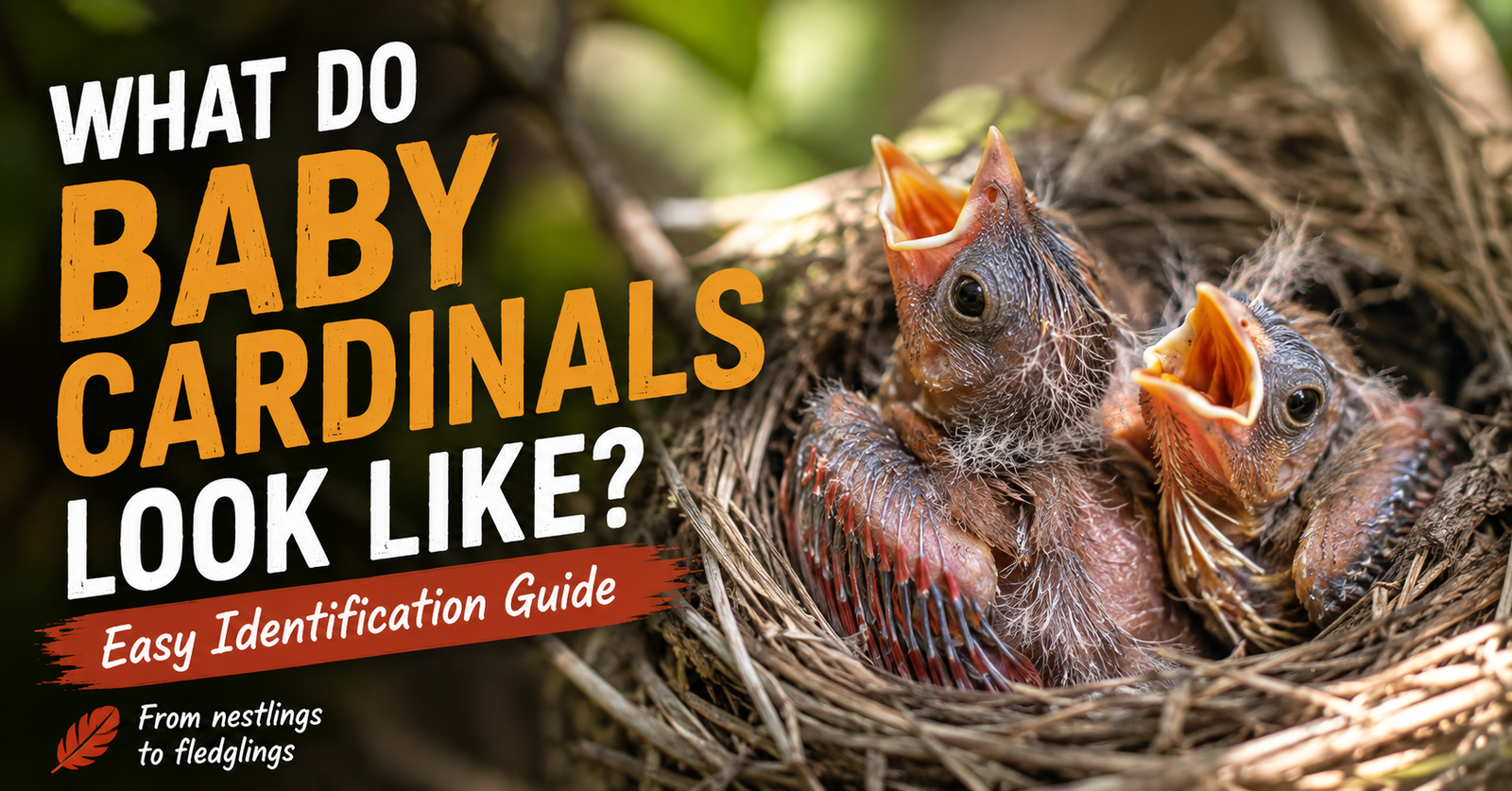
And if a pair does nest nearby, the young won’t come out looking like miniature red cardinals.
Our baby Northern Cardinal identification guide shows how dark juvenile bills, brownish plumage, developing crests, and fledgling behavior can help you recognize the youngsters once they begin appearing around the yard.
Don’t Disturb a Cardinal Nest to Keep Them Around
Finding a nest is exciting.
It’s also when I’d start backing off.
Repeatedly approaching the nest for photographs or checking the babies several times a day creates unnecessary disturbance.
You don’t need to inspect the nest to enjoy having cardinals raise a family nearby.
Watch the parents instead.
You may see adults carrying nesting material.
Later, they begin disappearing into the same shrub with food.
Eventually, fledglings appear.
You can watch an enormous amount of cardinal family behavior without putting your face over the nest.
Cardinal Pairs Can Keep Your Yard Busy All Summer
Northern Cardinals can raise multiple broods during a breeding season.
That means a yard providing useful nesting habitat and food can host a surprising amount of activity.
You may see courtship feeding early in the season.
Then nest building.
Then adults carrying insects.
Later, fledglings begin following their parents.
The male may continue caring for young while the female moves toward another nesting attempt.
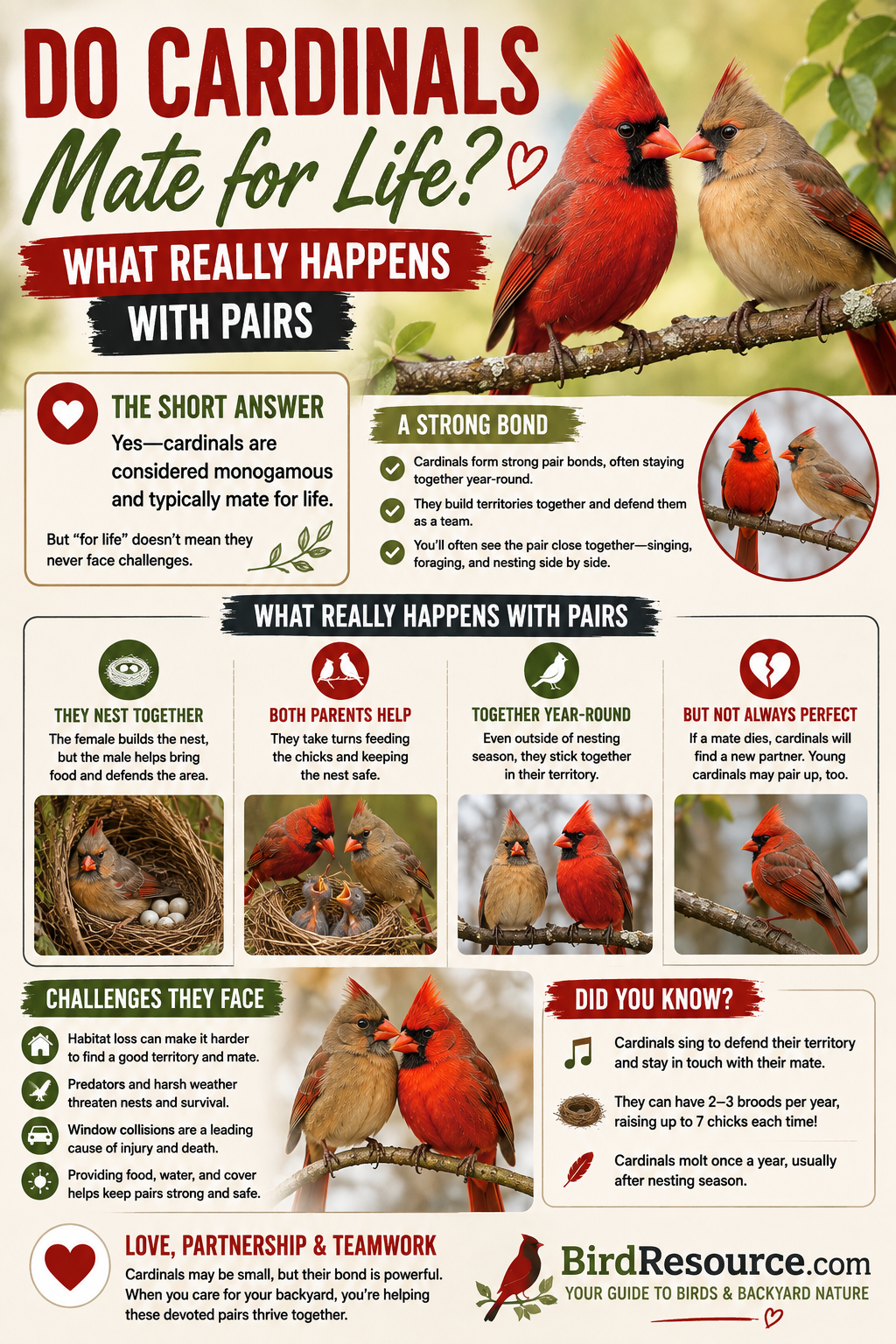
Our guide explaining what really happens with cardinal mates and pair bonds digs into those relationships, including courtship feeding, nesting roles, parental care, and why saying every cardinal pair automatically stays together for life is too simplistic.
Once you recognize those behaviors, attracting cardinals becomes more interesting than simply counting feeder visits.
Where Should I Put a Cardinal Feeder?
I want the feeder somewhere birds can access comfortably while having useful cover reasonably nearby.
Cardinals like brushy habitat.
A feeder near appropriate shrubs can allow a bird to retreat quickly rather than crossing a huge open area every time it wants food.
But don’t blindly push the feeder directly into dense vegetation.
You also need to think about predators.
A feeder shouldn’t create an easy ambush point for outdoor cats or other predators.
Windows matter too.
The safest feeder placement depends partly on the structure of your yard and house, so we’ll eventually build a dedicated feeder-placement guide rather than reducing it to one universal distance rule.
Keep Cats Away From Feeding Areas
If you want to attract birds, predator safety needs to be part of the plan.
Cardinals spend plenty of time low to the ground.
They forage beneath feeders.
They use shrubs.
Fledglings can spend time low in vegetation while they’re still developing their flying skills.
That makes free-roaming cats a serious concern.
Don’t create a beautiful feeding station and then unintentionally place it beside the perfect hiding location for a cat.
Think about what the setup looks like from ground level, not just from your kitchen window.
Make Your Windows Safer
Bringing more birds close to a house means we also need to think about glass.
Windows can reflect sky, trees, and vegetation in ways that birds perceive as open habitat.
Cardinals create another unusual window problem during breeding season.
A territorial male or female can see its own reflection and repeatedly attack it as though another cardinal has entered the territory.
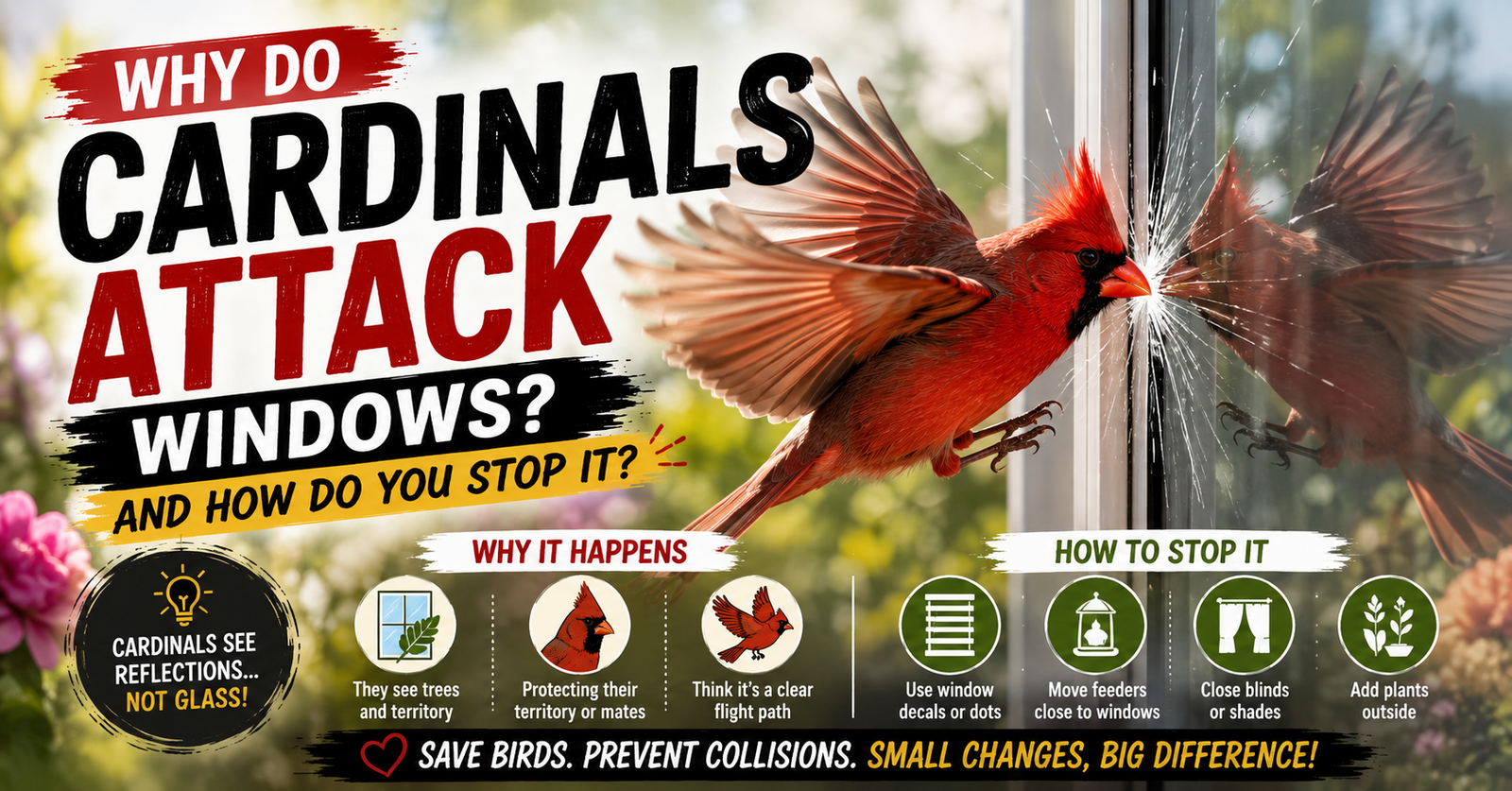
If that starts happening, our guide to why cardinals attack windows and how to stop them explains why exterior reflection treatments are usually more useful than repeatedly chasing the bird away.
Audubon also recommends making windows visible to birds as part of keeping backyard cardinals safe.
Attracting birds comes with some responsibility for reducing hazards around the places we’re encouraging them to visit.
Keep Cardinal Feeders Clean
A feeder full of excellent seed can still become a problem when it’s neglected.
Birds concentrate around feeding stations.
That means droppings, discarded seed, moisture, and repeated contact can create conditions where disease transmission becomes more concerning.
Clean feeders regularly.
Remove spoiled or moldy food.
Don’t keep dumping fresh seed on top of wet old seed.
Clean underneath heavily used feeding areas too.
Audubon specifically emphasizes regular feeder and bird-bath cleaning when attracting birds around homes.
I’d rather maintain two feeders properly than hang eight and let half of them become filthy.
Fresh Seed Matters
Birdseed isn’t immortal.
Heat, humidity, rain, and poor storage can damage it.
If seed smells bad, looks moldy, has become clumped with moisture, or is obviously spoiled, don’t expect the cardinals to appreciate your thriftiness.
Discard it.
Store bulk birdseed somewhere dry and protected from rodents.
And don’t buy six months’ worth simply because the giant bag has a lower price per pound if you can’t keep it fresh.
Sometimes buying the right amount is more economical than buying the largest amount.
Why Aren’t Cardinals Coming to My Feeder?
This is one of the first questions people ask after putting up a new feeder.
Give it time.
A wild bird doesn’t know that you purchased a feeder yesterday specifically for it.
Cardinals have established daily routines and natural feeding areas. It can take time for them to discover a new food source and begin using it consistently.
But if weeks pass without activity, I’d investigate the setup.
Is the feeder appropriate for a cardinal?
Is the food fresh?
Are cardinals actually common in your area?
Is the feeder exposed?
Are squirrels dominating it?
Is a cat hanging around underneath it?
Is there useful vegetation nearby?
Sometimes the problem isn’t the seed at all.
Make Sure Cardinals Actually Live Where You Are
This sounds obvious, but it’s worth saying.
You can’t attract a bird that doesn’t naturally occur in your region.
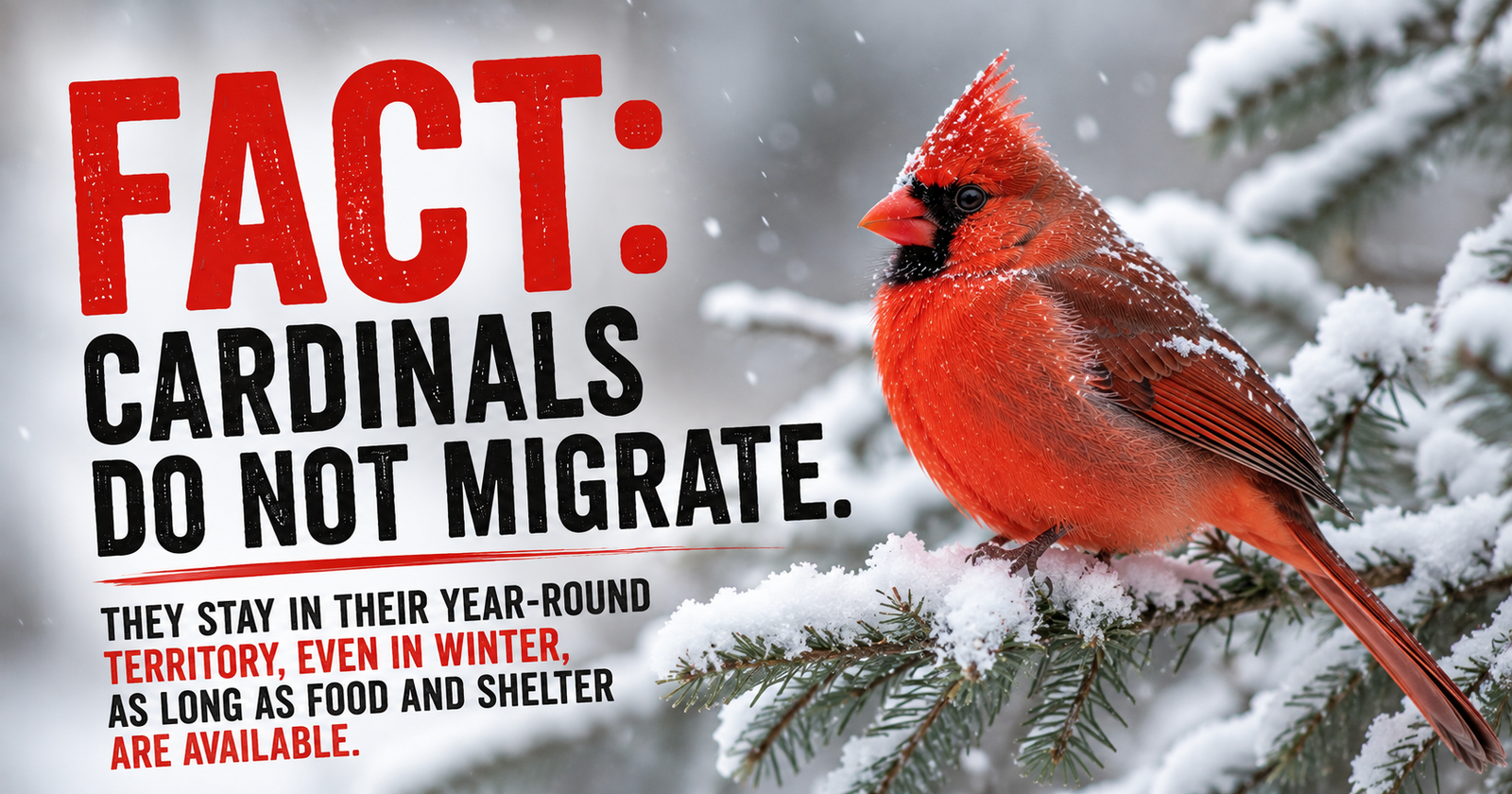
Northern Cardinals are widespread across the eastern United States and extend into parts of the Southwest, with their range reaching north into southeastern Canada. They are permanent residents throughout their established range.
If you’re outside their normal range, changing birdseed brands isn’t going to solve the problem.
Before spending money specifically to attract any bird species, make sure that bird reasonably occurs where you live.
Why Did My Cardinals Suddenly Disappear?
A quiet feeder doesn’t automatically mean you’ve done something wrong.
Bird activity changes.
Natural food availability changes.
Breeding changes daily routines.
Weather changes where birds spend their time.
Molting can make birds less conspicuous.
Local predators can temporarily alter behavior.
Seasonal social patterns change too.
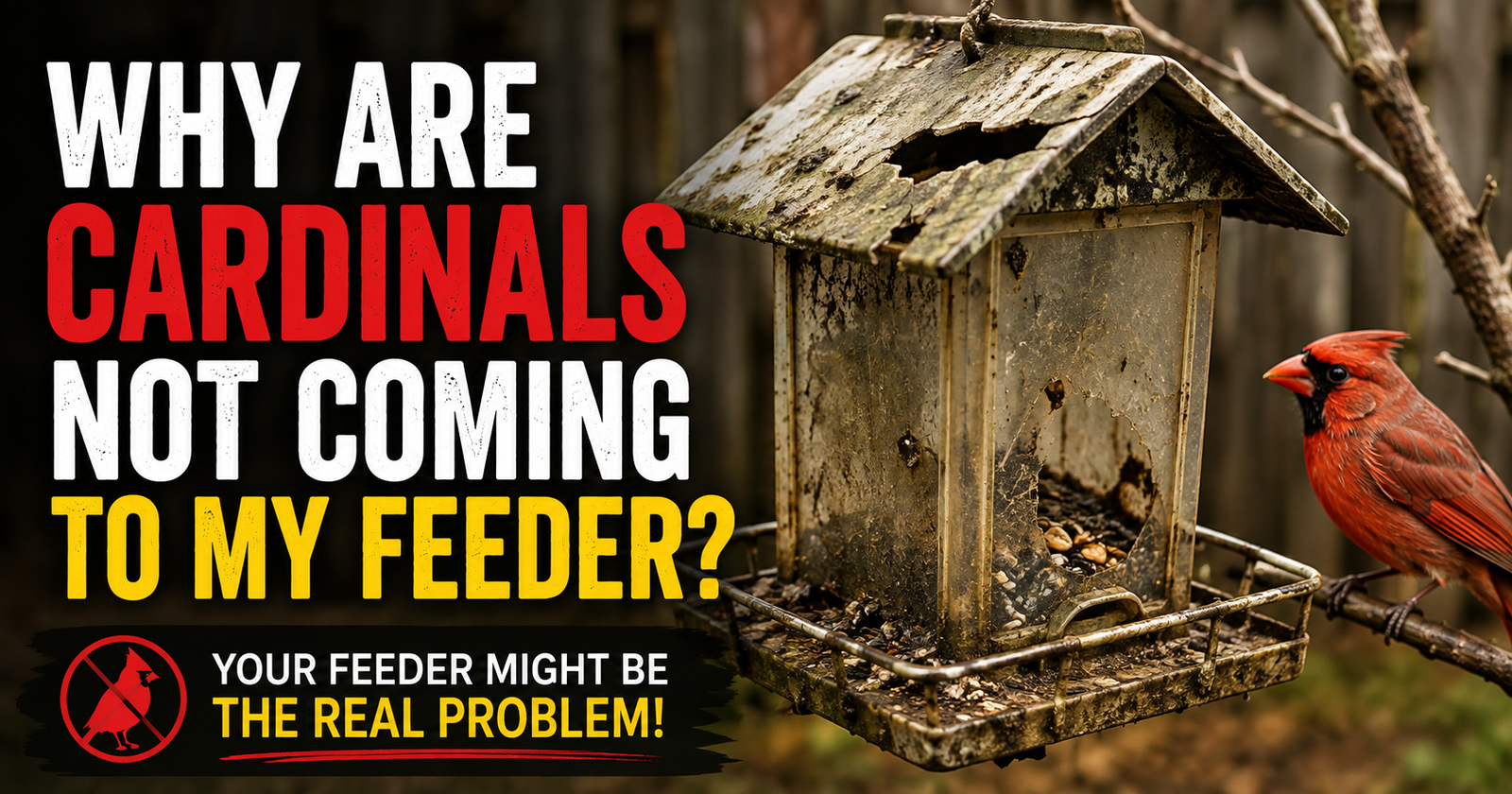
Cardinals may have abundant natural food available somewhere else and spend less time at your feeder.
This is important because people sometimes respond to a few quiet days by completely changing their feeding setup.
I’d observe first.
If the food is fresh, the feeder is clean, and nothing obvious has changed, give the birds some time.
We’ll eventually give this question its own full article because why cardinals suddenly disappear from a yard deserves more than a quick explanation.
Cardinals Won’t Necessarily Come Alone
If you create a good feeding setup, you’re probably going to attract more than Northern Cardinals.
That’s part of backyard birding.
Sunflower seed can bring chickadees, titmice, finches, nuthatches, and other birds.
Water can bring species that rarely touch your seed.
Native plants support even more wildlife.
If your only definition of success is “cardinals and absolutely nothing else,” you’re going to spend a lot of time fighting nature.
I’d rather create a healthy bird-friendly space and enjoy the variety while still making sure the feeder design and foods work particularly well for cardinals.
How Do I Attract More Than One Cardinal?
During breeding season, territorial behavior can limit how many adult cardinals comfortably share the same immediate area.
Outside breeding season, cardinals can become more social and may gather in groups.
If you have a larger yard, providing multiple feeding opportunities and substantial habitat can reduce some of the crowding around a single feeder.
But there’s no trick that guarantees ten cardinals will suddenly live on your property.
Local population, habitat, territory size, season, and food availability all matter.
The goal should be creating good habitat.
The birds decide how many of them use it.
Do Cardinals Come Back to the Same Yard?
Northern Cardinals are nonmigratory, so established birds can remain in the same general region throughout the year.
That makes repeat visits very possible.
A reliable food source, water, cover, and useful habitat can give cardinals reasons to keep using your property.
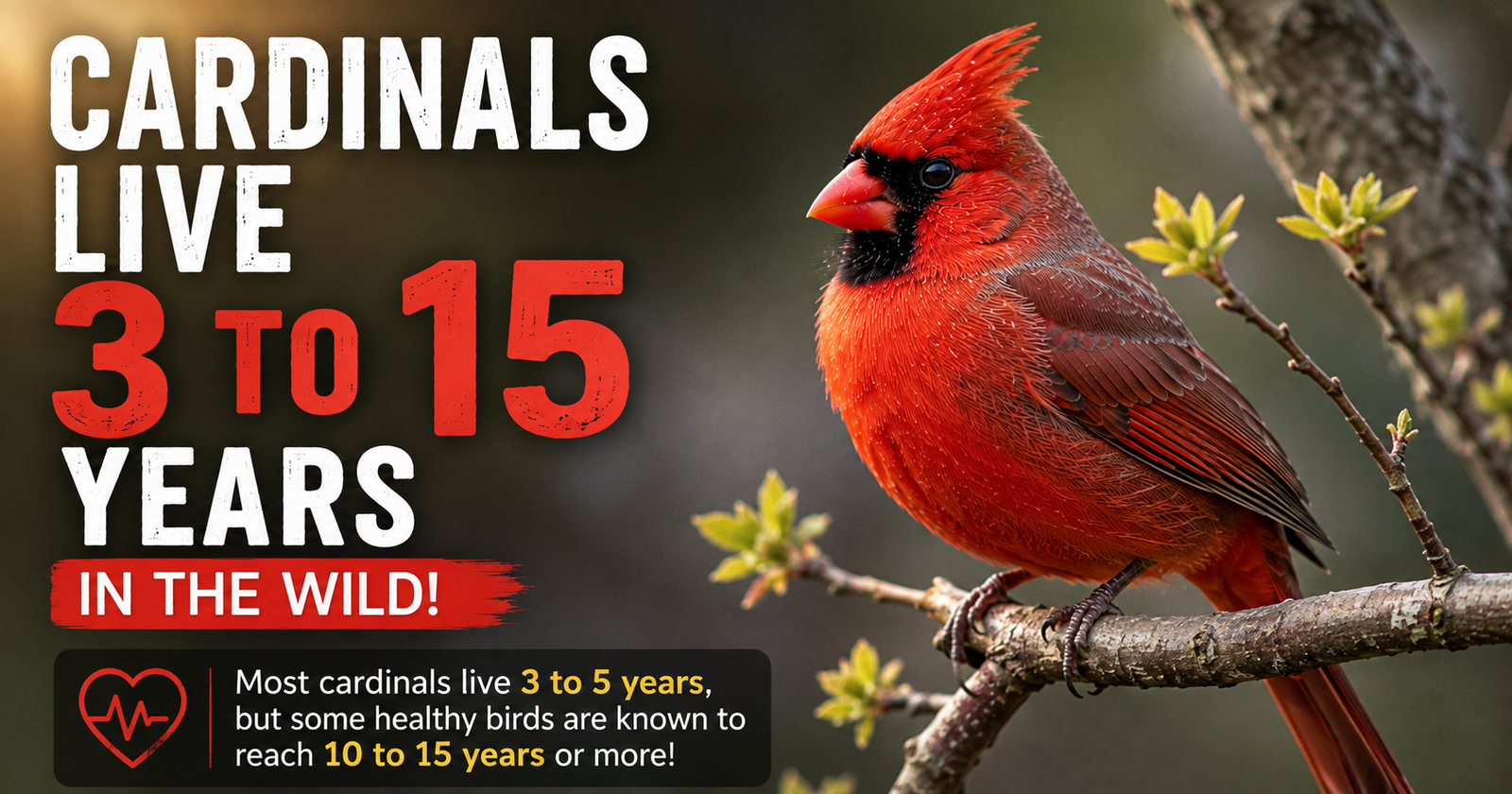
Still, I wouldn’t assume the red male you see this year is automatically the exact same individual you photographed three years ago. That uncertainty makes it useful to understand how long cardinals can live before trying to identify a returning bird by appearance alone.
Unmarked cardinals can be difficult to distinguish individually.
It’s perfectly reasonable to say cardinals keep returning to your yard.

It’s harder to prove you’re always seeing the same bird. For closer observation at a feeder, a camera feeder for cardinal watching may help you keep track of visiting birds.
Can I Attract Cardinals to a Small Yard?
Yes, provided Northern Cardinals live in the surrounding area and your space can offer useful resources.
A small yard doesn’t need to contain everything a cardinal uses throughout its entire day.
Your property exists within a larger landscape.
A bird may feed at your house, nest several properties away, drink somewhere else, and move through multiple yards.
That’s why even modest improvements can matter.
One good feeder, a clean bird bath, and some useful native vegetation can be a meaningful start.
Can I Attract Cardinals to an Apartment?
This depends heavily on your specific setting.
A balcony or patio within cardinal habitat can potentially receive visits, particularly if there are trees, shrubs, and other suitable habitat nearby.
But building rules, feeder restrictions, neighbors, seed debris, and the physical location of the apartment all matter.
A fifth-floor balcony surrounded by dense urban development isn’t equivalent to a first-floor patio beside a wooded courtyard.
If feeding isn’t practical, appropriate container-grown native plants or water may still add some habitat value depending on the space.
Never create a feeding setup that dumps seed and waste onto people or property below you.
Do Cardinals Use Birdhouses?
Not conventional enclosed nest boxes.
Northern Cardinals are open-cup nesters.
They typically choose dense vegetation rather than entering a birdhouse through a small round hole like a chickadee or bluebird.
This is one of the most common mistakes people make when trying to encourage cardinals to nest.
Buying a cute “cardinal birdhouse” doesn’t mean a cardinal will use it.
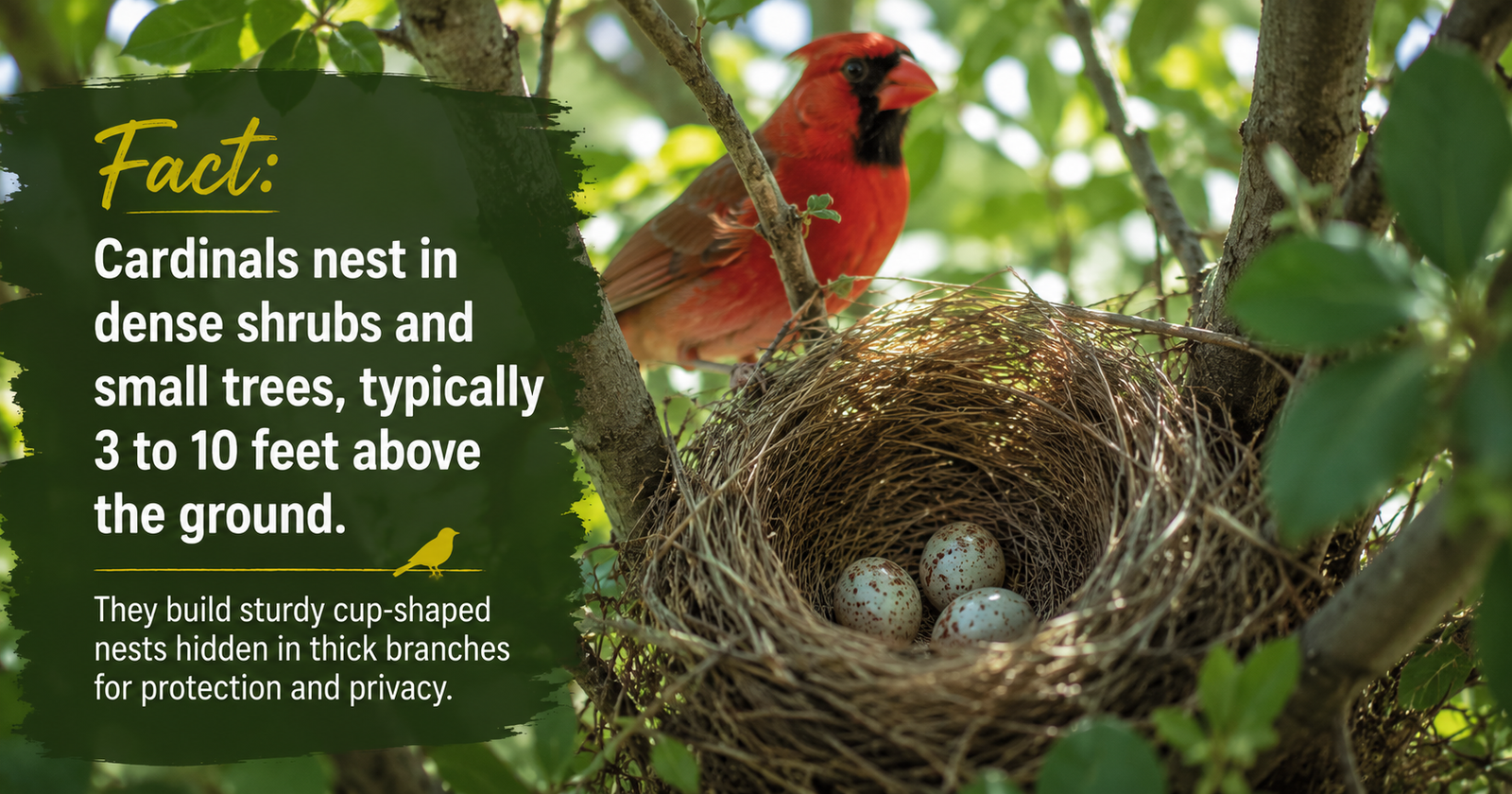
If nesting cardinals are your goal, invest your attention in shrubs, vines, thickets, and appropriate vegetation rather than an enclosed nest box. Those habitat choices become much clearer in this guide to the shrubs cardinals choose for nesting.
What About Cardinal Nesting Shelves?
Open nesting platforms or shelves are sometimes marketed for cardinals and other open-cup nesters.
I wouldn’t consider one necessary.
Cardinals already know how to select natural nest sites, and dense vegetation is much closer to the habitat they normally use.
A nesting shelf also doesn’t guarantee a cardinal will choose it.
If I had limited money to spend on improving a yard, I’d prioritize habitat plants before buying a cardinal-specific nesting structure.
What Time of Day Do Cardinals Visit Feeders?
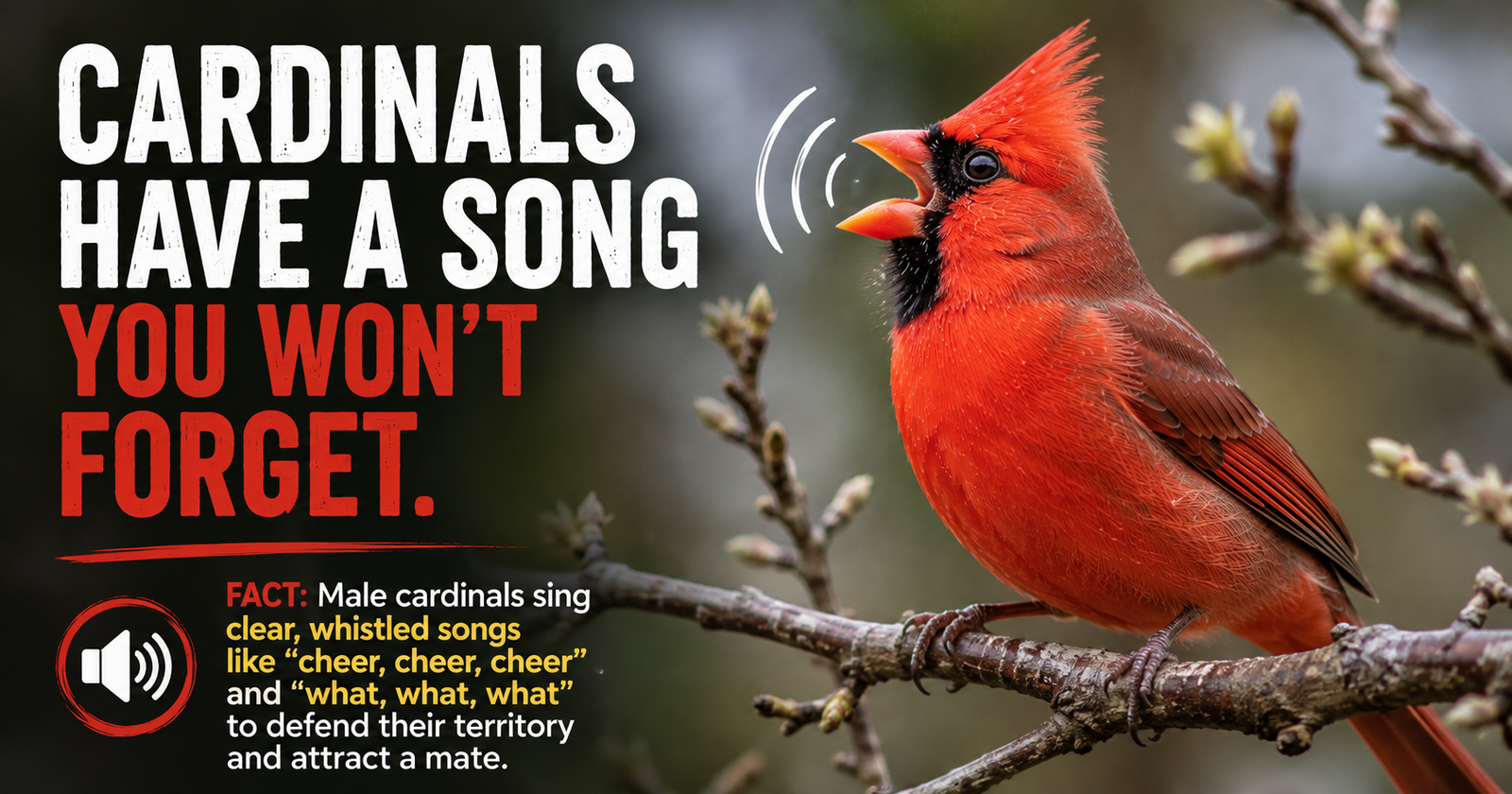
Cardinals can feed throughout daylight hours, but many people notice strong activity early in the morning and again later in the day. Listening for cardinal activity patterns can make those early-morning backyard visits easier to notice.
Don’t expect an exact schedule.
Weather, season, breeding responsibilities, competition, food availability, and the individual birds all influence feeder activity.
One fun advantage cardinals have for backyard watching is that males are incredibly easy to spot in low morning or evening light once they move into an open area.
Females can disappear into vegetation much more effectively.
If you think only the male is visiting, look more carefully around nearby shrubs.
His mate may be much closer than you realize.
Will Cardinals Become Dependent on My Feeder?
I wouldn’t think of normal backyard feeding as turning wild cardinals into pets that completely forget how to forage.
Cardinals continue using natural foods.
They’re eating seeds, fruits, insects, and other resources throughout their environment.
A feeder is supplemental.
That said, if you choose to feed birds, manage the feeding station responsibly.
Cleanliness, fresh food, predator awareness, and window safety matter whether the birds “need” your feeder or not.
Should I Feed Cardinals All Year?
You can maintain feeders year-round if you want to and can keep them properly maintained.
Cardinals remain in their range throughout the year, so there’s no migration-related reason you must take feeders down in fall.
In fact, Audubon notes that continued feeding does not prevent migratory birds from following their normal migration schedules.
Seasonal feeding is also perfectly reasonable.
The important thing is maintaining the feeder responsibly whenever it’s operating.
A Simple Cardinal Setup I’d Start With
If I were starting from scratch and wanted cardinals without turning the yard into a complicated bird-feeding operation, I’d keep the first setup simple.
I’d use black oil sunflower seed.
I’d choose a feeder with enough room for a cardinal to comfortably land and eat.
I’d provide a shallow source of clean water.
I’d maintain some dense shrubs or other protective vegetation nearby.
I’d keep the feeder and ground underneath it clean.
Then I’d watch.
Once cardinals begin using the yard, I’d pay attention to what they’re actually doing.
Are they feeding underneath the feeder?
Do they retreat into one particular shrub?
Are they using the bird bath?
Do they appear to be nesting nearby?
Are they eating naturally from plants?
That tells you far more about what your particular cardinals want than endlessly buying new backyard-bird gadgets.
Common Questions About Attracting Cardinals
What attracts cardinals the most?
A combination of appropriate food and good habitat is better than relying on one attraction. Black oil sunflower seed is an excellent feeder food, while water and dense vegetation provide additional resources cardinals need. Audubon’s current cardinal guidance similarly emphasizes food, water, shelter, and safer backyard conditions.
What color feeder attracts cardinals?
I wouldn’t choose a cardinal feeder primarily by color.
Food, accessibility, feeder design, placement, and surrounding habitat matter much more.
A gorgeous bright-red feeder that’s difficult for a cardinal to perch on isn’t automatically better than a plain feeder with an excellent tray and fresh sunflower seed.
How long does it take cardinals to find a new feeder?
There isn’t a guaranteed timeframe.
Some birds may discover a new feeder quickly, while others can take days or weeks to incorporate it into their routine.
If cardinals are already around, fresh desirable food and a comfortable feeder give you a good start.
What is the best feeder for cardinals?
Hopper and platform-style feeders are strong options because they can provide the room cardinals need to feed comfortably. Audubon specifically recommends hopper feeders with sunflower or safflower for attracting Northern Cardinals and Blue Jays.
We’re going to examine specific feeders separately because construction, cleaning, capacity, perch space, weather resistance, and squirrel access can make two seemingly similar feeders perform very differently.
What trees attract cardinals?
I’d think more broadly in terms of locally native trees and shrubs that provide food, insects, shelter, and useful vegetation structure.
Exact recommendations should vary by region rather than pretending one tree is best everywhere.
Do cardinals like bird baths?
Yes. Cardinals use water for drinking and bathing. A shallow, clean bird bath can make a yard more useful even if you already have excellent feeders.
Why are cardinals in my yard but not at my feeder?
They may be finding plenty of natural food, feeding underneath the feeder, disliking the feeder design, avoiding competition, or simply not having incorporated the feeder into their routine yet.
Seeing cardinals in the yard is actually good news.
You’ve already solved the hardest problem: cardinals are present.
Now you can experiment with making the feeding station more useful to them.
Can I attract a cardinal pair?
You can create conditions attractive to Northern Cardinals, but you can’t order a breeding pair like you’re reserving a table.
Food, water, dense vegetation, nesting structure, natural foods, and safer surroundings make your property more useful.
Whether a particular pair establishes a territory or nests there is up to the birds.
What’s the biggest mistake when trying to attract cardinals?
For me, it’s thinking that attracting cardinals means buying a red bird feeder and filling it with “cardinal mix.”
Forget the marketing for a minute.
Think like you’re creating habitat.
Give them food they actually eat.
Give them a feeder they can comfortably use.
Give them clean water.
Give them vegetation.
Give them somewhere to retreat.
Keep the feeding area clean.
Reduce obvious hazards.
That’s a much stronger foundation than buying a product because there’s a picture of a red cardinal on the package.
And once that foundation is in place, the right products can make the setup considerably easier and more enjoyable.
That’s where we’ll start separating the genuinely useful cardinal feeders, seeds, bird baths, and backyard-bird products from the stuff that’s mostly good packaging.
Caleb Hartwell is the Bird Identification & Behavior Contributor for BirdResource.com, where he helps readers understand what backyard birds actually need and how to create better places to feed, watch, and enjoy them without making birding unnecessarily complicated.