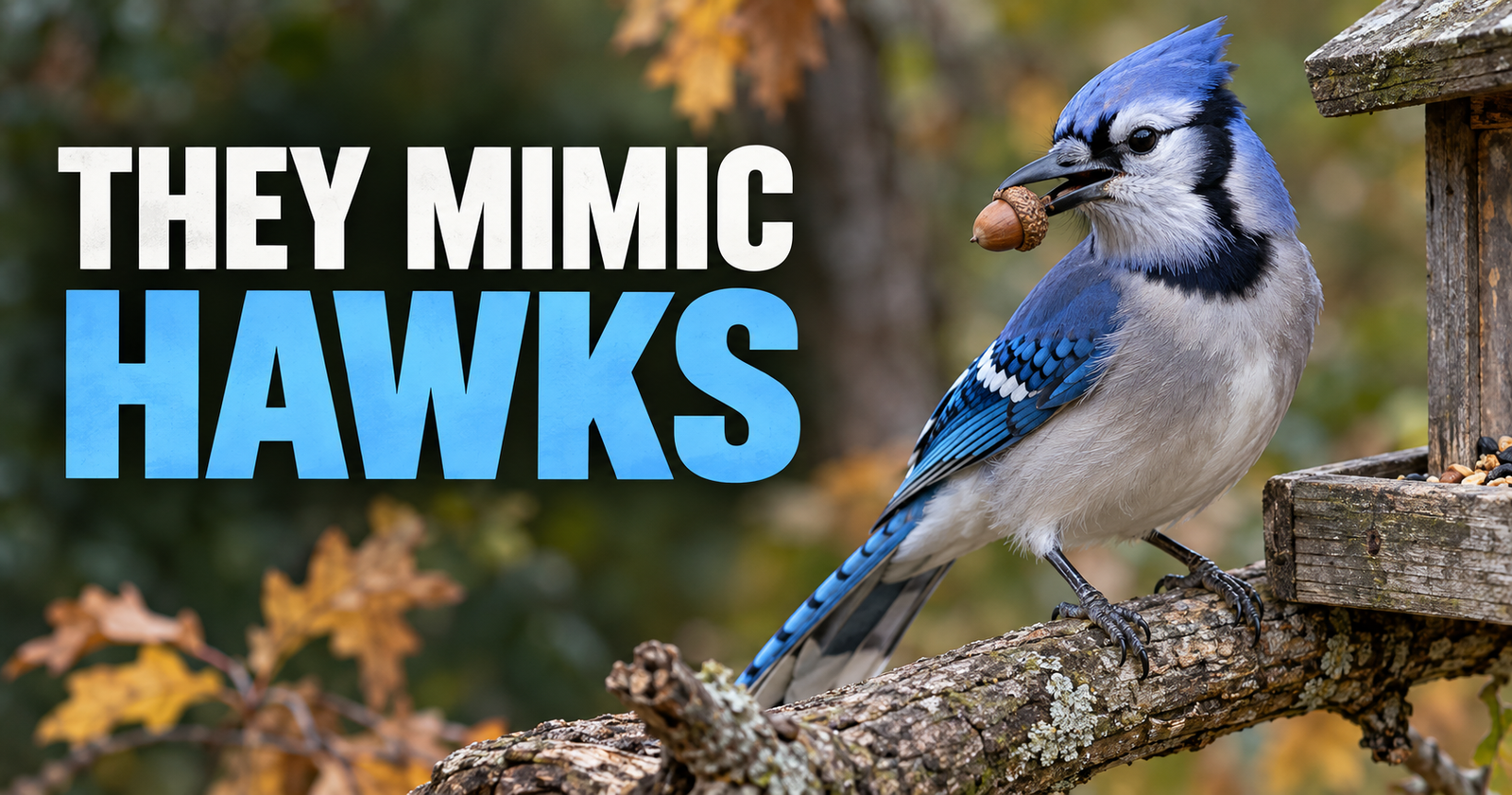
A Blue Jay is one of those birds most people think they already know.
Big blue bird.
Pointed crest.
Loud voice.
Shows up at the feeder, grabs something, and leaves.
Easy enough.
But once I started paying closer attention to what Blue Jays actually do, I realized how much gets missed when we reduce them to “the noisy blue birds.”
They imitate hawks.
They hide thousands of acorns.
Some migrate while others living in the same general region stay put.
They have surprisingly complicated family relationships.
They can be loud enough to wake up the neighborhood and then become remarkably quiet around their nests.
They sometimes eat other birds’ eggs and young, but that behavior makes up a much smaller part of their diet than their reputation suggests.
And that beautiful blue color?
The feathers don’t contain blue pigment.
Blue Jays are members of the corvid family, which puts them alongside crows, ravens, and magpies. Their intelligence, social behavior, vocal abilities, and adaptability make a lot more sense once you know who their relatives are.
So if you think you already know the Blue Jay because you recognize one at your feeder, there’s a lot more going on in that blue, black, and white bird than meets the eye. You can find more species-focused profiles in our individual bird species guides.
What Does a Blue Jay Look Like?
Northern Cardinals practically identify themselves with color.
Blue Jays give us several clues at once.
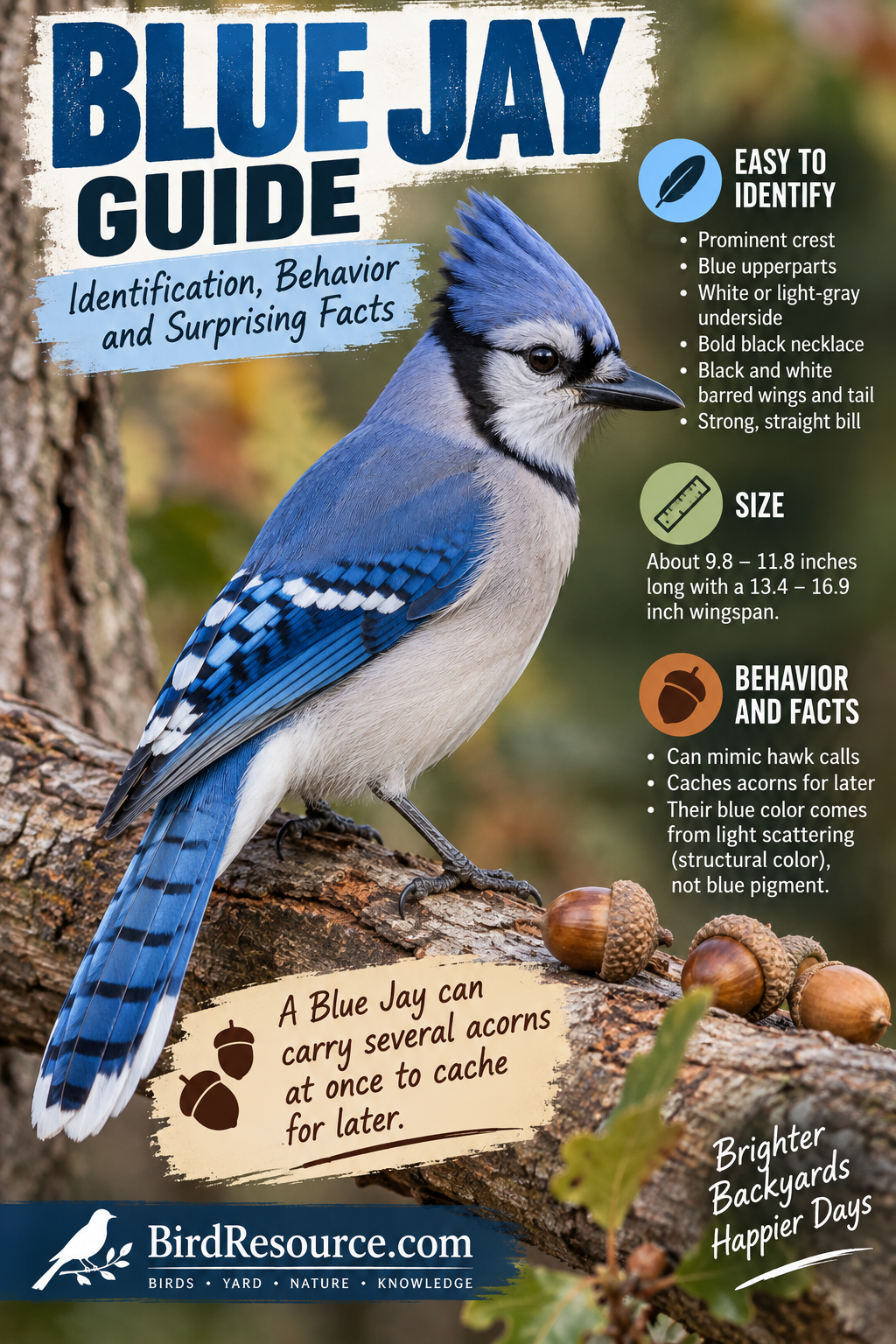
An adult Blue Jay has a prominent crest, blue upperparts, pale gray to white underparts, black markings around the face and throat, and a boldly patterned combination of blue, black, and white across the wings and tail.
Cornell describes them as large crested songbirds that are smaller than crows but larger than robins. Adults measure roughly 9.8 to 11.8 inches long, with a wingspan around 13.4 to 16.9 inches.
Their tails are relatively broad and rounded.
The bill is strong and straight.
And that black marking running around the neck and face creates what often looks like a dark necklace or bridle.
Once you’ve seen a Blue Jay well, they’re difficult to forget.
Are Blue Jays Actually Blue?
Here’s one of my favorite Blue Jay facts.
Not exactly.
The blue appearance doesn’t come from blue pigment inside the feathers.
Cornell explains that the actual pigment in Blue Jay feathers is melanin, which is brown. The brilliant blue we see is created when microscopic structures in the feathers scatter light.
This is called structural coloration.
Light hits the feather.
Its microscopic structure interacts with that light.
Blue wavelengths are reflected toward our eyes.
We see blue.
Change how the feather interacts with light and the appearance changes dramatically.
So that beautiful blue bird at your feeder isn’t carrying around a bunch of blue dye in its feathers.
Its plumage is essentially performing a tiny optical trick every time light hits it.
Why Do Blue Jays Have a Crest?
The crest is more than decoration.
Blue Jays can raise and lower it, and crest position can provide clues about the bird’s behavioral state.
Cornell notes that the crest tends to remain lowered when Blue Jays are calmly feeding with family or flock members or caring for nestlings. As aggression increases, the crest tends to rise. A loudly squawking Blue Jay commonly has its crest raised.
That gives you another way to watch the bird.
Don’t only listen to the noise.
Look at the head.
A smooth, flattened crest can make a Blue Jay look surprisingly different from the classic high-crested bird people picture.
And a bird with that crest standing tall while screaming at something nearby is probably worth paying attention to.
Are Male and Female Blue Jays Different Colors?
This is going to become one of the first supporting articles in this cluster because the answer surprises people.
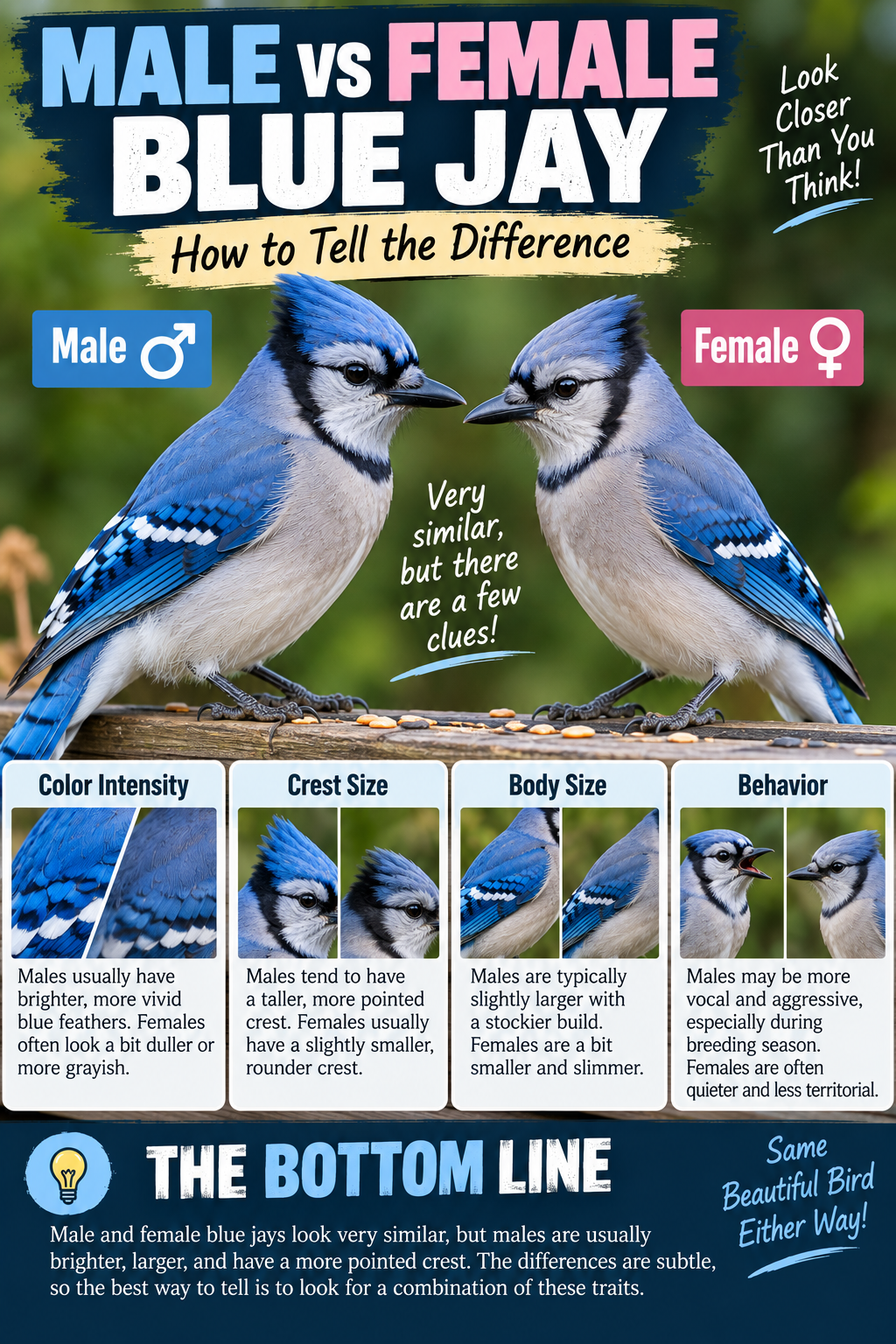
Male and female Blue Jays look extremely similar.
Both have the familiar blue, black, white, and gray coloration.
Both have crests.
Both have the black necklace.
Both have barred wings and tails.
You don’t get the dramatic visual difference we see between male and female Northern Cardinals.
Audubon notes that males average slightly larger, but plumage isn’t a dependable everyday way to determine sex.
Behavior can occasionally provide stronger clues, especially when you’re watching a known breeding pair around a nest.
But if a random Blue Jay lands on your feeder, confidently announcing “that’s definitely a male” based only on how blue it looks isn’t something I’d recommend.
Where Do Blue Jays Live?
Blue Jays are primarily birds of eastern and central North America.
They’re familiar throughout much of the eastern United States and Canada and have expanded northwestward over time.
Cornell describes them as birds of forest edges, woodlots, towns, parks, and yards, particularly where oak trees are present.
That association with edges helps explain why they’re such successful backyard birds.
They don’t require untouched wilderness.
A neighborhood containing mature trees, scattered woods, lawns, gardens, bird feeders, and oak trees can provide a lot of what a Blue Jay needs.
They’ll forage in trees.
They’ll come to feeders.
They’ll move through shrubs.
They’ll walk and hop on the ground.
They’re adaptable birds living comfortably alongside people in many parts of their range.
Why Do Blue Jays Like Oak Trees?
One word:
Acorns.
Blue Jays have an extraordinary relationship with oak trees.
They collect acorns, carry them away, and bury them for later.
Cornell reports that individual Blue Jays fitted with radio transmitters cached roughly 3,000 to 5,000 acorns during a single autumn.
They can carry several at once.
A Blue Jay has expandable space in its throat and upper esophagus that allows it to transport multiple acorns, plus another in its mouth and sometimes another held at the bill tip.
Then the bird flies somewhere else and hides them.
That’s good for the jay.
It creates food reserves.
But something else happens.
The jay doesn’t recover every acorn.
Some remain buried.
Some germinate.
Some eventually become oak trees.
Cornell credits Blue Jays’ acorn-caching behavior with helping spread oak trees following the last glacial period.
That’s an incredible ecological footprint for a bird most people know because it steals peanuts from the feeder.
What Do Blue Jays Eat?
Blue Jays are omnivores.
And they aren’t particularly shy about taking advantage of whatever food is available.
Their natural diet includes:
acorns
other nuts
seeds
grains
fruits
berries
insects
spiders
snails
They may also occasionally eat eggs, nestlings, small vertebrates, carrion, and other animal foods.
But this is where their reputation gets distorted.
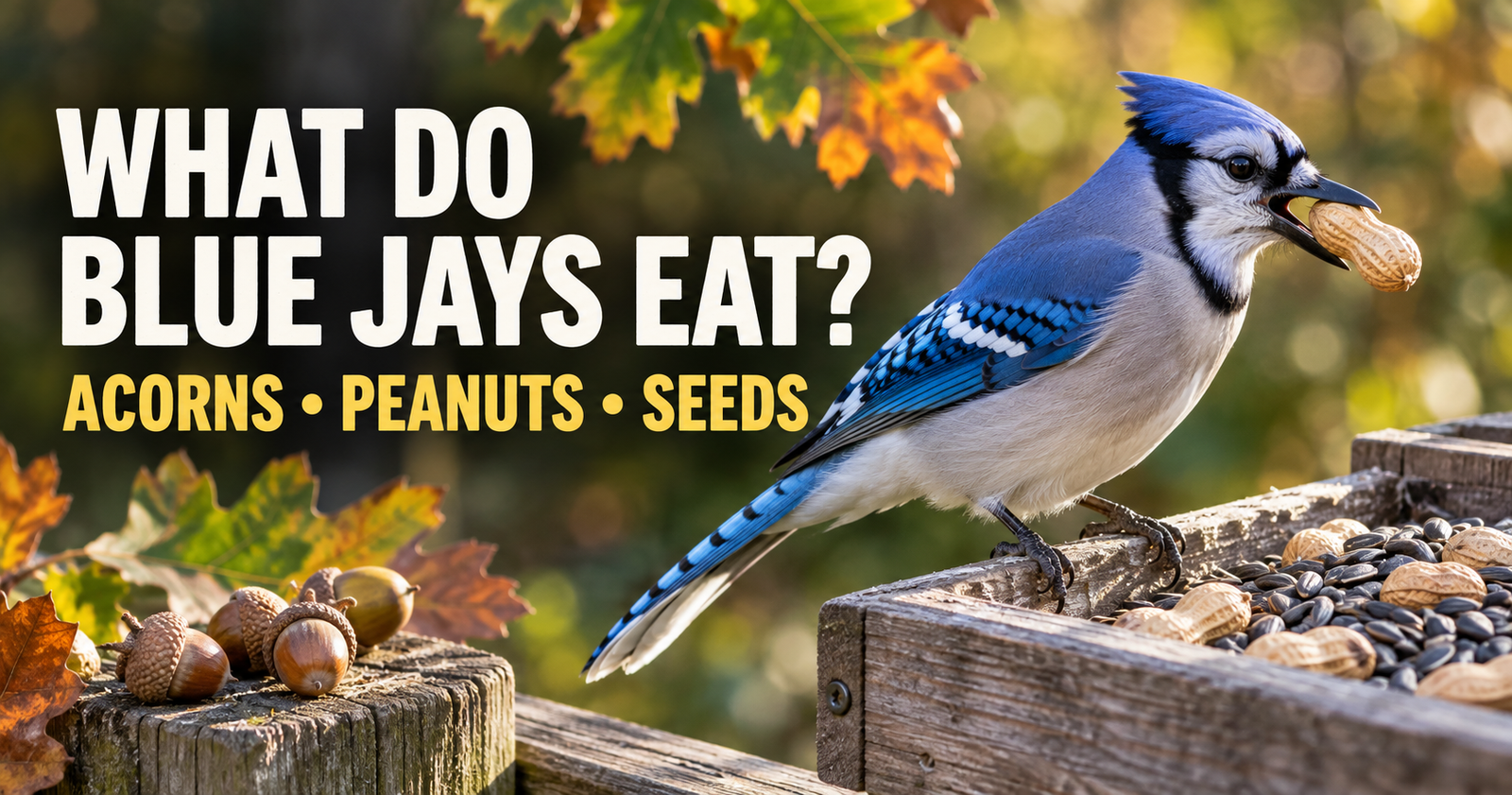
Cornell reports that Blue Jay stomach contents over the year were dominated by plant foods such as acorns, nuts, fruits, and grains, with insects making up about 22 percent. In a study examining 530 Blue Jay stomachs, traces of bird eggs or young were found in only six.
So yes, Blue Jays can raid nests.
No, baby birds aren’t their main food.
Both things can be true.
What Do Blue Jays Eat at Bird Feeders?
This is where Blue Jays become extremely easy to spoil.
Cornell recommends foods including:
peanuts, sunflower seeds, and suet.
Peanuts are particularly fun because a Blue Jay can grab a large peanut and fly away with it.
If you offer peanuts in the shell, you may see a jay pick one up, put it down, inspect another, compare them, and finally fly away carrying its selection.
That behavior can look almost comically picky.
But remember what these birds do naturally.
They’re evaluating nuts and transporting valuable food somewhere else.
Your peanut feeder has basically become an acorn tree with easier packaging.

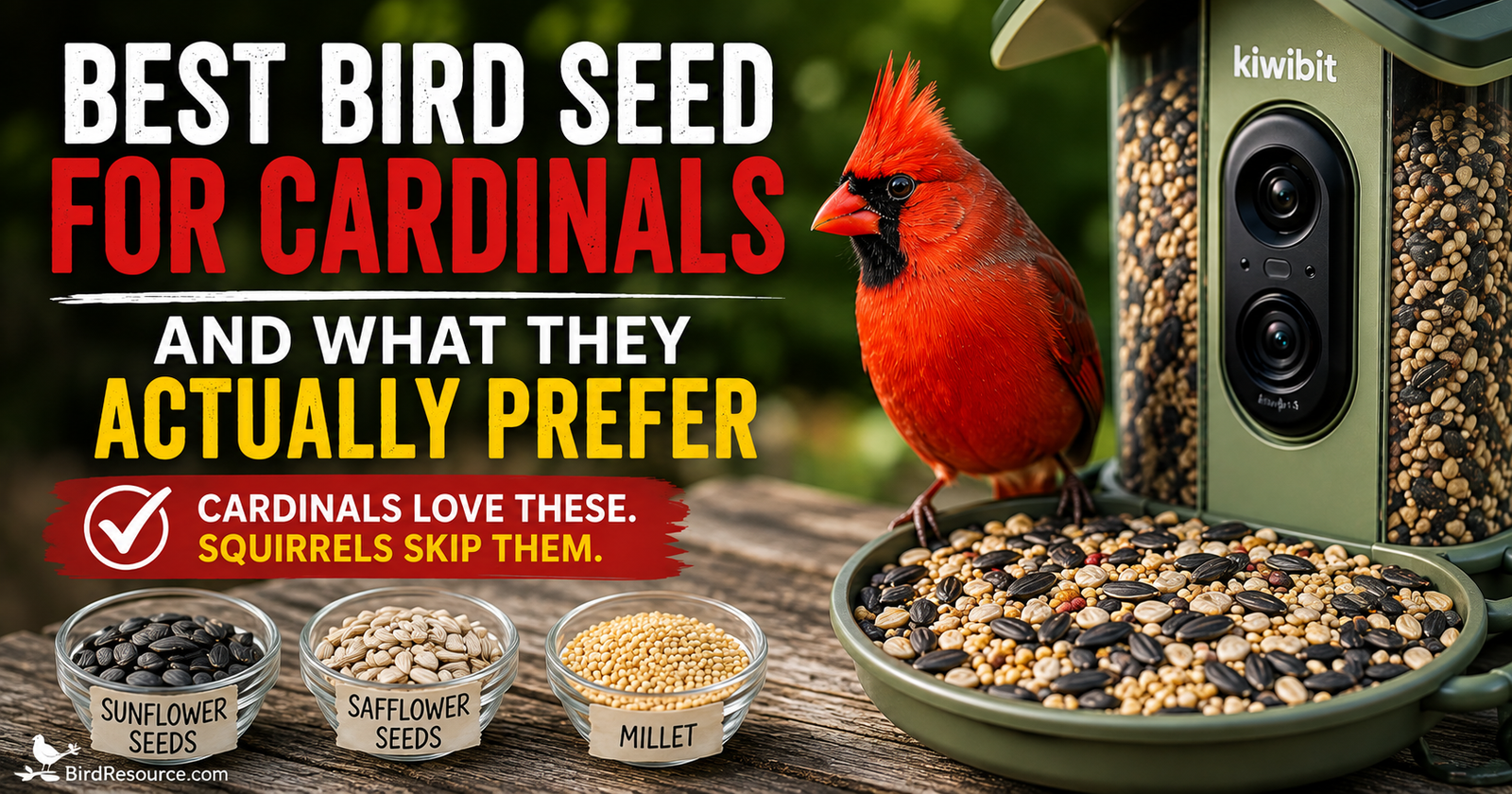
Do Blue Jays Eat Peanuts?
Absolutely.
Peanuts will be one of the major feeding topics in this cluster because Blue Jays are so strongly associated with them at backyard feeders.
I’d use plain, unsalted peanuts intended for birds rather than flavored or heavily salted human snack peanuts.
You can offer peanuts in the shell or shelled pieces depending on your feeder setup.
Whole peanuts create especially interesting behavior because the jay may carry them away and cache them.
And once a few Blue Jays discover a reliable peanut supply, don’t be surprised if they become very good at remembering where breakfast appears.
What Is the Best Feeder for Blue Jays?
Think big bird.
A tiny tube feeder with little peg perches isn’t what I’d intentionally buy for Blue Jays.
Cornell recommends tray feeders or hopper feeders mounted on a post rather than small hanging feeders for Blue Jays.
That makes perfect sense.
Blue Jays need room.
A platform gives them somewhere to land and handle large foods such as peanuts.
A roomy hopper can also accommodate their size.
And because Blue Jays frequently carry food away rather than sitting there eating every piece, you may see extremely quick visits.
Land.
Grab peanut.
Gone.
Repeat.
We’ll eventually give best bird feeders for Blue Jays its own commercial guide, just like we did for cardinals.
How Do You Attract Blue Jays?
If I specifically wanted more Blue Jays around my property, I’d focus on three things first:
peanuts, a roomy feeder, and habitat.
Oak trees are obviously valuable because they naturally produce one of the jay’s most important foods.
Other mature trees provide nesting and roosting opportunities.
A birdbath can help too. Cornell specifically notes that Blue Jays frequently drink from birdbaths.
Then I’d offer food they actually want.
Peanuts.
Sunflower.
Suet.
And I’d give them enough room to land comfortably.
That’s a much better strategy than buying a tiny decorative feeder simply because there’s a Blue Jay printed on the packaging.
Are Blue Jays Bullies?
They can certainly dominate smaller birds at feeders.
They’re larger than chickadees, finches, and many other familiar backyard birds, and a Blue Jay landing on a crowded platform can cause smaller birds to move.
But “bully” is a human label.
What we’re watching is competition.
Food is valuable.
Birds compete over it.
And interestingly, Blue Jays aren’t always the dominant bird themselves.
Cornell reports that in one Florida feeder study, Red-bellied Woodpeckers, Red-headed Woodpeckers, Florida Scrub-Jays, Common Grackles, and gray squirrels strongly dominated Blue Jays. Northern Cardinals, Mourning Doves, Northern Mockingbirds, and some other birds occasionally dominated them too.
So the giant backyard tyrant sometimes gets pushed around too.
Nature is rarely as simple as “this species is mean.”
Why Do Blue Jays Scream So Much?
Because Blue Jays have a huge vocal repertoire and use sound extensively for communication.
The classic sound is that loud jeer or jay! jay! call.
But that’s only a small part of what they can do.
Cornell describes clear whistles, gurgling sounds, clicking, chucks, whines, liquid notes, and a soft vocal performance known as the whisper song.
That whisper song can last for more than two minutes and sounds nothing like the screaming Blue Jay most people recognize.
So if you think Blue Jays have one obnoxious call, you’re hearing only the loudest part of a surprisingly complicated vocabulary.
Why Do Blue Jays Imitate Hawks?
This is one of the coolest Blue Jay behaviors.
They can mimic hawks.
Cornell specifically notes frequent imitation of Red-shouldered Hawks, and Blue Jays can also imitate Red-tailed Hawks and other species.
Why?
There may be more than one reason.
A jay may mimic a hawk because a real hawk is nearby, effectively communicating information about danger.
But there’s another possibility.
Cornell notes that Blue Jays sometimes mimic hawks when approaching feeders, potentially causing other birds to scatter and giving the jay easier access to food.
That’s clever.
Imagine walking into a restaurant and yelling:
“BEAR!”
Everybody runs out.
You take their table.
That’s roughly the accusation we’re making against the Blue Jay.
Whether every hawk imitation is deliberately deceptive is another matter, but the behavior itself is well documented.
Do Blue Jays Have a Song?
Sort of.
They’re not known for the kind of obvious melodic territorial song we associate with cardinals.
Cornell describes their whisper song as the vocalization most often considered a Blue Jay song. It’s a quiet mixture of clicks, chucks, whirrs, whines, liquid sounds, and pieces of other calls.
This can surprise people because it sounds so different from the familiar screaming jay.
You may have Blue Jays making these softer sounds around your yard and never realize they’re responsible.
That’s why What Do Blue Jays Sound Like? will eventually get its own full guide.
Are Blue Jays Smart?
Yes.
They’re members of the Corvidae family alongside crows, ravens, magpies, and other jays. Cornell describes Blue Jays as intelligent birds with complex social systems and tight family bonds.
Their behavior backs that up.
They cache food.
They remember food locations.
They communicate socially.
They mimic other birds.
They adjust behavior around competitors and predators.
They handle and evaluate food before transporting it.
Cornell has also documented captive Blue Jays using strips of newspaper to pull food within reach.
I wouldn’t turn that into claims that Blue Jays think exactly like humans.
They don’t need to.
Their intelligence evolved around solving the problems Blue Jays actually encounter.
And they’re remarkably good at those problems.
Do Blue Jays Remember Where They Hide Food?
They cache enormous quantities of food and recover at least some of those stores later.
That requires spatial memory.
A Blue Jay doesn’t simply bury one acorn under the feeder and come back tomorrow.
It can distribute food across numerous locations.
Cornell’s radio-tracking research showing individual birds caching thousands of acorns during autumn demonstrates the enormous scale of this behavior.
Of course, they don’t recover everything.
That’s where oak-tree dispersal comes in.
A forgotten acorn can become a seedling.
The Blue Jay loses lunch.
The forest gains a tree.
Are Blue Jays Related to Crows?
Yes.
Blue Jays and crows belong to the same family, Corvidae.
That family relationship helps explain some of the characteristics they share:
intelligence
complex communication
social behavior
opportunistic feeding
food caching
strong memory abilities
A Blue Jay is obviously much smaller and more colorful than an American Crow, but they’re closer relatives than their appearances might suggest.
Once you start watching the behavior instead of only the feathers, that family resemblance becomes much easier to see.
Do Blue Jays Mate for Life?
Blue Jays often maintain long-term pair bonds, and Cornell describes them as often mating for life and remaining with their social mate throughout the year.
That’s stronger evidence for long-lasting pair relationships than we have for some species that casually get described as “mating for life.”
Still, I don’t interpret the phrase as a guarantee that every Blue Jay forms one partnership that can never change.
Wild birds can lose mates.
Pair relationships can change.
Individual circumstances vary.
What we can say is that Blue Jays can form strong, enduring pair bonds and that the male and female work together extensively during reproduction.
Their relationship isn’t limited to mating.
It’s a parenting partnership.
How Do Blue Jays Choose a Mate?
Courtship can involve several birds.
Blue Jays may gather in courtship groups where multiple males follow a female, moving with her from tree to tree.
Audubon describes courtship as sometimes involving aerial chases, while Cornell notes that Blue Jays have complex social behavior and strong pair bonds.
Once a pair forms, their cooperation becomes obvious around the nest.
Both participate in nest construction.
The male becomes especially important while the female incubates.
And both parents ultimately care for the young.
That’s why I’m planning a dedicated Do Blue Jays Mate for Life? article later rather than trying to reduce all of that behavior to one sentence here.
Where Do Blue Jays Build Their Nests?
Blue Jays build open-cup nests in trees.
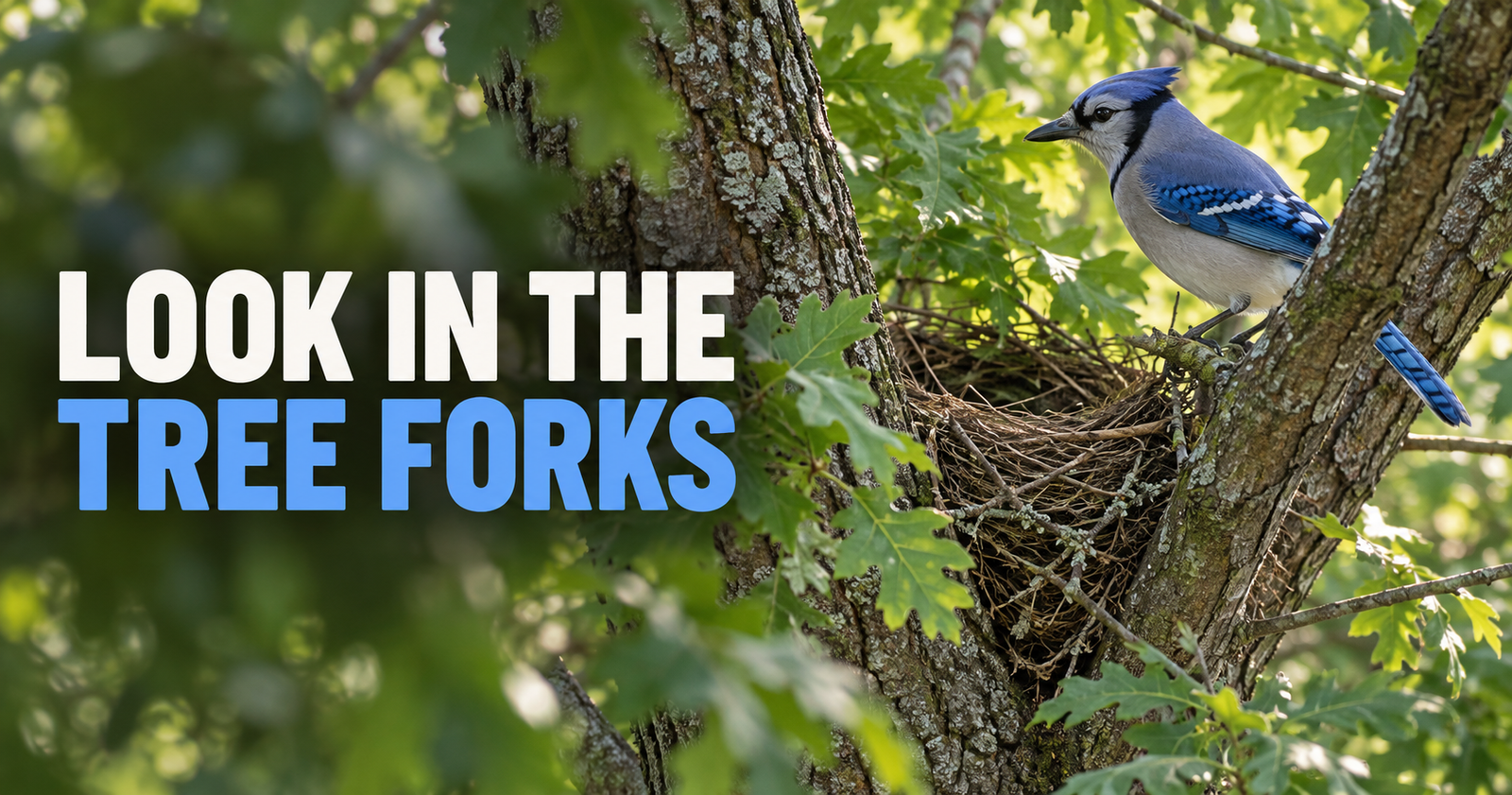
Cornell reports that they commonly choose the crotch or thick outer branches of either deciduous or coniferous trees, usually around 10 to 25 feet above the ground.
Both sexes gather materials and participate in construction.
The male tends to do more gathering.
The female generally does more of the actual building.
The finished nest is a substantial cup constructed from twigs, grass, and sometimes mud, then lined with finer materials such as rootlets.
Interestingly, Blue Jays can become remarkably quiet and secretive around their nests.
That’s quite a transformation for a bird famous for screaming across the neighborhood.
Do Blue Jays Use Birdhouses?
Usually, no. Blue Jays don’t normally use traditional enclosed birdhouses or nest boxes.
This is an easy point of confusion because people see Blue Jays around their yards and naturally assume putting up a birdhouse might encourage a pair to nest.
But Blue Jays aren’t cavity nesters like bluebirds.
Instead, they build open-cup nests in trees, usually positioned in the crotch or on a substantial branch. Cornell reports Blue Jay nests are commonly around 10 to 25 feet above the ground, although nesting height can vary. Both members of the pair help choose the nest site, and both participate in construction. Readers who want to follow the nesting process can find related information in Blue Jay nesting guides.
So if Blue Jays are your target, I wouldn’t buy a little enclosed wooden birdhouse specifically for them.
That doesn’t mean birdhouses are useless in a Blue Jay-friendly backyard. Appropriate nest boxes can attract completely different cavity-nesting species.
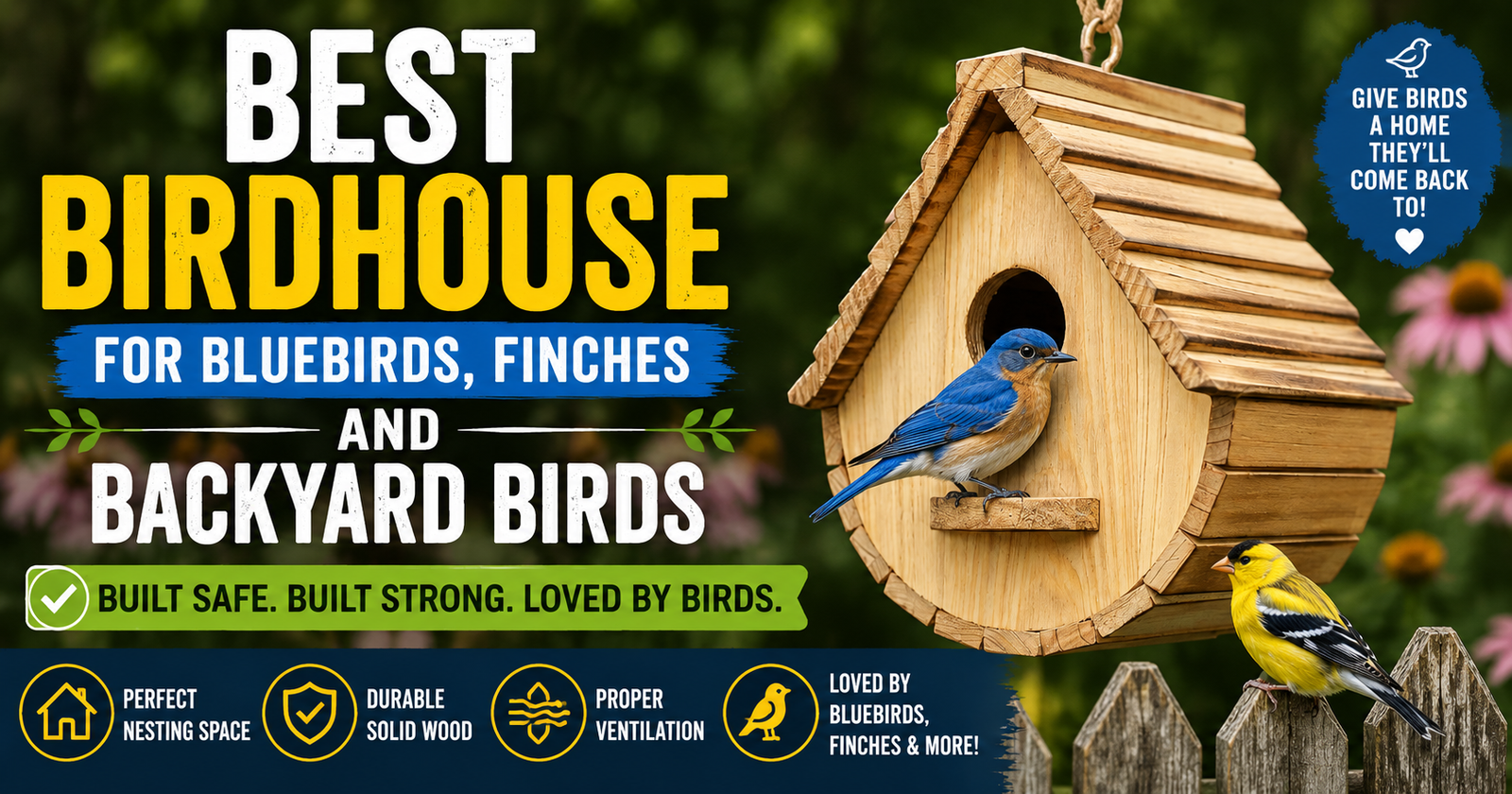
Our wooden birdhouse guide for bluebirds, finches, and other backyard birds explains that distinction in more detail.
For Blue Jays themselves, I’d put my effort into trees and suitable habitat rather than nest boxes.
What Does a Blue Jay Nest Look Like?
A Blue Jay nest is a fairly substantial open cup.
Cornell describes nests as being made from materials including twigs, grass, bark strips, moss, rootlets, and sometimes human-made materials such as paper. Mud may also be incorporated into the structure.
Both the male and female participate in building.
That’s worth remembering because someone watching a pair carry twigs into the same tree may be witnessing nest construction even if the nest itself is impossible to see.
The birds may make repeated trips to the same general area.
Eventually, all those individual pieces become a sturdy cup capable of holding eggs and growing nestlings.
We’ll give Where Do Blue Jays Nest? its own full article because nest placement, construction, nesting season, nest identification, and what to do when you find an active nest deserve much more detail.
What Do Blue Jay Eggs Look Like?
Blue Jay eggs can be bluish or light brown with brownish markings.
Cornell reports a typical clutch of about 2 to 7 eggs, with incubation lasting approximately 17 to 18 days. The female handles incubation while the male supplies her with food.
I wouldn’t identify a mystery nest from egg color alone.
Egg appearance can vary, and other birds can lay eggs that look surprisingly similar.
Instead, I’d combine several clues.
Where is the nest?
How is it constructed?
Which adult birds are repeatedly visiting?
How high is it?
What habitat surrounds it?
Seeing an adult Blue Jay tending the nest is considerably stronger evidence than trying to match the exact shade of an egg to a photograph online.
What Do Baby Blue Jays Look Like?
Newly hatched Blue Jays look nothing like the beautiful blue adults most people recognize.
They’re helpless nestlings that depend completely on their parents.
As feathers develop, they gradually begin taking on the familiar Blue Jay appearance.
By fledging age, young Blue Jays are substantially feathered, but they can still look somewhat awkward compared with adults.
Behavior can be an even bigger clue.
A fledgling may:
hop through branches,
make clumsy short flights,
beg loudly,
remain near vegetation,
and continue receiving food from its parents.
Finding one outside the nest doesn’t automatically mean something went wrong.
It may simply have reached the fledgling stage.
We’ll give What Do Baby Blue Jays Look Like? its own article because young-bird identification is important enough that I don’t want someone making a rescue decision based on two paragraphs in a general species guide.
When Do Baby Blue Jays Leave the Nest?
Blue Jay nestlings generally remain in the nest for around 17 to 21 days before fledging, according to Cornell.
But leaving the nest isn’t the same as becoming independent.
That’s one of the biggest misunderstandings people have about baby birds.
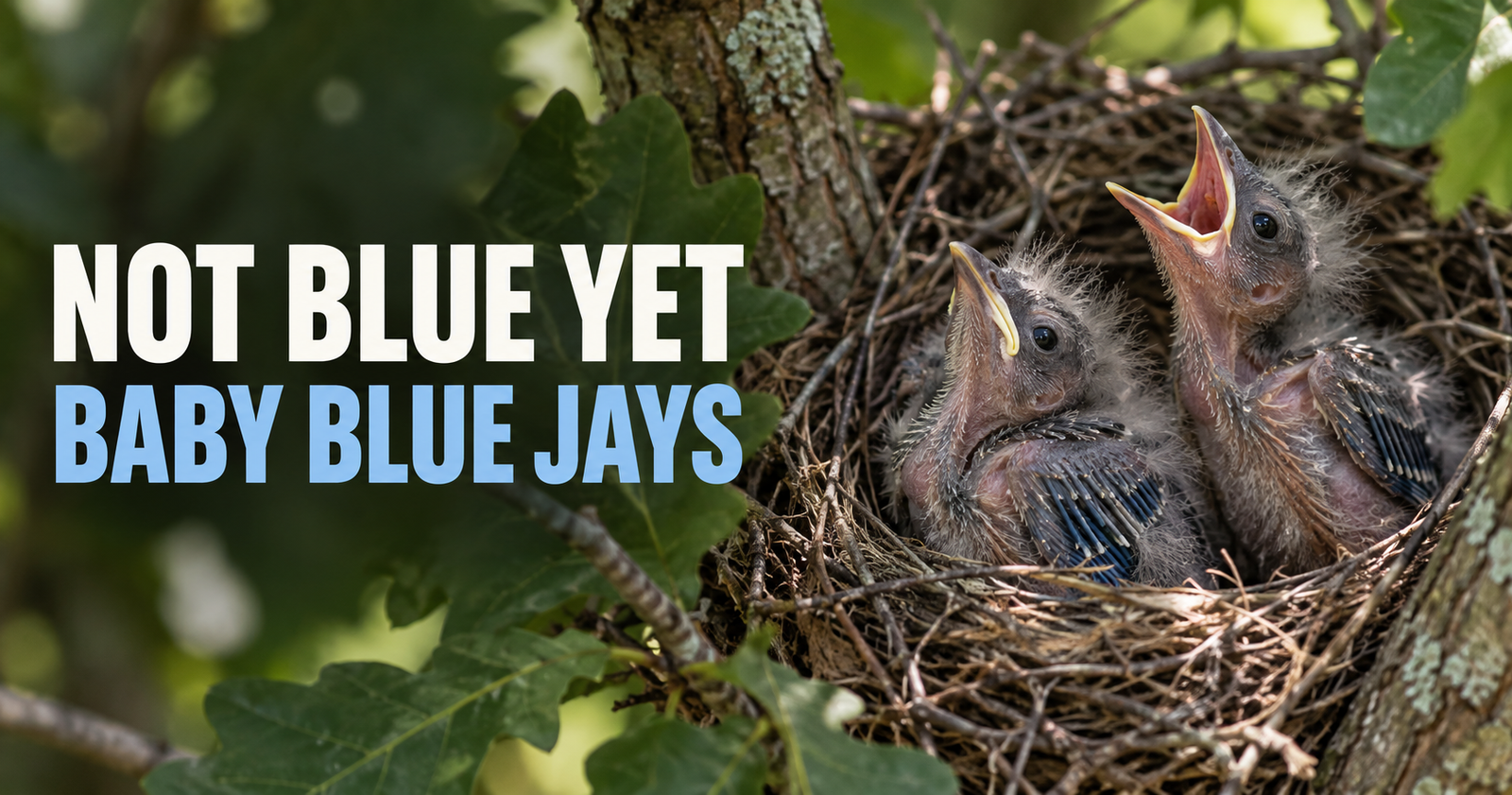
A young Blue Jay can leave the nest while it still needs parental care. The stages of young Blue Jay development explain why leaving the nest does not necessarily mean independence.
Flight skills continue developing.
Foraging skills improve.
Parents continue feeding and watching over the youngsters.
So if you find a feathered young Blue Jay hopping around underneath a tree, don’t immediately assume it fell.
First determine whether you’re looking at a nestling or a fledgling.
A healthy fledgling may be exactly where it’s supposed to be.
Are Blue Jays Aggressive?
Blue Jays can certainly be bold and assertive, especially around food.
They’re larger than many of the songbirds using backyard feeders, which gives them an advantage during direct competition.
A Blue Jay landing on a crowded feeder may cause chickadees, finches, sparrows, and other smaller birds to move away.
But I don’t think calling Blue Jays “mean” tells us much.
A feeder concentrates a valuable resource into one tiny location.
Put several species around that resource and competition is inevitable.
Cornell’s Project FeederWatch research has found recognizable dominance relationships among feeder birds, with body size being an important factor. Larger birds frequently displace smaller ones.
Blue Jays are playing by the same basic rules.
They’re just big enough that we notice when they win.
Do Blue Jays Scare Other Birds Away?
They can temporarily.
A Blue Jay lands.
Smaller birds scatter.
The jay grabs food.
It leaves.
Then the smaller birds return.
That’s very different from claiming Blue Jays permanently chase every other bird out of a yard.
If Blue Jays are completely dominating one feeding station, I’d consider providing more than one feeding location.
Spreading food around can reduce the amount of competition concentrated at one feeder.
We’ll eventually build Do Blue Jays Scare Other Birds Away? as its own problem-solving article because this is one of the most common complaints people have about them.
Do Blue Jays Eat Baby Birds?
Yes, Blue Jays can eat eggs and nestlings, but this part of their reputation is often exaggerated.
Cornell discusses a classic study examining the stomach contents of 530 Blue Jays. Only six contained traces of bird eggs or birds. Most contained insects and nuts instead.
That doesn’t mean nest predation never happens.
It does.
Blue Jays are opportunistic omnivores and can take advantage of animal foods when available.
But describing them primarily as baby-bird killers gives a very distorted picture of their normal diet.
Most of what they’re eating isn’t somebody else’s baby bird.
This deserves its own article later because Do Blue Jays Eat Baby Birds and Eggs? gives us an excellent opportunity to separate documented behavior from the reputation surrounding it.
Do Blue Jays Eat Mice?
Blue Jays are opportunistic enough that unusual animal foods are possible, but mice aren’t what I’d describe as a normal staple of their diet.
They’re much more strongly associated with:
acorns,
nuts,
seeds,
grains,
insects,
fruits,
and other readily available foods.
This is where unusual wildlife observations can become misleading online.
One photograph of a bird doing something strange gets shared repeatedly, and suddenly that rare behavior is presented as though it’s what the species normally does every afternoon.
I’d rather describe what’s typical first and then acknowledge unusual behavior separately.
Why Do Blue Jays Bury Acorns?
They’re caching food for later.
Blue Jays can collect food when it’s abundant, transport it away, and hide it in different locations.
Acorns are particularly important.
The jay may push an acorn into soil, leaf litter, or another hiding place and return later to retrieve it.
But birds don’t recover every cache.
Some forgotten acorns remain in the ground and germinate.
That gives Blue Jays an important ecological role as seed dispersers for oak trees.
A bird trying to save lunch for next week can unintentionally plant a tree that survives for decades or even centuries.
That’s one of my favorite things about Blue Jay behavior because it connects something happening at bird scale with changes in an entire forest.
Do Blue Jays Remember Where They Hide Food?
Food caching wouldn’t be particularly useful if the bird immediately forgot every hiding place.
Blue Jays are members of the corvid family, which also includes crows, ravens, and magpies.
Corvids are known for sophisticated cognitive abilities, and Blue Jays use memory and environmental information while managing food.
I wouldn’t turn that into the claim that every jay perfectly remembers every acorn.
Clearly some caches aren’t recovered.
But their ability to store food for later use is much more sophisticated than randomly dropping nuts around the yard.
Are Blue Jays Smart?
Yes, although I think “smart” becomes more useful when we describe what the bird actually does.
Blue Jays can:
cache food,
learn feeding locations,
respond to predators,
use varied vocal communication,
imitate other birds,
interact within complex social groups,
and adjust behavior according to what’s happening around them.
Those are meaningful cognitive abilities.
They’re also corvids, a bird family famous for complex behavior.
I don’t need to claim a Blue Jay has human-like intelligence to find any of that impressive.
Bird intelligence evolved around solving bird problems.
And Blue Jays solve plenty of them.
Can Blue Jays Recognize People?
I’d be cautious here.
Corvids are capable of impressive recognition and learning, and research on some corvid species has demonstrated recognition of individual humans.
But I wouldn’t automatically take every result from crow or raven research and state that it applies identically to Blue Jays.
What I am comfortable saying is that Blue Jays can learn routines.
If food repeatedly appears at the same location, they can learn where to look.
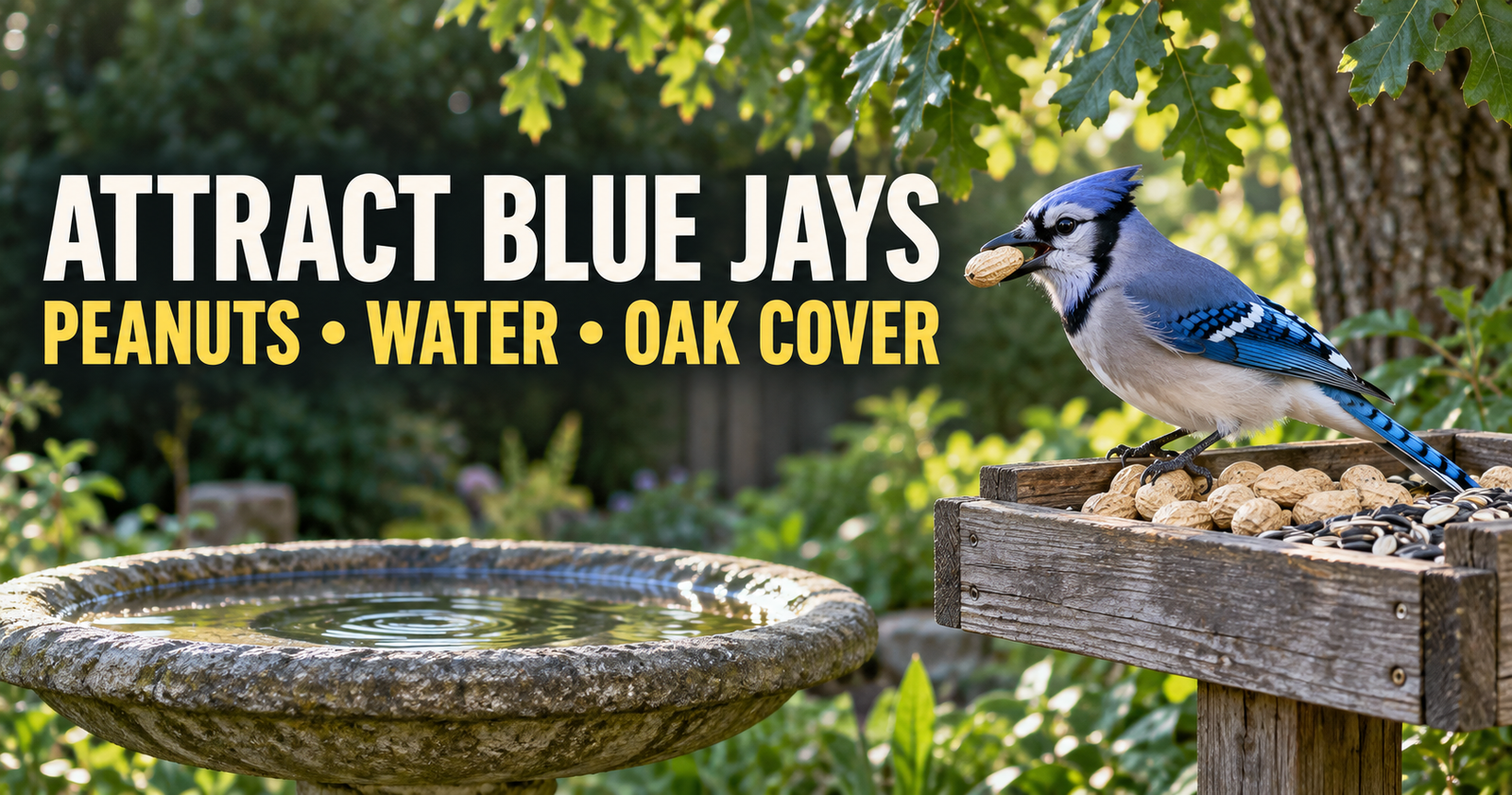
If you put peanuts out around the same time every morning, don’t be surprised when the jays become extremely good at showing up. A consistent schedule is only one part of a setup designed to attract Blue Jays consistently.
Whether one particular jay recognizes you personally is a more specific question than simply demonstrating that the bird has learned your feeding routine.
Can You Befriend a Blue Jay?
You can certainly make your yard somewhere Blue Jays become comfortable visiting.
Provide appropriate food consistently.
Give them water.
Maintain suitable habitat.
Avoid constantly disturbing them.
Over time, the birds may become predictable visitors.
But I wouldn’t try to turn a wild Blue Jay into a pet.
I actually like the relationship better when the bird remains wild.
You put out peanuts.
The jay decides whether to come.
Sometimes it lands nearby and watches.
Sometimes it grabs one and disappears.
Sometimes it ignores you completely.
That’s part of what makes backyard wildlife interesting.
Do Blue Jays Get Along With Cardinals?
Blue Jays and Northern Cardinals can absolutely use the same yard and even visit the same feeding areas.
That doesn’t mean they’ll always peacefully sit side by side.
A Blue Jay is considerably larger than a cardinal and can displace smaller birds during feeder interactions.
But they’re not permanent enemies.
Both species eat seeds.
Both readily use backyard feeders.
Both may be present around the same shrubs, trees, and feeding stations.
The relationship is better understood as two different wild bird species occasionally competing over the same resources.
This will eventually give us a fantastic bridge between our first two clusters:
Do Blue Jays Scare Cardinals Away?
and
Blue Jay vs Cardinal
Those articles can naturally connect the Blue Jay content we’re building now with our finished Northern Cardinal cluster.
Blue Jay vs Bluebird
These birds aren’t closely interchangeable just because both names contain the word blue.
A Blue Jay is a large crested corvid.
An Eastern Bluebird is a much smaller thrush.
Blue Jays have bold blue, white, and black patterning.
Eastern Bluebirds have blue upperparts with a rusty-orange breast.
Their nesting behavior is completely different too.
Bluebirds are cavity nesters and readily use properly designed nest boxes.
Blue Jays build open-cup nests in trees.
That’s why our birdhouse guide for bluebirds, finches, and backyard birds makes much more sense for bluebirds than for Blue Jays.
If you’re trying to attract “blue birds,” identifying which one you’re actually seeing matters quite a bit.
Blue Jay vs Steller’s Jay
Steller’s Jays are another crested jay, but they’re visually quite different.
A Steller’s Jay has a much darker head and upper body with deep blue coloration farther down the body.
Blue Jays have much more white and the familiar pale blue, white, and black barred wing pattern.
Geography helps enormously.
Blue Jays are primarily birds of eastern and central North America.
Steller’s Jays are strongly associated with western North America.
So before obsessing over one tiny feather marking, ask where the bird is.
Range can eliminate a lot of confusion.
Blue Jay vs Scrub-Jay
Scrub-jays are another group of blue birds people can confuse with Blue Jays.
One of the easiest differences is the crest.
Blue Jays have a prominent crest.
Scrub-jays don’t have that same pointed crested appearance.
Their plumage patterns are different too.
Depending on where you live, you may encounter California Scrub-Jays, Woodhouse’s Scrub-Jays, or other jay species rather than the familiar eastern Blue Jay.
This is why I always combine appearance with location.
A mystery blue bird in Missouri and a mystery blue bird in coastal California don’t necessarily have the same shortlist of likely species. Geography is one of several clues covered in our practical bird identification guides.
Why Do Blue Jays Raise Their Crests?
A Blue Jay can raise and lower its crest depending on what it’s doing.
That crest isn’t permanently standing upright.
An alert, excited, or agitated bird may hold the feathers more prominently raised.
A calmer bird can flatten the crest until its head looks surprisingly smooth.
This changes the bird’s appearance dramatically.
It’s also one reason photographs of Blue Jays can make them look like they have completely different personalities.
Raised crest:
Something is happening.
Flattened crest:
The bird may be in a much calmer behavioral state.
I wouldn’t translate every crest position into one precise emotion, but it’s definitely worth watching as part of the bird’s body language. Readers interested in interpreting body language can explore our bird behavior guides.
Do Blue Jays Sing?
Not in the same obvious way people think about a Northern Cardinal sitting high in a tree producing repeated musical whistles.
Blue Jays have a large and varied vocal repertoire.
Cornell describes harsh jay calls, quieter musical sounds, rattles, clicks, whines, whistles, and imitations among their vocalizations.
Some of their softer sounds are so different from the stereotypical loud Blue Jay call that people don’t realize which bird is making them.
That’s why the sound article in this cluster is going to be especially fun.
Once you learn more than the famous scream, Blue Jays suddenly sound like completely different birds.
Why Do Blue Jays Mimic Hawks?
Blue Jays can imitate hawks, particularly familiar woodland raptors such as Red-shouldered and Red-tailed Hawks.
Why they do it isn’t always perfectly obvious.
The mimicry may sometimes function as an alarm.
There has also been speculation that jays could use hawk-like calls in ways that affect other birds around food.
I’d be careful about presenting one explanation as universally proven.
What we know is that the imitation can be remarkably convincing.
So if you hear what sounds like a hawk around your feeder, look carefully.
You may find a Blue Jay instead.
Do Blue Jays Warn Other Birds About Hawks?
Their alarm behavior can certainly alert other animals nearby.
A Blue Jay spots a predator.
It becomes loud.
Other birds hear the commotion.
Suddenly multiple species may become more cautious or disappear into cover.
Whether the jay’s goal is specifically to perform a public service for every chickadee in the neighborhood isn’t something I’d assume.
The jay is responding to danger.
Other birds benefit from paying attention.
That’s enough to create an informal neighborhood alarm system.
Where Do Blue Jays Sleep at Night?
Blue Jays roost in trees and sheltered vegetation.
They don’t return to the nest every night after breeding season as though the nest were a permanent house.
That’s the same misconception we dealt with in the cardinal cluster.
A bird nest is primarily a place for eggs and developing young.
It’s not necessarily the bird’s lifelong bedroom.
At night, a Blue Jay needs a protected perch where it can rest while reducing exposure to weather and predators.
Dense trees and sheltered branches can provide that.
We’ll give this its own article later because Where Do Blue Jays Sleep at Night? is exactly the kind of simple question that opens into a much more interesting explanation of bird roosting.
Do Blue Jays Migrate?
This is one of the weirdest parts of Blue Jay behavior.
Some do.
Some don’t.
Cornell describes Blue Jay migration as poorly understood. Some individuals remain in the same area year-round, while others migrate south. Even the same individual may migrate during one year and remain farther north during another.
Large groups can sometimes be seen migrating together.
But there’s no simple rule like:
All northern Blue Jays leave every winter.
That’s what makes this such a good standalone article.
When we write Do Blue Jays Migrate? Why Some Leave and Others Stay, we’ll be able to dig into one of the genuinely stranger migration strategies among familiar backyard birds.
Where Do Blue Jays Go in Winter?
For many Blue Jays, the answer may simply be:
They’re still around.
Some birds remain resident throughout winter.
Others move.
Local feeder activity can change too.
Food availability changes.
Flock behavior changes.
Weather changes where birds spend time.
So if your Blue Jays disappear during winter, migration is one possibility, but it isn’t the only explanation.
And if Blue Jays suddenly appear in larger numbers, you may be seeing movement from elsewhere or changes in local social behavior.
Winter Blue Jays aren’t nearly as predictable as people sometimes assume.
How Long Do Blue Jays Live?
Blue Jays can live much longer than their everyday backyard appearance might suggest.
Cornell reports that the oldest known wild Blue Jay was at least 26 years and 11 months old.
That’s astonishing.
But I want to make the same distinction we made with Northern Cardinals.
A longevity record is not an average lifespan.
Most Blue Jays aren’t living nearly 27 years.
Wild birds face enormous risks from the moment they’re eggs.
Predators.
Weather.
Disease.
Collisions.
Accidents.
Food shortages.
Human-made hazards.
That exceptionally old bird survived all of those risks year after year.
The record shows what the species is capable of, not what every Blue Jay should be expected to reach.
Are Blue Jays Protected Birds?
Yes.
Blue Jays are native migratory birds protected in the United States under the Migratory Bird Treaty Act.
That means they’re not simply backyard pests that can be trapped, killed, or have active nests destroyed because someone finds them annoying.
If Blue Jays are causing a problem around your feeder, solve the feeder problem.
Change the setup.
Spread feeding locations.
Adjust the food.
Temporarily remove food if necessary.
Don’t turn a feeding disagreement into harming native wildlife.
Are Blue Jays Good to Have Around?
Blue Jays sometimes get a bad reputation because they’re loud, large enough to push smaller birds away from feeders, and occasionally eat the eggs or nestlings of other birds.
But reducing them to backyard bullies misses most of what they’re doing.
Blue Jays are native birds that fill several roles in their environment. They eat insects, consume fruits and seeds, serve as prey for larger animals, alert other birds when predators are nearby, and move enormous numbers of acorns around the landscape.
That last behavior is especially interesting.
Blue Jays cache acorns by carrying them away and hiding them for later. Some are recovered and eaten. Others are forgotten and can eventually grow into oak trees.
So the bird stealing peanuts from your feeder can also be helping spread forests.
I wouldn’t classify a Blue Jay as simply “good” or “bad.” It’s a wild bird behaving exactly like the species evolved to behave.
Do Blue Jays Help Oak Trees Grow?
Yes, and this is one of the most fascinating parts of Blue Jay behavior.
Acorns are an important food for Blue Jays. Rather than eating every acorn where they find it, jays frequently carry them elsewhere and cache them.
A bird may hide an acorn in soil or leaf litter and return for it later.
But not every hidden acorn is recovered.
Those forgotten caches can germinate away from the parent tree, making Blue Jays effective dispersers of oak seeds.
It’s a pretty remarkable relationship.
An oak produces the food.
A Blue Jay carries it away because it wants dinner later.
The bird forgets some of its hiding places.
New oak trees potentially appear.
Why Do Blue Jays Mob Hawks and Owls?
Blue Jays don’t always respond to predators by quietly disappearing.
Sometimes they get incredibly loud.
A Blue Jay that discovers a hawk, owl, or another potential threat may call repeatedly and participate in mobbing, where birds gather around and harass a predator.
Other birds may join the commotion.
Mobbing can make it difficult for a predator to remain concealed. An owl trying to quietly rest inside a tree isn’t particularly well hidden once several angry birds are announcing exactly where it is.
This is one reason I pay attention when Blue Jays suddenly become unusually loud and focused on one spot.
Sometimes they’re just being Blue Jays.
Other times they’ve found something worth looking for.
Why Are Blue Jays Screaming in My Yard?
A loud Blue Jay doesn’t automatically mean a predator is nearby.
Blue Jays have a large vocal repertoire and use sounds in many situations.
They communicate with other jays, respond to threats, interact around food, communicate within family groups, and sometimes imitate other birds.
Context helps.
If several Blue Jays are staring into one tree and screaming repeatedly, I’d look for a hawk, owl, cat, snake, or another potential threat.
If they’re all surrounding the peanut feeder, food competition may be involved.
And sometimes a Blue Jay is simply producing its normal loud call.
They’re not particularly concerned about keeping the neighborhood quiet.
What Is the Best Food for Blue Jays?
If I wanted to attract Blue Jays, plain unsalted peanuts would be one of the first foods I’d try.
Blue Jays also eat sunflower seeds, acorns, other nuts, corn, fruits, insects, and numerous other foods.
Peanuts are particularly fun because they’re large enough to watch the bird handle individually.
A jay may grab one and immediately fly away.
That doesn’t necessarily mean it’s going somewhere quiet to eat.
It may be hiding the peanut for later.
We’ll cover peanuts separately because there are important differences between shelled and unshelled peanuts, raw and roasted peanuts, and salted snack peanuts meant for people.
For wild birds, I’d avoid heavily salted or seasoned human snack foods.
Can Blue Jays Carry More Than One Peanut or Acorn?
Blue Jays are surprisingly capable food transporters.
They can carry food in their bill and upper digestive tract, allowing them to transport multiple items during caching trips.
That’s why a jay may seem unusually determined to collect as much food as possible before leaving.
It isn’t necessarily being greedy.
Flying back and forth costs energy.
If the bird can transport several pieces of food during one trip and hide them elsewhere, that’s an efficient strategy.
Watching this behavior is one reason Blue Jays can be so entertaining around a feeder.
What Kind of Feeder Is Best for Blue Jays?
I want something roomy.
Blue Jays are substantially larger than chickadees, finches, and many other common feeder birds.
A tiny tube feeder with little peg perches wouldn’t be my first choice.
Platform feeders work well because a Blue Jay can simply land and stand on the feeding surface.
Large hopper feeders can work too.
And if peanuts are the main food, a feeder designed to hold whole peanuts can make a lot of sense.
Whatever style I choose, I’d ask one simple question:
Can a Blue Jay comfortably land and get the food?
If the answer is no, I don’t care how many Blue Jays are pictured on the packaging.
Will Blue Jays Use a Smart Bird Feeder?
They can use appropriately sized camera feeders, and Blue Jays would be particularly interesting birds to record.
They’re active around food.
They carry things away.
They interact with other birds.
They raise and lower their crests.
They can show up when nobody is standing at the window.
A camera feeder can capture those visits and let you watch behavior you otherwise missed.
I wouldn’t buy one because Blue Jays need technology.
They don’t.
The camera is for us.
How Do I Attract Blue Jays to My Yard?
I’d start with food, water, trees, and suitable habitat.
Peanuts are an excellent feeder food to experiment with.
Sunflower seeds can attract them too.
A birdbath gives them another reason to visit.
Mature trees provide perches, nesting habitat, natural foods, and cover.
Oak trees are especially valuable because of the Blue Jay’s strong relationship with acorns.
And then I’d give the birds time.
If Blue Jays already live around your neighborhood, they’re remarkably good at discovering reliable food sources.
Once they figure out that peanuts regularly appear in your yard, you may begin seeing them much more often.
Can I Attract Blue Jays Without Feeding Them?
Absolutely.
Bird feeders are supplemental.
Trees and natural foods can make a property useful even when the feeder is empty.
Oak trees are particularly valuable.
Native plants can support insects and other foods.
Water can attract birds regardless of whether they’re interested in your seed.
A yard offering natural habitat gives Blue Jays reasons to visit throughout more of their daily routine rather than only when they’re hungry.
Mason Reed is the Bird Identification & Behavior Contributor for BirdResource.com, where he helps backyard birdwatchers understand the birds they see every day, from identification and feeding to nesting, sounds, seasonal behavior, and the strange things birds do when nobody seems to be watching.