One of the easiest bird behaviors to overlook happens right after a meal.
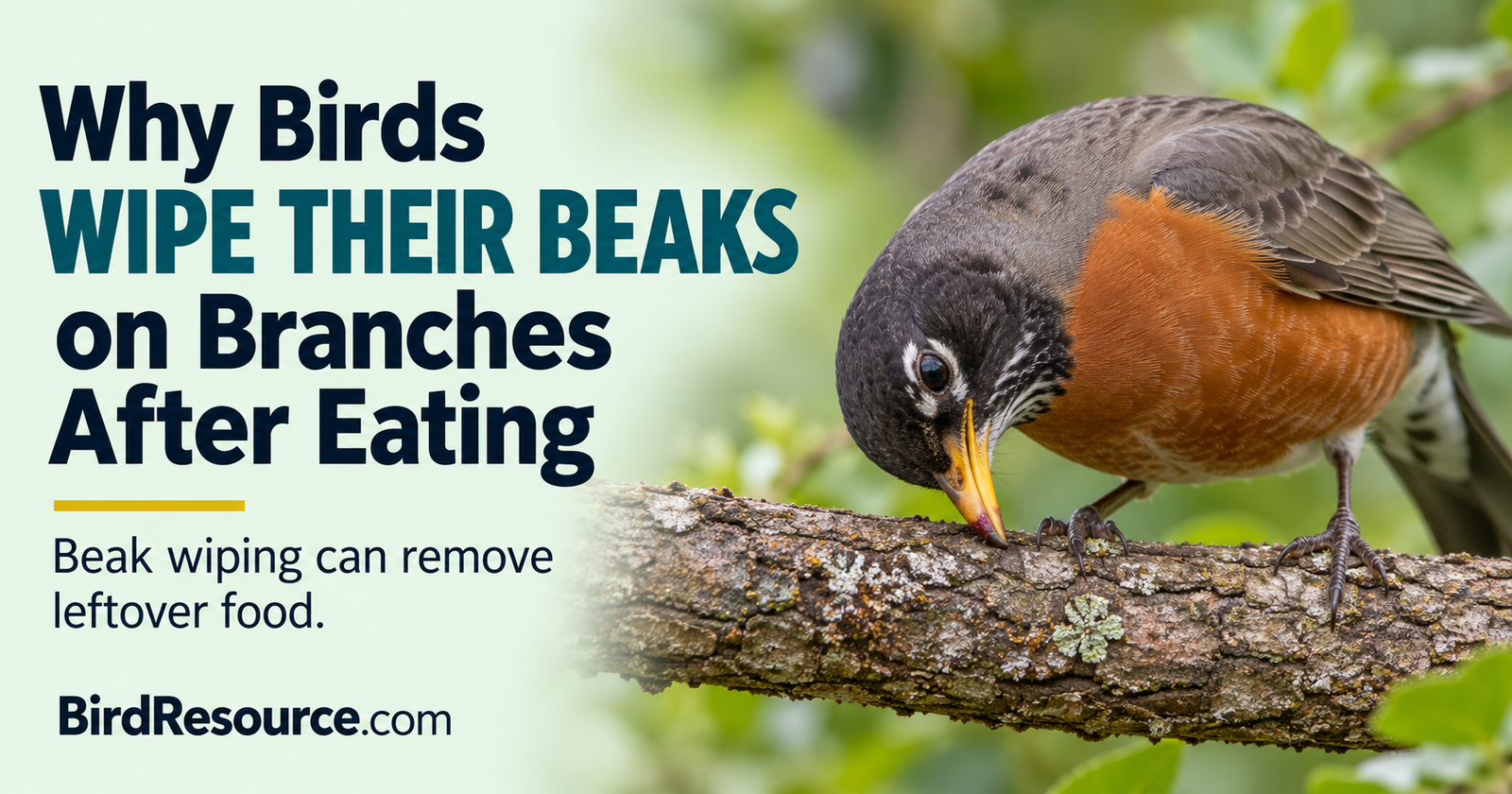
A bird finishes eating, hops onto a nearby branch, and starts rubbing the side of its beak against the wood.
Sometimes it makes two quick swipes.
Other times it rubs one side, switches to the other, and repeats the whole thing.
It almost looks like the bird is wiping its mouth on a napkin.
And that’s actually one of the reasons birds do it.
But cleaning leftover food isn’t the entire explanation.
Researchers have discovered that rubbing the beak against branches can also help maintain its shape. There’s even evidence that certain birds use the behavior during social interactions.
That’s what makes this little backyard habit worth paying attention to.
Something that looks like a bird simply cleaning up after lunch can reveal quite a bit about how it uses one of the most important tools on its body.
The Most Obvious Reason Is Cleaning Up After Eating
Think about what happens when a bird eats.
A cardinal cracks sunflower seeds.
A robin pulls apart a juicy worm.
A woodpecker works through suet.
A Blue Jay handles peanuts.
Not every meal leaves the beak perfectly clean.
Food particles, oils, and other material can remain around the bill.
And unlike us, birds can’t grab a paper towel.
So they use what’s available.
A branch.
A fence.
A feeder perch.
Sometimes even the edge of a birdbath.
The National Audubon Society’s research-based explanation of beak wiping describes cleaning as one of the clearest functions of this behavior.
Researchers have even found that European Starlings wipe their bills more frequently after eating sticky foods than dry foods.
That makes perfect sense.
The messier the meal, the more useful a quick wipe becomes.
I’d Watch What the Bird Ate Before It Started Rubbing
This is where I think backyard observation becomes much more interesting than simply memorizing bird facts.
If I noticed a bird wiping its beak, the first thing I’d want to know is what happened immediately beforehand.
Was it eating sunflower seeds?
Picking through suet?
Eating berries?
Catching insects?
Or had it been sitting quietly without eating anything?
Those details matter.
A bird rubbing its bill immediately after eating something sticky gives us a different clue than one repeatedly wiping its bill during an interaction with another bird.
The movement may look identical, but the reason behind it isn’t necessarily the same.
That’s why I’d pay attention to the entire sequence rather than only the few seconds when the bird rubs its beak.
Birds May Actually Be Filing Their Beaks
Here’s the part that surprised me.
A bird’s beak isn’t simply a hard object that stays exactly the same throughout its life.
The outer covering contains keratin, the same general material found in human fingernails.
And it continues growing.
Normal feeding activities help wear and maintain that outer surface.
But researchers have also investigated whether rubbing against branches contributes to beak maintenance.
The results were interesting.
In experiments involving European Starlings, researchers found evidence that bill wiping influenced beak length and shape.
Birds given different perch surfaces also changed how frequently they wiped their bills.
That suggests the behavior can help maintain a useful bill shape.
It’s not necessarily just about removing yesterday’s lunch.
The bird may also be maintaining the tool it needs to eat tomorrow.
Why Would Beak Shape Matter So Much?
Imagine trying to crack sunflower seeds with a badly shaped tool.
Or trying to pick up tiny insects with something that no longer closes properly.
A bird’s bill is essential for feeding.
But it also does much more.
Birds use their bills to:
- Handle and manipulate food.
- Preen and arrange feathers.
- Carry nesting materials.
- Interact with other birds.
- Explore objects in their environment.
Different species have different bill shapes because they use them for different purposes.
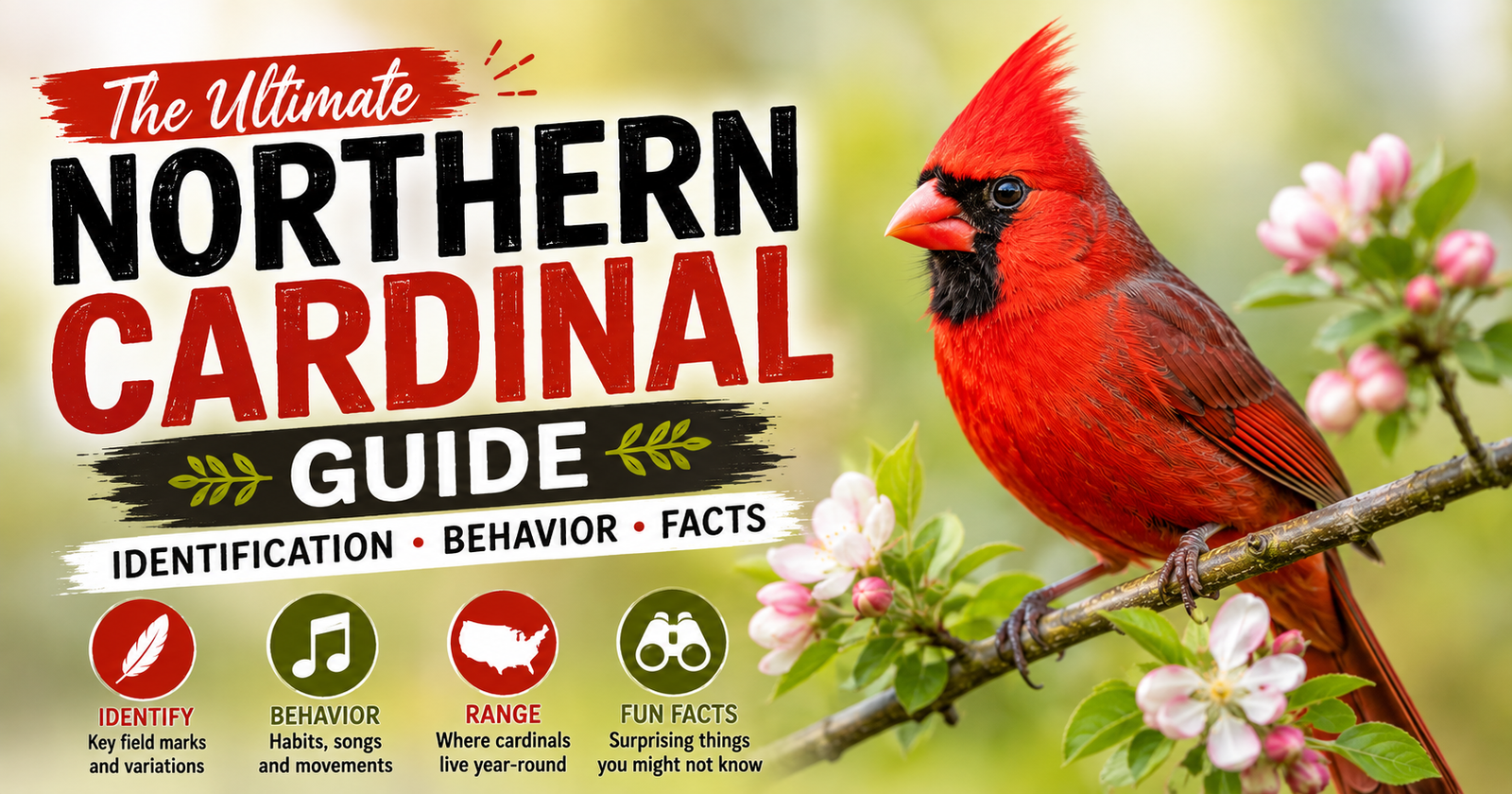
Our Northern Cardinal identification guide shows the thick, cone-shaped bill that helps cardinals handle seeds.
Compare that with the slender bill of a Mourning Dove.
They’re very different tools.
And keeping those tools in working condition matters.
Why Do Birds Rub Both Sides of Their Beaks?
This is one of the details I’d watch closely.
A bird may rub one side of its bill against a branch, then turn its head and rub the other.
If the purpose is cleaning, that makes sense.
Food residue doesn’t necessarily collect evenly.
The same basic logic applies to maintaining the outer surface of the bill.
But I wouldn’t assume every bird is deliberately performing a perfectly balanced sharpening routine.
Sometimes it may make only one or two swipes.
Sometimes several.
The behavior varies.
Researchers have documented birds wiping their bills repeatedly, sometimes far more often than the quick movements most people notice.
A Bird Doesn’t Need a Rough Branch Every Time
It’s tempting to assume that birds specifically seek out rough bark to sharpen their beaks.
But they wipe against all kinds of surfaces.
Wood.
Metal.
Rope.
Feeder edges.
Other solid objects.
That tells us something important.
Beak wiping isn’t always about grinding the bill against the roughest available surface.
Sometimes a smooth perch works perfectly well for removing food.
And different surfaces may contribute differently to normal bill maintenance.
I’d avoid interpreting every beak wipe as sharpening.
Cleaning is often the simpler explanation.
Why Do Cardinals Wipe Their Beaks After Eating?
Cardinals are a good bird to watch for this behavior because their feeding method involves handling and cracking seeds.
A Northern Cardinal uses its strong bill to manipulate seeds and break open shells.
After eating, it may rub its bill against a nearby perch or branch.
That can help remove leftover material.
If you’re watching cardinals at a feeder, I’d pay attention to whether they wipe more frequently after particular foods.
For example, does the behavior follow sunflower seeds?
Does it happen after safflower?
Does it happen when the bird hasn’t eaten anything recently?
Those are useful observations to record.
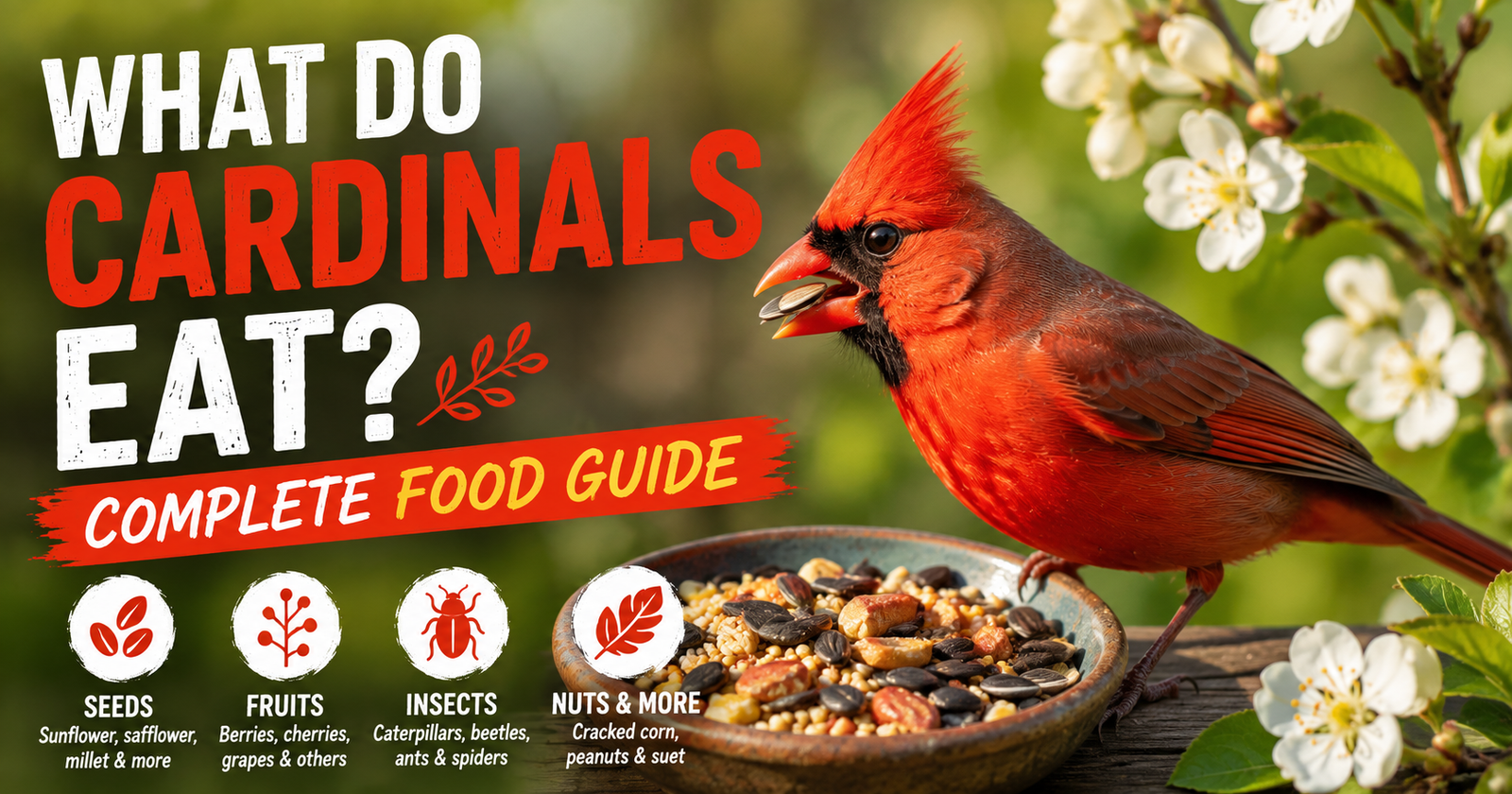
Our guide to what Cardinals eat explains their feeding habits and the foods they’re naturally equipped to handle.
Blue Jays Have Plenty of Reasons to Keep Their Bills Clean
Blue Jays are another interesting species because they handle such a wide variety of foods.
Peanuts.
Acorns.
Sunflower seeds.
Insects.
Fruits.
And other natural foods.
Some require considerable manipulation.
Others may leave residue behind.
If I were watching Blue Jays at a peanut feeder, I’d look for beak wiping after the bird finished opening or eating food.
But I wouldn’t automatically assume that every jay rubbing its bill is cleaning peanut residue.
The behavior can have multiple functions.
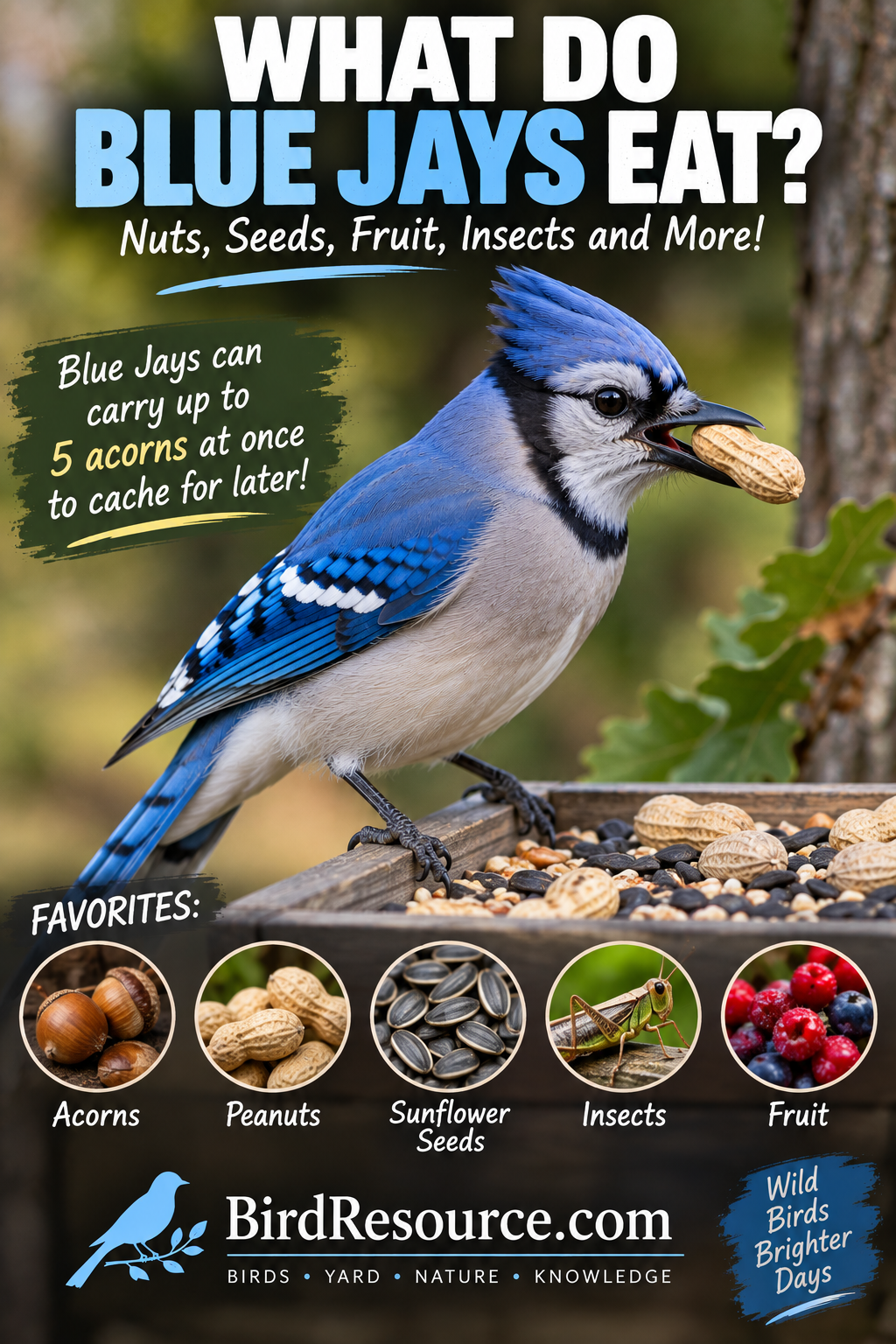
Our Blue Jay food guide explains why these birds are so well equipped to handle a wide variety of foods.
Here’s the Really Strange Part: Beak Wiping May Be Social
This is the explanation I find most unexpected.
Researchers have noticed that birds sometimes wipe their bills during social interactions.
And not necessarily after eating.
One study involving Dark-eyed Juncos found evidence that bill wiping may be associated with courtship behavior.
Researchers observed differences in bill-wiping responses when birds encountered potential mates.
That raises an interesting possibility.
Sometimes a bird rubbing its beak may be doing something connected to communication rather than cleaning.
Scientists have also investigated whether the behavior could transfer scent-related substances onto nearby surfaces.
But I wouldn’t claim that’s the established purpose of every bill wipe.
The evidence is species-specific, and researchers are still exploring the behavior.
That’s what makes it interesting.
Something that appears completely ordinary may serve different purposes depending on the situation.
Could Beak Wiping Be a Sign of Stress?
Possibly, depending on the species and circumstances.
Some birds perform repetitive movements during stressful situations.
But I wouldn’t look at a wild bird wiping its beak twice and decide it was anxious.
That would be reading far too much into one ordinary behavior.
A bird that just finished eating and casually wipes its bill is probably doing something completely normal.
Context matters much more than the movement alone.
If I wanted to investigate possible stress, I’d look for other unusual behaviors rather than treating occasional bill wiping as a warning sign.

Does Beak Wiping Mean a Bird Is Sick?
Usually, no.
Occasional beak wiping is normal.
But there’s a difference between a bird cleaning its bill after eating and one repeatedly rubbing its face while showing signs of illness.
I’d be more concerned if I noticed:
- Visible swelling or abnormal growth around the bill.
- Bleeding or discharge.
- Difficulty picking up or swallowing food.
- Persistent abnormal rubbing accompanied by weakness or distress.
Those signs deserve attention.
For an injured or obviously sick wild bird, I’d contact a licensed wildlife rehabilitator rather than trying to diagnose the problem from one behavior.
A normal beak wipe isn’t an emergency.
The Simple Backyard Observation I’d Try
This is one experiment I’d like to see documented with real photographs or video.
I’d choose a feeder where birds already visit regularly.
Then I’d observe the same location for several short sessions.
I wouldn’t change the food immediately.
First, I’d establish what normally happens.
I’d Record the Food
Was the bird eating sunflower seeds?
Suet?
Peanuts?
Fruit?
Or something else?
I’d Watch for the First Beak Wipe
Did the bird wipe immediately after eating?
Or several minutes later?
Did it rub both sides?
How many times?
I’d Note the Surface
Was it a rough branch?
A smooth feeder perch?
A fence?
Something else?
Then I’d Compare Different Feeding Sessions
I’d look for patterns rather than deciding one observation proves anything.
Maybe birds wipe more frequently after messy foods.
Maybe certain species use particular surfaces.
Maybe some birds wipe their bills even when no feeding activity is visible.
That would give us something genuinely useful to document.
These are proposed observations, not results from an experiment I’ve already conducted.
Common Questions About Birds Wiping Their Beaks
Why do birds wipe their beaks on branches?
Usually to remove food residue or other material. Research also suggests that wiping can help maintain bill shape.
Are birds sharpening their beaks when they rub them?
Sometimes bill maintenance may be involved. However, cleaning is another important explanation, and not every wipe should be interpreted as sharpening.
Why do birds rub their beaks after eating?
Food can leave oils, particles, and other residue on the bill. Rubbing against a solid surface helps remove it.
Do Cardinals wipe their beaks?
Yes. Cardinals and many other songbirds can wipe their bills against branches, perches, and other surfaces.
Why does a bird wipe both sides of its beak?
The bird may be cleaning residue from both sides or performing normal bill maintenance.
Is beak wiping a sign of illness?
Not by itself. Occasional wiping is normal. Persistent abnormal rubbing accompanied by swelling, discharge, difficulty eating, or other symptoms is more concerning.
Do birds wipe their beaks to communicate?
Research suggests bill wiping may have social functions in certain species, including possible associations with courtship. The purpose isn’t fully established across all birds.
A Bird’s Beak Is More Than Something It Eats With
That’s what makes this behavior interesting to me.
A bird lands.
Eats.
Turns its head.
Wipes its beak against a branch.
And flies away.
It’s easy to overlook because the entire movement may last only a second.
But that little action can help remove food, maintain an important feeding tool, and possibly serve other functions we don’t completely understand yet.
The next time I noticed a cardinal or Blue Jay rubbing its beak against a branch, I’d pay attention to what happened immediately beforehand.
Was it eating?
Was another bird nearby?
Did it wipe once or repeatedly?
Sometimes those tiny details tell us more about bird behavior than the dramatic things that first catch our attention.
Elias Brackenfield is a Backyard Bird Behavior Contributor for BirdResource.com, where he explores the everyday behaviors of wild birds and helps readers recognize the small details that make backyard birdwatching more interesting.