Finding a bird feeder that holds seed is easy.
Finding one that Northern Cardinals actually look comfortable using takes a little more thought.
Cardinals aren’t tiny feeder birds. They’re fairly substantial songbirds with long tails, stocky bodies, and heavy seed-cracking bills. That becomes obvious the first time you watch one trying to maneuver around a feeder designed for much smaller birds.
That’s why I don’t choose a cardinal feeder based on whether there’s a picture of a bright red bird on the package.
I look at the actual design.
Can a cardinal land comfortably?
Is there enough room for its body and tail?
Can it reach the seed without hanging awkwardly from a tiny perch?
Can I keep the feeder clean?
Will the seed stay reasonably protected?
And, if I’m spending more money, am I getting something that makes backyard birdwatching more enjoyable too?
For most people, platform feeders, roomy hopper feeders, and larger feeders with substantial perches are the styles I’d look at first.
But there’s another type that has become much more interesting recently.
The smart bird feeder.
And if I wanted a feeder that didn’t just attract cardinals but also let me watch, record, and identify the birds visiting my yard, there’s one in particular I’d consider. Readers comparing feeders, cameras, and other equipment can browse our Bird Products & Gear guides.
My Favorite Smart Bird Feeder for Watching Cardinals
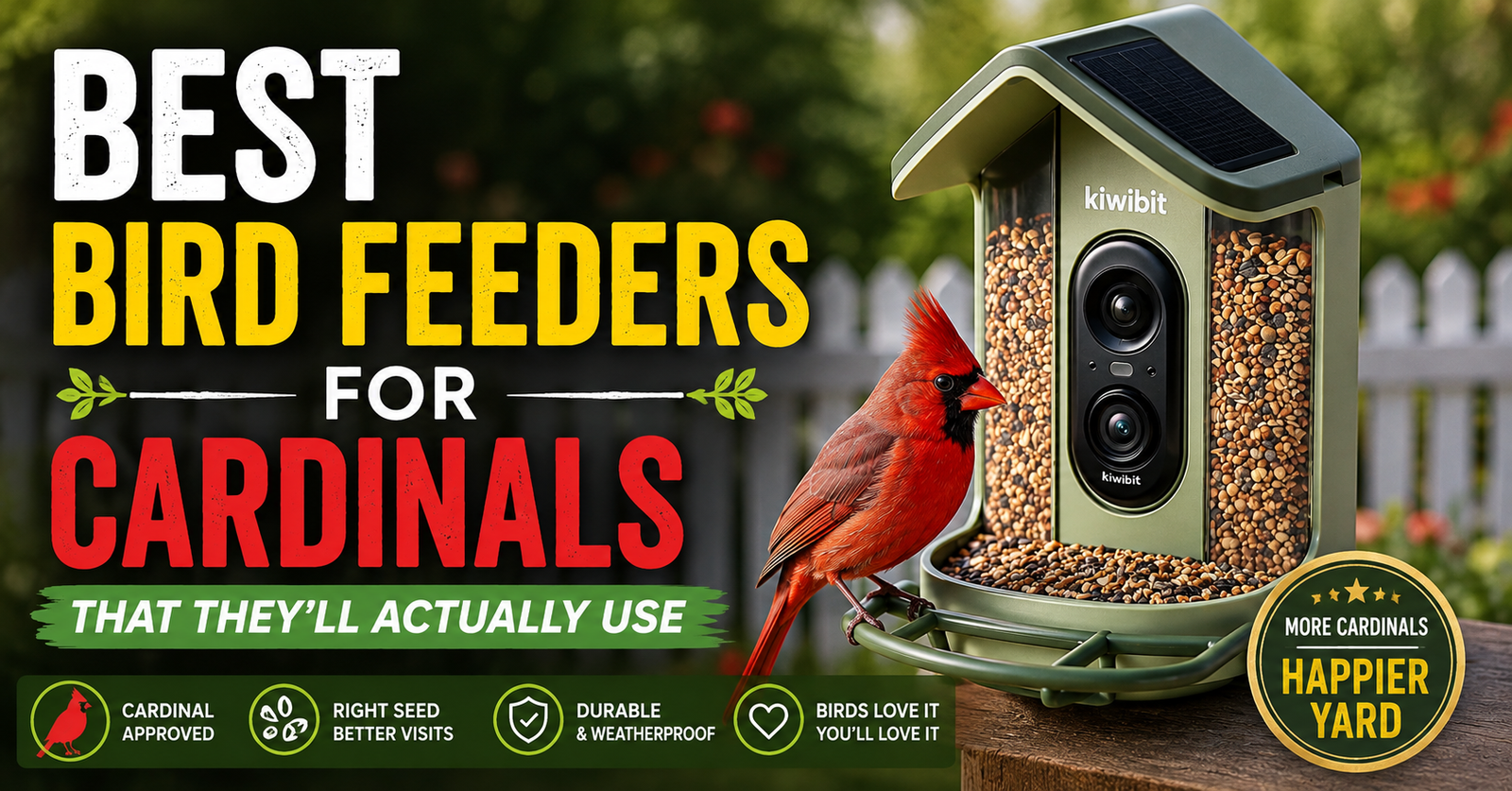
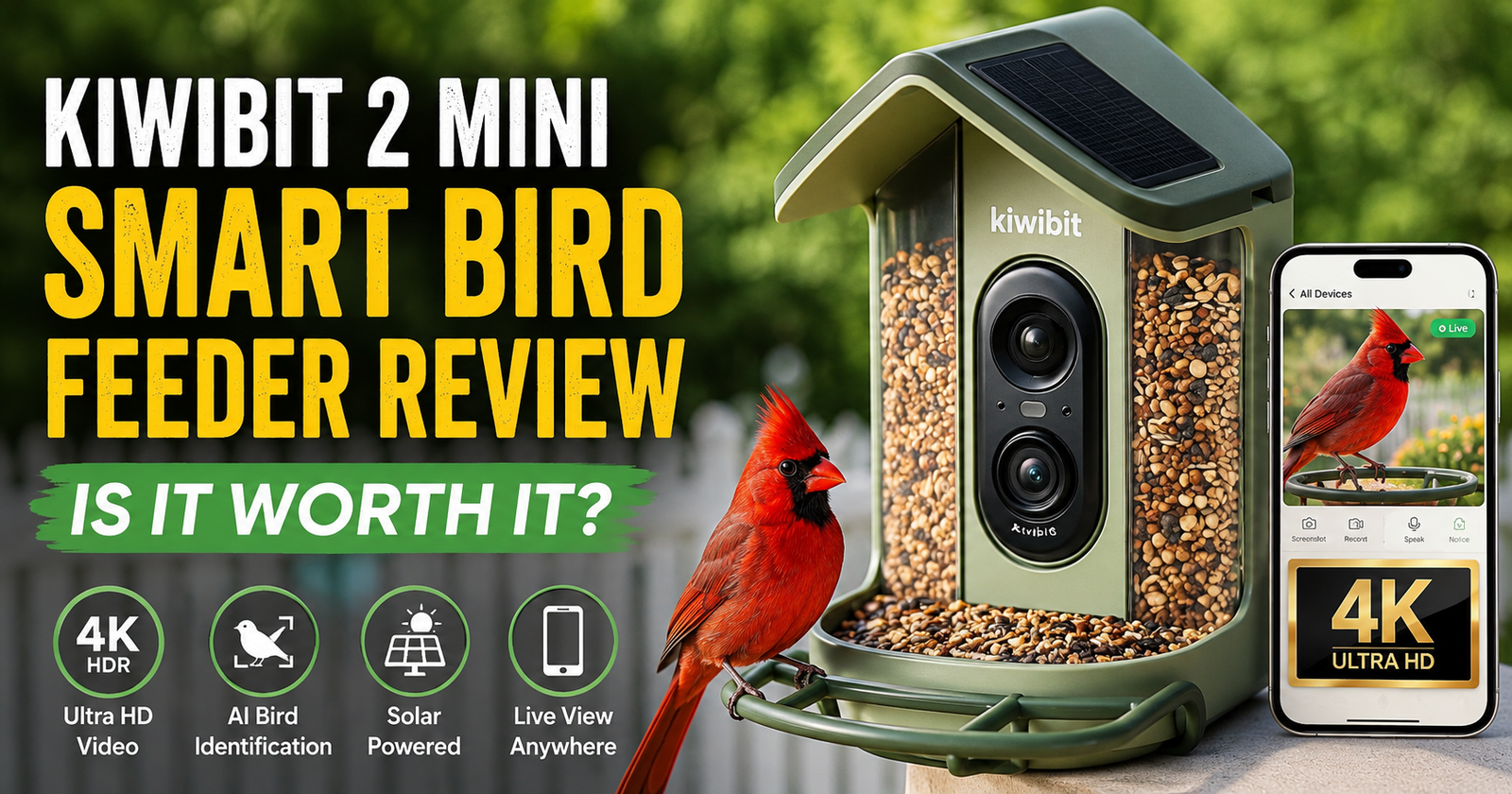
The Kiwibit Smart Bird Feeder 2 Mini takes a completely different approach to backyard bird feeding.
It’s still a feeder.
You fill it with seed.
Birds land and eat.
But sitting directly in front of that feeding area is a camera capable of capturing the birds that visit.
The current model offers 4K HDR video, an 8MP camera, slow-motion recording, solar charging, live viewing, bird alerts, and AI-assisted bird identification. Kiwibit also advertises identification covering more than 10,000 bird species.
That’s why I wouldn’t think of this as merely another place to dump sunflower seed.
It’s almost like putting a tiny birdwatching station in your backyard.
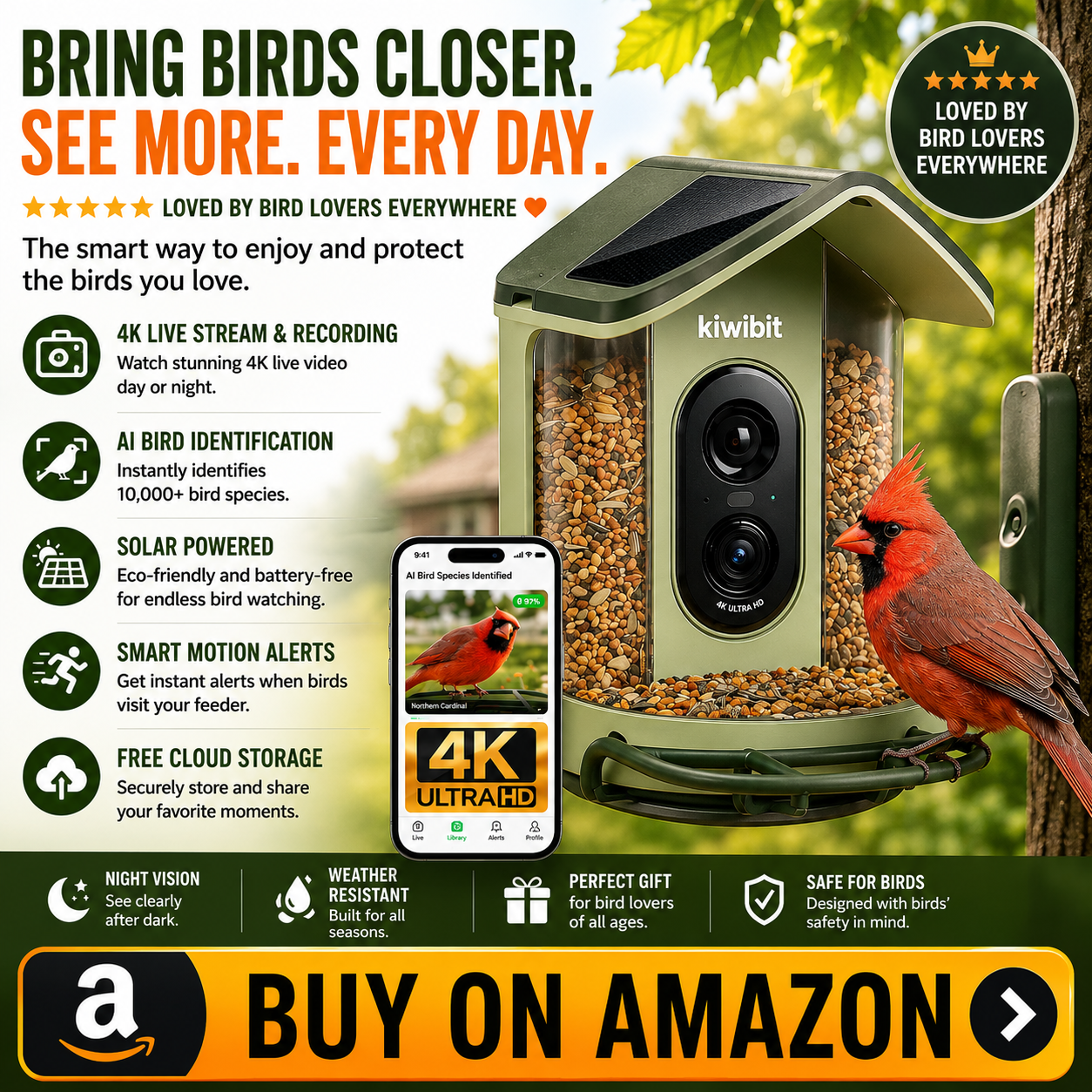
See the Kiwibit 4K smart bird feeder on Amazon
Why I Think This Feeder Is Especially Fun for Cardinals
Northern Cardinals are almost perfect birds for a camera feeder.
An adult male is obviously spectacular up close.
That deep red plumage, raised crest, black face, and huge orange-red bill make him one of the most recognizable backyard birds in North America.
But I’d be just as interested in seeing the females and young birds.
A female Northern Cardinal isn’t simply a dull version of the male. She has beautiful warm brown plumage with reddish accents, and her crest and heavy bill make her unmistakably cardinal-like once you know what you’re looking for.
Then a juvenile shows up.
Now things get interesting.
Young cardinals can have darker bills and immature plumage that make people stop and wonder what they’re looking at.
A camera sitting inches away gives you an opportunity to notice those details.
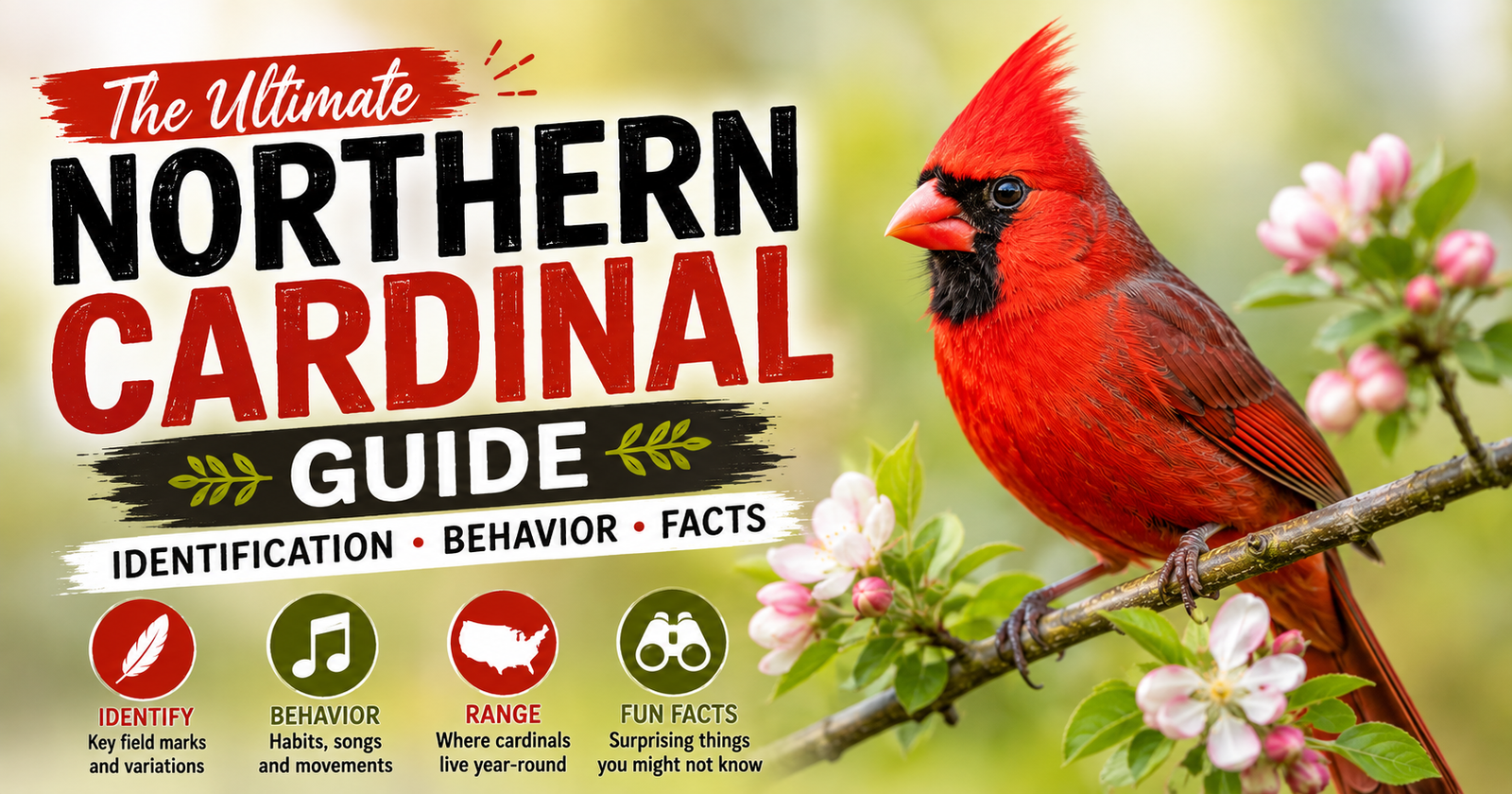
Our Northern Cardinal identification and behavior guide can help you work through those differences when unfamiliar-looking cardinals start appearing at your feeder.
You Don’t Need a Smart Feeder to Attract Cardinals
I want to make this very clear because I don’t like product articles that pretend buying something expensive is the only way to accomplish a simple goal.
Cardinals do not need a camera feeder.
They couldn’t care less whether they’re being recorded in 4K.
If your only goal is getting a cardinal to eat birdseed, a good traditional feeder can work beautifully.
The smart features are for you.
You’re paying for the ability to see what happens when you aren’t standing at the window.
You’re paying to save pictures.
You’re paying to watch birds up close.
You’re paying to potentially identify unfamiliar visitors.
You’re paying to turn an ordinary feeding station into something much more interactive.
That’s why I think the Kiwibit makes the most sense for someone who already enjoys backyard birds rather than someone simply looking for the cheapest possible way to put seed outside.
What Type of Bird Feeder Do Cardinals Like Best?
If we’re talking strictly about physical feeder design, I generally prefer feeders that provide plenty of usable space.
Platform Feeders
A platform feeder is one of the simplest options.
It’s basically an elevated tray.
And sometimes simple is exactly what a cardinal needs.
Instead of trying to balance on a tiny perch, the bird can land on the feeding surface, stand normally, grab a seed, crack it open, and continue feeding.
Platform feeders also give you an excellent unobstructed view of the bird.
Their weakness is that everything else can access them easily too.
Squirrels.
Doves.
Jays.
Other larger birds.
And because the seed is exposed, good drainage becomes extremely important.
Hopper Feeders
A roomy hopper feeder is another design I like for cardinals.
These generally hold seed in an enclosed reservoir and release it into a feeding area below.
That can give you a nice combination of seed capacity, some protection from weather, and enough room for a cardinal to land.
The important part is the feeding ledge.
Some hopper feeders provide plenty of space.
Others look large overall but have surprisingly narrow areas where the bird actually has to stand.
That’s what I’d inspect before buying.
Larger Tube Feeders
Cardinals can use tube feeders too.
I just wouldn’t intentionally choose one with tiny little stick perches if cardinals were my main target.
Look for a substantial perch, circular ring, tray, or another design that gives a larger songbird room to position itself.
The important thing isn’t whether the feeder is called a tube, hopper, or platform.
It’s whether an actual cardinal can comfortably use it.
Tiny Perches Are What I’d Avoid
This is probably my simplest buying advice.
Imagine the cardinal on the feeder.
Not the bird pictured on the package.
The real bird.
Where are its feet going?
Where is its tail going?
How does it reach the seed?
If the answer appears to involve hanging sideways from a tiny peg while twisting around to reach a little hole, I’m probably choosing something else.
Northern Cardinals naturally do a lot of their feeding on or near the ground, so giving them a more substantial place to stand makes sense.
I want the feeder to work with the bird’s natural behavior, not make the bird solve a puzzle every time it wants breakfast.
Why the Kiwibit Gives You Something Traditional Feeders Can’t
This is where we get away from feeder mechanics and into why I’d actually spend extra money on a smart feeder.
You don’t have to be there.
That’s huge.
Think about how we normally observe a feeder.
You look outside.
Nothing.
You walk away.
A cardinal arrives.
You come back.
Nothing.
Meanwhile, birds have been coming and going all day.
A smart feeder changes that.
The Kiwibit can detect activity around the feeder and provide notifications, letting you see visits you otherwise might have completely missed.
That’s what interests me more than simply saying:
“This feeder has a camera.”
It extends your birdwatching beyond the time you’re physically staring outside.
Imagine Seeing Your First Young Cardinal on Camera
This is one of the things I’d genuinely enjoy.
You start seeing adult cardinals during spring.
Then nesting season progresses.
Weeks later, something different lands on the feeder.
It’s cardinal-shaped.
It has the crest.
But the colors aren’t quite right.
And that bill looks dark.
Now you’ve got an image you can actually examine rather than a two-second memory.
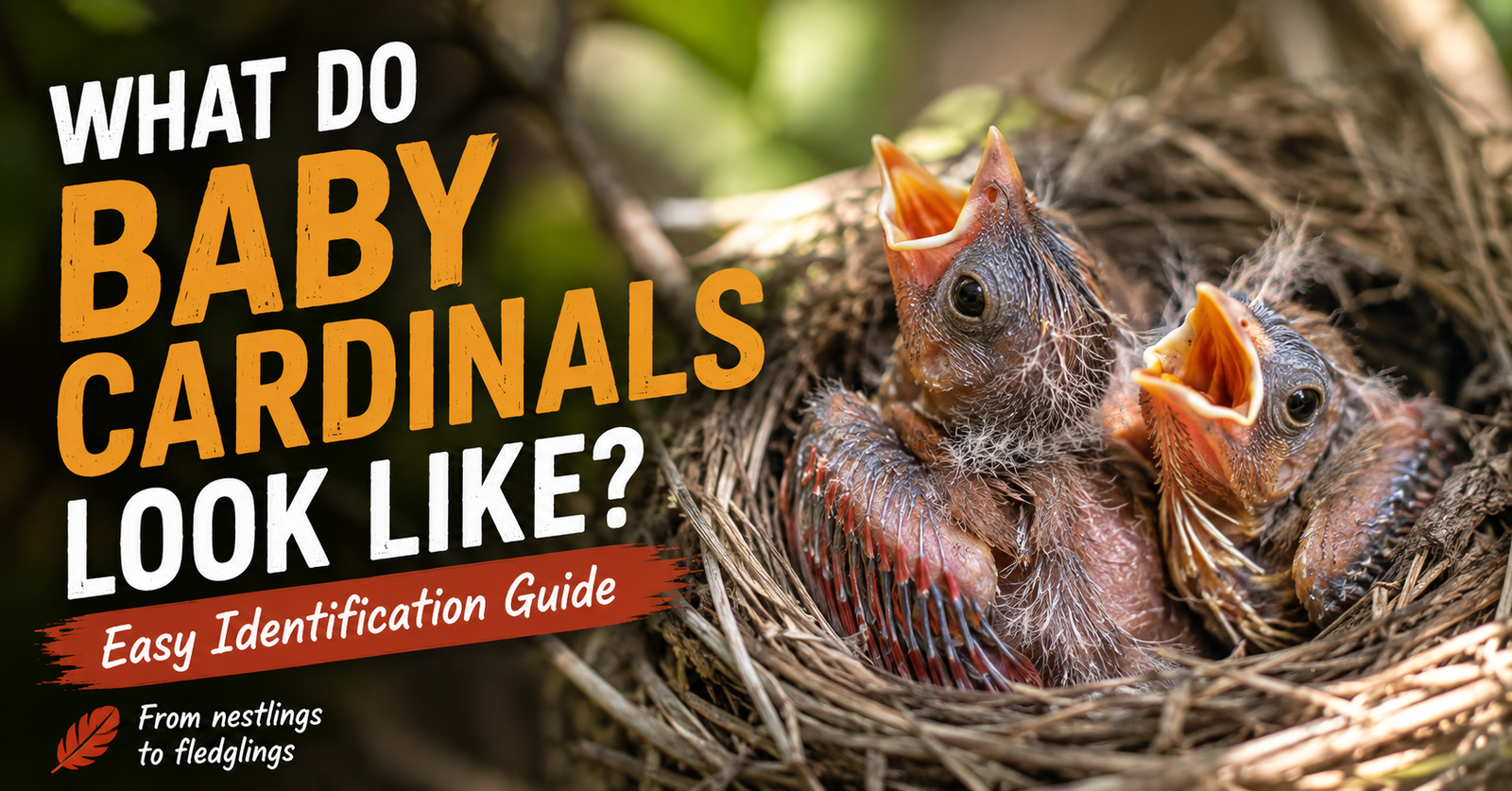
Our guide to what baby and juvenile cardinals look like explains those changing features, including what happens as young birds gradually begin looking more like adults.
A smart feeder could make watching that transition incredibly interesting.
The 4K Camera Makes More Sense When the Bird Is This Close
I don’t get overly excited about resolution numbers just because they’re large.
But there’s a legitimate advantage here.
The bird is sitting right in front of the camera.
Kiwibit advertises 4K HDR video from the Mini, along with 8MP images and a wide-angle view of the feeding area.
That close distance gives you the opportunity to see details.
Feather patterns.
Bill shape.
Eye color.
Plumage differences.
The condition of the feathers.
Even the way the bird manipulates individual seeds.
For identification, those details can be useful.
For somebody who simply loves cardinals, they’re fun to see.
Slow-Motion Video Might Be More Fun Than It Sounds
Birds move ridiculously fast.
Watch a cardinal fly onto a feeder at normal speed and the entire landing happens almost instantly.
Slow it down and suddenly you can see the wings spread.
Tail flare.
Feet reach forward.
Body settle.
Then the bird folds everything back together and starts eating like nothing happened.
The Kiwibit Mini supports slow-motion recording in addition to its higher-resolution video.
That’s not a feature anybody needs to feed birds.
But it’s exactly the kind of thing I’d start playing with once I had it.
Can the AI Tell Male and Female Cardinals Apart?
I wouldn’t buy the feeder expecting AI to replace learning how to identify birds yourself.
The system can provide species-identification assistance, but automated identification isn’t something I’d blindly trust in every situation.
Lighting can be bad.
The bird can be partially hidden.
Juveniles can look strange.
Molting birds can look strange.
Closely related species can create identification problems.
A perfect adult male Northern Cardinal sitting directly in front of the camera isn’t exactly the world’s greatest identification challenge.
Other visitors might be.
That’s why I’d use the AI result as a starting point.
Then look at the actual bird.
The more you do that, the less you’ll need help identifying common visitors.
This Could Help You Discover Birds You Didn’t Know You Had
This may actually be my favorite reason for owning a camera feeder.
Everybody notices the male cardinal.
He’s bright red.
He practically demands attention.
But what else is visiting?
Maybe a small bird arrives every morning before you’re awake.
Maybe another species appears while you’re at work.
Maybe something unusual passes through during migration.
Maybe you’ve had a bird visiting for months that you simply never noticed.
A traditional feeder attracts the bird.
A camera feeder can create a record that the bird was actually there.
That’s a meaningful difference.
The Solar Panel Makes Sense for Something Living Outside
Outdoor camera devices have one obvious problem.
Power.
I don’t want to constantly remove the camera and bring it inside just because the battery needs charging.
The Kiwibit Mini includes solar charging designed to help keep its rechargeable battery powered while it’s outside.
That’s a feature I’d consider genuinely important rather than decorative.
Of course, solar performance depends on the installation.
Put the feeder somewhere receiving almost no useful sunlight and you shouldn’t expect the panel to perform like one sitting in better conditions.
So before mounting it, I’d consider three things together:
birds, Wi-Fi, and sunlight.
You need a location that makes sense for all three.
Wi-Fi Is Something I’d Check Before Buying
This is the boring detail that can determine whether you love or hate a smart feeder.
Where are you putting it?
Now take your phone outside and walk to that location.
How’s the Wi-Fi?
If you’re barely connected, don’t assume a smart bird feeder is going to magically have perfect connectivity there.
The Kiwibit uses Wi-Fi for its connected features, so this is something I’d verify before deciding where the feeder will live.
A feeder 30 feet from your house with a solid signal is one thing.
A feeder way out behind a barn or at the back of a huge property can be another.
What Seed Should I Put in a Cardinal Feeder?
For cardinals, black oil sunflower seed is one of my favorite starting points.
Their heavy bills are extremely well suited to cracking seeds.
Safflower is another interesting option, particularly if squirrels are becoming a problem.

We’ve already taken a close look at why safflower seed can work so well for cardinals, including one of its biggest attractions for backyard feeding: squirrels often find it less appealing than sunflower seed.
That’s something I’d experiment with.
Start with a good food.
Watch what visits.
Then adjust.
A camera feeder makes that experiment even more interesting because you don’t have to guess which birds are actually eating what you’ve put out.
You Could Even Compare Cardinal Activity With Different Foods
This is where I’d probably get carried away.
Run black oil sunflower for a while.
What shows up?
Try safflower.
Did cardinal activity change?
Did squirrel activity change?
What about other birds?
Try an appropriate blend.
Compare again.
You’re not conducting a controlled university study in your backyard.
But you’re learning something about your own birds.
And I think that’s one of the coolest things about having a camera on the feeding station.
It encourages you to pay attention.
Where Should You Put a Cardinal Feeder?
Cardinals like having cover nearby.
They’re strongly associated with shrubs, thickets, hedgerows, woodland edges, and dense vegetation.
So I wouldn’t automatically put a feeder in the emptiest, most exposed portion of the yard.
At the same time, you need to think about predators, squirrels, windows, cleaning access, and, with a smart feeder, Wi-Fi and sunlight.
There isn’t one magic distance from a shrub that works for every property.
Look at the entire feeding station.
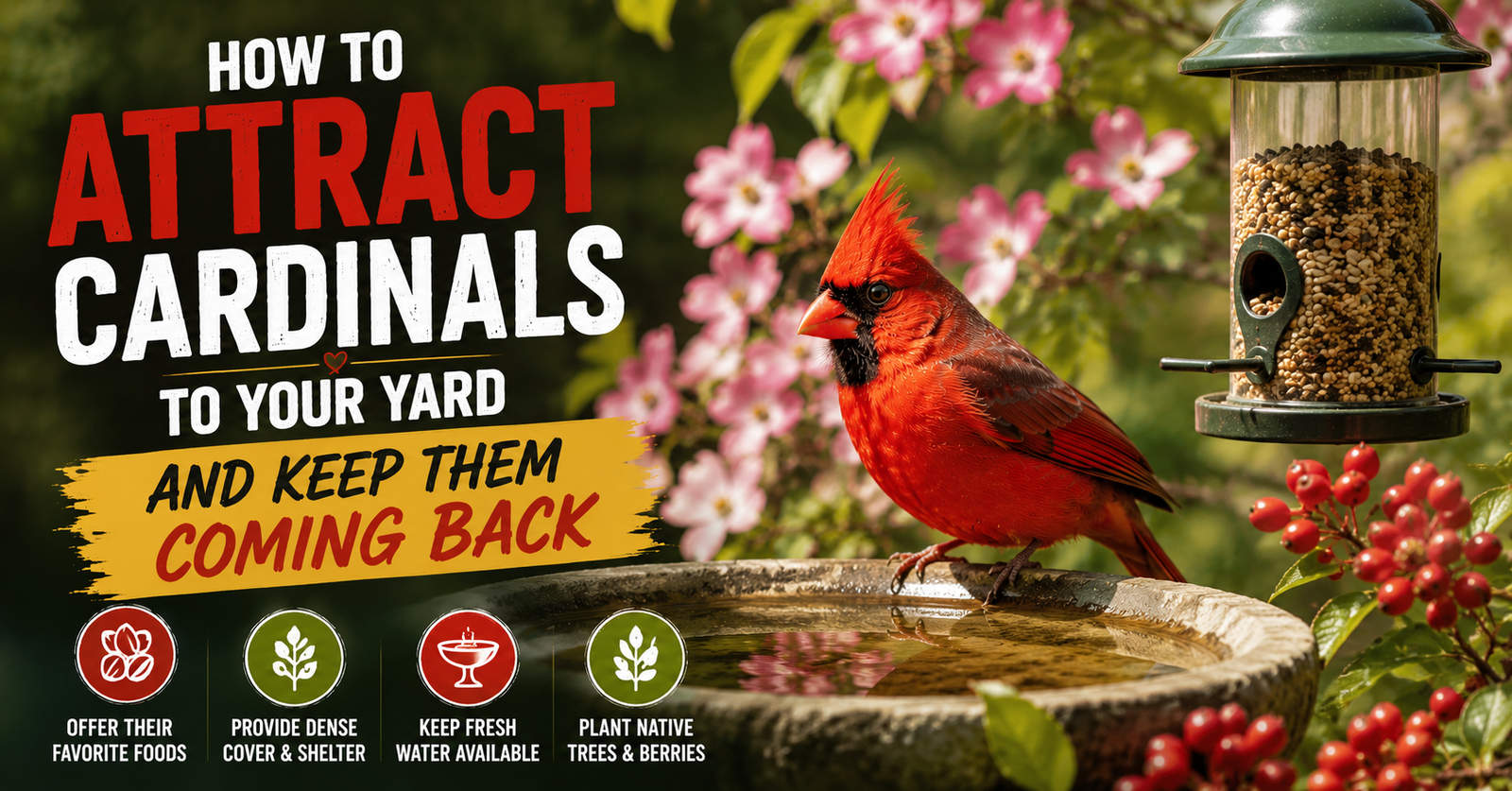
Our guide to attracting cardinals and keeping them coming back goes much deeper into building the kind of backyard environment cardinals actually want to use.
Don’t Forget About Windows
Cardinals and windows can become a bad combination.
Sometimes the problem is an accidental collision.
Other times it’s completely intentional.
During territorial periods, a cardinal may see its reflection and repeatedly attack the glass because it believes another cardinal has entered its territory.
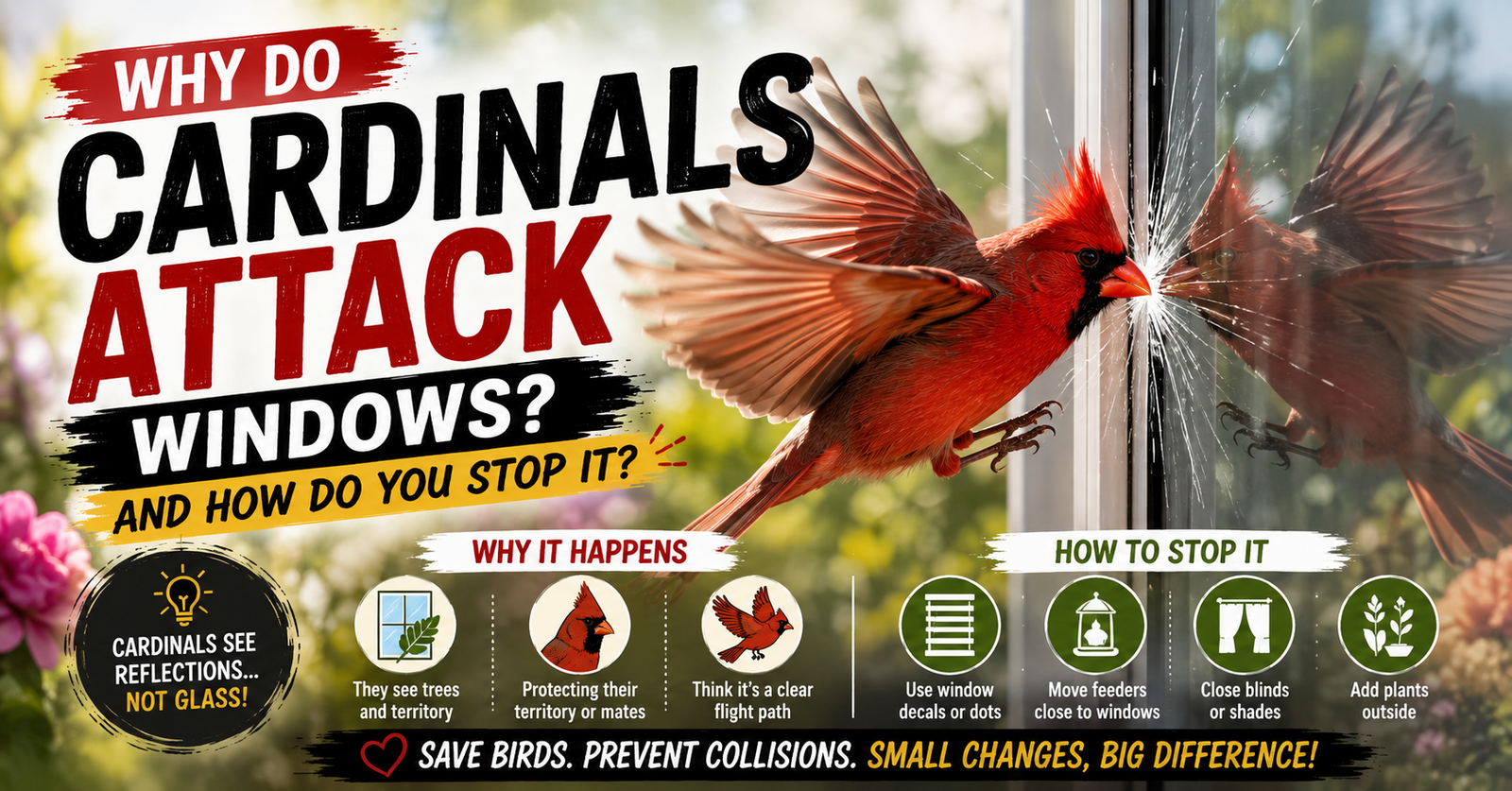
If you’ve ever watched one seemingly lose its mind against a window, our guide to why cardinals attack windows and how to stop it explains what’s actually happening.
Think about window safety when deciding where any feeder goes.
Will Cardinals Use a Smart Feeder in Winter?
They certainly can continue visiting feeders during winter.
Northern Cardinals don’t simply disappear south once temperatures drop. They’re year-round residents across their normal range.
That makes winter one of the times I’d most enjoy having a camera feeder.
A bright red male cardinal surrounded by fresh snow is one of those backyard scenes that never really gets old.
And with the camera already sitting at the feeder, you don’t need to be standing outside in freezing weather waiting for him.
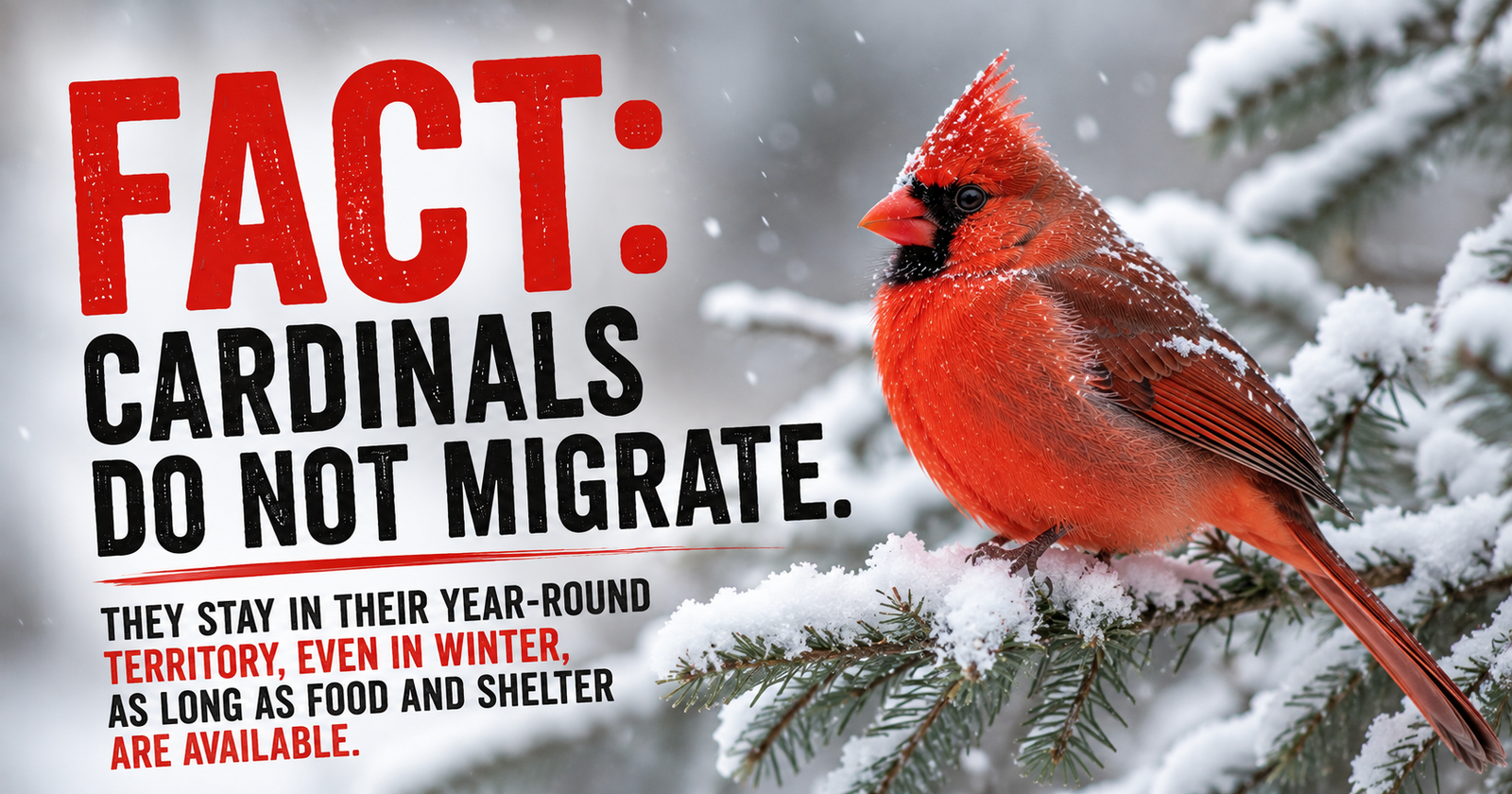
If you’re wondering why you’re still seeing the same birds after the temperature plunges, our guide to where cardinals really go in winter explains their seasonal movements and why they don’t need to migrate away.
Could the Camera Capture a Cardinal Pair?
Absolutely possible.
Cardinal pairs can both visit feeding areas, and watching the differences between the male and female up close would be one of the things I’d hope to capture.
You may even see interactions between them.
Cardinals are famous for their pair bonds, and males are sometimes observed feeding females during courtship.
But their relationships are more complicated than the simple claim that every pair stays together forever.
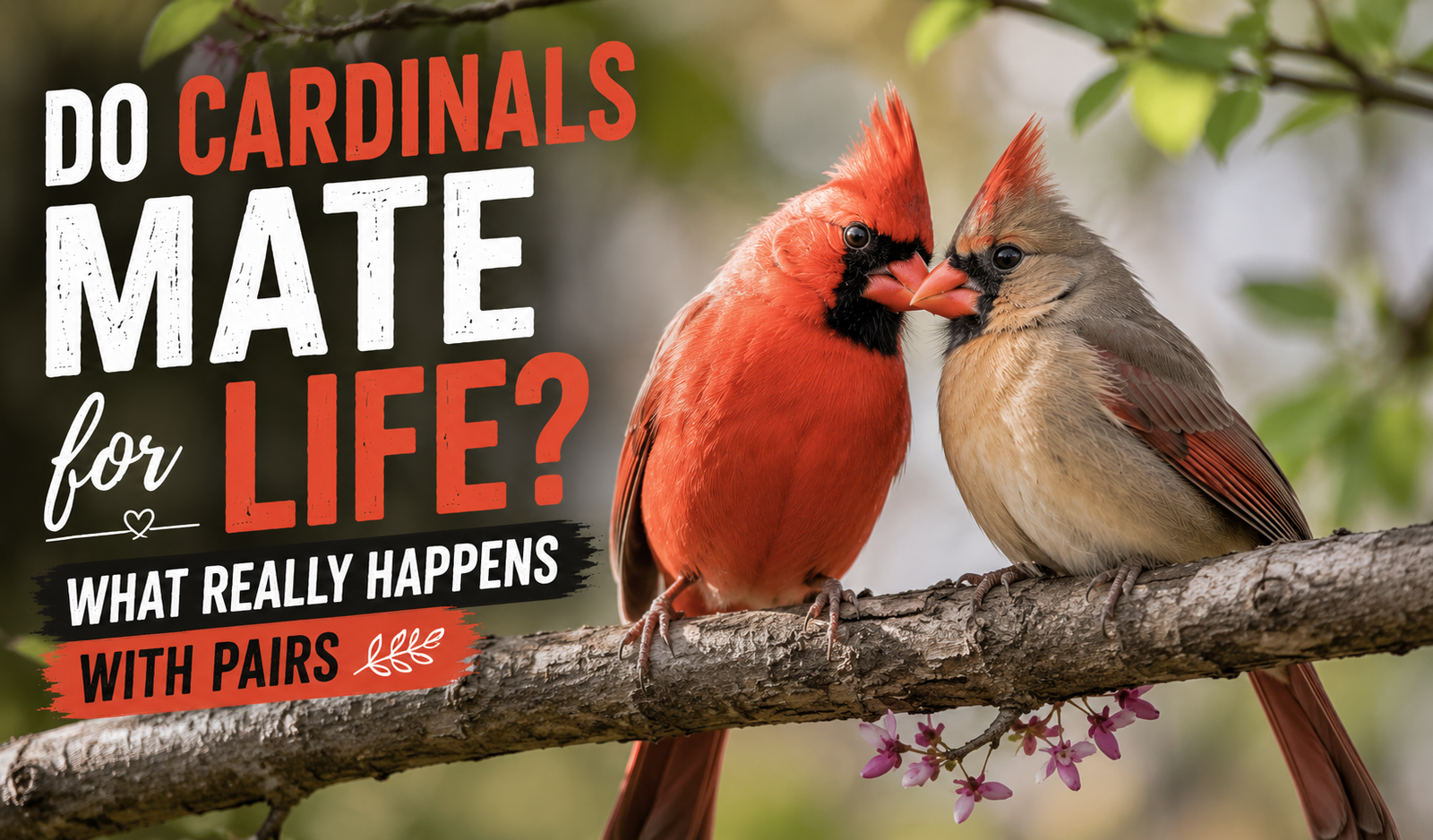
Our guide exploring whether cardinals really mate for life gets into what actually happens between pairs.
A camera feeder could give you a front-row seat to some of that behavior.
Could Baby Cardinals Eventually Show Up at the Feeder?
Young cardinals don’t jump out of the nest and immediately become completely independent adults.
Parents continue caring for fledglings after they leave.
As those young birds develop and begin exploring more of their surroundings, you may eventually see immature cardinals around feeding areas.
That can be incredibly confusing the first time.
People expect a “baby cardinal” to look like a miniature bright-red adult.
It doesn’t.
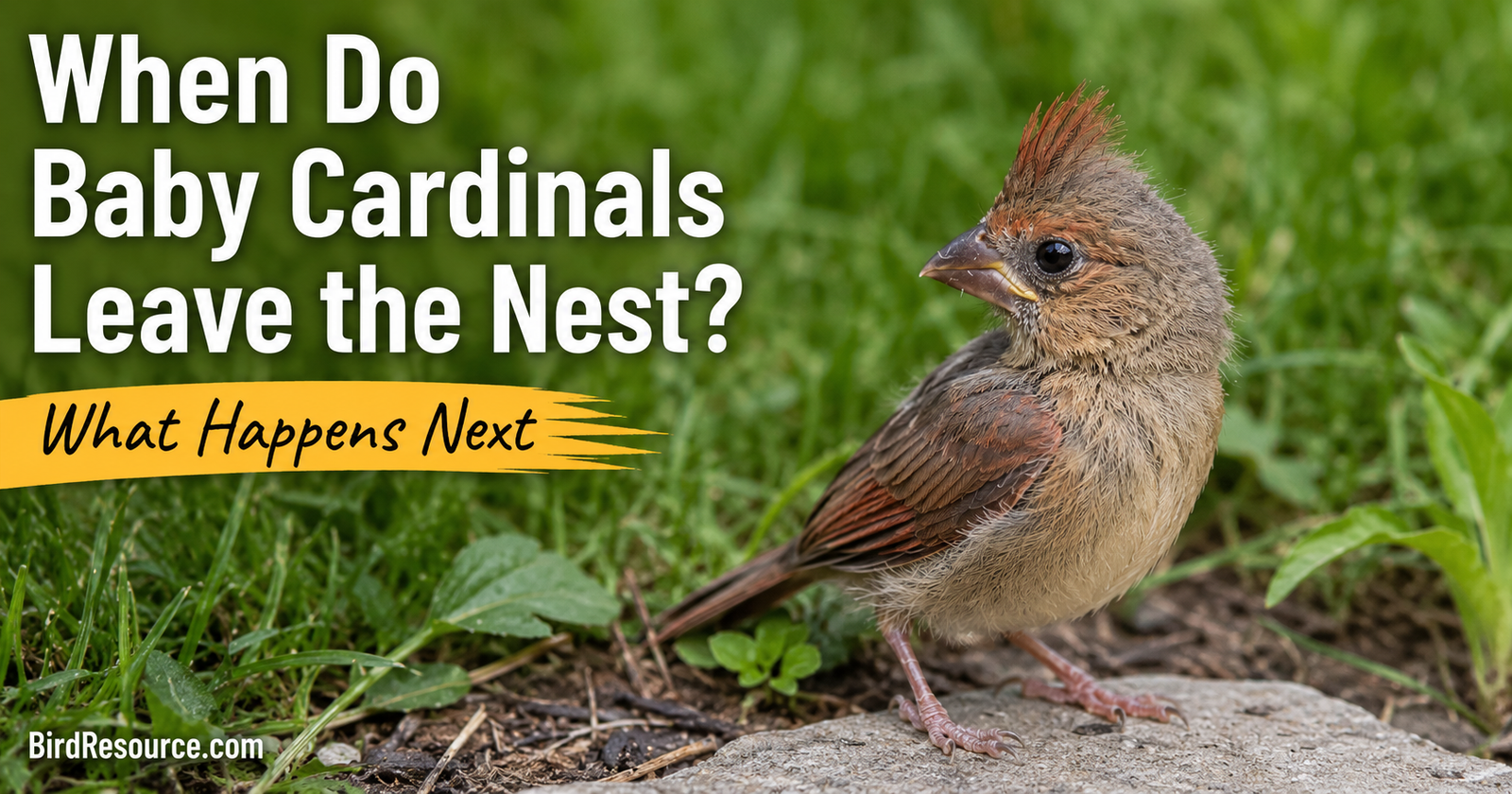
If you start seeing young birds around your feeder, our guide to when baby cardinals leave the nest and what happens afterward explains that vulnerable period much more closely.
Don’t Forget That Feeders Get Dirty
Smart feeder or $20 wooden platform, the rule is the same.
Keep it clean.
Birdseed gets wet.
Hulls accumulate.
Droppings happen.
Dust builds up.
Old food can sit in corners.
A camera doesn’t make any of that disappear.
If anything, spending more money on a feeder would make me more motivated to maintain it properly.
Remove old seed.
Don’t continually pile fresh food over something wet or spoiled.
Clean feeding surfaces.
Follow the manufacturer’s instructions around the electronic components.
Keep the food you’re offering fresh.
The coolest 4K bird footage in the world isn’t worth maintaining a filthy feeding station.
What About Squirrels?
They’re probably going to notice your feeder too.
That’s just backyard bird feeding.
You can use feeder placement, pole systems, baffles, and seed selection to reduce squirrel problems.
And this is another situation where safflower can become interesting.
Some squirrels show less interest in safflower than sunflower seed.
Not all of them.
I would never promise that.
But it’s such an easy variable to change that I think it’s worth experimenting with before assuming you need to completely redesign the feeding station.
Do You Need AI to Identify a Cardinal?
For an adult male?
Probably not for long.
He’s bright red, crested, long-tailed, and equipped with an enormous orange-red bill.
Once you learn him, you’ll recognize him instantly.
But that’s not really the point.
The AI isn’t there because Northern Cardinals are impossibly difficult to identify.
It’s there because you don’t control what lands on the feeder.
The cardinal may be what convinced you to buy it.
Then a completely unfamiliar bird arrives.
That’s when things get interesting.
Is the Kiwibit Smart Bird Feeder 2 Mini Worth It for Cardinal Lovers?
I think it depends on what you want.
If you simply want to feed cardinals as inexpensively as possible, no.
Buy a basic platform or roomy hopper feeder.
Spend the rest on quality birdseed.
But if you already enjoy watching cardinals and wish you could see what happens at the feeder when you’re not there, the Kiwibit becomes much more interesting.
You’re getting a feeder plus a close-up camera.
You’re getting 4K footage.
You’re getting alerts.
You’re getting slow-motion recording.
You’re getting solar charging.
You’re getting help identifying unfamiliar visitors.
And most importantly, you’re potentially seeing bird activity you’d otherwise completely miss.
That’s the reason I’d spend more.
Take a closer look at the Kiwibit Smart Bird Feeder 2 Mini on Amazon
Who I’d Recommend It To
I especially like this type of feeder for someone who’s becoming more serious about backyard birdwatching.
It’s also a great fit for families.
Kids can see which birds visited.
Parents can help identify them.
You can start keeping track of species.
You can compare seasonal visitors.
You can save interesting footage.
And because the feeder is doing the watching even when nobody is standing outside, you aren’t relying entirely on luck.
I’d also seriously consider it as a gift for someone who already loves birds.
A regular feeder is useful.
A smart feeder gives them something new to discover every day.
Who Should Skip It
If you hate dealing with apps and connected devices, skip it.
If the location where you need the feeder has terrible Wi-Fi, I’d think twice.
If your only goal is putting food outside for cardinals, save the money.
And if you’re completely new to backyard bird feeding with a limited budget, I’d prioritize the basics first.
Food.
Water.
Habitat.
A decent traditional feeder.
The technology comes afterward.
What I’d Look for in Any Cardinal Feeder
Even if you don’t buy the Kiwibit, I’d use the same basic criteria.
Give the cardinal room.
Avoid ridiculously tiny perches.
Choose something you can clean.
Look for drainage.
Think about seed protection.
Consider squirrel pressure.
Think about where you’re going to install it before buying it.
And don’t become so focused on the feeder that you forget why the cardinal is there in the first place.
It wants food and a safe place to access it.
Everything else is for us.
Common Questions About the Best Bird Feeders for Cardinals
What kind of bird feeder do cardinals prefer?
Roomy platform and hopper-style feeders are excellent choices because cardinals have enough space to land and feed comfortably. Larger tube feeders can also work when they provide substantial perching space.
Are platform feeders good for cardinals?
Yes. They’re one of my favorite simple choices because a cardinal can stand normally on the feeding surface instead of balancing on a tiny perch.
Will cardinals use a smart bird feeder?
Yes, provided the physical feeding area is suitable and you’re offering food they want. The camera and smart features don’t attract the cardinal themselves. They’re there so you can observe the birds that visit.
What is the best smart bird feeder for watching cardinals?
The Kiwibit Smart Bird Feeder 2 Mini is the smart model I’d consider here because it combines the feeding station with 4K HDR video, close-up images, slow-motion recording, solar charging, alerts, and AI-assisted identification.
What seed attracts cardinals best?
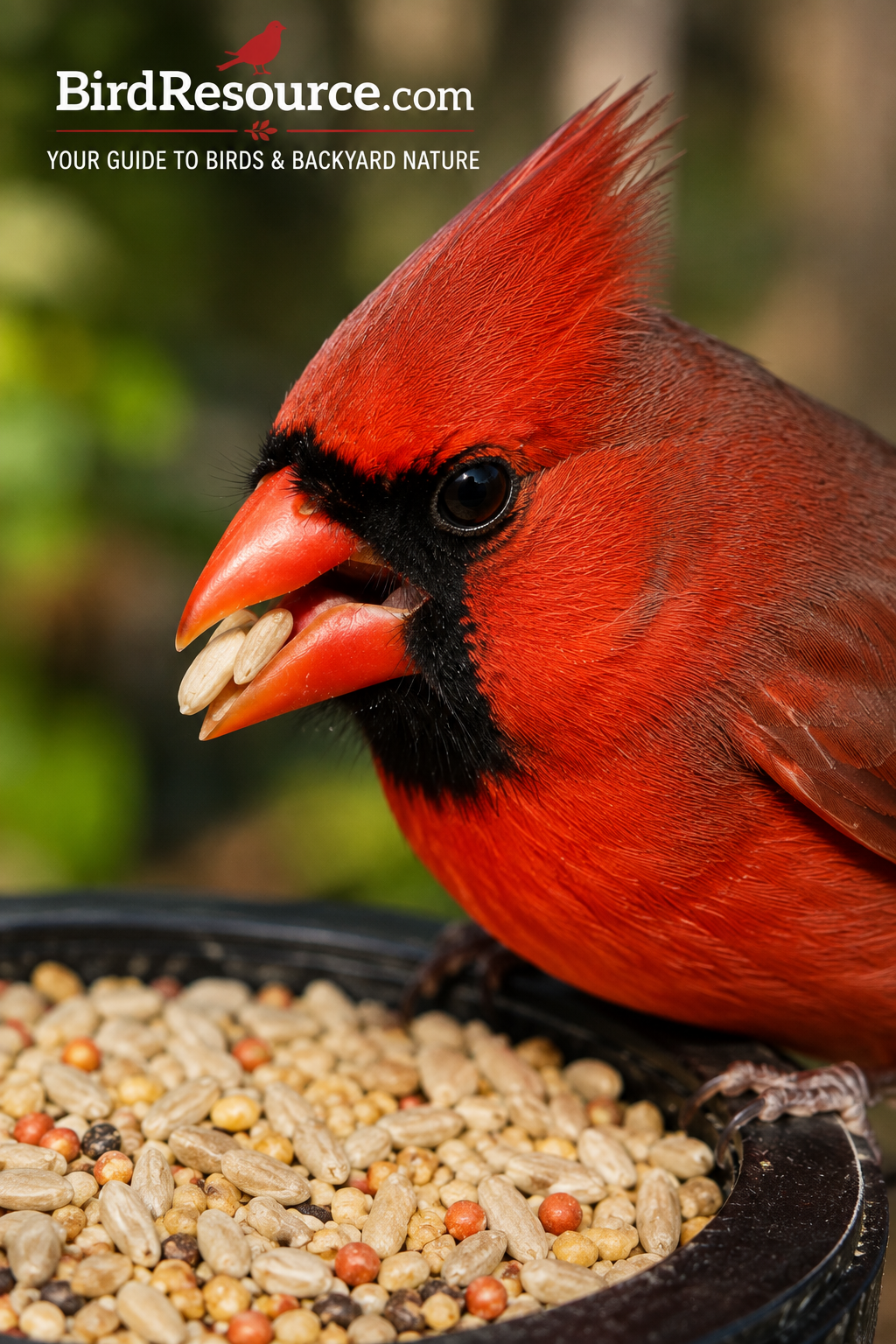
Black oil sunflower is one of my favorite starting choices. Cardinals also eat safflower, which can be especially useful when squirrels are becoming a problem.
Why won’t cardinals use my feeder?
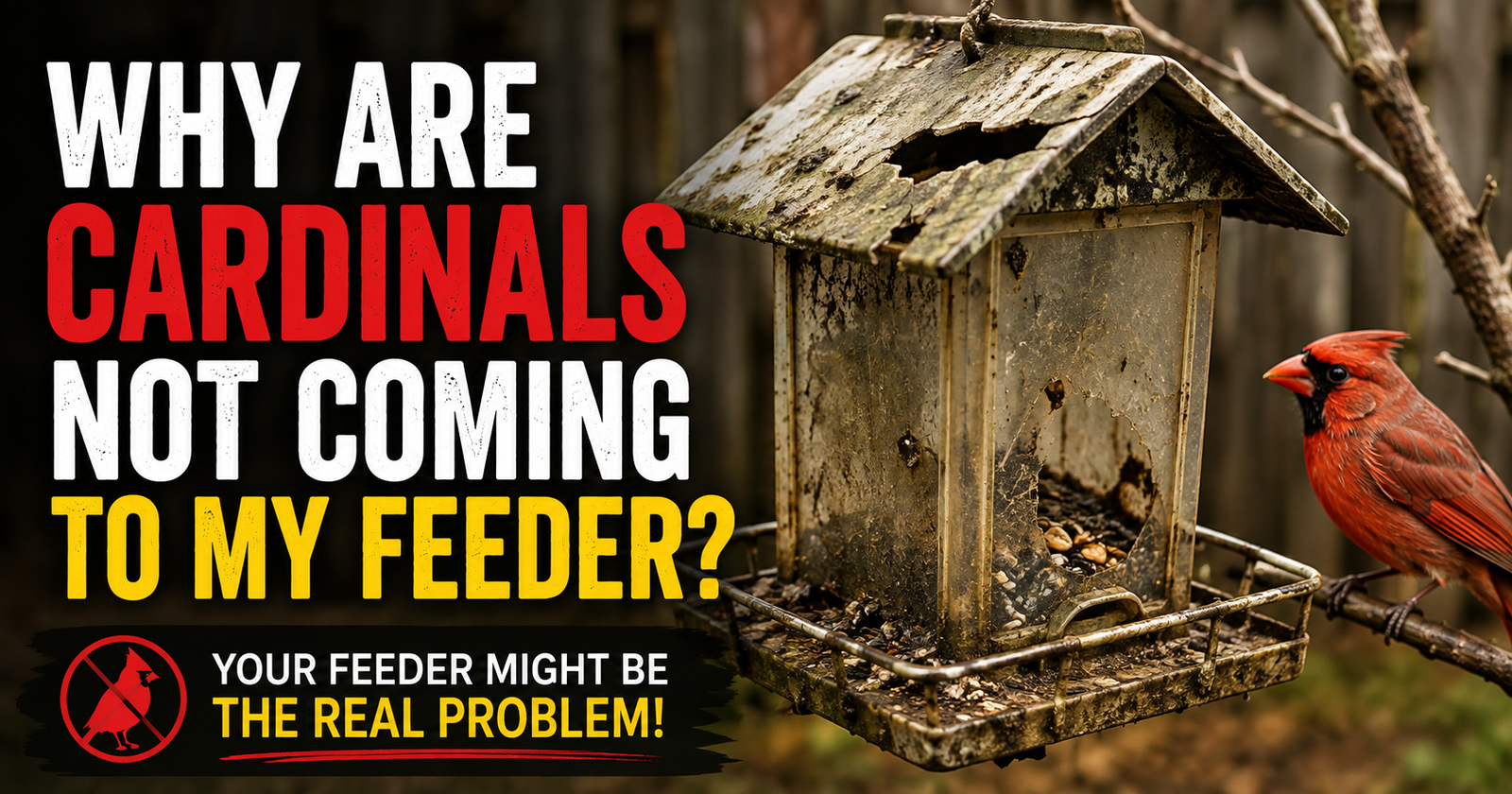
The feeding area may be too cramped, the seed may not appeal to them, the location could be too exposed, or the birds simply may not have become comfortable with a new feeder yet. These possibilities are explored in why cardinals may stop using a feeder, including what to check when a familiar feeder suddenly goes quiet.
Should a cardinal feeder be near bushes?
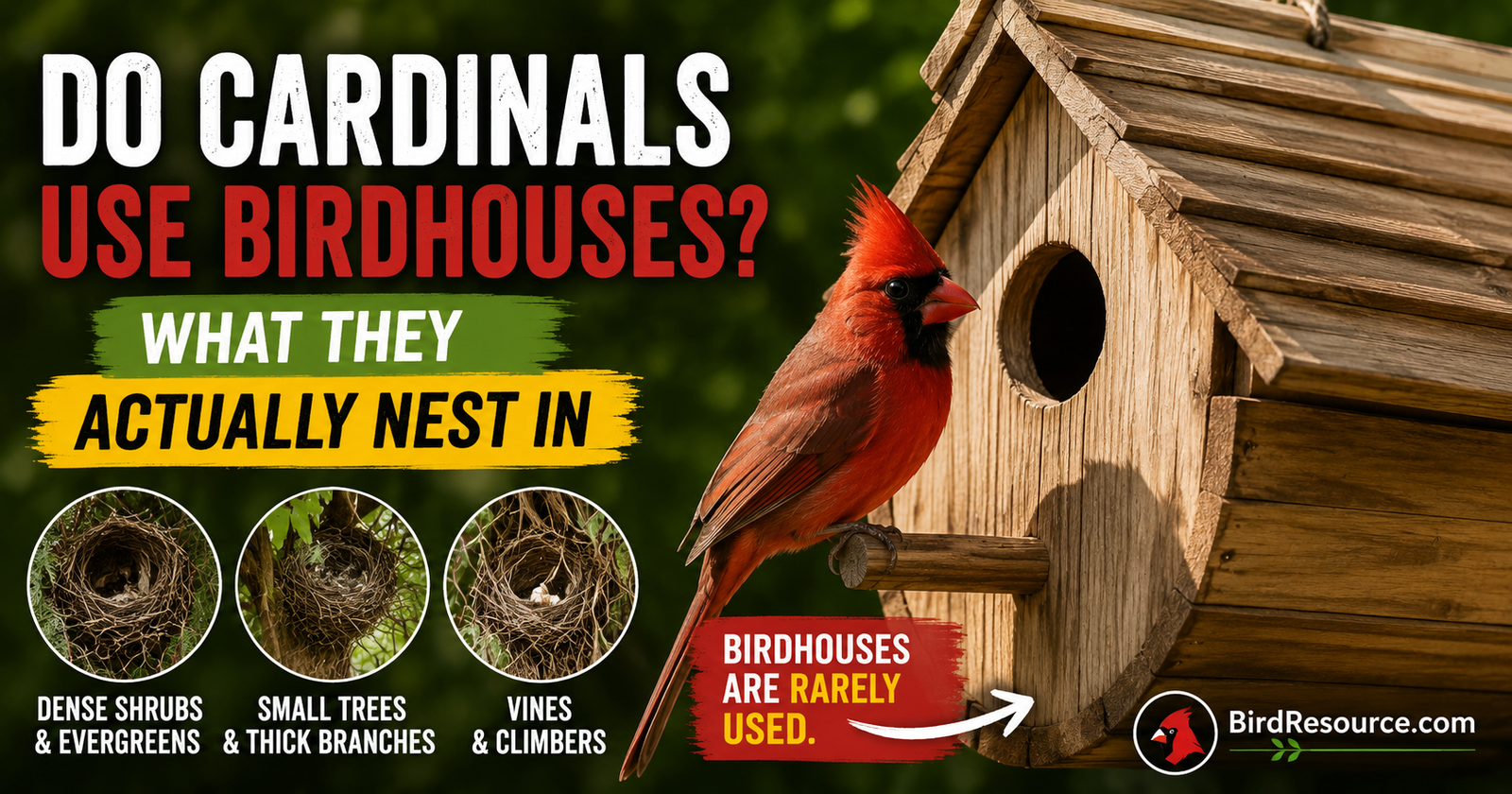
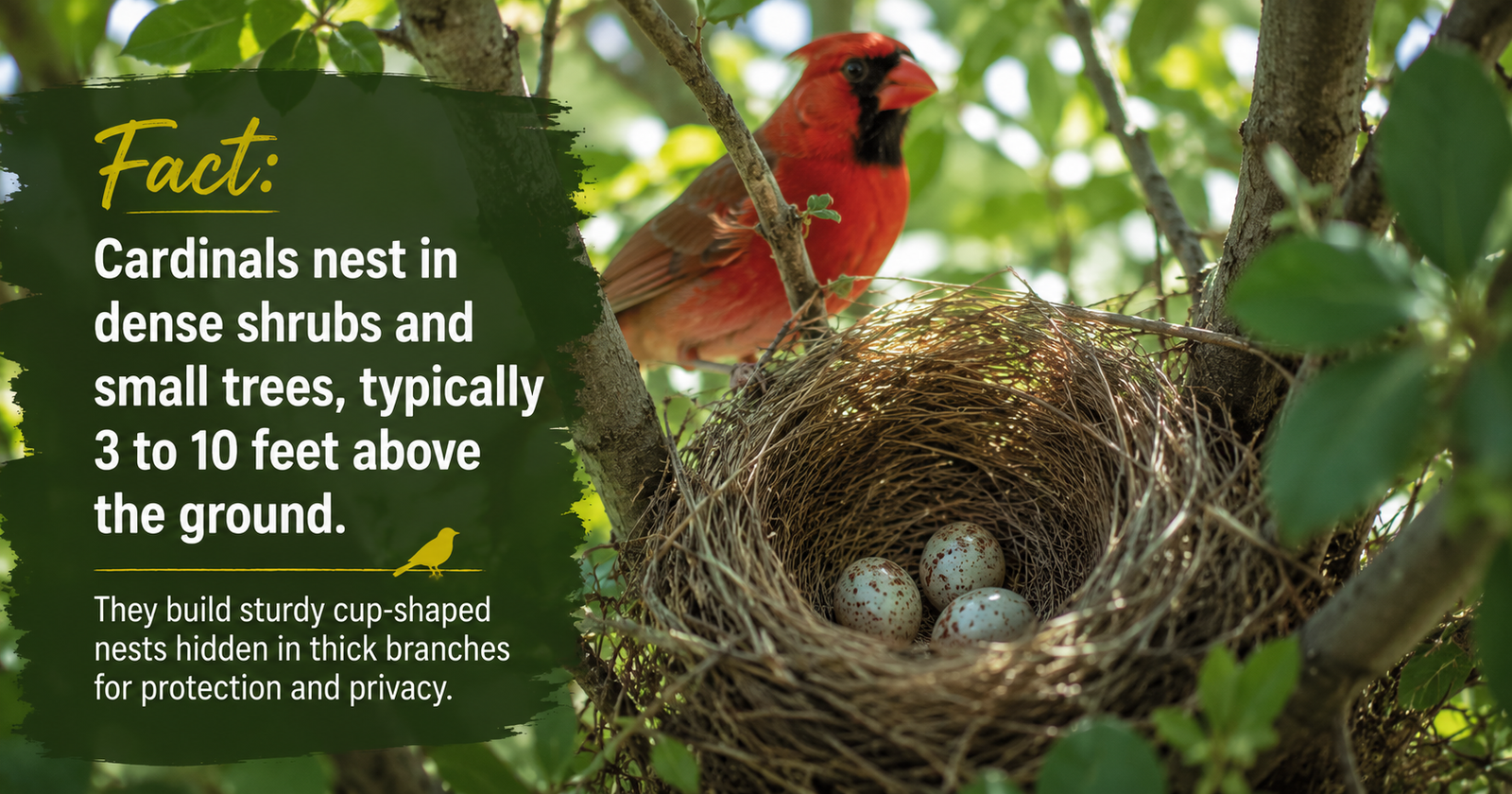
Having useful cover in the general area can make a feeding station more attractive to cardinals because these birds naturally spend considerable time around shrubs, thickets, and dense vegetation. You still need to consider predators and safe feeder placement. That same cover can support nesting, as shown in this guide to cardinal nesting habitat.
Can male and female cardinals use the same feeder?
Absolutely. Both males and females visit feeders, and you may see a pair using the same feeding area.
Are expensive bird feeders better for cardinals?
Not necessarily. A simple, well-designed platform feeder may physically accommodate a cardinal perfectly. More expensive feeders become worthwhile when you’re paying for features you actually want, such as squirrel resistance, better construction, or a camera.
Is a camera bird feeder worth buying?
I think it is for the right birdwatcher. You’re not buying it because the birds need a camera. You’re buying it because you want to see, record, identify, and learn about visitors you otherwise might miss.
For me, that’s what makes the Kiwibit interesting.
It isn’t trying to reinvent what a cardinal needs to eat.
It’s taking something as simple as a backyard feeding station and letting us see a side of it we normally miss.
You may hang it because you want close-up videos of the cardinals you’ve already been watching.
Then one morning your phone alerts you to a bird you’ve never seen in your yard before.
That’s when I think a smart feeder starts earning its keep.
See the Kiwibit 4K smart bird feeder and current Amazon offer
Mason Reed is the Backyard Birding & Gear Contributor for BirdResource.com, where he focuses on practical bird feeders, food, backyard birding gear, and helping everyday birdwatchers get more out of the birds already visiting their yards.