
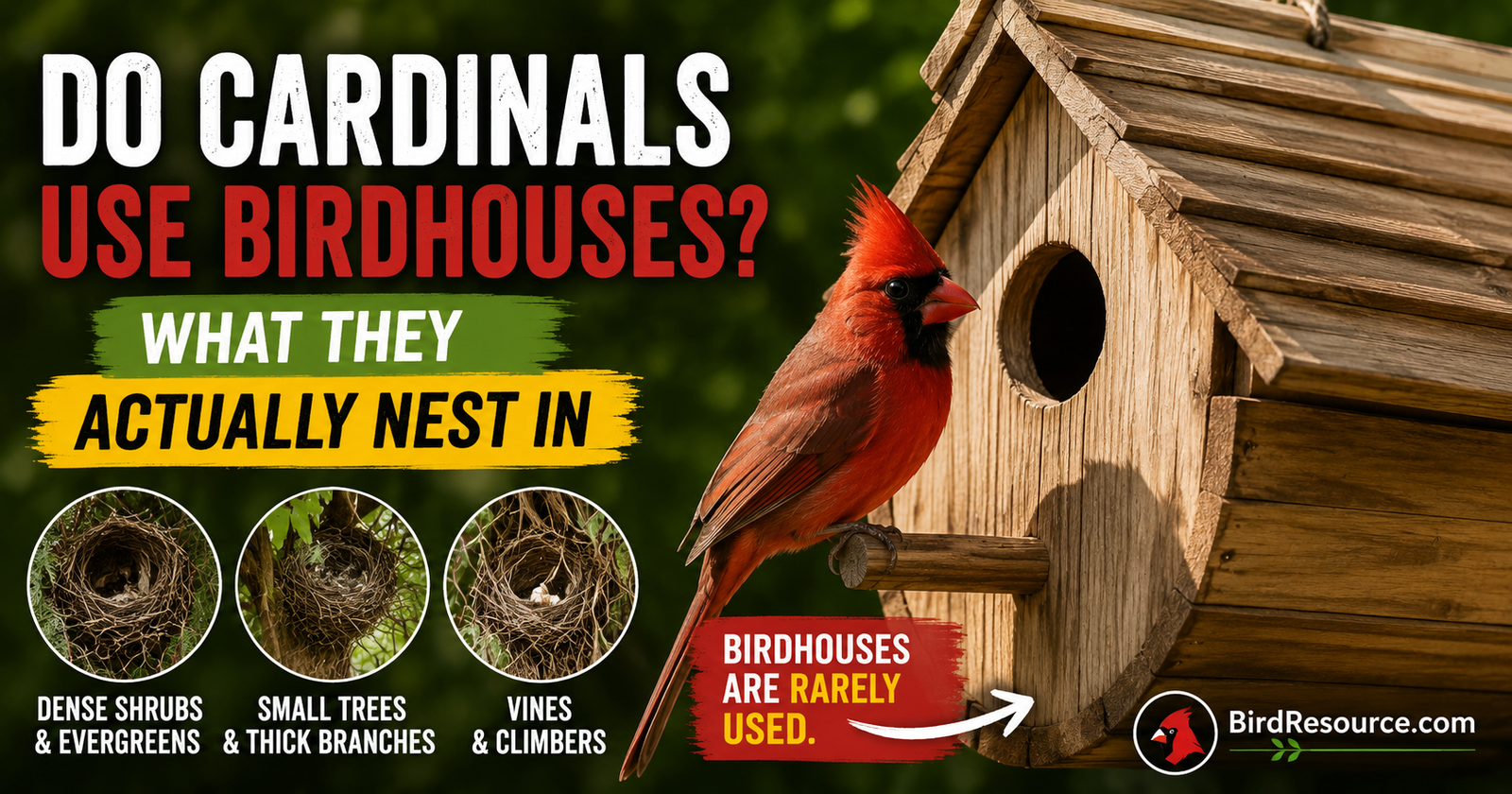
If you’ve been thinking about putting up a birdhouse for the cardinals in your yard, there’s something important I want you to know before you buy one.
Northern Cardinals normally do not use traditional enclosed birdhouses.
And yes, that includes plenty of wooden birdhouses advertised online with words like “cardinal” somewhere in the product title.
The problem isn’t that the house isn’t pretty enough.
It’s that a Northern Cardinal isn’t a cavity-nesting bird.
Bluebirds, chickadees, wrens, and some other familiar backyard birds naturally nest in cavities and can readily use appropriately designed nest boxes. Cardinals build a completely different kind of nest.
Cornell’s NestWatch specifically addresses this misconception. Cardinals normally build open-cup nests, and putting out a conventional enclosed nest box isn’t the way to attract them for nesting. Our nesting and nest box guidance explains more about where birds nest and how nesting choices differ by species.
So does that mean a wooden birdhouse is useless in a cardinal-friendly backyard?
Not necessarily.
It means we need to be realistic about which bird is actually going to use it.
What Do Cardinals Actually Nest In?
Northern Cardinals want vegetation.
Think:
Dense shrubs.
Vines.
Small trees.
Thickets.
Brambles.
Tangled growth.
That’s much closer to a cardinal’s idea of a nursery than a little wooden house with a round entrance hole.
Cornell reports that cardinal nests are typically wedged into the fork of small branches in a shrub, sapling, or vine tangle. They’re usually hidden by dense foliage and can be around 1 to 15 feet above the ground.
That’s a pretty broad range.
And cardinals aren’t particularly picky about using one exact species of plant.
Documented nesting vegetation includes dogwood, honeysuckle, hawthorn, grape, redcedar, spruce, pine, hemlock, rose bushes, blackberry brambles, elm, sugar maple, and box elder. If you're considering sugar maple among those options, types of maple trees compares different maple varieties for the home landscape.
The common theme isn’t:
“Find a wooden box.”
It’s:
“Find a protected spot surrounded by vegetation.”

Why Won’t Cardinals Use a Regular Birdhouse?
The easiest way to understand this is to think about how different birds evolved to nest.
A traditional birdhouse is essentially an artificial tree cavity.
That’s fantastic if you’re a cavity-nesting bird.
A cardinal isn’t.
The female Northern Cardinal constructs a cup-shaped nest from materials such as twigs, leaves, bark, grasses, stems, rootlets, and pine needles. She forms the nest around her body and positions it within supporting vegetation.
There’s no little entrance hole.
There’s no enclosed wooden chamber.
There’s no roof over the nest.
The bird enters the nest from above.
That’s an entirely different nesting strategy.
So What About This Wooden Birdhouse?
There’s still a reason I’d consider putting a traditional birdhouse in a bird-friendly backyard.
Other birds may use it.
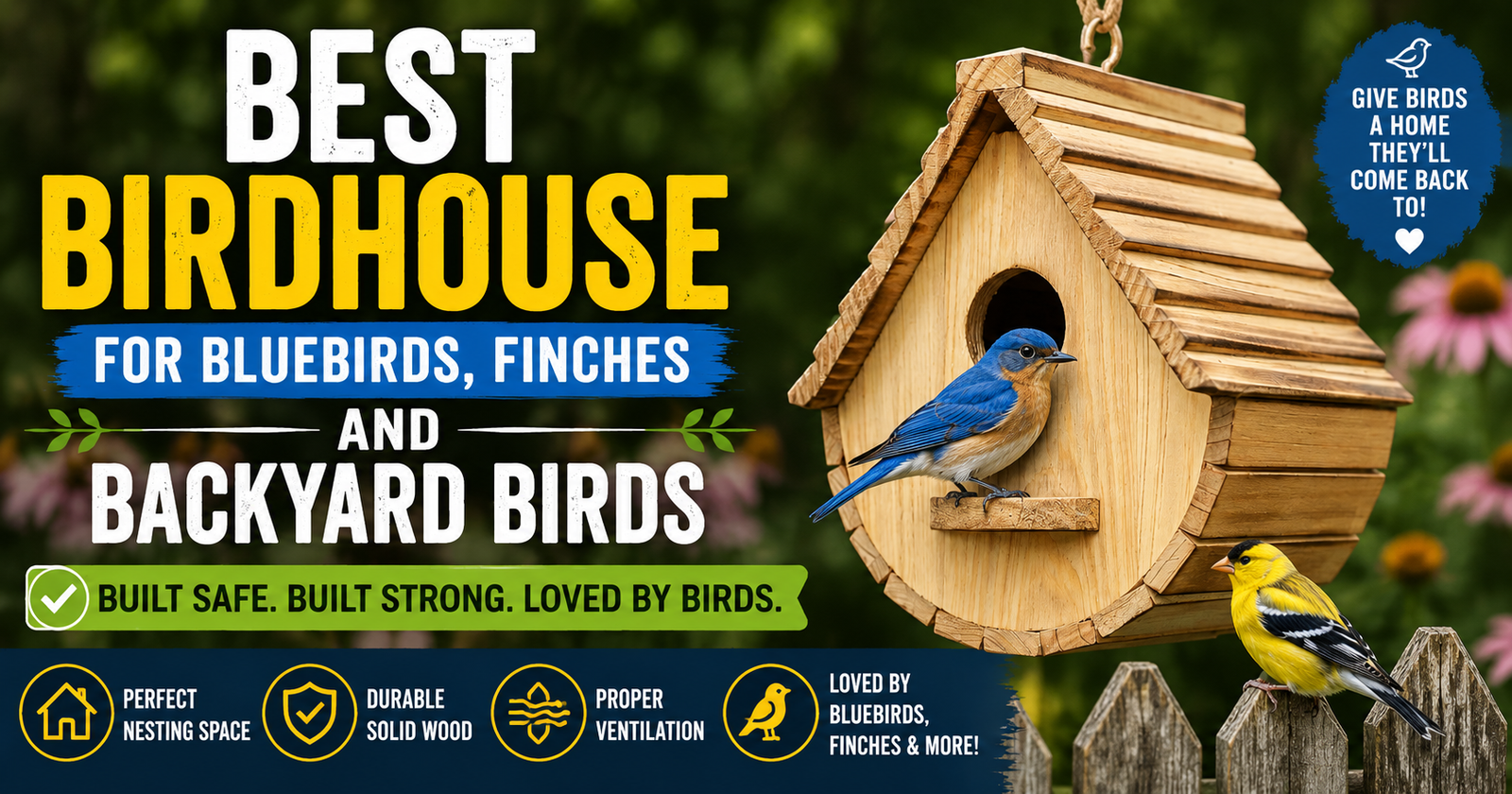
The wooden outdoor birdhouse we’re looking at is marketed for several backyard birds, including bluebirds, finches, and cardinals.
I would ignore the cardinal claim.
That’s important enough that I wouldn’t buy this product specifically expecting a Northern Cardinal to move inside.
But if you want a traditional wooden birdhouse that could add another nesting opportunity to a backyard where you’re already attracting cardinals and other birds, it’s worth considering for the appropriate cavity-nesting species that may be present.

See this outdoor wooden birdhouse and its current price on Amazon
I’d treat it as part of a broader bird-friendly backyard rather than calling it a “cardinal house.”
That’s a much more realistic expectation.
I Wouldn’t Buy Any Birdhouse Based Only on the Birds Listed in the Title
This is something I want people to start paying attention to.
Online product titles can get ridiculous.
You’ll see one birdhouse described as being for:
Bluebirds.
Cardinals.
Finches.
Wrens.
Chickadees.
Robins.
And seemingly every other bird that has ever flown across somebody’s backyard.
Those birds don’t all nest the same way.
Cornell’s NestWatch makes the distinction very clear. Nest boxes attract cavity-nesting species, while birds that normally build open-cup nests aren’t attracted to traditional nest boxes for nesting.
So whenever I see “cardinal birdhouse,” I don’t automatically trust the label.
I ask:
Does this species actually nest in cavities?
For a Northern Cardinal, the answer is no.

What Does a Cardinal Nest Look Like?
If you’re expecting a giant elaborate nest, you might be surprised.
A finished Northern Cardinal nest is typically around 4 inches across and 2 to 3 inches tall, with an interior roughly 3 inches across.
The female does most of the construction.
Cornell describes four basic layers.
The outer structure starts with coarse twigs, sometimes even incorporating bits of human-made material. There’s then a leafy mat, followed by grapevine bark, and finally a softer lining containing grasses, stems, rootlets, and pine needles.
It’s a remarkably sophisticated little structure.
And instead of building it inside a box, the female uses surrounding branches and vegetation to support and conceal it.
Where Should I Look for a Cardinal Nest?
Start lower than you might expect.
Cardinals aren’t typically building enormous nests 60 feet up in the crown of a mature tree.
Look carefully through dense vegetation.
Shrubs are excellent places to start.
So are vine tangles.
Thick hedges.
Rose bushes.
Small trees.
Blackberry brambles.
Dense ornamental landscaping.
Cornell describes Northern Cardinals as strongly associated with shrubby areas, including forest edges, overgrown fields, hedgerows, backyards, thickets, and ornamental landscaping.
That should tell us something important.
If you want nesting cardinals, the landscaping itself may matter considerably more than the birdhouse.

Dense Shrubs Are Basically the Cardinal’s Birdhouse
This is how I like to think about it.
We want to give every backyard bird a little wooden house because that’s something we recognize as shelter.
But the cardinal already knows what kind of “house” it wants.
A dense shrub can provide:
Structural support.
Visual concealment.
Shade.
Protection.
Nearby perching locations.
And a maze of branches that may make accessing the nest more difficult for some predators.
Cornell’s NestWatch recommends native trees and shrubs as a way to attract open-cup nesters such as cardinals and robins.
So if I had $50 to spend specifically on encouraging cardinals to nest, I might get more long-term value from improving the habitat than from buying a box labeled “Cardinal House.”
Would Cardinals Use a Nesting Shelf?
This is where things become less straightforward.
You’ll occasionally see open-front nesting shelves or platforms marketed toward cardinals.
They’re more believable than an enclosed birdhouse because they don’t require the bird to enter through a small cavity opening.
But I still wouldn’t promise that putting one outside means a Northern Cardinal will use it.
The natural nesting behavior we’re trying to imitate involves a cup nest supported within dense living vegetation.
That’s what I would prioritize.
If you want to experiment with an open nesting structure, fine.
Just don’t remove all the shrubs and then expect a wooden shelf attached to the side of the garage to somehow become irresistible cardinal habitat.


How Do I Encourage Cardinals to Nest in My Yard?
This is where things get much more useful.
Forget about convincing the bird to behave like a bluebird.
Give the cardinal more of what a cardinal actually wants.
Start with dense vegetation.
If your yard consists of nothing but closely cut grass and a couple of huge shade trees with bare trunks underneath, there may not be many appealing nesting locations.
Shrubs and smaller trees create structure at the height cardinals actually use.
Dense native plantings can provide even more value because they can support insects and natural food in addition to nesting cover.
And don’t feel like every corner of the property needs to look perfectly manicured.
A little controlled wildness can be extremely useful to birds.
Don’t Trim Every Shrub Into a Perfect Ball
This is one place where our landscaping preferences can work against wildlife.
We like tidy.
Birds often like tangled.
A thick shrub with interior branching and dense foliage can provide exactly the kind of hidden nesting location a cardinal is searching for.
Cornell reports that higher nests and nests in denser tangles may receive some additional relief from predators.
I’m not suggesting you abandon your entire yard.
I’m saying I wouldn’t aggressively thin every shrub during nesting season and then wonder why the cardinals aren’t interested.
Sometimes the messy-looking corner is the most valuable part of the yard.
Be Careful With Trimming During Nesting Season
If cardinals regularly use your shrubs, hedges, or vines, inspect them carefully before major trimming.
A nest can be surprisingly difficult to see.
That’s intentional.
Birds have spent an awfully long time getting good at hiding their nests from things that might eat the eggs or babies.
Cornell’s NestWatch points out that nesting birds deliberately choose locations where nests are concealed, making them difficult for people to find too.
So don’t assume a shrub is empty because you looked at it for five seconds.
Watch the adults.
A bird repeatedly entering the same dense area can be a clue that something is happening inside.
Watch the Female Cardinal
If you’re trying to figure out whether cardinals are considering nesting around your property, behavior can tell you more than staring into bushes.

A week or two before nest building begins, Cornell reports that the female starts visiting potential nesting sites while the male follows. The pair may call back and forth while assessing locations. The same springtime period can also bring territorial behavior, including why cardinals become territorial in spring.
Then the female does most of the actual construction.
The male may bring her nesting material, but she’s the primary builder.
So if you’re seeing a pair repeatedly disappearing into the same shrubs during breeding season, pay attention.
You might be watching them shop for real estate.
Don’t Keep Walking Up to a Nest Once You Find It
Finding a cardinal nest is exciting.
But I don’t want that excitement to turn into constant disturbance.
Don’t repeatedly push branches aside.
Don’t stand over the nest taking pictures every hour.
Don’t handle the eggs.
Don’t try to move the nest somewhere you think is safer.
Observe responsibly and give the birds space.
Cornell’s NestWatch specifically emphasizes monitoring nests without disturbing the birds and provides a code of conduct for people participating in nest monitoring.
The goal is getting to witness something amazing without becoming another problem the parents have to deal with.
Cardinals Usually Don’t Reuse the Same Nest
Here’s another reason leaving an old cardinal nest in place doesn’t necessarily mean the pair will return to it.
Northern Cardinals typically do not reuse their nests.
They may nest again in the general area, especially if the habitat remains attractive, but that doesn’t mean they’re moving back into exactly the same little cup.
This also helps explain why providing good habitat is more useful than obsessing over one specific nesting location.
Give them choices.
Let the birds decide.
How Long Does It Take a Cardinal to Build a Nest?
Usually several days.
Cornell reports approximately 3 to 9 days for construction.
That’s pretty impressive when you consider the female is assembling and shaping the structure piece by piece.
She manipulates twigs with her bill, bends material around her body, and uses her feet to help form the cup.
And after all that work?
She may never use that particular nest again after the nesting attempt is finished.
Then it’s back to building another one.
What Happens After the Nest Is Finished?
Then come the eggs.
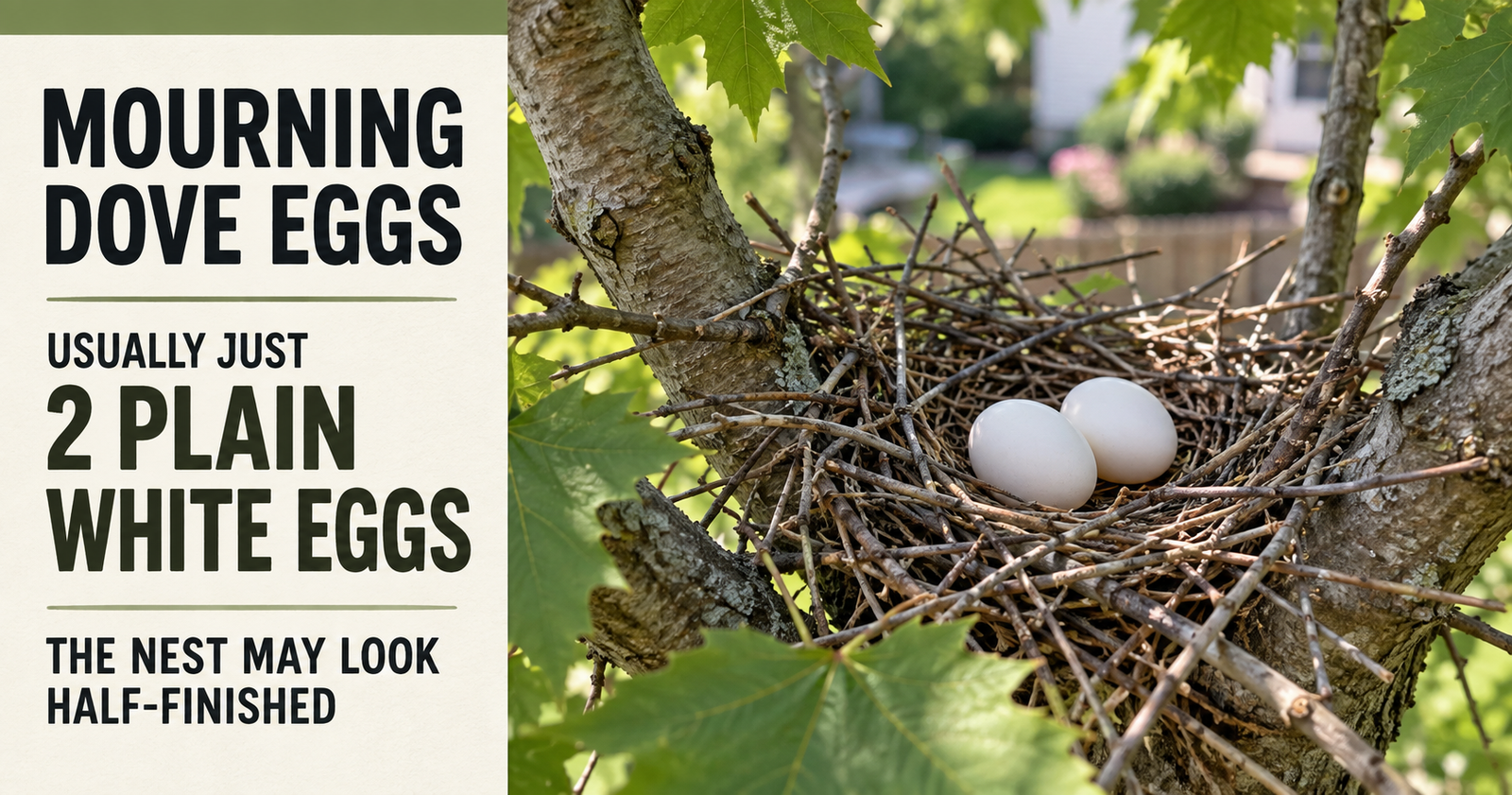
A typical Northern Cardinal clutch contains 2 to 5 eggs, according to Cornell. They’re generally grayish white, buffy white, or greenish white with gray to brown speckling.
They’re surprisingly beautiful when seen up close.
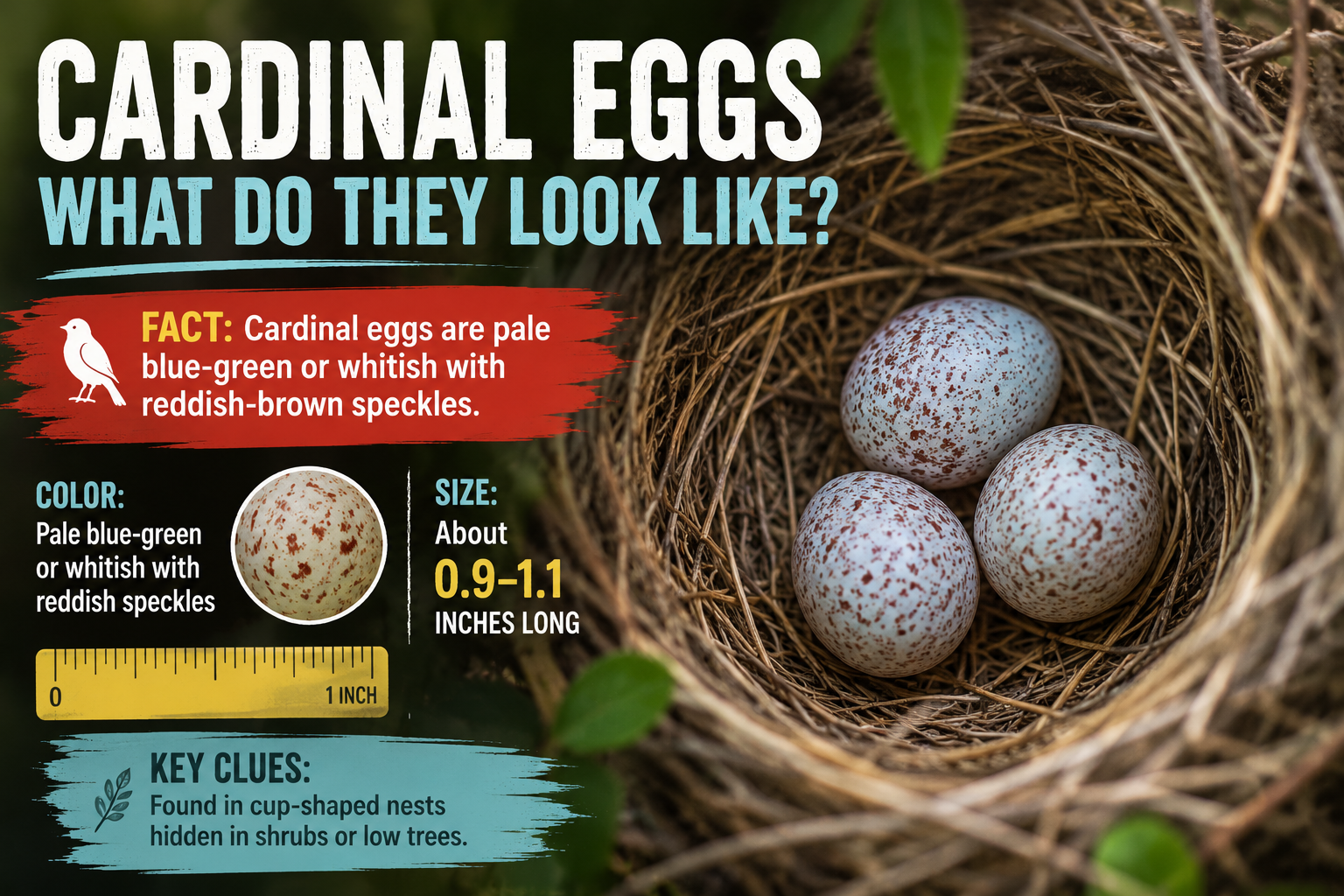
We’ve put together a detailed guide showing what cardinal eggs look like, including their colors, size, and identifying clues.
Just remember that finding eggs doesn’t mean you should start handling them to get a better look.
Observe from a respectful distance.
Then Things Move Surprisingly Fast
Cardinal babies don’t spend months sitting in the nest.
Cornell lists an incubation period of roughly 11 to 13 days and a nestling period of only about 7 to 13 days.
That means a nest can seemingly go from eggs to noisy little nestlings to empty surprisingly quickly.
And an empty nest doesn’t necessarily mean something terrible happened.
The youngsters may have fledged.
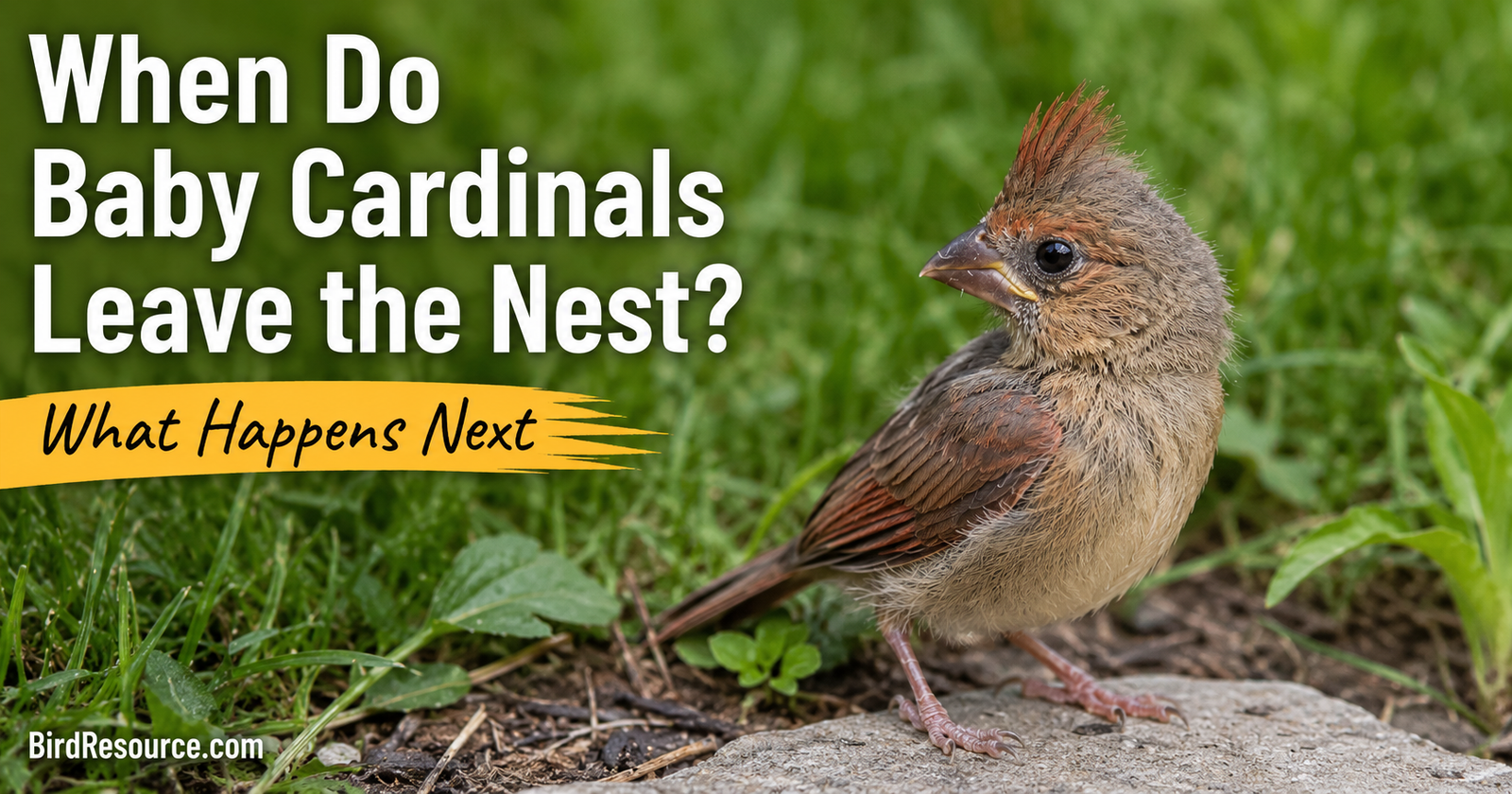
Our guide explaining when baby cardinals leave the nest and what happens afterward covers that next stage because fledging is one of the most misunderstood parts of a young bird’s life.
The babies leave before they look or behave like fully independent adults.
A Fledgling on the Ground Doesn’t Automatically Need Rescuing
This is worth mentioning in any article about backyard nesting.
You finally get cardinals nesting around your property.
Then one day you find a strange-looking young bird sitting low in a shrub or even on the ground.
It’s easy to assume:
It fell out of the nest.
But fledgling cardinals naturally leave the nest before they’re completely independent.
Parents continue caring for them afterward.
That’s why identifying the bird’s developmental stage matters.
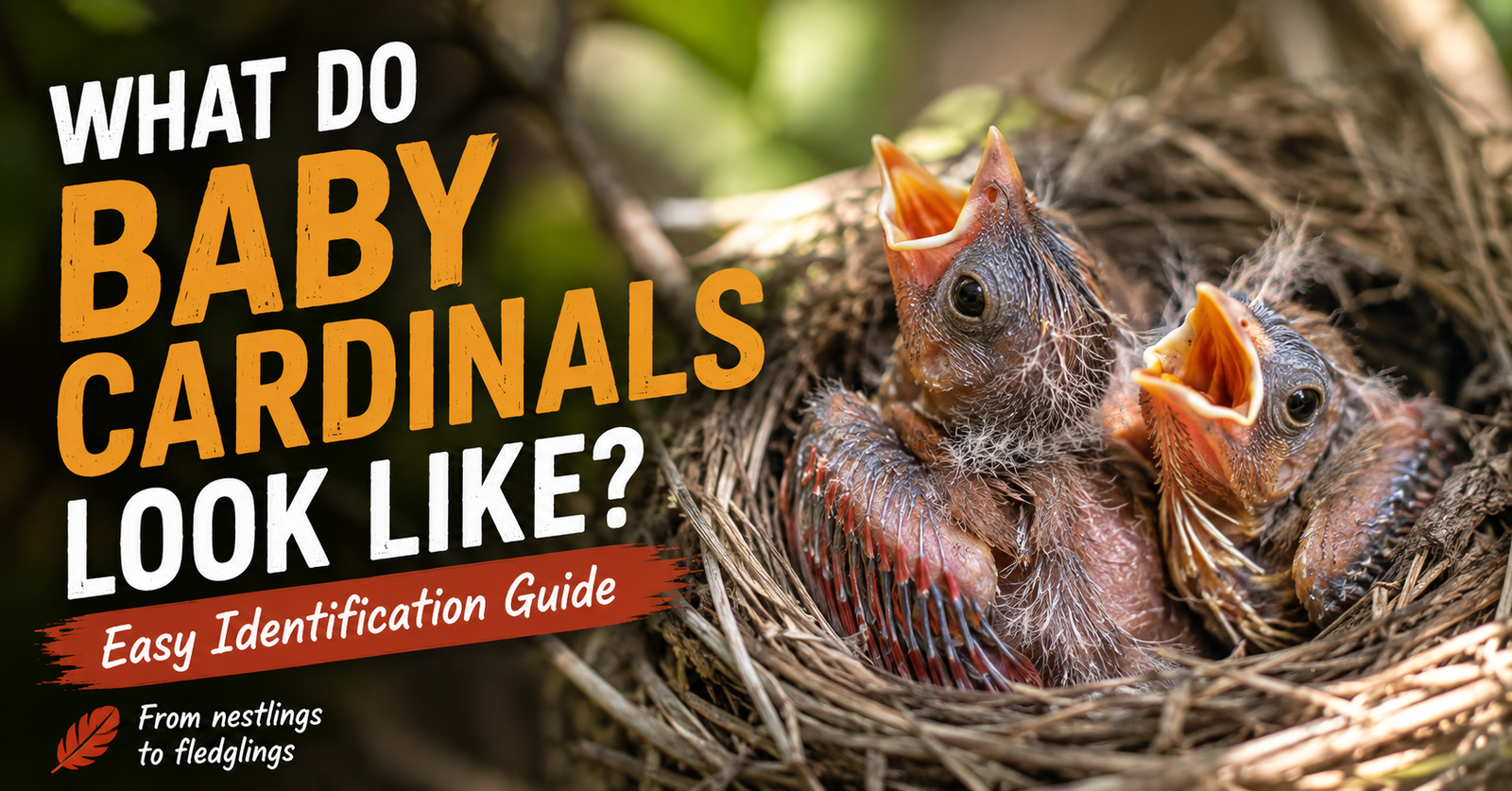
Our baby cardinal identification guide can help you tell the difference between a very young nestling and the much more developed fledgling you’re likely to encounter outside the nest.
Sometimes the best thing you can do is give the family space.
Can I Put Nesting Material Out for Cardinals?
I’d be conservative here.
Cardinals already know how to find nesting material.
The female naturally uses twigs, leaves, bark, grasses, stems, rootlets, pine needles, and similar materials.
You don’t need to provide dryer lint.
I wouldn’t offer string, yarn, fishing line, plastic strips, or anything else that could potentially become tangled around a bird.
A healthy yard containing natural plant material is already providing a lot of what they need.
Again, improving habitat usually wins.
What About Feeding Cardinals During Nesting Season?

Absolutely keep appropriate feeder foods available if you’re feeding birds responsibly. For readers who also want to review a cardinal-focused seed option, that can complement the shrubs and natural food sources cardinals use around a nesting yard.
Cardinals readily visit feeders for seeds, particularly sunflower.
But remember something important about babies.
Cardinal nestlings are fed mostly insects.
That means a bag of birdseed isn’t providing everything a nesting cardinal family needs.
This is another reason I value a backyard containing plants, insects, shrubs, and natural food sources instead of thinking one feeder solves everything.

Our guide to what cardinals eat throughout the year explains how much broader their natural diet is than what we typically see them eating at feeders.
Feeders Can Still Help Make Your Yard Attractive

A birdhouse may not attract nesting cardinals, but a good feeding station can certainly give cardinals another reason to spend time around the property.
Black oil sunflower is one of my first choices.
Safflower is another.

If you’re setting up a feeding station specifically around cardinals, our guide to the best bird seed for cardinals and what they actually prefer breaks down the foods I’d start with.
And if the cardinals are awkwardly trying to balance on whatever feeder you already own, that’s worth fixing too.
A Birdhouse Can Still Make Sense in the Same Yard
This is where I come back to that wooden birdhouse.
I don’t want someone reading this article and thinking:
“Birdhouses are useless.”
They’re absolutely not.
They’re just species-specific tools.
A good nest box in appropriate habitat can provide nesting opportunities for cavity-nesting birds.
So you can absolutely have:
Cardinals nesting in dense shrubs.
Bluebirds or other suitable cavity nesters using an appropriate nest box.
Chickadees elsewhere.
Wrens investigating another location.
And several species visiting your feeders.
That’s the kind of backyard bird habitat I find much more interesting than trying to force every species into the same type of house.
If you’d like to add a traditional wooden house for the cavity-nesting birds sharing your yard with the cardinals, take a closer look at this wooden outdoor birdhouse on Amazon .
Just don’t hang it up and wait specifically for Mrs. Cardinal to move in.
What If a Cardinal Lands on My Birdhouse?
That’s completely possible.
Birds land on things.
A cardinal sitting on the roof of your birdhouse does not mean it’s considering moving inside.
It may simply be:
Resting.
Looking around.
Singing.
Waiting to visit a feeder.
Watching another bird.
Using the house as a convenient perch.
That’s an important distinction.
Using a birdhouse as a perch isn’t the same as using it as a nest site.
What If I See Cardinals Going Near the Birdhouse?
Watch carefully.
Are they entering the hole?
Or are they disappearing into vegetation beside it?
That second possibility is much more consistent with typical Northern Cardinal nesting behavior.
A pair can choose a nest surprisingly close to houses and human activity if the surrounding vegetation provides what they need.
Cornell notes that cardinals readily inhabit backyards and ornamental landscaping and nest in dense foliage.
So the birdhouse itself may have nothing to do with why they’re hanging around.
Your shrub next to it might be the real attraction.
How Do I Make My Yard Better for Nesting Cardinals?
If cardinals were my priority, I’d think beyond one product.
I’d provide dense shrubs and vegetation.
I’d preserve useful cover.
I’d offer fresh water.
I’d grow plants providing natural seeds, berries, and insects.
I’d provide appropriate feeder foods.
I’d avoid unnecessary disturbance around potential nesting areas.
I’d watch for outdoor cats.
I’d be cautious with pesticides.
And I’d give the birds some privacy once they chose a nesting location.
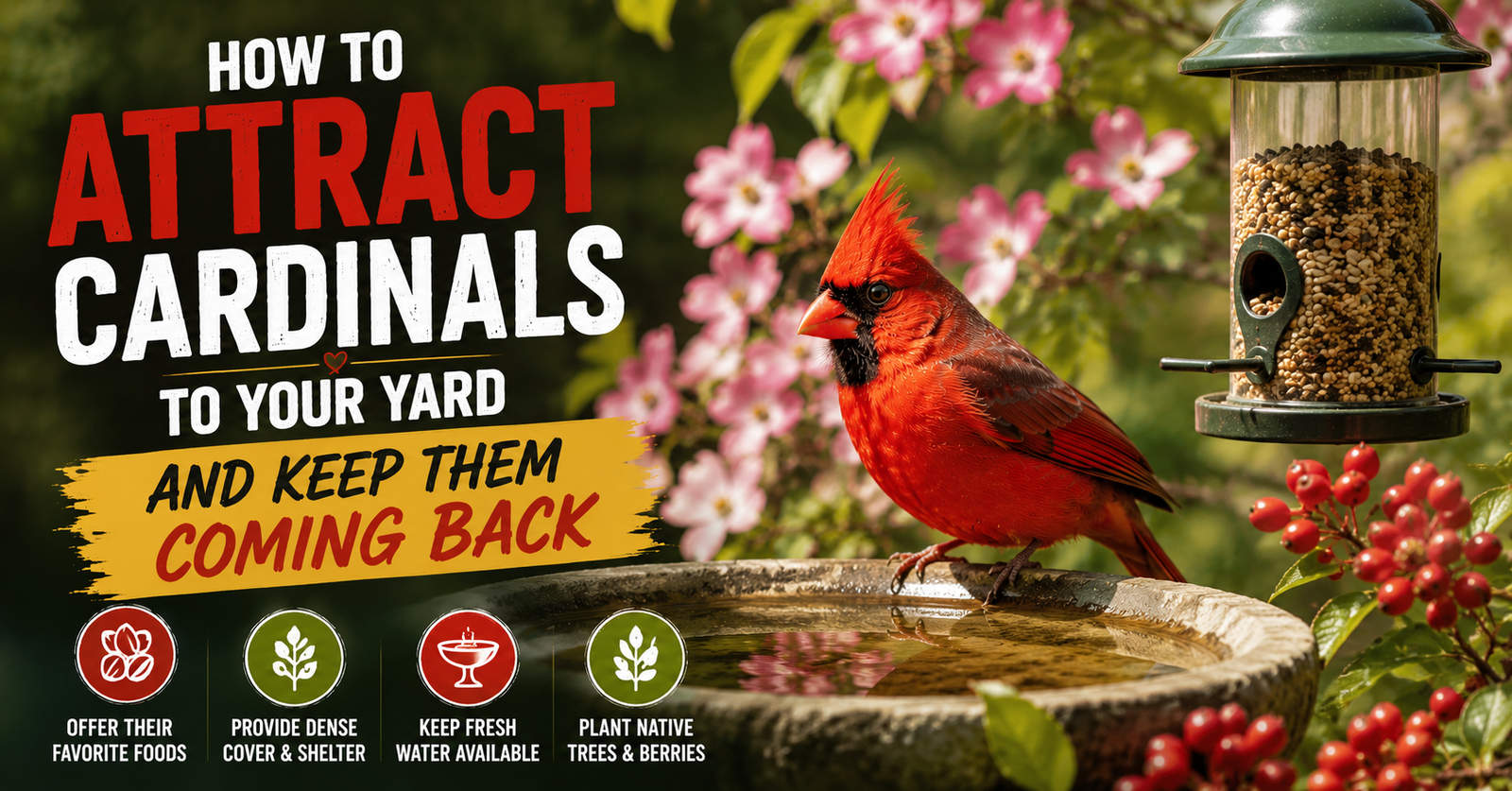
We’ve covered the whole-yard approach in our guide on how to attract cardinals and keep them coming back.
That’s the approach I’d use if my real goal wasn’t simply seeing a cardinal once, but making my property somewhere cardinals regularly want to spend time.
Common Questions About Cardinals and Birdhouses
Do cardinals use birdhouses?
Northern Cardinals normally do not use traditional enclosed birdhouses because they are open-cup nesters rather than cavity nesters. Cornell’s NestWatch specifically identifies cardinals among birds that aren’t attracted to nest boxes for nesting.
What kind of birdhouse do cardinals like?

I wouldn’t recommend a conventional birdhouse specifically for Northern Cardinals. I’d focus on providing dense shrubs, small trees, vines, and other suitable vegetation where they can construct their own open-cup nests. Those vegetation preferences also help explain where you are most likely to spot a Northern cardinal habitat needs.
Why are birdhouses advertised for cardinals?
Product marketing doesn’t necessarily reflect the natural nesting behavior of every bird named in a listing. Always check whether the species is actually a cavity nester before purchasing a nest box specifically for it.
Where do cardinals build their nests?
Northern Cardinals commonly place nests in shrubs, saplings, and vine tangles, usually hidden in dense foliage. Cornell reports typical nest heights of about 1 to 15 feet.
Will cardinals use a nesting shelf?
You may see open nesting structures marketed toward cardinals, but I wouldn’t count on one being used. Their typical strategy is building a cup nest supported and concealed within dense vegetation.
How high should a cardinal birdhouse be?
Because Northern Cardinals don’t normally use conventional birdhouses, there isn’t a recommended cardinal birdhouse mounting height comparable to the specifications used for cavity-nesting species. Their natural nests are typically placed roughly 1 to 15 feet above the ground.
Do cardinals reuse their nests?
Usually not. Cornell reports that Northern Cardinals generally don’t reuse their nests.
What plants do cardinals nest in?
Documented examples include dogwood, honeysuckle, hawthorn, grape, redcedar, spruce, pine, hemlock, rose bushes, blackberry brambles, elm, sugar maple, and box elder. Dense structure and concealment are important characteristics.
Should I remove an old cardinal nest?
During the active nesting season, I would leave nests and surrounding vegetation alone unless there’s a genuine reason intervention is necessary. Cardinals generally don’t reuse nests, but other birds and wildlife may still be using the surrounding area.
How can I tell if cardinals are nesting in my yard?
Watch for a pair repeatedly investigating dense shrubs or vines, adults carrying nesting material, or later adults repeatedly traveling to and from one concealed location. Avoid repeatedly approaching the suspected nest to confirm it.
Can I still put up a birdhouse if I have cardinals?
Absolutely. Just understand that the birdhouse is primarily an opportunity for appropriate cavity-nesting species, not your cardinals. Meanwhile, shrubs and dense vegetation can provide nesting opportunities for the cardinals.
The biggest mistake I think people make is trying to give a cardinal the kind of home we think looks like a bird’s home.
A cute wooden house.
A little roof.
A round doorway.
Maybe even a cardinal painted on the front.
But the cardinal already knows exactly what home should look like.
To her, it may be a thorny rose bush, a dense tangle of grapevine, or the thick shrub beside your porch that you’ve been meaning to trim.
If you really want cardinals nesting around your home, give them more of that.
And put the birdhouse somewhere appropriate for the cavity nesters that will actually appreciate it.
Mason Reed is the Backyard Birding & Nesting Contributor for BirdResource.com, where he focuses on practical backyard birding, nesting behavior, feeding, and helping everyday birdwatchers understand what wild birds actually need around their homes.