
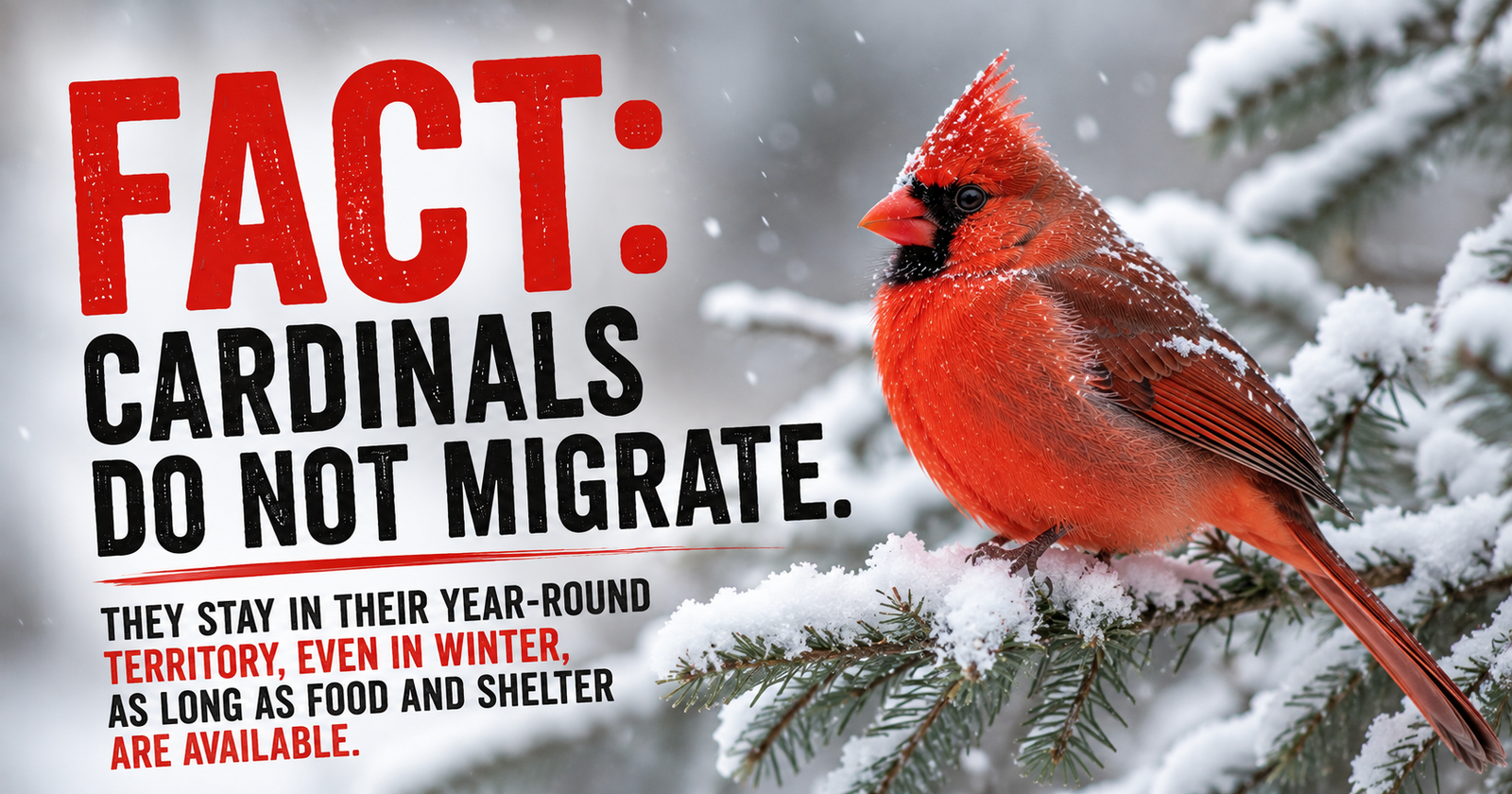
Northern Cardinals do not normally migrate. If cardinals live around your yard during spring and summer, those birds don’t pack up every fall and fly hundreds or thousands of miles south for winter.
They’re considered permanent, year-round residents throughout their established range.
That’s part of what makes cardinals such incredible backyard birds.
The Ruby-throated Hummingbirds disappear. Warblers pass through. Plenty of other familiar birds head south.
Then the first real snow arrives, you glance toward a bare shrub, and there’s a brilliant red male cardinal looking almost ridiculously bright against all that white.
But this raises an interesting question.
If cardinals don’t migrate, why do some people stop seeing them during certain times of the year?
That’s where cardinal behavior gets much more interesting than a simple yes-or-no answer about migration.
Do Northern Cardinals Migrate South for Winter?
No, not as a normal seasonal migration.
Northern Cardinals are classified as permanent residents. Cornell’s range information specifically lists their migration status as resident, and Audubon similarly describes the species as a permanent resident throughout its range.
That’s very different from a true migratory songbird.
A long-distance migrant may spend the breeding season in North America before traveling enormous distances to spend winter in Mexico, Central America, South America, or the Caribbean.
A Northern Cardinal doesn’t follow that annual pattern.
The bird may move around locally.
Its daily routine can change.
Its feeding areas can change.
Its social behavior changes dramatically between breeding season and winter.
But that’s different from migration.
If you’re seeing cardinals in January, you aren’t necessarily looking at northern birds that flew south to spend winter in your yard.
There’s a very good chance you’re looking at cardinals that live in the general area year-round.

Where Do Cardinals Go in Winter?
Usually, they stay within the same general region where they spent the rest of the year.
What changes is how they’re using that area.
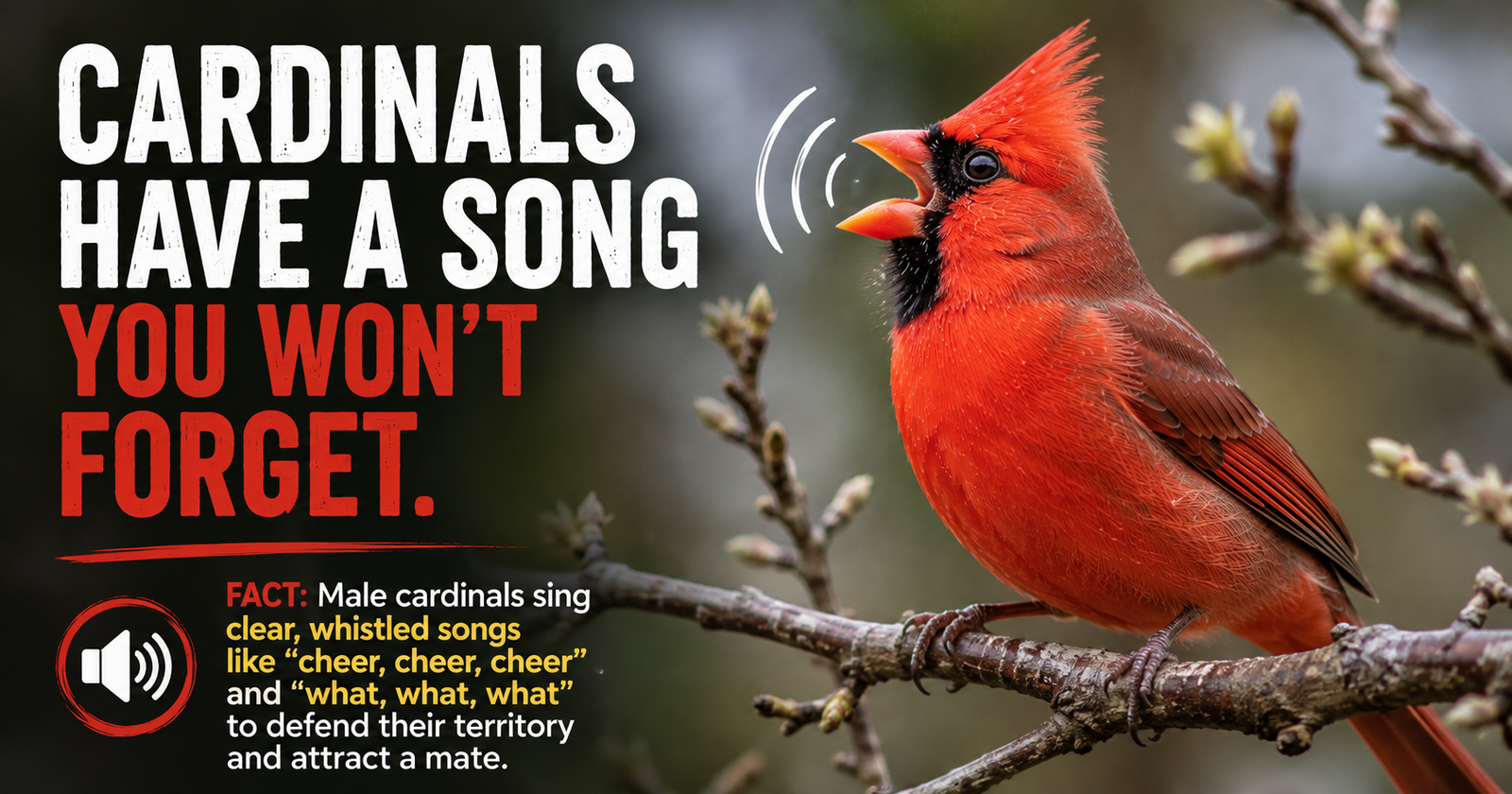
During breeding season, cardinals are strongly territorial. A male spends considerable effort advertising and defending his territory, which is one reason spring mornings can seem filled with cardinal songs.
Winter is different.
Cardinals become more tolerant of one another and can gather into groups.
Cornell reports that Northern Cardinals commonly move around as pairs during breeding season but can form flocks of a dozen to several dozen birds during fall and winter.
So the cardinal that seemed to “live” beside your patio all summer may spend part of winter moving around with a larger group.
It didn’t necessarily migrate.
Its routine changed.

Why Do I See More Cardinals During Winter?
This happens to plenty of backyard birdwatchers, and there are several possible reasons.
First, cardinals are incredibly conspicuous against a winter landscape.
A red male sitting inside a green summer shrub can disappear surprisingly well among leaves, shadows, and branches.
Put that same bird on a bare branch surrounded by snow and suddenly he looks like someone turned on a red light.
Vegetation also thins out.
Leaves disappear from deciduous trees and shrubs, giving you clearer views into places where cardinals may have been hiding all along.
Then there’s flocking behavior.
Instead of seeing one territorial pair, you may suddenly see several cardinals feeding together.
Cornell even documented up to six Northern Cardinals gathering simultaneously at its FeederWatch camera during a winter evening in January 2026.
Nothing necessarily arrived from hundreds of miles away.
Several local birds may simply be spending more time together.
Why Do I See Fewer Cardinals in Winter?
The opposite can happen too.
Someone who watched the same male and female around the yard all summer may suddenly wonder where they went.
Again, don’t immediately assume migration.
Cardinals can shift where they forage as natural food availability changes.
They may join winter flocks that travel around a larger local area.
Weather can alter their daily routines.
Changes in vegetation can change where they feel protected.
And your feeder isn’t necessarily the center of their universe.
A cardinal that visited every morning during one part of the year may discover another productive food source elsewhere.
That’s one reason a sudden decrease in feeder visits doesn’t automatically mean something happened to “your” cardinal.
It may still be surprisingly close.
Do Cardinals Stay in the Same Place All Year?
Broadly, yes. They’re year-round residents.
But don’t interpret that as meaning an individual cardinal spends 365 days inside the same half-acre yard.
Bird territories aren’t property deeds.
Cardinals move around to feed, drink, seek shelter, interact with other birds, and respond to changing conditions.
Their behavior during breeding season can also look dramatically different from winter behavior.
Spring may revolve around a defended territory and nest.
Winter can involve much more social foraging.
The geographic movement may be relatively small compared with migration, but from your kitchen window it can look huge.
If the birds stop visiting your feeder for several weeks, it can feel like they’ve completely disappeared.
Do Cardinals Leave Their Territory in Winter?
The intense territorial behavior you see during breeding season relaxes outside the breeding period.
That’s an important reason winter cardinal behavior can look so different.
A male that wouldn’t tolerate another male near his breeding territory in spring may later forage as part of a winter group.
Cornell reports that cardinals can form fairly large fall and winter flocks, sometimes containing several dozen birds.
That’s a dramatic behavioral change.
It also helps explain one of the things I find most fascinating about cardinals.
The same bird that spends spring attacking what it thinks is a rival male in a window reflection can spend winter peacefully feeding near several other cardinals.
Season changes the rules.

If you’ve seen the more ridiculous side of that spring territorial behavior, our guide explaining why cardinals attack windows and how to make them stop gets into why both males and females can become obsessed with fighting their own reflections.
Do Cardinal Pairs Stay Together During Winter?
They can.
Cornell notes that cardinal pairs may remain together throughout winter, although not every pair stays together into the following breeding season. Up to about 20 percent of pairs can split by the next season.
So the male and female you repeatedly see together during cold weather really could be a pair.
But winter groups can contain multiple cardinals too.
Seeing a male beside a female doesn’t automatically prove they’re a permanent lifelong couple.
Cardinal relationships are more flexible than the popular “cardinals mate for life” saying suggests.
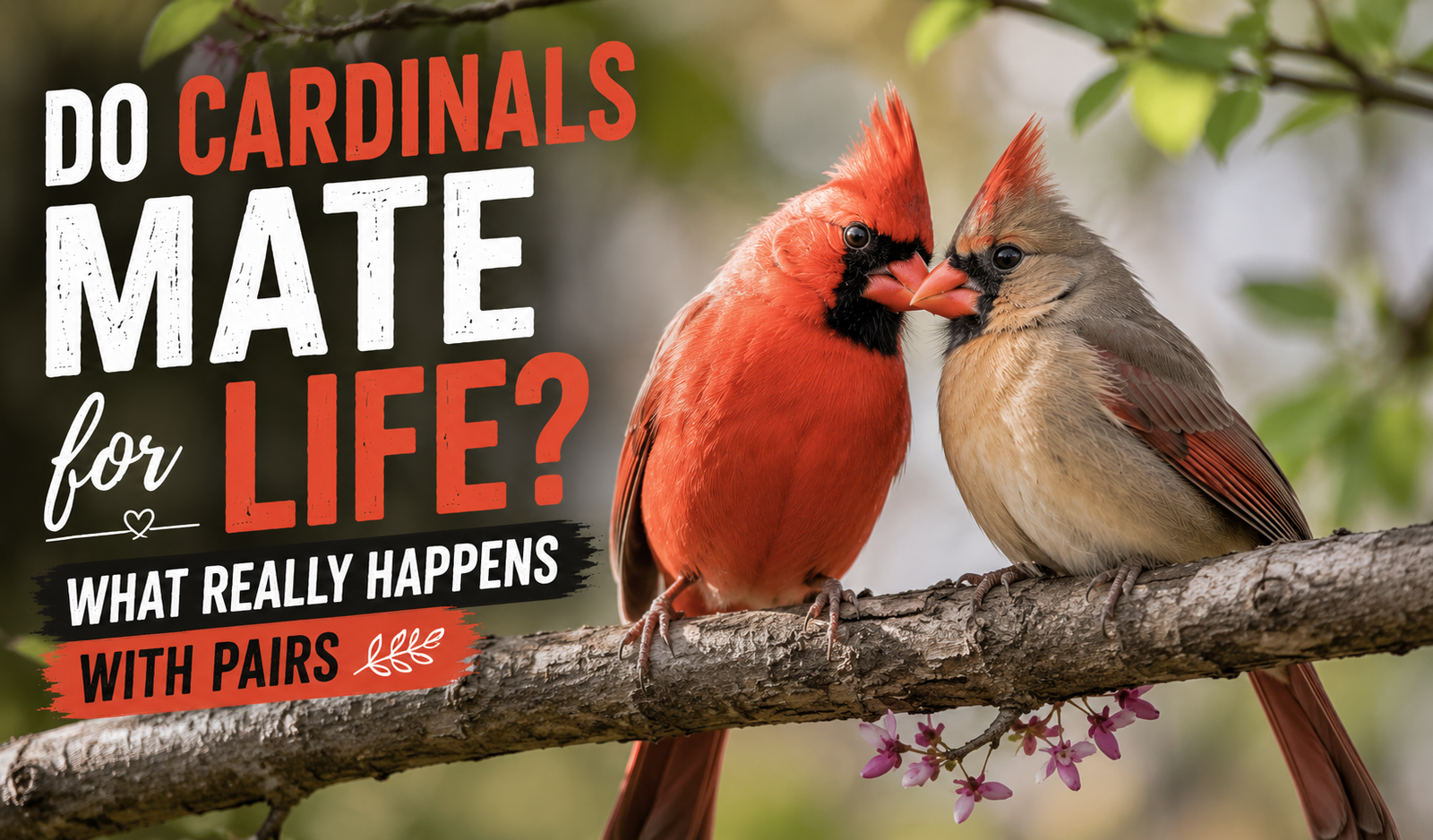
That’s why I went much deeper into actual pair behavior in our guide to whether cardinals really mate for life.
Winter gives us another piece of that story.
Do Cardinals Form Flocks?
Yes, particularly outside breeding season.
This surprises people who are accustomed to seeing one male and one female around the yard.
During fall and winter, Northern Cardinals can gather into flocks of a dozen to several dozen individuals.
They may also forage alongside other bird species.
Cornell notes associations with birds including Dark-eyed Juncos, White-throated Sparrows, titmice, goldfinches, and other sparrows.
A winter feeding area can therefore become much more socially complicated than it appears.
Instead of one territorial pair controlling the scene, you may have cardinals and several other species moving through together.
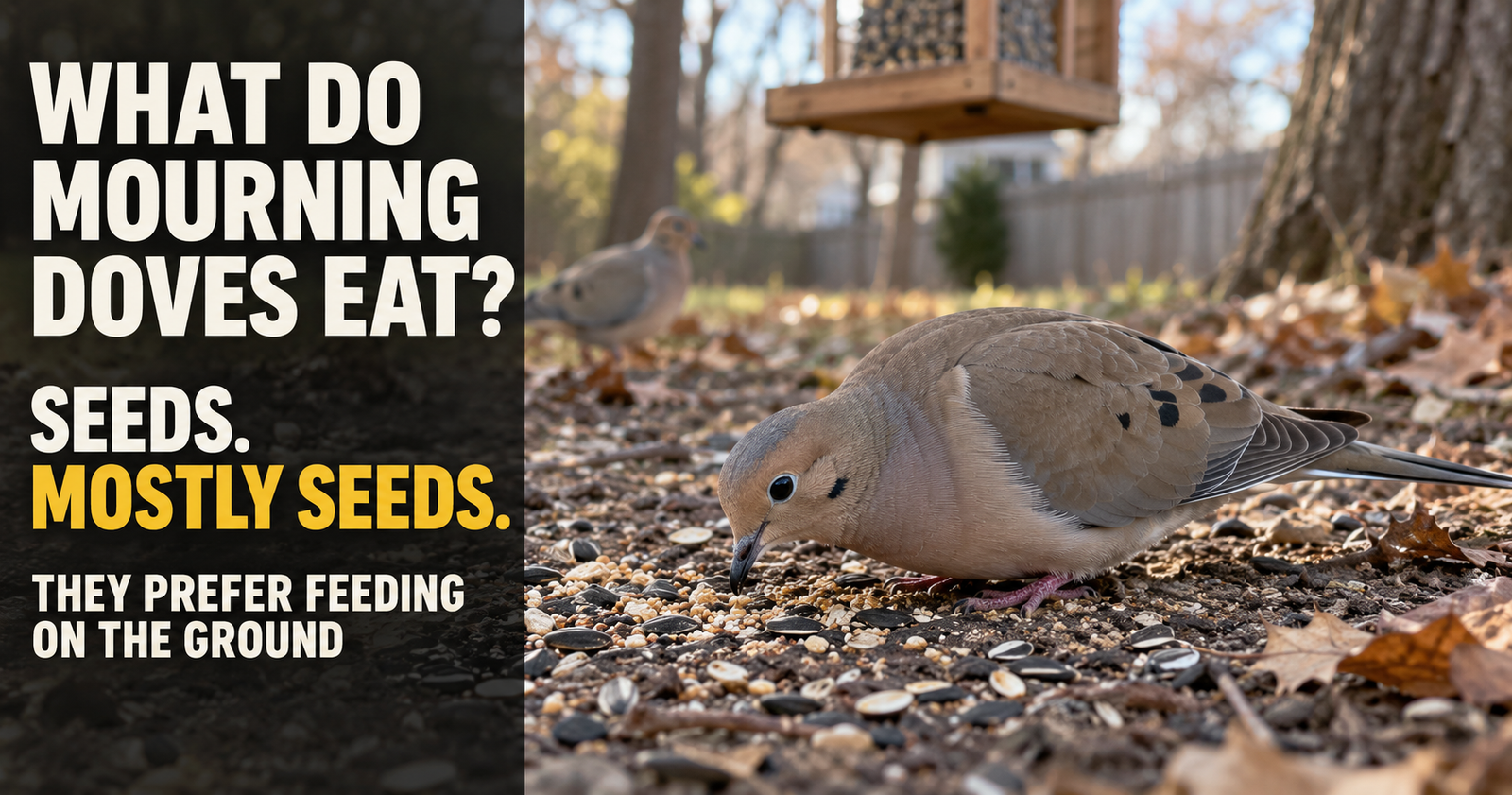
Why Are There Suddenly So Many Cardinals at My Feeder?
Winter flocking is one possible explanation.
Food concentration is another.
When natural foods become harder to locate or conditions become harsher, a reliable feeder can become an attractive stop.

Cornell notes that Northern Cardinals readily eat birdseed and particularly favor black oil sunflower seed. If you’re looking for another seed to try, safflower as another cardinal seed may be worth comparing with sunflower, especially around squirrels.
So imagine a winter flock moving through your neighborhood.
One bird finds your feeder.
Then another arrives.
Then four more appear.
Suddenly it looks like the cardinal population exploded overnight.
You may simply be seeing birds that were previously scattered across a much larger area concentrating around a productive food source.
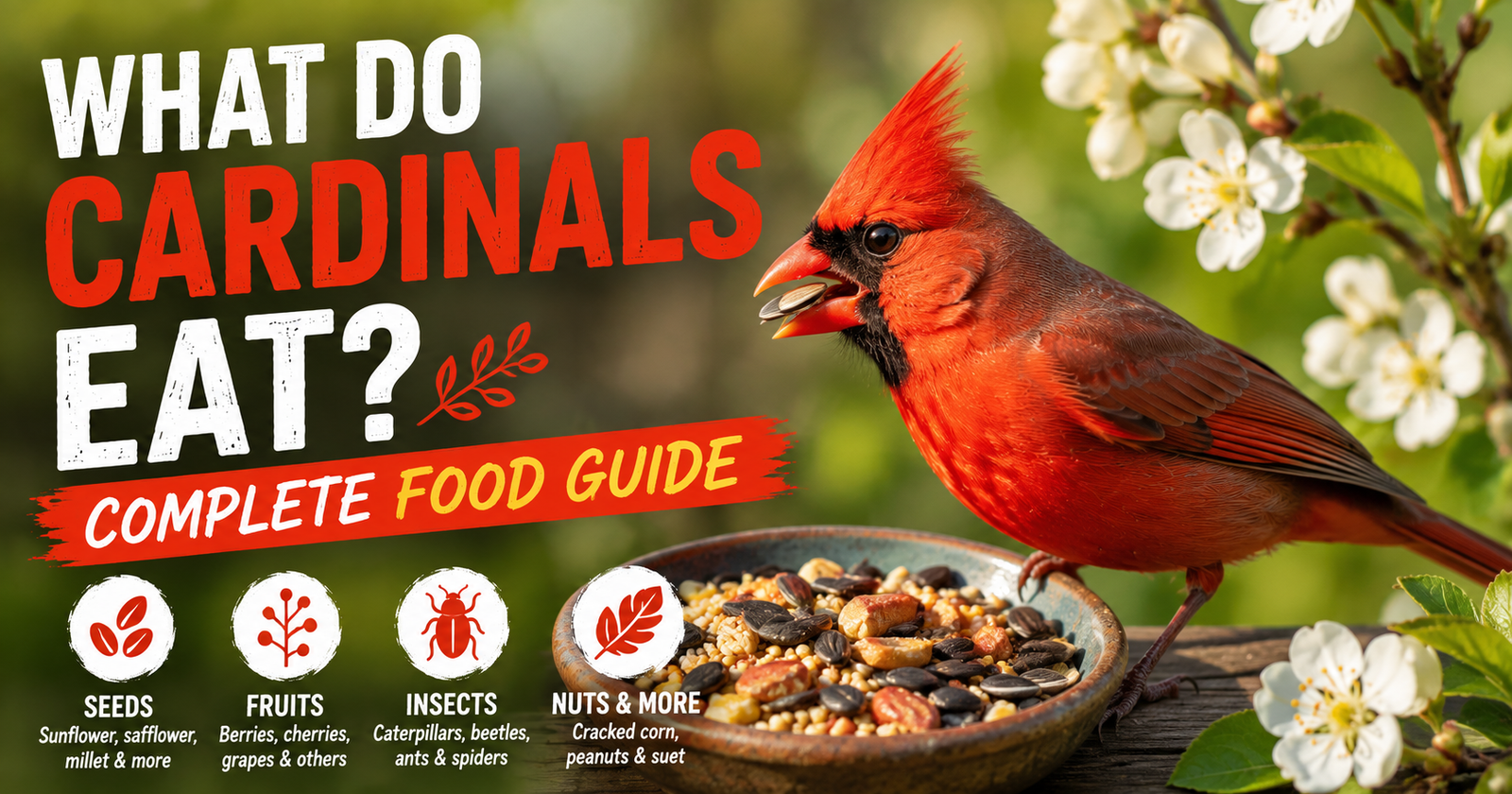
If you want to make that feeding station more useful, our cardinal food guide covers sunflower, safflower, natural fruits, insects, feeder foods, and how their diet changes throughout the year.
What Do Cardinals Eat During Winter?
Winter doesn’t give cardinals the same buffet of insects they can find during warmer months.
Fortunately, they’re flexible eaters.
Seeds and fruits make up a large portion of the adult Northern Cardinal diet, and those foods remain important when cold weather reduces insect activity.
Cornell lists natural foods including dogwood, wild grape, grasses, sedges, mulberry, hackberry, blackberry, sumac, and various other seeds and fruits. Cardinals also readily use backyard feeders, particularly for black oil sunflower seed.
That flexibility is incredibly valuable for a bird that stays put through winter.
A species heavily dependent on flying insects would face a very different problem once freezing temperatures arrived.
Cardinals can switch their attention toward the seeds and fruits that remain available.
Should I Feed Cardinals During Winter?
You certainly can.

Winter is one of my favorite times to maintain a cardinal-friendly feeder because the birds are easy to see and a dependable source of appropriate food can supplement what’s naturally available.
Black oil sunflower seed is an excellent starting point.
I also like thinking beyond the feeder.
Seed-producing plants and fruiting shrubs can continue providing natural food.
Dense vegetation gives birds shelter.
Clean water can become particularly valuable when natural water sources freeze.
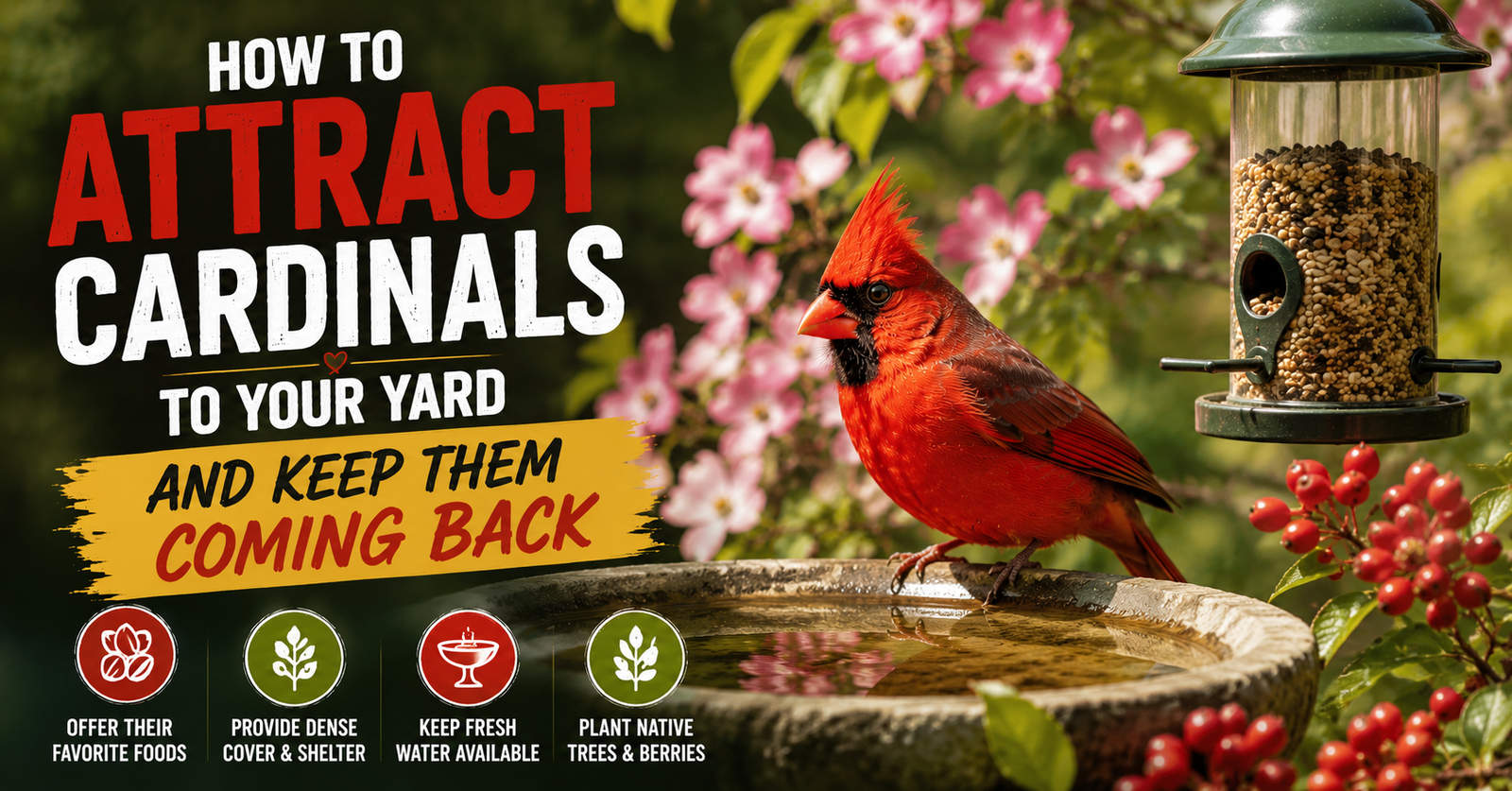
Our guide to attracting cardinals and keeping them around looks at the entire setup rather than treating a bag of birdseed as the only thing cardinals need.
Will Feeding Cardinals Stop Them From Migrating?
No.
You aren’t preventing Northern Cardinals from making a migration they would otherwise undertake.
They’re already a resident species.
This question usually comes from broader concerns about whether feeding wild birds causes migratory species to “forget” to leave.
For cardinals specifically, there’s no annual southbound migration you’re interfering with.
If they remain around your feeder in January, that’s normal cardinal behavior.
They didn’t miss their flight to Florida because you bought sunflower seeds.
How Do Cardinals Survive Freezing Temperatures?
Their feathers are enormously important.
Bird plumage isn’t simply decorative. It provides insulation.
When you see a cardinal looking unusually round and fluffy on a brutally cold morning, the bird hasn’t suddenly gained weight overnight.
Fluffing its feathers creates pockets of trapped air that improve insulation and help retain body heat. Audubon specifically uses the puffed-up Northern Cardinal as an example of this cold-weather strategy.
Cardinals can also seek protected areas out of harsh wind.
Dense vegetation can matter here just as much as it does during other parts of the year.
This is another reason I wouldn’t strip every shrub and brushy corner out of a bird-friendly yard.
A plant doesn’t stop being useful because nesting season ended.
Why Do Cardinals Look So Puffy in Winter?
They’re trapping warm air.
Feathers create an insulating layer around the bird, and fluffing them increases the amount of air held within that layer.
That’s why a cardinal can appear almost ball-shaped during cold weather.
The same bird may look considerably slimmer once temperatures rise or it becomes more active.
So a round winter cardinal isn’t automatically overweight, sick, or a different species.
Sometimes you’re simply looking at a very well-insulated cardinal.
Do Cardinals Change Color in Winter?
Not in the dramatic way some birds do.
Northern Cardinals don’t molt into a completely dull winter plumage.
Cornell specifically points out that cardinals remain striking through winter because they neither migrate away nor transform into a drab seasonal appearance.
That doesn’t mean every feather looks identical throughout the year.
Feather wear, molt timing, lighting, age, sex, and individual variation can influence appearance.
But an adult male remains recognizably red.
And against snow, he can look even brighter simply because the surroundings changed.
Do Female Cardinals Stay Through Winter Too?
Yes.
This isn’t a situation where males remain behind while females migrate somewhere else.
Both male and female Northern Cardinals are year-round residents.
Female cardinals are much less conspicuous because their plumage is primarily warm brown with reddish accents.
That difference can fool casual observers.
You may notice three brilliant males around the feeder while completely overlooking the females sitting in nearby vegetation.
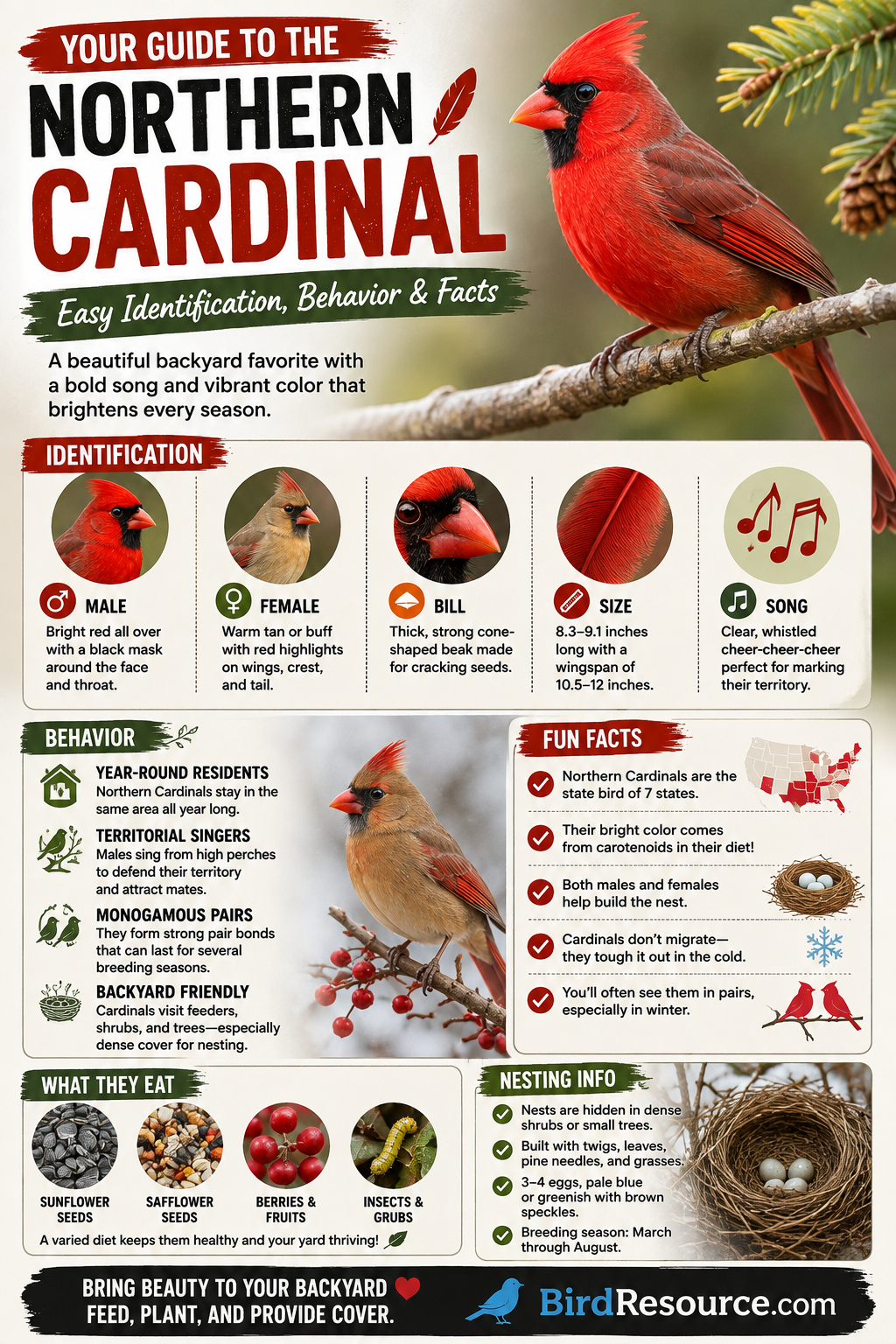
If you’re not completely confident telling them apart, our Northern Cardinal identification guide covers the differences between adult males, females, and younger birds.
Do Young Cardinals Migrate?
Young Northern Cardinals don’t undertake a normal seasonal migration either.
They eventually disperse from the immediate area where they were raised and establish lives of their own, but dispersal and migration aren’t the same thing.
A young bird can’t remain dependent on its parents forever.
After fledging, it gradually develops flight and foraging skills while the parents continue providing care.
Eventually, that family relationship changes and the young bird becomes independent.
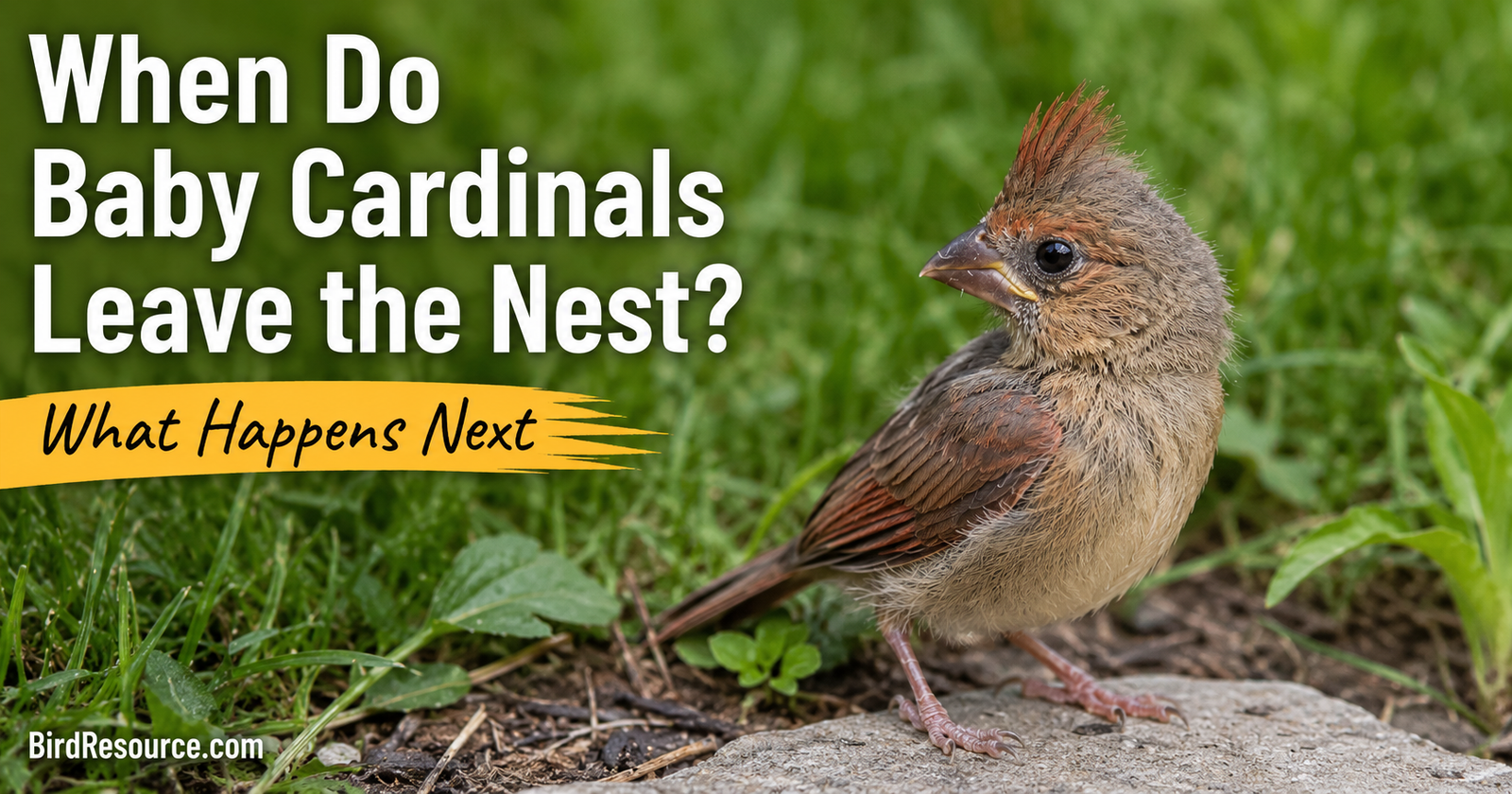
If you’re following a cardinal family from the nest outward, our guide to what happens after baby cardinals leave the nestexplains that transition in much more detail.
What’s the Difference Between Migration and Local Movement?
This distinction clears up a lot of confusion.
Migration is regular seasonal movement between geographic areas, often between breeding and wintering grounds.
Local movement is simply a bird moving around within the broader area where it lives.
Cornell categorizes Northern Cardinals as permanent residents rather than migrants.
So if a cardinal moves two neighborhoods away because another location has better winter food, that doesn’t suddenly make it migratory.
From the bird’s perspective, it moved locally.
From your perspective, the cardinal vanished.
Both observations can be true.
How Far Do Cardinals Travel in Winter?
There’s no single winter distance that every cardinal follows.
That’s partly because we’re not dealing with a predictable migration route.
Individuals move according to local food, habitat, social behavior, weather, and other conditions.
The important point is that they remain within their year-round geographic range rather than making the kind of regular long-distance seasonal journey associated with true migrants.
This is also why I wouldn’t promise that the cardinal at your feeder in July will sit outside the same window every morning in January.
Resident doesn’t mean stationary.
Do Cardinals Go Farther South When It Gets Extremely Cold?
Northern Cardinals can withstand remarkably cold winter conditions within their established range.
Their range extends north into southeastern Canada, and Audubon notes that the species now brightens winter landscapes that far north.
A severe cold snap can absolutely change bird behavior.
Cardinals may spend more time in protected vegetation.
They may alter when and where they forage.
They may concentrate around productive feeding locations.
But that isn’t the same as the entire population suddenly launching into a southbound migration.
They’re resident birds adapted to dealing with winter.
How Far North Do Cardinals Live Year-Round?
Farther north than they once did.
Northern Cardinals have expanded their range northward over time.
Cornell notes that the growth of towns and suburbs across eastern North America has helped the species expand north, while Audubon notes that cardinals now occur through winter as far north as southeastern Canada.
Backyard feeding may have contributed as well.
Audubon specifically notes that feeders stocked with sunflower seed may have aided the species’ northward expansion.
That’s a pretty interesting example of how changes humans make to the landscape can influence where a familiar bird succeeds.
Are Cardinals Moving North Because of Climate Change?
This deserves a more careful answer than simply saying yes.
Northern Cardinals have unquestionably expanded northward over time, but multiple factors can influence range expansion.
Cornell points to the expansion of towns and suburbs and the shrubby habitats associated with them. Audubon notes that sunflower-seed feeders may also have contributed to the northward spread.
Climate can influence bird ranges too, but I wouldn’t take every cardinal sighting farther north and assign one cause to it.
Wildlife range changes are often more complicated than a single explanation.
Do Cardinals Migrate in the Western United States?
Northern Cardinals aren’t distributed evenly across the entire country.
They’re widespread across eastern and central portions of North America, while much of the western United States lies outside their normal range. Audubon notes that they’re mostly absent west of the Great Plains, although locally present in parts of the desert Southwest.
This creates another potential source of confusion.
Someone in the East may see cardinals year-round.
Someone living much farther west may rarely or never see one.
That doesn’t mean western cardinals migrated away.
In many western areas, Northern Cardinals simply aren’t regular local birds in the first place.
Where Do Cardinals Sleep During Winter?
Cardinals seek protected places to roost rather than returning to a nest every night.
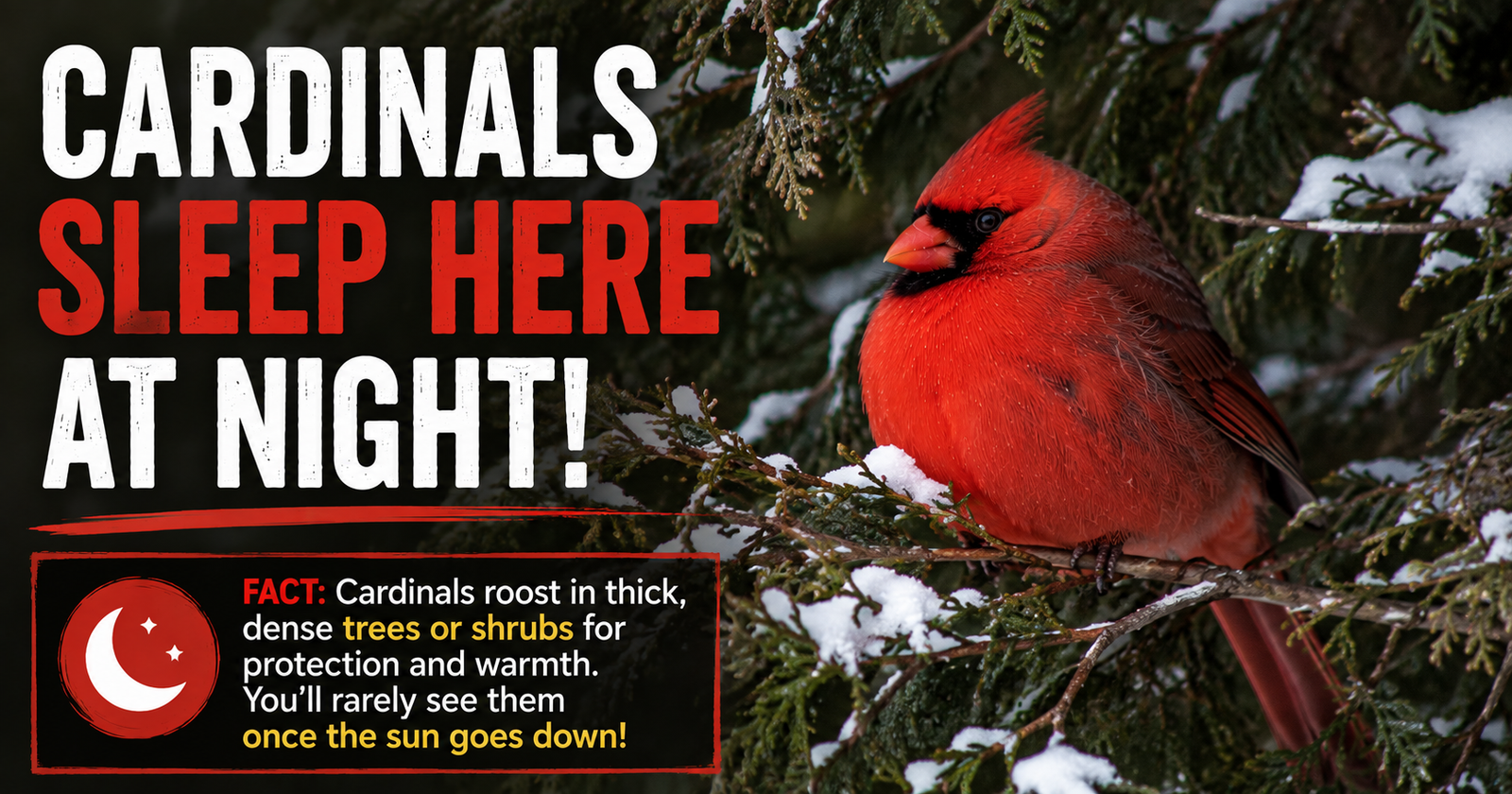
Dense shrubs, thickets, evergreens, and other sheltered vegetation can provide protection from wind and weather. These same protected habitats can be important overnight, as cardinal roosting shelter explains.
This is one reason winter habitat matters even when you aren’t thinking about nesting.
The nest isn’t the cardinal’s permanent bedroom.
Once breeding is finished, that little cup doesn’t function like a house the pair returns to every evening.
We’re going to give where cardinals sleep at night its own full guide because roosting behavior deserves a deeper explanation, especially the differences between nests, daytime cover, and nighttime roosting.
Do Cardinals Use Their Old Nest During Winter?
Generally, no.
Cardinals normally don’t reuse their nests even for subsequent nesting attempts, let alone turn them into winter homes. Cornell specifically notes that Northern Cardinals typically don’t use their nests more than once.
This is one of the biggest misconceptions people have about bird nests.
We see a nest and think house.
For many birds, it’s much closer to a nursery.
The female builds it for eggs and developing nestlings.
Once the youngsters leave, its job is essentially finished.
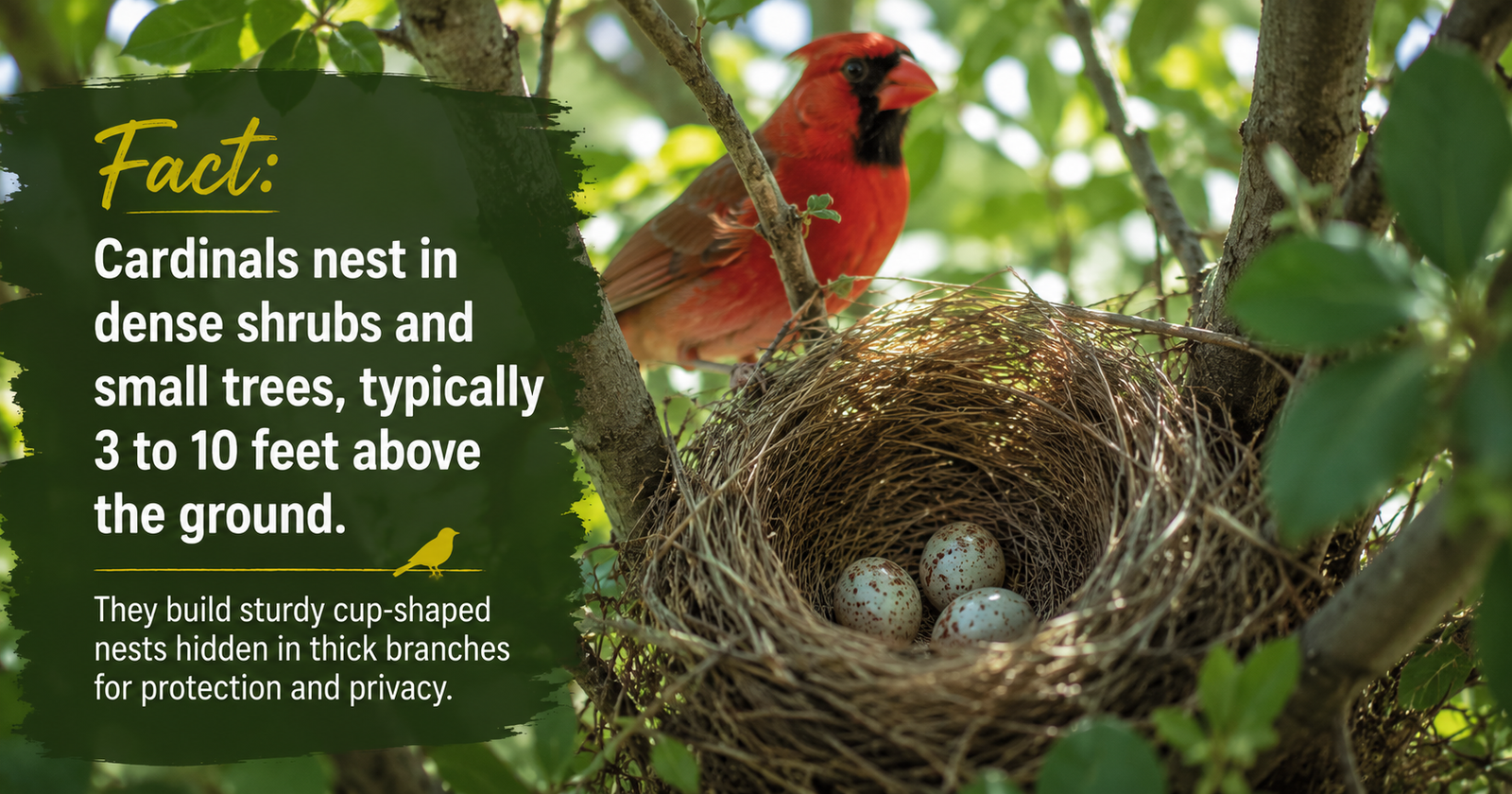
Our guide to where cardinals build their surprisingly well-hidden nests explains how those nesting sites are selected and why an old nest shouldn’t be thought of as the family’s permanent residence.
Why Is a Cardinal at My Feeder Before Sunrise?
Cardinals can be remarkably early feeder visitors.
Cornell’s FeederWatch camera observations note that Northern Cardinals are often among the first birds arriving in the morning and among the last lingering near dusk.
In winter, that behavior makes sense from an energy perspective.
A cold night means a small bird has spent hours maintaining body temperature without feeding.
Once daylight returns, replenishing energy becomes important.
And late in the day, feeding provides energy before another long night.
If you’ve ever noticed that your cardinal activity seems strongest around the edges of daylight, you’re not imagining it.
Why Do Cardinals Come to Feeders Right Before Dark?
For the same general reason morning feeding can be important.
Night means hours without actively foraging.
A bird heading into a cold winter night benefits from having adequate energy reserves.
Cornell’s winter feeder observations specifically note cardinals lingering among the later visitors before dusk.

This also makes late afternoon one of my favorite times to watch a cardinal feeder. If you want to document those visits without standing at the window, a camera feeder for cardinal watching may suit that observation goal.
The low light can make that red plumage look incredible, and winter flocking sometimes means several birds arrive close together.
What Should I Put Out for Cardinals in Winter?
If I were keeping the setup simple, I’d start with black oil sunflower seed.
Cardinals readily use it, and it’s widely available.
Safflower can be another useful option.
A feeder with adequate room for a cardinal to perch comfortably matters too.
Then I’d add water if I could maintain it safely during freezing conditions.
Finally, I’d think about natural habitat.
Dense shrubs provide cover.
Fruiting vegetation can supply natural food.
Seed-producing plants can continue feeding birds after the growing season ends.
A winter cardinal setup doesn’t need to look like a bird-feeding store exploded in your backyard.
Good food, clean water, useful vegetation, and a properly maintained feeder can go a long way.
Should I Keep My Cardinal Feeder Full During a Snowstorm?
Keeping appropriate food available during difficult weather can certainly provide a useful supplemental resource.
But I wouldn’t panic if the feeder runs empty for a few hours.
Wild cardinals haven’t forgotten how to find natural food.
What I would pay attention to is the condition of the food.
Snow, freezing rain, and moisture can turn exposed seed into a wet, frozen mess.
A feeder that keeps seed reasonably protected can make winter maintenance much easier.
Shake out accumulated snow where appropriate, replace spoiled or wet seed, and keep feeding surfaces reasonably clean.
Fresh sunflower seed is much more useful than a feeder packed with a frozen block of old seed.
Why Did My Cardinals Disappear After a Snowstorm?
Weather can temporarily change where birds spend their time.
During harsh conditions, cardinals may remain closer to dense protective vegetation and reduce unnecessary exposure.
Food availability can change too.
Another feeding location may become more attractive.
A flock may move elsewhere within the local area.
So if your feeder goes strangely quiet after severe weather, don’t immediately conclude the birds died or migrated south.
Give them time.
Check the feeder.
Make sure the food is accessible and fresh.
Look around nearby shrubs and thickets.
Sometimes the birds are there but behaving much more cautiously than they did during calm weather.
Do Cardinals Migrate During Summer?
No normal seasonal summer migration occurs either.
Summer changes cardinal behavior because it’s breeding season.
Pairs defend territories.
Males sing.
Females build nests and incubate eggs.
Both parents feed young.
Multiple nesting attempts may occur.
Those activities can make a pair’s movements look very concentrated around one portion of a property.
If they nested beside your house one year but selected vegetation several properties away the next, their summer activity around your feeder could change dramatically.
Again, they didn’t necessarily migrate.
They changed where they were spending their time locally.
Why Do Cardinals Suddenly Disappear in Late Summer?
Late summer can be an especially confusing period for backyard birdwatchers.
Breeding activity winds down.
Young birds become independent.
Birds molt.
Natural foods can become abundant.
Territorial behavior begins changing.
All of that can affect how visible cardinals are and how often they visit one particular feeder.
A quiet feeder isn’t always evidence of declining bird numbers.
Sometimes your yard simply isn’t the most interesting restaurant in the neighborhood that week.
This question deserves its own article later in our cardinal cluster because there are enough possible explanations that I don’t want to reduce it to “they found food somewhere else.”
Do Cardinals Migrate Because Their Food Runs Out?
No regular cardinal migration occurs in response to winter food shortages.
Instead, their flexible diet helps them remain resident.
Adult Northern Cardinals eat substantial amounts of seeds and fruit along with insects. When insect availability declines during winter, seeds and fruits remain important resources.
Backyard feeders can supplement that natural diet too.
This is one reason dietary flexibility matters.
A bird capable of switching among several available food sources has more options when the seasons change.
Are Cardinals the Same Birds I See Every Winter?
Possibly, but you usually can’t prove that just by looking.
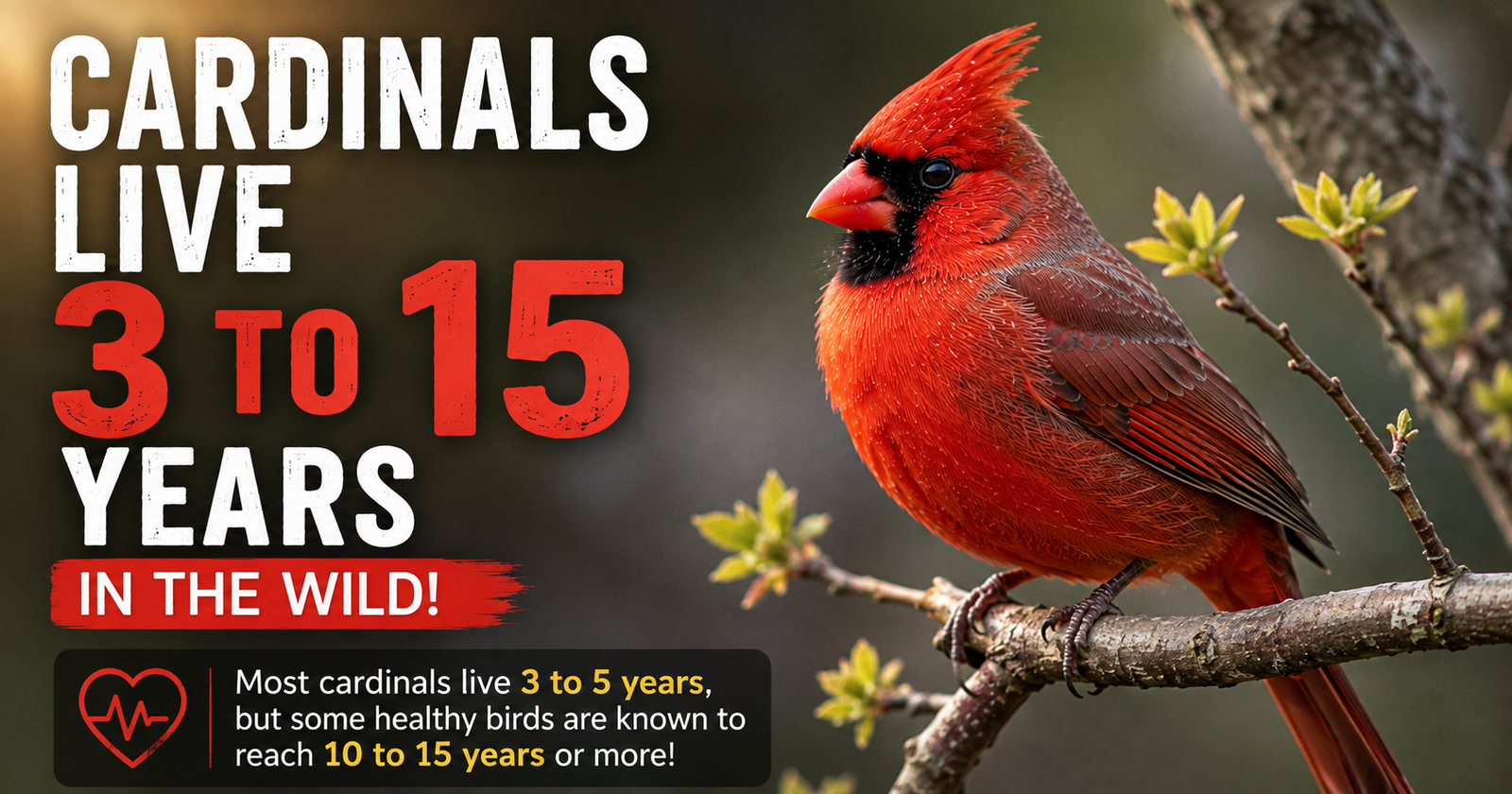
Northern Cardinals are year-round residents, so it’s entirely plausible that some of the individuals using your property in winter are the same local birds you saw during summer. Knowing the lifespan of a Northern Cardinal can help put those repeated seasonal sightings into perspective.
But unbanded birds can be extremely difficult to identify individually.
A familiar-looking red male isn’t necessarily “Charlie the Cardinal” returning to the same feeder for his fifth winter.
It could be.
We just shouldn’t pretend we know.
That’s an important distinction I want to maintain throughout BirdResource.com.
There’s nothing wrong with enjoying individual backyard birds and even giving them names.
We just need to separate what’s possible from what we can actually verify.
Cardinals Don’t Leave Winter Behind. They Adapt to It.
This is what makes the Northern Cardinal such an incredible winter bird.
It doesn’t escape the cold by flying thousands of miles south.
It stays.
The same general population that deals with territorial fights, nests, eggs, and fledglings during the warm months has to make it through freezing nights, snow, reduced insect activity, and shorter winter days.
Their behavior adjusts.
They gather into groups.
Their diet leans heavily on available seeds and fruits.
They use protective vegetation.
They fluff their feathers to improve insulation.
They continue moving through the same general landscapes where we watched them all summer.
And that means the red cardinal outside your snowy window isn’t necessarily a winter visitor at all.
It may have been your neighbor the entire time.
Common Questions About Cardinal Migration
Do cardinals fly south for the winter?
No. Northern Cardinals are permanent residents throughout their established range rather than regular seasonal migrants.
Where do cardinals go when it snows?
They remain within their year-round range and use sheltered vegetation and available feeding areas. Their local movements may change during severe weather, but snow doesn’t trigger a normal long-distance migration.
Why are cardinals associated with winter?
They’re year-round residents, males retain their red appearance, and that bright plumage becomes exceptionally conspicuous against bare vegetation and snow.
Do cardinals live in the same yard their whole lives?
Not necessarily. Being a resident species doesn’t mean an individual bird never moves beyond one yard. Cardinals move locally for food, shelter, breeding, social interactions, and other needs.
Do cardinals flock together in winter?
Yes. Cornell reports that fall and winter groups can contain a dozen to several dozen cardinals.
Why do I only see cardinals during winter?

Several things could make them easier to notice then. Bare vegetation improves visibility, red males stand out against winter backgrounds, flocking can concentrate multiple birds together, and feeders can become conspicuous feeding locations. A camera feeder can add another way to monitor those feeding locations; the Kiwibit Smart Bird Feeder 2 Mini looks at how this model handles remote bird observation.
Why do my cardinals disappear every winter if they don’t migrate?
Local movement and changing behavior can make resident birds disappear from one property. They may join flocks, use different food sources, spend more time around protective cover, or simply shift their daily routes. For a broader look at the possible reasons, see why cardinals disappear from one property.
Can cardinals survive below-freezing temperatures?
Yes. Northern Cardinals live year-round in regions that experience freezing winters, including parts of southeastern Canada. Their feathers provide insulation, and fluffing creates trapped air that helps retain heat.
Should I feed cardinals when there’s snow on the ground?

You can provide supplemental food. Black oil sunflower seed is a particularly good cardinal food, and keeping feeders clean, dry, and accessible makes them more useful during winter. For a supplemental feeding option, a cardinal-focused seed option may be worth considering.
Do cardinals come back after winter?
In much of their range, they never actually left.
What changes in spring is their behavior.
Winter groups begin giving way to breeding pairs and territorial activity. Males become much more conspicuous as they sing and defend territory, and soon the entire nesting cycle begins again.
That’s one of the pleasures of watching the same species throughout an entire year.
You’re not waiting for the cardinals to come home.
You’re watching what they do when the seasons change around them.
Caleb Hartwell is the Bird Identification & Behavior Contributor for BirdResource.com, where he digs into the everyday bird questions that turn out to have much more interesting answers, from winter disappearances and migration myths to nesting, feeding, fledglings, and the behavior happening just beyond the backyard feeder.